Havana Cuba; Tourism and LeisureBiblio.com
6.024 resultados
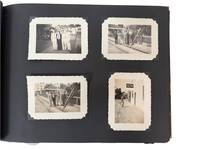
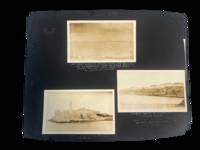
1920ref. 227281920. Havana Cuba travel photo album circa 1920s documents an American visitor's encounter with Havana during the interwar years when U.S. tourism commercial presence and Spanish-American War memory shaped how many American travelers interpreted the city. The vernacular photographs record arrival by steamship harbor landmarks civic buildings commercial streets factories boulevards monuments cemeteries and guarded public spaces giving insight into both Havana's urban landscape and the traveler's assumptions about access history and spectacle. The album's references to the USS Maine and Spanish-American War memorials place ordinary sightseeing within a longer history of U.S. intervention in Cuba; the Maine exploded in Havana Harbor on February 15 1898 killing more than 260 sailors and intensifying the crisis that led to war with Spain. Approximately 25 sepia-toned silver gelatin photographs each about 3 x 5 inches mounted to black album leaves with detailed handwritten captions in white pencil. The sequence begins aboard the S.S. Kroonland with one caption reading "My first view of Havana from the deck. three miles out at sea in a dark storm" followed by a landing view captioned "where we landed in Havana Cuba." The S.S. Kroonland returned to Panama Pacific Line service in 1923 on a New York to San Francisco route via Havana the Panama Canal and Los Angeles supporting the album's interwar travel context. The photographs then trace Havana's maritime and civic topography: harbor views Morro Castle captioned "Famous during the Spanish-American War" the waterfront in front of the fortress the Court House the President's Palace a "600-year-old church" the Henry Clay Cigar Store Havana's factory district and public boulevards "where all streets have parks in the center." Other images include a cemetery visit captioned "All people in Cuba are laid to rest above the ground" and a restricted-view street or carriage scene captioned "Officer would not let me take picture but when he turned I took it anyway" a revealing note on tourist privilege and unauthorized looking. Several images directly record the ways American travelers consumed Havana through imperial memory and Cuban nationalist commemoration. One monument is captioned "This was given by the Cuban people to the American soldiers that fell in the Spanish-American War" while another marks "the spot where the Maine sank at the entrance of the harbor." The album was made after Cuba's formal independence in 1902 and during the long aftermath of the Platt Amendment framework under which the United States retained extensive influence over Cuban affairs and intervened repeatedly in the early twentieth century. Album leaves chipped at edges several with corner losses not affecting images; prints generally sharp with strong contrast and clear annotations very good overall. Socially revealing Havana travel album documenting how a U.S. visitor pictured Cuba through steamship tourism colonial architecture cigar commerce Spanish-American War remembrance and the everyday authority structures of an interwar Caribbean capital. unknown
1920ref. 227281920. Havana Cuba travel photo album circa 1920s documents an American visitor's encounter with Havana during the interwar years when U.S. tourism commercial presence and Spanish-American War memory shaped how many American travelers interpreted the city. The vernacular photographs record arrival by steamship harbor landmarks civic buildings commercial streets factories boulevards monuments cemeteries and guarded public spaces giving insight into both Havana's urban landscape and the traveler's assumptions about access history and spectacle. The album's references to the USS Maine and Spanish-American War memorials place ordinary sightseeing within a longer history of U.S. intervention in Cuba; the Maine exploded in Havana Harbor on February 15 1898 killing more than 260 sailors and intensifying the crisis that led to war with Spain. Approximately 25 sepia-toned silver gelatin photographs each about 3 x 5 inches mounted to black album leaves with detailed handwritten captions in white pencil. The sequence begins aboard the S.S. Kroonland with one caption reading "My first view of Havana from the deck. three miles out at sea in a dark storm" followed by a landing view captioned "where we landed in Havana Cuba." The S.S. Kroonland returned to Panama Pacific Line service in 1923 on a New York to San Francisco route via Havana the Panama Canal and Los Angeles supporting the album's interwar travel context. The photographs then trace Havana's maritime and civic topography: harbor views Morro Castle captioned "Famous during the Spanish-American War" the waterfront in front of the fortress the Court House the President's Palace a "600-year-old church" the Henry Clay Cigar Store Havana's factory district and public boulevards "where all streets have parks in the center." Other images include a cemetery visit captioned "All people in Cuba are laid to rest above the ground" and a restricted-view street or carriage scene captioned "Officer would not let me take picture but when he turned I took it anyway" a revealing note on tourist privilege and unauthorized looking. Several images directly record the ways American travelers consumed Havana through imperial memory and Cuban nationalist commemoration. One monument is captioned "This was given by the Cuban people to the American soldiers that fell in the Spanish-American War" while another marks "the spot where the Maine sank at the entrance of the harbor." The album was made after Cuba's formal independence in 1902 and during the long aftermath of the Platt Amendment framework under which the United States retained extensive influence over Cuban affairs and intervened repeatedly in the early twentieth century. Album leaves chipped at edges several with corner losses not affecting images; prints generally sharp with strong contrast and clear annotations very good overall. Socially revealing Havana travel album documenting how a U.S. visitor pictured Cuba through steamship tourism colonial architecture cigar commerce Spanish-American War remembrance and the everyday authority structures of an interwar Caribbean capital. unknown books
1958ref. 237661958. Mexico travel photo album containing more than 150 photographs 1958 to 1961 documenting an American journey through cities coastal settlements fishing communities archaeological and historic sites markets and rural landscapes during the rapid expansion of postwar tourism to Mexico. The photographer traveled well beyond a single resort itinerary recording Guadalajara Guaymas San Blas Tequila Acapulco Cozumel and other locations while repeatedly turning the camera toward local residents vernacular buildings working waterfronts boats vegetation and roadside landscapes. Printed processing dates of "Dec. 58" and "Jan. 61" establish at least two photographic episodes while handwritten captions trace portions of the route and identify places and people encountered along it. Travel photo album of more than 150 color and black and white snapshots most approximately 3.5 x 3.5 inches Mexico and one page at an unidentified Southeast Asian location 1958 to 1961. The Mexico photographs range from city streets and groups of travelers to fishing boats harbors lagoons markets mountains tropical vegetation stone buildings construction archaeological or historic architecture and portraits of local residents. Handwritten captions identify "San Blas" "Guadalajara" "Guaymas" "Travel thru Mexico" "Tequila" "Cuernavaca" "Lerma Cozumel" and "Acapulco Cozumel '61" while another photograph of three women wearing traditional dress is captioned "Mayan women." A photograph identified "Tequila" records an open landscape and roadside setting while the Guaymas sequence includes fishing vessels and a man standing among their masts and rigging. Other images follow waterways by small boat showing passengers settlements along the banks dense tropical growth and working boats. The photographer also recorded companions and acquaintances including a man identified in a caption apparently reading "Ralph Glad hill" as well as paired portraits captioned "Lerma Cozumel" and "Bathing 30 '61." A group of black and white photographs records stone structures in varying states of construction or repair including one view captioned "My house as purchased." The final approximately ten photographs depart abruptly from the Mexican itinerary and depict an unidentified Southeast Asian village or settlement. The album belongs to a period when Mexico had become one of the principal foreign destinations for American travelers following decades of government investment in highways hotels archaeological tourism resort development and international promotion. By the late 1950s and early 1960s improved road and air connections allowed foreign visitors to construct itineraries extending from major cities into Pacific ports smaller towns archaeological sites and newly developing coastal destinations. The photographs register that mobility directly: named tourist centers sit beside fishing communities working harbors rural roads vernacular houses market activity and portraits of residents encountered during travel. Moderate handling wear to the album and mounts; photographs with occasional fading color shift surface wear and minor edge wear with several color prints showing pronounced red or magenta shift. Overall in good condition. A substantial photographic record of postwar American travel through Mexico preserving the movement between established tourist destinations and local communities before mass international tourism transformed many of the coastal places represented here. unknown
1958ref. 237661958. Mexico travel photo album containing more than 150 photographs 1958 to 1961 documenting an American journey through cities coastal settlements fishing communities archaeological and historic sites markets and rural landscapes during the rapid expansion of postwar tourism to Mexico. The photographer traveled well beyond a single resort itinerary recording Guadalajara Guaymas San Blas Tequila Acapulco Cozumel and other locations while repeatedly turning the camera toward local residents vernacular buildings working waterfronts boats vegetation and roadside landscapes. Printed processing dates of "Dec. 58" and "Jan. 61" establish at least two photographic episodes while handwritten captions trace portions of the route and identify places and people encountered along it. Travel photo album of more than 150 color and black and white snapshots most approximately 3.5 x 3.5 inches Mexico and one page at an unidentified Southeast Asian location 1958 to 1961. The Mexico photographs range from city streets and groups of travelers to fishing boats harbors lagoons markets mountains tropical vegetation stone buildings construction archaeological or historic architecture and portraits of local residents. Handwritten captions identify "San Blas" "Guadalajara" "Guaymas" "Travel thru Mexico" "Tequila" "Cuernavaca" "Lerma Cozumel" and "Acapulco Cozumel '61" while another photograph of three women wearing traditional dress is captioned "Mayan women." A photograph identified "Tequila" records an open landscape and roadside setting while the Guaymas sequence includes fishing vessels and a man standing among their masts and rigging. Other images follow waterways by small boat showing passengers settlements along the banks dense tropical growth and working boats. The photographer also recorded companions and acquaintances including a man identified in a caption apparently reading "Ralph Glad hill" as well as paired portraits captioned "Lerma Cozumel" and "Bathing 30 '61." A group of black and white photographs records stone structures in varying states of construction or repair including one view captioned "My house as purchased." The final approximately ten photographs depart abruptly from the Mexican itinerary and depict an unidentified Southeast Asian village or settlement. The album belongs to a period when Mexico had become one of the principal foreign destinations for American travelers following decades of government investment in highways hotels archaeological tourism resort development and international promotion. By the late 1950s and early 1960s improved road and air connections allowed foreign visitors to construct itineraries extending from major cities into Pacific ports smaller towns archaeological sites and newly developing coastal destinations. The photographs register that mobility directly: named tourist centers sit beside fishing communities working harbors rural roads vernacular houses market activity and portraits of residents encountered during travel. Moderate handling wear to the album and mounts; photographs with occasional fading color shift surface wear and minor edge wear with several color prints showing pronounced red or magenta shift. Overall in good condition. A substantial photographic record of postwar American travel through Mexico preserving the movement between established tourist destinations and local communities before mass international tourism transformed many of the coastal places represented here. unknown books
1886ref. 19413Avec une préface de Vigeant (datée 1887). Illustrations de Frédéric Régamey (1849-1925). Un frontispice, 11 compositions hors texte en 2 états et une vignette de titre.Édition originale tirée à 500 exemplaires. Celui-ci, un des 20 exemplaires de tête sur papier du Japon.Paris, A la Librairie illustrée - non daté (1886) - XVI et 243 pages. Ex-libris de la Bibliothèque de Jean Pierre Delhay, Maître d'Armes.Reliure demi basane brune marbrée à coins. Dos à nerfs orné de 2 fleurets croisés. Pièce de titre et d'auteur rouges et date en pied dorée (1886). Non rogné. Couverture illustrée et dos conservés. Pas de rousseur. Parfait état pour ce bel exemplaire bien relié. Format in-8°(23x16).Albert de SAINT-ALBIN (1843-1901), homme de lettres, vaudevilliste, rédacteur en chef du "Jockey", rédacteur au Figaro et chroniqueur sportif sous le pseudonyme de Robert Milton.Au moyen de cet ouvrage St. Albin nous fait faire la connaissance de presque toutes les salles d'armes de Paris, et nous décrit les méthodes et les mérites des différents maîtres et les qualités des meilleurs élèves. Par ses publications, St. Albin nous a donné une idée exacte et complète de l'escrime française à deux périodes distinctes et distantes l'une de l'autre de dix ans. Ses livres sont des documents qui resteront dans les bibliothèques des tireurs, car ils permettront de juger du passé et du présent, et de présager l'avenir de l'escrime en France, où l'art des armes est étudié et marche de progrès en progrès.
ref. 1911Couverture rigide 1ère Édition Editions Héracléia Monaco 37x28,5 cm
ref. 10373Avignon, François Girard & Dominique Seguin, 1738. In-8, (14)-320 pp., reliure plein vélin de réemploi, tranches rouges (reliure un peu frottée, restaurations anciennes à la page de titre, papier légèrement jauni). Ex libris armorié gravé portant la devise "Peregrinus Ubique".
ref. 6204"Lyon, Cormon et Blanc, an XIII (1805). Trois volumes in 12 cartonnages de l’époque (un peu usés aux coiffes et aux mors), VII, avertissement, 333 pp.; 300 pp.; 330 pp. + table. Avec des planches la plupart dépliantes."
ref. 3781Sans lieu ni date (milieu XIXème). Douze cartons 12 x 20 cm chromolithographiées.
ref. 3782Sans lieu ni date (milieu XIXème). Douze cartons 12 x 20 cm lithographiées en couleurs (manques à quatre carton).
1880ref. 2544Sans lieu, sans mention d'éditeur, sans date (circa 1880). Très belle boîte rectangulaire (13,5 x 8,5 cm) en carton, ornée d'une chromolithographie représentant 4 enfants déguisés en train de s'amuser, destinée à accueillir 12 chocolats individuels, eux-mêmes contenus dans de petits emballages en papier (2 x 4 cm), chacun illustré d’une chromolithographie représentant un enfant jouant : ballon, chasse aux papillons, bulles de savon, cerceau, bilboquet, pantin, jeu du volant, éventail (pour faire voler une bulle), déclamation avec une fleur, assiette tournante, musique (mandoline et violon). A la fin du XIXe siècle, les chocolatiers ne manquent pas d'imagination pour valoriser leurs produits et la chromolithographie offre un excellent moyen d'attirer l'oeil des gourmands ! Il suffit de faire appel à un imprimeur talentueux et créatif pour proposer des contenants originaux. Le style de ces charmants contenants laisse penser à ceux des éditeurs LB (Paris), J. Minot, F. Appel, Bognard ou encore Testu et Massin. De toute rareté, nous n'en avons trouvé aucune autre identique.
1880ref. 2545Sans lieu, sans mention d'éditeur, sans date (circa 1880). Très belle boîte rectangulaire (13,5 x 8,5 cm) en carton, ornée d'une chromolithographie représentant un enfant domptant 2 lions dans un cercle central entouré d'animaux sauvages et domestiques. Elle était destinée à accueillir 12 chocolats individuels, eux-mêmes contenus dans de petits emballages en papier (2 x 4 cm), chacun illustré d'une chromolithographie représentant un animal : chien, tigre, rhinocéros, hippopotame, chameau, éléphant, mouton, ours blanc, sanglier, cerf, loup et boeuf. A la fin du XIXe siècle, les chocolatiers ne manquent pas d'imagination pour valoriser leurs produits et la chromolithographie offre un excellent moyen d'attirer l'oeil des gourmands ! Il suffit de faire appel à un imprimeur talentueux et créatif pour proposer des contenants originaux. Le style de ces charmants contenants laisse penser à ceux des éditeurs LB (Paris), J. Minot, F. Appel, Bognard ou encore Testu et Massin. De toute rareté, nous n'en avons trouvé aucune autre identique.
1880ref. 2543Sans lieu, sans mention d'éditeur, sans date (circa 1880). Très belle boîte rectangulaire (13,5 x 8,5 cm) en carton, ornée d'une chromolithographie intitulée "Les Grands Concerts", destinée à accueillir 12 chocolats individuels, eux-mêmes contenus dans de petits emballages en papier (2 x 4 cm), chacun illustré d’une représentant un musicien. Le nom des instruments de musique est indiqué au verso : violon, basson, tambour, trombone, harpe, hautbois, flûte, cor, cymbales, grosse caisse, piston et clarinette. A la fin du XIXe siècle, les chocolatiers ne manquent pas d'imagination pour valoriser leurs produits et la chromolithographie offre un excellent moyen d'attirer l'oeil des gourmands ! Il suffit de faire appel à un imprimeur talentueux et créatif pour proposer des contenants originaux. Le style de ces charmants contenants laisse penser à ceux des éditeurs LB (Paris), J. Minot, F. Appel, Bognard ou encore Testu et Massin. De toute rareté, nous n'en avons trouvé aucune autre identique.
ref. 9987P., Horizons de France, sans date (1932). Deux tomes en 15 fascicules in 4° en demi-toile éditeur, avec sur les premiers plats, les 15 couvertures originales. Illustré des photographies de François Kollar reproduites en héliogravure. Préface de Paul Valéry., 428 et 420 pp.
ref. 9805Début XIXème siècle. In 8 de 855 pages percalines, chiffré B.P. Avec une table des chansons.
ref. 23272Paris, Louis Westhausser, [vers 1898]. In-4, [6] ff. découpés en trois bandes, broché, couverture originale illustrée (couverture un peu empoussiérée, quelques frottements, quelques rousseurs marginales).
ref. 23273Paris, Louis Westhausser, [vers 1898]. In-4, [6] ff. découpés en trois bandes, broché, couverture originale illustrée (couverture un peu empoussiérée, quelques frottements, quelques rousseurs marginales).
1900ref. 2750Paris, Simonin-Cuny, sans date (circa 1900). Dimension du plateau déplié : 27 x 36 cm. Plateau de jeu pliant, édité à l’occasion de l'Exposition Universelle de Paris en 1900, orné d'une très belle chromolithographie dans des tons principalement rouge, blanc et or. Il s’agit d’un jeu de parcours type jeu de l’oie, de 45 cases seulement. Si l'on retrouve les mêmes cases « pénalisantes » (puits, auberge, prison, …) que dans la version classique, le plateau est ici illustré de personnages, de saynètes comiques ou de célèbres monuments parisiens. Le titre est inscrit en capitales rouges en haut, tandis qu’en bas, le socle de la Grande Roue laisse une place à la règle du jeu (imprimée en noir) et aux cases de départ et d’arrivée (n°1 et 45), symbolisées par des enfants en costume tricolore chevauchant des oies et agitant des bannières.
ref. 11077In 8 broché, couverture rempliée, ornée d’une vignette contrecollée (brochet à l’affût). Préface de Tony BURNAND. Matériel, fabrication des leurres ; technique pratique, saumon, truite, brochet, chevesne, perche, poisson blanc, black-bass, organe des sens des poissons, instincts, pourquoi ça mord, eau, temps, truite saumonée. Faux-titre, titre, XII, 526 pages, 1 page de table des hors-texte, 380 figures dans le texte, 4 hors-texte, librairie Maloine Paris 321 juillet 1941. Edition originale. Un des exemplaires de luxe, numéroté sur papier couché vert d’eau. Seul grand papier. Très bon état. Rare et recherché.
ref. 4597P., Imprimerie nationale, 1902. Fort in 8 broché de 698 pp.
ref. 4774P., chez l'auteur, sans date. In 8 demi-chagrin dos à nerfs orné, VIII-276 pp. et 57 planches lithographiées (mouillures pâles sur certaines).
ref. 8250"Lyon, Ludovici Prost, 1627. In 8 vélin de l’époque, titre manuscrit effacé au dos, renforts sur les gardes, (16)-394, [14]-[8], 162, [6]-[8], 80 pp.; mouillures pâles tout du long."
1952ref. 3776Couverture rigide 1ère Édition Chambre suisse de l'horlogerie 1952 La Chaux-de-Fonds 23,5x16 cm
ref. 8251P., Chez l’auteur, 1817. In 8 demi-basane, dos lisse orné, 527 pp., table et errata, trois planches.
ref. 5861P., Delarue, sans date (1865). In 8 broché (dos fendu), 148 pp.