6.436 resultados
ref. 4092P., Robert Laffont, 1968. In 4 sous emboîtage, formant boîte avec un fascicule de 52 pp. contenant le règlement des jeux, 17 planches cartonnées, certaines dépliantes (reproductions de jeux anciens, grandeur d'origine) et dans un réceptacle en mousse des
ref. 19507Paris, la veuve Ribou, 1727. 2 parties en 1 vol. in-12, XXVIII-366-[10] pp., basane marbrée havane, dos à nerfs orné de caissons dorés, pièce de titre rouge, tranches rouges et mouchetées (manques à la reliure, mors fendus, coins émoussés, petites rousseurs éparses).
1896ref. 2390Paris, Enoch & Cie, Flammarion, sans date (circa 1896). In-4 – 20,5 x 30 cm. Reliure postérieure à la bradel en demi-toile ocre, pièce de titre en chagrin havane, couvertures en couleurs conservées. 112pp. Edition originale (mention fictive de deuxième édition d’après Derra de Moroda, 2373). Ouvrage orné de 21 planches en couleurs par H. Gray, comprises dans la pagination, et de 121 figures dans le texte donnant les positions des pieds.Provenance : en fin d’ouvrage, ex-libris Gilberte Counant, Librairie – Galerie « La Danse ».
ref. 17159Paris, chez Le Fuel, s.d. In-16, [6]-173-[11] pp., cartonnage éditeur de soie moirée bleue, décor de frise à l'antique en encadrement sur les plats, dos lissé orné d'une frise à l'antique dorée, tranches dorées, étui de même soie orné de même (quelques petites taches et effilochures, quelques petites rousseurs).
ref. 23852Paris, H.-L. Delloye, 1843. 3 vol. in-4, non paginé, basane maroquinée rouge, décor doré et à froid sur les plats, dos à nerfs orné de caissons dorés, tranches dorées (petites épidermures, quelques rousseurs éparses).
ref. 10548édité par NOS LOISIRS BOUQUET imprimeur. In folio, broché, (42x30cm), couverture en couleurs avec titre, 8 pages, texte sur deux colonnes, superbe couverture en couleurs et illustrations dans le texte en deux tons, de A.VACCARI. Collection de 33 fascicules, sans date (vers 1909) 1) La Barbe Bleue 2) Le petit Poucet (illustrations de CARREY) 3) Cendrillon 4) le chat botté 5) La Belle au bois dormant 6) Le Petit Caperon Rouge 7) Riquet à la houppe 8) Peau d’Ane. Pour ces 8 fascicules, la pagination est continue, édité par NOS LOISIRS. Devient Les beaux Contes collection Nos Loisirs. 8 pages in folio. 9) Ali Baba 10) Aladin ou la lampe merveilleuse 11) GULLIVER chez les nains première partie.(dos renforcé avec de petites déchirures réparées.) 12) GULLIVER chez les nains deuxième partie 13) Le Nain Jaune 14) La biche au bois 15) GULLIVER chez les géants première partie 16) GULLIVER chez les géants deuxième partie 17) La Belle aux cheveux d’or 18) l’oiseau bleu 19) la Belle et la Bête 20) la merveilleuse aventure de SINBAD le marin première partie 21) La merveilleuse aventure de SINBAD le marin deuxième partie 22) La bourse magique 23) Gracieuse et Percinet 24) Rumpelstilzchen 25) La petite poucette 26) Le petit tailleur 27) les souliers de bal 28) La lumière bleue 29) Petit frère et petite sœur 30) La maison de la forêt (page centrale illustrée en couleurs à la manière de la bande dessinée) 31) Le bonheur de Jean (page centrale illustrée en couleurs par HAYE…à la manière de la bande dessinée) 32) Le Rois CORBIN (page centrale illustrée en couleurs à la manière de la bande dessinée) 33) La petite Blanche Neige (page centrale illustrée en couleurs à la manière de la bande dessinée) quelques renforts au dos de quelques numéros, quelques petites déchirures en marges réparées, sans gravité. Bon ensemble peu courant
1960ref. 17494Volume 1. De janvier à novembre 1960 et de janvier 1961 à novembre 1961 (paraît tous les 2 mois). Avec supplément au catalogue et encarts publicitaires brochés.Volume 2. De janvier à novembre 1962 et de janvier 1963 à novembre 1963 (paraît tous les 2 mois). Avec Hommage à la Légion Étrangère et encarts publicitaires dans le texte.24 numéros en 2 volumes.Reliure à la bradel percaline noire de l'époque. Dos lisse avec titre et années dorés. Plats et gardes bleus aux fleurs de lys dorées. Pas de rousseur. Très bon état. Format in-4°(27x21).
ref. 18365Paris, Icare, 1952. In-4, 133 pp., en feuilles, couverture originale illustrée, chemise et étui cartonnées, exemplaire non coupé (quelques petites taches et gauchissement de la chemise et de l'étui, couverture légèrement roussie).
2012ref. Atlantic-9780470598221Wiley 2012. Hardcover. New. Wiley hardcover
ACNAV. 1974-2002. In-8 Carré. Broché. Bon état. Couv. convenable. Dos satisfaisant. Intérieur frais. 117 numéros d'env. 20-30 pages chacun. Illustrés de nombreux dessins et photos en noir et blanc. Texte sur plusieurs colonnes. Tampons et annotations de bibliothèque sur les couvertures en 1res pages. Quelques couvertures plastifiées. Range-fichettes au dos des 2e plats. Numéros manquants: 34, 70, 80, 82-85, 91, 116, 118-123, 130. Bulletin de l'ACNAV, Association Catéchétique pour l'Audio-Visuel. Du n° 1, 1974 au n° 137, mars 2002. Avec les numéros spéciaux 76 et 113 (format in-4°). Sommaire du n° 1: Poèmes. Bon vent, Bernard Favrel. Gérard Authelain, Informations sur la formation. Paul Verhoye, matériels et produits. Amateurs oui, bricoleurs, non ! La collection Education pour notre temps. La musique veut faire entendre sa voie (sic). Sommaire du n° 137: 'Avance en eau profonde', Danielle Thomasset. Escale à Cambra, Baptiser à l'heure d'internet. Les 7 dernières paroles du Christ. L'avenir de l'audio-visuel au Congo-Brazzaville, Brice Arsène Mankou. La Trinité dans l'art d'occident, Ph. Olivier. La merveilleuse machine de Louis Lumière (suite), Robert Chateau. L'ACNAV sur internet...
2002ref. RO40190424ACNAV. 1974-2002. In-8. Broché. Bon état, Couv. convenable, Dos satisfaisant, Intérieur frais. 117 numéros d'env. 20-30 pages chacun. Illustrés de nombreux dessins et photos en noir et blanc. Texte sur plusieurs colonnes. Tampons et annotations de bibliothèque sur les couvertures en 1res pages. Quelques couvertures plastifiées. Range-fichettes au dos des 2e plats. Numéros manquants: 34, 70, 80, 82-85, 91, 116, 118-123, 130.. . . . Classification Dewey : 790-Loisirs et arts du spectacle
1781ref. 210071781, chez l'auteur, chez Valleyre, chez Sorin, in-8 demi-cuir de 24+LXXII+600 pages, plats marbrés, titrage doré, carte, 8 planches noir et blanc et un monument d'Amérique de M. Court de Gebelin. ... «Considéré dans divers objets concernant l'Histoire, le Blason, les Monnoies, les Jeux, les Voyages des Phéniciens autour du Monde, les langues américaines, etc. ou dissertations mêlées, tome 1, remplies de découvertes intéressantes. « | Etat : Assez bon état général, coins et coiffes usés, manque de la carte et du monument d'Amérique (Ref.: J7978)
1711ref. 261711, chez Ulric Liebpert, in-12 plein cuir de 299+298 pages, plusieurs figures noir et blanc. « Avec les chartes servant de preuves aux faits avancez dans le corps de l'ouvrage, et l'explication des sceaux des sceaux, des Monoies & des Medailles des Ducs de Lorraine. » 2ème partie : Preuves du traité historique et critique sur l'origine et la généalogie de la maison de Lorraine. | Etat : Etat moyen, intérieur frais, dos abîmé (seuls restent les nerfs), nom du propriétaire au stylo sur le 2ème plat (Ref.: MA28)
ref. 23194Paris, Gabrielk de Gonet, [1848]. In-4, 416 pp., cartonnage de percaline lie-de-vin estampée à froid, fleurons dorés au centre des plats, dos long doré, tranches dorées (infimes frottements, dos légèrement éclairci, pâles rousseurs).
ref. 21204Paris, Chez Aristide Bruant, [1882-1901] . La plupart in-4, 1 double f. (petits manques, déchirures et taches).
ref. 22557Paris, Perrotin, 1834. 4 vol. in-8, XCV-320 pp. 26 pl. + 413 pp. 33 pl. + 411 pp. 39 pl. + 397 pp. 7 pl., demi-maroquin à coins vert, doubles filets dorés sur les plats, dos à nerfs orné de caissons dorés et mosaïqués, tête dorée (légère insolation, petites épidermures, quelques taches et rousseurs).
ref. 17706Paris, Garnier frères, 1889. In-8, 997 pp., cartonnage éditeur de toile rouge estampé d'un décor en noir (cartonnage défraîchi, rousseurs).
ref. 238502Londres, Egerton, Hitt, Sherwood, Neely & Jones [G. Hayden, printer], 1818 2 vol. in-12, [5] ff. n. ch. (titre, liste des souscripteurs), 346 pp. ; titre, 404 pp., demi-veau blond à coins, dos lisses ornés de filets et fleurons dorés, pièces de titre et de tomaison cerise, triple filet à froid sur les plats, grandes étiquettes ex-libris contrecollées en bas des plats supérieurs, tranches mouchetées de rouge Coins frottés.
ref. 17226Paris, Librairie de Firmin Didot, frères, 1854. In-8, 578 pp., 7 pl., chagrin vert d'A. Despierres, rel. de l'empereur, double filet à froid et filet doré en encadrement sur les plats, dédicace dorée au premier plat, dos à nerfs orné de caissons à froid et de filets dorés, doublure et garde de soie moirée blanche, tranches dorées (petits manques et frottements, soie tachée, rousseurs).
ref. 8259Paris, Pierre Horay, 1967. In-8 carré, 244 pp., cartonnage, titre en liège découpé et coloré sur le premier plat, illustrations, 2 feuillets de plastique pré-découpé (intacts), un jeu "L'anneau prisonnier" inséré, emboîtage carton (défauts minimes à la couverture). Maquette de Robert Hanès, couverture et page de titre par Jacques Carelman. / Square 8vo, 244 p., hardcover, title in die-cut, colored cork pieces on the first plate, illustrations, 2 pre-cut plastic sheets (untouched), one inlaid 'trapped ring' game, cardboard box. Layout by Robert Hanès, cover and title pages by Carelman.
1997ref. 213231997. Archive of LGBTQ travel guides documenting the expanding infrastructure of gay and lesbian tourism during the late 1990s and early 2000s. The material consists of specialized guidebooks produced for queer travelers documenting LGBTQ travel coordination hospitality identification and community information-sharing through listings for hotels nightlife venues restaurants and vacation destinations. The guides show how gay and lesbian travelers located affirming businesses and avoided hostile or uncertain environments during a period when mainstream travel industries frequently ignored LGBTQ concerns or failed to identify safe accommodations for openly queer visitors. Compiled through community networks and commercial LGBTQ publishing the guides document the use of dedicated directories and travel resources for navigating unfamiliar cities and international destinations. The archive provides evidence for the study of LGBTQ tourism queer consumer culture and the commercialization of gay and lesbian travel markets at the turn of the twenty-first century. Archive consists of four LGBTQ travel guides published between 1997 and 2001 measuring between approximately 5 x 8 inches and 7 x 9 inches. 1 Kolber-Stuart Billy and David Alport. Out & About Gay Travel Guides: USA Cities. New York: Out & About 1997. Regional travel guide covering more than forty American cities and selected Canadian destinations with listings for LGBTQ-friendly nightlife restaurants hotels and cultural attractions emphasizing businesses and districts with established gay and lesbian communities. 2 Kolber-Stuart Billy and David Alport. Out & About Gay Travel Guides: USA Resorts & Warm-Weather Vacations. New York: Out & About 1997. Destination-focused guide highlighting resort regions and vacation centers including Key West Fire Island Palm Springs Mexico Costa Rica and the Caribbean. The guide concentrates on locations with visible queer tourism economies and established reputations as welcoming spaces for LGBTQ travelers. 3 Ferrari Marianne. Gay Travel A to Z. Phoenix: Ferrari International Publishing 2001. Twentieth edition of the annually updated international LGBTQ travel guide issued in association with the International Gay & Lesbian Travel Association containing worldwide listings for hotels nightlife venues organized travel opportunities and tourism services catering to gay and lesbian travelers. 4 Access Gay USA. New York: HarperCollins 2000. City-organized travel guide providing recommendations for accommodations restaurants entertainment venues and attractions associated with LGBTQ social and cultural life across the United States. The guides document the rapid expansion of LGBTQ tourism infrastructure during a period marked by increasing public visibility growing commercial recognition of queer consumers and the emergence of dedicated gay and lesbian travel industries. The archive preserves printed systems of geographic and social navigation used before digital review platforms and online travel resources transformed tourism practices. Throughout the guides emphasis is placed on identifying explicitly affirming spaces rather than general tourist destinations reflecting uneven LGBTQ acceptance within public accommodations and hospitality industries during this period. Minor handling wear and light rubbing consistent with use; overall very good condition. Documentary archive of late twentieth-century LGBTQ travel culture and queer hospitality networks. unknown
1997ref. 213231997. Archive of LGBTQ travel guides documenting the expanding infrastructure of gay and lesbian tourism during the late 1990s and early 2000s. The material consists of specialized guidebooks produced for queer travelers documenting LGBTQ travel coordination hospitality identification and community information-sharing through listings for hotels nightlife venues restaurants and vacation destinations. The guides show how gay and lesbian travelers located affirming businesses and avoided hostile or uncertain environments during a period when mainstream travel industries frequently ignored LGBTQ concerns or failed to identify safe accommodations for openly queer visitors. Compiled through community networks and commercial LGBTQ publishing the guides document the use of dedicated directories and travel resources for navigating unfamiliar cities and international destinations. The archive provides evidence for the study of LGBTQ tourism queer consumer culture and the commercialization of gay and lesbian travel markets at the turn of the twenty-first century. Archive consists of four LGBTQ travel guides published between 1997 and 2001 measuring between approximately 5 x 8 inches and 7 x 9 inches. 1 Kolber-Stuart Billy and David Alport. Out & About Gay Travel Guides: USA Cities. New York: Out & About 1997. Regional travel guide covering more than forty American cities and selected Canadian destinations with listings for LGBTQ-friendly nightlife restaurants hotels and cultural attractions emphasizing businesses and districts with established gay and lesbian communities. 2 Kolber-Stuart Billy and David Alport. Out & About Gay Travel Guides: USA Resorts & Warm-Weather Vacations. New York: Out & About 1997. Destination-focused guide highlighting resort regions and vacation centers including Key West Fire Island Palm Springs Mexico Costa Rica and the Caribbean. The guide concentrates on locations with visible queer tourism economies and established reputations as welcoming spaces for LGBTQ travelers. 3 Ferrari Marianne. Gay Travel A to Z. Phoenix: Ferrari International Publishing 2001. Twentieth edition of the annually updated international LGBTQ travel guide issued in association with the International Gay & Lesbian Travel Association containing worldwide listings for hotels nightlife venues organized travel opportunities and tourism services catering to gay and lesbian travelers. 4 Access Gay USA. New York: HarperCollins 2000. City-organized travel guide providing recommendations for accommodations restaurants entertainment venues and attractions associated with LGBTQ social and cultural life across the United States. The guides document the rapid expansion of LGBTQ tourism infrastructure during a period marked by increasing public visibility growing commercial recognition of queer consumers and the emergence of dedicated gay and lesbian travel industries. The archive preserves printed systems of geographic and social navigation used before digital review platforms and online travel resources transformed tourism practices. Throughout the guides emphasis is placed on identifying explicitly affirming spaces rather than general tourist destinations reflecting uneven LGBTQ acceptance within public accommodations and hospitality industries during this period. Minor handling wear and light rubbing consistent with use; overall very good condition. Documentary archive of late twentieth-century LGBTQ travel culture and queer hospitality networks. unknown books
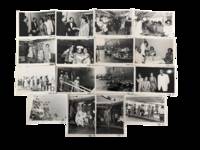
1960ref. 233811960. African American cruise travel photo archive documenting Black middle class leisure tourism and social life aboard the S.S. Bremen and S.S. Pasteur during Caribbean voyages in the late 1950s or early 1960s capturing a period when increasing numbers of African American professionals church groups fraternal organizations and retirees began participating in commercial cruise tourism despite the persistence of segregation across much of the United States. After World War II rising Black incomes expanding Black travel networks and the gradual erosion of formal segregation opened new opportunities for international leisure travel particularly to Caribbean destinations where cruise companies marketed tropical tourism to American passengers. Cruise ships became important social environments in their own right combining formal dining dancing deck recreation shore excursions and staged entertainment within enclosed floating resorts. The archive records African American passengers participating fully in this postwar leisure culture at a moment when many hotels beaches and tourist facilities in the United States still excluded or restricted Black travelers. Photo archive of 16 silver gelatin souvenir photographs each 4" x 6" West Indies cruise voyage aboard the T.S. Bremen and S.S. Pasteur circa late 1950s to early 1960s. Multiple photographs bear contemporary printed captions reading "WEST INDIES / T.S. BREMEN" while verso inscriptions identify scenes including "Lunch on Promenade Deck" "Carnival at the Pier" and "Captain Gothie welcomes aboard selected party." Passengers appear gathered at long dining tables beneath shipboard windows and ceiling fixtures standing in receiving lines with uniformed officers dancing in formalwear during onboard parties and posing beside railings and staircases on exterior decks. Several scenes capture Black women wearing floral dresses leis broad-brimmed hats sunglasses and evening attire associated with midcentury resort and cruise fashion. Three large-format photographs show small boats clustered beside the Bremen during harbor activity in the Caribbean with Black dockworkers and boatmen maneuvering passengers and cargo alongside the hull. Additional scenes depict crowded promenade decks staged entertainment and informal social gatherings aboard ship. During the 1950s and 1960s cruise tourism expanded rapidly alongside broader transformations in African American mobility following wartime migration rising educational attainment and the gradual dismantling of racial barriers in transportation and public accommodations. Long before mass air tourism fully displaced ocean liners Caribbean cruises offered Black travelers access to international leisure spaces beyond many of the racial restrictions that governed hotels beaches and entertainment venues in the Jim Crow United States. Light edge wear; manuscript notations on versos; images remain clear and strong overall. Overall in good condition. Material documenting African American participation in postwar cruise culture remains substantially less common than comparable white tourist photography particularly archives preserving identifiable shipboard social interaction rather than generic travel views. unknown
1960ref. 233811960. African American cruise travel photo archive documenting Black middle class leisure tourism and social life aboard the S.S. Bremen and S.S. Pasteur during Caribbean voyages in the late 1950s or early 1960s capturing a period when increasing numbers of African American professionals church groups fraternal organizations and retirees began participating in commercial cruise tourism despite the persistence of segregation across much of the United States. After World War II rising Black incomes expanding Black travel networks and the gradual erosion of formal segregation opened new opportunities for international leisure travel particularly to Caribbean destinations where cruise companies marketed tropical tourism to American passengers. Cruise ships became important social environments in their own right combining formal dining dancing deck recreation shore excursions and staged entertainment within enclosed floating resorts. The archive records African American passengers participating fully in this postwar leisure culture at a moment when many hotels beaches and tourist facilities in the United States still excluded or restricted Black travelers. Photo archive of 16 silver gelatin souvenir photographs each 4" x 6" West Indies cruise voyage aboard the T.S. Bremen and S.S. Pasteur circa late 1950s to early 1960s. Multiple photographs bear contemporary printed captions reading "WEST INDIES / T.S. BREMEN" while verso inscriptions identify scenes including "Lunch on Promenade Deck" "Carnival at the Pier" and "Captain Gothie welcomes aboard selected party." Passengers appear gathered at long dining tables beneath shipboard windows and ceiling fixtures standing in receiving lines with uniformed officers dancing in formalwear during onboard parties and posing beside railings and staircases on exterior decks. Several scenes capture Black women wearing floral dresses leis broad-brimmed hats sunglasses and evening attire associated with midcentury resort and cruise fashion. Three large-format photographs show small boats clustered beside the Bremen during harbor activity in the Caribbean with Black dockworkers and boatmen maneuvering passengers and cargo alongside the hull. Additional scenes depict crowded promenade decks staged entertainment and informal social gatherings aboard ship. During the 1950s and 1960s cruise tourism expanded rapidly alongside broader transformations in African American mobility following wartime migration rising educational attainment and the gradual dismantling of racial barriers in transportation and public accommodations. Long before mass air tourism fully displaced ocean liners Caribbean cruises offered Black travelers access to international leisure spaces beyond many of the racial restrictions that governed hotels beaches and entertainment venues in the Jim Crow United States. Light edge wear; manuscript notations on versos; images remain clear and strong overall. Overall in good condition. Material documenting African American participation in postwar cruise culture remains substantially less common than comparable white tourist photography particularly archives preserving identifiable shipboard social interaction rather than generic travel views. unknown books