6.595 resultados
1894ref. 109541Paris, s. n., impr. Louis Boyer et Cie, à Asnières 1894 In-4 32 x 23,5 cm. Reliure demi-percaline rouge, dos lisse orné d’un petit fer doré, couvertures conservées, [256] pp. en pagination multiple 8 pp. par numéro, nombreuses gravures et cartes, table des gravures, table des excursions. Exemplaire en bon état.
1994ref. BN6717251994. 1994. Softcover. La vie de famille La vie de famille France Loisirs paperback
2010ref. BN554507Guides Gallimard 2010. 2010. Softcover. Chicago Chicago Gallimard loisirs Guides Gallimard paperback
ref. 22126Paris, Ém. Paul, L. Huard et Guillemin, 1894. 4 vol. in-4, XXIII-332 pp. + 482 pp. + 340 pp. + 524 pp., demi-toile verte, dos long, pièce de titre verte, tête mouchetée couverture conservée (petits frottements).
ref. 23635Paris, Schemit, 1928. 3 vol. in-folio, XXIV-200 pp. CLII pl. + pp. 202 à 389 pl. CLIII à CCLXXIII + pp. 394 à 567 pl. CCLXXIV à CCCXCIII, demi-maroquin rouge, plats de maroquin brique, dos à faux nerfs, pièce de titre écrue (infimes frottements ou épidermures, quelques taches éparses).
18738vo., First US Edition [Later Issue]; original pictorial mustard cloth blocked and lettered in black, backstrip lettered in gilt and black, very neatly rebacked with old backstrip laid down, original printed endpapers wholly preserved, covers very lightly age-soiled (but every detail of the blocking bright and clear), corners very lightly bruised without material damage, a remarkably bright, clean copy. HARDY'S FIRST BOOK PUBLISHED IN THE US AND THE SECOND EDITION OF THE WORK OVERALL. Hardy's second novel 'Under the Greenwood Tree' was first published by Tinsley in 1872, one of the 'best press-noticed' books sold by that publisher. Under the terms of Tinsley's new agreement with Holt of New York it was then issued by the latter in their popular 'Leisure House' series in June 1873, the first of Hardy's works to be so issued in the US. His first novel 'Desperate Remedies' (1871) did not appear in the series until March 1874. From the series catalogue present on the front endpapers it is clear that this is a later issue (at least 1881 since the list includes 'A Laodician'). Most volumes in the 'Leisure Hour' series were severally reissued with updated endpapers. This copy has been expertly rebacked. The original, elaborately blocked, backstrip is virtually complete with just a few millimetres missing at extreme head and tail. The original endpapers, which carry a detailed catalogue of the 'Leisure Hour' series catalogue printed in red, are all complete and virtually unmarked. The top edge is mildly dust-soiled but this does not extend to the text, which also shows practically no trace of the usual foxing and spotting. A NOTABLE COPY AND A RARE SURVIVAL. See Purdy, p.8 et seq. NCBEL III 981.
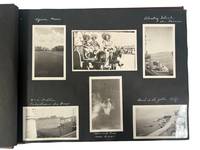
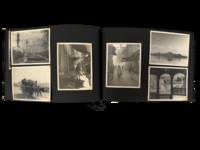
1930ref. 221561930. This Photo Album captures a series of trips across California Mexico Dominican Republic Cuba Panama and other U.S. and North American travel documents the coastal and cross-border tourist experience of an American social group during the 1930s through the early 1950s.The album records a continuous itinerary of domestic and international travel with dated captions such as "July 19 1938 / On Board S/S Dixie from New Orleans La" situating the group within organized steamship routes linking the United States to Caribbean destinations. Oblong photograph album measuring approximately 11.5 x 15.25 inches containing 218 silver gelatin photographs mounted on black pages with images ranging from approximately 2.25 x 2.75 inches to 4.5 x 5.5 inches. Photographs are captioned on album pages and occasionally on versos identifying locations and dates. California scenes include Los Angeles Hollywood Olvera Street Pasadena gardens San Diego Balboa Park Mission Beach La Jolla Catalina Island and the Hotel del Coronado with recurring images of beaches coastal views small boats and leisure activities such as bathing and sightseeing. Additional images depict San Francisco landmarks including Alcatraz Island and Muir Woods. Travel beyond the United States includes Tijuana Mexico; Havana Cuba; Santo Domingo Dominican Republic; and Panama City with scenes of street activity ruins courtyards and waterfronts. A sequence from Catalina Island emphasizes seaside recreation while Caribbean and Central American images show plazas tropical vegetation and urban environments including Afro-Caribbean individuals in public spaces. Additional photographs document travel to New Orleans Utah Salt Lake City Nova Scotia and a location labeled "Indian Island." This album documents patterns of American tourism during the mid-twentieth century when organized travel by rail and steamship enabled access to domestic resorts and international destinations across the Americas. The combination of coastal California imagery with Caribbean and Latin American scenes reflects a broader گردش of leisure travel that emphasized climate landscape and cultural difference within reachable distance of the United States. The presence of consistent captions and chronological markers provides a structured record of travel routes and destinations contributing to research on tourism history visual culture and cross-border movement in the pre-jet era. Light wear to album and photographs with minor handling marks; overall very good condition. A substantial visual record of American travel practices and geographic mobility across the Americas in the mid-twentieth century. unknown
1930ref. 221561930. This Photo Album captures a series of trips across California Mexico Dominican Republic Cuba Panama and other U.S. and North American travel documents the coastal and cross-border tourist experience of an American social group during the 1930s through the early 1950s.The album records a continuous itinerary of domestic and international travel with dated captions such as "July 19 1938 / On Board S/S Dixie from New Orleans La" situating the group within organized steamship routes linking the United States to Caribbean destinations. Oblong photograph album measuring approximately 11.5 x 15.25 inches containing 218 silver gelatin photographs mounted on black pages with images ranging from approximately 2.25 x 2.75 inches to 4.5 x 5.5 inches. Photographs are captioned on album pages and occasionally on versos identifying locations and dates. California scenes include Los Angeles Hollywood Olvera Street Pasadena gardens San Diego Balboa Park Mission Beach La Jolla Catalina Island and the Hotel del Coronado with recurring images of beaches coastal views small boats and leisure activities such as bathing and sightseeing. Additional images depict San Francisco landmarks including Alcatraz Island and Muir Woods. Travel beyond the United States includes Tijuana Mexico; Havana Cuba; Santo Domingo Dominican Republic; and Panama City with scenes of street activity ruins courtyards and waterfronts. A sequence from Catalina Island emphasizes seaside recreation while Caribbean and Central American images show plazas tropical vegetation and urban environments including Afro-Caribbean individuals in public spaces. Additional photographs document travel to New Orleans Utah Salt Lake City Nova Scotia and a location labeled "Indian Island." This album documents patterns of American tourism during the mid-twentieth century when organized travel by rail and steamship enabled access to domestic resorts and international destinations across the Americas. The combination of coastal California imagery with Caribbean and Latin American scenes reflects a broader گردش of leisure travel that emphasized climate landscape and cultural difference within reachable distance of the United States. The presence of consistent captions and chronological markers provides a structured record of travel routes and destinations contributing to research on tourism history visual culture and cross-border movement in the pre-jet era. Light wear to album and photographs with minor handling marks; overall very good condition. A substantial visual record of American travel practices and geographic mobility across the Americas in the mid-twentieth century. unknown books
1925ref. 227841925. SS Resolute photo archive approximately 86 photographs dating to 1925 documenting a passenger voyage through the Hawaiian Islands and broader Pacific region during a period of expanding U.S. tourism and colonial presence. The material captures volcanic landscapes urban development agricultural activity and Native Hawaiian individuals providing visual evidence of both environmental features and social life. These images record the intersection of natural geography and emerging tourist infrastructure in Hawaii during the interwar period when the islands were increasingly integrated into trans-Pacific travel networks. Approximately 86 black-and-white and color photographs each measuring about 3.5 x 5 inches mounted on black album leaves with white ink captions identifying locations such as Honolulu Hilo Waimea Bay Kilauea Crater and the Royal Hawaiian Hotel. The archive includes multiple views of volcanic activity including lava flows associated with eruptions from 1868 1901 and 1924 as well as craters at Halemaumau and Kilauea steam vents and descending lava formations. Coastal landscapes and inland terrain of Oahu and the Big Island are represented alongside urban scenes in Honolulu including hotels streetscapes and institutional buildings such as the Moana Hotel and the Mormon Temple at Laie. Agricultural images show sugarcane cultivation and rural labor environments while market scenes and portraits depict local residents in daily settings. A group of photographs includes Duke Kahanamoku posed with a surfboard marked "DUKE" alongside additional images referencing Pacific locations such as Tutuila and Upolu indicating the voyage extended beyond Hawaii. Produced during the 1920s expansion of Pacific tourism these photographs document how Hawaii and surrounding islands were visually framed for travelers within a colonial and commercial context. The combination of landscape infrastructure and human subjects reflects both the promotion of the islands as a destination and the presence of established local communities and industries. The archive supports research into tourism history Pacific colonial networks environmental documentation and Native Hawaiian cultural representation. Mild toning and occasional rippling to prints with minimal edge wear; captions remain clear; overall very good condition. A comprehensive visual record of a trans-Pacific यातà¥à¤°à¤¾ and its documentation of Hawaii and neighboring islands in the early twentieth century. unknown
1925ref. 227841925. SS Resolute photo archive approximately 86 photographs dating to 1925 documenting a passenger voyage through the Hawaiian Islands and broader Pacific region during a period of expanding U.S. tourism and colonial presence. The material captures volcanic landscapes urban development agricultural activity and Native Hawaiian individuals providing visual evidence of both environmental features and social life. These images record the intersection of natural geography and emerging tourist infrastructure in Hawaii during the interwar period when the islands were increasingly integrated into trans-Pacific travel networks. Approximately 86 black-and-white and color photographs each measuring about 3.5 x 5 inches mounted on black album leaves with white ink captions identifying locations such as Honolulu Hilo Waimea Bay Kilauea Crater and the Royal Hawaiian Hotel. The archive includes multiple views of volcanic activity including lava flows associated with eruptions from 1868 1901 and 1924 as well as craters at Halemaumau and Kilauea steam vents and descending lava formations. Coastal landscapes and inland terrain of Oahu and the Big Island are represented alongside urban scenes in Honolulu including hotels streetscapes and institutional buildings such as the Moana Hotel and the Mormon Temple at Laie. Agricultural images show sugarcane cultivation and rural labor environments while market scenes and portraits depict local residents in daily settings. A group of photographs includes Duke Kahanamoku posed with a surfboard marked "DUKE" alongside additional images referencing Pacific locations such as Tutuila and Upolu indicating the voyage extended beyond Hawaii. Produced during the 1920s expansion of Pacific tourism these photographs document how Hawaii and surrounding islands were visually framed for travelers within a colonial and commercial context. The combination of landscape infrastructure and human subjects reflects both the promotion of the islands as a destination and the presence of established local communities and industries. The archive supports research into tourism history Pacific colonial networks environmental documentation and Native Hawaiian cultural representation. Mild toning and occasional rippling to prints with minimal edge wear; captions remain clear; overall very good condition. A comprehensive visual record of a trans-Pacific यातà¥à¤°à¤¾ and its documentation of Hawaii and neighboring islands in the early twentieth century. unknown books
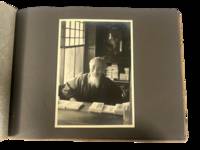
1930ref. 223021930. Japan travel photograph album. 1930s. This album documents Western travel through Japan during a period of expanding imperial influence and managed international tourism recording temple architecture theatrical performance and curated cultural sites alongside limited family portraiture. The photographs provide primary visual evidence of how foreign visitors encountered Japan through established travel circuits that emphasized religious monuments scenic landscapes and staged cultural forms while also including a labeled image from Korea that situates the journey within the geography of Japanese colonial rule. Photo Album containing 22 silver gelatin photographs each mounted one per page with white ink captions identifying locations including "Nikko" "Kyoto" "Shochiku-za" "Koya San" "Akashi" "Takao" and "Korea." Three photographs depict members of a Western family posed in studio and outdoor settings including portraits in front of temple gates and residential entrances. The remaining images focus on architectural and cultural sites including temple facades with detailed ornamentation mountain and waterfall landscapes and a staged theatrical performance at the Shochiku-za theatre in Osaka showing performers in elaborate costume and makeup. One photograph labeled "Korea" depicts seated women wearing hanbok indicating travel beyond the Japanese home islands. The photographs are consistently sized at approximately 5 x 7 inches and mounted in an album measuring approximately 8.5 x 12 inches bound in cloth boards with decorative striping and cord binding. The album was produced during a decade when Japan promoted domestic and imperial sites as destinations for foreign travelers integrating religious landmarks urban infrastructure and colonial territories into a coherent tourist experience. Sites such as Nikko and Koya San were presented as emblematic of national heritage while theatrical venues and scenic locations formed part of structured itineraries. The inclusion of Korea reflects the extension of these travel routes into occupied regions where colonial subjects and landscapes were incorporated into representations of the empire. Photographs remain clear with strong contrast; minor wear to album consistent with handling; overall very good. A focused visual record of Western travel in 1930s Japan documenting how cultural sites and imperial geography were presented to foreign visitors. unknown
1930ref. 223021930. Japan travel photograph album. 1930s. This album documents Western travel through Japan during a period of expanding imperial influence and managed international tourism recording temple architecture theatrical performance and curated cultural sites alongside limited family portraiture. The photographs provide primary visual evidence of how foreign visitors encountered Japan through established travel circuits that emphasized religious monuments scenic landscapes and staged cultural forms while also including a labeled image from Korea that situates the journey within the geography of Japanese colonial rule. Photo Album containing 22 silver gelatin photographs each mounted one per page with white ink captions identifying locations including "Nikko" "Kyoto" "Shochiku-za" "Koya San" "Akashi" "Takao" and "Korea." Three photographs depict members of a Western family posed in studio and outdoor settings including portraits in front of temple gates and residential entrances. The remaining images focus on architectural and cultural sites including temple facades with detailed ornamentation mountain and waterfall landscapes and a staged theatrical performance at the Shochiku-za theatre in Osaka showing performers in elaborate costume and makeup. One photograph labeled "Korea" depicts seated women wearing hanbok indicating travel beyond the Japanese home islands. The photographs are consistently sized at approximately 5 x 7 inches and mounted in an album measuring approximately 8.5 x 12 inches bound in cloth boards with decorative striping and cord binding. The album was produced during a decade when Japan promoted domestic and imperial sites as destinations for foreign travelers integrating religious landmarks urban infrastructure and colonial territories into a coherent tourist experience. Sites such as Nikko and Koya San were presented as emblematic of national heritage while theatrical venues and scenic locations formed part of structured itineraries. The inclusion of Korea reflects the extension of these travel routes into occupied regions where colonial subjects and landscapes were incorporated into representations of the empire. Photographs remain clear with strong contrast; minor wear to album consistent with handling; overall very good. A focused visual record of Western travel in 1930s Japan documenting how cultural sites and imperial geography were presented to foreign visitors. unknown books
1994ref. 210521994. Laermer Richard; Collins Andrew; Link Matthew; Damron Guides; Fodor's Editors; Guaracino Jeff. Gay and lesbian travel guide collection 1994-2007 documenting the development of LGBTQ travel culture and the identification of queer social spaces in the late twentieth and early twenty-first centuries. These guides situate travel as a structured means of accessing community particularly in the aftermath of the AIDS crisis when information about safe spaces health resources and social networks was critical. The collection provides evidence of how printed directories functioned as both navigational tools and cultural records of LGBTQ presence across cities regions and international destinations. Collection comprises 7 travel guides ranging in size from approximately 4" x 7" to 5" x 8.5". 1 Richard Laermer's Gay and Lesbian Handbook to New York City 1994. This book contains 244 pages of hundreds of listings in New York City broken up by subjects including gay neighborhoods entertainment the arts politics spirituality and most importantly health services and support groups for those suffering from AIDS in the midst of the crisis. 2 Betty & Pansy's Severe Queer Review of San Francisco 1995. A queer travel guide of San Francisco that contains many illustrations and sketches representing the underground of queer culture. 130 pages that includes listings of bars performance spaces night clubs hotels restaurants and more. This copy also includes an original postcard which features a picture of both authors and has an inscription signed by Betty. 3 Fodor's Gay Guide to San Francisco and the Bay Area by Andrew Collins. First Edition 1997. Includes 166 pages on Gay Life Culture Establishments and more in the bay area. 4 Matthew Link's Rainbow Handbook: Hawaii the Island's Ultimate Travel Guide 1999. Contains 225 pages dedicated to gay travel in Hawai'i written by gay travel writer Matthew Link. Includes a breakdown of locations on each individual island. 5 Fodor's Gay Guide to the USA Second Edition 1998. 600 Pages. Measures 5" x 9". Includes a city by city breakdown with 67 road maps. 6 Damron Men's Travel Guide 1999. 900 pages. Measures 3.5" x 6.5". Includes USA Mexico Canada Caribbean and European Cities along with a 1999 party calendar. About 800 pages on USA locations 7 Guaracino Jeff. Gay and Lesbian Tourism: the Essential Guide to Marketing. 183 pages. This is a 2007 book focusing on marketing towards the LGBT community. The author focuses on various aspects of LGBT tourism such as the case for its economic value finding the right stakeholders and the best practices in marketing towards that audience. Produced during a period of expanding LGBTQ visibility and mobility these guides illustrate how travel infrastructure supported the formation and maintenance of queer social networks. The inclusion of health resources nightlife and community organizations reflects the practical needs of travelers as well as the broader cultural landscape of LGBTQ life. Many listed establishments no longer operate making these guides a record of spaces that have since disappeared. Light wear consistent with use; bindings intact and pages clean; overall very good condition. This collection offers a substantial printed record of LGBTQ spatial and cultural networks at the turn of the twenty-first century. unknown
1994ref. 210521994. Laermer Richard; Collins Andrew; Link Matthew; Damron Guides; Fodor's Editors; Guaracino Jeff. Gay and lesbian travel guide collection 1994-2007 documenting the development of LGBTQ travel culture and the identification of queer social spaces in the late twentieth and early twenty-first centuries. These guides situate travel as a structured means of accessing community particularly in the aftermath of the AIDS crisis when information about safe spaces health resources and social networks was critical. The collection provides evidence of how printed directories functioned as both navigational tools and cultural records of LGBTQ presence across cities regions and international destinations. Collection comprises 7 travel guides ranging in size from approximately 4" x 7" to 5" x 8.5". 1 Richard Laermer's Gay and Lesbian Handbook to New York City 1994. This book contains 244 pages of hundreds of listings in New York City broken up by subjects including gay neighborhoods entertainment the arts politics spirituality and most importantly health services and support groups for those suffering from AIDS in the midst of the crisis. 2 Betty & Pansy's Severe Queer Review of San Francisco 1995. A queer travel guide of San Francisco that contains many illustrations and sketches representing the underground of queer culture. 130 pages that includes listings of bars performance spaces night clubs hotels restaurants and more. This copy also includes an original postcard which features a picture of both authors and has an inscription signed by Betty. 3 Fodor's Gay Guide to San Francisco and the Bay Area by Andrew Collins. First Edition 1997. Includes 166 pages on Gay Life Culture Establishments and more in the bay area. 4 Matthew Link's Rainbow Handbook: Hawaii the Island's Ultimate Travel Guide 1999. Contains 225 pages dedicated to gay travel in Hawai'i written by gay travel writer Matthew Link. Includes a breakdown of locations on each individual island. 5 Fodor's Gay Guide to the USA Second Edition 1998. 600 Pages. Measures 5" x 9". Includes a city by city breakdown with 67 road maps. 6 Damron Men's Travel Guide 1999. 900 pages. Measures 3.5" x 6.5". Includes USA Mexico Canada Caribbean and European Cities along with a 1999 party calendar. About 800 pages on USA locations 7 Guaracino Jeff. Gay and Lesbian Tourism: the Essential Guide to Marketing. 183 pages. This is a 2007 book focusing on marketing towards the LGBT community. The author focuses on various aspects of LGBT tourism such as the case for its economic value finding the right stakeholders and the best practices in marketing towards that audience. Produced during a period of expanding LGBTQ visibility and mobility these guides illustrate how travel infrastructure supported the formation and maintenance of queer social networks. The inclusion of health resources nightlife and community organizations reflects the practical needs of travelers as well as the broader cultural landscape of LGBTQ life. Many listed establishments no longer operate making these guides a record of spaces that have since disappeared. Light wear consistent with use; bindings intact and pages clean; overall very good condition. This collection offers a substantial printed record of LGBTQ spatial and cultural networks at the turn of the twenty-first century. unknown books
1960ref. 232021960. Pakistan travel album recordingstreet life mountain excursions landscapes military ceremony and local custom in the 1960s with particular strength in its photographs depicting everyday culture and public life of Pakistany rural people. Photographer identified in an inscription as "Pech." The album focuses on a Life in Pakistan showing men in regional dress military regiments animal handling agricultural labor roadside and market activity mountain travel and formal as well as informal gathering. References to Rawalakot Many scenes of upland terrain and military units place part of the album in northern Pakistan. Photo album of over 120 corner mounted and loose silver gelatin photographs arranged across black paper leaves with many loose prints inscribed in French. Photos measure primarily between 2.5" x 3.5" to 3.5" x 5". Album measures 7.5" x 11". Visible scenes include men in celebratory flower garlands gathered in mountain settings groups posed in rugged terrain and photographs of men standing beside lakes rivers and highland roads suggesting travel or climbing excursions that were socially marked as memorable events rather than casual tourism. One photo of a man's portrait is inscribed to "Pech" en verso and mentions Rawalakot and their participation in climbing "6000 feet" he signs off as "M. MacDonald / Rockhampton Queensland." Other photographs turn to daily life and custom showing men in turbans and traditional dress rural figures with cattle agricultural work village architecture street scenes and portraits of children and families. Several images show snake charmers one seated with cobras raised before him others posed with baskets and spectators nearby preserving a form of public performance long circulated in South Asian spectacle. Urban views include crowded market lanes mixed traffic and building fronts while architectural photographs show mosques domed structures gardens and formal compounds placing devotional civic and residential space within the traveler's route. A handful of photos show military images of uniformed men in camp and review settings one caption identifying a brigade parade ground and another a general showing the compiler's access to official environments alongside civilian ones. Multiple photos depict dinner settings with the compiler seated with friends family and his "amour" also seen throughout the album. Most images from Pakistan with a small handful in Egypt and Lebanon circa 1960s. One dinner scene shows him and three other individuals with the en verso inscribed "Beruit - 1962." In the 1960s Pakistan was a young post-Partition state shaped by military visibility frontier administration and conflict especially in Kashmir where UN observers operated. Foreign travelers and officials moved through the country alongside local communities recording mountain travel public ceremony village life and everyday custom with Rawalakot being part of a borderland where military oversight diplomacy and travel intersected. Chipping to album covers photos exhibit some corner and edge wear overall very good condition. A mid-century photo album of a traveler's view of Pakistan through a distinctly outsider lens shaped by transnational movement official access and cultural encounter. unknown
1960ref. 232021960. Pakistan travel album recordingstreet life mountain excursions landscapes military ceremony and local custom in the 1960s with particular strength in its photographs depicting everyday culture and public life of Pakistany rural people. Photographer identified in an inscription as "Pech." The album focuses on a Life in Pakistan showing men in regional dress military regiments animal handling agricultural labor roadside and market activity mountain travel and formal as well as informal gathering. References to Rawalakot Many scenes of upland terrain and military units place part of the album in northern Pakistan. Photo album of over 120 corner mounted and loose silver gelatin photographs arranged across black paper leaves with many loose prints inscribed in French. Photos measure primarily between 2.5" x 3.5" to 3.5" x 5". Album measures 7.5" x 11". Visible scenes include men in celebratory flower garlands gathered in mountain settings groups posed in rugged terrain and photographs of men standing beside lakes rivers and highland roads suggesting travel or climbing excursions that were socially marked as memorable events rather than casual tourism. One photo of a man's portrait is inscribed to "Pech" en verso and mentions Rawalakot and their participation in climbing "6000 feet" he signs off as "M. MacDonald / Rockhampton Queensland." Other photographs turn to daily life and custom showing men in turbans and traditional dress rural figures with cattle agricultural work village architecture street scenes and portraits of children and families. Several images show snake charmers one seated with cobras raised before him others posed with baskets and spectators nearby preserving a form of public performance long circulated in South Asian spectacle. Urban views include crowded market lanes mixed traffic and building fronts while architectural photographs show mosques domed structures gardens and formal compounds placing devotional civic and residential space within the traveler's route. A handful of photos show military images of uniformed men in camp and review settings one caption identifying a brigade parade ground and another a general showing the compiler's access to official environments alongside civilian ones. Multiple photos depict dinner settings with the compiler seated with friends family and his "amour" also seen throughout the album. Most images from Pakistan with a small handful in Egypt and Lebanon circa 1960s. One dinner scene shows him and three other individuals with the en verso inscribed "Beruit - 1962." In the 1960s Pakistan was a young post-Partition state shaped by military visibility frontier administration and conflict especially in Kashmir where UN observers operated. Foreign travelers and officials moved through the country alongside local communities recording mountain travel public ceremony village life and everyday custom with Rawalakot being part of a borderland where military oversight diplomacy and travel intersected. Chipping to album covers photos exhibit some corner and edge wear overall very good condition. A mid-century photo album of a traveler's view of Pakistan through a distinctly outsider lens shaped by transnational movement official access and cultural encounter. unknown books
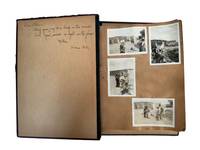
1939ref. 236791939. Mexico travel album documenting archaeology bullfighting urban leisure regional performance religious architecture and roadside travel from 1931 to 1939 during the first major expansion of tourism under the postrevolutionary government. The photographs follow visitors through Mexico City and its surrounding attractions presenting Teotihuacan Xochimilco public markets tropical landscapes and the bullring as components of a modern national itinerary. Mexican authorities during the 1930s institutionalized tourism within government policy and used historic centers architecture cultural traditions and natural scenery to shape an internationally recognizable image of the country. Photo album containing 96 items including 71 silver gelatin photographs 21 postcards and 4 pieces of printed Mexican ephemera including tickets and menus most photographs approximately 2.5" x 3.5" mounted in an album measuring approximately 8.5" x 11" Mexico 1931 to 1939. The photographs show bullfights before crowded stands at El Toreo; visitors standing among the monumental architecture of Teotihuacan; canal boats and waterside excursions at Xochimilco; church entrances plazas street markets gardens rural roads thatched buildings tropical vegetation animal displays and a roadside sign reading "Tropic of Cancer." Other scenes record costumed performers vendors working beside public buildings groups traveling by automobile social outings and companions posed at archaeological and scenic destinations. Printed material includes tickets for the 1939 season at "Plaza de Toros El Toreo" a color "Aguas de Lourdes" restaurant menu advertising "Un 'Seltzer' alcalino natural" newspaper clippings and postcards extending the private snapshots through commercially produced views of Mexican landscapes and monuments. An inscription on the front pastedown dated "Xmas 1931" establishes the beginning of the chronology while the El Toreo tickets extend the record through 1939. Tourism became an instrument of economic policy and national image making after the Mexican Revolution translating archaeological sites colonial architecture regional customs food and public spectacle into destinations for domestic and foreign visitors. Government tourism promotion of the period used bullfighting as a recognizable emblem of Mexico including official travel posters issued between 1930 and 1950 while preservation programs increasingly linked historic buildings and urban centers to the visitor economy. Pages and photos exhibit rippling but no apparent staining some minor wear consistent with age; several photographs remain securely mounted while others show lifting or losses. Overall in good condition. A sustained record of how postrevolutionary Mexico presented archaeology spectacle landscape and regional culture as the foundations of a modern tourist nation. unknown
1939ref. 236791939. Mexico travel album documenting archaeology bullfighting urban leisure regional performance religious architecture and roadside travel from 1931 to 1939 during the first major expansion of tourism under the postrevolutionary government. The photographs follow visitors through Mexico City and its surrounding attractions presenting Teotihuacan Xochimilco public markets tropical landscapes and the bullring as components of a modern national itinerary. Mexican authorities during the 1930s institutionalized tourism within government policy and used historic centers architecture cultural traditions and natural scenery to shape an internationally recognizable image of the country. Photo album containing 96 items including 71 silver gelatin photographs 21 postcards and 4 pieces of printed Mexican ephemera including tickets and menus most photographs approximately 2.5" x 3.5" mounted in an album measuring approximately 8.5" x 11" Mexico 1931 to 1939. The photographs show bullfights before crowded stands at El Toreo; visitors standing among the monumental architecture of Teotihuacan; canal boats and waterside excursions at Xochimilco; church entrances plazas street markets gardens rural roads thatched buildings tropical vegetation animal displays and a roadside sign reading "Tropic of Cancer." Other scenes record costumed performers vendors working beside public buildings groups traveling by automobile social outings and companions posed at archaeological and scenic destinations. Printed material includes tickets for the 1939 season at "Plaza de Toros El Toreo" a color "Aguas de Lourdes" restaurant menu advertising "Un 'Seltzer' alcalino natural" newspaper clippings and postcards extending the private snapshots through commercially produced views of Mexican landscapes and monuments. An inscription on the front pastedown dated "Xmas 1931" establishes the beginning of the chronology while the El Toreo tickets extend the record through 1939. Tourism became an instrument of economic policy and national image making after the Mexican Revolution translating archaeological sites colonial architecture regional customs food and public spectacle into destinations for domestic and foreign visitors. Government tourism promotion of the period used bullfighting as a recognizable emblem of Mexico including official travel posters issued between 1930 and 1950 while preservation programs increasingly linked historic buildings and urban centers to the visitor economy. Pages and photos exhibit rippling but no apparent staining some minor wear consistent with age; several photographs remain securely mounted while others show lifting or losses. Overall in good condition. A sustained record of how postrevolutionary Mexico presented archaeology spectacle landscape and regional culture as the foundations of a modern tourist nation. unknown books
1950ref. 3215Les flots bleus 1950 1950, Les flots bleus, album animé n° 107, imaginé par l'illusioniste Georgeo, illustré par Germaine Bouret, animé par Robert de Longchamp, album in-8 cartonné d'éditeur, couverture illustrée en couleurs, dos refait très proprement avec du scotch rouge, intérieur détaché mais complet de ses 6 illusions, systèmes complets, en très bon état, fonctionnent tous. | Etat : Très bon état intérieur, J2229 (Ref.: J2229)
ref. D'ALL1903Librairie Hachette -Boulevard Saint Germain - Paris - 1903 -Edition originale -382 pages - Tables in finé - Illustrations dans le texte noir et blanc et nombreux hors texte couleurs sous serpentes - Des premier jeux en passant par le cerf volant ,le criquet ,la toupie ,le billard ,l'escrime ,les échasses,jeux de ballon ,le cerceau ,etc -Fort volume in folio ,cartonnage souple broché éditeur couverture à rabats ,excellent état pour cet ouvrage rarissime .
ref. 17711Vérone, Officine Bodoni, 1957. In-8, 9 pp. 1 pl., cartonnage vert, étui de carton.
1769ref. GITk136A Paris chez Gueffier 1769-1770. 4 volumes in-8 *Tomes I: 2 feuillets non chiffrés (faux-titre titre) II-IV (épître) II-XXIII (discours explication des planches, errata) 2-243pp 3 feuillets non chiffrés (table, prix du matériel) *Tome II: 2 feuillets non chiffrés (faux-titre, titre) II-X (discours, explication des planches) 1 feuillet non chiffré (approbation, privilège) 2-322pp dont table 1 feuillet non chiffré prix du matériel *Tome III: 2 feuillets non chiffrés (faux-titre, titre) VI-XVI (discours, explication des planches) 2-204pp 1 feuillet prix du matériel *Tome IV: 2 feuillets non chiffrés (faux-titre, titre) II-XVI (avant-propos, explication des planches) 2-232pp 4 feuillets non chiffrés table. Demi basane rouge, dos lisse orné de filets dorés, frise dorée en queue, relié vers 1860. Orné de 5 "tables" (1 dans le texte, 1 à pleine page et 3 réunies sur 2 planches; 1 tableau dépliant et 73 planches dépliantes dont 1 numérotée bis ( 4 en noir, 69 finement colorées à l'époque). Manque en bordure de la coiffe supérieure du Tome I; restauration angulaire en tête du faux-titre du Tome II; planche n°11 non numérotée; feuillet 29-30 (Tome II) numéroté 21-22; cachets de bibliothèque sur les 4 pages de titre. Intérieur en bon état, collationné complet du texte, des "tables", du tableau et des planches. Reliure du XIXe siècle. TEXTE INTERESSANTS qui contribua à la création de l'illusion et de la prestidigitation modernes.
1950ref. 2748Couverture rigide Signé par l'illustrateur Collins 1950 London 28,5x22 cm
ref. 8252"P., Chez Denys Thierry, 1682. Petit in 8, feuillet dépliant, frontispice, titre, 9 pp. (68) pp. paginées de 1 à 17, (25) pp.; reliure veau de l’époque, dos muet orné à nerfs, tranches dorées. Première édition."
ref. 16929Paris, Galerie Jean Giraudoux, 1964. In-folio, 123 pp., cartonnage éditeur de toile grise estampée en rouge sur le premier plat, chemise et étui de l'éditeur de papier gris chiné, dos de toile rouge (dos de la chemise et étui insolés).