7.122 resultados
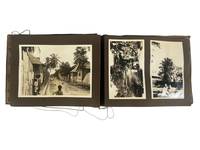
1930ref. 224461930. Caribbean and Panama travel photograph album. circa early 1930s. This album documents interwar travel through the Panama Canal Zone and Jamaica recording maritime transit canal infrastructure and rural Caribbean life as observed by Western travelers. The photographs provide primary visual evidence of the Panama Canal as a site of industrial activity and international movement alongside scenes of Jamaican village life and landscape establishing a contrast between engineered environments and colonial rural settings. The material is particularly strong in its depiction of canal operations and the presence of local populations within these spaces. Album containing 29 silver gelatin photographs mounted on black leaves with individual prints measuring approximately 3.5 x 4.5 to 5 x 7 inches housed in a string-bound album measuring approximately 7 x 9.5 inches. The opening sequence shows passengers aboard a steamship with men and women posed along deck rails and views of ships navigating canal locks and docking areas. Additional images depict cranes drawbridges canal cuts and small boats in the water along with dock workers and uniformed personnel visible among travelers. Architectural and infrastructural views include colonial-style buildings and mechanical equipment associated with canal operation concluding with a monument identified as that of Vasco Núñez de Balboa in Panama City. The Jamaica sequence includes landscape views of hillsides and gardens along with images of Black Jamaican residents posed in village settings. One photograph bears the caption "Kingston Jamaica 10 -- S.S. 'Reliance' West Indies Cruise" showing children and adults gathered along a dirt road lined with wooden and metal-roofed structures. Other images show groups assembled beneath trees and within rural surroundings. Produced during a period when the Panama Canal served as a major conduit for global shipping under U.S. administration and Caribbean travel formed part of organized cruise itineraries the album reflects established routes of interwar tourism. The juxtaposition of canal engineering and Jamaican village scenes situates the photographs within broader patterns of travel that linked industrial infrastructure with colonial landscapes. Minor water rippling to pages and photographs; images remain clear; overall very good. A coherent travel album documenting canal operations and Caribbean life in the early twentieth century. unknown
1930ref. 224461930. Caribbean and Panama travel photograph album. circa early 1930s. This album documents interwar travel through the Panama Canal Zone and Jamaica recording maritime transit canal infrastructure and rural Caribbean life as observed by Western travelers. The photographs provide primary visual evidence of the Panama Canal as a site of industrial activity and international movement alongside scenes of Jamaican village life and landscape establishing a contrast between engineered environments and colonial rural settings. The material is particularly strong in its depiction of canal operations and the presence of local populations within these spaces. Album containing 29 silver gelatin photographs mounted on black leaves with individual prints measuring approximately 3.5 x 4.5 to 5 x 7 inches housed in a string-bound album measuring approximately 7 x 9.5 inches. The opening sequence shows passengers aboard a steamship with men and women posed along deck rails and views of ships navigating canal locks and docking areas. Additional images depict cranes drawbridges canal cuts and small boats in the water along with dock workers and uniformed personnel visible among travelers. Architectural and infrastructural views include colonial-style buildings and mechanical equipment associated with canal operation concluding with a monument identified as that of Vasco Núñez de Balboa in Panama City. The Jamaica sequence includes landscape views of hillsides and gardens along with images of Black Jamaican residents posed in village settings. One photograph bears the caption "Kingston Jamaica 10 -- S.S. 'Reliance' West Indies Cruise" showing children and adults gathered along a dirt road lined with wooden and metal-roofed structures. Other images show groups assembled beneath trees and within rural surroundings. Produced during a period when the Panama Canal served as a major conduit for global shipping under U.S. administration and Caribbean travel formed part of organized cruise itineraries the album reflects established routes of interwar tourism. The juxtaposition of canal engineering and Jamaican village scenes situates the photographs within broader patterns of travel that linked industrial infrastructure with colonial landscapes. Minor water rippling to pages and photographs; images remain clear; overall very good. A coherent travel album documenting canal operations and Caribbean life in the early twentieth century. unknown books
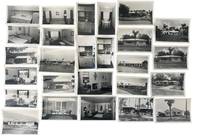
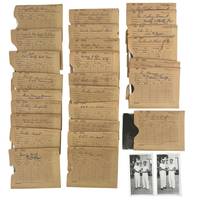
1951ref. 233771951. 1950s Clearwater Florida photographed by George L. Fulmer documenting real estate expansion and early housing and rental marketing showing how ranch houses apartment courts furnished efficiencies and street addressed properties were presented during the postwar Sunbelt expansion of Pinellas County. After World War II Florida's housing market was pushed by returning veterans retirees northern migrants automobile commuting and seasonal tourism while federal mortgage programs and private development made small houses garden apartments and furnished rentals central to the state's growth. Fulmer's commercial assignments connect that boom to named local properties: each job envelope ties the house or rental unit to a studio number client or property name address and in several cases a 1951 date. The archive reveals how Clearwater real estate moved through a practical commercial process with repeated exterior records interior room studies duplicate proofs and labeled job packets created for owners brokers and rental promotion. Photo archive of 47 items including 25 silver gelatin photographs and 22 large scale negatives. Many photographs have correlating negatives while some negatives contain unique images. Contained in 6 original photo studio envelopes. Photographs measure approximately 3 x 5 inches and negatives 4 x 5 inches Clearwater Florida circa 1951. Exteriors include one story ranch houses with low hip and gable roofs picture windows shutters carports mowed lawns curbside plantings palm trees shell or gravel yards television antennas and street frontage arranged for automobile approach. Apartment material includes a roadside sign reading "Bright Water Apts" with "Vacancy" a two story rental building set behind trees and a long low apartment row with a fenced yard and children's play equipment. Interiors include living rooms staged with patterned sofas lounge chairs framed floral and figural prints table lamps venetian blinds wall rugs and coffee tables; bedrooms with paired beds dressers and striped coverlets; small dining alcoves set with tables and chairs; and compact kitchens built around metal cabinets white sinks refrigerators cooktops wall ovens and built in storage. Fulmer photographs the houses apartments furnishings appliances and rental readiness as the product. Studio envelopes preserve job numbers and partly legible entries including Bright Water Apts Nokomis 1021 235 Bayshore Dr. 315 Venetian St. 420 Brightwater Mary Ann Apts Beach and dated jobs from July August September and October 1951. These photographs were taken in the decade when Clearwater shifted from a compact Gulf Coast resort city toward a year round Sunbelt housing market shaped by suburban lots furnished rentals small apartment complexes and real estate photography meant to make properties legible to buyers and tenants before arrival. The interior shots record what was being sold inside the walls from tropical curtains tile floors small dining rooms compact kitchenettes wall ovens living rooms sized for seasonal use and domestic decoration calibrated for a middle class Florida market. The address level job records support comparison with city directories tax records property files architectural surveys and later redevelopment histories making the archive usable for reconstructing specific Clearwater buildings rather than only identifying broad mid century style. Negatives show handling wear and envelopes show toning and some small tears. Overall in very good condition. unknown
1951ref. 233771951. 1950s Clearwater Florida photographed by George L. Fulmer documenting real estate expansion and early housing and rental marketing showing how ranch houses apartment courts furnished efficiencies and street addressed properties were presented during the postwar Sunbelt expansion of Pinellas County. After World War II Florida's housing market was pushed by returning veterans retirees northern migrants automobile commuting and seasonal tourism while federal mortgage programs and private development made small houses garden apartments and furnished rentals central to the state's growth. Fulmer's commercial assignments connect that boom to named local properties: each job envelope ties the house or rental unit to a studio number client or property name address and in several cases a 1951 date. The archive reveals how Clearwater real estate moved through a practical commercial process with repeated exterior records interior room studies duplicate proofs and labeled job packets created for owners brokers and rental promotion. Photo archive of 47 items including 25 silver gelatin photographs and 22 large scale negatives. Many photographs have correlating negatives while some negatives contain unique images. Contained in 6 original photo studio envelopes. Photographs measure approximately 3 x 5 inches and negatives 4 x 5 inches Clearwater Florida circa 1951. Exteriors include one story ranch houses with low hip and gable roofs picture windows shutters carports mowed lawns curbside plantings palm trees shell or gravel yards television antennas and street frontage arranged for automobile approach. Apartment material includes a roadside sign reading "Bright Water Apts" with "Vacancy" a two story rental building set behind trees and a long low apartment row with a fenced yard and children's play equipment. Interiors include living rooms staged with patterned sofas lounge chairs framed floral and figural prints table lamps venetian blinds wall rugs and coffee tables; bedrooms with paired beds dressers and striped coverlets; small dining alcoves set with tables and chairs; and compact kitchens built around metal cabinets white sinks refrigerators cooktops wall ovens and built in storage. Fulmer photographs the houses apartments furnishings appliances and rental readiness as the product. Studio envelopes preserve job numbers and partly legible entries including Bright Water Apts Nokomis 1021 235 Bayshore Dr. 315 Venetian St. 420 Brightwater Mary Ann Apts Beach and dated jobs from July August September and October 1951. These photographs were taken in the decade when Clearwater shifted from a compact Gulf Coast resort city toward a year round Sunbelt housing market shaped by suburban lots furnished rentals small apartment complexes and real estate photography meant to make properties legible to buyers and tenants before arrival. The interior shots record what was being sold inside the walls from tropical curtains tile floors small dining rooms compact kitchenettes wall ovens living rooms sized for seasonal use and domestic decoration calibrated for a middle class Florida market. The address level job records support comparison with city directories tax records property files architectural surveys and later redevelopment histories making the archive usable for reconstructing specific Clearwater buildings rather than only identifying broad mid century style. Negatives show handling wear and envelopes show toning and some small tears. Overall in very good condition. unknown books
1898ref. 14831Illustrations par Marius Roy.14 planches, la reproduction d'une gravure de Bonnart et une gravure sur la couverture. Vignette dans le texte.Édition limitée à 60 exemplaires. Il a été tiré, de cet ouvrage, 10 exemplaires sur papier de Chine et cinquante exemplaires sur papier du Japon tous numérotés et parafés par l'éditeur. Celui-ci (N°8) sur Japon.Édition nouvelle revue et augmentée. Paris, Ernest Flammarion, non daté, vers 1898 - 312 pages.Superbe reliure demi-maroquin chocolat à coins. Dos à 4 gros nerfs, filets dorés. Tête dorée sur témoins. Non rogné. Couverture illustrée et dos conservés. Très bon état pour ce bel exemplaire. Format in-8°(20x15).
ref. 5851"P., Veuve Bouchard-Huzard, 1848. Deuxième édition, deux volumes grand in 8 reliés, demi-chagrin de l'époque, dos lisse orné, XVI-720-596 pp. ; planches hors texte ; dos très légèrement frottés, bel exemplaire."
2002ref. R300269338Nouveau Millénaire. 2002. In-4. Relié. Bon état, Couv. convenable, Dos satisfaisant, Intérieur frais. 317 pages - nombreuses photos en couleurs dans et hors texte. Jaquette en bon état.. Avec Jaquette. . . Classification Dewey : 790-Loisirs et arts du spectacle
1850ref. 2817Sans lieu, ni éditeur, circa 1845-1850. Boîte : 38,5 x 30,5 x 4,5 cm. Couvercle de la boîte illustré d'une lithographie en couleurs "Henry IV au siège de Paris", signée Jannin. Edition en couleurs. Complet de ses 16 cartons illustrés et aquarellés, de ses 90 jetons en bois, de sa règle, de ses mises en os, de ses 2 sacs en tissu rose et d'un petit panier pour placer les mises. Ce "loto géographique des 86 départements" ne comporte pas d'indication de l'éditeur. Afin d'arriver à 90, la Martinique, la Guadeloupe, l'Île Bourbon (La Réunion) et Alger ont été ajoutées. Sur la boîte d'origine (absente ici et remplacée par celle d'un loto historique), il est précisé "admis à l'exposition", vraisemblablement celle de 1844 ou 1849. Les populations indiquées sont celles du recensement de 1836.
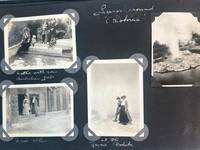
1918ref. 236571918. International travel and native documentation photograph album circa 1918 to 1930 documenting how an English speaking group encountered MÄori New Zealand Atlantic Africa Chile California and the Panama Canal during the golden age of long distance steamship travel and an era of Western imperial expansion across the globe. Photographs record the MÄori built environment at Rotorua the geothermal landscape surrounding PÅhutu geyser and Cape Verdean men working from small boats beside a passenger vessel at São Vicente. These images preserve the travelers' view of early twentieth century infrastructure cities Indigenous people labor and daily life. The album documents Indigenous communities rural life and economy and the foreign visitors who photographed and captioned them. Photograph album of approximately 220 silver gelatin photographs in various small formats New Zealand Britain Atlantic Africa South America California and Panama circa 1918 to 1930. The Rotorua sequence includes two travelers standing before a carved MÄori whare women beside a thermal pool and visitors at PÅhutu geyser recording architecture and geothermal land as parts of the tourist economy. The photographs preserve MÄori visual culture through the carved meeting house and its ornament but the captions remain those of visitors and do not identify the house carvers guides or community represented. A photograph captioned "Divers at St Vincent's off the coast of Africa" shows several small boats clustered around the travelers' ship with local men rowing diving and working close to the hull. The scene records maritime labor at São Vicente in Cape Verde a major Atlantic coaling and provisioning port where local workers serviced foreign steamships and performed hazardous labor within an economy controlled by international shipping. Chilean pages show ox drawn traffic in Santiago streets in Valparaíso and Coquimbo and residents posed in urban settings while California photographs include San Juan Capistrano and San Diego's mission revival architecture. Other photographs show women and men on farms horse teams plowing fields harvesting machinery a steam powered chaff cutter railway assisted canal operations cargo handling passenger steamships and small boat traffic. The album belongs to the golden age of passenger travel when steamship companies expanded international routes and promoted distant ports Indigenous cultural sites engineering works and territories shaped by Western imperial power as components of an increasingly accessible international tourism. At Rotorua MÄori guides hosts performers and communities made tourism possible while government agencies regulated access presentation and revenue; the resulting photographs preserve MÄori presence and engagement while also recording the selective framework through which visitors encountered MÄori culture. At São Vicente the divers and boatmen appear as laboring figures their work framed as spectacle from the deck of a foreign vessel. Moderate wear to the album covers and binding with occasional fading silvering and surface abrasion to the photographs; several captions faint but legible. Overall in good condition. A visual record of how Indigenous architecture labor land and historical memory were encountered during the expansion of Western imperial commercial and transportation power. unknown
1918ref. 236571918. International travel and native documentation photograph album circa 1918 to 1930 documenting how an English speaking group encountered MÄori New Zealand Atlantic Africa Chile California and the Panama Canal during the golden age of long distance steamship travel and an era of Western imperial expansion across the globe. Photographs record the MÄori built environment at Rotorua the geothermal landscape surrounding PÅhutu geyser and Cape Verdean men working from small boats beside a passenger vessel at São Vicente. These images preserve the travelers' view of early twentieth century infrastructure cities Indigenous people labor and daily life. The album documents Indigenous communities rural life and economy and the foreign visitors who photographed and captioned them. Photograph album of approximately 220 silver gelatin photographs in various small formats New Zealand Britain Atlantic Africa South America California and Panama circa 1918 to 1930. The Rotorua sequence includes two travelers standing before a carved MÄori whare women beside a thermal pool and visitors at PÅhutu geyser recording architecture and geothermal land as parts of the tourist economy. The photographs preserve MÄori visual culture through the carved meeting house and its ornament but the captions remain those of visitors and do not identify the house carvers guides or community represented. A photograph captioned "Divers at St Vincent's off the coast of Africa" shows several small boats clustered around the travelers' ship with local men rowing diving and working close to the hull. The scene records maritime labor at São Vicente in Cape Verde a major Atlantic coaling and provisioning port where local workers serviced foreign steamships and performed hazardous labor within an economy controlled by international shipping. Chilean pages show ox drawn traffic in Santiago streets in Valparaíso and Coquimbo and residents posed in urban settings while California photographs include San Juan Capistrano and San Diego's mission revival architecture. Other photographs show women and men on farms horse teams plowing fields harvesting machinery a steam powered chaff cutter railway assisted canal operations cargo handling passenger steamships and small boat traffic. The album belongs to the golden age of passenger travel when steamship companies expanded international routes and promoted distant ports Indigenous cultural sites engineering works and territories shaped by Western imperial power as components of an increasingly accessible international tourism. At Rotorua MÄori guides hosts performers and communities made tourism possible while government agencies regulated access presentation and revenue; the resulting photographs preserve MÄori presence and engagement while also recording the selective framework through which visitors encountered MÄori culture. At São Vicente the divers and boatmen appear as laboring figures their work framed as spectacle from the deck of a foreign vessel. Moderate wear to the album covers and binding with occasional fading silvering and surface abrasion to the photographs; several captions faint but legible. Overall in good condition. A visual record of how Indigenous architecture labor land and historical memory were encountered during the expansion of Western imperial commercial and transportation power. unknown books
1910ref. 235641910. Cuba photograph album depicting encounters between Western visitors and Cuban communities during the early republican period circa 1910s to 1920s when the island occupied an unusual position between formal independence and continuing American political and economic influence. The photographs move between Havana's monumental architecture hotels and waterfront districts and the rural landscapes villages rivers and agricultural communities that remained largely outside the tourist image promoted to foreign visitors. Repeated appearances of the same Western man often accompanied by a woman who appears to be his wife suggest an extended journey through both urban and remote regions of the island during a period when American travelers businessmen and government personnel moved through Cuba in growing numbers following the Spanish American War and the establishment of the Cuban Republic. Photo album of 26 silver gelatin photographs mounted on unbound album boards with blue covers boards measuring approximately 9 x 15 inches Cuba circa 1910s to 1920s. The photographs range from 6 x 6.5 to 8 x 9.5 inches. Images show waterfront houses built directly along riverbanks; tropical waterfalls and dense forest landscapes; interior courtyards and hotel spaces with colonnades and tiled floors; Morro Castle and lighthouse overlooking Havana Harbor; panoramic views of Cuban towns set among surrounding mountains; market scenes crowded with vendors women and children; cattle standing in shallow waterways; village gatherings outside rural buildings; and groups of local residents posed alongside visiting Westerners. Several photographs depict women standing in rivers holding broad metal pans possibly associated with washing river labor or mineral collection activities. Other images show children families agricultural workers and river communities while a series of portraits records the principal traveler and his companion at various points throughout the journey. One image depicts a group of local residents and Western visitors posed together in a forested region; another shows villagers gathered near a rural homestead while several photographs focus on transportation livestock and daily work in the countryside. The album belongs to the decades following Cuba's transition from Spanish colony to nominally independent republic a period shaped by the Platt Amendment American investment expanding tourism and intensive foreign interest in the island's economic resources and landscapes. Rather than concentrating exclusively on Havana's civic monuments and colonial architecture the photographer devoted substantial attention to rural communities Afro Cuban and mixed-race populations river labor village life and frontier environments seldom emphasized in commercial tourist imagery of the period. The contrast between hotels government-era landmarks village settlements cattle crossings market scenes and encounters with local residents documents the unequal worlds that coexisted within early twentieth century Cuba as foreign visitors moved between urban centers and agricultural regions. Light surface wear occasional toning minor album mounting wear and scattered edge wear to several boards; overall very good condition. A concentrated visual record of how Westerners experienced and represented Cuba's rural communities laboring populations landscapes and colonial-era urban centers during the first decades of the Cuban Republic. unknown
1910ref. 235641910. Cuba photograph album depicting encounters between Western visitors and Cuban communities during the early republican period circa 1910s to 1920s when the island occupied an unusual position between formal independence and continuing American political and economic influence. The photographs move between Havana's monumental architecture hotels and waterfront districts and the rural landscapes villages rivers and agricultural communities that remained largely outside the tourist image promoted to foreign visitors. Repeated appearances of the same Western man often accompanied by a woman who appears to be his wife suggest an extended journey through both urban and remote regions of the island during a period when American travelers businessmen and government personnel moved through Cuba in growing numbers following the Spanish American War and the establishment of the Cuban Republic. Photo album of 26 silver gelatin photographs mounted on unbound album boards with blue covers boards measuring approximately 9 x 15 inches Cuba circa 1910s to 1920s. The photographs range from 6 x 6.5 to 8 x 9.5 inches. Images show waterfront houses built directly along riverbanks; tropical waterfalls and dense forest landscapes; interior courtyards and hotel spaces with colonnades and tiled floors; Morro Castle and lighthouse overlooking Havana Harbor; panoramic views of Cuban towns set among surrounding mountains; market scenes crowded with vendors women and children; cattle standing in shallow waterways; village gatherings outside rural buildings; and groups of local residents posed alongside visiting Westerners. Several photographs depict women standing in rivers holding broad metal pans possibly associated with washing river labor or mineral collection activities. Other images show children families agricultural workers and river communities while a series of portraits records the principal traveler and his companion at various points throughout the journey. One image depicts a group of local residents and Western visitors posed together in a forested region; another shows villagers gathered near a rural homestead while several photographs focus on transportation livestock and daily work in the countryside. The album belongs to the decades following Cuba's transition from Spanish colony to nominally independent republic a period shaped by the Platt Amendment American investment expanding tourism and intensive foreign interest in the island's economic resources and landscapes. Rather than concentrating exclusively on Havana's civic monuments and colonial architecture the photographer devoted substantial attention to rural communities Afro Cuban and mixed-race populations river labor village life and frontier environments seldom emphasized in commercial tourist imagery of the period. The contrast between hotels government-era landmarks village settlements cattle crossings market scenes and encounters with local residents documents the unequal worlds that coexisted within early twentieth century Cuba as foreign visitors moved between urban centers and agricultural regions. Light surface wear occasional toning minor album mounting wear and scattered edge wear to several boards; overall very good condition. A concentrated visual record of how Westerners experienced and represented Cuba's rural communities laboring populations landscapes and colonial-era urban centers during the first decades of the Cuban Republic. unknown books
1951ref. 238661951. Large photo archive documenting recreational and civic life in Pinellas County Florida during the 1950s when rapid postwar migration was transforming communities along Florida's Gulf Coast. The photographs record the substantial postwar expansion of organized competitive sport in the United States particularly at the youth school amateur and spectator levels alongside the growth of commercial leisure and civic recreation. Through photographs of the Pinellas County Fair Clearwater Marina fishing and golf tournaments Clearwater High School athletics clubs theatrical productions dances and youth competitions the archive shows how Sunbelt population growth coincided with the proliferation of organized recreation spectator events and community institutions in Clearwater and the surrounding county. Fulmer's photographs document the social infrastructure of a rapidly expanding postwar population from school gymnasiums and golf courses to fairgrounds marinas clubs and tournament venues. Photo archive of approximately 193 items comprising 103 gelatin silver photographs and 91 corresponding large format negatives contained in 27 captioned envelopes Pinellas County Florida primarily 1951 to 1952. Photographs and negatives range from approximately 2½ x 4½ to 4 x 5 inches. Pinellas County Fair photographs show harness racing and horse competition crowded grandstands officials addressing spectators a woman riding before the crowd and aerial performers suspended above the fairgrounds. Golf appears repeatedly in a February 29 1952 Berg Golf Clinic at Pelican Golf Course; a "P.G.A. Boys & Girls Golf Tourn." with young competitors receiving trophies and certificates; junior champions; and adult tournament winners. Clearwater Marina provides another recurring center of organized leisure with charter fishermen displaying large catches beneath the "Clearwater Florida Marina" sign and Clearwater Fishing Tournament winners posing with certificates prizes and a results board sponsored by the Exchange Club of Clearwater. School athletics include basketball action inside a crowded Clearwater gymnasium Clearwater High School baseball a girls volleyball team and football players and coaches discussing plays on a chalkboard. Other assignments show boys competing with numbered model sailboats young archers practicing in formation boys and girls receiving tennis awards Scouts at ceremonies golfers at clinics and presentations a theatrical cast outside Phillips Park and civic groups at dinners and dances. Pinellas County's recreational culture expanded during the same postwar decades in which Florida became a principal destination of Sunbelt migration and Fulmer's assignments register that convergence. Between rapid population growth along the Gulf Coast and a national transformation in popular culture toward organized sport spectator entertainment commercial leisure and legalized wagering this photo archive documents the institutions which provided new residents and Pinellas County tourists with access to a modern sense of culture and American identity principally based on this kind of community organization. In Clearwater these developments coincided with the arrival of new residents drawn by Florida's climate automobile mobility expanding housing stock and promise of leisure producing a concentrated local version of the midcentury American "dream" in which prosperity was increasingly measured not only through homeownership and consumption but through access to recreation tourism sport and entertainment a population of with disposable income spiking an increase in wagering based activities. Fulmer's surviving job envelopes retain client or subject identifications job numbers and occasional dates preserving the working organization of a commercial photographer repeatedly hired to record the county's institutions and public occasions. Light surface wear and occasional handling marks to envelopes; photographs show minor curling few negatives in poor condition showing degradation. Archive in overall good condition. unknown
1951ref. 238661951. Large photo archive documenting recreational and civic life in Pinellas County Florida during the 1950s when rapid postwar migration was transforming communities along Florida's Gulf Coast. The photographs record the substantial postwar expansion of organized competitive sport in the United States particularly at the youth school amateur and spectator levels alongside the growth of commercial leisure and civic recreation. Through photographs of the Pinellas County Fair Clearwater Marina fishing and golf tournaments Clearwater High School athletics clubs theatrical productions dances and youth competitions the archive shows how Sunbelt population growth coincided with the proliferation of organized recreation spectator events and community institutions in Clearwater and the surrounding county. Fulmer's photographs document the social infrastructure of a rapidly expanding postwar population from school gymnasiums and golf courses to fairgrounds marinas clubs and tournament venues. Photo archive of approximately 193 items comprising 103 gelatin silver photographs and 91 corresponding large format negatives contained in 27 captioned envelopes Pinellas County Florida primarily 1951 to 1952. Photographs and negatives range from approximately 2½ x 4½ to 4 x 5 inches. Pinellas County Fair photographs show harness racing and horse competition crowded grandstands officials addressing spectators a woman riding before the crowd and aerial performers suspended above the fairgrounds. Golf appears repeatedly in a February 29 1952 Berg Golf Clinic at Pelican Golf Course; a "P.G.A. Boys & Girls Golf Tourn." with young competitors receiving trophies and certificates; junior champions; and adult tournament winners. Clearwater Marina provides another recurring center of organized leisure with charter fishermen displaying large catches beneath the "Clearwater Florida Marina" sign and Clearwater Fishing Tournament winners posing with certificates prizes and a results board sponsored by the Exchange Club of Clearwater. School athletics include basketball action inside a crowded Clearwater gymnasium Clearwater High School baseball a girls volleyball team and football players and coaches discussing plays on a chalkboard. Other assignments show boys competing with numbered model sailboats young archers practicing in formation boys and girls receiving tennis awards Scouts at ceremonies golfers at clinics and presentations a theatrical cast outside Phillips Park and civic groups at dinners and dances. Pinellas County's recreational culture expanded during the same postwar decades in which Florida became a principal destination of Sunbelt migration and Fulmer's assignments register that convergence. Between rapid population growth along the Gulf Coast and a national transformation in popular culture toward organized sport spectator entertainment commercial leisure and legalized wagering this photo archive documents the institutions which provided new residents and Pinellas County tourists with access to a modern sense of culture and American identity principally based on this kind of community organization. In Clearwater these developments coincided with the arrival of new residents drawn by Florida's climate automobile mobility expanding housing stock and promise of leisure producing a concentrated local version of the midcentury American "dream" in which prosperity was increasingly measured not only through homeownership and consumption but through access to recreation tourism sport and entertainment a population of with disposable income spiking an increase in wagering based activities. Fulmer's surviving job envelopes retain client or subject identifications job numbers and occasional dates preserving the working organization of a commercial photographer repeatedly hired to record the county's institutions and public occasions. Light surface wear and occasional handling marks to envelopes; photographs show minor curling few negatives in poor condition showing degradation. Archive in overall good condition. unknown books
ref. 18363Société de la gravure sur bois originale, 1932. 2 vol in-folio, en feuilles, couvertures originales conservées (3 chansons dont les partitions n'ont pas été imprimées pour des raisons légales, quelques déchirures des couvertures, insolation des couvertures, quelques rousseurs).
ref. 3785Sans lieu ni date (milieu XIXème). Douze cartons 12 x 20 cm lithographiées en couleurs (petit manque à un carton).
ref. 20805Paris, Chromolith. Clamaron, [seconde moitié du XIXe siècle]. IX pl., portefeuille de l'éditeur de demi-chagrin rouge, dos à faux-nerfs orné de fleurons dorés, plats de percaline chagrinée rouge, filets à froid en encadrement sur les plats, rabats de toile noire, liens (quelques petites taches, trois minuscules épidermures, pâles décharges).
1755ref. 000755Paris Desaint & Saillant, Vincent 1755
ref. 21910Paris, Rousseau-Girard, 1959-1961. 3 vol. in-4, 201 pp. LXXXVIII pl. + 259 pp. LXXI pl. + 288 pp. XCII pl., oasis vert sapin, dos à nerfs, tête dorée, couverture conservée (minuscules épidermures).
ref. 22044Paris, Jean Rousseau-Girard, 1959-1961. 3 vol. in-4, 201 pp. LXXXVIII pl. + 259 pp. LXXI pl. + 288 pp. XCII pl., demi-maroquin rouge à la bradel, plats de toile écrue, dos long, couverture conservée, étui cartonné écru (petits frottements aux étuis et 1 mors fendu à l'étui du 1er vol.).
1880ref. 14523Paris Choudens père et fils sans date (vers 1880) In-4 plein maroquin rouge cardinal Paris, Choudens père et fils, sans date (vers 1880). In-4, (4)-267 pp., plein maroquin rouge cardinal, double filet en encadrement estampé à froid, chiffre "M.D" à l'or sur le plat supérieur, dos à nerfs, entre-nerfs avec encadrement estampés à froid, ornés de lyres, double filet à l'or sur les bords, toutes tranches dorées, dentelles sur les chasses, signée Lortic. (Très petits frottements aux bords des coiffes et aux coins, discrète tache au dos.)
ref. 19380Paris, Octave Doin, 1892-1899. 5 vol. in-4, VI-756 pp. + 767 pp. + 744 pp. + 755 pp. + 802 pp., demi-basane brune, dos à nerfs orné de filets dorés et du nom G. Sourdille doré (reliures légèrement défraîchies mais solide, légère insolation, quelques rousseurs).
ref. 17581Paris, Madame Vve Le Petit, 1811. In-12, 408 pp., basane racinée fauve de l'époque, frises dorées en encadrement sur les plats, dos lisse orné de caissons et fleurons dorés, pièce de titre rouge (épidermures, rousseurs, gravures parfois rognées un peu court).
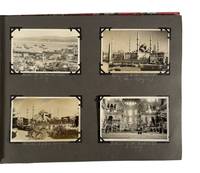
1927ref. 208311927. Photo album documenting a multi country group यातà¥à¤°à¤¾ in 1927 records interwar travel across southern Europe and the eastern Mediterranean including regions under colonial administration and recent political transition. The album follows a group of travelers moving from France through Italy Greece Turkey British administered Palestine and Egypt capturing urban landmarks archaeological sites and local populations encountered along the route. The sequence provides visual evidence of tourism infrastructure mobility and cross cultural observation during a period when former imperial territories such as Constantinople were undergoing redefinition following the dissolution of the Ottoman Empire and the establishment of modern nation states. Album contains 93 black and white silver gelatin photographs and four real photo postcards with images ranging approximately from 2.5 x 4 inches to 3.5 x 5.5 inches and one larger group photograph measuring about 9 x 7 inches. Photographs are mounted on black paper boards with handwritten captions in white pencil and interleaved tissue guards; string bound in patterned cloth boards. The album opens in Avignon with views of St. Pierre's Church and the Palais des Papes then continues through Italy with scenes of Naples and Pompeii as well as shipboard images captioned S.S. Adriatic. Subsequent sections include Athens with views of the Parthenon followed by Constantinople where four postcards depict the harbor the Sultan Ahmed Mosque and the Hagia Sophia shortly after the end of the Ottoman Empire. In British Mandate Palestine images show street scenes in Nazareth and Jerusalem including sites along the River Jordan the Western Wall and the Garden of Gethsemane alongside a captioned portrait labeled "A Jewish Maiden." The album concludes in Egypt with extensive views of archaeological and urban sites at Thebes Memphis Cairo and Luxor including the Obelisk of Hatshepsut Edfu Temple the tomb of Amenhotep II the Colossi of Memnon and the pyramids and Great Sphinx at Giza where the final group portrait shows the travelers posed on camels. Produced during the interwar period the album reflects expanding international tourism networks alongside ongoing European influence in the eastern Mediterranean and Middle East. The juxtaposition of ancient sites modern transport and local populations situates the material within broader histories of archaeology empire and travel culture in the early twentieth century. Light general wear to album and mounts; images well preserved with clear captions; overall very good condition. unknown
1927ref. 208311927. Photo album documenting a multi country group यातà¥à¤°à¤¾ in 1927 records interwar travel across southern Europe and the eastern Mediterranean including regions under colonial administration and recent political transition. The album follows a group of travelers moving from France through Italy Greece Turkey British administered Palestine and Egypt capturing urban landmarks archaeological sites and local populations encountered along the route. The sequence provides visual evidence of tourism infrastructure mobility and cross cultural observation during a period when former imperial territories such as Constantinople were undergoing redefinition following the dissolution of the Ottoman Empire and the establishment of modern nation states. Album contains 93 black and white silver gelatin photographs and four real photo postcards with images ranging approximately from 2.5 x 4 inches to 3.5 x 5.5 inches and one larger group photograph measuring about 9 x 7 inches. Photographs are mounted on black paper boards with handwritten captions in white pencil and interleaved tissue guards; string bound in patterned cloth boards. The album opens in Avignon with views of St. Pierre's Church and the Palais des Papes then continues through Italy with scenes of Naples and Pompeii as well as shipboard images captioned S.S. Adriatic. Subsequent sections include Athens with views of the Parthenon followed by Constantinople where four postcards depict the harbor the Sultan Ahmed Mosque and the Hagia Sophia shortly after the end of the Ottoman Empire. In British Mandate Palestine images show street scenes in Nazareth and Jerusalem including sites along the River Jordan the Western Wall and the Garden of Gethsemane alongside a captioned portrait labeled "A Jewish Maiden." The album concludes in Egypt with extensive views of archaeological and urban sites at Thebes Memphis Cairo and Luxor including the Obelisk of Hatshepsut Edfu Temple the tomb of Amenhotep II the Colossi of Memnon and the pyramids and Great Sphinx at Giza where the final group portrait shows the travelers posed on camels. Produced during the interwar period the album reflects expanding international tourism networks alongside ongoing European influence in the eastern Mediterranean and Middle East. The juxtaposition of ancient sites modern transport and local populations situates the material within broader histories of archaeology empire and travel culture in the early twentieth century. Light general wear to album and mounts; images well preserved with clear captions; overall very good condition. unknown books