1 573 résultats
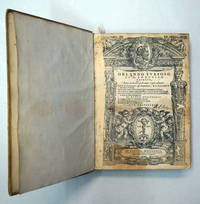
1532In-8°; cc. (40) grande ritratto dell’autore inciso su legno al frontespizio. Legatura in cartonato moderno. Agnelli 2, pp. 119-120
1981pp. 141, cm 21x15, brossura, prefazione di Walter Binni, Biblioteca Teatrale, 37. Nuovo.
1991DISPONIBILITÀ GARANTITA AL 99%; SPEDIZIONE ENTRO 12 ORE DALL'ORDINE. MAI SFOGLIATO, LIEVISSIMI SEGNI DEL TEMPO. Un romanzo di struttura solida e geniale, con personaggi indimenticabili, che reincarnano antichi miti, attualizzandoli. Informazioni bibliografiche Titolo: Donna di spade Collana: La Scala Autore: Giuseppe Pederiali Copertina d: Aldo Di Gennaro (da una miniatura del Roman de la Rose) Editore: Milano: Rizzoli, 1991 ISBN: 8817665142, 9788817665148 Lunghezza: 257 pagine; 22 cm Soggetti: Letteratura, Narrativa italiana contemporanea, Romanzo, Fantascienza, Fantasy, Orlando Furioso, Magia, Il tesoro del Bigatto, Romanzi storici, Mitologia, Angelica, Rinaldo, Boiardo, Ariosto, Saghe, Avventura, Classici Parole e frasi comuni Adelchi alberi Angelica anguane animali Anselmo armi Astolfo Babai bambino Baradoz battaglia Bondeno boschi braccio briganti Buarina capanna capelli Carlo Magno castello Catai cavalieri cavallo Ciaccio cielo coccodrillo colpo Comacchio compagni conosceva Corte Palasio costruito creature davanti Desiderio domandò Lupo donna drago duca Durlindana fango ferro Finalis fiume foresta franchi frecce Grimoaldo guerriero insieme John Updike albero Alberone lago lance lasciare legno longobardi Luigi Meneghello Lupo mago Maimone Gerundo mazapegoli Medoro mondo nemici Nonantola notte occhi omarini Orlando Paciarina paladini palude Parpagnano parpaioni Pavia pelle piedi Pilaca Prete Sereno Qali quercia ragazzo rami riva Rodoaldo Rudea Safadino saraceno Sciagiarra Scrillo scudieri Sette Mari signore soldati spada spalle Spiplino tarantasio terra testa Turpino uccidere uomini uomo vecchio
1991In 16 (18x11) Brossura con sovracopertina editoriale; pp. 124; ottimo
1968DISPONIBILITÀ GARANTITA AL 99%; SPEDIZIONE ENTRO 12 ORE DALL'ORDINE. OTTIME CONDIZIONI, LIEVI SEGNI DEL TEMPO. Descrizione bibliografica Titolo: Ariosto, Shakespeare e Corneille Autore: Benedetto Croce (1866-1952) Editore: Bari: Laterza, 1968 Lunghezza: 263 pagine; 18 cm ISBN: 8842011355, 9788842011354 Note: "La poesia del Racine": p. 249-[256] Collana: Volume XI (11) di Opere di Benedetto Croce in Edizione Economica Soggetti: Critica letteraria, Classici, Letteratura, Lodovico Ariosto, William Shakespeare, Pierre Corneille, Literature, Criticism and interpretation, Dissociazioni storiche, Storia letteraria e politica, Saggi, Filologia, Recensioni critiche, Orsini, Armonia, Poetica, Poesia, Sentimento, Tragedie, Drammaturgia, Romanzi, Commedie, Anglosassone, Inglese, Italiana, Francese, Tragedia, Works, Epica, Romanzo, Cid, Orlando furioso, Re Lear, Seicento, Cinquecento, Drammaturghi, Storicismo, Filosofia, Estetica, Aesthetica, Teatro Parole e frasi comuni affetti Amleto ammirazione amore ariostesca Ariosto artista azioni bellezza biografia canto carattere caratteri cavallereschi Cimbelino Cleopatra comico concetto Cordelia Coriolano corneliana critica cuore arte Desdemona determinazione donna drammatica drammi storici estetica Falstaff figure filologi filosofia forma forza francese Furioso genere giudizio Giulietta gusto ideale immagini innanzi invece Jago King Iago Lear letteraria lirica Macbeth mente Mercante di Venezia mondo morale morte motivo Ofelia opere Otello parole passionale passione pensiero personaggi poema poesia poeta poetico politica Polyeucte psicologica Racconto d'inverno Racine ragione rappresentazione romantico romanzesco Romeo e Giulietta Sanctis scene sentimento Shakespeare e Corneille shakespeariana shakespeariano situazioni spirito storia svolgimento talvolta teoria tragedia tragico tratto Troilo e Cressida umana uomini volontà Vossler
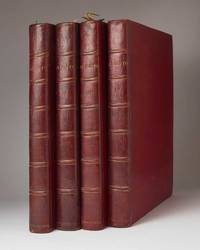
18762 volumi, belle legature in mezza pelle rossa con 4 nervi ai dorsi, tit. e fregi in oro, tagli dorati, pag. (4) 511; (4) 546 (2). In antiporta riprodotto il frontespizio della rarissima edizione del 1521 con il motto Pro Bono Malum. Lievi usure alle legature e leggerissimo foxing ad alcune pagine; nel complesso ottimi esemplari in bella e solida legatura.
1977pp. 217, cm 18x11, brossura, collana PBE, 138, volume con sottolineature a penna.
1969A CURA DI Pompeo Giannantonio, Francesco Pugliese Carratelli LIGUORI 1969 673 PP. FONDO DI MAGAZZINO: NEL CELLOPHANE EDITORIALE
1976LIGUORI 1976 311 PP. FONDO DI MAGAZZINO: NEL CELLOPHANE EDITORIALE
1968pp. 317, cm 18x12, bross., Classe Unica 152
2000pp. 591, cm 24x17, bross., Nuovo
2001pp. 126, cm 20x13, bross., "Le BUssole", Nuovo
1987pp. 176, cm 17x11, brossura.
2008pp. 457, in 8°, bross., serie "Sestante"15, Nuovo
1967pp. 124, in 8°, bross., coll. "Saggi"
2010pp. 162, in 8°, brossura.
1915Cm. 23,5, br. edit., pag. 44. Dedica autografa a Venceslao Santi. Interessante. Tratto da Giornale storico della Letteratura italiana.
1954In 8o, legatura editoriale tutta tela, titoli in oro al dorso, segnalino in seta.Ottima copia.Pp.1253
1920Collana " Gli Immortali". Due volumi in 8° piccolo. Legatura editoriale tutta tela, fregi e titoli in oro impressi al piatto e al dorso.Prima serie. Senza data. Ottime copie. Pp.607 + 637
réf. 108859Venetia Felice Valgrisi 1887. Kl.4° Titelholzschnitt 8 Bl. 654 S. 16 Bl Tavola zahlreiche Vignetten und 51 blattgrossen Holzstich-Illustrationen von Dosso Dossi am Anfang jedes Gesanges. Perg. d. Zeit handschriftl Rückentitel Deckel etwas fleckig Titelbl. aufgezogen Buchblock etwas fleckig min. wasserärndig 13 Bl. der Tavola mit grösseren hinterlegen ersetzten Fehlstellen Textverlust. Einige Illustrationen etwas stumpf. abgezogen einige Marginalien von alter Hand.Cover slightly stained; title page reattached; text block slightly stained with minimal water damage; 13 leaves of the Tavola with larger gaps filled in loss of text. Some illustrations slightly faded; some marginal notes in an old hand. Die erste Valgrisi-Ausgabe des „Furioso“ stammt aus dem Jahr 1556; ab 1565 erscheinen die 5 posthumen Gesänge begleitet von den Zusammenfassungen von Luigi Grotta d’Adria. - Ludovico Ariosto deutsch Ariost; 8. September 1474 in Reggio nell’Emilia; † 6. Juli 1533 in Ferrara war ein italienischer Humanist Militär Höfling und Autor. Sein Hauptwerk das Versepos Orlando furioso „Der rasende Roland“ gilt als einer der wichtigsten Texte der italienischen Literatur und wurde in ganz Europa rezipiert.Text Ital. 010 Venetia, Felice Valgrisi, 1887 unknown
1773réf. 21246051773. Birmingham: John Baskerville for Pietro and Giovanni Claudio Molini. 1773. Four vols 4to. Contemporary red straight-grained morocco boards filleted in gilt spine gilt-ruled in compartments and lettered directly in gilt raised bands edges gilt board-edges with a single gilt fillet turn-ins roll-tooled in gilt marbled endpapers green silk place-markers; I: pp. vi lviii 362 with copper-engraved portrait frontispiece by Etienne Fiquet after Charles Eisen and a further 12 copper-engraved plates; II: pp. ii 450 with 11 copper-engraved plates; III: pp. ii 446 with 12 copper-engraved plates; IV: pp. ii 446 26 list of subscribers with 11 copper-engraved plates issued without errata leaf 52 as usual; light variable foxing and browning slight offset from plates vol. II with marginal paperflaw to H2; generally a very good crisp set in a well-preserved and unrestored binding with all the cancels called for by Gaskell; nineteenth-century ink inscriptions to vol. I frontispiece verso in two hands 'coll: perf: H. Drury. Harrow.' and 'LARGE PAPER. C. 153.3. from Queen Charlotte's Collection where it was bought 1819. bound by Roger Payne' see below; recent bookseller's tickets to front pastedowns.The dedication copy of John Baskerville's Orlando furioso a handsomely bound large-paper copy from the library of Queen Charlotte later in the possession of Lord Byron's tutor and friend Henry Drury with an uncensored plate defaced by the disgruntled engraver.Among the most accomplished productions of the Baskerville Press this edition of Ariosto's epic poem was commissioned by the brothers Giovanni Claudio c. 1724-c. 1812 and Pietro Molini c. 1730-1806 members of a prominent Florentine family of publishers and booksellers active in Italy France and England. Pietro who styled himself 'Librajo dell'Accademia Reale' at Haymarket is documented in London from at least 1769 - when he acted as the London representative for the Livorno edition of the Encyclopedie 1770-79 - to 1795. In his preface Pietro Molini emphasises the correctness of the text partly based on Francesco de Franceschi's 1584 Venetian edition the diligence of its printer the 'notissimo Giovanni Baskerville' and the collaboration of 'the most celebrated artists of London and Paris' trans. This is followed by a detailed life of Ariosto by Giovanni Andrea Barotti 1701-1772 a scholar from Ferrara whose edition of the complete works of the poet first published in 1741 was among the first to draw on the poet's autograph manuscript rather than relying solely on printed sources. Baskerville appears to have printed the letterpress in 1770 while the copperplates were completed by 1774. Each of the forty-six cantos opens with a facing engraving the illustrations signed by twenty-one artists and engravers active in London and Paris. The designers include Giovanni Battista Cipriani Jean-Michel Moreau le Jeune Charles-Nicolas Cochin Charles Monnet and Jean-Baptiste Greuze. The result was widely admired. Dibdin described it as the finest edition of Ariosto known to him: 'Paper printing drawing plates - all delight the eye and gratify the heart of the thorough-bred bibliomaniacal virtuoso. This edition has hardly its equal and certainly not its superior in any publication with which I am acquainted' pp. 758-59. This copy features an early uncensored state of the plate to Canto XLIII engraved by Francesco Bartolozzi 1727-1815 after Giovanni Battista Cipriani. Apparently exasperated by delays and insults from Molini - who 'one day in a passion called him an ass a poltroon an animal' Benton p. 42. Bartolozzi defaced his own work incising on the tomb of the Saracen knight Brandimarte the words 'd'asino de poltrone d'animale' removed in subsequent states cf. the Princeton copy.Ariosto dedicated his Orlando furioso to Cardinal Ippolito d'Este 1479-1520 son of Ercole I d'Este Duke of Ferrara. While centred on the paladin Orlando and his unrequited love for the pagan princess Angelica - which drives him mad - the poem interweaves multiple narrative strands within a famously complex episodic structure. Among these are the trials leading to the union of Ruggiero - a pagan knight descended from Hector - and the Christian knight heroine Bradamante culminating in Ruggiero's conversion and their marriage. From this union Ariosto mythically derives the House of Este. In his dedication to Queen Charlotte Molini explicitly draws on this genealogy invoking the 'heroes of the most glorious House of Este from which the august progenitors of your royal consort trace their origin who did not have to envy Achilles Homer nor Augustus Virgil' trans. This alludes to the eleventh-century union of Alberto Azzo II founder of the House of Este and Kunigunde of Altdorf whose son Welf I founded the younger House of Welf ancestors of the dukes of Brunswick and the Hanoverian monarchs of Britain. This dynastic connection had long played a role in the political and genealogical self-fashioning of the House of Hanover. In 1676 Sophia of Hanover mother of George I commissioned genealogical research to substantiate the traditional claim that her house descended from the Este through the Welf line. These investigations established that the House of Hanover could also claim English royal descent through Mathilda of England daughter of Henry II. Molini thus constructs a deliberate bridge between Ariosto's original Este dedication and the British royal family linking the poem's chivalric mythology to the lineage of George III and his consort.An avid reader from an early age Queen Charlotte began to form a substantial personal library after her marriage to George III in 1761. Initially housed in London her collection was later moved to Windsor Castle increasingly used as a royal residence from the mid-1770s and partly to Frogmore House which was expanded to accommodate the growing collection. In 1803 the Queen appointed Edward Harding 1755-1840 as her personal librarian at Frogmore a position he held until her death. The 1819 Christie's sale catalogue records over 4500 titles in German French Italian and English mostly recent publications.The King and Queen head the long list of subscribers to the Baskerville Orlando George III's copy is now in the King's Library at the British Library; see Bibliothecae regiae catalogus vol. I p. 123. This list forms a veritable 'who's who' of eighteenth-century Britain including aristocrats artists writers and booksellers. Among the most notable subscribers are Johann Christian Bach 1735-1782 Edmund Burke 1729-1797 David Garrick 1716-1779 and Joshua Reynolds 1723-1792. Several women are also included among them Society hostess Margaret Clive Baroness Clive nee Maskelyne 1735-1817 sculptor Anne Seymour Damer nee Conway 1748-1828 and Susanna Leveson-Gower Marchioness of Stafford nee Stewart 1742-1805 one of the most influential women in eighteenth-century British politics. The list extends internationally including subscribers from France Spain the Netherlands Russia Germany and Italy. In Naples appear Sir William Hamilton 1730-1803 British envoy and antiquarian and the architect Luigi Vanvitelli 1700-1773. The subscription price was four guineas or louis d'or with the plates.Following Queen Charlotte's death her Baskerville Orlando furioso was sold at auction with the rest of her books and personal effects an event that gave rise to a national scandal; after passing through the London trade this copy was acquired by Henry Drury classical scholar and assistant master at Harrow School from 1801 until his death serving as master of the lower school from 1833 to 1841. He was also a member of the Roxburghe Club and Fellow of the Royal Society. Among his many friends were Dibdin Drury appears in his Bibliographical Decameron and Lord Byron who stayed in his house at Harrow and later corresponded with him 'in affectionate terms and without much regard to the propriety later thought usual to preserve in a correspondence with a clergyman' ODNB. Drury's vast library including numerous Greek and Latin classics was dispersed in 4729 lots by Robert Harding Evans in a sale lasting twenty-three days in 1827 and a second by Christie & Manson in 1841 after his death. Although the binding has been attributed to Roger Payne he is not known to have bound for the Royal family; however 'he strongly influenced many who did more particularly Christian Samuel Kalthoeber who bound many of the books in the King's Library at the British Museum' Davenport p. 91. Provenance:1. Charlotte of Mecklenburg-Strelitz Queen Consort of Great Britain and Ireland r. 1761-1818; her sale Christie's 9 June-16 July 1819 lot 1766 '4 vol. 4to. Cuojo turch. Birm. 1773'. 2. Evidently bought at Queen Charlotte's sale by the bookseller and publisher Robert Triphook 1781/2-1868 active on St James's Street c. 1809 and on Old Bond Street from 1815 to 1825 no. 2648 'Ariosto . large paper fine impressions of plates red morocco gilt leaves . The Queen's Copy' listed for PS12 in the supplement to his Catalogue for 1819 of Rare Books in Various Languages.3. Henry Joseph Thomas 'Harry' Drury 1778-1841 bibliophile Harrow master and friend and correspondent of Lord Byron; his sale R. H. Evans 19 February-23 March 1827 lot 339 'Ariosto L. Orlando Furioso 4 vol. LARGE PAPER. Plates by Bartolozzi &c. red morocco gilt leaves Queen Charlotte's copy Birmingham Baskerville 1773' sold for PS10 10s see The Classical Journal vol. xxxvi Sept.-Dec. 1827 p. 145.4. The booksellers Dulau and Co. at 37 Soho Square 'Valuable and Choice Works' in Bent's Literary Adviser September 1842 'ARIOSTO . large paper . red morocco by Roger Payne . From the Collection of Queen Charlotte' listed for PS11 11s.Brunet I col. 438 'belle edition' Cohen-de Ricci 95 'Tres belle edition' Gaskell 48b; Graesse I p. 199 this copy 'Drury' mentioned in note; ESTC T133620; Lowndes I p. 61 this copy 'Drury' mentioned in note; Ray French 64. See Benton John Baskerville 1914; Davenport Royal English Bookbindings 1896; Dibdin The Library Companion 1824; Schellenberg Book Illustration in the Long Eighteenth Century 2015. hardcover
réf. DADAX0367144484New unknown
réf. 106334Zurigo Orell Füssli und Comp 1842. Gr.-8° 56 S. Geheft. Etwas stockfl. sonst gutes Ex. Text ital.Johann Caspar von Orelli 13. Februar 1787 in Wädenswil; † 6. Januar 1849 in Zürich war ein Schweizer Klassischer Philologe. 010 Zurigo, Orell, Füssli und Comp, 1842 unknown
réf. 2121709Venice: Gabriele Giolito de' Ferrari. 1551. 12mo. Early 19th-century English half calf roll-tooled in blind spine with raised bands tooled in blind and lettered directly in gilt; ff. 43 1; woodcut printer's device to recto of first and final leaf woodcut initials and ornaments; extremities a little worn hinges cracked but hold firm head of spine chipped; a few small stains but otherwise a very good crisp copy; armorial bookplate of Samuel R. Block to front pastedown his ownership signature in ink to title page.First edition the final and definitive ""Ferrara"" version of Ariosto's first comedy in verse and his ""most problematic work for the stage"" Portner.Ludovico Ariosto 1474-1533 best known today for his epic poem Orlando furioso was also the author of five comedies. Following the successful staging of his comedy I Suppositi in the Vatican during the 1519 Carnival he was commissioned by Pope Leo X to write a new play. Il Negromante The Necromancer was sent to Rome on 16 January 1520 however its planned Roman premiere never took place; the pope instead chose to stage Niccolo Machiavelli's La Mandragola. The most likely reason for the play's cancellation was its veiled yet pointed critique of Leo X and the Vatican particularly regarding the sale of indulgences and clerical corruption. While Ariosto's wit was tolerated in other settings a performance of Il Negromante in the heart of the papal court - just three years after Martin Luther's Ninety-five Theses - may have been considered too unsettling.In the play the charlatan Mastro Iachelino the so-called ""Necromancer"" is summoned to cure the supposed impotence of Clintio through his claimed magic arts. Clintio a newlywed is in fact secretly married to another woman Lavinia. Seeking to escape the marriage imposed on him by his foster father Massimo he later turns to Iachelino himself hoping to maintain the illusion of impotence. Meanwhile another young man Camillo also seeks the Necromancer's help hoping to win the favour of Emilia the bride involved in the unconsummated marriage with Clintio.Two versions of the comedy exist: one ""for Rome"" and one ""for Ferrara"". The first sent to the papal court in 1520 was published posthumously in Venice in 1535. The second revised for the Ferrarese court around 1528 was also published posthumously in this edition printed by Gabriele Giolito de' Ferrari in 1551 and dedicated by the editor Lodovico Dolce c. 1508-1568 to Giovan Vincenzo Vigliona. Dolce based his edition on the original manuscript which he had acquired from Ariosto's heirs.Adams A-1655; Edit16 CNCE 2665; Agnelli-Ravegnani Annali delle Edizioni Ariostee II p. 123 ""of considerable rarity like all Giolito editions and of undeniable importance regarding the text of Il Negromante inasmuch as it provides us with a version of the comedy not merely corrected but entirely rewritten by the poet"" trans. See Portner ""A Non-Performance of Il Negromante"" Italica 59/4 Renaissance Winter 1982 pp. 316-329. hardcover
réf. 1h11344Friedrich Frommann Verlag Jena 1804 - 1808. 434/419/385/414 S. original Halbleder-Einbände mit goldgeprägten Rückentiteln etwas berieben und bestossen. - übersetzt von J.D. Gries/gute Exemplare/in erster Auflage/Goedeke VII 636192; Kosch VI 791; NDB VII. 59 - unknown