Ariosto, LodovicoBiblio.com
1572 risultati
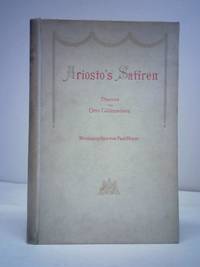
rif. 2b9989B. Behr`s Verlag Bln. 1904. XV/79 S. mit einem in Holz gestochenen Portraitfrontispiz Lodovico Ariostos gold- und rotgeprägter original Pergamenteinband mit Hopfgoldschnitt in Rot und Schwarz auf Büttenpapier Einband etwas fleckig. - Im Versmaß des Originals übersetzt von otto Gildemeister herausgegeben von Paul Heyse/gutes Exemplar - unknown
1800Cm. 20, br. muta originale, pag. 80. Difetti alla bross., ma internamente ottimo e fresco esemplare in barbe.
1974Cm. 24, pp. 147 (5). Bross. edit. con sovracop. ill. Edizione fuori commercio di 500 copie numerate (n. 283).
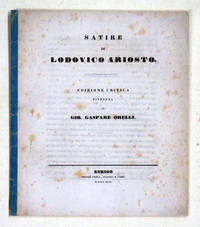
rif. 106334Zurigo Orell Füssli und Comp 1842. Gr.-8° 56 S. Geheft. Etwas stockfl. sonst gutes Ex. Text ital.Johann Caspar von Orelli 13. Februar 1787 in Wädenswil; † 6. Januar 1849 in Zürich war ein Schweizer Klassischer Philologe. 010 Zurigo, Orell, Füssli und Comp, 1842 unknown
1786rif. 30730Londra / Livorno: Si vende in Livorno presso Tommaso Masi e compagni 1786. Very Good. Londra or Livorno: Si vende in Livorno presso Tommaso Masi e compagni 1786. First Edition. 12mo. 4 xxiii 3 96 2 122 23-42 2 3-99 1 collated and complete; Bentivoglio signatures misbound A3 A5 A4 A7 A6 A8 9 10 though also complete. Frontis; engraved title page. Text in Italian. Full contemporary calf; five raised bands gilt decoration and red title label to spine; marbled endpapers; edges stained light blue; green ribbon; sky blue endpapers. Boards lightly worn with brief exposure to extremities; minor chipping to base of spine. Binding sound and interior unmarked. Scarce collection of Italian satires; ESTC speculates the book was probably printed in Livorno. ESTC N476240. Si vende in Livorno presso Tommaso Masi e compagni unknown
1786rif. 30730Londra / Livorno: Si vende in Livorno presso Tommaso Masi e compagni 1786. Very Good. Londra or Livorno: Si vende in Livorno presso Tommaso Masi e compagni 1786. First Edition. 12mo. 4 xxiii 3 96 2 122 23-42 2 3-99 1 collated and complete; Bentivoglio signatures misbound A3 A5 A4 A7 A6 A8 9 10 though also complete. Frontis; engraved title page. Text in Italian. Full contemporary calf; five raised bands gilt decoration and red title label to spine; marbled endpapers; edges stained light blue; green ribbon; sky blue endpapers. Boards lightly worn with brief exposure to extremities; minor chipping to base of spine. Binding sound and interior unmarked. Scarce collection of Italian satires; ESTC speculates the book was probably printed in Livorno. ESTC N476240. Si vende in Livorno presso Tommaso Masi e compagni unknown books
1939L.Ariosto S.Rosa B.Menzini V.Alfieri Satire. , Sonzogno 1939, Libro usato da collezione.Pagine brunite con gore e scollate. Tagli irregolari bruniti. Dorso strappato e scollato con parti mancanti.Copertina rigida usurata con strappo al dorso. Usato (Used) . 358
1932(Bibl. di cultura mod.). 8°, pp.361,br.ed.Timbretti ex libris.
1959Cm. 22, pp. viii, 301 (5). Bross. edit. ornata. Ottima copia.
1959Cm. 20,5, pp. viii, 301 (5). Bross. edit. ornata. Buono stato di conservazione.
1952leggerissimi segni del tempo
1959Mm 125x205 Collana "Biblioteca di Cultura Moderna" - Brossura editoriale di 301 pagine, in ottime condizioni. SPEDIZIONE IN 24 ORE DALLA CONFERMA DELL'ORDINE.
1928In-8° (cm. 20,5), pp. 361, Bross. edit. ornata. Ottimo es.
1967Mm 110x180 Universale Laterza. Brossura editoriale di pagine 309, Opera in ottime condizioni. Spedizione in 24 ore dalla conferma dell'ordine.
1889In 8, pp. 73 + (1b). Dedica autogr. dell'A. al p. ant. D. rifatto. Br. ed. L'A., letterato e studioso di Dante originario di Napoli, in quest'opera affronta uno studio critico sul Furioso.
Milano, L. Trevisini, 1939, in-8, br., pp. 47, (1). Strappetto con minima perdita al margine bianco delle ultime due pagine e alla cop. posteriore.
1775Quattro volumi di cm. 21,5, pp. (8) 321 (1); 391 (1); 407 (3); 410. Ritratto dell'Ariosto all'antiporta del primo volume e 92 tavole fuori testo incise in rame per opera di Cochin e altri (ciascuna protetta da velina). Legatura coeva in piena pelle, dorsi lisci con titoli su doppio tassello e ricchi fregi in oro. Piatti inquadrati da greca in oro, tagli e sguardie marmorizzati. Doppio ex libris. Qualche traccia d'uso esterna prevalentemente alle cuffie. Peraltro esemplare marginoso ed in ottimo stato di conservazione. Impresso su carta vergata. Agnelli-Ravegnani (II, 289): "E' questa una delle più pregiate e ricercate stampe francesi del Furioso... Più che per la traduzione in prosa del D'Ussieux, questa edizione è cara ai bibliofili per il ritratto dell'Ariosto e per le 46 bellissime incisioni su rame e fuori testo, disegnate dal Cochin.". Cohen (97-98): "Les estampes, faites exprès pour cette édition, sont fort belles...".
1844Cm. 25, pp. xxiv, 616. Con moltissime incisioni nel testo e su tavole f.t. (protette da velina) di Johannot, Baron, Francais e Nanteuil. Legatura coeva in piena percallina rossa, dorso a nervi con titoli e fregi in oro. Piatti inquadrati da liletti e tagli dorati. Entro custodia in cartonato rigido. Qualche brunitura, peraltro ben conservato.
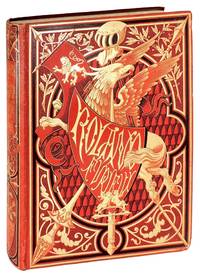
1888rif. 38124Paris: Libraire Hachette Et Cie 1888. Hardcover. Very Good. Hardcover. Nouvelle Edition. Elephant Folio. A French translation of the Italian epic poem Orlando Furioso 1516 which is a chivalric romance known for its intricate plot humor and the eventual madness of Orlando Roland due to unrequited love. It is a fantastical story featuring soldiers war sorcerers mythical creatures a trip to the moon and romances between several characters. One of the longest poems in European literature it took the author over twenty years to complete Wikipedia. Gustave Doré's exquisite illustrations compliment Roland's expeditions and encounters perfectly. His detailed portrayals of sea monsters griffins fairyfolk demons and epic battles are stunning. A beautiful publisher's binding in the original red cloth with black and gilt illustration of a griffin to front board and spine. Repaired two inch split to bottom of front joint. Rear hinge interior is starting; although binding remains secure. Minor rubbing and light soiling to boards and spine. Foxing throughout; although text and illustrations remain bright. Includes 82 full page illustrations along with hundreds of in text illustrations by Gustave Doré. All plates are present. 165 pages plus plates. This is a large heavy book that may require an extra shipping fee. FRE/070925. Libraire Hachette Et Cie hardcover books
A Paris, Chez Laporte, [1795] ; 4 volumes in-8, demi-veau marbré havane, dos lisse, estampé de frises et filets dorés, pages de gardes et tranches jaspées, pièces de titre, titre et tomaison en lettres dorées, non rognés. (Reliure de l'époque). 2 ff., 374 pp - 2 ff., 390 pp - 2 ff.,384 pp et 2 ff., 389 pp. Ouvrage orné de 46 planches dessinées par C. N. Cochin gravées par De Launay, Lingée et Ponce, les mêmes que celles du Roland Furieux traduit par d'Hussieux paru chez Brunet en 1775-1783. Sans le portrait en frontispice de l'Arioste dessiné par Eisen d'après le Titien. Elle est précédée d'un Abrégé de la vie de l'Arioste extraite de Simon Fornari, de l'abbé Pezana, etc., d'une traduction de la Lettre de Galilée au seigneur François Rinuccini (au sujet de l'Arioste et du Tasse). Le dernier tome contient un extrait du Roland de Boyardo (pp.100-261) ainsi que la Fleur des Batailles de Doolin comte de Mayence. " Chef-d'œuvre de l'Arioste, poète italien de la Renaissance, le Roland Furieux (Orlando Furioso), parodie du poème chevaleresque, tresse, avec une habileté et une ironie, trois grands thèmes : la guerre entre Charlemagne et les Sarrasins, la folie de Roland vainement amoureux de l'inconstante Angélique, enfin les amours et le mariage de Roger et Bradamante, ancêtres imaginaires de la dynastie d'Este. Composé de 46 chants, mêlant le tragique au plaisant, le lyrique au romanesque, usant avec autant de liberté que de maîtrise de toute la culture européenne, d'Homère aux contemporains en passant par les romans médiévaux, le Roland furieux, expérience livresque et humaine de l'Arioste en une symphonie perpétuellement mouvante de personnages et d'événements qui, après l'écroulement des repères du Moyen Âge, reflète le scepticisme souriant de la Renaissance. Ses compatriotes, l'ont surnommé le divin Arioste et son ottava rima a été appelé ottava d'oro (la huitième d'or). Il publia son poème pour la première fois en 1516, en 40 chants, mais il ne cessa de le retoucher et en donna en 1532 une édition augmentée de six chants. ".
1879Grande in-folio (cm. 49), pp. (4) viii, 658. Frontespizio in rosso e nero, moltissime incisioni nel testo e su tavole fuori testo. Solida legatura coeva in mezza pelle, dorso a nervi con titoli in oro. Piatti e sguardie marmorizzate, taglio di testa dorato. Qualche spellatura superficiale al dorso, ma complessivamente esemplare genuino e ben conservato. Si tratta della rara tiratura di testa in 40 esemplari numerati su carta Whitman (ns. esemplare n. 1).
1775rif. ST17632bParis: Brunet 1775-83. 225 x 142 mm. 8 7/8 x 5 5/8". With blank leaf M6 in volume III half title in volume IV. Four volumes. A new translation by M. d'Ussieux. Appealing contemporary marbled calf gilt covers with triple gilt fillet border flat spines gilt in compartments with central patera sunburst lancet tools at corners and sides one black and one red morocco label red paste paper endpapers all edges gilt. With engraved portrait in volume I and 92 ENGRAVED PLATES with original tissue guards 46 from the Baskerville suite see below and 46 by Cochin. Cohen-De Ricci 98; Ray "French" p. 113. Bindings with half a dozen small patches of lost patina due to insect activity leather on spines a little dried and crackled occasional mild browning other trivial imperfections but an extremely pleasing copy especially internally with a clean remarkably fresh text wide margins and excellent impressions of the engravings. Our French edition of Ariosto's great sprawling romantic epic combines illustrations from two famed editions with engravings by top artists of the period. Each of the 46 cantos of "Mad Orlando" has two plates depicting the events described one from the Baskerville edition of 1773 printed in Italian for Molini and one from the quarto edition of the present French translation published just before our octavo printing. These 46 pairs of images are not only aesthetically pleasing as engravings but they allow for fascinating studies in interpretation because the pairs are consistently--and sometimes very distinctly--different one from the other. Jean-Michel Moreau known as Moreau le Jeune 1741-1814 provided illustrations for Diderot's encyclopedia and engraved works for François Boucher in addition to illustrating the works of Rousseau and Voltaire. According to the Getty Museum "publishers sought him out for his powers of observation and ability to capture nuances of gesture pose and light." Ray says that the best work by Moreau "showed him to be the equal of the established rococo masters Boucher Eisen and Gravelot" and that in his heyday "he carried all before him." Ray was enchanted by the Moreau engravings seen here noting "Moreau was at the top of his form as might have been expected when the most elegant of illustrators encountered the most elegant of poets." Charles Nicholas Cochin 1715-90 was one of the foremost French illustrators and one of the most influential persons in the French art world of the 18th century. He began producing engravings in his teens was elected to the Academy at 26 and was a member of the court for 40 years doing portraits of almost every celebrity of the period. As the person who provided the finished plates from the 276 original compositions by Oudry for the famous large folio edition of La Fontaine's "Fables" 1755-59 Cochin played an instrumental role in producing what Ray says is "one of the most ambitious and successful of all illustrated books." At 50000 lines long and 26 years in the making and refining "Orlando Furioso" by Ariosto 1474-1533 is one of the most singular and extravagant of narratives ever conceived. The story takes place against the background of the war between Charlemagne and the Saracens when Orlando Roland one of Charlemagne's finest knights neglects his duty out of love for the pagan princess Angelica. After she falls in love with a Saracen and elopes Orlando goes mad and is only restored to sanity when another knight flies to the moon in Ezekiel's chariot and obtains a magic potion to break the spell. There are many more complications. First published in 1516 "Orlando" was translated into English French as here Spanish and German becoming one of the most influential works of literature writers indebted to Ariosto include Tasso Cervantes Spenser Shakespeare Milton Byron and Shelley. Brunet unknown books
1840rif. 235989Paris: Ruel Aine 1840. hardcover. very good. Translated 'de L'Arioste' by Le Comte de Tressan. 2 volumes. Illustrated with 90 engravings scattered foxing. Tall 8vo 1/2 burgundy morocco marbled boards and endpapers gilt spine. Paris: Ruel Aine n.d. ca. 1840. Very good . Ruel Aine unknown books
1775Secondo volume dell'Orlando Furioso in francese, comprendente dal XIII al XXIII canto. L'opera dell'Ariosto è qui perfettamente conservata in un'opera perfettamente conservata e interamente in francese. Secondo di due volumi.
1775rif. ST17632bParis: Brunet 1775-83. 225 x 142 mm. 8 7/8 x 5 5/8". With blank leaf M6 in volume III half title in volume IV. Four volumes. A new translation by M. d'Ussieux. Appealing contemporary marbled calf gilt covers with triple gilt fillet border flat spines gilt in compartments with central patera sunburst lancet tools at corners and sides one black and one red morocco label red paste paper endpapers all edges gilt. With engraved portrait in volume I and 92 ENGRAVED PLATES with original tissue guards 46 from the Baskerville suite see below and 46 by Cochin. Cohen-De Ricci 98; Ray "French" p. 113. Bindings with half a dozen small patches of lost patina due to insect activity leather on spines a little dried and crackled occasional mild browning other trivial imperfections but an extremely pleasing copy especially internally with a clean remarkably fresh text wide margins and excellent impressions of the engravings. Our French edition of Ariosto's great sprawling romantic epic combines illustrations from two famed editions with engravings by top artists of the period. Each of the 46 cantos of "Mad Orlando" has two plates depicting the events described one from the Baskerville edition of 1773 printed in Italian for Molini and one from the quarto edition of the present French translation published just before our octavo printing. These 46 pairs of images are not only aesthetically pleasing as engravings but they allow for fascinating studies in interpretation because the pairs are consistently--and sometimes very distinctly--different one from the other. Jean-Michel Moreau known as Moreau le Jeune 1741-1814 provided illustrations for Diderot's encyclopedia and engraved works for François Boucher in addition to illustrating the works of Rousseau and Voltaire. According to the Getty Museum "publishers sought him out for his powers of observation and ability to capture nuances of gesture pose and light." Ray says that the best work by Moreau "showed him to be the equal of the established rococo masters Boucher Eisen and Gravelot" and that in his heyday "he carried all before him." Ray was enchanted by the Moreau engravings seen here noting "Moreau was at the top of his form as might have been expected when the most elegant of illustrators encountered the most elegant of poets." Charles Nicholas Cochin 1715-90 was one of the foremost French illustrators and one of the most influential persons in the French art world of the 18th century. He began producing engravings in his teens was elected to the Academy at 26 and was a member of the court for 40 years doing portraits of almost every celebrity of the period. As the person who provided the finished plates from the 276 original compositions by Oudry for the famous large folio edition of La Fontaine's "Fables" 1755-59 Cochin played an instrumental role in producing what Ray says is "one of the most ambitious and successful of all illustrated books." At 50000 lines long and 26 years in the making and refining "Orlando Furioso" by Ariosto 1474-1533 is one of the most singular and extravagant of narratives ever conceived. The story takes place against the background of the war between Charlemagne and the Saracens when Orlando Roland one of Charlemagne's finest knights neglects his duty out of love for the pagan princess Angelica. After she falls in love with a Saracen and elopes Orlando goes mad and is only restored to sanity when another knight flies to the moon in Ezekiel's chariot and obtains a magic potion to break the spell. There are many more complications. First published in 1516 "Orlando" was translated into English French as here Spanish and German becoming one of the most influential works of literature writers indebted to Ariosto include Tasso Cervantes Spenser Shakespeare Milton Byron and Shelley. Brunet unknown