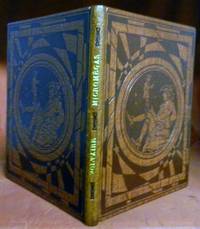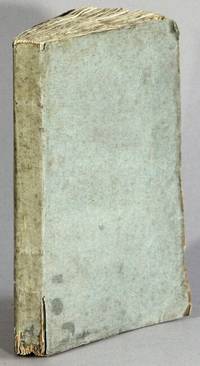
1784rif. 67131Londres: chez Robinson No 25 Pater-Noster-Row 1784. First British edition 8vo pp. 2 ii 208; vignette title page; original blue paper wrappers; edges curled small cracks at spine ends; all else very good. Unpublished during the author's lifetime these Memoires are generally seen as an outright attack on Frederick of Prussia after Voltaire had suffered humiliation on Frederick's orders in Frankfurt. chez Robinson, No 25, Pater-Noster-Row unknown books
1767rif. 3278A LAUSANNE. PAR LA COMPAGNIE DES LIBRAIRES. 1767. 2 PARTIES EN UN VOLUME IN-12 (10 X 17 X 3 CENTIMETRES ENVIRON) DE IV + 212 ET (2) + 70 PAGES, RELIURE D'EPOQUE PLEIN VEAU MARBRE, DOS LISSE ORNE D'UN DECOR DE CAISSONS A FLEURONS DORES, TITRE DORE SUR ETIQUETTE MAROQUIN HAVANE, TRANCHES ROUGES. QUELQUES PETITS DEFAUTS EXTERIEURS, SINON BON EXEMPLAIRE.
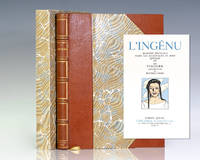
1923rif. 22200Paris: Rene Kieffer 1923. leather_bound. Orig. full two-toned brown leather covers decorated in blind backstrip lettered in gilt marbled endpapers. Teg. Fine. 54 pages. 24 x 19 cm. Limited edition copy 95 of 500 on velin la forme with 45 vignettes in pochoir by Joseph Hemard. An exquisite copy bound by Kieffer with his label on verso of front cover paste-down. Hémard’s lasting fame however lies in his book illustrations – always with a distinctly French character usually comic and often mildly erotic. He was probably the most prolific book illustrator in the first half of the twentieth century in France. Rene Kieffer unknown books
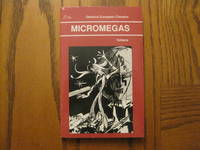
1989rif. 006340Dedalus 1989. Soft cover. Fine. Tim Gray. First Dedalus edition/printing small trade paperback. As New unread condition. Translated by W. Fleming. Intro by Ben Barkow. Collection of stories. ". as Proto SF is "Micromégas" the title story contained in Le Micromégas de Mr. de Voltaire avec une Histoire des Croisades & un nouveau plan de l'Histoire de l'esprit humain coll 1752; trans Tobias Smollett as Micromegas a Comic Romance for full subtitle see Checklist 1753 in which two Alien giants see Great and Small the larger from a planet circling Sirius and a smaller giant from Saturn visit Earth where their responses to human life make some satirical points not least that our species may not be so very important in the context of the much larger physical Universe that was coming to be accepted at the time Voltaire was writing. " JC/PN Encyclopedia of SF Internet 4th Ed. Dedalus paperback
1923rif. 22200Paris: Rene Kieffer 1923. leather_bound. Orig. full two-toned brown leather covers decorated in blind backstrip lettered in gilt marbled endpapers. Teg. Fine. 54 pages. 24 x 19 cm. Limited edition copy 95 of 500 on velin la forme with 45 vignettes in pochoir by Joseph Hemard. An exquisite copy bound by Kieffer with his label on verso of front cover paste-down. Hémard’s lasting fame however lies in his book illustrations – always with a distinctly French character usually comic and often mildly erotic. He was probably the most prolific book illustrator in the first half of the twentieth century in France. Rene Kieffer unknown
rif. 46036Paris Le Livre 1923 in 12 (18x13) 1 volume broché, étiquette de titre imprimée contrecollée sur le plat supérieur, VI et 174 pages, avec des bois originaux de Maximilien Vox, dont frontispice, bandeaux et culs-de-lampe en noir et blanc. Collection ''Le Livre du Lettré'', 1. Bel exemplaire ( Photographies sur demande / We can send pictures of this book on simple request )
rif. 245861 volume in-12° broché, titre contrecollé sur le plat supérieur, 174 p., frontispice, bandeaux et culs-de-lampe en noir et blanc - Petites rousseurs, dos insolé, très bon état malgré tout.
1981rif. 123982Berkeley CA: The Arif Press 1981. cloth label on spine. Arif Press. 12mo. cloth label on spine. 16 2 pages. Limited to 150 copies. Translated from the French by P.H. Hanson. Frontispiece facsimile of 1784 engraving. The Arif Press unknown books
1981rif. 95056Berkeley: Arif Press 1981. Hardcover. Fine. Translated by P. H. Hanssen. Slim small octavo. Cloth with applied paper label. Fine. One of 150 copies. Arif Press hardcover books
1981rif. 123982Berkeley CA: The Arif Press 1981. cloth label on spine. Arif Press. 12mo. cloth label on spine. 16 2 pages. Limited to 150 copies. Translated from the French by P.H. Hanson. Frontispiece facsimile of 1784 engraving. The Arif Press unknown
1981rif. 95056Berkeley: Arif Press 1981. Hardcover. Fine. Translated by P. H. Hanssen. Slim small octavo. Cloth with applied paper label. Fine. One of 150 copies. Arif Press hardcover
1788rif. 718181 vol in-8 broché, Paris, Libraires Éditeurs, 1788, 63 pp.
rif. 137212Paris: Librairie d'Amateurs n.d. The Libraire d'Amateurs edition of Voltaire's satirical novella. Quarto bound in three quarter crushed morocco over marbled boards with gilt titles and tooling to the spine in six compartments within raised gilt bands marbled endpapers ribbon bound in top edge gilt with 46 monochrome plates by Umberto Brunelleschi. In fine condition. Housed in a custom marbled slipcase. One of the most influential thinkers of the French Enlightenment François-Marie Arouet know by the nom de plum Voltaire was a resourceful and prolific writer. His works touched nearly every literary form including plays poems novels theoretical essays and scientific treatises. A forthright and candid advocate of civil liberties he frequently criticized the institutions of religious dogma and classism prevalent in 18th century France often doing so through satire to avoid censorship and imprisonment. Librairie d'Amateurs hardcover
1927rif. 186Paris, Auguste Blaizot, 1927. Un vol. in-4 (22. 3x27) en feuilles. Couverture passée, particulièrement le dos, second plat insolé.
1925rif. elala168Paris: René Kieffer 1925. 1925. 8vo. pp. numerous text illus. with pochoir hand-colouring. contemporary half morocco original coloured pictorial wrs. bound in. First Edition Illustrated by Joseph Hémard Limited to 500 copies this one of 480 on vélin de cuve. One of the few of Voltaires works to deal with a distinctly economic subject. Directed against the Physiocrats and specifically Mercier De La Rivières Ordre naturel et essentiel des sociétés the witty and sarcastic tale takes its title from Merciers statement that in an organized state according to the physiocratic doctrine an average sum of forty crowns should suffice for the existence of each citizen. Voltaire singles out for special ridicule the proposed impot unique or single tax on land. The story revolves around the owner of a small estate yielding an annual net income of forty crowns who is alarmed at the promulgation of several edicts "by a few gentlemen who having some leisure have undertaken to govern the kingdom from their firesides". According to them the government "being by divine- and birth-right co-proprietor of his land he at least owes it one-half of his income" and that "as all wealth proceeds from land land is to bear the whole burden of taxation." Carteret IV 406. 1st Edition. Paris: René Kieffer, 1925. unknown
1907rif. 610304New York: Review of Reviews 1907. Hardcover. Fine. First edition. One volume of a six volume set. Translated into English by numerous contributors. 12mo. Black-and-white frontispiece. Tan clothcovered boards stamped in brown with gilt on the spine. About fine. Review of Reviews hardcover books
1908rif. 554398New York: Review of Reviews 1908. Hardcover. Near Fine. Later printing. One volume of a six volume set. Translated into English by numerous contributors. 12mo. Black-and-white frontispiece. Tan clothcovered boards stamped in brown with gilt on the spine. Near fine with foxing to the endpapers and the edges lacking the dust jacket if issued. Review of Reviews hardcover books
rif. elala5774London: Au dépens de la Compagnie 1757. Originally published at The Hague in 1738 this collection of writings begins with the letter on the soul. It should not be confused with Voltaire’s Lettres Philosophiques Letters Concerning the English Nation. Bengesco II p. 20 1558n. 8vo. pp. 285 3. woodcut tailpieces. 19th century bds. worn. elala5774 London: Au dépens de la Compagnie, 1757 unknown
rif. elala5775London: Au dépens de la Compagnie 1775. Originally published at The Hague in 1738 this collection of writings begins with the letter on the soul. It should not be confused with Voltaire’s Lettres Philosophiques Letters Concerning the English Nation. Bengesco II p. 20 1558n citing 8vo. 12mo. pp. 316. Uncut in original wrs. elala5775 London: Au dépens de la Compagnie, 1775 unknown
rif. 117621Glasgow Printed by Robert Urie 1759. . Fourth edition; 12mo 18 x 10.5 cm; a little toned front hinge reinforced; contemporary tree calf contrasting red morocco lettering-piece to spine joint and headcap repaired slightly scuffed and rubbed very good; 6 3-149 13pp. An early Glasgow printing of this interesting outsider's take on English society and its people precipitated by Voltaire's exile to Great Britain in 1726. The resulting Letters first published in 1734 following his return to Paris express his great admiration for the comparative religious freedom enjoyed by England's Quakers and Socinians as well as its constitutional monarchy 'where the Prince is all powerful to do good and at the same time restrain'd from committing evil' the implication being that England could provide a model for France's reform p.53. When the French edition was published the following year without the approval of the royal censor as Lettres Philosophique it caused a storm with copies confiscated and publicly burnt and Voltaire again forced to flee Paris. The work remains one of Voltaire's most widely known and read texts which helped introduce Bacon Locke and Newton to Europe's Enlightenment thinkers. It also contains an early account of Newton's famous discovery of gravity passed on to Voltaire by Newton's niece Catherine Barton as well as an early translation into French verse of Hamlet's soliloquy from Act 3 Scene 1: 'Demeure il faut choisir & passer à l'instant / De la vie à la mort ou d l'Etre au neant.' p.173. Widely ranked as Voltaire's most important early philosophical work and 'the first bomb hurled against the Ancien Régime' Babson. ESTC T137639. Glasgow, Printed by Robert Urie, 1759. unknown
1733rif. 60085London C. Davis and A. Lyon 1733. 8vo. Lovely contemporary full Cambridge-style binding with five raised bands to spine and blindstamped ornamental borders to boards. . Double gilt line-borders to boards. All edges of boards with gilt borders. Gilt title to spine. Hinges neatly and professionally re-inforced. Internally very nice clean and fresh. A lovely crisp and large copy with good margins printed on heavy fine paper. 16 -including preface contents advertisements 253 1 18 -Index pp. The important actual first edition of this highly celebrated key work of the Enlightenment in which the anecdote of how Newton discovered gravity the story about Newton and the falling apple appeared for the first time together with the description of the difference between the physical world view of the English and the French the "plenum" and the "vacuum". This seminal work in which Voltaire famously depicts British philosophy science society and culture in comparison to French can be viewed as the Enlightenment equivalent to Tocqueville's "Democracy in America". This series of essays which is based on Voltaire's experiences when living in England was actually written by Voltaire mostly in English which he mastered to perfection. It has often been presumed that the first edition of the work was that published in French in 1734 but actually the present English edition constitutes the actual first appearance of the work as well as the version that is closest to Voltaire's intention as the French language version is the re-written one and the English version the original. Curiously almost all modern English versions are translations into English of the French edition instead of the original English version making this edition of the utmost importance.After the original English edition of 1733 two French editions soon followed the first in 1734. Unlike the British the French resented the book and already in 1734 the French Parliament issued an order for the author's arrest and condemned the work causing the impact of it in France to be delayed. The book was burned for being "dangerous to religion and civil order". At the same time the work became a bestseller in Britain and as much as 14 editions of the work were published in the eighteenth century. "Inspired by Voltaire's two-year stay in England 1726-8 this is one of the key works of the Enlightenment. Exactly contemporary with Gulliver's Travels and The Beggar's Opera Voltaire's controversial pronouncements on politics philosophy religion and literature have placed the Letters among the great Augustan satires. Voltaire wrote most of the book in English in which he was fluent and witty and it fast became a bestseller in Britain. He re-wrote it in French as the Lettres philosophiques and current editions in English translate his French." Nicholas Cronk Introduction to the Oxford's Classics edition from 1999.The great French philosopher Voltaire was greatly impressed by the philosophical and scientific achievements of the English especially those of Newton Locke and Bacon. As a disseminator of scientific knowledge Voltaire came to play a great rôle in the popularization of Newtonian science and its discoveries the present work being a prime example. Although the work was condemned by the French authorities it still came to play a great rôle in the spreading of Newtonian ideas in France. The present work generally came to play a dominant rôle in Enlightenment accounts of the history of science and philosophy. The work focuses on British science and thought and uses the accounts of these to emphasize what is lacking in French society and French thought. The work is generally very critical towards the French "ancient régime" and when Voltaire here discusses the emergence of empiricism it is viewed as an English tradition that stands in opposition to the French rationalist tradition with Descartes as the prime example. This view is taken over by the following Enlightenment historians of science and philosophy e.g. d'Alembert see for instance his "Preliminary Discourse" of 1751. Some of the most influential passages of the work are probably those on Bacon who Voltaire sees as the founder of modern experimental science Newton and Descartes. Letters XIV on Descartes and Newton XV on attraction and XVI on Newton's Optics from 1704 are among the most influential essays of the work. In XVI Voltaire reflects upon Newton's "Optics" and the way that he rejected Descartes' theory and set out his own account of the properties of light. In XV he presents the first account of Newton and the falling apple: "As he was walking one Day in his Garden and saw some Fruits fall from a Tree he fell into profound Meditation on that Gravity the Cause of which had so long been sought but in vain by all the Philosophers whilst the Vulgar think there is nothing mysterious in it. He said to himself that from what height soever in our Hemisphere those Bodies might descend their Fall wou'd certainly be in the Progression discover'd by Galileo; and the Spaces they run thro' would be as the Square of the Times. Why may not this Power which causes heavy Bodies to descend and is the fame without any sensible Diminution at the remotest Distance from the Center of the Earth or on the Summits of the highest Mountains; Why said Sir Isaac may not this Power extend as high as the Moon." pp. 127-28.But perhaps the most famous passage in the volume is the opening of Letter XIV: "A Frenchman who arrives in London will find Philosophy like every Thing else very much chang'd there. He had left the World a "plenum" and he now finds it a "vacuum". At Paris the Universe is seen compos'd of Vortices of subtile Matter; but nothing like it is seen in London. In France 'tis the Pressure of the Moon that causes the Tides; but in England 'tis the Sea that gravitates towards the Moon; so that when you think that the Moon should make it Flood with us those Gentlemen fancy it should be Ebb which very unluckily cannot be prov'd." pp. 109-10. hardcover
1763rif. 9356Londres, J. Nourse, 1763. In-12 de 213 pages, plein maroquin vert, dos lisse richement orné, triple filet doré encadrant les plats, fleurons aux angles, filet doré sur les coupes, tranches dorées, dentelle dorée intérieure, garde de soie jaune.
1963rif. LFA01414Un ouvrage de 692 pages, format 185 x 120 mm, illustré, relié cartonnage dos cuir, publié en 1963, Editions Garnier Frères (Paris), bon état
rif. 40520Paris Librairie Universelle de P. Mongie ainé 1821 in 8 (21x13) 1 volume reliure demi veaur rouge de l'époque, dos à nerfs soulignés d'une roulette dorée et orné de flaurons estampés à froid, tranches marbées, 264 pages. Adressées à M. Dupont, avocat au conseil souverain de Colmar; précédées d'un jugement philosophique et littéraire sur Voltaire, et suivies d'une épître inédite au roi de Prusse, et de fragmens de lettres à Grimm, Diderot, Helvétius, Thiriot, Damilaville, au marquis de Fraigne et autres. Bon exemplaire ( Photographies sur demande / We can send pictures of this book on simple request )
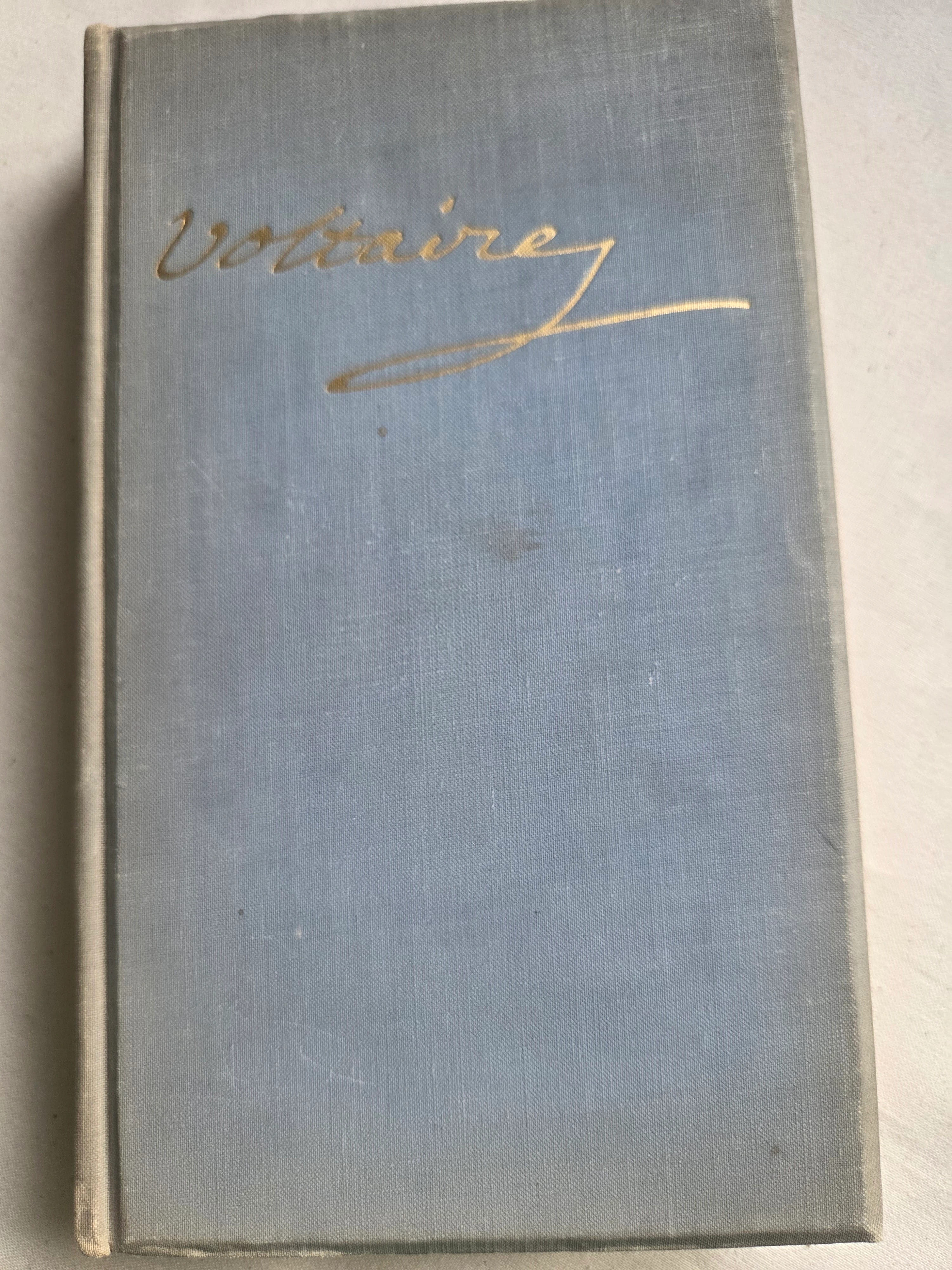
1937rif. 968Paris Compagnie Typographique 1937 in-8 (200x120mm.), bradel de toile gris bleu, portant la signature de Voltaire poussé or sur le premier plat, couverture imprimée.