RussiaABAA

17 544 résultats
1698réf. 112625London: R. Baldwin 1698. First edition of this work. Octavo bound in modern wrappers 28 pages. In very good condition with some browning and toning to the text. Rare with no other examples appearing at auction in the last 80 years. R. Baldwin unknown books
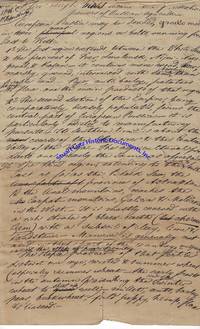
réf. 4678JOSEPH SLOCUM 1800-1853. Slocum was a merchant from Syracuse New York who attempted to sell farm equipment to Russia in the nineteenth century. He was unable to turn a profit from his endeavors and his family fell into financial hardship. His daughter Margaret Olivia Scolum Sage became an influential philanthropist and teacher. She endowed a building and a now-defunct agricultural school at Syracuse University both named after him. Archive. 9 pieces. 1830s-40s. An archive related to Joseph Slocum and his business with Russian agriculture. There are nine letters and documents predominately letters written to Slocum from various Americans and Russians. Highlights are listed below and the best piece is the first one the lengthy manuscript detailing Russian agriculture and natural resources: •Handwritten document. 4pgs. September 12 1846. St. Petersburg Russia. The four page handwritten manuscript is entitled “Some Rough Hints About the Productive Power of Russian Agriculture”. It states in part: “European Russia it may be divided grosso muto in three great regions or belts running from East to West. 1st - The first region extends between the White Sea and the provinces of Tver Smolensk Nijni-Novogorod & Kazan - it contains more wood low marshy ground intermixed the sand Baron then arable land. – Rye oats barley potatoes hemp and flax are the main products of that region. 2nd - the second section of the Empire being comparatively densely populated forms a central part of the European Russia – it is particularly addicted to manufacturing pursuits. It's Southern limits is about the course of the Oka River & the Central Valley of the Volga. The agricultural products are nearly the same as aforesaid. 3rd - the third region extending to the south and southeast as far as the Black Sea the provinces of Ashnaklan and the Ural Mountains reaches the Carpathian mountains Galicia & Moldavia in the West. It is mostly covered with a rich strata of black earth with a subsoil of clay lime & sandstone. Minoru is generally not used in this part of the country vulgarly called the step or prairie count the staple products of the fertile district are rye winter and summer wheat especially summer wheat - the summer frosts in the autumn preventing the seeds of the winter week to start up well millet oats barley peas buckwheat field poppy hemp flax & linseed. Cotton & Vine are raised merely in the most remote districts of the South such as Georgia Astrakhan the territory of the Cossacks of the Don Crimea & Bessarabia. Three other very important staples of Steph region are livestock & saltworks & fisheries. The stock consists mainly of horned cattle and horses grazing in large herds on the pastorate of the steps of the Black Sea… As well as on both sides a lower Volga. Sheep both Merinos Saxon & form and main object of the agricultural industry of the step and owners. – The Russian or common sheep is generally the property of the peasantry. The wool and tallow are usually sent overland in the winter to the manufacturing districts of the central belt of Russia Moscow. Or exported via Odessa Taganrog Riga & Petersburg to England and France. The saltworks are especially remarkable on the left sure the Volga on the verge of the province of Astrakhan as well as near the Ural River not far from the city of Orenburg. The Lake Elton alone of a circumference of nearly 180 miles is a solid mass of salt inexhaustible in its mineral riches. The stone saltworks of Gletznaia.As well as the saltworks a Crimea produce an immense quantity of that precious mineral. Besides that all the basin of the Caspian is full of an infinity of small salt lakes. The main fisheries are at the mouth of the Volga on the Caspian – they produce an enormous quantity of fish of all kind. Besides that of the fisheries of the Ural River on the Don. The main fluvial artery of Russia is the Volga – it is a Mississippi of our country. Its length is upwards 3000 miles. Unfortunately it is frozen up during nearly 6 months of the year. There are but very few steamboats in it. This year a large steam tow boat has been put into action on the Volga attended with great success…”. The manuscript continues extolling Russia’s natural resources. It is uncertain who wrote it and the condition is good with folds and fold separations. A partial typewritten transcript is included. LS. 1pg. August 1843. Russia. A letter signed “L. Perovsky” by Russian nobleman Lev Perovski 1792-1856 as Russian Minister of the Interior. Perovski thanked Slocum: “The Directo fo the Agronomical…School having informed me that you presented to the museum of this Institution several agronomical instrument I feel myself much gratified to acknowledge…”. Agronomy is crop and soil science. The letter is in very good condition with folds and short fold separations. ALS. 4pg. 5 ½” x 8 ½”. November 7 1846. St. Peterburg Russia. An autograph letter signed by an American working for the United States Legation at St. Petersburg. He wrote in part to Slocum: “…The only reproach I ever heard from the Minister as I told you at that time and which certainly stands on a misunderstanding concerns the establishment of a cast iron fabrication. The Minister is in full belief you had spoken to him about a…in the Union that as soon as a new colony any where is established…This seemed to His Excellency excellent means to introduce in Russia and to…in this way the…possibility to the peasants to have their implements cheap & well one…”. The letter is in fine condition. ANS. 1pg. 1834. New York. A brief note acknowledging money received from Slocum signed “Ja J Roosevelt” by Jacobus “James” Roosevelt III 1760-1847 the New York state businessman and politician who was great-grandfather of FDR. In fine condition. ALS. 1pg. June 6 1834. New York. An autograph letter signed “Jab J Roosevelt” by Jacobus Roosevelt. Roosevelt wrote to Slocum requesting the return of an item. In very good condition. ALS. 3pgs. October 22 1846. St. Petersburg Russia. A lengthy letter to Slocum signed “Chas Cramer” to Slocum. Charles Cramer 1799-1879 was an important trader to Russian and his letter concerns finance: “…he gave you an order for the purchase of Implements for Agricultural purposes & that he assigned you a credit against…of the Government. He fully confirmed the contents of the letter you communicated to me & promised to reply to your letter…Mr. Clay stated when I asked him on your behalf that he could do nothing in the case to further your interest. Major Whistler whom I called on several time but missed has not yet returned my calls. I rather think he will not be able to serve you better than I can with the Government of this Empire…We merchants often meet with heavy losses – Do consider your ‘Adventure to Russia’ misfortune & think no more about it for you will not gain anything…”. The penciled letter is in very good condition with a tear in the address leaf. Letter. 1pg. 5 ¼” x 8 ¼”. 1846. St. Petersburg. A contemporary copy of an 1846 letter by Rhesa Griffin a Syracuse area merchant: “Received St. Petersburg 31 July 1846 of the Russian Imperial Department…five hundred thirty six silver rubles and sixteen seven coppers in full satisfaction of all and every claim or Demand on the above Department or if any other Department of the Russian Government and in full satisfaction of all and every agreement or understanding made by me with Joseph Slocum as an agent of the Russian Government…”. The document is wrinkled and in very good condition. unknown books
1997réf. 44813Novato CA: Presidio Press 1997. First Edition. Octavo; black cloth with titles stamped in silver on spine; dustjacket; xviii240pp; illus. Fine in a Near Fine dustjacket unclipped with light wear to extremities vertical fold to front flap and a short tear to upper edge of rear panel. Recently published memoir of a 25 year old American soldier a drafter school teacher who fought the Bolshevik's in Russia between 1918-1919. Presidio Press unknown books
1902réf. 16767London: Jarrold & Sons 1902. Later Printing. Octavo. Green decorated cloth blocked in gilt and colors; 285pp 3pp ads. Title page states "Fifth Printing." Very mild external wear; still a tight attractive Near Fine copy of this very attractive book among the earliest translations into English of Gorky's work. Jarrold & Sons unknown books
1988réf. 46769New York: Atlantic IntÕl Pub 1988 . First American edition. Hardcover. Very good/Very good. New York: Atlantic IntÕl Pub 1988 . First American edition. Numerous b/w photographs. 262 17 pp. Hardcover. 8vo. Dark red cloth. A very good tight clean copy in a very good dust wrapper. Very good/Very good. Atlantic IntÕl Pub hardcover books
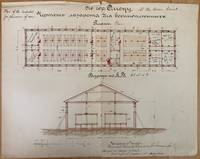
1916réf. List1025Siberia Petrograd et al. 1916. First Edition. Various documents and letters most legal format roughly 200 pages in total with three publications and several newspapers on the subject and thirteen hand drawn architectural plans for a new camp at Omsk measuring between 25 x 17 and 13 x 8 inches. During World War One a staggering number of prisoners - roughly 2.4 of the five million in total who were sent to the Eastern Front - ended up as prisoners of war in Russia. Of that number roughly two million were from Austria-Hungary. Though often neglected by historians due to the attention given to the Russian Civil War and the atrocities of World War Two the subject has drawn increased historical interest with the historian Gerald H. Davis and others calling attention to its importance in the 1980s. Davis and others have written on the relationship between the large prisoner population and the dissolution of their nations as well as the abhorrent conditions many were forced to endure partially due to hierarchical structure of treatment due to differing attitudes by their Russian hosts toward different nations and ethnicities and partially due to the lack of appropriate infrastructure and resources to support such a large prisoner population. Offered here are the papers of Herbert H.D. Pierce the Special Aide to Embassador George T. Marye in Petrograd containing a substantial amount of firsthand accounts of prison conditions from the early years of the war as well as a striking series of manuscript architectural plans for a new prison camp that was built in Omsk. Pierce a diplomat who was most famously involved with a case involving seal fishing in the Berings Strait was appointed as a Special Aide out of his retirement and served until his death in 1916. It is possible that he was assigned the task of dealing with the prisoner of war situation as nearly all of his papers that we recovered from his estate from this period deal with the subject. Pierce was involved specifically with the disbursal of relief funds received from the German and Austro-Hungarian governments that were to be disbursed to their citizens. The highlight of the collection is a series of hand drawn architectural plans for a series of POW camp structures in Omsk bearing the signature of a N. Alexandrow architect. It is unclear what Pierce's exact relationship was to this project. The plans are translated into English in ink. Of particular interest are the separate officers' barracks plans as one of the violations of POW laws in Russia was the varying levels of treatment given to different prisoners in particular in their recognition of German and Austro-Hungarian ranking officers. There were twenty-eight prison camps in Omsk this one is not identified specifically. The Siberian camps often held up to 35000 prisoners this one shows plans for 10000. There were 128 camps in the Moscow region where camps typically housed 2000-5000 prisoners. The conditions of the camps were generally abysmal with camp capacities routinely exceeded by roughly 50-100%. Frequent disease outbreaks killed thousands of prisoners during the conflict in Omsk Novo-Nikolaevsk Sretensk and Totskoe specifically. The group includes letters written to Marye describing conditions in the camps as well as reports of the Americans' own observations in Siberia Moscow and elsewhere. Most are in English though several original documents in German are included. Also included are Pierce's working copies of the Second Hague Convention guidelines of 1907 Order 697 of the War Department that established the regulations regarding prisoners of war in 1914 and a copy of the agreement made between Germany and Russia in August of 1914 which allowed for all women and all men over 45 years and younger than 17 to leave the country unheeded. Some of the letters document violations of this agreement for example a fifty-five year old Austrian man writing to the embassy stating that he had been detained. The authorship of some of the reports is often unclear - one report is credited to "A Russian Lady" another from Krasnaya-Ratchka near Khabaraovsk is an uncredited 18 page description of prisoner conditions. One uncredited report nineteen pages long on the conditions of prisoners in the Moscow Circuit may have been written by Pierce himself and is addressed to Marye. Another 44 page report on Siberian prison conditions is uncredited and likely produced by the embassy itself. A portion - perhaps 25% or so - of the reports are incomplete or unclear in origin though there is much to glean from them regardless. Also included are three printed publications. The first is entitled Rapport du Conseiller Prive E.G. Chinkevitch Membre du Comte special de secours aux prisonniers de guerre sur la visite des camps des prissoniers Austro-Hongrois dans l'arrondissement militair d'Omsk printed in 1915. OCLC locates a single copy in France. The report outlines the observed conditions and includes twenty-six photographs of prisoners. The second is a forty-three page report addressed to James Gerard the American ambassador in Berlin by an unidentified author which outlines the prisoner of war conditions in England written in February of 1915. The third is a scarce map of Russian prisoner of war camps printed by L. Friederichsen in Hamburg in 1915 entitled Karte vom Europäischen und Asiatischen Russland mit Angabe der hauptsächlichsten Orte in denen sich Kriegsgefangene und zurückgehaltene Zivilpersonen befinden sowie mit Bestimmungen über den Postverkehr nach diesen Orten. The map shows locations of prison camps throughout the Russian Empire and also shows the mail routes. It is in fine condition overall and we locate six copies in OCLC. Overall a scarce survival of primary source material on a somewhat overlooked but important period in Russian history with relevance to diplomatic historians as well worthy of further study. Works cited: Grekov N. V.: Germanskie i avstriiskie plennye v Sibiri 1914-1917 German and Austrian prisoners in Siberia 1914-1917 in: Vibe P. P. ed.: Nemtsy. Rossiia. Sibir' Germans. Russia. Siberia Omsk 1997 p. 159. Nachtigal Reinhard: Seuchen unter militärischer Aufsicht in Rußland. Das Lager Tockoe als Beispiel für die Behandlung der Kriegsgefangenen 1915/16 in: Jahrbücher für Geschichte Osteuropas 48/3 2000 pp. 367-368; Brändström Kriegsgefangenen 1922 pp. 41-48. Nachtigal Reinhard; Radauer Lena: Prisoners of War Russian Empire. In: 1914-1918 Online. https://encyclopedia.1914-1918-online.net/article/prisoners_of_war_russian_empire Accessed 5/21. unknown books
réf. 14498Archive of 13 Vintage Horse Racing photos 3.2" x 2.3" Part of an album. Russian Military Officers Horseback riding on a manege or racetrack. The riders are wearing typical Russian outfits of 1920's. unknown books
réf. 16790Russia bond Irkutsk 1917 This bond dates from the year of the Bolshevik revolution. 200 rubles P-S886. During the Russian Civil War which broke out after the October Revolution the city of Irkutsk to whom this Bond was issued became the site of many furious bloody clashes between the "White movement" and the "Red Bolsheviks". In 1920 Aleksandr Kolchak the commander of the largest contingent of anti-Bolshevik forces was executed in Irkutsk. This effectively destroyed the anti-Bolshevik resistance. Bolshevik revolutionaries overthrew the Provisional government subsequently creating the Soviet government. The amounts of payments in default were enormous. the repudiation of the old debt by the Soviet government shocked international finance and triggered unanimous condemnation by the governments of the great powers. The revolutionary Russia completely fell out of the world economy and sealed itself up in isolation. unknown books
1893réf. 653421893. St. Petersburg: Izd. L.F. Pantelieeva 1893. St. Petersburg: Izd. L.F. Pantelieeva 1893. The Last Edition of the Nakaz Published in the Nineteenth Century Catherine II 1762-1796 Empress of Russia. Bezgin Il'ia Grigor'evich Editor. Nakaz Eja Imperatorskago Velicestva Ekateriny Vtoryja Samoderzicy Vserossijskija Dannyj Kommissii o Socinenii Proekta Novago Ulozenija. St. Petersburg: Izd. L.F. Pantelieeva 1893. 53 201 pp. Text of Nakaz in Russian with parallel French translation. Original printed stiff wrappers bound into recent quarter calf over cloth gilt fillets and lettering piece to spine endpapers renewed. Light soiling and edgewear to wrappers moderate toning to text faint dampspotting to a few leaves. Small early owner label to front free endpaper internally clean. $1750. The last edition published in the nineteenth century. The Nakaz or Instruction is a statement of legal principles written by Catherine II between 1764 and 1766. It was among her most ambitious and significant undertakings. Infused with the ideas of the French Enlightenment and copied mostly from the work of Voltaire Montesquieu and Beccaria it was compiled as a guide for the All- Russia Legislative Commission convened by the Empress in 1767 to create a new code to replace the 1649 Muscovite Code. Revised in consultation with Frederick the Great and Voltaire the Instruction proclaimed the equality of all men before the law and denounced torture and the death penalty. Unfortunately her proposed code was never completed. The first two editions one with parallel texts in Russian and German were published in 1767. OCLC locates 1 copy in a North American law library Columbia. Another copy located at Harvard Law School. Butler The Nakaz of Catherine the Great 526 Entry 18. unknown books
1907réf. 653411907. The First Edition of the Nakaz Published in the Twentieth Century Catherine II 1762-1796 Empress of Russia. Chechulin Nikolai Dmitrevich 1863-1927 Editor. Nakaz Imperatritsy Ekateriny II Dannyi Kommissii o Sochinenii Proekta Novago Ulozheniia. St. Petersburg: Izd. Iurid. Knizhnago Sklada "Pravo" 1907. ii cliv 174 pp. Three folding plates of facsimile manuscript leaves. Text of Nakaz in Russian with parallel French translation. Contemporary pebbled cloth light rubbing to extremities with minor wear to spine ends and corners which are bumped. Light toning to text a few leaves have carefully repaired tears. Early inscription and owner inkstamp to title page interior otherwise clean. $1250. The first edition published in the twentieth century. Title two in the series Pamiatniki Russkago Zakonodatel'stva 1649-1832. The Nakaz or Instruction is a statement of legal principles written by Catherine II between 1764 and 1766. It was among her most ambitious and significant undertakings. Infused with the ideas of the French Enlightenment and copied mostly from the work of Voltaire Montesquieu and Beccaria it was compiled as a guide for the All- Russia Legislative Commission convened by the Empress in 1767 to create a new code to replace the 1649 Muscovite Code. Revised in consultation with Frederick the Great and Voltaire the Instruction proclaimed the equality of all men before the law and denounced torture and the death penalty. Unfortunately her proposed code was never completed. The first two editions one with parallel texts in Russian and German were published in 1767. Our 1907 edition may have been inspired by a spirit of reform fired by the Russian Revolution of 1905. OCLC locates 1 copy in a North American law library Columbia. Another copy located at Harvard Law School. Butler The Nakaz of Catherine the Great 526 Entry 19. unknown books
1769réf. 647731769. Early French-Language Edition of Catherine's Nakaz Catherine II 1762-1796 Empress of Russia. Landres J. Rodolphe Frey de Translator. Instructions Adressees par Sa Majeste Instructions Adressees par Sa Majeste L'Imperatrice de Toutes les Russies L'Impratrice de Toutes les Russies: A la Commission Etablie Pour Travailler a L'Execution du Projet d'un Nouveau Code de Lois. Traduit de l'Allemand. "A Petersbourg" i.e. Yverdon Switzerland: s.n. 1769. 286 pp. 12mo. 6" x 4". Early quarter vellum over marbled boards untrimmed edges a few unopenened signatures. Light soiling corners lightly bumped and worn. Moderate toning somewhat heavier in places some leaves have light foxing a few have light dampstaining to margins internally clean. Ex-library. Small inkstamp to title page. A handsome copy. $1000. Reissue of the first edition in French published for by the St. Petersburg Academy of Sciences for private distribution in 1769. This important text also known as the Nakaz or Instruction is a statement of legal principles written by Catherine II from 1764 and 1766. Permeated with the ideas of the French Enlightenment and copied mostly from the work of Voltaire Montesquieu and Beccaria it was compiled as a guide for the All-Russia Legislative Commission convened by the Empress in 1767 to create a new code to replace the 1649 Muscovite Code. Revised in consultation with Beccaria Frederick the Great and Voltaire the Instruction proclaimed the equality of all men before the law and disapproved of death penalty and torture. Unfortunately her proposed code was never completed. Catherine's manuscript was written in French and she later produced a Russian translation. Editions in German and Russian were published in Moscow in 1767. The book was initially banned in France because it was too liberal which is why the first French-language edition was produced in Switzerland with a false imprint. French and Latin editions were eventually published in 1770. OCLC locates 6 copies of this imprint in North American law libraries Columbia George Washington University Harvard Library of Congress UC-Berkeley Yale. Butler The Nakaz of Catherine the Great 531 Entry 40. unknown books
1771réf. 647971771. Amsterdam 1771. 2nd Dutch ed. Amsterdam 1771. 2nd Dutch ed. Early Amsterdam Edition of Catherine's Nakaz Catherine II 1762-1796 Empress of Russia. Instruction de Sa Majeste Imperiale Catherine II. pour la Commission Chargee de Dresser le Projet d'un Nouveau Code de Loix. Amsterdam: Chez Marc Michel Rey 1771. vii 229 pp. Frontispiece engraved copperplate medallion portrait of Catherine II by C.A. Boily. Octavo 7-3/4" x 4-3/4". Contemporary mottled calf blind rules to boards gilt spine with lettering piece edges rouged marbled endpapers. A few minor scuffs to boards moderate rubbing to extremities spine ends worn front joint starting at ends corners bumped and somewhat worn. Light toning to text dampstaining and light foxing to a few leaves internally clean. An attractive copy. $1500. Second Dutch edition. This important text also known as the Nakaz or Instruction is a statement of legal principles written by Catherine II from 1764 and 1766. Permeated with the ideas of the French Enlightenment and copied mostly from the work of Voltaire Montesquieu and Beccaria it was compiled as a guide for the All-Russia Legislative Commission convened by the Empress in 1767 to create a new code to replace the 1649 Muscovite Code. Revised in consultation with Beccaria Frederick the Great and Voltaire the Instruction proclaimed the equality of all men before the law and disapproved of death penalty and torture. Unfortunately her proposed code was never completed. Catherine's manuscript was written in French and she later produced a Russian translation. Editions in German and Russian were published in Moscow in 1767. Several editions followed in nations ranging from Italy to Latvia. The first Dutch edition in Dutch translation was published in Amsterdam in 1769. The 1771 Amsterdam edition was the first Dutch edition in French. It is a scarce imprint. OCLC locates 2 copies in North American law libraries Library of Congress UC-Berkeley. Butler The Nakaz of Catherine the Great 528 entry 28. unknown books
1770réf. 648241770. St. Petersburg 1770. 4th & best ed. St. Petersburg 1770. 4th & best ed. "The Best and Most Luxurious" Four-Language Edition of Catherine the Great's Nakaz Catherine II 1762-1796 Empress of Russia. Kozitzki Grigorii Vasil'yevich d. 1775 Latin translation. Nakaz Eia Imperatorskago Velichestva Ekateriny Vtoryia Samoderzhitsy Vserossiiskiia Dannyi Kommissii o Sochinenii Proekta Novago Ulozheniia. Instructions of Her Imperial Majesty Catherine II to the Commission on the Work of the Projected New Code of Laws. St. Petersburg: Imperatorskaya Akademii Nauk 1770. viii 403 pp. Four title pages one in each language. Printed in double columns Russian and Latin on one page and German and French on the opposite page. Allegorical engravings by C. M. Roth at head and tail pieces. Latin translation by Grigorii Vasil'yevich Kozitzki. Quarto 9-1/2" x 8". Contemporary calf raised bands lettering piece and black-stamped ornaments to spine edges rouged patterned endleaves Light rubbing faint stains scratches and ink marks to boards which are slightly bowed moderate rubbing to extremities corners bumped and worn. Large copperplate vignettes at beginning and end of text. Light toning to text somewhat heavier in places faint dampstaining to margins in a few places internally clean. A nice copy. $3500. Only four-language edition the fourth and best edition overall. Described by Count M.A. Korf then director of the Imperial Library as "The Best and Most Luxurious Edition." The Nakaz or Instruction is a statement of legal principles written by Catherine II between 1764 and 1766. It was among her most ambitious and significant undertakings. Infused with the ideas of the French Enlightenment and copied mostly from the work of Voltaire Montesquieu and Beccaria it was compiled as a guide for the All-Russia Legislative Commission convened by the Empress in 1767 to create a new code to replace the 1649 Muscovite Code. Revised in consultation with Frederick the Great and Voltaire the Instruction proclaimed the equality of all men before the law and denounced torture and the death penalty. Unfortunately her proposed code was never completed. Catherine's manuscript was written in French and she later produced a Russian translation. Editions in German and Russian were published in Moscow in 1767. The book was initially banned in. unknown books
1771réf. 648601771. Early Amsterdam Edition of Catherine's Nakaz Catherine II 1762-1796 Empress of Russia. Instruction de Sa Majeste Imperiale Catherine II. Pour la Commission Chargee de Dresser le Projet d'un Nouveau Code de Loix. Amsterdam: Chez Marc Michel Rey 1771. vii 229 pp. Copperplate portrait frontispiece. Octavo 7-3/4" x 4-3/4". Later patterned-paper covered boards calf lettering piece to spine patterned endpapers. Minor wear to spine ends and corners front joint starting at ends. Negligible light toning to text dampstaining to bottom and fore-edges of text block very faint in most places in preliminaries somewhat darker. A nice copy. $1250. Second Dutch edition. This important text also known as the Nakaz or Instruction is a statement of legal principles written by Catherine II from 1764 and 1766. Permeated with the ideas of the French Enlightenment and copied mostly from the work of Voltaire Montesquieu and Beccaria it was compiled as a guide for the All-Russia Legislative Commission convened by the Empress in 1767 to create a new code to replace the 1649 Muscovite Code. Revised in consultation with Beccaria Frederick the Great and Voltaire the Instruction proclaimed the equality of all men before the law and disapproved of death penalty and torture. Unfortunately her proposed code was never completed. Catherine's manuscript was written in French and she later produced a Russian translation. Editions in German and Russian were published in Moscow in 1767. Several editions followed in nations ranging from Italy to Latvia. The first Dutch edition in Dutch translation was published in Amsterdam in 1769. The 1771 Amsterdam edition was the first Dutch edition in French. It is a scarce imprint. OCLC locates 2 copies in North American law libraries Library of Congress UC-Berkeley. Butler The Nakaz of Catherine the Great 528 entry 28. unknown books
1927réf. WebOneAbe-371Paris: Rieder 1927. Performing arts Paris: Rieder 1927. Square 8vo original printed wrappers. Top of spine pulling else fine. With 176 pp. ads for art films and 20 heliogravure plates. Printed Wrappers. Very Good. 8vo. Paris: Rieder, Paperback books
1884réf. 1397881884. BINDING. La Russie et les Russes. By Victor Tissot. 4 423 1 pp. Illustrated with 7 plates and 240 illustrations in the text. 4to. 275 x 195 mm bound in publisher's polychrome binding. Paris: Librairie Plon E. Plon Nourrit et Cie. 1884. First Illustrated Edition. The text appeared in a smaller format without illustrations in 1882. A handsome copy of this celebrated survey of Russia in its original polychrome binding with a view of the Kremlin on the front cover. Of the illustrations 67 are by F. de Haenen and 115 are by Pranischnikoff. Scattered foxing a near fine copy. unknown books
réf. 8622Muscatine: Prairie Press n.d. 1st. paperback. Near fine. Wrappers. Decorated cover. Small chip at the head of the spine. Two tipped in illustrations. Prairie Press paperback books
réf. P4601Berlin und Stettin: bey Friedrich Nicolai 1788. Octavo 15.5 × 9.2 cm. Contemporary half calf; spine richly gilt and with green title lable; edges red; XVI 347 pp. Frontis engraving by E. Henne. Bookplate of Martin E. Winkler to front pastedown. Boards very lightly rubbed; tiny ink shelfmark to first leaf; a few small smudges but overall a very good copy. First collected edition and the first edition printed in Germany of these three anti-Masonic plays by Catherine the Great which were first staged in Russia in 1786 at the Hermitage Theater in St. Petersburg. At the same time they were published in German translation by Christian Gottlieb Arndt 1743-1829 by at least two Russian publishers evidently to great acclaim. Catherine's plays were in particular a reaction to the arrival of Alessandro Cagliostro 1743-1795 in St. Petersburg where he sought to spread word of his system of "Egyptian Freemasonry" but was exposed and ridiculed. The publisher the German writer critic and bookseller Christoph Friedrich Nicolai 1733-1811 was one of the key representatives of the Berlin Enlightenment. His lengthy preface praises Catherine's wisdom and reaffirms the need for ridiculing occultism and superstition of all forms in this "century of philosophy." Curiously he also mentions that the Russian editions of Catherine's plays earned their publishers over twenty thousand rubles. Cat. Russica C344. From the collection of the German historian and icon collector Martin E. Winkler 1893-1982. KVK and OCLC locate no copies in North America only microform. hardcover books
1742réf. WRCAM241811742. 27pp. Text in parallel English and French columns. Quarto. Later plain wrappers front wrap detached. Untrimmed. Clean and very good. A treaty of military alliance between Great Britain and Russia. unknown books
1755réf. WRCAM24182London 1755. 18pp. Text in parallel French and English. Quarto. Dbd. Titlepage and final leaf a bit tanned. Else quite good. Detailed military alliance treaty between Great Britain and Russia setting forth the need for a capable defense force in case of attacks on dominions of both nations. One of the secret articles at the end stipulated that Great Britain shall pay Russia 100000 pounds a year to maintain a strong military force on the borders of Livonia. unknown books
1956réf. WRCAM9768Moscow 1956. Three volumes. Photos plates and maps some folding. Large thick octavo. Gilt cloth. Nice set in very good dust jackets. A comprehensive history from the earliest times through World War II issued under the auspices of the Russian Academy. hardcover books
1917réf. 318401Philadelphia: J.B. Lippincott. London : Chapman & Hall 1917. First edition. With numerous Illustrations. xi 1 232 pp. 8vo. Bound in light tan mottled modern three quarters polished calf brown leather title label and marbled boards. Fine. First edition. With numerous Illustrations. xi 1 232 pp. 8vo. J.B. Lippincott. London : Chapman & Hall unknown books
1898réf. 318338London: C. Arthur Person 1898. Second edition. Illustrated.x. 275pp. 8vo. Bound in three quarters brown mottled calf red leather title label marbled boards. Fine. Second edition. Illustrated.x. 275pp. 8vo. C. Arthur Person unknown books
1930réf. 317605London: Herbert Jenkins 1930. First Printing. Illus. 320pp. 8vo. Bound in modern three quarters mottled brown calf marbled sides leather title label. Fine. First Printing. Illus. 320pp. 8vo. Herbert Jenkins unknown books
1880réf. 53786Moscow 1880. 10 hand-colored albumenprints some captioned in type in French and Russian. Oblong 4to. Contemporary quarter maroon morocco and boards cover titled in gilt "Photographs." Front joint cracked photographs in fine condition. 10 hand-colored albumenprints some captioned in type in French and Russian. Oblong 4to. Beautifully and finely hand-colored photographs of Moscow and St. Petersburg. Provenance: Baldur Bookshop Richmond Surrey receipt laid-in unknown books