Blake, William (Trianon Press)Biblio.com
18 330 résultats
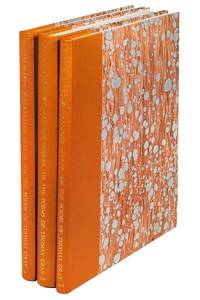
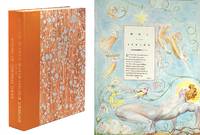
réf. 1077171972. London: Trianon Press 1972. Folio with 116 color facsimile leaves reproduced by collotype and hand-stencil color the text of the poems reproduced from copper-plate with 3 additional printings to reproduce Blake's pencillings and the tone of the paper. Original sheets marbled boards morocco backstrip lettered in giltquarter brown morocco box. § Edition limited to 518 copies in all including 100 copies for Paul Mellon personally of which 12 copies were a super de luxe issue in three volumes with extra material 36 copies were a de luxe issue also with extra material but in sheets unbound18 copies were hors commerce contents unrecorded and 352 copies either bound in 3 volumes in slipcases or as a single set of the loose sheets in a box. This is copy 387. The 116 water-color illustrations to Thomas Gray's poems are among Blake's major achievements as an illustrator. They were commissioned in 1797 by Blake's friend the sculptor John Flaxman as a gift for his wife Ann to whom Blake addressed the poem that ends the series. The commission may have been inspired by the Flaxmans' seeing Blake's water-color designs to Edward Young's Night Thoughts begun in 1795. The Gray illustrations follow the same basic format. Blake cut windows in large sheets of the same type of Whatman paper used for the Night Thoughts illustrations and mounted in these windows the texts of Gray's poems from a 1790 octavo edition published by John Murray leaving out some prefatory materials fly-titles the notes and the 7 engraved illustrations. Blake then drew and colored his designs surrounding the letterpress texts. On blank versos near the beginning of each poem and in one case on a separate piece of paper pasted over letterpress text Blake inscribed with pen and ink either titles for each design or quotations from the poem to indicate the passage illustrated. On most text pages Blake also drew a pencil cross left of the first line of the illustrated passage. He numbered most leaves consecutively in pen and ink beginning a new sequence for each of the 13 poems. Blake conceived of his work as an illustrated book rather than a series of unbound designs as indicated by his offsetting Gray's texts above and to the right left on versos from the middle of each leaf-then the convention for all letterpress books. Although listed by William Michael Rossetti in his catalogue of Blake's drawings and paintings published in the 1863 and 1880 editions of Alexander Gilchrist's Life of William Blake the Gray illustrations were virtually unknown until their rediscovery by Herbert Grierson in 1919. The Trianon Press reproductions are recognized as the finest examples of the art of facsimile reproduction; working from the originals in Paul Mellon's collection each leaf is faithfully hand-colored through stencils to achieve an astonishing exactitude. The Times Literary Supplement stated that nothing like these books had ever been printed before and that it was highly unlikely that they could be printed again. Bentley Blake Books 385. unknown
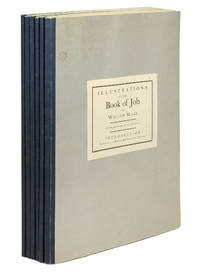
1935réf. 79441935. New York: Pierpont Morgan Library 1935. Large 4to text illustrations including 63 color facsimile plates in six fascicles in original wrappers with labels; near fine copy small stain to one wrapper enclosed in the original blue cloth box rather worn. § A magnificent production showing for the first time the three colored sets done by Blake and the drawings for the smaller set as well as reproducing in fine facsimile the proof issue of the first printing. Issued in a small edition and hard to find in good condition. Bentley BB 374. "The 134 plates of this excellent edition include Blake's pencil drawings and watercolors and proofs of his engravings. For the genesis of Job it is of crucial importance." Despite the Trianon Press edition of 1987 this edition is still a necessity as it reproduces in color a set not reproduced in color in the Trianon edition. unknown books
1886réf. 302951London: Kegan Paul Trench and Co 1886. Folding facsimile of the Blake broadside by William Muir. With explanatory note by Herbert Gilchrist at pp. 159-60. 1 vols. 4to. Blake plate folded fine. Volume bound in contmporary quarter brown morocco and cloth marbled endsheets t.e.g. Minor rubbing to joints. Very good. Folding facsimile of the Blake broadside by William Muir. With explanatory note by Herbert Gilchrist at pp. 159-60. 1 vols. 4to. First volume of the Hobby Horse publication of the influential Century Guild. Notable for the fine facsimile of the rare Blake broadside Little Tom the Sailor. The ballad is by William Hayley and in the autumn of 1800 Blake engraved the two images on pewter. The broadside was "Printed for & Sold by the Widow Spicer of Folkstone for the benefit of her orphans". The facsimile is uncredited but is by William Muir. Bentley 407b Kegan, Paul, Trench and Co unknown books
1968réf. 1075951968. London: Trianon Press 1968. 4 vols. 8vo and 12mo Vol. I 8vo i-vii-viii 50 4 pp. Vol. II 12mo 2 pp. 22 plates Vol. III 4 pp. 31 plates Vol. IV 12mo 2 pp. 10 plates negative and copper plate. Original tan morocco volume 4 in brown cloth as issued cloth slipcase gilt lettering to backstrips of all three volumes. Backstrips slightly flaked. § Copy #14 with the first three volumes bound in morocco. From an edition of 726 total copies including 700 numbered 1 to 700 of which the first 50 have additional material and are in a special binding and 26 reserved copies lettered A-Z. Volume I is an introductory volume followed by three volumes of plates. "In about 1818 Blake revised For Children: The Gates of Paradise giving the work the new title of For the Sexes: The Gates of Paradise and adding three new text plates at the end Plates 19-21. All twenty-one plates are intaglio etchings/engravings. Plates 19-20 contain brief interpretive statements keyed by number to the preceding design plates. The final plate is addressed to Satan as the "God of This fallen World." Blake Archive. Bentley BB 48. unknown books
réf. 1268401972. London: Trianon Press 1972. 3 volumes folio with 116 color facsimile leaves reproduced by collotype and hand-stencil color the text of the poems reproduced from copper-plate with 3 additional printings to reproduce Blake's pencillings and the tone of the paper. Marbled boards morocco backstrips slipcases a fine set as issued. § Edition limited to 518 copies in all including 100 copies for Paul Mellon personally of which 12 copies were a super de luxe issue in three volumes with extra material 36 copies were a de luxe issue also with extra material but in sheets unbound18 copies were hors commerce contents unrecorded and 352 copies either bound in 3 volumes in slipcases or as a single set of the loose sheets in a box. This is copy #125. The 116 water-color illustrations to Thomas Gray's poems are among Blake's major achievements as an illustrator. They were commissioned in 1797 by Blake's friend the sculptor John Flaxman as a gift for his wife Ann to whom Blake addressed the poem that ends the series. The commission may have been inspired by the Flaxmans' seeing Blake's water-color designs to Edward Young's Night Thoughts begun in 1795. The Gray illustrations follow the same basic format. Blake cut windows in large sheets of the same type of Whatman paper used for the Night Thoughts illustrations and mounted in these windows the texts of Gray's poems from a 1790 octavo edition published by John Murray leaving out some prefatory materials fly-titles the notes and the 7 engraved illustrations. Blake then drew and colored his designs surrounding the letterpress texts. On blank versos near the beginning of each poem and in one case on a separate piece of paper pasted over letterpress text Blake inscribed with pen and ink either titles for each design or quotations from the poem to indicate the passage illustrated. On most text pages Blake also drew a pencil cross left of the first line of the illustrated passage. He numbered most leaves consecutively in pen and ink beginning a new sequence for each of the 13 poems. Blake conceived of his work as an illustrated book rather than a series of unbound designs as indicated by his offsetting Gray's texts above and to the right left on versos from the middle of each leaf-then the convention for all letterpress books. Although listed by William Michael Rossetti in his catalogue of Blake's drawings and paintings published in the 1863 and 1880 editions of Alexander Gilchrist's Life of William Blake the Gray illustrations were virtually unknown until their rediscovery by Herbert Grierson in 1919. The Trianon Press reproductions are recognized as the finest examples of the art of facsimile reproduction; working from the originals in Paul Mellon's collection each leaf is faithfully hand-colored through stencils to achieve an astonishing exactitude. The Times Literary Supplement stated that nothing like these books had ever been printed before and that it was highly unlikely that they could be printed again. Bentley Blake Books 385. unknown books
réf. 1077171972. London: Trianon Press 1972. Folio with 116 color facsimile leaves reproduced by collotype and hand-stencil color the text of the poems reproduced from copper-plate with 3 additional printings to reproduce Blake's pencillings and the tone of the paper. Original sheets marbled boards morocco backstrip lettered in giltquarter brown morocco box. § Edition limited to 518 copies in all including 100 copies for Paul Mellon personally of which 12 copies were a super de luxe issue in three volumes with extra material 36 copies were a de luxe issue also with extra material but in sheets unbound18 copies were hors commerce contents unrecorded and 352 copies either bound in 3 volumes in slipcases or as a single set of the loose sheets in a box. This is copy 387. The 116 water-color illustrations to Thomas Gray's poems are among Blake's major achievements as an illustrator. They were commissioned in 1797 by Blake's friend the sculptor John Flaxman as a gift for his wife Ann to whom Blake addressed the poem that ends the series. The commission may have been inspired by the Flaxmans' seeing Blake's water-color designs to Edward Young's Night Thoughts begun in 1795. The Gray illustrations follow the same basic format. Blake cut windows in large sheets of the same type of Whatman paper used for the Night Thoughts illustrations and mounted in these windows the texts of Gray's poems from a 1790 octavo edition published by John Murray leaving out some prefatory materials fly-titles the notes and the 7 engraved illustrations. Blake then drew and colored his designs surrounding the letterpress texts. On blank versos near the beginning of each poem and in one case on a separate piece of paper pasted over letterpress text Blake inscribed with pen and ink either titles for each design or quotations from the poem to indicate the passage illustrated. On most text pages Blake also drew a pencil cross left of the first line of the illustrated passage. He numbered most leaves consecutively in pen and ink beginning a new sequence for each of the 13 poems. Blake conceived of his work as an illustrated book rather than a series of unbound designs as indicated by his offsetting Gray's texts above and to the right left on versos from the middle of each leaf-then the convention for all letterpress books. Although listed by William Michael Rossetti in his catalogue of Blake's drawings and paintings published in the 1863 and 1880 editions of Alexander Gilchrist's Life of William Blake the Gray illustrations were virtually unknown until their rediscovery by Herbert Grierson in 1919. The Trianon Press reproductions are recognized as the finest examples of the art of facsimile reproduction; working from the originals in Paul Mellon's collection each leaf is faithfully hand-colored through stencils to achieve an astonishing exactitude. The Times Literary Supplement stated that nothing like these books had ever been printed before and that it was highly unlikely that they could be printed again. Bentley Blake Books 385. unknown books
1893réf. 1270451893. London: Quaritch 1893. Large 4to xxi pp. text 54 leaves printed in outline in reddish brown. Original half hardgrain morocco first blank and title-page foxed otherwise internally a very fine copy with some light wear to the backstrip. § A very scarce companion volume to the colored version both issued by Quaritch at the same time. Bentley Blake Books 173. Bookplate at the front of Pickford Waller and in the back that of Harris Elliott Kirk. unknown books
réf. 1081121987. Paris: Trianon Press for the Blake Trust 1987. 22 separate plates approx. 15.75 x 12.25 inches 30 x 31 cm each printed in color on Arches housed in a tri-fold paper folder. Very good condition. § The New Zealand Set are careful watercolor copies of the central designs of the original engravings produced by the circle of John Linnell presented here in faithful facsimile. Butlin noted in the Blake Quarterly: "The long list of color facsimiles produced by the Trianon Press under Arnold Fawcus for the William Blake Trust were above all objects of beauty recreating as near to perfection as possible Blake's original achievements.". unknown books
1948réf. 16214Unknown. 1948. First edition. Matted and framed original artwork for The Case of the Dangra Millions Sexton Lake Library book number 189. 18 1/2" X 17 3/8" in total size. Depicts in full color a man with a gun hiding behind a door who has just knocked unconscious a listener at the door with the butt end of the pistol while a young woman and her male companion look on. Colorful and attractive. Unknown. unknown
1764réf. 1263551764. London: Printed in the Year of our Lord God 1699: and Re-printed in the year 1764. Sm. 4to vii viii errata 179pp. Engraved portrait frontispiece not always present. Original blue boards white paper backstrip rather soiled ff. iv-v also soiled otherwise a good copy as issued entirely untrimmed. § Second edition of Lodowick Muggleton's spiritual autobiography published posthumously in 1699 and reprinted in 1764. Muggleton was the founder of a radical Protestant sect which engaged in heated debates with the Quakers and others. Morton in "The Everlasting Gospel" 1958 et seq. is responsible for suggesting that Blake many have been influenced by extreme dissenters including Muggletonians -- others disagreed. Bentley BBS p.579. "Blake participates in a radical politico-religious tradition that was most vocal and extreme in the seventeenth century. chiefly Ranters Muggletonians and other extreme dissenters". ESTC T91008; Smith Bibliotheca Anti-Quakeriana p. 310. See Wikipedia for a long entry on Muggletonianism. unknown
1764réf. 1263551764. London: Printed in the Year of our Lord God 1699: and Re-printed in the year 1764. Sm. 4to vii viii errata 179pp. Engraved portrait frontispiece not always present. Original blue boards white paper backstrip rather soiled ff. iv-v also soiled otherwise a good copy as issued entirely untrimmed. § Second edition of Lodowick Muggleton's spiritual autobiography published posthumously in 1699 and reprinted in 1764. Muggleton was the founder of a radical Protestant sect which engaged in heated debates with the Quakers and others. Morton in "The Everlasting Gospel" 1958 et seq. is responsible for suggesting that Blake many have been influenced by extreme dissenters including Muggletonians -- others disagreed. Bentley BBS p.579. "Blake participates in a radical politico-religious tradition that was most vocal and extreme in the seventeenth century. chiefly Ranters Muggletonians and other extreme dissenters". ESTC T91008; Smith Bibliotheca Anti-Quakeriana p. 310. See Wikipedia for a long entry on Muggletonianism. unknown books
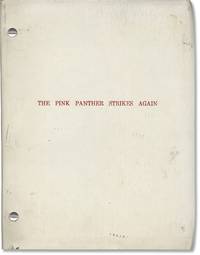
réf. 172336N.p.: N.p. 1976. Draft script for the 1976 film. The fifth installment in the much-loved "Pink Panther" series and the fourth to star Peter Sellers in which Inspector Clouseau faces off against former Chief Inspector Dreyfus who has just been released from long-term confinement in a psychiatric hospital. Dreyfuss plans to destroy England by launching nuclear missiles from a castle in Bavaria where he is in hiding. Shot on location in London Surrey Munich and Paris. White titled wrappers. Title page present with credits for screenwriters Blake Edwards and Frank Waldman. 142 leaves with last page of text numbered 140. Mimeograph duplication rectos only. Pages Near Fine wrappers Very Good plus bound with two silver screw brads. N.p. unknown
réf. 172336N.p.: N.p. 1976. Draft script for the 1976 film. The fifth installment in the much-loved "Pink Panther" series and the fourth to star Peter Sellers in which Inspector Clouseau faces off against former Chief Inspector Dreyfus who has just been released from long-term confinement in a psychiatric hospital. Dreyfuss plans to destroy England by launching nuclear missiles from a castle in Bavaria where he is in hiding. Shot on location in London Surrey Munich and Paris. White titled wrappers. Title page present with credits for screenwriters Blake Edwards and Frank Waldman. 142 leaves with last page of text numbered 140. Mimeograph duplication rectos only. Pages Near Fine wrappers Very Good plus bound with two silver screw brads. N.p. unknown books
réf. 105372London Waddington Graphics and Corianda Studios 1991 . Screenprint in colours 1991 on wove paper signed titled and numbered 49/95 from the edition of 95 in pencil published by Waddington Graphics and Corianda Studios 102.5 x 77 cm. 40.4 x 30.3 in. London Waddington Graphics and Corianda Studios 1991 unknown
réf. 105374London Waddington Graphics and Corianda Studios 1991 . Screenprint in colours 1991 on wove paper signed titled and numbered from the edition of 95 in pencil published by Waddington Graphics and Corianda Studios 102.5 x 77 cm. 40.4 x 30.3 in. London Waddington Graphics and Corianda Studios 1991 unknown
réf. 105389London Waddington Graphics and Corianda Studios 1991 . Screenprint in colours 1991 on wove paper signed titled and numbered from the edition of 95 in pencil published by Waddington Graphics and Corianda Studios 102.5 x 77 cm. 40.4 x 30.3 in. London Waddington Graphics and Corianda Studios 1991 unknown
réf. 105390London Waddington Graphics and Corianda Studios 1991 . Screenprint in colours 1991 on wove paper signed titled and numbered from the edition of 95 in pencil published by Waddington Graphics and Corianda Studios 102.5 x 77 cm. 40.4 x 30.3 in. London Waddington Graphics and Corianda Studios 1991 unknown
réf. 105369London Waddington Graphics and Corianda Studios 1991 . Screenprint in colours on wove paper signed titled and numbered from the edition of 95 in pencil published by Waddington Graphics and Corianda Studios 102.5 x 77cm. London Waddington Graphics and Corianda Studios 1991 unknown
réf. 105370London Waddington Graphics and Corianda Studios 1991 . Screenprint in colours on wove paper signed titled and numbered from the edition of 95 in pencil published by Waddington Graphics and Corianda Studios 102.5 x 77cm. London Waddington Graphics and Corianda Studios 1991 unknown
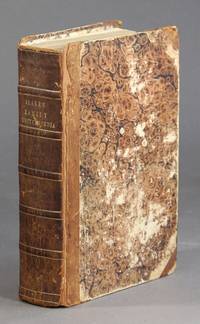
1834réf. 59712New York: published by Peter Hill no. 94 Broadway 1834. Large 8vo in 4s approx. 10¼" x 6½" pp. 6 960; alphabetical text in double column; engraved oval frontispiece portrait of George Washington and 22 lithographs by Pendleton of notable American architecture; contemporary quarter diced russia over marbled boards; boards worn neatly rebacked with old spine laid down; internally clean and the binding remains sound. Early owner's ownership signature on two flyleaves and recto of the frontispiece. Originally published in monthly parts beginning in 1832 of which no copies in OCLC this is the first book edition. Among the buildings represented are City Hall Augusta Georgia; Columbia College; the Deaf and Dumb Asylum Philadelphia; Mount Auburn Cemetery; Andover Theological Seminary; Mount Vernon; the Arcade in Providence; Kenyon College; Dartmouth College; the Capitol of Pennsylvania at Harrisburg; Yale College and State House; The White House State House in Boston and City Hall in New York among others. That six of the nine records in OCLC are for individual plates suggests that this was a book often broken up for the lithographs. OCLC locates a total of only 7 copies: Yale Boston Athenaeum Boston Public Harvard Lehigh Houston and the University of Edinburgh. Not noted in Walsh Anglo-American General Encyclopedias. Not in the Arents Collection of Books in Parts. American Imprints 23440; Sabin 5782. published by Peter Hill, no. 94 Broadway unknown
1834réf. 59712New York: published by Peter Hill no. 94 Broadway 1834. Large 8vo in 4s approx. 10¼" x 6½" pp. 6 960; alphabetical text in double column; engraved oval frontispiece portrait of George Washington and 22 lithographs by Pendleton of notable American architecture; contemporary quarter diced russia over marbled boards; boards worn neatly rebacked with old spine laid down; internally clean and the binding remains sound. Early owner's ownership signature on two flyleaves and recto of the frontispiece. Originally published in monthly parts beginning in 1832 of which no copies in OCLC this is the first book edition. Among the buildings represented are City Hall Augusta Georgia; Columbia College; the Deaf and Dumb Asylum Philadelphia; Mount Auburn Cemetery; Andover Theological Seminary; Mount Vernon; the Arcade in Providence; Kenyon College; Dartmouth College; the Capitol of Pennsylvania at Harrisburg; Yale College and State House; The White House State House in Boston and City Hall in New York among others. That six of the nine records in OCLC are for individual plates suggests that this was a book often broken up for the lithographs. OCLC locates a total of only 7 copies: Yale Boston Athenaeum Boston Public Harvard Lehigh Houston and the University of Edinburgh. Not noted in Walsh Anglo-American General Encyclopedias. Not in the Arents Collection of Books in Parts. American Imprints 23440; Sabin 5782. published by Peter Hill, no. 94 Broadway unknown books
réf. 115051Clairvaux: by the Trianon Press for the William Blake Trust London 1976. First edition thus copy II of 32 copies bound in full morocco with an original guide sheet stencil and copperplate and a set of extra plates showing progressive stages of the collotype and hand-stencil process from a total edition of 538 copies printed on Arches pure rag paper made to match the paper used by Blake. Blake scholar Geoffrey Keynes 1887-1982 the brother of John Maynard provides a commentary and bibliographical history. "The Book of Los was the first of the two small books executed by Blake mainly as etchings on copper to be printed as ordinary intaglio plates. The Book of Ahania was the companion volume. The title-pages of both books were dated by Blake 1795 so that they were probably the last ones to be produced in his Lambeth house. Each book exists in only a single copy. The Book of Los. has been since 1866 in the British Museum" Keynes. Only one copy of the Book of Los is known. These beautifully produced facsimiles of Blake are now highly regarded in their own right. Large quarto. Colour plates reproducing the original Book of Los. Original tan full morocco spine lettered in gilt. With the original handmade marbled slipcase. A few light marks to covers a few spots to fore-edge an excellent copy. unknown
1935réf. 63710hNew York: Peirpont Morgan Library 1935. Book. Fine. Hardcover. 1st Edition. Folio - over 12 - 15" tall. Six fascicles with black cloth-backed grey card covers and front title-labels all in a new cloth clam-shell box with original title-label to spine. Very fine and rarely handled: clean tight and unmarked. Very neat --a sound and handsome set. Peirpont Morgan Library Hardcover
1954réf. 45872Paris Editions du Lombard 1954 In-4, cartonnage bradel illustr de l'diteur.Edition originale de cet album, qui constitue le premier tome de la collection Le Mystre de la Grande Pyramide. Etat de conservation: trs bon pour l'intrieur et le cartonnage.
1795réf. 185860London: printed for J. Johnson 1795. The full and unexpurgated translation of his witty licentious poetry First edition in English of Catullus's complete poems for which William Blake engraved the two frontispiece portraits of Catullus and Cornelius Nepos. The edition which presents Latin and English texts in parallel with extensive notes began the English commentary tradition on Catullus. The technique of stipple engraving employed by Blake for the two frontispieces was "unusual for him in book illustration" and resulted in "a pleasing softness quite different from the effect conveyed by the ordinary line engraving" Ryskamp p. 40. The Catullus engraving was reproduced in the 1894 edition of the Carmina by Richard Burton and Leonard Smithers who identified Blake's illustration as the statue in the Council House of Verona. The anonymous editor John Nott 1751-1825 was a physician and classical scholar. This edition "sealed his reputation as a gifted classicist and poet" ODNB. In the introduction he makes no apologies for Catullus's frequent "indecencies" writing that "when an ancient classic is translated and explained the work may be considered as forming a link in the chain of history: history should not falsified. we must not in our translation suppress or even too much gloss them over through a fastidious regard to delicacy". Nott's commitment to the integrity of the original is uncommon for its day. A generation later in 1821 George Lamb published a new translation in which Catullus's text is normalized to accommodate the contemporary moral conservatism. The publisher Joseph Johnson issued the works of political and Romantic radicals throughout the 1790s. "The publication of such writers whose work is marked by heightened emotionalism provided a fecund publication list for the emergence of Catullus in English" Stead p. 27. 2 parts in 1 vol. octavo 213 x 139 mm pp. xxxvi 223 3 ii 236 2. Errata leaf at rear of each vol.; bound without half-titles. With 2 stipple-engraved portrait frontispieces by Blake after Xaverius Della Rosa. Early 19th-century half calf spine decorated in gilt and blind red morocco label marbled sides rolled in blind red edges. Ownership inscriptions and previous catalogue descriptions to front endpapers in ink and pencil. Front joint professionally restored binding rubbed and lightly worn at extremities pale tide mark to first frontispiece contents slightly foxed. A very good copy. Bentley 441; Bentley & Nurmi 357; ESTC N12190; Keynes 110; Russell 82; Ryskamp 50. Terry Reksten The Dunsmuir Saga 1991; Henry Stead A Cockney Catullus: The Reception of Catullus in Romantic Britain 1795-1821 2015. unknown