18 324 résultats
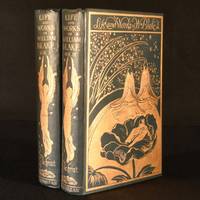
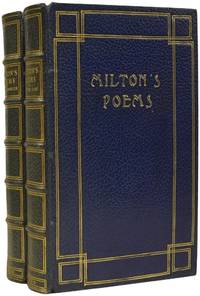
réf. 70746London: The Nonesuch Press 1926. Literature LIMITED EDITION in a fine bespoke binding. Quarto 26 x 16cm two volumes pp.359; 283. With fifty-three illustrations by William Blake reproduced in collotype. Letter press printing in the Italic type of Blado by Walter Lewis printer of Cambridge University Press on Van Gelder Rag Paper. Title page border and arabesque ornaments designed by Douglas Percy Bliss printed in two colours. Hand-bound by MacLehose of Glasgow in full mid-blue crushed Levant with elegant gilt strapwork to covers gilt-panelled spine with twin rules top edge gilt others untrimmed with an attractive heavy-deckle edge subtle pink marbled endpapers. Clean throughout with very light spotting to prelims and final leaves. Bindings are pleasingly aged with gentle toning to the spine. A fine pair in superb full morocco by one of the foremost British trade binderies. James MacLehose 1811-1885 began business as a bookseller in Glasgow in 1838 later bookseller and publisher to the University. Around 1862 he established a bookbinding shop working fine leather in his own style with a perfection of workmanship seldom attained. The bindery continued to produce quality work well into the twentieth century with examples held in the Hunterian Library University of Glasgow. As James MacLehose & Sons then MacLehose Jackson & Co. Jackson Wylie & Co. and finally the Maclehose Group the firm was liquidated in 1982. John Milton is regarded as one of history's greatest poets and one of the pre-eminent writers in the English language revered by poets such as William Blake whose etchings first embellish the present work in 1808. Blake has become a seminal figure in the history of the poetry and visual art of the Romantic Age. London: The Nonesuch Press, 1926 unknown
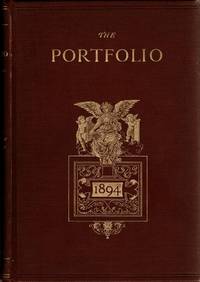
1894réf. 32183AB1894. Original / First Edition. 21 Volumes bound in seven Volumes. London Seeley and Co. 1894-1896. Quarto 19.2 cm wide x 27.2 cm high. c. 1600 pages with a total of 37 Etchings / Engravings. Hardcover / All Volumes in their original very decorative Art Nouveau-Bindings with gilt lettering and ornament on spine and frontcover. All Bindings in protective Collectors-Mylar. Excellent actually stunning condition with only minor signs of wear and occasional foxing to some of the illustrations only. One layer loosened in the 1895-Volume. This collection of 21 Volumes Bound in seven Volumes includes: 1. 1894 - Annual Volume One 3 Volumes in 1: I. William Sharp - "Fair Women In Painting and Poetry" With Etchings by Alma-Tadema / Sir Peter Lely / Daniel Mytens etc. II. C.J.Cornish - "The New Forest" Illustrated by Lancelot Speed Alexander Ansted and John Fullwood III. Walter Armstrong - "Thomas Gainsborough" _______________________________________________________ 2. 1894 Annual Volume Two - 3 Volumes in 1: I. P.G.Hamerton - "The Etchings of Rembrandt" With Plates Etched in Facsimile by Amand Durand The four wonderful Rembrandt-Etchings are: a. Rembrandt with the Broad Hat and Embroiderd Mantle b. The Rat Killer c. Johannes Lutma d. Rembrandt's Mother seated looking to the right II. Rev. W.K.R.Bedford - "MALTA and the Knights Hospitallers" With Plates etched: a. "Isola Point" - Etched by A. Ansted b. "Rabato Gozo" - Drawn by T.H.Crawford and Engraved by Walter L. Colls c. "Citta Vecchia" - Etched by A. Ansted from a drawing by Edward Lear d. "Chapel of our Lady of Philermos" - Engraved by Walter L. Colls III. A.H. Church - "Josiah Wedgwood - Master-Potter" His Precursors / His Early Years / As Master-Potter / His Ceramic Improvements / His Invention of the "Jasper" Body / The Barberini or Portland Vase / Cameo His Cameos Medallions and Plaques / His Portrait Cameos / Vases in the Jasper Body / Miscellaneous Productions in Jasper / Later Years / Position as an Art-Potter / Collections and Collectors // Illustrations in the Wedgwood-Volume include: 1. Portland Vase / 2. Plaque Sacrifice of Iphigenia / 3. Two Medallions A Zephyr / 4. Medallion Portrait of Flaxman __________________________________________________ 3. 1895 - Annual Volume One - 3 Volumes in 1: I. C.J.Cornish - "The Isle of Wight" a. With an original etching by John Fullwood: "Freshwater Gate" Frontispiece b. With an original etching after E.Duncan: "Isle of Wight - The Fleet leaving Portsmouth" c. With an original etching by John Fullwood: "Bonchurch" d. With an original etching by Thomas Huson: "Sandown Bay" Also includes several text-illustrations of the Isle of Wight II. Julia Cartwright - "Raphael in Rome" III. L.Binyon - "Dutch Etchers" _____________________________________________________ 4. 1895 - Annual Volume Two - 3 Volumes in 1: I. Julia Cartwright Mrs. Henry Ady - "The Early Work of Raphael" Illustrated II. Walter Armstrong - "The Art of William Quiller Orchardson" WIth original engravings and text-illustrations III. George Grahame - "Claude Lorrain - Painter & Etcher" Illustrated _______________________________________________________ 5. 1895 - Annual Volume Three - 3 Volumes in 1: I. Richard Garnett - "William Blake - Painter and Poet" With an etching "The Sons of God" and several illustrations also in colour: a. "The Sons of God" From the Book of Job b. "The Lamb and Infant Joy" from Songs of Innocence c. "The Fly and the Tiger" From Songs of Experience d. "The Book of Thel Title-page in two facsimiles by W.Griggsl e. "America" With 19 further text-illustrations by William Blake including a rare portrait of Blake II. Olivier Georges Destree - "The Renaissance of Sculpture in Belgium" Illustrated III. W.H.James Weale - "Gerard David - Painter and Illuminator" Illustrated ______________________________________________________________________ 6. 1895 - Annual Volume Four - 3 Volumes in 1: I. W.J.Loftie - "Whitehall" With many interesting historical illustrations on Whitehall and Scotland-Yard II. Professor Anderson - "Japanese Wood-Engravings" Illustrated beautifully some in colour after Utagawa Toyokuni Utamaro Katsugawa Shuncho etc. III. Claude Phillips - Antoine Watteau Illustrated _______________________________________________________________ 7. 1896 - Annual Volume - 3 Volumes in 1: I. Claude Phillips - The Picture Gallery of Charles I. Illustrated II. Cecilia Waern - "John La Farge - Artist and Writer" Illustrated with a stunning engraving of "Prosperitas" an illustration of "The Wolf Charmer" etc. etc. III. Richard Garnett - Richmond on The Thames Illustrated with stunning engravings by a. John Fullwood "Richmond Hill" - Engraving b. Clough Bromley "The Thames from Buccleugh Gardens" - Engraving c. T.Huson "The View from Richmond Hill" - Engraving d. T.Huson "Richmond Bridge" - Engraving and many text-illustrations "The Portfolio" was a British monthly art magazine published in London from 1870 to 1893. It was founded by Philip Gilbert Hamerton and promoted contemporary printmaking especially etching and was important in the British Etching Revival. Early contributors included Francis Turner Palgrave 18241897 and Sidney Colvin 18451927. The mid-nineteenth century in France and Britain saw a rise in the interest in etching. Hamerton had spent the 1860s in France with his French wife Eugénie. The impetus for the launch of The Portfolio came in the wake of the foundation in Paris of the Société des aquafortistes in 1862 and to a lesser extent from the longer established Etching Club from 1838. Etchings by many French etchers such as Paul Rajon 18431888 and Alfred Brunet-Debaines 18451939 were a marked feature of the publication. Indeed The Standard remarked in 1874 that the publication's "speciality as probably most people know is the etchings with which it is adorned." Rajon published twelve etchings in the periodical before his untimely death. The New York Times lavished praise on the publication when in 1875 it remarked that it could not "eulogize too highly the merits of this periodical in all its departments. It is without question the most beautiful in regard to illustration which emanates from the press." The late nineteenth-century British author George Gissing wrote in his diary for December 1895 sic. that he took the magazine for his son because of its good pictures. In a survey of the etching revival in 1878 the Magazine of Art highlighted the centrality of Hamerton and his monthly magazine which had "so ably and unceasingly pleaded the cause of etching" in Britain. Wikipedia ______________________________________________________________________ Philip Gilbert Hamerton 10 September 1834 4 November 1894 was an English artist art critic and author. He was a keen advocate of contemporary printmaking and most of his writings concern the graphic arts. He was an important theorist of the English Etching Revival. Hamerton was born at Laneside a hamlet near Shaw and Crompton Lancashire England. His mother died giving birth to him and his father died ten years later. When he was about five he was sent to live with his two aunts at an estate called the Hollins1 on the edge of Burnley where he attended Burnley Grammar School. Hamerton's first literary attempt a volume of poems was unsuccessful leading him to devote himself for a time entirely to landscape painting; he camped out in the Scottish Highlands where he eventually rented the former island of Inistrynich in Loch Awe upon which he settled with his wife Eugénie Gindriez the daughter of a French republican magistrate in 1858. Discovering after a time that he was more suited to art criticism than painting he moved to Sens and later to Autun3 where he produced his Painter's Camp in the Highlands 1863 which was very successful and prepared the way for his standard work on Etching and Etchers 1866. In the following year he published Contemporary French Painters and in 1868 a continuation Painting in France after the Decline of Classicism. He had by now become art critic to the Saturday Review which necessitated frequent visits to England forcing him to give it up. He proceeded in 1870 to establish and edit an art journal of his own The Portfolio a monthly periodical each number of which included of a monograph upon some artist or group of artists often written by him. The journal championed printmaking especially etching. He selected and wrote the accompanying text for Etchings by French and English Artists London: Seeley 1874 which included work by Alphonse Legros and Léon Gaucherel. The discontinuation of his painting gave him time for writing and he successively produced The Intellectual Life 1873 perhaps the best known and most valuable of his writings; Round my House 1876 notes on French society by a resident; and Modern Frenchmen 1879 admirable short biographies. He also wrote two novels Wenderholme 1870 and Marmorne 1878. In 1884 Human Intercourse another volume of essays was published and shortly afterwards Hamerton began his autobiography which he brought down to 1858. In 1882 he issued a finely illustrated work on the technique of the great masters of various arts under the title of The Graphic Arts and three years later another splendidly illustrated volume Landscape which traces the influence of landscape upon the mind of man. His last books were: Portfolio Papers 1889 and French and English 1889. In 1891 he removed to Villa Clématis in the Parc des Princes district of Boulogne-Billancourt in the southwest suburbs of Paris. He died there suddenly on 4 November 1894 aged sixty occupied to the last with his labours on The Portfolio and other writings on art. In 1897 'Philip Gilbert Hamerton: an Autobiography 18341858; and a Memoir by his wife 18581894' was published. Wikipedia hardcover
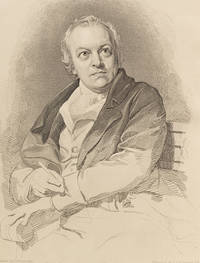
1870réf. 1278541870. BLAKE William BLAIR Robert. The Grave. London: John Camden Hotten circa 1870. Folio 11 by 14 inches modern three-quarter red morocco raised bands top edge gilt. $1650.Third edition of Blair's singular poetic achievement with splendid engraved frontispiece portrait of William Blake and 12 engraved plates rendered by Shiavonetti after Blake's original designs including the engraved title page. In October 1805 Blake was commissioned by the engraver and would-be publisher Robert H. Cromek to prepare 40 drawings for Robert Blair's Grave from which Cromek planned to select 20. While The Grave originally appeared in 1743 the illustrations in this very scarce second edition and the rarely found 1808 first edition are especially famous for vividly demonstrating ""the rare imaginative power of William Blake"" Magnusson 162. ""In fact Blair had a perceptible influence on Blake the poet as well as on Blake the painter"" Kunitz & Haycraft 46. A dispute over a preliminary etching ""in white-line"" called ""Death's Door"" which Cromek rejected resulted in Blake's being prevented from engraving his own designs so the 12 drawings eventually selected were rendered by Louis Schiavonetti ""with a mingled grace and grandeur which won for them a wider popularityÉ Never has the theme of death been handled in pictorial art with more elevation and beauty"" DNB. Also featured is Blake's dedicatory poem ""To the Queen"" a prefatory comment on the designs by Henry Fuseli and a concluding section ""Of the Designs."" Preceded by the rare 1808 edition of less than 600 copies and the large folio second edition of 1813. This third edition was produced by John Camden Hotten sometime around 1870 after Gilchrist's 1863 Life of William Blake reawakened an interest in the poet/artist. With minor alterations Gilchrist was able to use the original plates from the 1813 edition with the reset text being a very close imitation of the original; the letterpress title page is still for the 1813 Ackermann edition for instance with no mention of Hotten or 1870. Bentley Blake Books 350A. Keynes 82. Ray Illustrator and the Book in England 6a. See Lewine 68. Fine condition. hardcover
1870réf. 1278541870. BLAKE William BLAIR Robert. The Grave. London: John Camden Hotten circa 1870. Folio 11 by 14 inches modern three-quarter red morocco raised bands top edge gilt. $1650.Third edition of Blair's singular poetic achievement with splendid engraved frontispiece portrait of William Blake and 12 engraved plates rendered by Shiavonetti after Blake's original designs including the engraved title page. In October 1805 Blake was commissioned by the engraver and would-be publisher Robert H. Cromek to prepare 40 drawings for Robert Blair's Grave from which Cromek planned to select 20. While The Grave originally appeared in 1743 the illustrations in this very scarce second edition and the rarely found 1808 first edition are especially famous for vividly demonstrating ""the rare imaginative power of William Blake"" Magnusson 162. ""In fact Blair had a perceptible influence on Blake the poet as well as on Blake the painter"" Kunitz & Haycraft 46. A dispute over a preliminary etching ""in white-line"" called ""Death's Door"" which Cromek rejected resulted in Blake's being prevented from engraving his own designs so the 12 drawings eventually selected were rendered by Louis Schiavonetti ""with a mingled grace and grandeur which won for them a wider popularityÉ Never has the theme of death been handled in pictorial art with more elevation and beauty"" DNB. Also featured is Blake's dedicatory poem ""To the Queen"" a prefatory comment on the designs by Henry Fuseli and a concluding section ""Of the Designs."" Preceded by the rare 1808 edition of less than 600 copies and the large folio second edition of 1813. This third edition was produced by John Camden Hotten sometime around 1870 after Gilchrist's 1863 Life of William Blake reawakened an interest in the poet/artist. With minor alterations Gilchrist was able to use the original plates from the 1813 edition with the reset text being a very close imitation of the original; the letterpress title page is still for the 1813 Ackermann edition for instance with no mention of Hotten or 1870. Bentley Blake Books 350A. Keynes 82. Ray Illustrator and the Book in England 6a. See Lewine 68. Fine condition. hardcover books
4to (260 x 205 mm), 2 parts in one, first part the first edition, the second part is a third edition, [4], vii-xii, 214, 126, [2]; [2], ix, [1], 197, [1]pp., engraved frontispieces and 18 plates (5 folding), of which 5 plates by William Blake, occasional offsetting, signatures L & M misbound (part 2), scattered faint spotting, marbled endpapers, contemporary full red morocco, single gilt fillet border to boards, smooth spine, seven gilt tooled bands producing 6 compartments, upper compartment with the Arnold crest - a demi tiger regardant bezanty holding a pheon, next compartment gilt lettered direct, some light rubbing to extremities, otherwise a very nice copy. Epic poetic tribute to the lives, loves, and reproductive capacity of plants by the grandfather of Charles Darwin. Darwin's Botanic Garden is important for the five plates in part I which are engraved by William Blake: 'The Fertilization of Egypt,' engraved after the painting by Henry Fuseli, and four engravings of the Portland Vase. "The chief source of Erasmus Darwin's literary fame during his lifetime, The Botanic Garden contains a great deal of important and frequently advanced scientific information in the nearly 300 footnotes and the 115 pages of appendices to its verses..."? The Encyclopaedia Britannica. Provenance: Armorial bookplate of George Henry Arnold (1791-1844) to font paste-down; later bookplate of Ralph Hermon Major.
2012réf. __0435071696Heinemann 2012. Mixed media product. New. 1st edition. 13.15x10.55x7.87 inches. Heinemann unknown
1967réf. 2111902160603187Not Available 1967. Soft Cover. Fine. Size: 37.5 cm Not Available paperback
1880réf. 1020F17London: Macmillan and Co 1880. Cloth. Near Fine. 9.5" by 7". William Blake. An exceptional example of the preferred second edition of Alexander Gilchrist's richly illustrated biography of William Blake in the publisher's wonderfully decorative original cloth. The two volume second edition of this work. First published in 1863 this second edition is expanded and is generally regarded as more desirable than the first edition in large part due to the binding. Volume I is illustrated with fifty-six vignette full page and mounted illustrations with volume II illustrated with forty-one full plates and vignettes including a number of prints from electrotypes made from the original copperplates of 'Songs of Innocence and Songs of Experience' and Blake's Virgil woodcuts. Retaining many of the original tissue guards. Collated complete. Alexander Gilchrist was an English author known chiefly as a biographer for William Etty and William Blake. The work is considered the standard reference work on Blake with Dante Gabriel Rossetti and his brother William Michael Rossetti both offering contributions. Gilchrist spent many years compiling the material and interviewing Blake's surviving friends although the work was originally left incomplete following Gilchrist's sudden death from Scarlet Fever in 1861. The work was first published two years later having been complete by his wife Anne Gilchrist. In the publisher's original decorative cloth binding with extensive gilt detailing. Bumps to back strip head and tail otherwise externally exceptional. Pages clean and bright with instances of light offsetting to pages facing plates. Near Fine Macmillan and Co hardcover
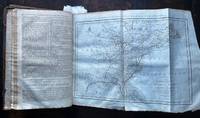
réf. 65645Printed for C. Cook. London. 1787. 2 volumes. Large folio. pp. ii 460; ii 461-970 ii Directions to Binder. 22 engraved maps some folding by THOMAS BOWEN and 90 engraved plates. Lacking 9 maps New Discoveries : World : World Chart : Africa : Europe : South America : Great Britain : Asia : Russian Empire and both frontispieces and 1 plate with 2 plates erroneously listed. Contemporary calf worn but joints intact final text leaf to v.I lacking lower half one other text leaf torn across without loss a few corners torn 2 plates damaged with loss at the top margin occasional marginal tear and loss offered as a good reading copy. Printed for C. Cook. London. [1787?]. 2 volumes. Large folio. unknown
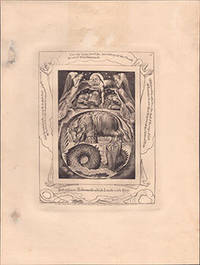
réf. 51-7263London: William Blake March 8. 1825 1826. Original engraving. Platemark 21.5 x 16.3cm; Sheet size 34.6 x 26.2cm. .Three marginal abrasion.Printed on thick unwatermarked rag paper.From the 100 sets on drawing paper with the word "Proof" removed from the plates printed in 1826. Plate 6 from "llustrations of the Book of Job".Binyon 111 second state; Bindman 631."Illustrations of The Book of Job" consists of 22 engraved plates executed entirely with the burin. In the collection of the British Museum there are three complete copies as well as separate impressions one related drawing and the copperplates themselves. In its technical excellence the series is a tribute to earlier engravers whom Blake admired such as Albrecht Dürer."Illustrations of The Book of Job" was commissioned by John Linnell in 1823. It is dated March 1825 but was not finished until 1826. It is the last of several works on the theme of Job which were made by Blake throughout his career. Initially about 300 sets of impressions were made - about half of these were described as "proof" sets. John Linnell retained the copperplates and a posthumous edition was printed in 1874. The plates are now in the British Museum London: William Blake, March 8. 1825 [1826]. unknown
réf. 28867London: Trianon Press 1974. Limited edition Letter R of 26 lettered copies of a total edition of 558 copies. 1 vols. Folio. Original marbled boards brown morocco spine fine in original matching slipcase. Blake William. Limited edition Letter R of 26 lettered copies of a total edition of 558 copies. 1 vols. Folio. The illuminated pages were brilliantly reproduced by Daniel Jacomet; the text was composed by hand in 16 point Garamond and printed by Aulard & Cie master printers in Paris. Trianon Press unknown
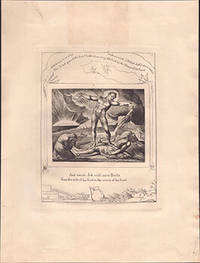
réf. 51-7262London: William Blake March 8 1825 1826. Original engraving. Platemark 20.3 x 16.3cm; Sheet size 34.6 x 26.2cm. .Two marginal abrasions.Printed on thick unwatermarked rag paper.From the 100 sets on drawing paper with the word "Proof" removed from the plates printed in 1826. Plate 15 from "Illustrations of the Book of Job.".Binyon 120 second state; Bindman 640."Illustrations of The Book of Job" consists of 22 engraved plates executed entirely with the burin. In the collection of the British Museum there are three complete copies as well as separate impressions one related drawing and the copperplates themselves. In its technical excellence the series is a tribute to earlier engravers whom Blake admired such as Albrecht Dürer."Illustrations of The Book of Job" was commissioned by John Linnell in 1823. It is dated March 1825 but was not finished until 1826. It is the last of several works on the theme of Job which were made by Blake throughout his career. Initially about 300 sets of impressions were made - about half of these were described as "proof" sets. John Linnell retained the copperplates and a posthumous edition was printed in 1874. The plates are now in the British Museum. London: William Blake, March 8 , 1825 [1826]. unknown
réf. 28867London: Trianon Press 1974. Limited edition Letter R of 26 lettered copies of a total edition of 558 copies. 1 vols. Folio. Original marbled boards brown morocco spine fine in original matching slipcase. Blake William. Limited edition Letter R of 26 lettered copies of a total edition of 558 copies. 1 vols. Folio. The illuminated pages were brilliantly reproduced by Daniel Jacomet; the text was composed by hand in 16 point Garamond and printed by Aulard & Cie master printers in Paris. Trianon Press unknown books
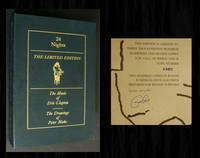
réf. 92424LIMITED & NUMBERED EDITION SIGNED BY ERIC CLAPTON. Published by Genesis in 1991 this is number 2385 of 3000 in existence. Actually a compilation of two volumes CDs memorabilia all housed in a decorative clamshell box. As new simply a breathtaking presentation; highlighted by a carefully written and indisputably authentic autograph by rock legend Eric Clapton. International buyers should request a shipping quote prior to purchase. Signed by author. Genesis Publications hardcover
1787réf. g4041London: J Cooke. G : in good condition. Cover worn with loss to leather. Front board loose. Worming extinct to prelims. Occasional foxing and marks. 1787. Reprint. Brown hardback leather cover. 390mm x 260mm 15" x 10". 990pp vi plates. 90 b/w plates 18 b/w maps 8 fold-out. . And Containing a Complete Genuine History and Description of the Whole World . with an Account of the Rise Progress and Present State of Navigation throughout the Known World. 2 volumes bouns as 1. William Cooper His Booke. Heavy book extra shipping needed for overseas. . J Cooke hardcover
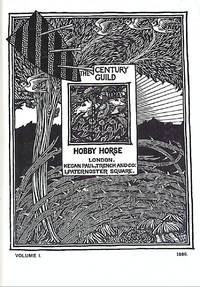
1886réf. d2793London: Kegan Paul Trench & Co. G : in good condition. Covers rubbed and soiled. Eps darkened. Fold-out repaired with archive tape. 1886. First Edition. Blue hardback boards with cream vellum spines. 320mm x 240mm 13" x 9". vi 160pp; viii 160pp iv; vii 160pp plates. 37 plates 24 b/w 13 sepia 1 fold-out. Published 1886-18878. With Glasgow Arts Club bookplate. Heavy set extra shipping needed for overseas. . Kegan Paul, Trench & Co hardcover
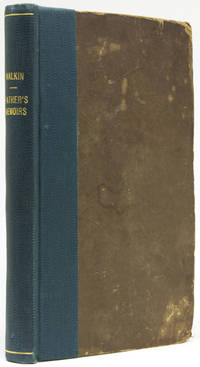
1806réf. 220643London: T. Bensley for Longman Hurst Rees and Orme 1806. First edition. Engraved frontispiece by Robert Cromek after the design by William Blake and Haye and three plates one folding map. xlviii 172 pp. 1 vols. 8vo 25 x 15.5 cm. UNCUT in the original boards; rebacked in cloth endpapers renewed. Fine tall copy. First edition. Engraved frontispiece by Robert Cromek after the design by William Blake and Haye and three plates one folding map. xlviii 172 pp. 1 vols. 8vo 25 x 15.5 cm. A book of paramount importance to Blake studies. Malkin was a personal friend of William Blake with whom he shared an interest in radical politics and on the death of his gifted six-year-old son Thomas in 1802 Malkin commissioned Blake to design the frontispiece for Malkin's FATHER'S MEMOIR. In his Preface to this work Malkin gives what the DNB calls the "first and fullest" account of Blake's early life and career and it was with this very tribute to his friend's idiosyncratic genius that Malkin first gave impetus to a more general appreciation of William Blake's art. Keynes 80; Bentley Blake Books p. 18 T. Bensley for Longman, Hurst, Rees, and Orme unknown
1806réf. 220643London: T. Bensley for Longman Hurst Rees and Orme 1806. First edition. Engraved frontispiece by Robert Cromek after the design by William Blake and Haye and three plates one folding map. xlviii 172 pp. 1 vols. 8vo 25 x 15.5 cm. UNCUT in the original boards; rebacked in cloth endpapers renewed. Fine tall copy. First edition. Engraved frontispiece by Robert Cromek after the design by William Blake and Haye and three plates one folding map. xlviii 172 pp. 1 vols. 8vo 25 x 15.5 cm. A book of paramount importance to Blake studies. Malkin was a personal friend of William Blake with whom he shared an interest in radical politics and on the death of his gifted six-year-old son Thomas in 1802 Malkin commissioned Blake to design the frontispiece for Malkin's FATHER'S MEMOIR. In his Preface to this work Malkin gives what the DNB calls the "first and fullest" account of Blake's early life and career and it was with this very tribute to his friend's idiosyncratic genius that Malkin first gave impetus to a more general appreciation of William Blake's art. Keynes 80; Bentley Blake Books p. 18 T. Bensley for Longman, Hurst, Rees, and Orme unknown books
1880réf. 140947503London: Macmillan and Co 1880. Second Edition. Very Good. Second edition A New and Enlarged Edition Illustrated from Blake's Own Works with additional Letters and a Memoir of the Author. Plates Portraits and Facsimiles. xxi 2 1-431; ix 4 1-383 pp. Bound in the publisher's dark green cloth boards ornately stamped in gilt. Complete in two volumes. Very Good. Light wear to cloth with some rubbing through at joints and tips light rubbing to gilt. Foxing and light offsetting to endsheets and preliminaries contemporary ownership notation to both volumes and light toning to contents. The exceptional second edition of Blake's life and prose a true apex of late Victorian decorated bindings. Macmillan and Co unknown
1880réf. 140947503London: Macmillan and Co 1880. Second Edition. Very Good. Second edition A New and Enlarged Edition Illustrated from Blake's Own Works with additional Letters and a Memoir of the Author. Plates Portraits and Facsimiles. xxi 2 1-431; ix 4 1-383 pp. Bound in the publisher's dark green cloth boards ornately stamped in gilt. Complete in two volumes. Very Good. Light wear to cloth with some rubbing through at joints and tips light rubbing to gilt. Foxing and light offsetting to endsheets and preliminaries contemporary ownership notation to both volumes and light toning to contents. The exceptional second edition of Blake's life and prose a true apex of late Victorian decorated bindings. Macmillan and Co unknown books
1813réf. 003676London: R. Ackermann 1813. Leather. Very Good. William Blake. Original half brown morocco over pebbled boards five raised bands gilt title and decorated compartments marbled endpapers 14" x 11 1/2". Dedication to the Queen by Blake List of Subscribers from 1808 issue Advertisement signed Cromak Remarks signed Fuseli Biographical sketch of Robert Blair Biographical sketch of Lewis Schiavonetti Biographical sketch of Robert Hartley Cromek Text of poem 37 pages Of the Designs; Engraved Blake portrait engraved titlepage of 1808 plus 11 full-page plates engraved by Schiavonetti after William Blake at rear. Some general exterior wear bumped corners and rubbing; typical light foxing heaviest on Blake portrait and engraved title page else internally clean. Provenance: Armorial bookplate of George Baird Stichill. Size: Folio R. Ackermann hardcover
réf. 72110An archive of family letters written to Gratia Turnbull Fuller Blake during the mid-19th century covering a wide range of historic topics including the U.S. Civil War slavery yellow fever and a legal dispute over land in New York City. Born in Lawrence Ohio Gratia married Cincinnattus Blake 1830-1918 a farmer Union soldier and Sheriff of Gallipolis Ohio in 1857. Together they raised six sons. This archive contains a six-page letter Gratia received from her sister-in-law Mary B Fuller. Mary's husband Gratia's brother was Captain Emilius Fuller 1815-63 a Confederate Army officer commander of the St. Martin Rangers Company Infantry in Louisiana and captain of a boat called the Queen of the West. He was seriously wounded and taken prisoner when his boat was destroyed in Bayou Teche on April 14 1863. He was transferred to Johnson's Island Ohio where he died on July 25. In her letter dated December 15 1867 Mary's bitter feelings about slavery and the war are still fresh. "I have the most of my work to do myself. I prefer doing it rather than have a free trifling negress around me. Their impudence I cannot ensure" she wrote from her home in St. Martinsville Louisiana. "They are free as they may stave with their freedom for all I care. I can have a woman by feeding her of giving her a cabin or a room to sleep in and that would cost me less than when I owned them for then we had to clothe feed and take care of them when sick. Many of them are getting their eyes opened and say they have had no good times since the Yankees came among them." Along with their personal losses Mary's family is concerned about an outbreak of yellow fever. Her son James wrote to his Aunt Gratia on October 26 1867 about "yellow jack" which caused 1/3 of the St. Martinsville population to flee: "133 names are published of the victims and except for one or two - they all died since September 11 and about 2/3 of the names only are given which would swell the mortuary list to about 200." An undated letter from her sister-in-law Julia Blake Eaton 1836-1927 includes a negative report of her visit to Cincinnati: "I saw too much suffering while there to feel very happy. I saw a great many of the poor fellows that were wounded at Pittsburgh carried off the steamboats. Poor fellows. God help them." This collection contains 15 letters written in 1856-58 by Cincinnatis to Gratia before they were married. In October 1856 he wrote about all he is doing to yield a living from his Ohio farmlands in order tomake a home for his future bride: "If I do not buy a house I shall have to build such as my means will allow. I shall have to earn part of the money if not raise my wagon cover and live under it. If my hut is of cornstalks and brush I shall be happy if Gratia will share it with me." Another group of nine letters was written by Cincinnatis to Gratia in 1877-78 when he was running a steamboat operation taking potatoes from his farm in Ohio to market in New Orleans along with other goods such as coal picked up along the way. "No good news to speak of and a great deal of bad news" he wrote on November 10 1878. "Lost the big boat Trowbridge have only the small boat Blake left us. We can only run a part of a day or night at a time the wind is blowing now . the wind blew so hard that the waves came over the side splashboards . I think this is my last March trip forever and if we get this one down safe I think it a miracle." The collection includes three other letters written to his "boys" and the family during this period. Another group of letters in this archive are related to the ongoing dispute over property in New York with a branch of Cincinnatus Blake's family known as the "Brower heirs". His sister Visalia wrote on March 4 1867 urging him to join other members of the family to cooperatively hire an attorney to pursue their rights: "We will proceed to enter into a contract with the lawyer whom we have selected as our council by which he will be bound to proceed to collect the necessary evidence to prove our heirship and title to the property in question as take such proceedings as may be necessary to enforce that title against the Trinity Church Corporation." Cincinnatus Blake was apparently distantly related to Anneke or Annetje Jans who purchased a 62-acre piece of land in Manhattan which her living children sold upon her death in 1671. A great-grandson of Jans Cornelius Bogardus later claimed his branch of the family had not legally given up its right to the property since his grandfather one of Anneke's six children had been dead at the time of the sale and were owed one-sixth of the sale. After a century of legal dispute the court rejected the claims. This collection includes a dozen other brief notes and letters from friends during the period. The latest letter in this collection is dated 1884 written to Gratia by her son Charles O. Blake 1860-1924 who asks for money as he is stuck in Fairplay Colorado likely trying to cash in on the gold rush: "I am still a prisoner in this dammed town and see no prospect of getting out of it until I borrow money of you." The collection also includes about a dozen mailing envelopes. The materials are housed in mylar sleeves. Most were folded for mailing with some edgewear and occasional soiling. All are legible and in very good condition. A fascinating archive rich in content. unknown
1938réf. 48034New York and London: Harper & Brothers Publishers 1938. 1938. First U.S. edition. Inscribed by the author on the front free fly leaf "Eric Gillette with best wishes from the author." Original yellow cloth is lightly soiled with a few tiny spots else a very good copy in dust jacket with small chips and tiny nicks to the spine ends corners and extremities. The book is divided into three parts. The first section deals with the death of Martie a young boy killed by a hit-and-run driver. The father grieves and blames himself for having sent the boy out at dusk. At the same time he plans to kill the driver if and when he learns the identity. The second section deals with the father coming to grips with his son's death and devotes his energies to tracking down his son's killer. As he searches for the killer he develops a profile of the killer and looks for the right person to fill the bill as driver and killer. He decides upon a man named George Rattery whose life fits the bill of the father's mental picture of the killer. He decides to kill Rattery in a boating accident. Section three reveals that George Rattery is dead by poisoning the father's diary comes to light and the police accuse him of murdering Rattery. He calls in Nigel Strangeways to clear his name. After much investigation Strangeways brings the case to a stunning conclusion. A Haycraft-Queen Cornerstone title. Highly recommended. Harper & Brothers Publishers, 1938. hardcover
réf. 1073691970. London: Trianon Press 1970. 4to with 10 facsimile leaves 5 pp. commentary by Sir Geoffrey Keynes plus 32 pp. of the progressive collotype printings. Full green morocco near fine with green marbled slipcase. § Copy III of 36 de luxe copies. The total edition was of 662 copies including 36 de luxe copies numbered I-XXXVI 600 regular copies numbered 1-600 and 26 copies lettered A-Z reserved for the trustees of the William Blake Trust and the publishers. Bentley Blake Books 5. All Religions are One c. 1788 is "a small tractate perhaps Blake's first experiment in his illuminated printing it exists in only one copy. It affirms that the Imagination 'is the true man'. and thus early Blake had completed his revolutionary theory of the nature of man and proclaimed the unity of all true religions." Damon Blake Dictionary. unknown
réf. 1047771970. London: Trianon Press 1970. 4to 10 facsimile leaves and 5 pp. of commentary. Original full green morocco backstrip slightly faded as usual slipcase. § Edition de luxe this being copy h.c. ii limited to 36 copies specially bound with extra suites of the plates of an edition in all of 662 copies. Bentley Blake Books 5. All Religions are One c. 1788 is "a small tractate perhaps Blake's first experiment in his illuminated printing it exists in only one copy. It affirms that the Imagination 'is the true man'. and thus early Blake had completed his revolutionary theory of the nature of man and proclaimed the unity of all true religions." Damon Blake Dictionary. unknown