[Blake, Daniel H]Biblio.com

18 354 résultats
réf. 32639Printed broadside 5" x 8" with salutation in ink manuscript. Some margin browning and light margin chipping else Very Good. Blake was Pastor of the First Congregational Church in Waupun. Beneath his printed signature is written in ink "Pastor Cong. Ch". Professor Conatty was T.J. Conatty a public school teacher in Kenosha and a prominent figure in the Wisconsin Teachers' Association. He was later implicated in a bribery scheme with James Rood Doolittle Senator from Wisconsin 1857-1869. On Conatty's behalf Doolittle was to use his influence with President Lincoln to obtain cotton permits during General Banks's occupation of New Orleans; in return Doolittle would receive 25% of the profits. We haven't ascertained whether Senator Doolittle is the "Br. Doolittle" to whom this printed letter is addressed. This unusual ephemeral Civil War broadside is unrecorded. Waupun is in southeastern Wisconsin about sixty miles northwest of Milwaukee. Not located on OCLC as of October 2023 or anywhere else. unknown
réf. 32639Printed broadside 5" x 8" with salutation in ink manuscript. Some margin browning and light margin chipping else Very Good. Blake was Pastor of the First Congregational Church in Waupun. Beneath his printed signature is written in ink "Pastor Cong. Ch". Professor Conatty was T.J. Conatty a public school teacher in Kenosha and a prominent figure in the Wisconsin Teachers' Association. He was later implicated in a bribery scheme with James Rood Doolittle Senator from Wisconsin 1857-1869. On Conatty's behalf Doolittle was to use his influence with President Lincoln to obtain cotton permits during General Banks's occupation of New Orleans; in return Doolittle would receive 25% of the profits. We haven't ascertained whether Senator Doolittle is the "Br. Doolittle" to whom this printed letter is addressed. This unusual ephemeral Civil War broadside is unrecorded. Waupun is in southeastern Wisconsin about sixty miles northwest of Milwaukee. Not located on OCLC as of October 2023 or anywhere else. unknown books
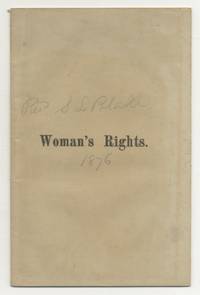
1870réf. 541677Concord: B.W. Sanborn & Co 1870. Softcover. Very Good. First edition. Octavo. 32pp. The printed wrappers are moderately toned light foxing on the title page and final text page very good or better. Rev. Blake's spirited and detailed exhortation against contemporary advocates for women's rights and women's suffrage whom he refers to as "hot-headed agitationists". He also includes appendices on the issue of women in regard to taxation and education. A nice copy in the original wrappers. B.W. Sanborn & Co unknown
1870réf. 541677Concord: B.W. Sanborn & Co 1870. Softcover. Very Good. First edition. Octavo. 32pp. The printed wrappers are moderately toned light foxing on the title page and final text page very good or better. Rev. Blake's spirited and detailed exhortation against contemporary advocates for women's rights and women's suffrage whom he refers to as "hot-headed agitationists". He also includes appendices on the issue of women in regard to taxation and education. A nice copy in the original wrappers. B.W. Sanborn & Co unknown books
1963réf. 711London: Trianon Press for William Blake Trust 1963. With 18 full-page plates in colour. Half morocco with gilt lettering on the spine. Preserved in a slipcase matching the boards. Number 374 of an edition limited to 480 copies printed on Arches pure rag paper made to match that used by Blake. Each page is watermarked with Blake's monogram. Trianon Press for William Blake Trust unknown
1963réf. 711London: Trianon Press for William Blake Trust 1963. With 18 full-page plates in colour. Half morocco with gilt lettering on the spine. Preserved in a slipcase matching the boards. Number 374 of an edition limited to 480 copies printed on Arches pure rag paper made to match that used by Blake. Each page is watermarked with Blake's monogram. Trianon Press for William Blake Trust unknown books
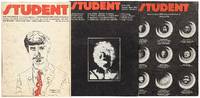
1968réf. 560543London: Connaught Publications Ltd 1968. Softcover. Very Good. Vol. 1 Nos. 1-3 three issues. Published and edited by Richard Branson. Quartos. Each 54pp. Heavily illustrated. Light wear on the wrappers with some foxing on the front cover of the first issue very good or better overall. The first three issues of Student a publication started by a 16 year old Richard Branson which aimed to provide students with a more well-rounded view of their world and of their future. "The fierce debates on education surely involving the student more than anyone are almost never thrown open to him. We plan to be a vehicle for intelligent comment and protest" from Number 1. The publication despite being started by such a young man features some of the most prominent artists and thinkers of the era delivering hard-hitting controversial content in a mature well styled manner. Notable articles and features include an interview between a young Richard Branson and American writer James Baldwin discussing racism in America “Ain’t White People Just Naturally Smarter Prettier Better” by Alice Walker and a short story titled Passage for Translation by John le Carre. For a deeper break down of the contents see below. The inaugural issue includes a short story titled Passage for Translation by author John le Carre an article about the state of British art with excerpts by Gerald Scarfe Kenneth Armitage Henry Moore David Hockney Michael Ayrton and Peter Blake; an article promoting teenage use of contraceptives followed by one encouraging chastity outside of marriage; a centerfold black and white re-creation of PROVOS by Ralph Steadman; an article titled “White Slavery Today” by Colonel Patrick Montgomery of the Anti-Slavery Society about the state of human trafficking; and more. Number 2 includes an article about suicide and mental health by Alan Munton; an article by journalist James Cameron with sections covering Vietnam America China Britain India and a short advice column written to protest-happy students; articles titled "Pro-America" and "Anti-America" the latter written by Bertrand Russell; Other topics include marriage contraception abortion poetry fashion and more. Number 3 includes the “never printed in full before” now infamous “Rivers of Blood” speech by Enoch Powell regarding race and immigration in England the article accompanied by a Ralph Steadman illustration titled “Transition”; an interview between a young Richard Branson and American writer James Baldwin discussing racism in America; an article titled “Ain’t White People Just Naturally Smarter Prettier Better” by Alice Walker who later became the first African-American woman to win the Pulitzer Prize for Fiction; an article by Jean-Paul Sartre recounting his time spent with Fidel Castro; “Paris In The Spring” by Stephen Spender about the civil unrest of 1968; other topics include Vietnam fashion education and more. Issues appear to be extremely uncommon with OCLC locating 11 serial entries likely all incomplete with only four U.S. holdings Harvard Yale Emory Michigan State. Connaught Publications Ltd unknown
1968réf. 560543London: Connaught Publications Ltd 1968. Softcover. Very Good. Vol. 1 Nos. 1-3 three issues. Published and edited by Richard Branson. Quartos. Each 54pp. Heavily illustrated. Light wear on the wrappers with some foxing on the front cover of the first issue very good or better overall. The first three issues of Student a publication started by a 16 year old Richard Branson which aimed to provide students with a more well-rounded view of their world and of their future. "The fierce debates on education surely involving the student more than anyone are almost never thrown open to him. We plan to be a vehicle for intelligent comment and protest" from Number 1. The publication despite being started by such a young man features some of the most prominent artists and thinkers of the era delivering hard-hitting controversial content in a mature well styled manner. Notable articles and features include an interview between a young Richard Branson and American writer James Baldwin discussing racism in America “Ain’t White People Just Naturally Smarter Prettier Better” by Alice Walker and a short story titled Passage for Translation by John le Carre. For a deeper break down of the contents see below. The inaugural issue includes a short story titled Passage for Translation by author John le Carre an article about the state of British art with excerpts by Gerald Scarfe Kenneth Armitage Henry Moore David Hockney Michael Ayrton and Peter Blake; an article promoting teenage use of contraceptives followed by one encouraging chastity outside of marriage; a centerfold black and white re-creation of PROVOS by Ralph Steadman; an article titled “White Slavery Today” by Colonel Patrick Montgomery of the Anti-Slavery Society about the state of human trafficking; and more. Number 2 includes an article about suicide and mental health by Alan Munton; an article by journalist James Cameron with sections covering Vietnam America China Britain India and a short advice column written to protest-happy students; articles titled "Pro-America" and "Anti-America" the latter written by Bertrand Russell; Other topics include marriage contraception abortion poetry fashion and more. Number 3 includes the “never printed in full before” now infamous “Rivers of Blood” speech by Enoch Powell regarding race and immigration in England the article accompanied by a Ralph Steadman illustration titled “Transition”; an interview between a young Richard Branson and American writer James Baldwin discussing racism in America; an article titled “Ain’t White People Just Naturally Smarter Prettier Better” by Alice Walker who later became the first African-American woman to win the Pulitzer Prize for Fiction; an article by Jean-Paul Sartre recounting his time spent with Fidel Castro; “Paris In The Spring” by Stephen Spender about the civil unrest of 1968; other topics include Vietnam fashion education and more. Issues appear to be extremely uncommon with OCLC locating 11 serial entries likely all incomplete with only four U.S. holdings Harvard Yale Emory Michigan State. Connaught Publications Ltd unknown books
1800réf. 76319London:: T. Cadell and W. Davies 1800. First edition. old full calf blind-stamped and gilt-ruled; edges marbled. . There is some light foxing to the three Blake plates and 3-4 gatherings of the text are quite foxed. The joints are split and appear to have been reinforced with adhesive; corners worn. 4to. With three plates engraved by William Blake: a frontispiece Pericles not signed; The Death of Demosthenes; and Thomas Hayley the latter two with printed attributions to Blake. . T. Cadell and W. Davies, unknown
1780réf. 78782London:: John Bell 1780. A New Edition Revised Corrected and Augmented by an original Set of Prints. . old full calf rebacked retaining the old spine. Small attractive old bookplate on pastedown; offsetting of the fencing figures in the folding plates; one plate soiled at the fore-edge due to misfolding; misfolding without damage to another plate. One pair of leaves detached from the generally weak sewing structure; boards rubbed and worn and splitting at joints. A rare book in need of rebinding. 8vo. Complete with fourteen engraved plates thirteen of which are folding; one engraved by William Blake. John Bell, hardcover
1859réf. 13History of Slavery and The Slave Trade in good condition Binding is tight. J. & H. Miller
1993réf. feb1451771993: First Russian Edition of Songs of Innocence and of Experience ПеÑни ÐевинноÑти и Опыта Северо-Запад hardcover
1971réf. 0822553clairvaux France: The Trianon Press for the William Blake Trust 1971. Facsimile Edition. Hardcover in Slipcase. Very Good/No Dust Jacket as issued. Color Facsimile Illustrations. 4to - over 9¾" - 12" tall. Two volumes both bound in full orange morocco housed in a marbled two compartment slipcase 4to & 8vo unpag. One of 50 deluxe copies of which this is # XXXIX - bound in full morrocco and each containing a set of plates shewing the progressive stages of the colotype and hand-stencil process and a guide-sheet and stencil tipped-in at rear of smaller book. . Another spectacular facsimile production from the Trianon Press reproducing the copy residing at the library of congress produces under the supervision of Mr. Arnold Fawcus and printed on Arches pure rag paper to match the paper originally used by Blake. A facsimile of the Rosenwald copy in the Library of Congress. Prospectus laid-in. minor light wear and fading to case extremities. The Trianon Press for the William Blake Trust hardcover
réf. 2080202105000182Shueisha N.A. Soft Cover. Fine. Size: 25cm Number of books: 3 including separate volume Shueisha paperback
1858réf. 000017110Columbus Ohio: J. & H. Miller 1858. First edition. Hardcover. Very Good. Large 8vo. 3 iv-xvi 1 18-832 4 pp. Full contemporary black sheep with decorations stamped in blind on the boards gold lettering and gold decorations on the spine; all edges marbled. Marbled endpapers and pastedowns. Illustrated with a frontispiece and a few plates engravings all in black and white. With a publisher's advertisement slip for a different work a Bible laid in. With a passage on John Brown's raid at Harper's Ferry and an appendix on the Dred Scott decision. Hogg 88. Sabin 5800. Blake begins his history with the practice of slavery in ancient Greece and Rome and includes chapters on slavery in the West Indies and discusses slavery in the fifteenth to the eighteenth centuries. His work ends with a discussion of the annexation of Texas the Missouri Compromise and the conflict in Kansas. A timely history published shortly before the U.S. Civil War. The boards' edges rubbed without much loss to the leather light foxing to the versos of the plates. J. & H. Miller hardcover
réf. 021062London: The Crime Club/Collins 1939. . 1st Edition . Hardcover. Good/Good. First Edition. Previous owner's pencil name and date fading to cloth at spine ends else cloth covers bright foxxing to top page edge in unpriced pictorial dust jacket with large triangular chip 6.5 cm long at rear fold and other smaller edge chips and edge-wear else good. Scarce. London: The Crime Club/Collins, (1939). hardcover
réf. 9781616685850NOVA SCIENCE PUBLISHERS INC
1963réf. 71715Oxford: The Clarendon Press 1963. Elephant FolioFacsimile. xviii 220 145 manuscript plates pp. Light grey-brown hardback with a cursive gilt title to front and gilt lettering to spine. Illustrated brown paper dust jacket protected by Melinex. In a custom-made brown slip-shoe. Not price clipped. Some light speckled loss of colour to top of front board and spine. Light bumping to spine ends. Jacket has been repaired for tears and losses and lined with a heavyweight Japanese paper. Both boards and jacket are generally clean. There is minimal creasing to the jacket joints. Internally clean and bright. This is the first complete facsimile of Vala what Northrop Frye has called 'the greatest abortive masterpiece in English literature'. Provides a thorough transcript and study of the poem with its ninety illustrations. Through this vigorous examination Bentley concludes that the poem's poor critical appraisal has been misguided due to a lack of understanding of the complexities of the original manuscript. A fine volume giving space to Blake's extraordinary talent as both illustrator and poet. This is a heavy item and may require additional postage if being shipped outside of Europe. . Very Good. Hardcover. 1963. The Clarendon Press 1963 hardcover
1965réf. 11332London: Cape 1965. A first edition first printing published by Cape in 1985. A near fine book small and neat gift inscription to the title page signed by Blake on the title page. Some light bumping to the boards. A very nice signed item. Cape hardcover
1926réf. 13181London: Nonesuch Press 1926. Two vols. One of 1450 sets printed on Van Gelder rag paper there were also 90 copies in one volume on India paper. Printed in Baldo Italic by Walter Lewis Cambridge University Press printer. 53 collotype illustrations after William Blake. 8vo. original parchment backed patterned paper covered boards. A very good bright set free endpapers rather browned as usual.“My favourite.of Nonesuch publications. The Blake illustrations are surprisingly right” Francis Meynell in The Nonesuch Century. Nonesuch Century no.32 Francis Meynell’s favourite Nonesuch book Nonesuch Press hardcover
1980réf. 386544No place: John Blake 1980. Unbound. Near Fine. Photocopied loose quarto sheets. 305 serially numbered leaves followed by two hand-numbered leaves all printed rectos only. Very near fine in a worn hand-lettered envelope. The manuscript dutifully shows evidence of corrections deletions and emendations but seems like a reasonably close to final draft. The book a study of what became of the Beatles in the aftermath of their breakup culminating in the murder of John Lennon was published in New York by Perigee Books in 1981. Included is a copy of the book. John Blake unknown
1980réf. 386544No place: John Blake 1980. Unbound. Near Fine. Photocopied loose quarto sheets. 305 serially numbered leaves followed by two hand-numbered leaves all printed rectos only. Very near fine in a worn hand-lettered envelope. The manuscript dutifully shows evidence of corrections deletions and emendations but seems like a reasonably close to final draft. The book a study of what became of the Beatles in the aftermath of their breakup culminating in the murder of John Lennon was published in New York by Perigee Books in 1981. Included is a copy of the book. John Blake unknown books
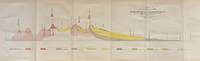
1854réf. 339591U. S. Pacific Railroad Exploration & Survey War Department 1854. unbound. 3 Maps. Lithographs with original hand coloring. Sheet one measures 35 1/2" x 10 7/8" sheet two measures 39 1/2" x 11" sheet three measures 40 1/8" x 30". These three fascinating geological renderings of the area from the Mississippi River to the Pacific Ocean derive from the investigations of Jules Marcou a French geologist who worked extensively in North America. In 1853 under the service of the U.S. government he became the first geologist to cross the United States as part of the Pacific railroad exploration headed by A.W. Whipple that was then underway. These maps were the result of his travels and were published as part of a report entitled "Reports of explorations and surveys to ascertain the most practicable and economical route for a railroad from the Mississippi River to the Pacific Ocean made under the direction of the Secretary of War in 1853-4." Two of the pieces presented in geological cross-section the maps color-coded to indicate the type and age of the rock along the river as per a key in the upper left. Mountain ranges are simply but delicately rendered and valleys are labeled beneath each section to show their expanse. The third selection is presented as a map showing the area between Columbus and Los Angeles along the 35th parallel. On this piece relief is shown through symbols and color-coding. The maps also provides the locations of various creeks forts Indian territories and intersecting rivers. The three maps are in good condition with original folds as issued. Some tears at folds. William P. Blake was the Geologist of the Office of the Unites States Pacific Railroad Surveys. These surveys were conducted in 1853-1855 in the interest of finding possible routes for a transcontinential railroad. This map functions as a document of the kinds of investigations conducted in this period of rapid Western expansion. U. S. Pacific Railroad Exploration & Survey, War Department unknown
1854réf. 339591U. S. Pacific Railroad Exploration & Survey War Department 1854. unbound. 3 Maps. Lithographs with original hand coloring. Sheet one measures 35 1/2" x 10 7/8" sheet two measures 39 1/2" x 11" sheet three measures 40 1/8" x 30". These three fascinating geological renderings of the area from the Mississippi River to the Pacific Ocean derive from the investigations of Jules Marcou a French geologist who worked extensively in North America. In 1853 under the service of the U.S. government he became the first geologist to cross the United States as part of the Pacific railroad exploration headed by A.W. Whipple that was then underway. These maps were the result of his travels and were published as part of a report entitled "Reports of explorations and surveys to ascertain the most practicable and economical route for a railroad from the Mississippi River to the Pacific Ocean made under the direction of the Secretary of War in 1853-4." Two of the pieces presented in geological cross-section the maps color-coded to indicate the type and age of the rock along the river as per a key in the upper left. Mountain ranges are simply but delicately rendered and valleys are labeled beneath each section to show their expanse. The third selection is presented as a map showing the area between Columbus and Los Angeles along the 35th parallel. On this piece relief is shown through symbols and color-coding. The maps also provides the locations of various creeks forts Indian territories and intersecting rivers. The three maps are in good condition with original folds as issued. Some tears at folds. William P. Blake was the Geologist of the Office of the Unites States Pacific Railroad Surveys. These surveys were conducted in 1853-1855 in the interest of finding possible routes for a transcontinential railroad. This map functions as a document of the kinds of investigations conducted in this period of rapid Western expansion. U. S. Pacific Railroad Exploration & Survey, War Department unknown books
1793réf. 39831London: John Stockdale. Very Good. 1793. Hardcover. Contemporary mottled calf neatly rebacked marbled endpages. Two volumes in one. Some foxing; bookplate old PO name. Seventy copperplates twelve engraved by Blake includes frontis to volume 1. A tall copy of the first Blake edition with the eleven page list of subscribers and ad on the final page for Barlow's Aesop Fables. First issue with the long "S. "; quarto . John Stockdale hardcover