18 354 résultats
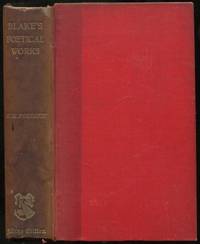
1893réf. 437283London: George Bell & Sons 1893. Hardcover. Good. Aldine edition later printing. 12mo. cxxxiii 231pp. Edited by William Michael Rossetti. Frontispiece portrait. Two-tone red cloth gilt-stamped spine title. Spine darkened with ends chipped a good to about very good copy. George Bell & Sons hardcover books
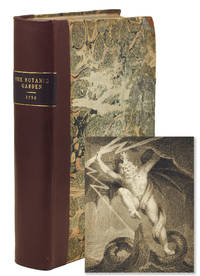
1795réf. 1262351795. London: Johnson 1795-94. 2 vols. in one 4to xx 218 124 2 directions to binder and advertisement; 2 viii 200 2 directions to the binder lacking the errata and ads pp. With a frontispiece to each volume ten plates in vol. I and 8 in vol. II. Early half calf marbled boards newly rebacked in calf with gilt-lettered label. A very good copy if a little aged -- early manuscript note loosely inserted about the Portland Vase copied from the Morning Chronicle c. 1796. § Best edition. 6 plates are engraved by Blake the best known being Fertilization of Egypt and Tornado both after Fuseli. The third edition of part one is the only edition to include the striking Tornado plate. At page 87 appears the enigmatic circular image of an African man in chains titled "Am I not a man and a brother." Bentley 450B and C. Essick William Blake's Commercial Book Illustrations XXI. The Morning Chronicle was a newspaper founded in 1769 in London. It was notable for having been the first steady employer of essayist William Hazlitt as a political reporter and the first steady employer of Charles Dickens as a journalist. unknown books
1978réf. 1004901978. London: Trianon Press 1978. Oblong folio quarter morocco cloth slipcase. As new. § Limited to 376 copies. The first accurate reproduction of Blake's seven engravings for the Divine Comedy first published in 1838. This new edition has an introduction and commentary by Geoffrey Keynes; three facsimiles of early states and monochrome reproductions of Blake's watercolor designs for the plates. Bentley Blake Books Supplement 208. unknown books
1960réf. 56991960. Wythenshaw Manchester: The William Morris Press n.d. Oblong folio 43 pages 24 illustrations. Pictorial wrapper with light wear. § Retraces the history of the 18 "Heads of the Poets" tempera paintings that were created by Blake for his patron William Hayley. Includes a lengthy narrative and an annotated illustrated catalogue. Conran was the director of the City of Manchester Art Gallery which acquired the paintings in 1885. Not in Bentley. Uncommon. unknown books
1957réf. 509940Pawlet U.S.A. Vermont: Set and Printed by Claude Fredericks 1957. Softcover. Fine. First edition thus. Folio measuring 11½" x 15". 12pp. Marbled wrappers with paper spine label. First two leaves with very light foredge toning from the wrappers a bit of light wear at the spine else fine. A handsome production published at Christmas by Fredericks "for the pleasure of his friends." Copy number 130 of 180 copies published. Fredericks was a poet playwright printer writer and longtime professor of literature at Bennington College in Vermont. He was the proprietor of the Banyan Press and also noted for the journal he kept throughout most of his life ultimately consisting of over 65000 pages. (Set and Printed by Claude Fredericks) unknown books
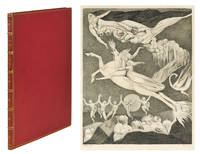
1796réf. 1246441796. London: by S. Gosnell for William Miller 1796. Slim 4to xi 16 pp. With a frontispiece and 2 illustrations headpiece and tailpiece designed by Blake and engraved by Perry. Later full red straight-grain morocco gilt-lettered backstrip a fine copy with a faded inscription on the title-page "Sophia Baillie". § First edition with Blake's illustrations ridiculed in the press upon publication. One of the rarest letterpress books to contain illustrations designed by Blake. Four copies have sold in the last 40 years; two have appeared at auction. The year 1796 saw three translations of Burger's Lenore one by J. T. Stanley one by H. J. Pye the Poet Laureate and a third by W. R. Spencer with designs by Lady Diana Beauclerk. Blake was commissioned to create three illustrations for the Stanley translation including the frontispiece "Lenore clasping her spectral bridegroom" which is famous for supposedly having hung as a separate print in C.G. Jung's office. The British Critic for September 1796 spitefully compared Lady Diana's pictures with those of Blake's: "We are highly impressed by the propriety decorum and grace which characterizes all the figures of this elegant artist Lady Beauclerk even those of a preternatural kind; forming a most striking contrast to the distorted absurd and impossible monsters exhibited in the frontispiece to Mr. Stanley's last edition i.e. Blake's design. Nor can we pass by this opportunity of execrating that detestable taste founded on the depraved fancy of one man of genius which substitutes deformity and extravagance for force and expression and draws men and women without skin with their joints all dislocated; or imaginary beings which neither can nor ought to exist." The Analytical Review chimed in with comments including "perfectly ludicrous instead of terrific." Lenore had a profound effect on the development of Romantic literature throughout Europe7 and a strong influence on the English ballad-writing revival of the 1790s.8 According to German language scholar John George Robertson5 Lenore exerted a more widespread influence than perhaps any other short poem in the literature of the world. . like wildfire this remarkable ballad swept across Europe from Scotland to Poland and Russia from Scandinavia to Italy. The eerie tramp of the ghostly horse which carries Lenore to her doom re-echoed in every literature and to many a young sensitive soul was the revelation of a new world of poetry. No production of the German "Sturm und Drang"-not even Goethe's Werther which appeared a few months later-had such far-reaching effects on other literatures as Bürger's Lenore; it helped materially to call the Romantic movement in Europe to life. In a similar tone English literature scholar Marti Lee claims that:6 "Lenore" had tremendous influence on the literature of the late eighteenth- and early nineteenth-centuries and in fact today's popular horror books and movies are still feeling the reverberations. . In short Bürger's achievement while minor in itself helped father an international movement that led directly to the massive popularity of Gothic works then and now. . As the Gothic novel borrowed many of its original conventions from the German ballads as popularized by "Lenore" we can fairly say that Bürger is one of the most influential founding fathers of the Gothic and horror genres.Bentley Blake Books 440. Easson and Essick William Blake Book Illustrator vol. 2 XLVI. Bindman Complete Graphic Works of Blake 380-382. unknown books
1808réf. 1238991808. London: Cadell and Davies 1808. Single plate etching on wove unwatermarked paper margins slightly spotted image clean. § From the first 4to edition. Bentley Blake Books 435b. unknown books
1813réf. 1092031813. London: Ackermann 1813. Single plate etching on wove unwatermarked paper recently cleaned. § From the second 4to edition. Bentley Blake Books 435D. unknown books
1808réf. 1073291808. London: Cadell and Davies 1808. Single plate etching on wove unwatermarked paper margins slightly soiled image clean. § From the first 4to edition. Bentley Blake Books 435 A. unknown books
1813réf. 1107781813. London: Ackermann 1813. Single plate folio etching on wove unwatermarked paper good. § From the second folio edition. Bentley Blake Books 435. unknown books
1808réf. 1238981808. London: Cadell and Davies 1808. Single plate etching on wove unwatermarked paper; wide margins somewhat soiled. § From the first 4to edition this is one of the most powerful plates in the series. Bentley Blake Books 435b. unknown books
1813réf. 1092051813. London: Ackermann 1813. Single plate etching on wove unwatermarked paper recently cleaned . § From the second 4to edition this is one of the most powerful plates in the series. Bentley Blake Books 435D. unknown books
1808réf. 1107441808. London: Cadell and Davies 1808. Single plate etching on wove unwatermarked paper trimmed to the image. § From the first 4to edition. Bentley Blake Books 435b. unknown books
1813réf. 1092071813. London: Ackermann 1813. Single plate etching on wove unwatermarked paper recently cleaned. § From the second 4to edition. Bentley Blake Books 435D. unknown books
1808réf. 1073201808. London: Cadell and Davies 1808. Single plate etching on wove unwatermarked paper trimmed to the image recently cleaned. § From the first 4to edition. Bentley Blake Books 435 A. unknown books
1808réf. 1239001808. London: Cadell and Davies 1808. Single plate etching on wove unwatermarked paper wide margins somewhat soiled. § From the first 4to edition this is one of the best known plates in the series. Bentley Blake Books 435b. unknown books
1813réf. 1092141813. London: Ackermann 1813. Single plate etching on wove unwatermarked paper recently cleaned. § From the second 4to edition this is one of the best known plates in the series. Bentley Blake Books 435D. unknown books
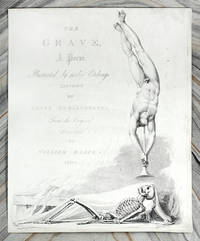
1813réf. 1092081813. London: Ackermann 1813. Single plate etching on wove unwatermarked paper recently cleaned. § From the second 4to edition this is one of the best known plates in the series. It was designed by Blake and engraved by Luigi Schiavonetti. Bentley Blake Books 435D. "In October 1805 Blake was commissioned by the engraver and would-be publisher Robert H. Cromek to prepare forty drawings illustrating Robert Blair's The Grave a popular "Graveyard" school poem first published in 1743. Cromek planned to select twenty of these designs for a deluxe edition of the poem. In Cromek's first prospectus of November 1805 Blake is named as both the designer and engraver of fifteen designs. Blake etched one image Deaths Door in white-line but Cromek rejected it. The dark power of the white-line print appeals to modern tastes but was far from fashionable in the early nineteenth century. In a second prospectus also of November 1805 Cromek announced that Luigi or Louis Schiavonetti would engrave twelve designs for the new edition. Blake had lost the potentially lucrative commission to engrave his own designs; his relationship with Cromek descended into anger and argument. In spite of their disagreement Cromek included a portrait of Blake as a frontispiece to the volume published in 1808. Cromek promoted the book aggressively and the illustrations to The Grave became Blake's best known work through much of the nineteenth century." The William Blake Archive. unknown books
1808réf. 1238951808. London: Cadell and Davies 1808. Single plate etching on wove unwatermarked paper cleaned and in fine condition. § From the first 4to edition. Bentley Blake Books 435b. unknown books
1808réf. 1077721808. London: Cadell and Davies 1808. Single plate etching on wove unwatermarked paper trimmed to the image recently cleaned. § From the first 4to edition. Bentley Blake Books 435 A. unknown books
1813réf. 1092021813. London: R. Ackermann 1813. Single plate etching on wove unwatermarked paper recently cleaned. § From the second 4to edition. Bentley Blake Books 435D. unknown books
1808réf. 1073221808. London: Cadell and Davies 1808. Single plate etching on wove unwatermarked paper margins slightly soiled and worn image clean. § From the first 4to edition. Bentley Blake Books 435 A. unknown books
1813réf. 1092061813. London: Ackermann 1813. Single plate etching on wove unwatermarked paper recently cleaned. § From the second 4to edition this is one of the most famous plates in the series. Bentley Blake Books 435D. unknown books
1808réf. 1238971808. London: Cadell and Davies 1808. Single plate etching on wove unwatermarked paper; wide margins scattered foxing somewhat soiled. § From the first 4to edition. Bentley Blake Books 435b. unknown books
1808réf. 1073231808. London: Cadell and Davies 1808. Single plate etching on wove unwatermarked paper margins slightly soiled and worn image clean. Framed. § From the first 4to edition. Designed by Blake and engraved by Luigi Schiavonetti to Blake's indignation. A glorious image. Bentley Blake Books 435b. unknown books