3.866 Ergebnisse
1948Best.-Nr. 91636Alfred A. Knopf. Good in Good dust jacket. First American Edition. Hardcover. 1st American edition Some rubbing and chipping around cover edges and on crown and heel. Small stain on endpaper. Numbered pencil markings on endpapers. Photos upon request. International shipping billed at cost. Please note that the buyer is responsible for any customs duties tariffs or import fees levied by the destination country.; 12mo 7" - 7½" tall; 178 pages . 1948. Alfred A. Knopf hardcover
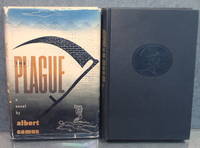
1948Best.-Nr. 47010New York: Alfred A Knopf 1948. First American edition published in 1948. Translated from the French by Stuart Gilbert. A near fine beautiful copy in full black cloth with grim reaper imprint on front cover gilt titled spine and red top edge. Typography and binding design by Warren Cappell. Very near fine with clean and tight text no markings. In a very good price-intact dust jacket with modest wear to spine ends in a protective mylar cover. . First American Edition. Hard Cover. Near Fine/Very Good. Alfred A Knopf Hardcover
1963Best.-Nr. 329898np: New Labratory Press 1963. One of 30 copies hand set in 14 point Hunt Roman a type designed by Hermann Zapf printed at the New Labratory Press. 4pp. Small folio. Gray wrappers. Fine. One of 30 copies hand set in 14 point Hunt Roman a type designed by Hermann Zapf printed at the New Labratory Press. 4pp. Small folio. New Labratory Press unknown books
Best.-Nr. 7989P., Jombert et Le Conte, 1722, un volume in 8 relié en plein veau marbré, dos orné de caissons et fers dorés, tranches rouges (reliure de l'époque), (quelques cahiers uniformément jaunis, petites galeries de vers dans les marges intérieures sans atteinte au texte), (8), 535pp., 7pp., 5 PLANCHES DEPLIANTES
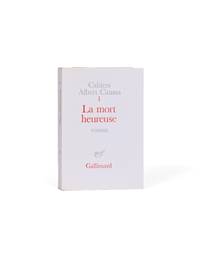
Best.-Nr. 29718Paris Gallimard 1er mars 1971. 1 vol. 150 x 220 mm de 231 p. et 3 f. Broché non coupé. . Édition originale. Un des 106 premiers exemplaires sur vélin de Hollande n° 17. . Le premier roman d'Albert Camus resté à l'état d'ébauche rédigé en Algérie entre 1932 et 1936. Il constitue le premier volume des Cahiers Albert Camus. Neuf non coupé. Paris, Gallimard, (1er mars) 1971. 1 vol. (150 x 220 mm) de 231 p. et [3] f. Broché, non coupé. unknown
1971Best.-Nr. 29718Tirage de tête sur Hollande Paris, Gallimard, (1er mars) 1971. 1 vol. (150 x 220 mm) de 231 p. et [3] f. Broché, non coupé. Édition originale. Un des 106 premiers exemplaires sur vélin de Hollande (n° 17).
1944Best.-Nr. 52562Paris Gallimard 1944 In-12, cartonnage de l'diteur orn sur les plats et le dos de compositions en couleurs dessines par Mario Prassinos.Edition originale. Un des 1.000 exemplaires numrots sur papier chtaignier et relis d'aprs une maquette de Mario Prassinos.
1959Best.-Nr. 55640Paris Gallimard 1959 In-12, demi-maroquin brun coins, plats de papier damier noir et beige, dos quatre nerfs; doublures et gardes de papier brun, tte dore, non rogn, couverture imprime (Alix).Edition originale. Tirage limit 161 exemplaires numrots. Un des 100 exemplaires sur vlin pur fil Lafuma-Navarre.
1668Best.-Nr. 19477Chez Jean Baptiste Loyson | à Paris 1668 | 12 x 18 cm | relié
1948Best.-Nr. 022281New York: Knopf. Original black cloth in Dust Jacket. First American Edition. Previous owners name in ink dated August 1948 the year of publication Near Fine in Very Good Dust Jacket with slight edge wear. . Near Fine. Hardcover. 1st Edition. 1948. Knopf hardcover
1948Best.-Nr. 1387500New York NY: Alfred A. Knopf 1948. First American Edition First Printing. Hardcover. Octavo 278 pages. In Good condition with a Good minus condition dust jacket. Blue-grey and black spine with black red and white lettering. Dust jacket is wrapped in a mylar covering price is uncut "$3.00 net" has moderate shelving wear mild to moderate wear along the extremities chipping along the joints and fore edges scratches on the rear cover tears along the head edges and spine and moderate age-toning. Boards have mild age-toning along the head and tail edges mild wear along the extremities stains on the rear board and bending wear along the spine head and tail edges. Text block has mild splitting to the gutter pages 89-121 stains on the rear end-page and paste-down moderate age-toning throughout mild wear along the edges and faded dark red inking along the head edge. DL consignment. Shelved in Case 6. Albert Camus was born November 7 1913 in Dréan Algeria then French Algeria. Camus' mother was deaf and illiterate his father killed in acting in 1914 serving in World War I and he would grow up very poor pied-noir a slang term for French and other European people born in Algeria. Camus would be diagnosed with tuberculosis in 1930 at which time he moved in with his uncle Gustave Acault. Living with his uncle Camus found a great love for philosophy taking particularly to Greek philosophers and Nietzsche. This love of philosophy would push Camus to completing a degree in philosophy in 1936. During and after his time in university Camus would join the Algerian Communist Party and Algerian People's Party both of which sought freedom from colonial rule in Algeria. Camus' work with the ACP greatly involved organizing the "Théâtre du Travail" Worker's Theater which would be renamed "Théâtre de l'Equipe" Theater of the Team after Camus and the ACP split. Some of the scripts written for "Théâtre de l'Equipe" would become the basis for his later novels. In 1938 Camus solidified his anti-colonial feelings working for a leftist newspaper which spoke out against the colonial regime as well as the rising fascist regimes across Europe. In 1940 Camus moved to Paris after the banning of the newspaper there producing his "first cycle" of works on the absurd including his most famous work "L'Étranger" "The Stranger". With the outbreak of World War II and the German invasion of France Camus fled Paris moving first to Lyon in southeast France then to Algeria and then to the Frech Alps to recover from a flare up of tuberculosis. It was in the Alps that Camus began work on his "second cycle" of works now dealing more with revolt. "La Peste" or "The Plague" would be published in 1947 in France and in 1948 in the US riding on Camus' infamy gained both for his earliest works and for his role in the French Resistance against German occupation. It depicts the Algerian city of Oran amidst a devastating plague and many different people's reactions to it from feelings of despair to those who fight bravely against the illness. Both Camus' own tuberculosis and a cholera epidemic which killed a large portion of Oran in 1849 were inspirations for the novel though it was set in the 1940's. The novel has been noted as allegorical for the French resistance to Nazi occupation during World War II. Upon it's release "The Plague" received generally positive critical reception with moderate commercial success. However during the COVID-19 pandemic in 2020 the novel became a best-seller with publisher Penguin Classics reporting difficulties matching demand. Many hailed "The Plague" as a reflection of the time with lockdown measures compared to the novel's cordon sanitaire and Camus' own daughter noting that it should be inspiration for people to take responsibility in how they reacted to the pandemic. 1387500. Shelved Dupont Bookstore. Alfred A. Knopf hardcover
1948Best.-Nr. 140946762New York: Alfred A. Knopf 1948. First American edition. Hardcover. First American edition first printing. vi 278 2 pp. Bound in publisher's black cloth with blindstamped front board gilt lettering on spine. Near Fine with tiny stain to front board old bookstore ticket on front free endpaper in a Very Good dust jacket price-clipped rubbed along edges tiny chip in top of front panel a few tape mends to verso. Camus' existentialist novel La Peste in the original French set in Oran Algeria. Alfred A. Knopf hardcover
1946Best.-Nr. 3370New York NY: Alfred A. Knopf 1946. First American Edition. Tan cloth over boads with brown titling on the spine. Very good with light blemish to cloth cover. Text block clean and tight with uncut fore edge./DJ not present. 5" x 7.25" pp. 2 - 154. This is Camus' first published novel. It was broadly critiqued and holds a canonical place in French philosophical existentialism. "I laid my heart open to the benign indefference of the universe." p. 154. Alfred A. Knopf unknown
1948Best.-Nr. 1387500New York NY: Alfred A. Knopf 1948. First American Edition First Printing. Hardcover. Octavo 278 pages. In Good condition with a Good minus condition dust jacket. Blue-grey and black spine with black red and white lettering. Dust jacket is wrapped in a mylar covering price is uncut "$3.00 net" has moderate shelving wear mild to moderate wear along the extremities chipping along the joints and fore edges scratches on the rear cover tears along the head edges and spine and moderate age-toning. Boards have mild age-toning along the head and tail edges mild wear along the extremities stains on the rear board and bending wear along the spine head and tail edges. Text block has mild splitting to the gutter pages 89-121 stains on the rear end-page and paste-down moderate age-toning throughout mild wear along the edges and faded dark red inking along the head edge. DL consignment. Shelved in Case 6. Albert Camus was born November 7 1913 in Dréan Algeria then French Algeria. Camus' mother was deaf and illiterate his father killed in acting in 1914 serving in World War I and he would grow up very poor pied-noir a slang term for French and other European people born in Algeria. Camus would be diagnosed with tuberculosis in 1930 at which time he moved in with his uncle Gustave Acault. Living with his uncle Camus found a great love for philosophy taking particularly to Greek philosophers and Nietzsche. This love of philosophy would push Camus to completing a degree in philosophy in 1936. During and after his time in university Camus would join the Algerian Communist Party and Algerian People's Party both of which sought freedom from colonial rule in Algeria. Camus' work with the ACP greatly involved organizing the "Théâtre du Travail" Worker's Theater which would be renamed "Théâtre de l'Equipe" Theater of the Team after Camus and the ACP split. Some of the scripts written for "Théâtre de l'Equipe" would become the basis for his later novels. In 1938 Camus solidified his anti-colonial feelings working for a leftist newspaper which spoke out against the colonial regime as well as the rising fascist regimes across Europe. In 1940 Camus moved to Paris after the banning of the newspaper there producing his "first cycle" of works on the absurd including his most famous work "L'Étranger" "The Stranger". With the outbreak of World War II and the German invasion of France Camus fled Paris moving first to Lyon in southeast France then to Algeria and then to the Frech Alps to recover from a flare up of tuberculosis. It was in the Alps that Camus began work on his "second cycle" of works now dealing more with revolt. "La Peste" or "The Plague" would be published in 1947 in France and in 1948 in the US riding on Camus' infamy gained both for his earliest works and for his role in the French Resistance against German occupation. It depicts the Algerian city of Oran amidst a devastating plague and many different people's reactions to it from feelings of despair to those who fight bravely against the illness. Both Camus' own tuberculosis and a cholera epidemic which killed a large portion of Oran in 1849 were inspirations for the novel though it was set in the 1940's. The novel has been noted as allegorical for the French resistance to Nazi occupation during World War II. Upon it's release "The Plague" received generally positive critical reception with moderate commercial success. However during the COVID-19 pandemic in 2020 the novel became a best-seller with publisher Penguin Classics reporting difficulties matching demand. Many hailed "The Plague" as a reflection of the time with lockdown measures compared to the novel's cordon sanitaire and Camus' own daughter noting that it should be inspiration for people to take responsibility in how they reacted to the pandemic. 1387500. Shelved Dupont Bookstore. Alfred A. Knopf hardcover books
1948Best.-Nr. 140946762New York: Alfred A. Knopf 1948. First American edition. Hardcover. First American edition first printing. vi 278 2 pp. Bound in publisher's black cloth with blindstamped front board gilt lettering on spine. Near Fine with tiny stain to front board old bookstore ticket on front free endpaper in a Very Good dust jacket price-clipped rubbed along edges tiny chip in top of front panel a few tape mends to verso. Camus' existentialist novel La Peste in the original French set in Oran Algeria. Alfred A. Knopf hardcover books
1955Best.-Nr. 100326Hamish Hamilton. London. 1955. Hamish Hamilton. 1955. First edition first impression UK. Hardback in DW. Edges of boards very slightly faded. Endpapers browned prelims and page edges lightly foxed otherwise a clean and sound copy in wrapper that is sunned to spine chipped at corners and lacks small portions at head and tail of spine but is NOT price-clipped. VERY SCARCE. hardcover
1946Best.-Nr. LIQ-5087P. Editions Rombaldi 1946. In folio en feuilles sous chemise à rabats (mors de la chemise abimés)
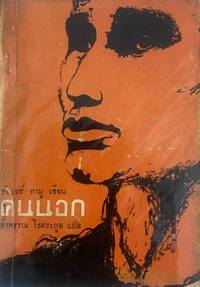
1967Best.-Nr. feb1218921967: First Thai Edition of The Stranger คนนà¸à¸ . Used. For more details please contact me University Press
1948Best.-Nr. 92581Gallimard | Paris 1948 | 11.50 x 18 cm | reliure de l'éditeur
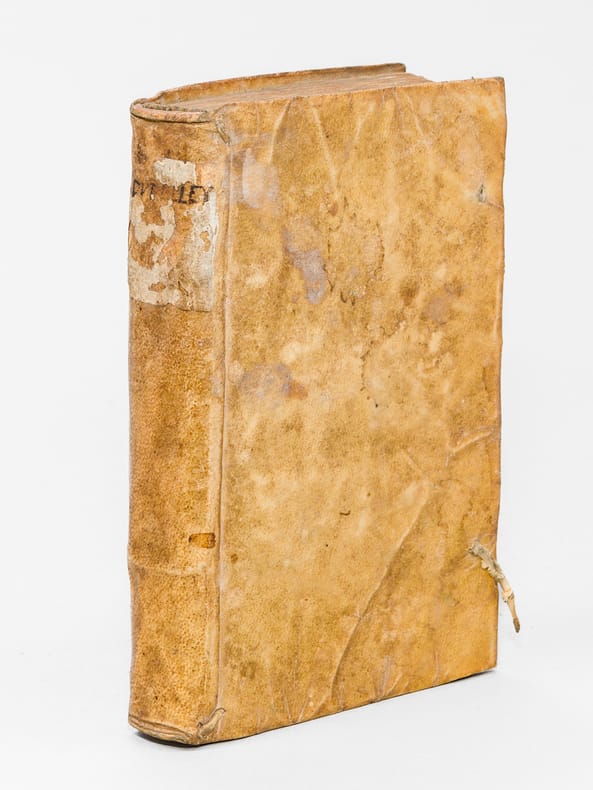
1627Best.-Nr. 674321 vol. petit in-8 reliure de l'époque plein vélin à lacets, Chez Pierre Billaine, Paris, 1627, 8 ff., 366 pp. et 1 f. n. ch.
Best.-Nr. 81787Sceaux Les Tirages à part du Palimugre, s.d. [1947] 1 vol. in-16, en feuilles, couverture rempliée, non paginé (16 ff.). Édition originale de ce texte destiné au numéro spécial de la revue "Le Voyage en Grèce" qui sera repris dans L'Eté en 1954. Tirage limité à 285 exemplaires, celui-ci un des 35 exemplaires de tête numérotés sur bulle. Rousseurs.
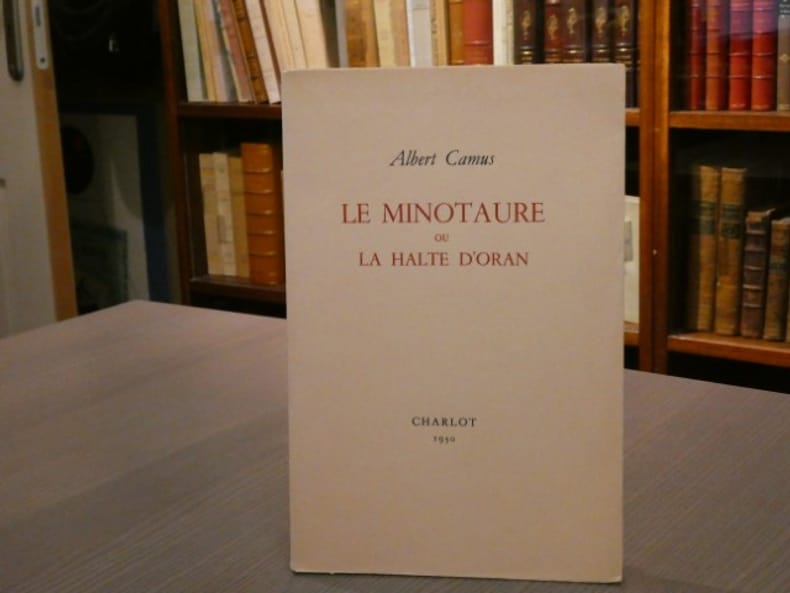
Best.-Nr. 73933Charlot Paris 1950 Grand in-8 ( 250 X 165 mm ) de 80 pages, broché sous couverture imprimée rempliée. EDITION ORIGINALE, un des 57 exemplaires numérotés sur vélin de Hollande Van Gelder. Très minime défaut au dos, bel exemplaire, non coupé. De la bibliothèque P.R. MERY ( Ex-libris ).
1630Best.-Nr. 28479Douai veuve Marc Wyon 1630 in-16 vélin souple, dos lisse muet [Rel. de l'époque], petite mouillure claire
2007Best.-Nr. 60162007 Paris, Gallimard - NRF, 2007. Broché sous couverture à rabats: 14.5 x 22 cm, 262-[10] p., non coupé. Édition originale. Un des 60 exemplaires sur vélin pur fil Malmenayde (no. 75), seul grand papier. Exemplaire à l'état de neuf.