Doris LessingBiblio.com
4 321 résultats
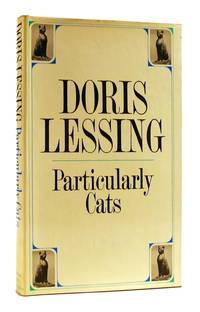
1967réf. 182370New York: Simon & Schuster 1967. First Edition; First Printing. Hardcover. Near Fine in a Near Fine dust jacket. Simon & Schuster hardcover
réf. 8393Scorpion Press. 1959. First edition. Original paper wrappers stapled.Only 500 numbered copies 442. Wrappers a bit discoloured foxed throughout. Pictures on request. 1959. First edition. Original paper wrappers stapled.Only 500 numbered copies 442. Wrappers a bit discoloured foxed throughout. Pictures on request. Scorpion Press unknown
2007réf. 184763New York: Harpercollins 2007. 1st U.S. Edition; First Printing. Hardcover. Very Good in a Near Fine dust jacket. Harpercollins hardcover
1978réf. 186997New York: Knopf 1978. First Edition; Second Printing. Hardcover. Very Good in a Very Good dust jacket. Knopf hardcover
1962réf. 367876New York: Simon & Schuster 1962. First American edition stated first printing with $5.59 price on flap and "First Reviews from England" on dust jacket. 568 pp. 8vo. Yellow cloth with some sunning along top edge; dust jacket with two closed tears along top of front and rubbing to head and foot of spine. First American edition stated first printing with $5.59 price on flap and "First Reviews from England" on dust jacket. 568 pp. 8vo. The most famous novel by the Nobel prize winning author a review copy with a TLS to editor James Silberman from the publicity director of Simon & Schuster. Simon & Schuster unknown
1962réf. 314359New York: Simon & Schuster 1962. Book Club Edition. Hardcover. Very Good in a Very Good dust jacket. Small open tear on spine heel. Small closed tears on spine crown and top rear panel. Simon & Schuster hardcover
1980réf. 175742New York: Knopf 1980. First Edition; First Printing. Hardcover. Very Good in a Near Fine dust jacket.; 8vo 8" - 9" tall. Knopf hardcover
1983réf. 175745New York: Alfred A Knopf Inc 1983. First Edition; First Printing. Hardcover. Very Good in a Near Fine dust jacket.; 8vo 8" - 9" tall. Alfred A Knopf Inc hardcover
1991réf. x-0826407072Continuum Intl Pub Group 1991. Paperback. New. 1st edition. 370 pages. 8.50x5.50x1.00 inches. Continuum Intl Pub Group paperback
réf. BIB-507624Publisher: Studentlitteratur Utg. 2015 264 p. This book is brand new. Language: Svenska We have this book in our store house - please allow for a couple of extra days for delivery. unknown
réf. BIB-519794Publisher: Norstedts Utg. 2015 480 p. This book is brand new. Series: Litteraturens klassiker Language: Svenska We have this book in our store house - please allow for a couple of extra days for delivery. unknown
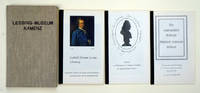
réf. 99551Kamenz Lessing Museum 1982. 8° 119; 31; 47 S. einige Abb. OLwd.-Flügelmappe mit 3 Hlwd.-Broschüren Tadell. Da Lessings Geburtshaus bei einem Brand vernichtet worden war bauten die Kamenzer Bürger an anderer Stelle ein repräsentatives Gebäude und eröffneten darin 1931 das Museum für ihren großen Sohn.Seitdem widmet es sich –nur kurzzeitig kriegsbedingt unterbrochen – der Person dem Werk und der Wirkung des Dichters. Dieses Buch befindet sich in unserem Aussenlager; sollten Sie dieses im Laden abholen wollen bitten wir Sie um vorgängige Nachricht. 010 Kamenz, Lessing Museum, 1982 unknown
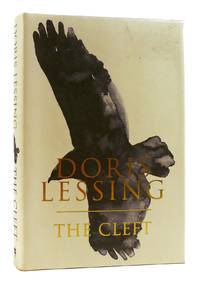
2007réf. 180722New York: Harpercollins Publishers 2007. First Edition; First Printing. Hardcover. Very Good in a Very Good dust jacket. Faint shelf wear on front panel. Harpercollins Publishers hardcover
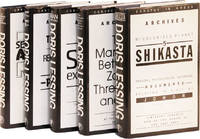
1979réf. 53268London: Jonathan Cape 1979-1983. First U.K. Editions. First Impressions. Five octavo volumes 22.5cm; blue paper covered boards titled in gilt on spine; pale gray/blue topstain; dustjackets; 365; 245; 288; 145; 179pp. All are Near Fine or better with topstain faded on most volumes. The dustjackets are uniform designed by David Prout; unclipped priced £5.95 - £7.95 net the third volume has a publisher's price sticker over the original price; Near Fine or better. Solid set of the author's only work of science fiction. "Places the crisis of human self-striving into a metaphysically conceived interstellar frame.tinged with Sufi mysticism." CLUTE & NICHOLLS p.714. BARRON 4-333. Jonathan Cape unknown
réf. A9780758602732Hardback. New. hardcover
1988réf. 172975New York: Alfred A Knopf Inc 1988. First Edition; First Printing. Hardcover. Very Good in a Near Fine dust jacket. Light foxing on top text blcok edge. Stated First Edition with the price intact on the front flap.; 8vo 8" - 9" tall. Alfred A Knopf Inc hardcover
1983réf. 173086New York: Alfred A Knopf Inc 1983. First Edition; First Printing. Hardcover. Very Good in a Near Fine dust jacket.; 8vo 8" - 9" tall. Alfred A Knopf Inc hardcover
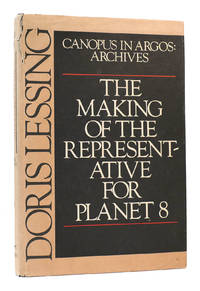
1982réf. 173085New York: Alfred A Knopf Inc 1982. First Edition; First Printing. Hardcover. Very Good in a Very Good dust jacket. 1/2 inch open tear at bottom of rear panel.; Canopus In Argos--Archives; 8vo 8" - 9" tall. Alfred A Knopf Inc hardcover
1980réf. 173083New York: Knopf 1980. First Edition; First Printing. Hardcover. Very Good in a Very Good dust jacket. 1 inch closed tear at bottom of front panel.; 8vo 8" - 9" tall. Knopf hardcover
1910réf. 173521New York: P. F. Collier & Son 1910. First Edition; First Printing. Hardcover. Very Good in boards. Top text block edge gilded. P. F. Collier & Son hardcover
réf. B9781107199637Hardback. New. Drug wars have ravaged Latin America from Pablo Escobar in Colombia and El Chapo in Mexico to the favelas of Rio de Janeiro. This book helps social scientists area specialists and policymakers understand why state crackdowns often backfire and why deterrence-based approaches have been successful but hard to implement and sustain. hardcover
1982réf. 168423New York: Alfred A Knopf Inc 1982. First Edition; First Printing. Hardcover. Very Good in a Very Good dust jacket. 1 inch open tear at top of front gutter; 9.6 X 6.5 X 1.0 inches. Alfred A Knopf Inc hardcover
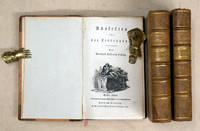
réf. 95871Bern Haller 1785-86. Kl.8° je ein Titelkupfer LII 496; XVIII 664; XVI 296; 280 S. HLdr. über 5 Bünde m Rückenschild goldgeprägt. Rundumrotschnitt Deckel min. berieben minimlast fingerfleckit sonst tadell. Erste Ausgabe der Sammlung.- Goed. IV/135167;- Erstes Kompendium der wissenschaftlichen Arbeiten Lessings enthaltend die Aufsätze über das Theater die Briefe die neueste Literatur betreffend die Schriften zum Fragmentenstreit und die Hamburger Dramaturgie.- Die Lebensbeschreibung stammt von J. G. Herder.Ohne den 1787 erschienenen Anhang. 010 Bern, Haller, 1785-86 unknown
2005réf. SKU0496305Cambridge University Press 2005-03-21. Paperback. Good. Textbook May Have Highlights Notes and/or Underlining BOOK ONLYNO ACCESS CODE NO CD Ships with Emailed Tracking Cambridge University Press paperback
1978réf. 24613AB1978. Leipzig Insel 1978. Folio. 152 Seiten. Hardcover/ Gebundene Ausgabe mit originalem Schutzumschlag in Brodart / Mylar Spezielle Sammler - Schutzfolie für Schutzumschläge. Leinen mit illustriertem Schutzumschlag. Sehr guter Zustand mit nur absolut geringen rein äußerlichen Gebrauchsspuren. Rücken des Umschlags etwas vergilbt. Nathan the Wise original German title: "Nathan der Weise" is a play by Gotthold Ephraim Lessing in 1779. It is a fervent plea for religious tolerance. It was never performed during Lessing's lifetime and was first performed in 1783 at the Döbbelinsches Theater in Berlin. Set in Jerusalem during the Third Crusade it describes how the wise Jewish merchant Nathan the enlightened sultan Saladin and the initially anonymous Templar bridge their gaps between Judaism Islam and Christianity. Its major themes are friendship tolerance relativism of God a rejection of miracles and a need for communication. Wikipedia Anatoli Tankhum Lvovich Kaplan December 26 1902 in Rahachow Belarus- July 3 1980 in Leningrad was a Jewish-Russian painter sculptor and printmaker whose works often reflect his Jewish origins. Kaplan one was one of six children; his father was a butcher in Rahachow which was at that time within the Jewish Pale of Settlement in Russia. His background was therefore not dissimilar to that of Marc Chagall born a generation earlier in 1887 and although their lives were very different their art has much in common. The shtetl figures in many of Kaplan's paintings - autobiographical references are very clear in The Butcher's Shop 1972 and Tailor's Shops 1975 and in the many illustrations which he was to create to the works of Sholem Aleichem. Around 1922 Kaplan came to Leningrad then named Petrograd where he was to base his career for the rest of his life although he often revisited the towns of his childhood. He graduated in 1927 from the Russian Academy of Arts there. In the 1930s he became associated with a group of artists and lithographers in Leningrad which had been instructed to prepare a series of works dedicated to the remote Jewish Autonomous Oblast being created by Stalin in the hope of resettling Russia's Jewish population in a remote area in the Far East of the country. Here Kaplan learnt and took to the skills of printmaking developing many individual techniques. His first cycle of prints 1937-1940 was entitled Kasrilevka the name of the village invented by Sholem Aleichem. During the war Kaplan was at first evacuated to the Urals but returned to Leningrad in 1944. His lithograph cycle of Landscapes of Leningrad during the Days of the Blockade 1948 was widely acclaimed in Russia and was purchased by eighteen State galleries. At one time Kaplan was supervisor of design in a glassware factory and this gave him an interest in the third dimension which was later to blossom in his ceramics and sculptures. From the 1950s onwards Kaplan's artworks concentrated on Jewish themes despite constant and often serious opposition and obstruction from the Soviet cultural authorities. Amongst these works should be mentioned his cover and illustrations to the Jewish Folksongs of Dmitri Shostakovich 1977 illustrations to Aleichem's Tevye the Milkman 3 series 1957-1966 The Enchanted Tailor 1954-57 and Song of Songs 1962 and a magnificent series of coloured lithographs printed in London in 1961 on the old Jewish Passover song Chad Gadya One Kid Goat. Throughout this time Kaplan was also producing paintings though in view of their subject matter they were rarely displayed in the Russia of his time. From 1967 onward he began also to produce ceramics and sculptures including a remarkable set based on the characters of Gogol's Dead Souls. Wikipedia Anatoli Lwowitsch Kaplan 28. Dezember 1902 in Rahatschou Weißrussland; 3. Juli 1980 in Leningrad war ein russisch-jüdischer Maler Bildhauer und Grafiker. Kaplans Umfeld in der Kindheit war nicht unähnlich dem von Marc Chagall der eine Generation früher 1887 geboren wurde. Auch wenn das Leben der beiden Künstler sehr unterschiedlich verlief so haben sie in ihrem Werk doch viel gemeinsam. Vor allem die Stetl-Gestalten und Szenen spielen bei beiden eine große Rolle. Ebenso die autobiographischen Bezüge wie sie in Kaplans Gemälden Metzgerladen 1972 und Schneiderladen 1975 ganz offensichtlich sind ebenso in vielen Illustrationen zu Werken des Schriftstellers Scholem Alejchem. Auf der Akademie wurde Kaplan in erster Linie als Maler ausgebildet. Weil er damit in den Jahren danach sein Brot nicht verdienen konnte musste er alle möglichen Aufgaben übernehmen. Dadurch erwarb er sich Routine auch in dekorativen und plakativen Arbeiten sowie in unterschiedlichsten Techniken samt dem Umgang mit Schrift und Ornamenten. Im Jahr 1937 erhielt er den Auftrag des Leningrader Ethnographischen Museums für die jüdische Sektion eine Serie von Lithographien zu schaffen. Jetzt erst in der Experimentierwerkstatt des Leningrader Künstlerverbandes erlernte Kaplan systematisch die Techniken der Druckgrafik. Er entwickelte auch eigene Verfahren. Seinen ersten Lithographie-Zyklus 19371940 nannte er Kasrilewke nach einem Dorf in einer Erzählung von Scholem Alejchem. Der Krieg brachte einen harten Einschnitt in Kaplans künstlerisches Wirken. Erst 1944 nach der Rückkehr aus der Evakuierung im Ural konnte er seine Arbeit wieder aufnehmen. Er begann sofort mit einem Lithographien-Zyklus über die Leiden seiner Stadt. 1946 erschien die Mappe Leningrad in den Tagen der Blockade. Kaplan führte die Bildfolge bis zum Ende der fünfziger Jahre weiter und bezog den Wiederaufbau ein. Ab 1953 konzentrierte sich Kaplan wieder ganz auf jüdische Themen. Damit eckte er ständig und ernsthaft bei den sowjetischen Kulturbehörden an. Unter den Werken dieser Epoche sind besonders bemerkenswert die Illustrationen zu Jüdische Volkslieder von Dmitri Schostakowitsch zu Scholem Alejchems Tewje der Milchmann Der behexte Schneider und Stempenju und zu Mendele Moicher Sforims Fischke der Lahme. Ab 1967 schuf Kaplan vor allem Keramiken und Skulpturen darunter einen bemerkenswerten Satz von Gestalten aus Gogols Roman Die toten Seelen. In Formen und Farben beweist er einen phantastisch-spielerischen Umgang mit dem Material. Wikipedia hardcover