4594 risultati
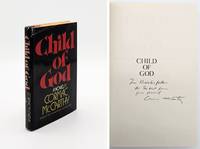
rif. 71269New York: Random House 1973. First edition first printing. Hardcover. Near Fine/Very Good. Inscribed by Cormac McCarthy in black ink on the half-title page to Santa Fe bookseller Nicholas Potter: "For Nicholas Potter All the best from your friend Cormac McCarthy." 197 pp. Octavo 21.5 cm. Publisher's black cloth and red paper-covered boards stamped in red and gold. Black dust jacket with red white and olive green typography designed by Muriel Nasser. First edition clearly stated on the copyright page. Dust jacket with "$5.95" price intact at top-front flap and "1/74" code at the rear flap's bottom-left. A Near Fine unread copy with occasional light surface soil or toning. The text block is solid and square. The top edges of the boards are gently sunfaded. The front free endpaper has a previous ownership inscription written neatly in blue ink: "Dane Meyers Hugh Prather Collection." The dust jacket is in Very Good condition showing the spine-fading common to this title along with some general surface rubbing and scratching. The jacket edges are lightly toned with a few minor creases and short closed tears measuring less than 2cm. An attractive copy with an intimate association. A significant association copy warmly inscribed by the notoriously reclusive author to his long-time friend the late Santa Fe bookseller Nicholas Potter. A short note in Potter's hand is laid in: ".This copy inscribed to me in the mid 90's." Throughout a friendship spanning forty years Potter’s bookstore served as a frequent destination for McCarthy where the two shared a rapport rooted in their mutual appreciation of literature art music and history. This volume represents a vital fragment of that connection; McCarthy who famously avoided public life inscribed most of his published works to Potter. The first printing of Child of God consisted of a run of 7500 copies and was the only printing of the first edition of this work. The book was a commercial failure upon its release selling less than 2500 copies. The book sparked controversy over its subject matter with some reviewers objecting to it on moral grounds. The narrative chronicles the progressive isolation and depravity of Lester Ballard—a dispossessed outcast who pushes the boundaries of abhorrent human behavior. Set in the rugged hill country of mid-century Tennessee the story is told in a detached clinical manner. McCarthy’s third novel Child of God intensified the visceral Southern Gothic vision of his previous works and solidified his reputation for writing spare biblical prose that depicts harrowing and macabre scenes with unflinching clarity. Random House hardcover
1965rif. 71251New York: Random House 1965. Second printing of the first edition in the first issue dust jacket. Hardcover. Near Fine/Very Good. Inscribed by Cormac McCarthy in black ink on the half-title page to Santa Fe bookseller Nicholas Potter: "For Nicholas All the very best Cormac." 246 pp. Octavo 21 cm. Publisher's green cloth and light burgundy paper-covered boards stamped in gilt red and blind. Publisher's green topstain. White dust jacket with red and black typography designed by Muriel Nasser. Second printing clearly stated on the copyright page. First issue dust jacket with "$4.95" price intact at top-front flap and "5/65" code at the bottom-right. A Near Fine copy the text block is clean square and seemingly unread throughout. The green topstain is lightly faded and the paper at the fore-edges of the boards show bits of abrasion. The dust jacket is Very Good gently sunned at the spine and showing light overall surface soiling and minor edgewear including a short split beginning at the top-front flap fold and tiny chips at the spine head and the top-right corner of the front panel. An attractive copy with an intimate association. A significant association copy warmly inscribed by the notoriously reclusive author to his long-time friend the late Santa Fe bookseller Nicholas Potter. Throughout a friendship spanning forty years Potter’s bookstore served as a frequent destination for McCarthy where the two shared a rapport rooted in their mutual appreciation of literature art music and history. This volume represents a vital fragment of that connection; McCarthy who famously avoided public life inscribed most of his published works to Potter. The second printing of The Orchard Keeper consisted of a small run of only 750 copies. It has been noted that surplus first-issue dust jackets were used for this printing; these were frequently price-clipped to accommodate the second printing’s increased $6.95 price. The present example is notably not price-clipped retaining the original $4.95 price. Set in a remote rural Tennessee community between the World Wars The Orchard Keeper is McCarthy’s debut novel inaugurating a cycle of four Southern Gothic works with Outer Dark Child of God and Suttree to follow. The narrative explores the forces of modern civilization as they encroach upon older more rugged ways of living. Upon its release the novel earned McCarthy immediate critical acclaim and comparisons to the likes of William Faulkner. Random House hardcover
rif. 71328New York: Alfred A. Knopf 2006. First edition first printing. Hardcover. Fine/Fine. 241 pp. Octavo 24 cm. Publisher's black and orange paper-covered boards with metallic copper stamping to the spine. Original dust jacket designed by Chip Kidd with the "$24.00" price and "10/2006" code intact. A Fine copy in a Fine dust jacket; bright square and clean. Laid in at the front are three unique pieces of ephemera which along with this volume are from the collection of the late Santa Fe bookseller and McCarthy associate Nicholas Potter. These items provide rare insight into McCarthy's restrictive signing habits following the publication of this title: -Signed Sales Receipt: A Nicholas Potter Books receipt dated October 16 2006 documenting McCarthy's purchase of a "Toynbee Set." Signed by Cormac McCarthy in black ink at the bottom. -Nicholas Potter Autograph Note: A small handwritten note in Potter's hand dated the same day providing the context for the receipt. It reads: "October 16 2006 Cormac told me today that he would not sign any trade editions of The Road even for friends. His logic is that he signed 250 copies the limited edition and gave them to his son John the dedicatee of the book and that some day John would be able to sell them for a good purpose college etc. He felt it was an 'infringement' on John's right to the legacy if he signed other copies. He said if I ever saw a signed trade edition it was a forgery. Since I won't be able to get one signed I decided to keep the credit card receipt he signed for a set of Toynbee as a souvenir with my copy of the book." -McCarthy Handwriting Specimen: A small slip of paper featuring a specimen of McCarthy's "architectural" handwriting in pencil it reads: "Now is the time for all good men to come to the aid of their country." Attached to this note is a small memo note in Potter's hand identifying the specimen it reads: "Cormac's 'architectural' handwriting 4.24.07." All ephemera is in Fine condition measuring 6" x 4" or smaller and laid in at the front of the book. Representing perhaps the closest approximation of a signed American trade edition of The Road this copy is accompanied by three pieces of ephemera documenting its provenance. From the library of the late Santa Fe bookseller Nicholas Potter-an avid collector of McCarthy's works-this flawless copy stands as a vital fragment of a forty-year friendship. Throughout that time Potter's bookstore served as a frequent destination for McCarthy the two sharing a rapport rooted in literature art music and history; the included ephemera clarifies the author's refusal to sign this specific title. Pulitzer Prize-winning and austere The Road is a harrowing odyssey and a testament to paternal devotion. Set in an ash-covered wasteland the narrative depicts a father and son navigating a landscape of predatory cannibals among the ruins of civilization. Refining the sparse prose of his late career into minimalist parable McCarthy captures the endurance of hope in the face of total environmental collapse. The work was adapted into a film directed by John Hillcoat and starring Viggo Mortensen. Alfred A. Knopf hardcover
rif. 71269New York: Random House 1973. First edition first printing. Hardcover. Near Fine/Very Good. Inscribed by Cormac McCarthy in black ink on the half-title page to Santa Fe bookseller Nicholas Potter: "For Nicholas Potter All the best from your friend Cormac McCarthy." 197 pp. Octavo 21.5 cm. Publisher's black cloth and red paper-covered boards stamped in red and gold. Black dust jacket with red white and olive green typography designed by Muriel Nasser. First edition clearly stated on the copyright page. Dust jacket with "$5.95" price intact at top-front flap and "1/74" code at the rear flap's bottom-left. A Near Fine unread copy with occasional light surface soil or toning. The text block is solid and square. The top edges of the boards are gently sunfaded. The front free endpaper has a previous ownership inscription written neatly in blue ink: "Dane Meyers Hugh Prather Collection." The dust jacket is in Very Good condition showing the spine-fading common to this title along with some general surface rubbing and scratching. The jacket edges are lightly toned with a few minor creases and short closed tears measuring less than 2cm. An attractive copy with an intimate association. A significant association copy warmly inscribed by the notoriously reclusive author to his long-time friend the late Santa Fe bookseller Nicholas Potter. A short note in Potter's hand is laid in: ".This copy inscribed to me in the mid 90's." Throughout a friendship spanning forty years Potter’s bookstore served as a frequent destination for McCarthy where the two shared a rapport rooted in their mutual appreciation of literature art music and history. This volume represents a vital fragment of that connection; McCarthy who famously avoided public life inscribed most of his published works to Potter. The first printing of Child of God consisted of a run of 7500 copies and was the only printing of the first edition of this work. The book was a commercial failure upon its release selling less than 2500 copies. The book sparked controversy over its subject matter with some reviewers objecting to it on moral grounds. The narrative chronicles the progressive isolation and depravity of Lester Ballard—a dispossessed outcast who pushes the boundaries of abhorrent human behavior. Set in the rugged hill country of mid-century Tennessee the story is told in a detached clinical manner. McCarthy’s third novel Child of God intensified the visceral Southern Gothic vision of his previous works and solidified his reputation for writing spare biblical prose that depicts harrowing and macabre scenes with unflinching clarity. Random House hardcover books
1965rif. 71251New York: Random House 1965. Second printing of the first edition in the first issue dust jacket. Hardcover. Near Fine/Very Good. Inscribed by Cormac McCarthy in black ink on the half-title page to Santa Fe bookseller Nicholas Potter: "For Nicholas All the very best Cormac." 246 pp. Octavo 21 cm. Publisher's green cloth and light burgundy paper-covered boards stamped in gilt red and blind. Publisher's green topstain. White dust jacket with red and black typography designed by Muriel Nasser. Second printing clearly stated on the copyright page. First issue dust jacket with "$4.95" price intact at top-front flap and "5/65" code at the bottom-right. A Near Fine copy the text block is clean square and seemingly unread throughout. The green topstain is lightly faded and the paper at the fore-edges of the boards show bits of abrasion. The dust jacket is Very Good gently sunned at the spine and showing light overall surface soiling and minor edgewear including a short split beginning at the top-front flap fold and tiny chips at the spine head and the top-right corner of the front panel. An attractive copy with an intimate association. A significant association copy warmly inscribed by the notoriously reclusive author to his long-time friend the late Santa Fe bookseller Nicholas Potter. Throughout a friendship spanning forty years Potter’s bookstore served as a frequent destination for McCarthy where the two shared a rapport rooted in their mutual appreciation of literature art music and history. This volume represents a vital fragment of that connection; McCarthy who famously avoided public life inscribed most of his published works to Potter. The second printing of The Orchard Keeper consisted of a small run of only 750 copies. It has been noted that surplus first-issue dust jackets were used for this printing; these were frequently price-clipped to accommodate the second printing’s increased $6.95 price. The present example is notably not price-clipped retaining the original $4.95 price. Set in a remote rural Tennessee community between the World Wars The Orchard Keeper is McCarthy’s debut novel inaugurating a cycle of four Southern Gothic works with Outer Dark Child of God and Suttree to follow. The narrative explores the forces of modern civilization as they encroach upon older more rugged ways of living. Upon its release the novel earned McCarthy immediate critical acclaim and comparisons to the likes of William Faulkner. Random House hardcover books
rif. 71328New York: Alfred A. Knopf 2006. First edition first printing. Hardcover. Fine/Fine. 241 pp. Octavo 24 cm. Publisher's black and orange paper-covered boards with metallic copper stamping to the spine. Original dust jacket designed by Chip Kidd with the "$24.00" price and "10/2006" code intact. A Fine copy in a Fine dust jacket; bright square and clean. Laid in at the front are three unique pieces of ephemera which along with this volume are from the collection of the late Santa Fe bookseller and McCarthy associate Nicholas Potter. These items provide rare insight into McCarthy's restrictive signing habits following the publication of this title: -Signed Sales Receipt: A Nicholas Potter Books receipt dated October 16 2006 documenting McCarthy's purchase of a "Toynbee Set." Signed by Cormac McCarthy in black ink at the bottom. -Nicholas Potter Autograph Note: A small handwritten note in Potter's hand dated the same day providing the context for the receipt. It reads: "October 16 2006 Cormac told me today that he would not sign any trade editions of The Road even for friends. His logic is that he signed 250 copies the limited edition and gave them to his son John the dedicatee of the book and that some day John would be able to sell them for a good purpose college etc. He felt it was an 'infringement' on John's right to the legacy if he signed other copies. He said if I ever saw a signed trade edition it was a forgery. Since I won't be able to get one signed I decided to keep the credit card receipt he signed for a set of Toynbee as a souvenir with my copy of the book." -McCarthy Handwriting Specimen: A small slip of paper featuring a specimen of McCarthy's "architectural" handwriting in pencil it reads: "Now is the time for all good men to come to the aid of their country." Attached to this note is a small memo note in Potter's hand identifying the specimen it reads: "Cormac's 'architectural' handwriting 4.24.07." All ephemera is in Fine condition measuring 6" x 4" or smaller and laid in at the front of the book. Representing perhaps the closest approximation of a signed American trade edition of The Road this copy is accompanied by three pieces of ephemera documenting its provenance. From the library of the late Santa Fe bookseller Nicholas Potter-an avid collector of McCarthy's works-this flawless copy stands as a vital fragment of a forty-year friendship. Throughout that time Potter's bookstore served as a frequent destination for McCarthy the two sharing a rapport rooted in literature art music and history; the included ephemera clarifies the author's refusal to sign this specific title. Pulitzer Prize-winning and austere The Road is a harrowing odyssey and a testament to paternal devotion. Set in an ash-covered wasteland the narrative depicts a father and son navigating a landscape of predatory cannibals among the ruins of civilization. Refining the sparse prose of his late career into minimalist parable McCarthy captures the endurance of hope in the face of total environmental collapse. The work was adapted into a film directed by John Hillcoat and starring Viggo Mortensen. Alfred A. Knopf hardcover books
rif. EXE-241Neuchâtel, Samuel Fauche et Louis Fauche-Borel, 1779-1796. 4 volumes in-4°, plein veau, dos lisses, pièces de tomaison vertes (reliure de l'époque). Edition Originale. Illustrée de 22 planches gravées sur cuivre d'après les dessins de Marc Théodore Bourrit, dont 19 repliées, 2 grandes cartes dépliantes, 8 vignettes dont 4 vignettes de titre et 2 tableaux d'observation, également repliés. À la conquête du Mont Blanc et des « glacières », pionnier de la géologie alpine et de la météorologie, Horace-Bénédict de Saussure (1740-1799) ne néglige pas pour autant la botanique et l'aspect humain dans son tableau détaillé des montagnes. Le Genevois a traversé la chaîne des Alpes quatorze fois. Il fut l'âme de la première ascension du Mont-Blanc, en 1786, avant de l’accomplir lui-même l'année suivante. Il a aussi fixé le vocabulaire de la glaciologie, propageant l'idée d'une dynamique glacière. Le Voyage dans les Alpes est le texte fondateur de ce qui deviendra la géographie physique. Du point de vue cartographique, de nombreuses cimes et des glaciers, restés jusque-là anonymes, sont identifiés. Il présente également le premier tableau général de la région du Mont Blanc dressé sur la base d'observations directes. Référence: Jacques Perret. Regards sur les Alpes, 100 livres d'exception, 1515-1908, p. 87.
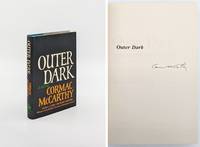
1968rif. 71258New York: Random House 1968. First edition first printing. Hardcover. Near Fine/Very Good. Signed by Cormac McCarthy in black ink on the half-title page. 242 pp. Octavo 21 cm. Publisher's turquoise cloth and grey paper-covered boards stamped in black silver blue. Publisher's black topstain. Black dust jacket with white green and orange typography designed by Muriel Nasser. First printing statement on the copyright page. Dust jacket is price-clipped and has the "9/68" code at the front flap’s bottom-right. A Near Fine unread copy clean and square. The black topstain is lightly faded. The price-clipped dust jacket is Very Good with just a tiny closed tear measuring less than 1cm at the bottom edge of the front panel and one very small dark stain on the spine. A nice copy. Signed by the notoriously reclusive author. From the library of the late Santa Fe bookseller Nicholas Potter. Throughout a friendship spanning forty years Potter’s bookstore served as a frequent destination for McCarthy where the two shared a rapport rooted in their mutual appreciation of literature art music and history. This volume represents a vital fragment of that connection. The first printing of Outer Dark consisted of a run of 5000 copies and was the only printing of the first edition of this work. The book was a commercial failure upon its release selling less than 3500 copies. Set in purgatorial turn-of-the-century Appalachia Outer Dark is McCarthy’s second novel distilling his Southern Gothic style which he would continue to explore in his two subsequent novels Child of God and Suttree. The narrative utilizes an archaic rhythmic prose to deliver a wandering tale—a harrowing meditation on nihilism. Its publication cemented McCarthy as a singular prophetic stylist distinguished from many of his more experimental postmodernist contemporaries through a mastery of the macabre and the mythic. Random House hardcover
1968rif. 71258New York: Random House 1968. First edition first printing. Hardcover. Near Fine/Very Good. Signed by Cormac McCarthy in black ink on the half-title page. 242 pp. Octavo 21 cm. Publisher's turquoise cloth and grey paper-covered boards stamped in black silver blue. Publisher's black topstain. Black dust jacket with white green and orange typography designed by Muriel Nasser. First printing statement on the copyright page. Dust jacket is price-clipped and has the "9/68" code at the front flap’s bottom-right. A Near Fine unread copy clean and square. The black topstain is lightly faded. The price-clipped dust jacket is Very Good with just a tiny closed tear measuring less than 1cm at the bottom edge of the front panel and one very small dark stain on the spine. A nice copy. Signed by the notoriously reclusive author. From the library of the late Santa Fe bookseller Nicholas Potter. Throughout a friendship spanning forty years Potter’s bookstore served as a frequent destination for McCarthy where the two shared a rapport rooted in their mutual appreciation of literature art music and history. This volume represents a vital fragment of that connection. The first printing of Outer Dark consisted of a run of 5000 copies and was the only printing of the first edition of this work. The book was a commercial failure upon its release selling less than 3500 copies. Set in purgatorial turn-of-the-century Appalachia Outer Dark is McCarthy’s second novel distilling his Southern Gothic style which he would continue to explore in his two subsequent novels Child of God and Suttree. The narrative utilizes an archaic rhythmic prose to deliver a wandering tale—a harrowing meditation on nihilism. Its publication cemented McCarthy as a singular prophetic stylist distinguished from many of his more experimental postmodernist contemporaries through a mastery of the macabre and the mythic. Random House hardcover books
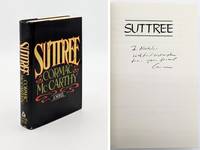
rif. 71273New York: Random House 1979. First edition first printing. Hardcover. Near Fine/Near Fine. Inscribed by Cormac McCarthy in black ink on the half-title page to Santa Fe bookseller Nicholas Potter: "For Nicholas With fond best wishes from your friend Cormac." 451 pp. Octavo 21.5 cm. Publisher's black cloth and cream paper-covered boards stamped in gilt. Black dust jacket with orange yellow and olive green typography and ornamentation designed by Jack Ribik. First edition clearly stated on the copyright page. Dust jacket with "$12.95" price intact at top-front flap and "2/79" code at the bottom of the rear flap. A Near Fine copy with only minimal sporadic surface soil and gentle wear to the edges and corners of the boards perhaps lightly read. The text block is solid and square. The dust jacket is likewise Near Fine with only very light surface rubbing and some minor edgewear near the folds. An attractive copy with an intimate association. A significant association copy warmly inscribed by the notoriously reclusive author to his long-time friend the late Santa Fe bookseller Nicholas Potter. A short note in Potter's hand is laid in: "Scarce 1st edition inscribed to me in the mid 90's." Throughout a friendship spanning forty years Potter's bookstore served as a frequent destination for McCarthy where the two shared a rapport rooted in their mutual appreciation of literature art music and history. This volume represents a vital fragment of that connection; McCarthy who famously avoided public life inscribed most of his published works to Potter. The first printing of Suttree consisted of a run of just under 6500 copies and was the only printing of the first edition of this work. It was another commercial failure for McCarthy at the time selling less than 3000 copies before being remaindered by the publisher. Suttree is McCarthy's most expansive and picaresque work marking the culmination of his "Southern Gothic" period preceded by The Orchard Keeper Outer Dark and Child of God. Set in the decaying riverside slums of mid-century Knoxville Tennessee the narrative follows Cornelius Suttree as he navigates a grotesque carnival of scattered river-dwellers. It is a masterpiece of character and atmosphere that balances dark humor with existentialism through its dense philosophical prose. Random House hardcover
rif. 71273New York: Random House 1979. First edition first printing. Hardcover. Near Fine/Near Fine. Inscribed by Cormac McCarthy in black ink on the half-title page to Santa Fe bookseller Nicholas Potter: "For Nicholas With fond best wishes from your friend Cormac." 451 pp. Octavo 21.5 cm. Publisher's black cloth and cream paper-covered boards stamped in gilt. Black dust jacket with orange yellow and olive green typography and ornamentation designed by Jack Ribik. First edition clearly stated on the copyright page. Dust jacket with "$12.95" price intact at top-front flap and "2/79" code at the bottom of the rear flap. A Near Fine copy with only minimal sporadic surface soil and gentle wear to the edges and corners of the boards perhaps lightly read. The text block is solid and square. The dust jacket is likewise Near Fine with only very light surface rubbing and some minor edgewear near the folds. An attractive copy with an intimate association. A significant association copy warmly inscribed by the notoriously reclusive author to his long-time friend the late Santa Fe bookseller Nicholas Potter. A short note in Potter's hand is laid in: "Scarce 1st edition inscribed to me in the mid 90's." Throughout a friendship spanning forty years Potter's bookstore served as a frequent destination for McCarthy where the two shared a rapport rooted in their mutual appreciation of literature art music and history. This volume represents a vital fragment of that connection; McCarthy who famously avoided public life inscribed most of his published works to Potter. The first printing of Suttree consisted of a run of just under 6500 copies and was the only printing of the first edition of this work. It was another commercial failure for McCarthy at the time selling less than 3000 copies before being remaindered by the publisher. Suttree is McCarthy's most expansive and picaresque work marking the culmination of his "Southern Gothic" period preceded by The Orchard Keeper Outer Dark and Child of God. Set in the decaying riverside slums of mid-century Knoxville Tennessee the narrative follows Cornelius Suttree as he navigates a grotesque carnival of scattered river-dwellers. It is a masterpiece of character and atmosphere that balances dark humor with existentialism through its dense philosophical prose. Random House hardcover books
1477In-folio (300 x 200mm). 320 carte, grande iniziale in rosso di 26 linee, interamente rubricato. Legatura in pelle di scrofa coeva tedesca su assi di legno (Heilbronn), anticamente legato al pluteo, angoli e fermagli in metallo, borchie mancanti.
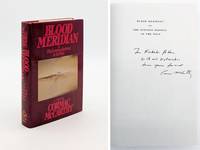
1985rif. 71283New York: Random House 1985. First edition first printing. Hardcover. Near Fine/Near Fine. Inscribed by Cormac McCarthy in black ink on the half-title page to Santa Fe bookseller Nicholas Potter: "For Nicholas Potter With all best wishes from your friend Cormac McCarthy." 337 pp. Octavo 21.5 cm. Publisher's red cloth and red paper-covered boards lettering stamped in gilt with ruling in metallic red. Maroon dust jacket designed by Richard Adelson with red typography and Salvador Dalì's "The Phantom Cart" on the front. Photograph of the author by Mark Morrow on the back. First edition clearly stated on the copyright page. Dust jacket with "$17.95" price intact at top-front flap and "3/85" code at the bottom of the rear flap. Housed in a custom slipcase by Robert Wang of Denver mirroring the dust jacket design. A Near Fine copy with only a few light spots of surface soil at the edges of the text block which is otherwise clean solid and square. The dust jacket is also Near Fine with only very light surface rubbing some minor wear near the folds and just a hint of toning at the top edge. A bright attractive copy with an intimate association. A significant association copy warmly inscribed by the notoriously reclusive author to his long-time friend the late Santa Fe bookseller Nicholas Potter. Throughout a friendship spanning forty years Potter's bookstore served as a frequent destination for McCarthy where the two shared a rapport rooted in their mutual appreciation of literature art music and history. This volume represents a vital fragment of that connection; McCarthy who famously avoided public life inscribed most of his published works to Potter. A short note in Nicholas Potter's hand is laid in: "Incredibly powerful prose combined with a dark and bloody subject matter. This copy inscribed to me by Cormac in the mid 1990's. Very rare inscribed. 1st issue without remainder mark fewer than 2000 of the 5000 copy printing were sold before it was remaindered. Considered by many to be the greatest American novel of the 2nd half of the 20th century." Largely ignored upon its release Blood Meridian is now widely considered the preeminent American novel of the late twentieth century. Set amidst the scorched landscapes of the mid-nineteenth-century American Southwest McCarthy completely reimagines the Western myth. A significant departure from the author's previous four Southern Gothic works McCarthy takes a leap into the desert sublime. The narrative tracks the harrowing journey of "The Kid" through a landscape of escalating depravity haunted by the terrifyingly eloquent and primordial figure of "The Judge." Renowned for its beautiful apocalyptic prose the novel stands as a monumental interrogation of the violence of history and the nature of evil. Random House hardcover
1985rif. 71283New York: Random House 1985. First edition first printing. Hardcover. Near Fine/Near Fine. Inscribed by Cormac McCarthy in black ink on the half-title page to Santa Fe bookseller Nicholas Potter: "For Nicholas Potter With all best wishes from your friend Cormac McCarthy." 337 pp. Octavo 21.5 cm. Publisher's red cloth and red paper-covered boards lettering stamped in gilt with ruling in metallic red. Maroon dust jacket designed by Richard Adelson with red typography and Salvador Dalì's "The Phantom Cart" on the front. Photograph of the author by Mark Morrow on the back. First edition clearly stated on the copyright page. Dust jacket with "$17.95" price intact at top-front flap and "3/85" code at the bottom of the rear flap. Housed in a custom slipcase by Robert Wang of Denver mirroring the dust jacket design. A Near Fine copy with only a few light spots of surface soil at the edges of the text block which is otherwise clean solid and square. The dust jacket is also Near Fine with only very light surface rubbing some minor wear near the folds and just a hint of toning at the top edge. A bright attractive copy with an intimate association. A significant association copy warmly inscribed by the notoriously reclusive author to his long-time friend the late Santa Fe bookseller Nicholas Potter. Throughout a friendship spanning forty years Potter's bookstore served as a frequent destination for McCarthy where the two shared a rapport rooted in their mutual appreciation of literature art music and history. This volume represents a vital fragment of that connection; McCarthy who famously avoided public life inscribed most of his published works to Potter. A short note in Nicholas Potter's hand is laid in: "Incredibly powerful prose combined with a dark and bloody subject matter. This copy inscribed to me by Cormac in the mid 1990's. Very rare inscribed. 1st issue without remainder mark fewer than 2000 of the 5000 copy printing were sold before it was remaindered. Considered by many to be the greatest American novel of the 2nd half of the 20th century." Largely ignored upon its release Blood Meridian is now widely considered the preeminent American novel of the late twentieth century. Set amidst the scorched landscapes of the mid-nineteenth-century American Southwest McCarthy completely reimagines the Western myth. A significant departure from the author's previous four Southern Gothic works McCarthy takes a leap into the desert sublime. The narrative tracks the harrowing journey of "The Kid" through a landscape of escalating depravity haunted by the terrifyingly eloquent and primordial figure of "The Judge." Renowned for its beautiful apocalyptic prose the novel stands as a monumental interrogation of the violence of history and the nature of evil. Random House hardcover books
rif. DR00Les armes de la famille portent « trois aiglettes en vol », ou, mieux « de gueules à trois aigles d’azur aux ailes éployées posées 2 et 1 et regardant à dextre » Référence: www.montferre.com
PARIS, Alphonse Picard, Coll. Manuels de bibliographie historique - 1891- Fort in-8° - Reliure demi-chagrin chocolat époque - Plats & gardes marbrés - Dos à nerfs - XVII-1000 pages - Bel exemplaire Ex-libris : André Raulin
RENNES, Imp. Vatar - 1819 et 1823 - Edition Originale - Complet en 2 volumes - In-8 - 1/2 reliure postérieure - Dos lisse - Plats & Gardes marbrés - VI & 600 et VII & 367 pages - Ex-libris Le Blohic - Très beaux exemplaires
VANNES, imp. Lafolye Frères - 1911 - In-8 - Reliure 1/2 toile à la Bradel - Titre doré - Plats marbrés - Couverture conservée - Signet - 39 pages -Très Bel exemplaire Envoi " Au vicomte de Noailles hommage respectueux & sympathique de l'auteur, ce 12 mai 1912" Ex-libris armorié vicomte de Noailles
NANTES, Impr. de Mellinet-Malassis, 1821 - E.O. - Grand in-4 - Reliure de l'époque (frottée) - Dos lisse orné - Pièce de titre en maroquin cerise- Titre doré - 1 f.- 26- 432-VI-9 pages - Rare Ex-libris Armorié : Poulle-Symian, devise "Non te Negabo" & Ex-libris Le blohic.