Antiquariat.de
8.034 resultados
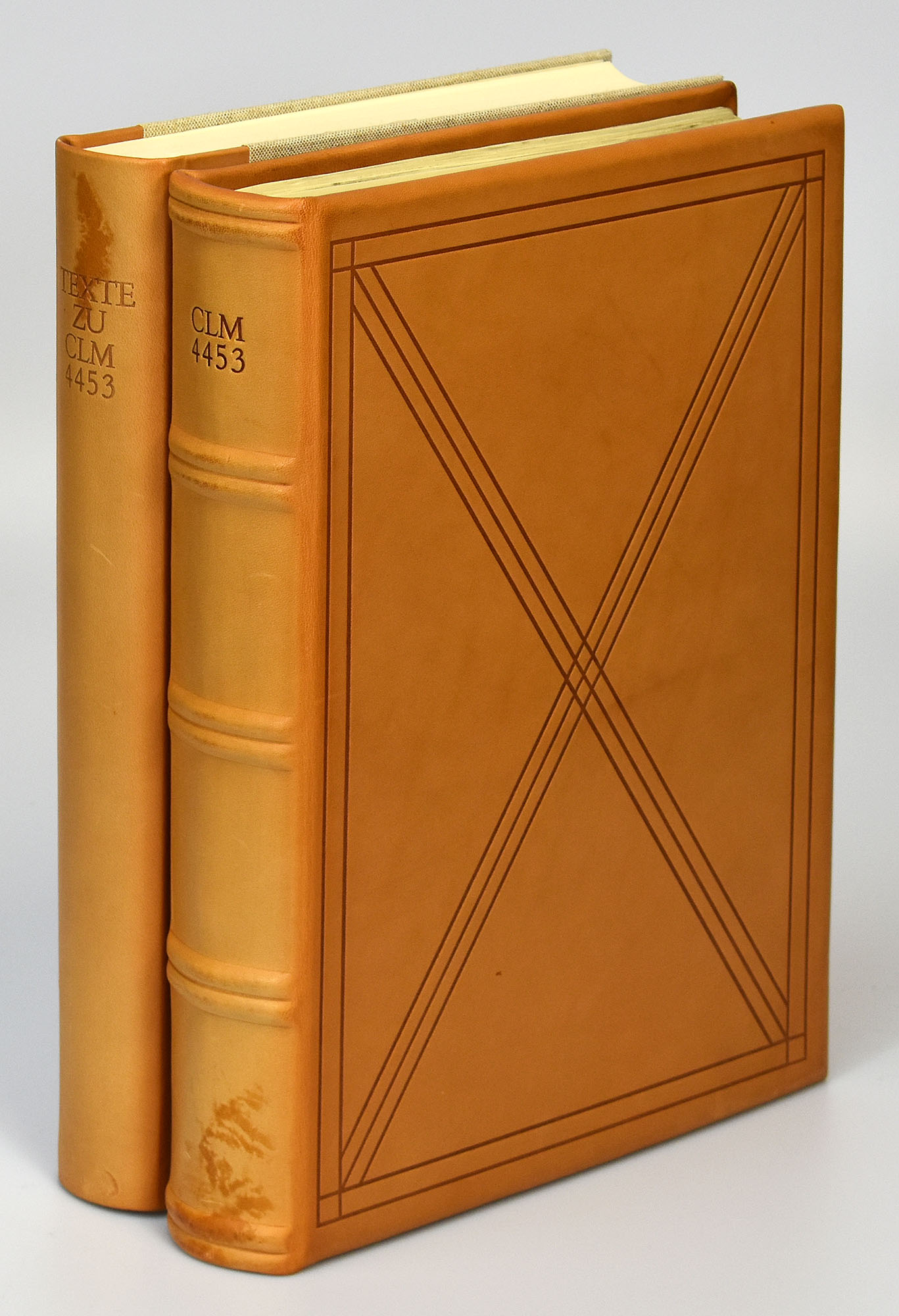
1978ref. 4039FBFrankfurt am Main/Stuttgart/München, S. Fischer/Müller & Schindler/Hirmer Verlag, 1978. 4°. 36 x 27 cm. 276 Blatt; 226 Seiten. Original-Lederband auf 5 Doppelbünden mit Blindprägung nach Streicheisenlinien in Original-Pappschuber und Original-Halbleinenband mit Leinen-Deckelbezug im Original-Pappschuber. [8 Warenabbildungen]
15618vo. (24) pp. With woodcut title vignette. Modern half calf. One of two impressions produced the same year (the other was printed at Rheims by Jean de Foigny). The oration here published opened the third and final period of the Council of Trent (1561-63) in the "première session". - A good, clean copy. BM-STC French 425. Not in Adams.
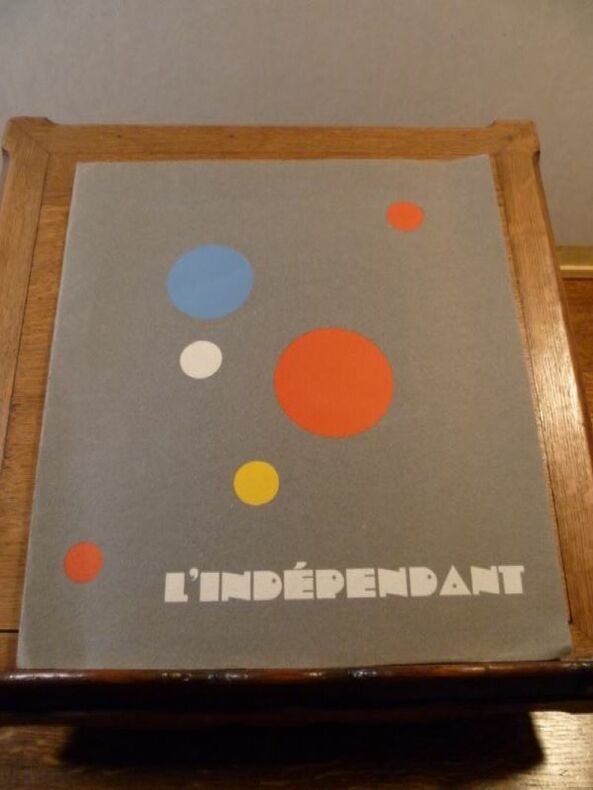
1930ref. 12681930 1 Il comporte divers documents originaux dont : un feuillet en néerlandais : 'd'Onafhankelijke', un double feuillet : 'Première présentation de notre caractère de publicité L' indépendant, un feuillet 'Nous sommes à votre disposition', un feuillet reproduisant la lettre, sur papier à en-tête de l'Institut des Arts décoratifs, de Henri van de Velde concernant la 'réussite' de ce nouveau caractère, un leporello dépliant 'indépendant' caractère qu'exige la publicité en 1930, un double feuillet 'plantin's specialiteiten', un double feuillet publicitaire 'l'intertype' et son enveloppe, un carton gris 'Ét. ''plantin'' Brussel, un papier à en-tête 'Établissements PLANTIN', une enveloppe de même 32,5 x 28,7 cm, Portefeuille imprimé à caractère publicitaire comportant titre et pastilles de couleurs, rouge, bleue, jaune, blanche. Bruxelles, Imprimerie Plantin, 1930.
1930ref. 12681930 1 Il comporte divers documents originaux dont : un feuillet en néerlandais : 'd'Onafhankelijke', un double feuillet : 'Première présentation de notre caractère de publicité L' indépendant, un feuillet 'Nous sommes à votre disposition', un feuillet reproduisant la lettre, sur papier à en-tête de l'Institut des Arts décoratifs, de Henri van de Velde concernant la 'réussite' de ce nouveau caractère, un leporello dépliant 'indépendant' caractère qu'exige la publicité en 1930, un double feuillet 'plantin's specialiteiten', un double feuillet publicitaire 'l'intertype' et son enveloppe, un carton gris 'Ét. ''plantin'' Brussel, un papier à en-tête 'Établissements PLANTIN', une enveloppe de même 32,5 x 28,7 cm, Portefeuille imprimé à caractère publicitaire comportant titre et pastilles de couleurs, rouge, bleue, jaune, blanche. Bruxelles, Imprimerie Plantin, 1930.
Folio (189 x 290 mm). XVI, (1) pp. With large woodcut title illustration and 6 woodcut illustrations in the text, all by Jost Amman. Modern marbled boards with cloth spine, new endpapers. All edges red. Second independent edition of this "short account of the manner how towns, castles, and other places are to be garrisoned with soldiers in such a way that they may withstand the enemy". Formerly attributed erroneously to Fronsperger's "Kriegßbuch", from which Amman's fine title woodcut was taken, the treatise was first published privately in 1560 as the 8th volume of the monumental military encyclopedia by the imperial field marshal and fortification architect Reinhard count Solms (1491-1562); Feyerabend issued it separately in 1563. The text woodcuts show siege engines and instruments. - Leaves XIII and XIIII transposed. Colophon leaf repaired at foot and spotted. - Provenance: the library of Heinrich Stiebel, Frankfurt (his bookplate on pastedown, numbered 5272). Later in the collection of Thomas Fremantle, 3rd Baron Cottesloe (1862-1956), commander of the Territorial Army and president of the Society for Army History Research (purchased from Sotheran's, December 1936). VD 16, R 940. Jähns I, 550 (and cf. 509-514). Cf. Cockle 530 (1563 ed.).
4to. LIX (but: 61) ff., final blank leaf. With 2 title woodcuts and 49 woodcuts in the text (including some repeats). 19th century unsophisticated boards. First edition of this popular genealogy of the Habsburg monarchy, published nearly simultaneously with the German translation. The Alsatian Catholic humanist and educator Gebwiler (ca. 1473-1545; cf. ADB VIII, 486f.) was a friend of Jacob Wimpfeling and counted Beatus Rhenanus among his students. The title woodcuts show the Imperial Eagle on the left, holding in its claws a many-headed hydra, and on the right the Habsburg peacock with a rooster and a lion in its claws. The other woodcuts include a half-page illustration of the Imperial Eagle and 48 small portraits of historical personages. - Spine end corner professionally repaired. Some slight duststaining; a faint dampstain to the upper margin of a few pages. A few minor edge flaws and traces of handling, but a fair copy. VD 16, G 594. BM-STC German 334. Muller II, 47, 254. Ritter 944. Ritter Cat. 1070. Schmidt 232. Cf. Lipperheide Ea 1 (1530 edition only).
Einblattdruck. 1 S. Qu.-Folio (404:307 mm). Mit papiergedecktem Siegel über rotem Wachs. Gefaltet. Aufruf an alle Untertanen, "sonderlich aber allen an der Thonaw, so wol andern nechst geseßnen Flecken", für die Verproviantierung der "anzall Italianisch Kriegßvolck" zu sorgen, welche "die Babstlich Heiligkeit [...] herauß verordnet" habe: "Also haben wir hierinn nachfolgende maaß, ordnung und Tax, Euch [...] setzen unnd benennen wöllen, Alß neblich, daß man gedachtem herab ziehenden Kriegßvolck in ihren nachtleger die notturfft, Profiant, von Brot, Wein, Bier, alt und jungem Fleisch, Käß, Ayr, Schmaltz, Habern und dergleichen, umb bezalung und volgende Tax zufüern [...], und volgender gestalt, alß drey Brott weissen gebäch, deren jedes neün Lot wigt, per ein Kreutzer, ein Maß Wein per vier Kreutzer, ein Pfunt Behaimbischen Käß, per drey Kreutzer, den besseren Käß, so man in Osterreich macht, werden unsere Commissarien nach der güet Taxiern [...]". Mit der Schlacht bei Sissek am 22. Juni 1593 war der Lange Türkenkrieg ausgebrochen, der bis 1606 währen sollte. - Dorsalvermerke des 17. Jhs. zum Inhalt sowie zeitgenöss. Vermerk "Asentirt den 30. Juni Ao. 97". Unter dem Urkundentext rechts: "Commissio domini electi imperatoris in consilio". Links mit eigenh. Zeichnung des niederösterreichischen Statthalters Wolfgang v. Hofkirchen und des Kanzlers Christoph Pirckheimer, rechts des Hans Wilhelm Frhr. von Schönkirchen ("Hanns Wilhelmb Herr von Schennkhirchen d. Ä.") und des Dr. Paul Kraus. Nicht bei Starzer.
1893ref. 2111902160200874Yoshijiro Yabusaki Tsukiji Kyobashi District Tokyo City 1893. Soft Cover. Fine. Number of books: 12 sheets per chapter Yoshijiro Yabusaki Tsukiji, Kyobashi District, Tokyo City paperback
ref. 2111902160200807Nagamatsu Do kura-ban N.A. Soft Cover. Fine. Volume: 1 Nagamatsu Do kura-ban paperback
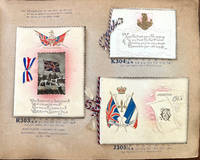
1915ref. 64006Bradford West Yorkshire UK: W.N. Sharpe Ltd. 1915. Thick oblong Folio. 13 x 10.5 x 2.5 in. 72 pp unpaginated. on thick tanned-gray card stock w/ 93 greeting cards envelopes calendar greeting cards folding cards embossed examples most of them colour printed some w/ die-cut decorations and features many w/ hand-coloured Bromide photo illustrations hand-coloured photogravure many raised gilt ornamental decorations monograms and all could be ordered w/ gilt embossed Regimental badges or ornaments. Publisher’s fish-scale scalloped ivory-silver cloth embossed gilt lettering & ornament on front cover some toning scuffing minor bumping to spine edgewear light uniform interior toning slightly shaken 1 small closed tear rear joint at head of spine still a VG- copy w/ Regimental Badges order sheet tipped-in on pricing and ordering instructions on endpapers including specific pricing for Welsh customers. First edition of this scarce World War I-era greeting card and advertising promotions salesman’s sample catalogue filled with beautifully executed printer’s samples to help raise morale during the brutal second year of the Great War. 1915 opened with the disheartening Neuve Chapelle offensive by General Haig and subsequent political fallout battles of Aubers Ridge Festubert Loos as well as Zeppelin bombings and U-Boat blockade transformed the War and Great Britain into an all out effort and grinding stalemate of trench warfare. With millions of men separated from their families and homes W.N. Sharpe and other publisher’s quickly expanded and adapted ensuring that postcards and greeting cards were supplied so that people far from loved ones could exchange morale-boosting messages. These greeting cards were available to be embossed with regimental badges flags of the allies patriotic messages and would prove to be wildly popular during the opening years of the War. When initially prepared for printing in late 1914 there were only 25 Regimental badges but this quickly grew to 62 and here Sharpe has included the updated list. The greeting cards and Christmas cards feature Bromide photos of English Bulldogs with British Empire flags; soft-focus images of idyllic rural scenes mothers & children; Naval scenes; flower arrangements and even King George V. By the early 20th-Century W.N. Sharpe was one of the largest greeting card and postcard colour printing companies in the World on par with Raphael Tuck and were well known for their famed “Patent FAB Patchwork Card” which featured a decorative square of silk that could be cut out and worked into a pin cushion or tea cozy. Following World War I they would continue to expand into producing stationery wedding cards and stationery birthday cards along with calendars postcards and many other paper ephemera. In 1937 they would built the historic 76000 square foot Hallmark House in Bradford and later in 1984 was acquired by Hallmark Cards of the United States. No copies in Worldcat; See: Graham Hall Classic Cards’ Bradford: The History of W.N. Sharpe Ltd. The Bradford Antiquary Series 3 Vol. 11 2007. W.N. Sharpe Ltd., hardcover
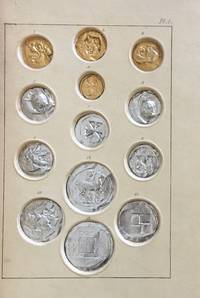
1850ref. 58074London: Grant and Griffith Corner of St. Paul’s Churchyard 1850. Thick 4to. 6.75 x 9.25 x 2 in. 4 iv 208 pp. plus 2 pp. publisher’s ads decorated colophon leaf in red & black inserted errata leaf at rear. Title printed in red & black. With 10 plates featuring 114 embossed relief facsimile coins featuring gold silver copper & bronze leaf applied mimicking the originals all preserving their original printed cover leafs and some text woodcut engraved illustrations. Original embossed padded green publisher’s calf ornamental design borders & lettering in relievo marbled endpapers black linen tape reinforcement at gutter margin sunning & chipping to spine wear offsetting to text leaves minor wear & chipping to fore-edges of covers embossed raised letter spine label present still a VG bright original copy. First edition of this rare and inventive numismatic sample book on ancient Greek & Roman coins by the influential British illustrator and noted numismatist. He proclaims in his introduction how he has invented a new process to recreate actual facsimile coins in their original metals as he had found no other printing or reprographic process properly conveyed either the weight or appearance of the coins quite separate from the chromolithograph colour printing process for his very successful Coins of England. The coin specimens appear as they would have in a Victorian cabinet specimen trayHenry Noel Humphreys 1810-1879 was also fascinated with illuminated Medieval manuscripts and began producing beautiful books with painted ornaments by using the beautiful chromolithography process of Owen Jones 1809-1874. However he also had a keen interest in the natural world writing on aquariums butterflies entomology biology and more. See: Twyman A History of Chromolithography pp. 153-156; Alexander Del Mar A History of Money in Ancient Countries from the Earliest Times to the Present p. xv; Leitzmann Supplement to Lipsius Bibliotheca Numaria 60. Grant and Griffith, Corner of St. Paul’s Churchyard, unknown
ref. 4501Versailles Imprimerie de Ph. -D. Pierres An VI (1798). 1 vol. In-4 . Rel.demi maroquin noir, plats toilés, dos à 4 nerfs titre et auteur dorés Edition originale, illustrée de 21 planches tirées en bistre, finement dessinées et gravées par Gallien. Très bel exemplaire,
ref. SONG1302964798Used: Good unknown
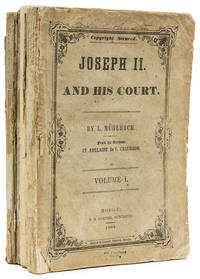
1864ref. 228980Mobile Alabama: S.H. Goetzel; Farrow & Bennett Printers 1864. First edition in English. 4 vols. 8vo. Printed wallpaper wrappers worn and fragile; back wrapper of Vol. II missing. In blue cloth drop-box. First edition in English. 4 vols. 8vo. Rare and telling example of printing in the confederacy toward the end of the war when paper was so scarce the publisher was forced to use wallpaper taken from Southern homes for the wrappers. Parrish 6437; Crandall M.L. Confederate imprints 3106 S.H. Goetzel; Farrow & Bennett, Printers unknown
1864ref. 228980Mobile Alabama: S.H. Goetzel; Farrow & Bennett Printers 1864. First edition in English. 4 vols. 8vo. Printed wallpaper wrappers worn and fragile; back wrapper of Vol. II missing. In blue cloth drop-box. First edition in English. 4 vols. 8vo. Rare and telling example of printing in the confederacy toward the end of the war when paper was so scarce the publisher was forced to use wallpaper taken from Southern homes for the wrappers. Parrish 6437; Crandall M.L. Confederate imprints 3106 S.H. Goetzel; Farrow & Bennett, Printers unknown books
1885ref. 6213Valladolid 1885. About very good. 28pp. plus folding table. Original grey printed wrappers. Wrappers with two moderate losses at fore edge; slight tear at fore edge into the text. Minor wear else. Extremely rare first edition of the founding statues of a printing house employing inmates of the Hospital for the Poor in Valencia. The regulations outline every facet of the new operation and include over a dozen model forms for use in the Escuela de Typografica. The printing establishment employed both permanent and temporary workers and was housed in the Palace of the Provincial Council due to "lack of suitable premises in the Hospital." Temporary workers included assistant typesetters and servant boys employed as volume demanded; twelve workers were to be sourced from the hospital itself to learn typesetting and bookbinding. The text explains that the purpose of the creation of the School of Typography and Bookbinding at the hospital is to give "artistic-professional education to those residents who wish it". Training was to last three years and be comprised of three groups. The first to learn typesetting and exercises in compositing; the second group to learn correction and imposition on plates and with the press; and the third pagination techniques for monographs and periodicals the study of presses and machines and other "theoretical and practical elements of bookbinding and publishing." Further chapters detail pay rates individual responsibilities of each staff member and procurement of materials. We find no copies in OCLC though one copy is located at the private Fundacion Universitaria Española in Madrid.
1885ref. 6213Valladolid 1885. About very good. 28pp. plus folding table. Original grey printed wrappers. Wrappers with two moderate losses at fore edge; slight tear at fore edge into the text. Minor wear else. Extremely rare first edition of the founding statues of a printing house employing inmates of the Hospital for the Poor in Valencia. The regulations outline every facet of the new operation and include over a dozen model forms for use in the Escuela de Typografica. The printing establishment employed both permanent and temporary workers and was housed in the Palace of the Provincial Council due to "lack of suitable premises in the Hospital." Temporary workers included assistant typesetters and servant boys employed as volume demanded; twelve workers were to be sourced from the hospital itself to learn typesetting and bookbinding. The text explains that the purpose of the creation of the School of Typography and Bookbinding at the hospital is to give "artistic-professional education to those residents who wish it". Training was to last three years and be comprised of three groups. The first to learn typesetting and exercises in compositing; the second group to learn correction and imposition on plates and with the press; and the third pagination techniques for monographs and periodicals the study of presses and machines and other "theoretical and practical elements of bookbinding and publishing." Further chapters detail pay rates individual responsibilities of each staff member and procurement of materials. We find no copies in OCLC though one copy is located at the private Fundacion Universitaria Española in Madrid. books
1814ref. 2111902160200379Bunemon Maruya 1814. Soft Cover. Fine. Number of books: 1 Bunemon Maruya paperback
1514ff. 360 (of 361) leaves. Lacks folio Fii (but with xerox facsimiles inserted). First signature detached, and somewhat browned. The title is printed in red and black, and has a central woodcut depicting Mount Parnassus, with the Muses, Bacchus and the temples of Delphi and Apollo. On the verso of the title page are the large woodcut arms of George, Duke of Saxony, showing a powerful knight in frontal view. This woodcut is dated 1514 in the banderole at the knight's head. The blank bottom 2.5" of the title have an old repair. Printed with wide margins in the text, and throughout there are marginal and interlinear Latin notes and comments in black ink by at least two sixteenth-century hands. (The manuscript notes here might reward better scholars than we are with interesting revelations). Folio. 330 mm. Highly decorated and tooled half alum tawed vellumized pig skin over oak boards binding. The spine covering is gone, revealing four double cord raised bands, and remains of an early manuscript used as binder's super. Clasps perished but the brass receivers on the front board are present. Johannes Beuschel was a German neo-latin poet and teacher at the Leipzig university. Probably born at Rothenburg ob der Tauber in the 1470's. From 1504 (and many years thereafter) he was a reader/professor of neo-Latin poetry. He probably died in Leipzig in 1522. Other names associated with him are: Erythropolitanus - Rotenburgensis; Johannes Tuberinus; Johannes Beusselius; Johannes Peussel or Pewschel; etc. He should not be confused with the anti-Jewish writer Johannes Matthias Tiberinus [ca. 1420-1500]. This is apparently an issue of one of the so-called lecture printings (Vortrag-Drucke). Used especially in Leipzig and Erfurt, they were issued in very small quantities for use in the university. Their wide margins were provided for just the sort of annotation seen in this example. They were apparently meant mainly for local sale. As a genre they are rather rare. Of this work we can locate no examples in the U.S. and only a few in Europe. Dedicated to George (the Bearded), Duke of Saxony (1471-1539), who became Duke of Saxony in 1500. He developed decided ability as a ruler. Among other actions, he took measures to suppress the robber-knights, and regulated the judicial system by defining and adjusting the jurisdiction of the various law courts. His court was better regulated than that of any other German prince, and he bestowed a paternal care on the University of Leipzig, where a number of reforms were introduced, and Humanism, as opposed to Scholasticism, was encouraged. The most significant era of his life unfolded after the time of this book, during Luther's Reformation. Most of his political measures, stood the test of experience, but in ecclesiastico-political matters he witnessed with sorrow the gradual decline of Catholicism and the spread of Lutheranism within his dominions, in spite of his earnest efforts and forcible prohibition of the new Protestant doctrine. Hardcover. Very Good. RARE. **PRICE JUST REDUCED! Safe ADD1
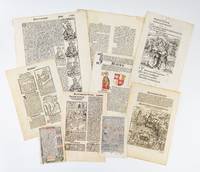
1480ref. ST12778-08481480-1537. Largest leaf measures 428 x 307 mm. 16 3/4 x 12 1/8". 13 OF THE 15 LEAVES WITH WOODCUT OR METALCUT ILLUSTRATIONS several being a half-page or larger and one with contemporary coloring most leaves also with woodcut or metalcut initials. A couple leaves with some light dampstaining a few others with light toning thumbing and/or the occasional stain repair or other minor issue but in general excellent specimens in pleasing condition. These early printing packets present an excellent opportunity for libraries teachers and students as well as private collectors to develop or expand their teaching or personal collections and at a modest cost. Each packet includes four incunabular leaves six post-incunable leaves and five 16th century leaves printed after 1520--all hand-picked to demonstrate a variety of genres formats and countries of origin. Most of the leaves here feature woodcut or metalcut illustrations two of which can be attributed to the prominent engravers Urs Graf and Albrecht Dürer. The illustrations depict a wide variety of scenes including battles biblical episodes saints royalty and natural history. The packets are comprised of leaves from the following works listed in chronological order. 1 BIBLE IN LATIN. Ulm: Johann Zainer 1480. From the press of the first printer in Ulm the first Bible to have notices by Menardus Monachus at the beginning of each chapter briefly summarizing the contents. 2 CHRONICLE. Chronecken der Sassen. Mainz: Peter Schoeffer 6 March 1492. 3 SCHEDEL HARTMANN. Liber Chronicarum. Nuremberg: Anton Koberger 1493. 4 HORTUS SANITATIS. Strassburg: Johann Prüss OR Cologne: Heinrich Quentell 1499 or possibly 1507. 5 A BOOK OF HOURS IN LATIN PRINTED ON VELLUM. Paris: Thielman Kerver 1507. With initials finished by hand. 6 GUILELMUS PARISIENSIS. Postilla Guillermi Super Epistolas et Evangelia. Basel: Michael Furter 1513. With woodcuts attributed to Urs Graf. 7 CHRONICLES: FRANCE. Le Premier -Quatrième Vollume de la Mer des Hystoires & Croniques de France. Paris: Gaillot Du Pré; Michel le Noir 1517-18. 8 MAXIMILIAN I. Die Geuerlicheiten und Eins Teils der Geschichten des . . . Helds und Ritters Tewrdannckhs. Augsburg: Johann Schönsperger 1519. 9 SHIP OF FOOLS - COMMENTARY. Des Hochwirdigen Doctor Keiserspergs Narenschiff. Strassburg: Johanne Grieninger 1520. Using the original woodcut blocks from the First Edition of Sebastian Brant's "Das Narrenschiff'" 1494 many of which are attributed to Dürer. 10 BIBLE IN LATIN. Biblia cum Concordantijs. Lyon : Jacob Sacon for Anton Koberger ca. 1520. From one of many similar editions printed from 1512 to the early 1520s. 11 JACOBUS DE VORAGINE. Golden Legend. Westminster: Wynkyn de Worde 1527. 12 A BOOK OF HOURS IN LATIN PRINTED ON PAPER. Venice: Luca-Antonia Giunta 1532. 13 LIVIUS TITUS. Römische Historien. Mainz Juonem Johann Schoeffer 1533. 14 CHRONICLE. FORESTI GIACOMO FILIPPO. Supplementum Supplementi Delle Chroniche del Venerando Padre Frate Jacobo Philippo. Venice : Bernardino Bindoni 1535. 15 BIBLE IN CZECH. Biblij Czeska. Prague: Pawel Severýn z Kapí Hory 1537. Provenance note: These specimens were acquired by us as part of a very large group of leaves assembled by a collector who purchased widely and frequently over the course of 25 years; he did not take apart books to harvest individual leaves. unknown
1480ref. ST12778-08481480-1537. Largest leaf measures 428 x 307 mm. 16 3/4 x 12 1/8". 13 OF THE 15 LEAVES WITH WOODCUT OR METALCUT ILLUSTRATIONS several being a half-page or larger and one with contemporary coloring most leaves also with woodcut or metalcut initials. A couple leaves with some light dampstaining a few others with light toning thumbing and/or the occasional stain repair or other minor issue but in general excellent specimens in pleasing condition. These early printing packets present an excellent opportunity for libraries teachers and students as well as private collectors to develop or expand their teaching or personal collections and at a modest cost. Each packet includes four incunabular leaves six post-incunable leaves and five 16th century leaves printed after 1520--all hand-picked to demonstrate a variety of genres formats and countries of origin. Most of the leaves here feature woodcut or metalcut illustrations two of which can be attributed to the prominent engravers Urs Graf and Albrecht Dürer. The illustrations depict a wide variety of scenes including battles biblical episodes saints royalty and natural history. The packets are comprised of leaves from the following works listed in chronological order. 1 BIBLE IN LATIN. Ulm: Johann Zainer 1480. From the press of the first printer in Ulm the first Bible to have notices by Menardus Monachus at the beginning of each chapter briefly summarizing the contents. 2 CHRONICLE. Chronecken der Sassen. Mainz: Peter Schoeffer 6 March 1492. 3 SCHEDEL HARTMANN. Liber Chronicarum. Nuremberg: Anton Koberger 1493. 4 HORTUS SANITATIS. Strassburg: Johann Prüss OR Cologne: Heinrich Quentell 1499 or possibly 1507. 5 A BOOK OF HOURS IN LATIN PRINTED ON VELLUM. Paris: Thielman Kerver 1507. With initials finished by hand. 6 GUILELMUS PARISIENSIS. Postilla Guillermi Super Epistolas et Evangelia. Basel: Michael Furter 1513. With woodcuts attributed to Urs Graf. 7 CHRONICLES: FRANCE. Le Premier -Quatrième Vollume de la Mer des Hystoires & Croniques de France. Paris: Gaillot Du Pré; Michel le Noir 1517-18. 8 MAXIMILIAN I. Die Geuerlicheiten und Eins Teils der Geschichten des . . . Helds und Ritters Tewrdannckhs. Augsburg: Johann Schönsperger 1519. 9 SHIP OF FOOLS - COMMENTARY. Des Hochwirdigen Doctor Keiserspergs Narenschiff. Strassburg: Johanne Grieninger 1520. Using the original woodcut blocks from the First Edition of Sebastian Brant's "Das Narrenschiff'" 1494 many of which are attributed to Dürer. 10 BIBLE IN LATIN. Biblia cum Concordantijs. Lyon : Jacob Sacon for Anton Koberger ca. 1520. From one of many similar editions printed from 1512 to the early 1520s. 11 JACOBUS DE VORAGINE. Golden Legend. Westminster: Wynkyn de Worde 1527. 12 A BOOK OF HOURS IN LATIN PRINTED ON PAPER. Venice: Luca-Antonia Giunta 1532. 13 LIVIUS TITUS. Römische Historien. Mainz Juonem Johann Schoeffer 1533. 14 CHRONICLE. FORESTI GIACOMO FILIPPO. Supplementum Supplementi Delle Chroniche del Venerando Padre Frate Jacobo Philippo. Venice : Bernardino Bindoni 1535. 15 BIBLE IN CZECH. Biblij Czeska. Prague: Pawel Severýn z Kapí Hory 1537. Provenance note: These specimens were acquired by us as part of a very large group of leaves assembled by a collector who purchased widely and frequently over the course of 25 years; he did not take apart books to harvest individual leaves. unknown books
8vo. (32), 226, (28) pp., final blank f. With 2 woodcut initials. Contemporary vellum with giltstamped label to spine. First Latin edition, the first 16th c. Latin verse translation of the most important and only complete epic of Alexandrine hellenism in imitation of Homer. - The classicist J. Hartung (1505-79) received the Heidelberg Chair of Greek in 1537. in 1546 he followed a call as Professor of Greek and Hebrew in Freiburg/Breisgau, where he also taught Poetry. - With dedicatory poems by Joachim Mynsinger, Jacob Micyllus, and Balthasar Acanthius; these are followed by emendations of the Greek text, improving upon the Aldine and the Frankfurt edition, with Latin and - “quite uncommon!” (cf. Hieronymus) - German notes in Gothic type. - Somewhat browned throughout (occasionally stronger). Small stamp of the Bonclerici Library on t. p. VD 16, A 3132. IA 106.503. Hoffmann I, 215. Schweiger I, 38. Hieronymus, Griechischer Geist 188. Not in Adams or BM-STC German. Not in Dibdin or Moss.
1926Complete in 3 volumes: viii,vii,18 + xxiii,40 + ix,11 pp. + 465 unbound plates (facsimiles of 2272 examples of typography and woodblock illustrations from the period 1500-1540 in the Netherlands), in 3 uniform cloth-backed portfolio's from the publisher (with a few traces of use), text in French, limited edition (most probably 200 copies), rare complete set in very good condition, weight: 10 kg., [Content: Vol.I: Les Pays-Bas septentrionaux, II: Les Pays-Bas meridionaux, 3: Supplement], S102956
1926ref. S102956Den Haag, Martinus Nijhoff 1926-1935 Complete in 3 volumes: viii,vii,18 + xxiii,40 + ix,11 pp. + 465 unbound plates (facsimiles of 2272 examples of typography and woodblock illustrations from the period 1500-1540 in the Netherlands), in 3 uniform cloth-backed portfolio's from the publisher (with a few traces of use), text in French, limited edition (most probably 200 copies), rare complete set in very good condition, weight: 10 kg., [Content: Vol.I: Les Pays-Bas septentrionaux, II: Les Pays-Bas meridionaux, 3: Supplement], S102956
15603 Bde in einem. 18 nn. (inkl. 1 weißes), 128 numerierte Bll. 27 num. Bll., 1 w. Bl. 6 nn., 42 num. Bll. Mit Titel in rot und schwarz. Zeitgenöss. Schweinslederband mit reicher Blindprägung und Resten von zwei Schließen. Folio. Sammelband mit den drei Werken des Martin Pegius zum privatem und öffentlichen Baurecht sowie zum Eherecht. Die beiden Beibindungen mit den Titeln "De jure emphyteutico. Bawrecht die man sonst nendt Erbrecht" bzw. "De jure et privilegijs dotium. Recht und Freyhaiten der Heüratgüter" werden vom VD 16 zwar separat geführt, kommen jedoch zumeist - wie auch hier - mit dem oben zitierten Titel gemeinsam vor. - Der hübsche Schweinslederband mit Spuren fachmännischer Restaurierung; die Deckel schwach aufgeworfen. Innen durchgehend mit schwachem Wasserrand. Im ganzen ordentliches, vollständiges Exemplar. VD 16, C 1962; C 1945; C 1953. Stalla 374.