8,091 results
Second edition, 3 vols., royal 8vo (235 x 155 mm), large paper copy, [4], 425, [1]; [4], 434, [2]; xl, 420, [4]pp., with half-titles and engraved frontispiece portrait to first and second volumes as called for, 10 facsimile plates, 6 of which are double-page or folding, some occasional light spotting to text (mainly prelims), marbled endpapers, cont. red morocco, spines gilt extra, marbled boards, spines just slightly faded, uncut, t.e.g. an attractive set. This famous bibliography of the output of the Manutius family and their Aldine Press, 1494-1598, has remained the standard work on the subject and has been praised as a classic of its kind. Over 1,500 entries given. Provenance: From the library of Charles Butler (1821-1910), Warren Wood in Hatfield, Hertfordshire. The majority of the library was sold at Sotheby's, London, on 5 April 1911.
4to, numerous illustrs., (some coloured), orig. decorated wrappers, 86 lots.
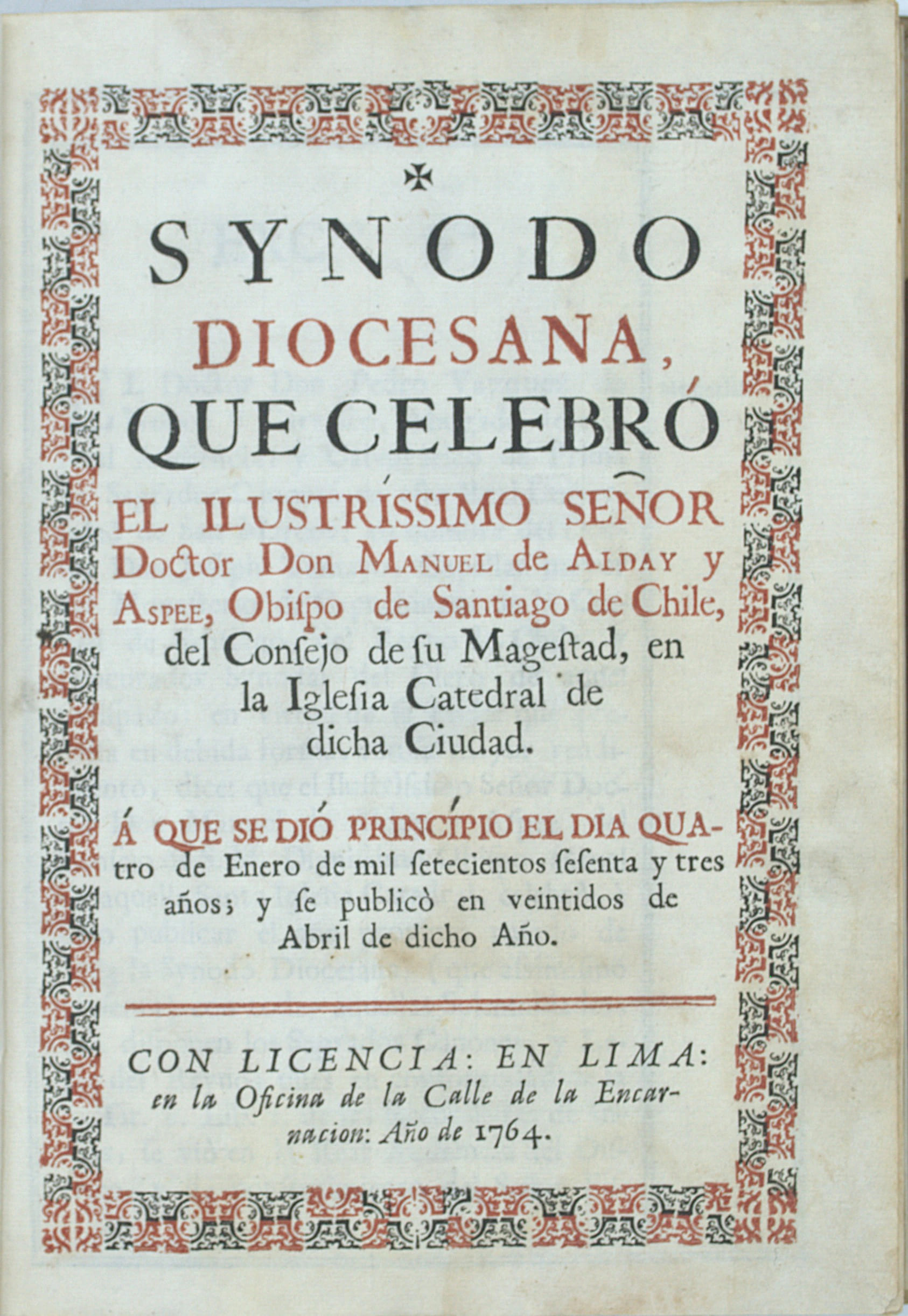
1764ref. PHO-2524Lima, Oficina de la Calle de la Encarnación, Imprenta Real, 1764. Grand in-4° (280 × 206 mm), 4ff.-170pp.-13ff. ; 7ff.-168 pp., relié en demi-vélin à coins, pièce de titre et de tomaison. 1 cahier bruni.
8vo. 256, (6) pp. With the title and imprint set in type in the cartouches of an elaborate woodcut architectural frame including atlantes, grotesque faces, garlands of fruit, etc., and Rouille's woodcut eagle and snake device in an oval window in a pendant hanging from the title-cartouche; 210 emblems (200 with woodcuts); nearly every page (with or without an emblem woodcut) in one of about 34 different richly decorated woodcut frames (generally in four pieces made for use together). There are 6 additional small woodcuts (plus many repeats), usually used as tailpieces, and 5 woodcut decorated initials (3 series of roman capitals in white on a pictorial background). Set in roman and italic types (some by Robert Granjon) including several of the earliest italics to use sloped capitals. Early 18th-century (Spanish?) sheepskin parchment, sewn on 2 supports, with a hollow back, with the title in manuscript across the head of the spine. Rouille issue of the first Spanish edition of the first emblem book, by the legal scholar Andrea Alciato (1492-1550) in Milan, first published in Latin at Augsburg in 1531 with only 104 emblems (97 with woodcuts), but greatly expanded up to the author's death. The present edition has more emblems and more woodcuts than any earlier edition, also more than the French and Italian editions by the same publishers in the same year and more than the competing editions by De Tournes. It brings the work nearly to its definitive form. The Macé issue of the present edition is identical except for the imprint and device on the title-page. Alciato not only produced a work that was to continue through hundreds of editions over the centuries, he invented a whole new genre, the emblem book, which combines allegorical images with a brief motto that aims to give the core of the idea and explanatory text (here in verse), the combination of text and image intended to give more meaning to both and to encourage contemplation by the reader. - The first authorized edition, published by Wechel at Paris in 1534, expanded the first edition and included 113 emblems. Aldo Manutio published a second volume at Venice in 1546, but it was in Lyon that the two volumes were first published together, by two competing firms: De Tournes produced an edition in 1547 with 113 + 86 = 199 emblems, but the 86 in the second volume have no woodcuts; Rouille (publisher) and Bonhomme (printer) produced an edition in 1548 with 201 emblems (128 with woodcuts). On 9 August 1548 they also received a privilege for translations into French, Italian and Spanish, and as these appeared they continued to expand the work. The present first Spanish edition of 1549 (one year before the author's death) therefore contains 210 emblems (200 with woodcuts). Ten emblems (all with woodcuts) therefore make their first appearance as emblems in the present edition, and it omits only 2 emblems published earlier: one that was considered obscene and another omitted for unclear reasons. These 212 emblems were to remain the definitive set for future editions. In most respects, the present Spanish edition follows the 1548 Latin edition but Bernardino Daza who translated it into Spanish claimed to have followed a printed copy with corrections in Alciato's hand, making the present Spanish text an essential source for the author's intentions, rather than just a translation. - Most of the emblems are based on episodes in classical literature, so that their woodcuts depict those scenes, but one shows a map and 14 show quite detailed botanical illustrations of different species of trees: these were cut for the great botanist Leonard Fuchs, De historia stirpum commentarii insignes, which also appeared in 1549. - Except for these trees, the emblem woodblocks are believed to have been cut by Pierre Eskrich. Many appeared in Bonhomme and Rouille's 1548 Latin edition and were based primarily on those cut by Bernard Salomon for Jean de Tournes's 1547 edition, but Eskrich made revisions and additions of his own and as the editions expanded he cut further blocks not based on Salomon. Of the 34 woodcut frames, at least 12 are signed, all with the initials "PV", identified as Pierre Vase, another name used by Eskrich. These present a tremendous wealth of grotesque faces, atlantes, caryatids, fantastic beasts, plants and various kinds of abstract ornament. Some show a single scene interrupted by the space left for the emblem and text (one shows a large ship, two show landscapes, etc.). - With several early owners' inscriptions, some struck through; a ca. 1815 bookseller's engraved label of Théophile Barrois, fils, libraire, Quai Voltaire, n°. 11, Paris, on salmon-coloured paper (35 x 54 mm); and an engraved armorial bookplate of the Dublin-born physician in Paris, Sir Robert Alexander Chermside MD (1787-1860). Lacking the final blank leaf R4. As in many copies, the descender of the 9 in the imprint date "1549" has not printed, so that the date looks like "1540" (this has lead to frequent references to a ghost edition of "1540"). A fraction of a millimetre has been shaved off the head of the woodcut frame on the title-page, there is a long tear along the gutter fold of bifolium O1.8, a couple corners of leaves torn off (not approaching the text or woodcuts), a tiny hole in the title-page, occasional and mostly marginal stains and a few marginal reinforcements. In spite of these defects, most leaves are in good or very good condition. Macé's presswork is somewhat inconsistent, but this has more effect on the woodcut frames than the emblem woodcuts (and since the frames repeat, one can generally find an example that has printed well). Adams, Rawles & Saunders F029. Baudrier IX, 167. Fairfax Murray (French) 9. Green, Andrea Alciati 36. Iberian books 63018. Landwehr, Romanic emblem books, 40. USTC 342602. Cf. Adams A614 (Bonhomme issue); Jammes, Emblèmes 5 (Bonhomme issue); Mortimer (French) 15 (1549 French ed.); Palau 6061 (Bonhomme issue); Praz, p. 250 (1548 & 1550 Latin eds.).
1955ref. 119715München, 1955. M. 61 Abb. 122 S. (Mitteil. d. Inst. d. Dt. Ges. f. Forsch. im Graph. Gewerbe 1/1).
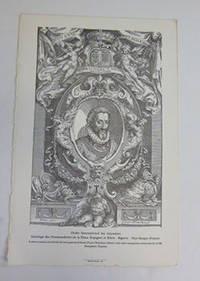
ref. 51-7451Pau en Béarn France: circa 1988. Impression on thick paper outside the edition of 300 copies. 50 x 32.5cm.Met Museum Object Number: 66.511.The Ordre International des Anysetiers is a revival of a large fraternity which was very active in France during the Middle Ages. Pau en Béarn, France: circa 1988 unknown
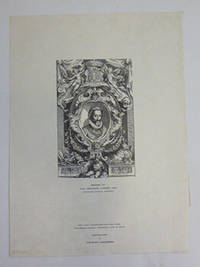
ref. 51-7449Pau en Béarn France circa 1988. One of 8 impressions on Japan paper for Jacques Labarere.38.5 x 28cmMet Museum Object Number: 66.511.The Ordre International des Anysetiers is a revival of a large fraternity which was very active in France during the Middle Ages.Professor Jacques Labarère's Pyrenean library contained many nuggets now dispersed. Starting with Souvenirs d'un montagnard by Count Tyndall Russell-Killough one of the twenty rarest Pyrenean books; printed in 1878 the in-8° . Hot on its heels is Boudon de Saint-Amans' Fragmens d'un voyage . en 1789 an anthology of his publications in two volumes in a fine period binding. The journey continues at the same level with A Picturesque and Descriptive Tour in the Mountains of the High Pyrenees . by Joseph Hardy published in London in 1825 and decorated with 24 aquatint-engraved views. Pau en Béarn , France circa 1988 unknown
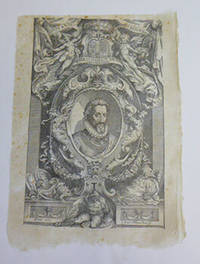
ref. 51-7450Pau en Béarn France: circa 1988. Unique impression on Méo paper for Jacques Perot. 45 x 31cm.in a printed sleeve. Light foxing. .The French historian and curator Jacques Perot served as the director and curator of the Musée national du Château de Pau until 1988///Met Museum Object Number: 66.511. Pau en Béarn, France: circa 1988 unknown
1960Collana: Il Liocorno n.2, 1960. Con 25 tavole fuori testo in nero e a colori. Presentazione di Mario Pavan. Traduzione di G. A. Romesi. Sprovvisto di sovraccoperta. Spedizioni tracciabili con raccomandata entro 24 ore dall'ordine. Hardback cover in fine conditions, no inscriptions or markings inside. Worldwide delivery.
1957ref. 014114Vallauris Imprimerie Arnéra 1957 plaquette in-8 Agrafé, couverture illustrée
2009ref. GITh382Ajaccio Albiana 2009. Fort in-8 broché couverture illustrée 364pp. Illustrations dans le texte. Auréole claire allant décroissant sur quelques feuillets. Exemplaire complet, en bon état à l'exception du défaut signalé. (4583)
ref. 007454Bruxelles Imprimerie Bayard 0 In-8 Agrafé Edition originale
2 volumes bound as 1. 8vo. (16), 431, (1 blank); 295, (7) pp. With 2 title-pages, each with the same woodcut Giunta device (a decorated fleur-de-lis in a wreath with 2 putti), a full-page woodcut showing a larger version of the same device on the last printed page of vol. 2, and about 90 spaces with guide letters left for 3-line manuscript initials (not filled in). Set in an Aldine-style italic (with upright capitals), but the imprint in the first successful italic with sloped capitals, headings (including the titles) in roman capitals. 18th-century gold-tooled mottled calf, sewn on 5 recessed cords, each board with a frame made from a single roll, the spine tooled as a single field (filled with a 7 mm roll of diagonal lines) except for a separate field for the red morocco label, gold-tooled board edges, marbled endpapers (Dutch pattern in red, blue, yellow, green and white), red edges, headbands in green, tan and white, green ribbon marker. Third edition of frequently satirical poetry and plays written in (mostly blank) Italian verse by the Florentine statesman, poet and playwright Luigi Alamanni (1495-1556), the two volumes first published in 1532 and 1533. He and his contemporary Giangiorgio Trissino pioneered the use of blank verse in Italian poetry. The French King François I (1494-1547), who promoted Renaissance Italian ideas and fashions in France, had been allied with the Medici in Florence, but when Giulio de' Medici (from 1523 Pope Clement VII) and François I fell out in 1521, Luigi Alamanni, whose family had long supported the Medici, took François's side and plotted against Giulio. As a result Luigi had to flee to France, living part of the time in Lyon and frequenting François's court in Paris. He returned to Florence when the Medici fell in 1527 but fled again when they regained power in 1530. As a result, he wrote most of his works in France, and Sébastien Gryphius first published them in two volumes at Lyon. The second editions followed in Italy in the same years, published by Bernardo Giunta in Florence (volume 1) and Melchior Sessa in Venice (volume 2). Each volume of the present third edition includes a (different) dedication to King François I. The literary content is: volume I: Elegia (in IV libri with X, VII, VIII & V elegies); Egloga I-XIIII; Sonettini; Canzone; Favola di Narcisso; Il diluvio Rom[ano]; Favola di Athlante; Satire I-XII; Luigi Almanni a Bernardo Altoviti S.; Salmi penit[entiali] I-VII. Vol. II: Selve (in III libri with VII, V & V silvan poems); Favola di Phetonte; Argomento di messer' Antonio Bruciolo sopra l'Antigone; Tragedia di Antigone; Hymni I-VIII; Stanze; Sonetti. - With alphabetical indexes of the poems at the beginning of volume 1 and the end of volume 2. - The book was printed for the Giunti heirs by Peter Schoeffer the younger (ca. 1475/80-1547), the son of Gutenberg's assistant, who began printing in Mainz, but printed in Venice in 1541 and 1542. He was an important typographic punchcutter, so that the book shows types often of his own cutting. The italic used for the imprint is especially interesting as the second (and the first successful) italic to use sloped capitals: that used for the main text follows the earlier Aldine italics, with upright capitals. Schoeffer's present italic with sloped capitals, apparently completed in 1537, proved very successful and helped make sloped capitals the norm for italics. - With an early owner's inscription at the foot of the title-page. The first page and last page are very slightly browned and one page has torn at the foot along the gutter fold, but the book is still in very good condition, most leaves fine. With the front board detached, the back hinge worn, a vertical crack down the spine (with a chip at the foot and damage to the headband), and the right half of the spine label lost. 16th-century Italian poetry of both literary and political interest. BM-STC Italian 12. Camerini, Annali dei Giunti 465. Edit 16, CNCE 600. Gamba, Serie testi lingua Italiana (1839), 15. USTC 808166. Cf. Adams A 406f, (1532-33 Lyons ed.).
1968ref. 13169Imprimerie Déhan 1968 216 pages in8. 1968. broché. 216 pages. Monographie historique de la paroisse de Sérignan (Bas-Languedoc) entre 1650 et 1792 rédigée par Alain Molinier. L'ouvrage décrit le village son terroir ses ressources et analyse la société locale avec une attention particulière aux aspects ruraux et maritimes de la basse plaine de l'Orb
1839AN ABSOLUTELY OUTSTANDING COPY OF THE FIRST AND ONLY EDITION OF THIS EXTREMELY EARLY AND IMPORTANT EXPLICATION OF THE KORAN. 3 leaves; 192 pp + 43 pp Arabic text starting from the back of the book, with a separate title-page. A LARGE-PAPER COPY, BEAUTIFULLY PRINTED WITH HUGE MARGINS ON EXTREMELY FINE, THICK LAID PAPER. 4to. Original paper wraps. ENTIRELY UNCUT, FINE AND BRIGHT, LIKE NEW. Chauvin (X, 70) gives a long notice of this extremely important publication.
Folio. 159, (1 blank) ff. Text set in two columns in a gothic rotunda type with the headings of different capitals ("CAP. ...") set in roman type. With spaces (left blank) for hand-drawn initials and with some woodcut initials throughout. With the woodcut printer's device of Octavianus Scotus at the end of the work. 18th-century brown goatskin, blind-tooled double fillet frame on both boards, gilt-ruled spine with red morocco spine label lettered in gold, gold-tooled board edges and inner dentelles, red edges, orange ribbon marker, marbled endpapers. Extremely rare second edition of Al-Razi's "Kitab al-Mansuri" (Book of Medicine dedicated to Mansur): a short general textbook on medicine in ten chapters, which he dedicated to the Samanid prince Abu Salih al-Mansur ibn Ishaq, governor of Ray, in 903. The work was rendered into Latin as "Liber ad Almansorem" by Gerard de Sabloneta, a 13th-century Italian who specialized in translating Arab medical texts and is said to have translated the work of the great Islamic scholar Ibn Sina (Avicenna, 980-1037) by order of Emperor Frederick II. The first Latin printed edition of "Al-Mansuri" was produced in Italy in 1481. This incunabular edition contains all ten books of the "Liber ad Almansorem", which were seldom printed together: usually only parts of the book were published, most frequently Book 9, which was a popular text under the Latin title "Liber nonus ad Almansorem", and numerous editions were printed in Renaissance Europe with commentaries by prominent physicians of the day, containing descriptions and treatments for a wide range of physical ailments, including epileptic fits, gall stones, ulcers, and toothaches. The ten books present here are considered one of the first medical textbooks printed, covering a range of medical subjects: (1) anatomy and physiology, (2) the tempers, (3) simple remedies, (4) health, (5) skin diseases, (6) diet, (7) surgery, (8) poisons, (9) diseases of the various organs, and (10) fevers. This edition also includes the author's famous treatise titled "De aegritudinibus puerorum", the first treatise entirely devoted to childhood diseases. He clearly discusses the etiology and semeiology of 24 such ailments (including smallpox and measles) with their mostly herbal remedies, each one in a separate chapter. This is followed by additional short treatises by various authors, including Musa ibn Maymun (Maimonides), Yuhanna ibn Masawaih (Mesue the Elder), and ibn Zuhr of Seville (Avenzoar). - This is one of the main works in mediaeval and Renaissance medicine, written by the Persian physician Abu Bakr Muhammad bin Zakariyya al-Razi (854-925, often known as Razi, Rhazes or Rhasis), arguably the most celebrated and most original of the mediaeval writers during the Islamic Golden Age. He is widely regarded as one of the most important figures in the history of medicine and had a widespread influence on both the Islamic world and late mediaeval European medicine. A comprehensive thinker, al-Razi made fundamental and enduring contributions to various fields, which he recorded in over 200 manuscripts, and is particularly remembered for numerous advances in medicine through his observations and discoveries. An early proponent of experimental medicine, he became a successful doctor and served as chief physician of Baghdad and Shahr-e Rayy hospitals. As a teacher of medicine, he attracted students of all backgrounds and interests and was said to be compassionate and devoted to the service of his patients, whether rich or poor. He was the first to clinically distinguish between smallpox and measles, and suggested sound treatments for the former. - In translation, al-Razi's medical works and ideas became known among mediaeval European practitioners and thus profoundly influenced medical education in the Latin West. Some parts of his "Liber ad Almansorem", namely "On Surgery" and "A General Book on Therapy", became part of the medical curriculum in Western universities. Edward Granville Browne considers him "probably the greatest and most original of all the Muslim physicians, and one of the most prolific as an author". He has also been described as the father of paediatrics and as a pioneer of obstetrics and ophthalmology. Notably, he became the first human physician to recognize the reaction of the eye's pupil to light. - Early editions of al-Razi’s "Liber ad Almansorem" are extremely uncommon on the market, with only two auction records on RBH for this second edition of 1497 (in 1955 and 1994), the first 1481 edition being equally rare, if not rarer. - With some 17th century marginal annotations (partly cut off). Binding slightly worn around the edges, boards very slightly shaved. Some very light staining to the first and last leaves, otherwise in good condition. HC 13893. Goff R-176. GW M38002. BMC V, 448. BSB-Ink R-161. IDL 3908. ISTC ir00176000. Proctor 5082. Schuman, From Hammurabi to Gesell 12. Stillwell R 170. Not in Bod-Inc. Cf. Hamel, Bibliographie der astronomischen Literatur bis 1700, p. 367 (1500 ed.); Sarton, Introduction to the History of Science I, 609.
Folio (215 x 316 mm). (4), 125 ff., final blank f. Title-page printed in red and black. With woodcut title border and numerous initials. - (Bound after) II: Hyginus, C[aius] Julius. Fabularum liber [...]. Basel, Johann Herwagen, March 1535. (24), 246, (2) pp. With 2 different printer's devices, 48 woodcuts in the text and numerous initials. - (Bound after) III: Alexander Trallianus. De singularum corporis partium, ab hominis coronide ad imum usque calcaneum, vitiis, aegritudinibus, & injuriis [...]. Basel, Heinrich Petri, (March 1533). (18) ff. (last blank), 342, (6) pp. With repeated woodcut printer's device and numerous initials. Contemporary wooden covers with blindstamped leather spine on four double bands. 2 clasps. The principal work of Rhazes, hailed as the "Arabic Galen", frequently reissued with a wealth of commentaries as late as the Renaissance. Dedicated to Prince Almansor of Chorasan, this edition contains the commentary of the physician Galeazzo da Santa Sofia (d. 1427), a native of Padua who served in Vienna as the personal physician to Duke Albrecht IV - likely the only edition of this commentary. The volume was edited by the physician Georg Kraut, who contributed a "Libellus introductorius in artem parvam Galeni de principiis universalibus totius medicinae". - II: Bound before this is the first edition of this variously reprinted collection of Hyginus's mythographical works, "an indispensable aid for the knowledge of the subject matter of Greek tragedy" (Tusc. Lex. Lit.). This is the first appearance in print of the "Fabularum liber", edited by Jacob Micyllus; the finely illustrated "Poeticon astronomicon" had first appeared in 1482. - III: Also bound within the same volume is the second Latin edition of the works of Alexander from Tralles in Lydia (525-ca. 605), the third great physician of the Byzantine epoch, edited by the learned Swiss physician Alban Thorer (Albanus Torinus, 1489-1516). - Traces of a removed title label on the upper cover of the well-preserved binding. Finely penned annotations to Rhazes; the other works contain marginalia in a different hand. An old ownership appears to have been removed from the upper blank margin of Hyginus. Wants the first free endpaper. Some dampstaining to upper margins throughout; other margins show only occasional staining; otherwise largely clean with insignificant browning. I. VD 16, M 6766. Adams R 225. BM-STC German 634. Benzing 115, 5. Bird 2030. Burg 187. Durling 1747. Haeser I, 705. Panzer VII, 111, 362. Wellcome I, 5748. Not in Lesky, Osler or Waller, not in Wolfenbüttel. - II: VD 16, H 6479. Honeyman 1738. Houzeau/L. 762. Panzer VI, 306, 1013. BM-STC German 427. Schweiger II.1, 464. Zinner 1592. Not in Adams. - III. VD 16, ZV 394. BM-STC German 20. Adams A 701 (incomplete). Choulant, Ält. Med. 136. Durling 147. Wellcome I, 206 (incomplete). Cf. Puschmann I, p. 99.
8vo. (8), 247, (1) ff. With woodcut printer's device on title-page, repeated on recto of final leaf. Contemporary limp vellum with traces of ties and remannts of a handwritten spine title. The twelve books on medicine by Alexander of Tralles, the first parasitologist in medical history (and the younger brother of Anthemius, architect of the Hagia Sophia), issued together with al-Razi's classic treatise on smallpox and measles ("Kitab fi al-Jadari wa al-Hasaba"): the first book ever published on smallpox, also known as "Peri loimikes" or "De pestilentia". - Indeed, Al-Razi was the first physician in the history of medicine to distinguish between smallpox and measles, and consider them as two different diseases. The influence of his diagnostic concepts on Muslim medicine was very clear, especially on Ibn Sina. This work gained great popularity in Europe and was also translated into French, English and German; Brockelmann states it saw some 40 Latin editions between 1498 and 1866. - Al-Razi (also known as Rhazes; 850-923 or 932) is considered the greatest mediaeval physician next to Avicenna; he also conducted alchemical experiments. According to his biographer al-Gildaki, he was blinded for refusing to share his secrets of chemistry. - Binding professionally repaired along the edges. Occasional browning and staining, some waterstaining near the end. 18th century ink ownership "A. Gonnella" to title-page. Rare; a single copy in auction records (Swann, 1 March 1979, Sale 1132: Distinguished Collection of Historic Medicine, lot 9). Edit 16, CNCE 1120. Wellcome I, 212. Durling 152. Cf. GAL S I, 419, no. 3. M. H. Fikri, Treasures from the Arab Scientific Legacy in Europe, No. 44 (Venice 1555 ed.). Not in Adams or BM-STC Italian.
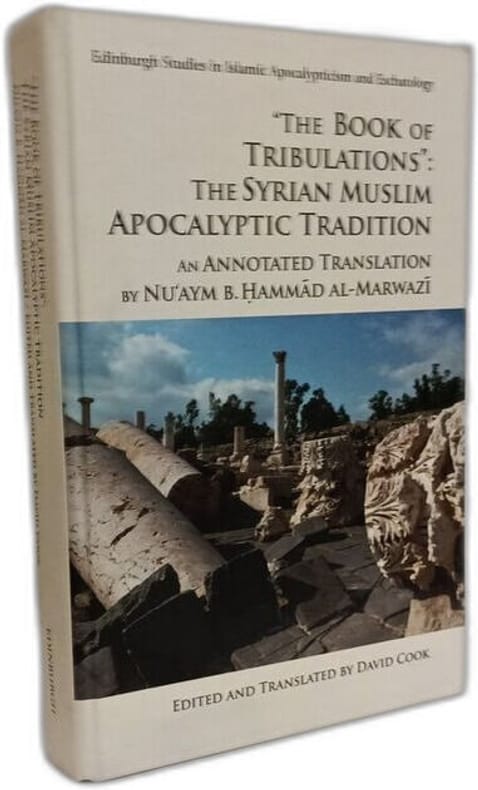
2017ref. 100145111Edinburgh University Press 2017 248 pages 15 8x23 8x3 6cm. 2017. Cartonné. 248 pages. Ouvrage académique en trois volumes étudiant l'évolution historique du culte marial en Égypte des premiers siècles (I-VI) jusqu'à l'époque moderne (XI-XX). L'œuvre analyse les documents la liturgie copte et les influences culturelles notamment les possibles liens avec le culte d'Isis. Il s'agit d'une publication de référence de la collection Studium Biblicum Franciscanum
2000ref. 3127766Herndon: International Institute of Islamic Thought 2000. XV, 237 Seiten. Gr. 8° (22,5-25 cm). Orig.-Broschur. [Softcover / Paperback].
2000ref. 2090502113714302Not Available 2000. Soft Cover. Fine. The book is in fine condition. Not Available paperback
1986ref. 2092902141101910Seibuhyakkaten 1986. Soft Cover. Fine. Volume: 1 Seibuhyakkaten paperback
1898Twenty Volumes. Illustrated with Etchings, proofs-before-letters on Japan Vellum, and impressions of the Historical Portraits on India Paper. Offsetting from tissue guards marring a few illustrations. Title pages printed in red and black. Uncut. Top edges gold. 8vo. Original full blue cloth bindings, some wear. Original spine paper labels. Spines faded. Victorian Edition. Limited Edition. Number 996 of only 1000 copies. Nice set. Impressive. SET/W49
1919ref. 362253A.I.F printing Section. H.M.A.T 1919. First Edition. Softcover. Good copy in the original stiff-card wrappers; edges slightly nicked and dust-dulled as with age. Physical description; 8 pages. Subjects; British Navy. Australian Navy. H.M.A.T. Nestor. British Military. A.I.F printing Section. H.M.A.T paperback
2013New English Paperback. Pbo. Roy. 8vo. (24 x 17 cm). In Turkish. 374 p., color and b/w ills. and Ottoman documents. Ibrahim Müteferrika eserlerinden Yalova Kâgithânesi. A history of paper mill in Yalova City in the period of the late Ottoman Empire by Ibrahim Muteferrika. OTTOMANIA Turkish and Islamic art Muteferrika Printing House Typography Paper Yalova.