8,034 results
196924x16cm. 42 pages. Softcover. Cover slightly water-stained. Ex-libris stamp on front whitepage. Else in good condition.
1772ref. 15319, , 1772-1777. 4 pièces en 2 volumes in-8, texte encadré, veau marbré, dos lisse orné à la grotesque, pièces de titre en maroquin rouge et de tomaison en maroquin noir, tranches rouges (reliure de l'époque).
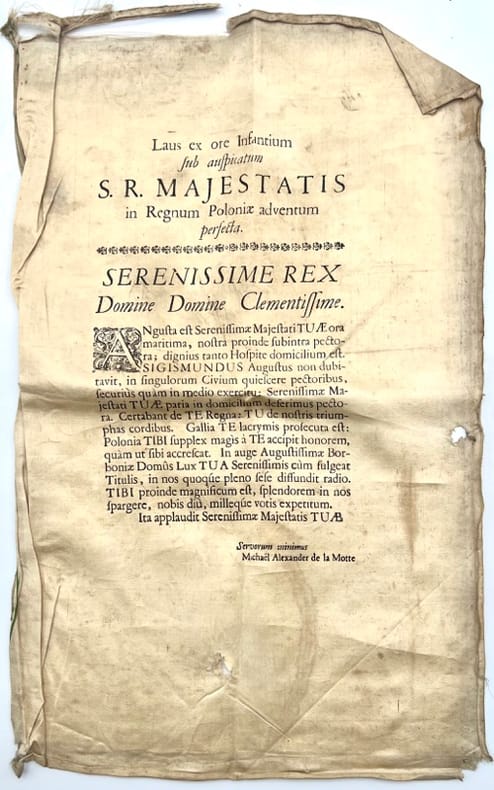
1714ref. 44331S.l.n.d., , 1714-1734. Placard in-quarto sur soie (39 x 25 cm).
1634ref. 40475Leyde, Abraham et Bonaventure Elzevier, 1634. Petit in-12 (126 x 67 mm) de (20) pp. dont 1 titre-frontispice et 1 figure gravée, 786-(30) pp. (sig.*10 A-Z12 Aa-Ll12), maroquin bleu, dos lisse orné, roulette dorée d'encadrement sur les plats, frise intérieure dorée, gardes de tabis rose, tranches dorées (reliure du XVIIIe siècle).
4to (142 x 196 mm). 119 ff. (of 122, without initial blank and two final blanks). 38 lines, single column, roman type. With 38 woodcut illustrations in the text showing constellations. Modern full calf with double blind rules to covers, spine on five raised bands with gilt title "Aratus". All edges red. First edition of Avienus's translation of this influential astronomical poem, rarely found complete, pre-dating the editio princeps of the Greek text by 11 years. Based on Eudoxus of Cnidus, Aratus's didactic poem about celestical phenomena (written soon after 276 BC, probably at the Macedonian court) enjoyed immense success and was frequently translated in Roman times - an interest occasioned by the increasing degree to which men viewed their fates tied to astrology and the stars. Avienus's 4th-century Latin text, informed by the Neoplatonic tradition, is expanded considerably from the original. The volume includes additional translations of Aratus by Cicero and by Germanicus Caesar, who offer earlier viewpoints. The latter version is accompanied by 38 zodiacal woodcuts, almost all of which were designed and executed for this volume and thus are present in brilliant early proofs. Four beautiful cuts in the Venetian manner are especially remarkable (cf. Essling, 431). - The "Ora maritima", on the other hand, is a short poetic account of early sea routes used by Greek and Carthaginian traders along the coasts of the Mediterranean, Caspian, and Black Seas. A few scholars have speculated that one of Avienus's sources for his work was the now-lost Massiliote Periplus, a conjectural sailing guide from the 6th century BC, although this idea is controversial. The final text in the volume constitutes the first dated edition of the most popular Roman medical work (by Serenus Samonicus), likewise couched as a didactic poem. The collective volume is thus of the greatest interest for the history of science. The editor, Vettore Pisani, was a pupil of Giorgio Valla. - Folio a4 remargined at foot and p6 (the final leaf present) repaired at head (both barely touching text). A few contemporary manicules. A very clean copy (entirely complete save for 3 blank leaves) of an edition usually encountered only in parts or even fragments, even in institutional collections. - Provenance: from the library of the surgeon, meteorologist, and antiquarian Charles Leeson Prince (1821-99) of Crowborough, Sussex, with his large bookplate (dated 1882) to front pastedown. Later in the collection of the meteorologist George James Symons (1838-1900); bequeathed to the Royal Meteorological Society with the Symons bequest bookplate (dated 1900) on lower pastedown. HC 2224* (= H 2223). Goff A-1432. GW 3131. Proctor 4593. Klebs 137.1. Sander 718. Essling 431. Pellechet 1673. Bod-inc A-639. Sheppard 3709-3711. BMC V 294. BSB-Ink A-969. Stillwell A 1277. ISTC ia01432000.
5 Bde. und Index in 2 Bdn. Mit 6 wdh. Druckermarken. Blindgepr. Schweinslederbände der Zeit. Reste von Schließen. Folio (265 x 375 mm). Schöner, sehr seltener Pariser Nachdruck der lateinischen Gesamtausgabe, die 1530 bei Froben in Basel erschien, erstmals von Philipp Montanus besorgt. - Mit 3 Blattweisern (ein vierter verloren). Einige Wurmgänge (auch im Text); durchgehend gleichmäßig schwach gebräunt. Die Schweinslederbände etwas berieben, hübsch blindgeprägt mit drei verschiedenen Rollenstempeln. Exemplar aus der Bibliothek der Ingolstädter Franziskaner mit deren hs. Besitzvermerk des frühen 18. Jhs. sowie Stempel an Titel und Vorsatz. Hoffmann II, 412. BM-STC French 244 (nur Bd. 1). Diese Ausgabe nicht bei Adams.
8vo. (132) ff. With 2 different woodcut devices. - (Bound with) II: [Melekhet ha-dikduk]. Institutiones grammaticae in Hebraeam linguam [...]. (144) ff. With several musical notes and two woodcut devices. Modern vellum, in custom-made cloth case. I: Second edition of Münster's "Proverbs", previously published in 1520, together with his first own work ever, an introduction to Hebrew grammar. Numerous contemporary Hebrew and Latin marginalia. - II: Only edition of Münster's second publication, a foundation stone of modern Hebrew studies. Includes (fol. r1 ff.) the co-called Jonas polyglot in Hebrew, Chaldaic, Greek, and Latin, with other matter. Contemp. ownership obliterated from t. p.; lower corner defective (remargined professionally; losses supplied in pencil). Numerous contemp. marginalia, mostly in Latin. Both works are very rare; the former has not been seen at auctions since 1950. I: VD 16, B 3564. Burmeister 137. Hantzsch 234.2-4. Adams B 1536. Steinschneider (Bodl.) 11.51. Panzer VI, 244, 540. Vinograd Mem 1256. OCLC 71515193. Not in BM-STC. - II: VD 16, M 6685. Burmeister 2. Hantzsch 220.2. Adams M 1931. BM-STC German 633. Steinschneider (Hdb.) 1374. Panzer VI, 245, 541. Wolfheim I, 865. Graesse IV, 623. OCLC 22612604.
(8), 290, (2 [statt 30]) SS. Mit großer Holzschnittdruckermarke am letzten Bl. verso. Neurer brauner Pappband. 4to. In maßgefertigter Leinenkassette. Die zweite Ausgabe dieser berühmten Grammatik, erstmals 1542 erschienen. "Der Brief des Baillivius ist weggefallen. Ebenso ist das - nunmehr undatierte - Vorwort nicht mehr an diesen, sondern allgemein, wie üblich, an die Hebraicae Linguae Studiosi gerichtet. Gleichzeitig sind infolgedessen die persönlich gehaltenen Stellen am Anfang und Schluß in Wegfall gekommen. Jene sind ersetzt durch einen Hinweis auf des Verfassers Leistungen für das Studium der hebräischen und chaldäischen Sprache während eines Zeitraums von über 20 Jahren" (Prijs). "[E]nthält die Summe des grammatischen Wissens Münsters, die Summe einer 30jährigen Arbeit, die er mit diesem Werk zum Abschluß brachte. Aber das Werk enthält nicht nur das eigene Wissen Münsters, sondern berücksichtigt fast die gesamte Forschung seit Reuchlin, sowohl die christliche als auch die jüdische, die deutsche und die ausländische [...] Nach bewährtem Beispiel wurde wieder ein Übungstext angehängt, und zwar das apokryphe Buch Tobias [...] Münster sah diese Grammatik als endgültig an und arbeitete fortan keine neue mehr aus [...] Das Opus grammaticum consummatum erwies sich auch tatsächlich als eine perfektionierte Arbeit, die zahlreiche Auflagen erlebte" (Burmeister, Biogr. Gesamtbild, S. 69). "Als Hebraist nimmt [Münster] in Deutschland nach Reuchlin eine der ersten Stellen ein" (ADB XXIII, S. 30). - Etwas gebräunt und wasserrandig; die Seitenränder teils leicht unregelmäßig bzw. alt hinterlegt. Einige wenige Marginalien der Zeit zu Beginn. Am letzten Textblatt Lochstempelung der Philadelphia Divinity School. Ohne die letzten 14 Blätter Anhang. Sehr selten; zuletzt 1971 im Handel; über VD 16 nur drei Standortnachweise (Leipzig, Wien, Wolfenbüttel). VD 16, ZV 11220. Burmeister 12. Adams M 1937. Steinschneider 2015, 21. Prijs 68. Fürst II, 407. OCLC 48902972. Nicht im BM-STC.
1564Folio. (416) ff. Hebrew type, 4 cols. With woodcut printer's device on title page. 17th century calf with gilt spine and cover rules; gilt Jesuit device to cover. Edges tinted yellow. Rare second Venetian edition of the first Hebrew Bible concordance (first published by Bomberg in 1523), with a new Latin dedication to Maggio Parentini. Words are arranged etymologically by roots and stems; the order of the books follows that of the Vulgate. The Arles-born Rabbi Isaac Nathan ben Kalonimus (fl. 1400-48) compiled the work commonly referred to as "Meir Nativ" ("Light of the Way") between 1437 and 1447 with the twofold aim to facilitate the study of Biblical exegesis and to keep Jews who had converted to Christianity from misquoting the Bible in religious controversies (cf. Jewish Encyclopaedia). Nathan himself moved in Christian scholarly circles and participated in theological disputations with his Christian colleagues. Notably, he based his present concordance on a work compiled by the Franciscan Arlotto de Prato. Occasionally (as here) the book is falsely attributed to Isaac's nephew Mordechai Nathan. - Text ruled in red throughout; the edges' yellow paint has seeped into the margins in places. Title page somewhat brownstained; a few corner defects early on, otherwise very clean and largely unbrowned. Ms. ownership of the Jesuit college at Chambéry (Savoy), dated 1585, on title (and repeated on last leaf but one); old stamp and long bibliographical note in French (c. 1900). Binding somewhat rubbed; spine professionally repaired. No copy in U.S. libraries. Adams B 1953. BM-STC Italian 104. Steinschneider 5399.3. Fürst III, 22. OCLC 257608293. Not in Edit 16.
4to. [287] ff. (B-C6, D-E8, F28 [!], G8, H6, J8, K4, L-N8, O6, P-Q8, R6, S-V8, X6, Y-Z8, a8, b4, c7 [6+1: includes "c medium" between c2 and c3], d-e8, f6, g-h8, i4, k-l8, m6, n-p8; published thus without a gathering A, agreeing with ÖNB copy). With title woodcut, 8 pp. of musical notes, and numerous (32 large, 12 almost full-page, and hundreds of small) woodcuts in the text (wanting the woodcut map and the folding plate on musical theory). Contemp. wooden boards with blindstamped pigskin spine and one central brass clasp. The first encyclopedic work in modern European history. The first Strasbourg edition, a revision of the Freiburg first edition published the previous year. In the manner of a dialogue between teacher and student, the book discusses the sciences and liberal arts, including music (with notes), medicine, geometry, surveying, etc. Grüninger modified several woodcuts from the first edition and added others; he also incorporated a brief Hebrew grammar by Conrad Pellicanus, making this the first Strasbourg-printed book to include Hebrew type (cf. Schmidt). - Among the illustrations are a map of the world on f. c6r and many charming miniature woodcuts in the margins. Occasionally, details of the initials (F11r) and woodcuts (e.g., F18v, c2v [salamander], and c3v [dragon]) have been coloured in red. Several contemporary underlinings and marginalia, including a lengthy note on earthquakes that supplements the printed text by additional sources, such as the Arabian astronomer Abu Ma'shar: "Erdbebung bedeute straff Gottes. Naturliche Ursachen nemlich die Hitz und würckung etlicher Planeten, mit der Sonnen, als Martis, Iovis, Saturni, und sönderlich sagt Albumasar vom Saturno. Bedeuten stets künfftig Unglück, wie auch Plinius danen saget, das kein Erdbidem zu Rom geschehen sey one Bedeutung künfftiger ding [...]" (c5v). Some browning and fingerstaining; quires S and e misbound; several small edge defects (larger in d5, k6); paper defects to D4 and (almost touching text) d6. Some worming near beginning and end of volume, also concerning the binding; some damage to spine-ends. VD 16, R 1034. BM-STC 731. Proctor 9891. Schmidt (Grüninger) 66. Ritter 1984. Muller 24, 26. Smith, Rara, 82. Sabin 69123. Ferguson (Reisch) 201f. Alden/L. 504/2. Zinner 849. Eitner VIII, 183. Not in Adams.
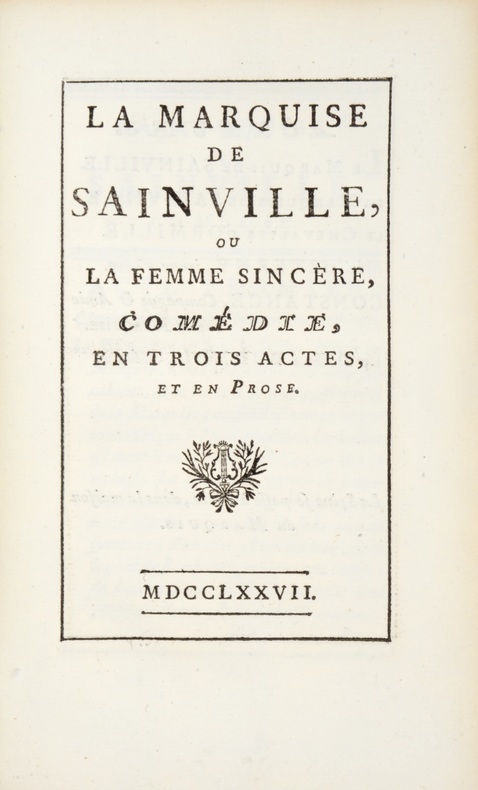
1504ref. 41988Lyon, Claude Davost, Étienne Gueynard, 1504. In-4 gothique à deux colonnes de (12)-217 ff. mal chiffré 215 (sign. aa bb a-z π-ƒ A9), index, veau marbré, dos orné à nerfs, pièce de titre en maroquin rouge, tranches rouges (reliure XVIIIe).
ref. 16006Ulm, Johann Zainer, sans date, [pas après 1478]. Petit in-folio gothique (20 x 29 cm) de (418) ff. à 40 lignes par page, sans foliotation, réclames ni signatures dont 2 feuillets blancs (1er et 371e), peau de truie sur ais de bois biseautés, dos à trois nerfs, décor géométrique estampé à froid dans un encadrement de médaillons, titre manuscrit en noir sur le dos, fermoirs, traces de cabochons (reliure de l'époque).
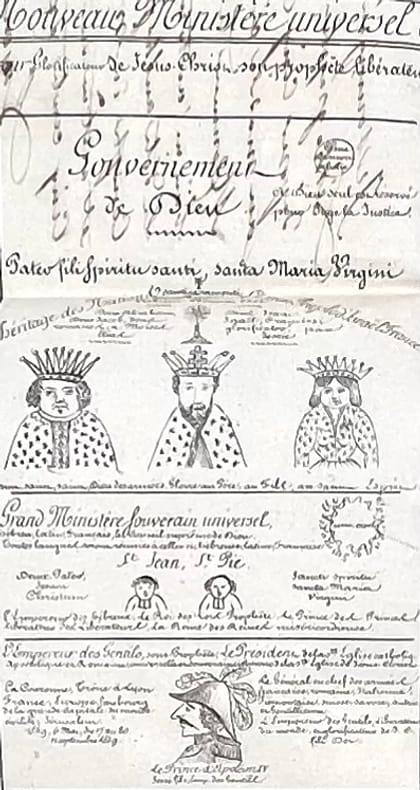
1849ref. 43873(Lyon), Jacques-Nicolas Senocq, 1849. Placard autographié (560 x 440mm).
4to. 165, (3) pp. With woodcut printer's device to title-page. Contemporary vellum. A very rare oriental grammar, unknown to Vater and Jülg: the first true grammar of Aramaic produced in France, expanded from Mercier's similarly titled "Tabulae in Chaldaeam grammaticen" published in 1550 (a slight work of a mere 18 leaves). The French oriental scholar Jean Mercier (ca. 1510-70) studied under François Vatable, whom he succeeded as professor of Hebrew at the Collège Royal. Created Lecteur du Roi in 1546, Mercier later was forced to flee to Venice because of his Protestant sympathies but returned to France and there died of the plague. "L'hébraïsant J. Mercier, auteur de la première grammaire araméenne parue en France, estime que la connaissance des langues maternelles des 'adversaires de la foi' permettra de les battre avec leurs propres armes sans leur laisser la moindre échappatoire" (S. Kessler-Mesguich, Hébraïsant-Chrétiens des XVIe et XVIIe siècles, p. 91). - Rare; USTC locates only 7 copies in libraries internationally, of which only one is in America (Houghton Library). - Lower corner of final leaf remargined; modern endpapers, using old paper. An attractive, tightly bound specimen. Adams M 1310. French Vernacular Books 79777. OCLC 457680439 (BnF copy). Not in Vater/Jülg.
1582ref. 15603Paris, Imprimé Par Jean Le Blanc pour Julien Duval, 1582. Petit in-8 gothique de (108) ff. [aaaa8-oooo8]. 2 grand bois portent les initiales JLB (pour Julien Le Blanc) et 30 petites vignettes sur bois la plupart signées JLB. Imprimé en rouge et noir. Nombreuses initiales ornées. Les Quinze Effusions du tres precieux sang de nostre sauveur et redempteur Jésus-Christ. S.l.n.d. [Paris, Jean Leblanc, 1585]. Petit in-8 gothique de (8) ff. [A8]. 9 grands bois in texte portant les initiales JLB. Initiales ornées. La Vie de Madame Sainte Marguerite, vierge et martyre avec son oraison. Imprimé à Paris par Jean Leblanc, 1585. Petit in-8 gothique de (8) ff. [A8]. Vignette sur bois au titre. Les 3 pièces reliées en 1 vol. petit in-8 (11 x 7 cm), maroquin rouge, triple filet doré en encadrement sur les plats, dos lisse orné, pièces de titre en maroquin vert, dentelle dorée sur les tranches et filet doré sur les coupes, signet de soie bleue, tranches dorées (reliure du XVIIIe siècle).
1581ref. 117826venise perchacino 1581 in-8 In Venetia [Venise], appresso Gratioso Perchacino [Grazioso Percacino], 1581, 1 volume grand in-8 de 150x210 mm environ, [10] ff., 112 pages, [11] ff. (table), incomplet : il manque 2 feuillets à la table des noms propres et le dernier feuillet de la table finale. Reliure cartonnée d'attente muette, plats recouverts de papier marbré. Exemplaire en partie dérelié, bas de la page de titre découpé (sans atteinte au texte), une déchirure en marge de la page 22, des traces importantes de mouillures, des sauts-erreurs-décalage de pagination, état d'usage.
1681ref. 42869La Correrie, per Laurentium Gilibert, typographum juratum apud Gratianopolim, 1681. In-4 de 348 pp. et (48) pp. d'index (sign. A-Z-Aa-Zz-Aaa-Ccc4, Ddd2), demi-veau havane, dos orné (reliure du XIXe siècle).
1681ref. 43386Correriae, Per Laurentium Gilibert, typographum Juratum apud Gratianopolim, 1681. Petit in-8 de 339-(41) pp. 48 pp. (8)-91-(1) pp., index, errata (signatures: A-Aa dernier blanc, A-C a-f ), veau granité, dos orné à nerfs (reliure de l'époque).
1921Very Good French Original wrappers. Demy 8vo. (22 x 14 cm). In French. 33, [1] p., tables, and plates. First and only edition of this extremely rare treatise on How Kufic script is applied to print, a brief history of Kufic script, its use in ancient and modern times, examples of writing accompanied by illustrations, typesetting on the keyboard for linotype printing, its use on typewriters, its use in telegraphy (with Arab and international typesettings), etc. Ali Kenan (?-1962), married Emine Nemika Sultan (1888-1969) in 191 and became a groom to the Ottoman palace and the royal family. Only one copy can be traced in OCLC 1065045158, in The British Library, St. Pancras.
8vo. 62, (2) ff. With wodcut printer's device on title page. Contemporary limp vellum with later giltstamped orange spine label and ms. spine title. Very rare Italian edition of the "Kitab al-Jawami", an Arabic work on the interpretation of dreams by an "Achmet, son of Seirim" - almost certainly identical with the 8th century Muslim mystic Abu Bakr Muhammad ibn Sirin. The work survived in a Greek translation ("Biblion oneirokritikon") prepared in the 12th century. "The author Ahmed served as interpreter of dreams to Caliph Al-Mamun around 820 [...] The mediaeval conflation of medicine with astrology originated with the Arabs. Through the Salernitanian school, which had many Arabic works translated, the notion reached Europe in the 11th century, where it remained predominant as late as the 17th and 18th century [...] In 1577 J. Loewenklau published a Latin translation of the Oneirokritiká of Ahmed, whom he calls Apomasar" (cf. Schöll). - Slight waterstaining and old ink ownerships and annotations to title page. BM-STC Italian 338. Edit 16, CNCE 40443 (title misspelt: "insonnii"). OCLC 1002786023. Not in Adams. Cf. GAL I, 66. Schöll, Geschichte der griechischen Literatur III, 487. Graesse, Bibl. mag. et pneum. 97.
8vo. (8), 247, (1) ff. With woodcut printer's device on title-page, repeated on recto of final leaf. Contemporary limp vellum with traces of ties and remannts of a handwritten spine title. The twelve books on medicine by Alexander of Tralles, the first parasitologist in medical history (and the younger brother of Anthemius, architect of the Hagia Sophia), issued together with al-Razi's classic treatise on smallpox and measles ("Kitab fi al-Jadari wa al-Hasaba"): the first book ever published on smallpox, also known as "Peri loimikes" or "De pestilentia". - Indeed, Al-Razi was the first physician in the history of medicine to distinguish between smallpox and measles, and consider them as two different diseases. The influence of his diagnostic concepts on Muslim medicine was very clear, especially on Ibn Sina. This work gained great popularity in Europe and was also translated into French, English and German; Brockelmann states it saw some 40 Latin editions between 1498 and 1866. - Al-Razi (also known as Rhazes; 850-923 or 932) is considered the greatest mediaeval physician next to Avicenna; he also conducted alchemical experiments. According to his biographer al-Gildaki, he was blinded for refusing to share his secrets of chemistry. - Binding professionally repaired along the edges. Occasional browning and staining, some waterstaining near the end. 18th century ink ownership "A. Gonnella" to title-page. Rare; a single copy in auction records (Swann, 1 March 1979, Sale 1132: Distinguished Collection of Historic Medicine, lot 9). Edit 16, CNCE 1120. Wellcome I, 212. Durling 152. Cf. GAL S I, 419, no. 3. M. H. Fikri, Treasures from the Arab Scientific Legacy in Europe, No. 44 (Venice 1555 ed.). Not in Adams or BM-STC Italian.
2 rad. Tafeln (ca. 556 x 328 mm und 546 x 290 mm). Folio. Die beiden berühmten, nach Volcher Coiters Biographen Robert Herrlinger "vollends originell[en] und wegweisend[en]" Kinderskelett-Tafeln aus den "Externarum et internarum principalium humani corporis partium tabulae" (Nürnberg, 1572). Nachdem der jungverstorbene Mediziner Coiter (1534-76), ein in Nürnberg wirkender Friese, nach seiner Zeit in Italien an keiner Universität mehr lehrte, hatte das Werk zunächst nur einen sehr eingeschränkten Leserkreis, und seine "Auflage kann nicht groß gewesen sein" (Herrlinger, 57). Bei den hier vorliegenden Tafeln handelt es sich um "die ältesten bisher bekannten [Abbildungen] aus dem Gebiet der Embyrologie und Kinderanatomie. Es handelt sich um zwei große Falttafeln von über einem halben Meter Höhe [...] Die erste zeigt das Skelett eines halbjährigen Kindes von schräg vorne, die zweite von schräg hinten; auf dieser ist als 'Abb. 3' ein kleines Skelett einer dreimonatigen Fehlgeburt hinzugefügt [...] Alle Abbildungstafeln sind wie immer mit V.C.D. signiert. Wenn sie auch nicht völlig korrekt sind, so ist vor allem an den beiden großen Kinderskeletten bemerkenswert, wie Coiter versucht, in reiner Schwarz-Weiß-Technik Knorpel und Knochen als zwei verschiedene Materialien zu kennzeichnen: er punktiert den Knorpel und läßt den Knochen weiß. Noch heute ist diese Art der Knorpeldarstellung üblich [...] Coiters Kinderskelette haben Schule gemacht. Felix Platter bringt in seinem anatomischen Lehrbuch von 1583 ebenfalls, als zweiter, Kinderskelette, die ohne Coiter kaum denkbar sind [...] Wirklich neue, bessere Abbildungen vom foetalen und vom kindlichen Skelett gab erst Thomas Kerckring (1670). Coiters Abbildungen waren ein ganzes Jahrhundert lang maßgebend gewesen" (ebd., S. 80). - Etwas braunfleckig; kl. Einrisse alt hinterlegt. VD 16, ZV 3754. R. Herrlinger, Volcher Coiter (Nürnberg, 1952), S. 79ff. (mit Abb.).
8vo (105 x 159 mm). (3), 69 (but: 68), (1) ff. With two different woodcut devices to title-page and colophon; several pretty woodcut initials. Contemporary Italian carta rustica binding. Rare first Italian edition of these Fables of Bidpai. Reprinted in 1610 and again in 1872. First translated from the Pehlevi version into Arabic under the title "Kalilah wa-dimnah" by Ibn al-Muqaffa and subsequently into Greek by Simeon Seth, whose version is known under the title of "Stephanites kai Ichnelates". From this version the present Italian one is derived. - The ancient Sanskrit Panchatantra fables, a classic of the genre, are thought to have been assembled ca. 200 BC out of stories from an even older oral tradition. The stories became known in Europe through Hebrew translations of Arabic versions under the name Bidpai. Featuring animals as a mirror for human behaviour, the fables were intended to educate people, especially young rulers. - Binding a little stained. Interior shows occasional browning and very minor staining; old ink annotations to pastedown and flyleaf. An appealing copy. Chauvin II, p. 24, no. 38A. BM-STC Italian 309. Edit 16, CNCE 35122. OCLC 22606298. Not in Adams.
1783ref. 41804Paris, Imprimerie Royale, 1783. In-8 (199 x 120 mm) de (4)-49 pp., maroquin rouge, titre en long sur le dos «ÉPREUVE DE LA NOUVELLE PRESSE DE L’IMPR. ROYALE» encadré d’un double filet doré, triple filet doré d’encadrement sur les plats armes royales serties de la mention « Imprimerie royale », roulette dorée sur les coupes, dentelle intérieure, doublures et gardes de moire bleue, tranches dorées (reliure de l’époque).
ref. 44878Versailles, De l'Imprimerie de l'Hôtel de la Guerre, 1 janvier 1768. 2 vol. Grand in-4 broché de 4 pp.Règlement sur l'établissement d'une imprimerie dans l'Hôtel de la guerre, à Versailles. Versailles, De l'Imprimerie de l'Hôtel de la Guerre, 17 octobre, 1771. Grand in-4 broché de 4 pp.