Elzevier, Kornelis, 1717-1761Biblio.com

221 résultats
2026réf. LRB42000615Paris: Editions Recreasoft 2026 Gebonden hardcover. Taal: Nederlands. Circa 980 pagina's. Deel 2 van een meerdelig werk. / Volume 2 of a multi-volume work. Nederlands : Print-on-demand herdruk. Oorspronkelijke editie : 1755. Werk in het Nederlands. Dit werk is een uitgebreid lexicon van geneeskundige chemische en farmaceutische termen samengesteld uit zowel oude als nieuwe medische boeken. Het biedt een gedetailleerde referentie voor apothekers en artsen met aanvullende opmerkingen en annotaties. Boekafbeeldingen zijn niet bindend English: Print-on-demand reprint. Original edition : 1755. Text in Dutch. This work is a comprehensive lexicon of medical chemical and pharmaceutical terms compiled from both old and new medical books. It provides a detailed reference for pharmacists and physicians with additional notes and annotations. Book images are non-contractual. Editions Recreasoft. Softcover. New. Editions Recreasoft paperback
réf. 51-5914Amsterdam: Danielem Elsevirium 1677 and Ex Typographica Blaviana Amstelodami M DC LXXXIII i.e. 1683. Two works bounds together in contemporary vellum; small piece missing on spine. Small 4to. 15 x 19.5cm. Numerous woodcuts. Collation 76 239 49pp.Tractatus de homine = OCLC Number / Unique Identifier:1156436662:Notes:"Claudii Clerselier praefatio Gallicae editioni praefixa & in Latinum conversa:" p. 5-70 at frontAt head of title: Renati Des-CartesPrinter's device on t-pReprint of 1662 first Latin editionSignatures: a-iâ´ k² A-Zâ´ 2A-2Gâ´Title in red and black; head and tail pieces; initials; side notes.AND.Musicæ compendivm = OCLC Number / Unique Identifier:894012867:Physical Description:49 pages : illustrations music diagrams ; 21 cm 4toNotes:Woodcut title vignette with text "Indefessus Agendo.".René DESCARTES – Tractatus de Homine & Musicae Compendium Très rare ensemble de deux importants ouvrages de René Descartes reliés ensemble en un volume reliure d'époque en plein parchemin plats un peu salis pièces de titre de maroquin au dos manques en tête et en queue autrement bel état. Intérieur avec quelques rousseurs et certaines pages bien brunies sans gravité. René DESCARTES – Tractatus de Homine et de Formatione Foetus. Apud Danielem Elsevirium Amstelodami Chez Daniel Elsevir à Amsterdam 1677 – Édition originale en latin de cet important ouvrage de l'auteur : le traité de l'homme jolie vignette de l'éditeur en page de titre. Illustré de nombreux bois gravés dont certains particulièrement évocateurs. 74 239pp. Relié avec René DESCARTES – Musicae Compendium Ex typographia Blaviana 1683 Amstelodami Amsterdam Belle réédition de cet abrégé de musique publié pour la première fois en 1618 intérieur bien complet des quelques figures en bois gravé jolie vignette en page de titre. 49pp. Provenance : un cachet illisible effacé en page de titre du premier ouvrage. Amsterdam: Danielem Elsevirium, 1677 [and] Ex Typographica Blaviana, Amstelodami, M DC LXXXIII [i.e. 1683] hardcover
1669réf. 029403Amsterdam: Louys & Daniel Elzevier 1669. ". enrichie outre les anciennes notes de toutes celles de la Bible flamande de la plus-part de celles de m. Diodati & de beaucoup d'autres; de plusieurs cartes curieuses & de tables fort amples pour le soulagement de ceux qui lisent l'Ecriture Sainte. Le tout disposé en cet ordre par les soins de Samuel Des Marets . & de Henry Des Marets son fils". Un volume in folio 27x42x16 cm legatura coeva in tutta pelle con fregi e inquadratura a secco dei piatti. Restauri ai margini e al dorso della legatura. Le pagine presentano ordinarie tracce del tempo alcuni piccoli restauri e rari strappetti ai margini. Nel complesso le condizioni del volume sono molto buone. Alla terza pagina bianca anteriore note di possesso manoscritte tra '700 e '800 di famiglia valdese. Antiporta calcografica disegnata da Nicolaes Berchem ed incisa da Theodorus Matham e 5 tavole fuori testo su doppie pagine ripiegate. Tav. 1: Pais de Canaan tav. 2 Paradis terrestre Tav. 3 Voyages des Apotres Tav. 4 Le voyage des Israelites Tav. 5 Description de Jerusalem. Le prime 4 tavole furono progettate da Nicolaes Berchem appositamente per questa edizione e realizzate da Abraham Blotelingh tavole 1 2 e 4 e da Jan Visscher tavola 3. La tavola 5 invece non è firmata. Due parti in un volume: 1 Vieux Testament: 42-366-2-162 carte. Segnatura: A-ZⶠAa-ZzⶠAaa-Pppâ¶; A-ZⶠAa-CcⶠDâ¸. 2 Nouveau Testament con un proprio frontespizio che riporta il sottotitolo ".qui contient tous les livres de la nouvelle alliance de nôtre Seigneur Jesus Christ: traduit sur le grec reveu & corrigé par les ministres & professeurs de Geneve. Avec les renvois des passages paralleles & diverses notes tant anciennes que modernes": 2-202-70 carte. Segnatura: A-ZⶠAa-KkⶠLlâ´ ; A-LⶠMâ´. Louys & Daniel Elzevier hardcover
1674réf. 09098Amsterdam: D. Elzevier 1674. Contemporary stiff vellum with overlapping edges small hole in the rear cover manuscript spine title. A SELECT UNIVERSAL BIBLIOGRAPHY" Breslauer & Folter. With nearly 20000 titles this is the largest most international and most important 17th-century bookseller's catalog. It served a cosmopolitan European clientele. The third generation typefounder printer editor and bookseller divided his Latin inventory into theology law medicine and varia. He imposed the same scheme on his holdings of French and German books. The Italian Spanish and English language materials are in three straight alphabets. A fine crisp copy. ¶Breslauer & Folter Bibliography its History & Development 68; Bigmore & Wyman Bibliography of Printing I: 196; Willems Les Elzevier 15. D. Elzevier unknown
1664réf. 71746Amsterdam: Chez Daniel Elzevier 1664. 12mo. French language. xii 566 22 pp. Full extra-gilt red morocco with the tiny binders stamp 'ALLO' on the front turn-in. Henry IV's arms in gilt embossed to the boards also covered in gilt-stamped fleur-de-lis raised bands and gilt lettering to spine; all edges gilt marbled endpapers. Minor yellowing to endpapers otherwise internally clean. Title Title page illustrated with a black & white drawing of Henry IV. Hardouin de Perefixe was the Archbishop of Paris: the book is panegyric and exhortation of moral virtue to Louis XIV whom Perefixe tutored mainly advising him against imitating the lustful adultery of Henry IV. Beautifully bound . Near Fine. Gilt-decorated Morocco. 1664. Chez Daniel Elzevier 1664 unknown
réf. 41219Amsterdam: Ex Officinâ Elseviriana 1674. 12mo 131 x 73 mm 7 parts in one 176; 86; 60; 200 2 blank; 120; 24; 103 5 blankpp. first part with general title printer's woodcut device to title expertly replaced all leaves neatly ruled in a contemporary brown ink text very clean and bright bound in a blue morocco floral border to both boards spine with five raised bands exquisite gold tooling to compartments gilt turn ins al edges gilt a very fine binding which resembles bindings from the Samblanx bindery but is not signed. The most important bookseller's catalogue of the seventeenth century listing about 20000 books from the stock of Daniel Elzevier. Divided into seven parts over the following subjects: theology law medicine miscellaneous subjects and books in the French Italian Spanish English and German languages. "No prices were given but these were presumably quoted in request. Included are of coursethe books published by the Elzeviers still in print and a vast number of other books printed in Holland and the catalogue is therefore still of bibliographical value. It also served contemporary scholars as a work of reference and may be considered a select universal bibliography."—Breslauer & Folter. Willems 15; Rahir 8; Berghman 2004; Bigmore & Wyman I p. 196; Breslauer & Folter 68; Pollard & Ehrman 69. Amsterdam: Ex Officinâ Elseviriana, 1674 hardcover
1643réf. ST20492Lugduni Batavorum Leyden: Bonaventura Elzevier and Abraham Elzevier 1643. Second Elzevier Edition. 137 x 78 mm. 5 1/2 x 3". 12 p.l. 672 44 pp. 2 leaves. ELEGANT EARLY 19TH CENTURY RED STRAIGHT-GRAIN MOROCCO VERY ELABORATELY GILT BY BOZERIAN unsigned but see below covers framed by bead-and-star roll enclosed with double gilt fillets leaf tools at corners. smooth spine in compartments with large central fleuron of floral lancets emanating from central circlet in a richly stippled ground small circles at corners one compartment with gilt lettering cresting tulip and violet roll at foot of spine turn-ins with bead-and-star roll marbled endpapers vellum flyleaves all edges gilt. Woodcut initials headpieces and tailpieces numismatic portrait tondo fine engraved title page by C. C. Dusend showing Erasmus gazing through a telescope at the Godly orb seen through parted clouds. Willems 552; Rahir 546; USTC 1027918. For the binding: Culot "Jean Claude Bozerian" Roulette 9 Plate I and Palette 12 Plate X. Just barely perceptible rubbing to joints and extremities one leaf with tiny burn hole affecting a couple of words intermittent minor foxing negligible ink spots here and there other trivial imperfections but an extremely attractive copy the text fresh and clean and the very well-preserved binding with lustrous leather and bright gilt. This is a remarkably pretty copy of an extremely influential but generically elusive work printed by a legendary press and bound by the founder of a celebrated French binding dynasty. First published in 1524 the "Colloquia" comprise 63 conversations originally written for Erasmus' students on varied and overlapping topics but these urbane meditations soon became widely read as they covered subjects that intrigued the important thinkers of the day. Their influence was so profound that it is not saying too much to claim that they helped to speed the Reformation. Although they are difficult to classify precisely one could categorize them as including in general terms exposure of ritualistic fallacies invective against corruption within the church examination of popular imposture deploring of contemporary personal sins practical advice for laymen and miscellaneous discussion of amusing topics. In specific terms the text takes on such controversial topics as the value of pilgrimage celibacy and abstinence from meat on Fridays and other prescribed days. Erasmus' "Colloquia" was frequently published by the Elzeviers once in French and a total of nine times in Latin. The text was universally adopted for school use up through the 18th century. Although our lovely little binding is unsigned Culot firmly identifies its tools as those used by Jean-Claude Bozerian 1762-1840. He was the elder of the Bozerian brothers François is referred to as "le jeune" and was active in Paris from 1795 to about 1810. He began his career in Lyon as an apprentice bookseller printer and bookbinder eventually deciding to focus on the latter craft. Marriage to the widow of binder Pierre Boulier allowed him to establish a binding workshop in Paris where he was joined by his brother. His bindings were soon much in demand by French bibliophiles who appreciated their superior materials tasteful design and flawless execution--all characteristics that are plainly evident in the present case. Bonaventura Elzevier and Abraham Elzevier unknown
1672réf. 17900H80592Amsterdam: Danielem Elsevirium. Two volume set . Acceptable. Hardcover. 1672. Danielem Elsevirium hardcover
1672réf. 3999H84169Amsterdam: Danielem Elsevirium. Inner front and rear hinges are in need of repair. . Acceptable. Hardcover. 1672. Danielem Elsevirium hardcover
1648réf. ST12230Leyden: Bonaventure and Abraham Elzevier Suivant la copie imprimée à Paris 1648. First Elzevier Edition. 133 x 73 mm. 5 1/4 x 2 7/8". 12 p.l. 440 pp. ELEGANT 19TH CENTURY CHESTNUT BROWN MOROCCO GILT BY JOLY FILS stamp-signed on front doublure covers with French fillet border center of each board with intricate lozenge formed by strapwork fleurons volutes and many small tools this within a lobed triple-fillet frame with scrolling cornerpieces and with large fleurons projecting out from the corners; raised bands spine richly gilt in compartments with central fleuron and scrolling cornerpieces gilt titling BLUE-GREEN MOROCCO DOUBLURES with wide gilt frame formed by plain and decorative rules and repeating small tulip tools marbled flyleaves all edges gilt. With engraved allegorical title page. Front flyleaf with bookplate of P. R. Méry. Willems 630; Rahir 625. ◆Spine uniformly sunned to a pleasing hazel brown front joint just beginning to show rubbing isolated tiny rust spots or faint foxing but in nearly fine condition the very pretty binding otherwise unworn and with bright gilt and the text quite clean bright and fresh. This is an attractively bound Elzevier edition of letters by Balzac 1597-1654 a writer whose prose had a major influence on French literature. Our volume contains letters to diverse persons with the majority addressed to Valentin Conrart 1603-75 counsellor and secretary to the king who hosted literary gatherings that gave birth to the French Academy. The Elzeviers published a number of volumes containing the correspondence of Balzac and it is said that these editions contributed considerably to Balzac's renown. Our binding is retrospective in design communicating a clear sense of bindings from that period yet identifiable at once as late 19th century work and reflecting an artisan working at the top of his craft. Bonaventure and Abraham Elzevier] Suivant la copie imprimée à Paris unknown
réf. 41266Paris. Damascene Morgand. 1896. tall8vo 24cm xxivx491pp. rubricated title-page double-column head & tail decoration 356 figures fleurons et marques indexes brown linen-backed marbled boards spine title on leather label spine sunned otherwise fine. gar. ~ A large auction catalogue listing 3464 entries dated 1583 to 1617 mainly from the House of Elzivier but also other Dutch & Belgian period publications. The Elzenir family were prominent Dutch booksellers publishers and printers in the 17th and early 18th Centuries. With a foreword by Ferdinand Brunetiere of the French Academy and a letter by Alphonse Willems Professor at the University of Brussels. Paris. Damascene Morgand. 1896 unknown
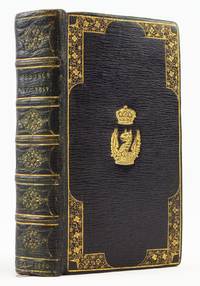
1640réf. ST19814Lugd. Batavorum Leyden: Ex officina Elzeviriana 1640. Third Elzevier Edition. 130 x 72 mm. 5 1/8 x 2 7/8". 4 p.l. 536 30 47 pp. Excellent late 18th century dark blue straight-grain morocco in the style of Roger Payne gilt covers with floral vine cornerpieces gilt supralibros of George Spencer-Churchill 5th Duke of Marlborough Stamp 3 featuring the head and wings of a griffin emerging from a ducal coronet surmounted by the coronet of a marquess raised bands spine panels with gilt fleuron centerpiece gilt lettering gilt-ruled turn-ins all edges gilt. Title page with engraved frame featuring the Four Evangelists and their symbols. Rahir 500; Willems 505. For the binding: Smith and Benger p. 46; "British Armorial Bindings" https://armorial.library.utoronto.ca/node/31988. ◆Spine evenly faded and gilt consequently a little dulled a touch of rubbing to extremities tail margin of text with half-inch wide light dampstain extending an inch up on the fore-edge margin of the last couple quires a hint of foxing and browning other trivial imperfections but still a pleasing copy without serious defects internally and in a scarcely worn binding with lustrous covers. This Elzevier printing of the first lexicon of New Testament Greek comes in an elegant binding and with illustrious provenance. First printed in 1619 the "Manuale" is the work of German philologist Georg Pasor 1570-1637 and was the authority on New Testament Greek throughout the 17th century. Printed by Bonaventure and Abraham Elzevier our volume is bound in the style of the venerable English artisan Roger Payne using the straight-grain morocco process developed by Payne with delicately tooled gilt panels framing the cover. The supralibros of a man whose love of books brought him to ruin was added at the center both boards sometime before 1817. The coronet above the griffin indicates that George Spencer-Churchill 1766-1840 was at that time the Marquess of Blandford before his father's death in 1817 made him the 5th Duke of Marlborough. According to DNB "He spent great sums on his gardens and his library at White Knights near Reading." His extravagance eventually ruined him financially and most of his collection had to be auctioned during his lifetime. According to the University of Toronto's "British Armorial Bindings" this volume was Lot 3017 in the sale of the "Distinguished and Celebrated" White Knights Library conducted by R. H. Evans of London in June of 1819; it sold for eight shillings. Our book was later sold at Sotheby's on 13 June 1934 lot 725; the catalogue for that sale described the binding as "in the style of Roger Payne." We find ourselves inclined to believe even more heartily in this association. Ex officina Elzeviriana unknown
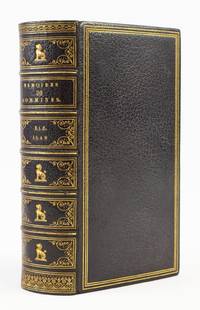
1648réf. ST19567-004Leyden: Chez les Elzeviers 1648. First Elzevier Edition. 135 x 75 mm. 5 1/4 x 3". 12 p.l. 765 19 pp. ATTRACTIVE DARK BLUE MOROCCO GILT BY NIÉDRÉE stamp-signed on front turn-in covers with French fillet border raised bands spine compartments with sea lion crest of Sir Richard Tufton at center curling tendrils at corners gilt lettering densely gilt turn-ins marbled endpapers all edges gilt. With engraved title page featuring four tondo portraits and the French royal arms. Verso of front free endpaper with ink monogram of Edwin Wolf II; front pastedown and front flyleaf with tipped-on old dealer descriptions. Willems 634 citing this copy among the handsomest offered at auction; Rahir 630. ◆A little browning mostly to edges of leaves in the first and last couple of quires one leaf with corner replaced away from the text and probably before printing other trivial signs of use internally but A VERY APPEALING COPY the text quite clean and fresh and in a lustrous binding with few signs of wear. This is a distinguished copy of the famous "Memoirs" that comprise the first critical and philosophical history to be written after antiquity; they deservedly earned for Commines ca. 1445 - ca. 1511 the appellation of "father of modern history." In this work Commines chronicles the reign of Louis XI and the Italian expedition of Charles VIII covering most of the three decades beginning in 1464. Britannica says that "the graphic style of his narrative and above all the keenness of his insight into the motives of his contemporaries an insight undimmed by undue regard for principles of right and wrong make this work one of the great classics of history." Willems describes this Elzevier edition as "admirably executed" and notes that "well-preserved copies" fetch high prices citing our copy from the Tufton sale as one such example. Sir Richard Tufton 1813-71 was the natural son of Henry Tufton Earl of Thanet and succeeded to the earl's estates on his father's death in 1849. The "sea lion"--literally the head and forelegs of a lion with a fish-like lower body--stamp on our binding is the crest from his coat of arms. The handsome binding is the work of Parisian artisan Jean-Edouard Niédrée d. 1864 who was known for his skillful work and for the great care he took to preserve margins in the books he bound. Chez les Elzeviers unknown
166316mo., on laid paper, title and preliminaries very lightly age-soiled; most attractively bound in seventeenth century red full morocco, sides with triple frame border stopped at corners by rosettes all in gilt, back with five raised bands, second compartment framed and lettered in gilt, all other compartments framed in gilt, all edges gilt, marbled endpapers, one corner lightly bruised, joints very lightly rubbed, short split in upper joint (but binding entirely sound), a very good, clean copy of a scarce work in wholly unrestored period binding. Scarce life of Paolo Sarpi by his disciple Fulgenzio Micanzio (1570-1654). Sarpi (1552-1623), Venetian scholar, church reformer and patriot, was the author of several works, of which the most important is his 'Istoria del Concilio Tridentio', first published in Italian (London, 1619) with an English translation by Brent in the following year and a French edition by Elzevier in 1661. It was his approach to treat ecclesiastical history in the manner of politics; 'a kind of Anglican picture of the debates and decisions' (Hay). His contempt for the Curia made him popular with Protestants; Milton refers to him as 'the great unmasker'. Prudently, Sarpi never acknowledged his authorship of the work, despite the efforts of Louis II to extract his admission. Willems, p.217, n.876.
In 1 Band. 13,5 x 8,4 cm. (12) 599 S. Ganzpergament der Zeit mit schwarzem handgeschriebenem Rückentitel. Titelkupfer. Einband etwas berieben und fleckig, angestaubt, Schnitt fleckig. Titelkupfer gerändert, etwas berieben und beschabt (ohne Bildverlust). Buchblock teils leicht wellig, hier einige Blatt wasserrandig. Großteil des Buchblocks leicht gebräunt, aber fleckenfrei. Insgesamt noch guter Zustand. - Contemporary vellum, handwritten title to spine, copperprint-frontispiece. Generally in acceptable condition. Eine der wenigen medizinischen Schriften des Günstlings von Kardinal Richelieu und Leibarztes von Ludwig XIV. und Kardinal Mazarin. Mit vielen philosophischen Themen vermengt: Kapitel über Liebe, Freude, Hoffnung, Kühnheit, Beständigkeit, Wut, Kenntnis der Tiere etc. - Brunet III,726. - Caillet 2730. - Hirsch/Hüb. I,879 (andere Ausg.) und II, 157. - Es erschienen später noch zwei weitere Teile (1660 und 1662).
12° (12,8 x 8 cm). 717 S. Pergamenteinband der Zeit, Goldschnitt. Einband berieben und etwas fleckig. Mit einigen Anstreichungen alter Hand, Besitzvermerke auf Titel und Vorsatz, insgesamt gut erhalten. First Elzevir printing of one of the earliest satirical roman in the complete five parts. Elzevir printed two editions in the same year - this is the first, with pp. 207 and 209 numbered 107 and 109. The volume opens with an engraved title-page. - Brunet, I, 652. - Willems 452. -
12°. 14,7 x 10 cm. 439 S. Leinen mit goldgeprägtem Rückentitel und Verlagsangabe, beide Deckel mit goldgeprägten Deckelvignetten und Rahmung, Kopfgoldschnitt. Lesebändchen. (= Elzevier-Ausgabe). Ecken, Kapitale und Gelenke etwas beschabt. Rücken etwas berieben. Das Lesebändchen etwas verkürzt. Kleines Buchbinderschildchen auf Vorsatz, kleiner Namenseintrag von alter Hand auf dem Vortitel, teils minimal stockfleckig, fester Buchblock. Insgesamt guter Zustand. Enthält Gedichte der 1., 2. und 3. Periode. - Hübsche Zierleisten und Schlußstücke.
In-8, plein veau marbré de l'époque, dos à nerfs orné de caissons dorés (mors fendus), (2) f., 547 p., (36) f. d'index, titre frontispice de R. Persyn gravé. Jolie édition elzévirienne, et bonne édition critique donnée par Cornelis Schrevel, de l’œuvre de l’historien romain Marcus Junianus Justinus, abréviation de l’immense 'Histoire universelle' de Trogue Pompée consacrée à la Grèce et à Rome, aujourd’hui perdue. Index original de Joannes Freinshemius. "Ecrivain habile, dont le style est net, l’expression d’une grande pureté et la réflexion solide" (Joël Schmidt). Titre emblématique gravé R. Persyn. (Brunet III, 566. Willems, 1409). Plusieurs ex-libris anciens manuscrits dont: "De Mézières, 1723".
2 tomes reliés en un volume petit in-12, plein vélin ivoire cordé à petits rabats de l'époque, 160, (2) p. et (1) f. blanc, 242, (2) p. Traduction française de : "La Verità vendicata da i sofismi di Francia" rédigé par un abbé résident de l'Empereur à Venise, Domenico Federici, publié pendant les événements même de la "guerre de Dévolution". "A propos de la renonciation de Marie Thérèse au trône espagnol, il examine tous les arguments qu'on peut alléguer pour ou contre. Puis, après avoir discuté la question des droits de la reine aux Pays-Bas, il conclut qu'elle ne peut en avoir aucun. Cet exposé est appuyé sur de nombreux textes et sur des pièces [publiés en appendice]" ('Sources de l'Histoire de France', 8735). Willems ('Elzevier', 1809) souligne la qualité matérielle de cette édition qu'il distingue de deux autres "beaucoup moins belles" publiées à la même date. ('Les traductions de l'italien en français au XVIIe siècle', PUPS, 2001, p. 235). Très bon exemplaire.
In-12, plein vélin ivoire cordé à rabats de l'époque, (1) f. de frontispice gravé, 417 p., (1) f. blanc, titre inclus. Très belle édition elzévirienne illustrée d'un frontispice gravé signé "P.P.F." pour Pieter Philippe fecit et d'un fleuron de titre à la marque du Solitaire. Ce poème épique, par lequel Brébeuf établit sa réputation, est divisé en dix livres, les huit premiers ayant pour argument la guerre entre César et Pompée, les deux derniers racontant les expéditions d’Afrique et d’Égypte. "Plutôt qu'une traduction, son ouvrage est une imitation libre, une paraphrase, son dessein étant, dit-il, "d'égaler son modèle" (…). Il y avait entre son imagination et celle de Lucain des affinités naturelles" ('Dictionnaire des lettres françaises', p. 211). (Rahir, 'Elzevier', 827. Willems, 827: "Edition fort bien exécutée"). Joli exemplaire, bien relié, très frais.
Petit in-12, demi-veau cerise, dos à nerfs ornés d'une guirlande et soulignés de doubles filets dorés, fleurons entrenerfs, armes dorées en pied, titre doré, tranches marbrées (rel. du XIXe), (4), 143, (1), 42, 112 p. Edition originale posthume "annexe aux Elzévier" et "très jolie édition imprimée par F. Foppens" (Willems) divisée en trois parties sous pagination particulière. La première contient le "Traité de l'origine des cardinaux", la seconde le traité "Des Légats…" la troisième, le "Traité de Pise…". Juriste lyonnais élève des Cujas, l'auteur devint l'un des aumôniers d'Henri IV puis de Louis XIII. Le 'traité des légats' est attribué à Jean-Denis de Sallo. Ce traité fut fait au sujet de la légation du cardinal Chisi qui devait venir en France en exécution du traité de Pise. (Brunet, II, 891. Willems, 2017). Joli exemplaire, frais, bien relié. Ex-libris imprimé de P. de la Morandière.
Petit in-12, broché, couverture de papier moderne, 96 p. (quelques rousseurs), bandeaux et culs de lampe. Jolie édition hollandaise, "à la sphère". (Guibert, I, 101, n°7) Bon exemplaire.
Petit in-12, broché, couverture de papier moderne, 60 p., bandeaux et culs de lampe. Jolie édition hollandaise "à la sphère", réimpression elzévirienne de l'édition de 1662. (Guibert, I, 85, n°12). Bon exemplaire.
In-12, plein vélin rigide ivoire à petits rabats, pièce de titre de maroquin olive, tranches mouchetées rouges (rel. du XIXe), 424 p. (titre inclus) et (2) p. de table, titre-frontispice gravé. Remise en vente, sous une nouvelle page de titre, de la première édition de 1659, illustrée d'un titre-frontispice gravé par Pieter Philippe. L'édition est assurée par Guillaume Girard qui signe l'épître dédicatoire à Conrart. Contient les quatre livres de lettres à Conrart et un cinquième de "Lettres à diverses personnes". "Billets spontanés et sensibles, dans un style dont la négligence même a grâce et beauté" ('Dict. des lettres françaises', p. 105). (Beugnot, 119. Pieters, n°92. Tchemerzine-Scheler, I, 432. Willems, 841). Bon exemplaire, bien relié.
In-12, plein vélin rigide ivoire à petits rabats, pièce de titre de maroquin olive, tranches rouges (rel. du XIXe s.), 388, (18) p., titre-frontispice gravé. Edition posthume elzévirienne de ce recueil d’essais publié et préfacé par Claude Girard, ami et correspondant de Guez de Balzac, secrétaire du duc d’Epernon devenu archidiacre d’Angoulême. La page de titre gravée représente l’auteur, en "entretien" avec ses amis, dans un grand décor classique, un jardin "à la française" en arrière-plan. (Beugnot, n°217. Tchemerzine-Scheler, I, 373. Willems, 1297). Bon exemplaire, très frais, bien relié.