[Fontanarosa] Montherlant, Henri de :Livre Rare Book
1 535 résultats
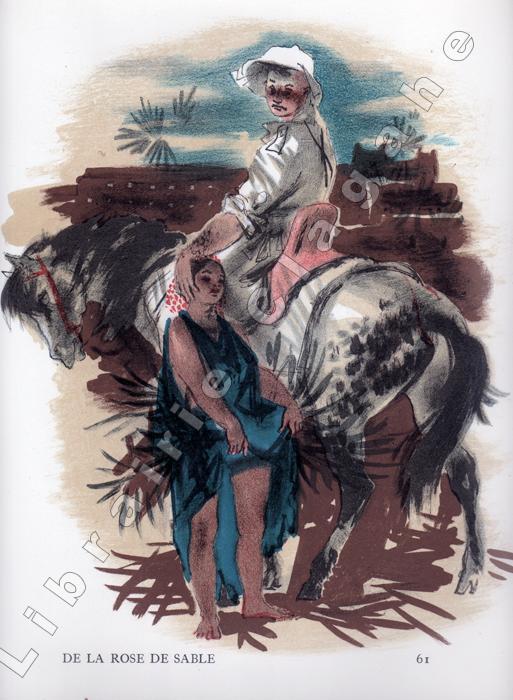
1948réf. 2078Paris, Robert Laffont, 1948 ; in-folio, en feuillets sous chemise-étui jaune (bordé de rouge pour l'étui), pièce de titre rouge, couverture beige imprimée noir et rouge à rabats, 24 lithographies en couleurs dont 22 in-texte et 2 hors-texte ; 130 pages, (3) feuillets (blanc, notes, achevé d'imprimer).
1983réf. LFA-126713929Un ouvrage de 228 pages, format 210 x 270 mm, broché couverture couleurs, illustré, publié en 1983, bon état
réf. 611Paris, Grasset, 1928 14 x 20, 211 pp., broché, non-coupé, bon état (légères rousseurs)
1898réf. 110521898 P., Bibliothèque-Charpentier, 1898, 1 fort vol. in-12° (195 x 130) relié plein cartonnage moderne à la Bradel recouvert de papier anthracite à motifs noir, dos lisse orné d'une pièce de titre en maroquin noir souligné d'un filet doré, gardes de papier noir, de (2) ff. (faux-titre et titre) - 608 pp. Très bel exemplaire non rogné à grands témoins conservés.
2002réf. 015918Paris L'Echoppe - Collection "Envois" 2002 In-16 Broché, couverture à rabats Signé par l'auteur
réf. 1352Paris, Paul Hartmann, 1947 15 x 21, 159 pp., broché, très bon état
1910A COMPLETE SET, WITH NUMEROUS ADDITIONAL PLATES (including three printed on vellum), OF THIS CHARMING SUITE OF ETCHINGS DEVOTED TO PICTURESQUE SCENES OF TURN-OF-THE-CENTURY PARIS. 8 pp + 18 loose signed etchings + 13 additional etchings. This set was issued in three series of six etchings each, for a total of 18. This set is complete, and all 18 etchings are SIGNED IN PENCIL by the artist. From a total edition of 300 sets, this is one of 250 numbered sets on fine Dutch laid paper ("Hollande"). Exceptionally, THIS SET HAS 13 ADDITIONAL ETCHINGS BY TOUSSAINT: 5 proofs, in the first state, of etchings in the portfolio; 2 duplicates printed on laid paper; 3 duplicates PRINTED ON REAL VELLUM; and 3 supplementary etchings not otherwise included in the portfolio. Folio. House in the original portfolio. A few of the etchings are a little dusty or spotted, but the large majority, including the three printed on vellum, are in excellent condition.
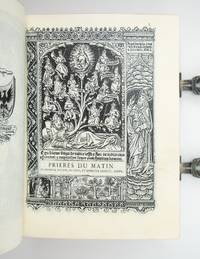
1858réf. ST21120Paris: Printed by J. Claye for Gruel & Engelman 1858. 155 x 117 mm. 6 1/8 x 4 5/8". 703 1 pp. VERY FINE GOTHIC-STYLE BLIND-STAMPED BROWN MOROCCO BY LÉON GRUEL stamp-signed at foot of spine covers with central panel showing the Tree of Jesse surrounded by the words "Egredietur virga de radice Iesse et flos deradice eius ascendet et requiescat super eum" A rod shall come forth from the root of Jesse and a flower shall grow out of his root and rest upon him" this framed by a roll of grapevines and floral vines oblique fleur-de-lys at each corner two silver square knot fore-edge clasps one catchplate replaced raised bands densely gilt turn-ins marbled endpapers and flyleaves all edges stained red. In a very fine brown morocco-backed buckram drop-back box with padded plush interior gilt lettering on spine. Title page and colophon with large device of Gruel & Engleman featuring two angels verso of title with printer's device of J. Claye each page with elaborate woodcut border featuring biblical scenes modelled on those in printed 15th century French Prayer books and seven miniatures Tree of Jesse Crucifixion Deposition Pentecost Trinity Conception of the Virgin Annunciation to the Virgin. Front flyleaf with a lengthy ink inscription to Mademoiselle Jeanne Ansart from printer Jules Claye in elegant calligraphic hand dated 1 December 1876. With three contemporary prayer cards and two commemorative cards--one for the ordination of a priest one for a nun professing her initial vows--laid in. See Judge "Léon Gruel: Master of Medieval Revival in Bookbinding" Encyclopedia of Design 2021 online: https://encyclopedia.design/2024/03/21/leon-gruel-master-of-medieval-revival-in-bookbinding/; Jeremy Norman "Master Printer Jules Claye Inscribes a Copy of a Book of Hours that He Printed on Vellum" History of Information online: https://www.historyofinformation.com/detail.phpid=5590. Faint rubbing to joints and extremities isolated trivial thumbing one small red smudge but A VERY FINE COPY--clean fresh and bright internally in a very lustrous binding with sharp impressions of the stamps. A luxurious volume in every way this is the only known copy printed on vellum of a 15th century-style prayer book created by distinguished Parisian publishers Gruel et Engelmann; it was bound by a celebrated craftsman who was an expert on the history of his craft and presented by the printer to a young woman perhaps to commemorate her taking religious vows. The firm that became Gruel et Engelmann had a complex evolution. It was founded as a bindery by Isidore Desforges in 1811 and after Desforges' daughter Catherine married Paul Gruel 1800-46 the latter took over the business in 1825. Following his death Catherine kept the bindery going for five years before marrying Parisian publisher Jean Engelmann d. 1875. The spouses merged their firms and combined their specialties to produce beautiful devotional books inspired by Medieval manuscript Books of Hours and early printed prayer books bound in appropriately historic styles. Catherine's son Léon Gruel 1840-1923 joined the firm as a binder and after his stepfather's death Gruel et Engelmann was run by Léon who headed the binding division and his stepbrother Edmond Engelmann who was in charge of the design and printing of books. In her "Bookbinders and their Craft" Prideaux says that the Gruel firm "always had the highest reputation . . . for initiative in artistic matters as well as for irreproachable execution in the detail of its many-sided achievements." The productions of Gruel et Englemann were informed by the collecting enthusiasms of the brothers--Léon's for historical bindings and Edmond's for illuminated manuscripts. Under their direction Gruel et Engelmann published and bound numerous works of devotion like the present "Paroissien" a service book that includes the texts and prayers in Latin and French used to celebrate Mass throughout the year. The author of "Manuel Historique et Bibliographique de l'Amateur de Relieure" and an expert on historical bindings Léon Gruel was adept at replicating any number of antiquarian bindings styles. As he noted in an interview with "The Bookman" in 1900 "Modern book binding has discovered nothing to equal the old designs and at best we can only copy." For this volume he chose the very appropriate Gothic style a particular favorite of his. According to the "Encyclopedia of Design" Gruel's "blend of reverence for the past with innovative application in the present allowed him to recreate historical styles with unparalleled accuracy and creativity." According to the former owner of this book distinguished bibliophile and rare book dealer Jeremy Norman Gruel et Engelmann never advertised a vellum printing of this title leading him to believe that their printer Jules Claye 1806-86--whom he considers "one of the great French trade printers of the mid-19th century"--printed this copy on vellum for himself. The sturdy vellum leaves make the text block here 63 mm. thick--a considerable bulk for a volume of this size. Claye recognized this and even concluded his lengthy and elegantly calligraphed inscription to Mlle. Jeanne Ansart with a graceful apology for the weight of the book: "As you approach the hour when God shall bless you / I offer prayers for you though we have never met / And I come to consecrate with a devout remembrance / The day you shall behold this new dawn. / This work of my handsI must admit / Is heavy for yours to bear yet it shall endure. / Forgive me remembering that our Divine Master / Climbed Golgotha beneath the burden of His cross." While it is possible that "the hour when God shall bless you" and "this new dawn" might indicate a marriage it seems more likely that this refers to Mlle. Ansart's taking the veil. The presence here of a Mass card that depicts a young woman professing her initial vows as a nun would seem to support this theory. Whatever path she chose Jeanne Ansart and successive owners cherished and carefully protected this luxurious volume over the years leaving it for us to savor visually and tactilely. [Printed by J. Claye for] Gruel & Engelman unknown
1858réf. ST21120Paris: Printed by J. Claye for Gruel & Engelman 1858. 155 x 117 mm. 6 1/8 x 4 5/8". 703 1 pp. VERY FINE GOTHIC-STYLE BLIND-STAMPED BROWN MOROCCO BY LÉON GRUEL stamp-signed at foot of spine covers with central panel showing the Tree of Jesse surrounded by the words "Egredietur virga de radice Iesse et flos deradice eius ascendet et requiescat super eum" A rod shall come forth from the root of Jesse and a flower shall grow out of his root and rest upon him" this framed by a roll of grapevines and floral vines oblique fleur-de-lys at each corner two silver square knot fore-edge clasps one catchplate replaced raised bands densely gilt turn-ins marbled endpapers and flyleaves all edges stained red. In a very fine brown morocco-backed buckram drop-back box with padded plush interior gilt lettering on spine. Title page and colophon with large device of Gruel & Engleman featuring two angels verso of title with printer's device of J. Claye each page with elaborate woodcut border featuring biblical scenes modelled on those in printed 15th century French Prayer books and seven miniatures Tree of Jesse Crucifixion Deposition Pentecost Trinity Conception of the Virgin Annunciation to the Virgin. Front flyleaf with a lengthy ink inscription to Mademoiselle Jeanne Ansart from printer Jules Claye in elegant calligraphic hand dated 1 December 1876. With three contemporary prayer cards and two commemorative cards--one for the ordination of a priest one for a nun professing her initial vows--laid in. See Judge "Léon Gruel: Master of Medieval Revival in Bookbinding" Encyclopedia of Design 2021 online: https://encyclopedia.design/2024/03/21/leon-gruel-master-of-medieval-revival-in-bookbinding/; Jeremy Norman "Master Printer Jules Claye Inscribes a Copy of a Book of Hours that He Printed on Vellum" History of Information online: https://www.historyofinformation.com/detail.phpid=5590. Faint rubbing to joints and extremities isolated trivial thumbing one small red smudge but A VERY FINE COPY--clean fresh and bright internally in a very lustrous binding with sharp impressions of the stamps. A luxurious volume in every way this is the only known copy printed on vellum of a 15th century-style prayer book created by distinguished Parisian publishers Gruel et Engelmann; it was bound by a celebrated craftsman who was an expert on the history of his craft and presented by the printer to a young woman perhaps to commemorate her taking religious vows. The firm that became Gruel et Engelmann had a complex evolution. It was founded as a bindery by Isidore Desforges in 1811 and after Desforges' daughter Catherine married Paul Gruel 1800-46 the latter took over the business in 1825. Following his death Catherine kept the bindery going for five years before marrying Parisian publisher Jean Engelmann d. 1875. The spouses merged their firms and combined their specialties to produce beautiful devotional books inspired by Medieval manuscript Books of Hours and early printed prayer books bound in appropriately historic styles. Catherine's son Léon Gruel 1840-1923 joined the firm as a binder and after his stepfather's death Gruel et Engelmann was run by Léon who headed the binding division and his stepbrother Edmond Engelmann who was in charge of the design and printing of books. In her "Bookbinders and their Craft" Prideaux says that the Gruel firm "always had the highest reputation . . . for initiative in artistic matters as well as for irreproachable execution in the detail of its many-sided achievements." The productions of Gruel et Englemann were informed by the collecting enthusiasms of the brothers--Léon's for historical bindings and Edmond's for illuminated manuscripts. Under their direction Gruel et Engelmann published and bound numerous works of devotion like the present "Paroissien" a service book that includes the texts and prayers in Latin and French used to celebrate Mass throughout the year. The author of "Manuel Historique et Bibliographique de l'Amateur de Relieure" and an expert on historical bindings Léon Gruel was adept at replicating any number of antiquarian bindings styles. As he noted in an interview with "The Bookman" in 1900 "Modern book binding has discovered nothing to equal the old designs and at best we can only copy." For this volume he chose the very appropriate Gothic style a particular favorite of his. According to the "Encyclopedia of Design" Gruel's "blend of reverence for the past with innovative application in the present allowed him to recreate historical styles with unparalleled accuracy and creativity." According to the former owner of this book distinguished bibliophile and rare book dealer Jeremy Norman Gruel et Engelmann never advertised a vellum printing of this title leading him to believe that their printer Jules Claye 1806-86--whom he considers "one of the great French trade printers of the mid-19th century"--printed this copy on vellum for himself. The sturdy vellum leaves make the text block here 63 mm. thick--a considerable bulk for a volume of this size. Claye recognized this and even concluded his lengthy and elegantly calligraphed inscription to Mlle. Jeanne Ansart with a graceful apology for the weight of the book: "As you approach the hour when God shall bless you / I offer prayers for you though we have never met / And I come to consecrate with a devout remembrance / The day you shall behold this new dawn. / This work of my handsI must admit / Is heavy for yours to bear yet it shall endure. / Forgive me remembering that our Divine Master / Climbed Golgotha beneath the burden of His cross." While it is possible that "the hour when God shall bless you" and "this new dawn" might indicate a marriage it seems more likely that this refers to Mlle. Ansart's taking the veil. The presence here of a Mass card that depicts a young woman professing her initial vows as a nun would seem to support this theory. Whatever path she chose Jeanne Ansart and successive owners cherished and carefully protected this luxurious volume over the years leaving it for us to savor visually and tactilely. [Printed by J. Claye for] Gruel & Engelman unknown books
1956réf. 009289Paris Glm 1956 In-8 Broché, couverture à rabats
1950réf. 007350Paris Gallimard nrf Nouvelle Revue Française, Collection "Le point du jour" 1950 In-12 Broché, couverture bleue Ed. originale Dédicacé par l'auteur
1962réf. 012204Paris Sources 1962 In-4 En feuilles, couverture rempliée, chemise et étui toilé éditeur
1987réf. 016068Marseille André Dimanche 1987 In-4 En feuilles, couverture à rabat
1917réf. 013144Paris Galerie Haussmann 1917 En feuilles
1949réf. 015020Paris Gallimard NRF 1949 Demi-reliure Dédicacé par l'auteur
1945réf. 006641Paris Bruxelles A l'enseigne du cheval ailé 1945 In-12 Broché Edition originale Dédicacé par l'auteur
1929réf. 012907Paris Cahiers d'art 1929 In-4 Broché, couverture rempliée>
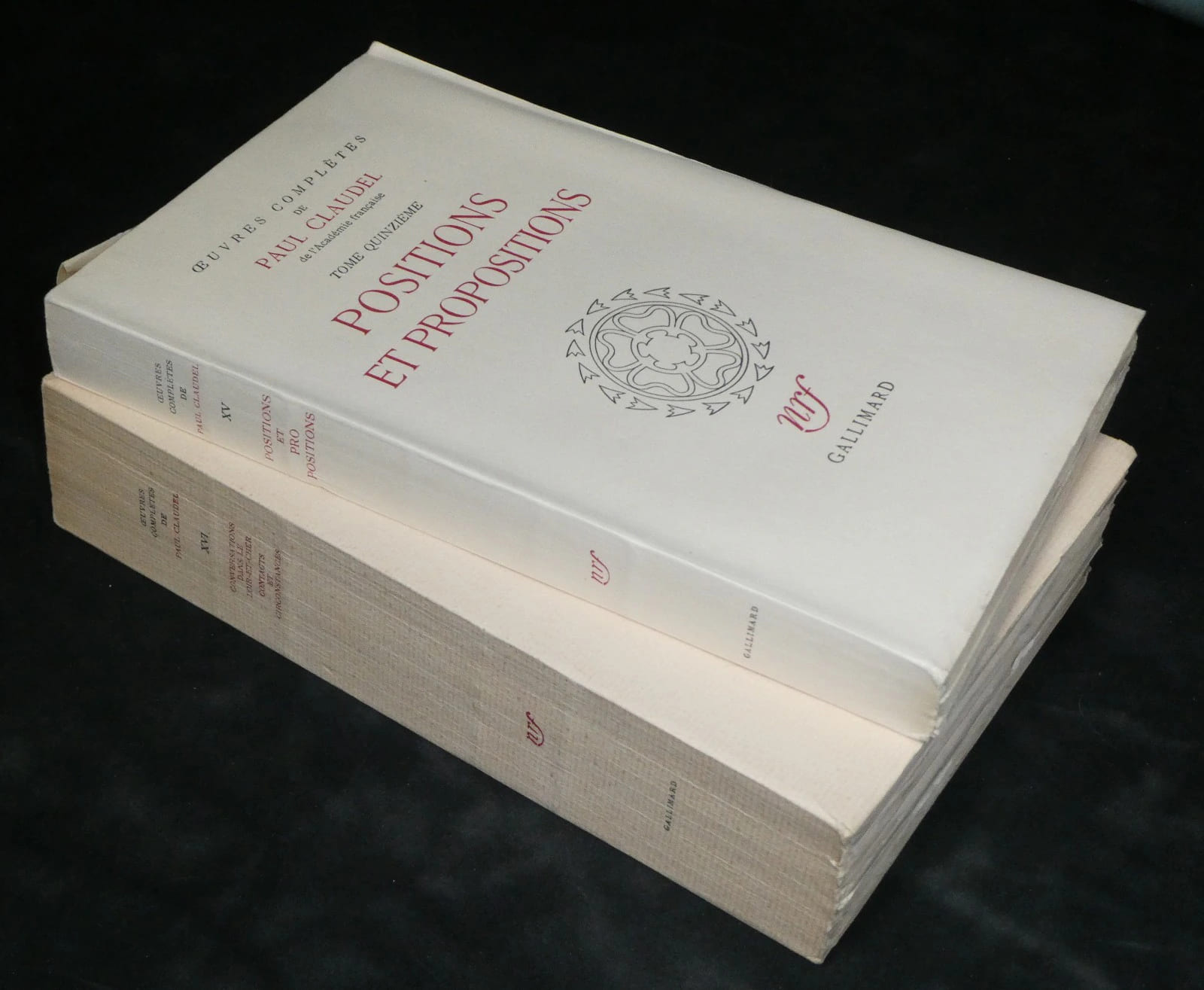
1959réf. boz_006667Paul Claudel - Oeuvres Complètes, Tome 16 - EO 1/50 sur vélin d'Arches - 1959 Auteur : Paul Claudel Titre : Œuvres complètes, Tomes 15 (Positions et Propositions) et 16 (Conversations dans le Loir-et-Cher, Contacts et Circonstances) Édition : Librairie Gallimard (nrf), Paris, 1959 Tirage : Tome 15 : n 1473, l'un des 1000 exemplaires sur vergé des papeteries Navarre de Voiron. ; Tome 16 : Exemplaire n 27, un des 50 exemplaires numérotés de 1 à 50 sur vélin d'Arches (tirage de tête) Illustrations : Tome 15 : Photographie de Paul Claudel en 1923, 1, N&B. ; Tome 16 : Camille Claudel (buste de l'auteur à 30 ans reproduit en frontispice), 1, N&B Reliure : Volumes brochés sous couverture imprimée. Exemplaires tel que paru, avec leurs marges non coupées et non rognées. Dimensions : 14,6 x 22,8 cm État : Complet, bel état de conservation. Tome 15 très frais. Pour le tome 16, il y a quelques traces sur la page du titre et une présence d'une trace d'ombrage due à une coupure de journal. Voir photos pour plus de détails. Nombre de pages : Tome 15 : 326 pages ; Tome 16 : 444 pages
1955réf. boz_001570PAUL BOWLES - Après toi le déluge - EO 1/66 Vélin Seul Tirage - Coll. Du Monde Entier Auteur : Paul Bowles. Traduit de l'américain par Marie Viton. Titre : Après toi le déluge (Let It Come Down) Édition : Gallimard, coll. « Du Monde Entier » (CLVII), Paris, 1955 Tirage : Édition originale de la traduction française. Un des 60 exemplaires numérotés sur vélin pur fil Lafuma-Navarre (celui-ci portant le n° 7), seul grand papier après 6 exemplaires hors commerce. Reliure : Volume broché, sous couverture souple d'éditeur de couleur gris-bleu. Dos lisse avec titre et auteur en rouge et noir. Exemplaire à marges non coupées. Dimensions : 14,4 x 20,7 cm État : Exemplaire en très bel état. Intérieur très frais, marges non coupées. Dos légèrement insolé. Annotation au crayon sur la page de garde. Voir photos pour plus de détails. Nombre de pages : 312 pages.
1932réf. 12358Lyon, Librairie Pierre Masson, 1932 ; in-4, broché ; 13, (9) pp., illustrations in-texte, 91 planches hors-texte protégées par des serpentes (dont 29 en héliogravure et 62 en phototypie) ; couverture crème rempliée, illustrée et imprimée en rouge et noir.
réf. 766Paris, Perrin, 1920 14 x 19, 219 pp., illustrations, broché, bon état (1 découpe page de garde, 1 petit manque haut de couverture)
1989réf. 013155Caen L'Echoppe 1989 In-12 Broché, couverture à rabats
réf. 25208La Caricature morale, religieuse, littéraire et scénique,Planche HT parue dans volume 4, 14 juin 1832 (Planche n°170) Hauteur : 27 cmx Largeur : 35.6 cm - Titre en bas au centre : « PERE-SCIE. » ; indications, en ht au centre : « La Caricature (Journal) // (N°85.) », en ht à dte : « Pl. 170. »Inscription - Dans la lettre : « Lith. de Becquet, rue Childebert N°9. » [imprimeur], « On s’abonne chez Aubert, galerie véro dodat. » [éditeur] ; dans l’image, en bas à gche, signature : « AB. » [Auguste Bouquet, dessinateur]Inscription - Sur la première page des journaux, le nom : « LA CARICATURE. » ; sur la tranche d’une des liasses : « CH. PHILIPON. » ; sur la table du fond, des liasses d’autres journaux d’opposition victimes de la censure : la « TRIBUNE », notamment, et le nom de « BASCANS » (le journaliste Bascans, qui a collaboré à la Tribune, au National et à la Revue républicaine, fut condamné à plusieurs mois de prison)Description iconographique: Persil représenté de profil, en train d’essayer de découper avec son nez immense en forme de scie un personnage (sans doute Charles Philipon. A moins qu’il ne s’agisse de Daumier ?) en le tenant fermement immobile avec ses mains et son genou droit. Les poignets du personnage sont attachés par un lien. Il est allongé sur une pile de journaux qui sont des exemplaires de La Caricature. On reconnaît, sur certaines couvertures, des attributs caricaturaux du régime de Juillet : la poire par Philipon (pour railler Louis-Philippe), la seringue à clystère (pour railler l’usage de lances à incendie par Lobau pour réprimer une manifestation en 1831), un bonnet (portrait du juste-milieu). Dénonciation de l’entrave à la liberté d’expression. C’est Persil, représenté en habit de magistrat, qui est particulièrement visé, en regard de tous les procès intentés et saisies opérées à "La Caricature" et aux autres journaux de l’opposition.Personne / Personnage représenté: Persil, Jean-Charles
1936réf. 4364Éditions Rieder 1936 97 pages in12. 1936. broché couverture rempliée papier cristal. 97 pages.
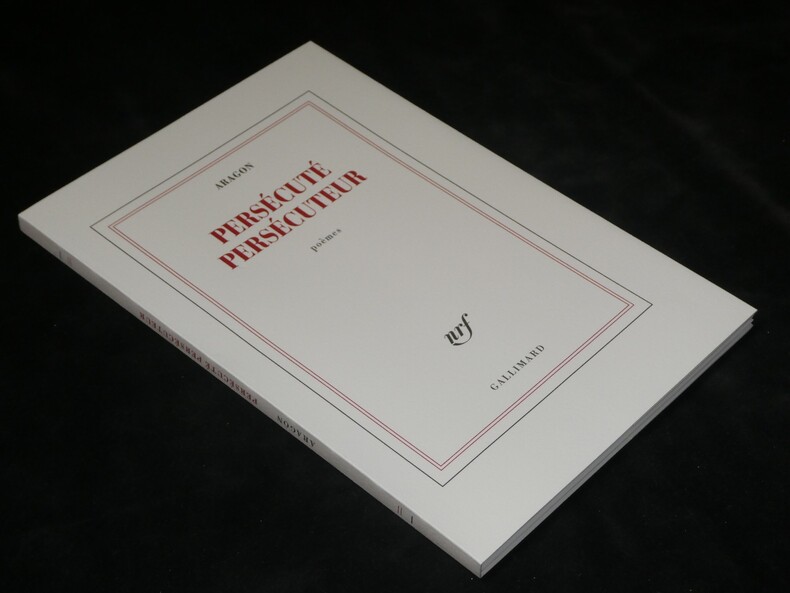
2022réf. boz_006472Titre : Persécuté persécuteur, poèmes Édition : NRF Gallimard, Paris, 2022 Tirage : Édition originale (de la présente édition), exemplaire n 17 sur 50 sur vélin rivoli des papeteries Arjowiggins Reliure : Broché, couverture souple imprimée. Exemplaire tel que paru, avec ses marges non coupées. Dimensions : 14,5 x 21,6 cm État : Très bon état général, l'ouvrage est comme neuf. Exemplaire complet. Voir photos pour plus de détails. Nombre de pages : 81 pages