Louis AragonLivre Rare Book
1 538 résultats
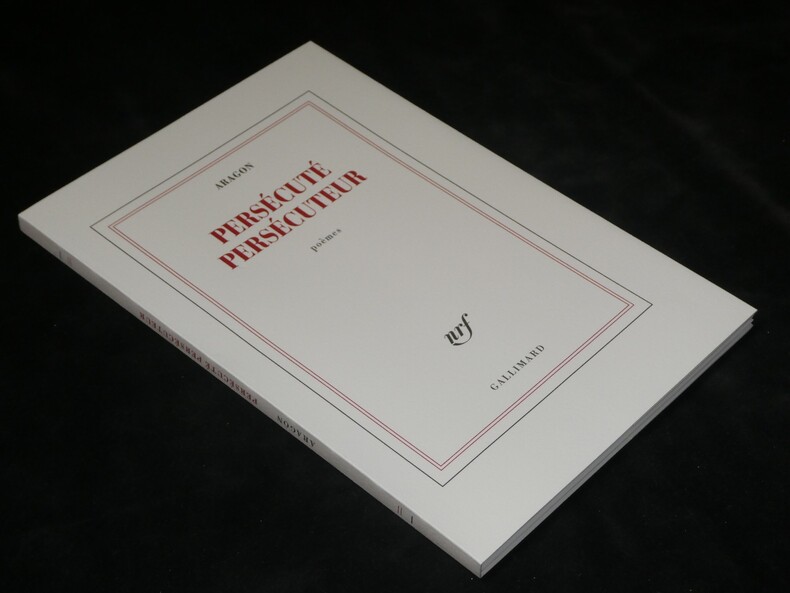
2022réf. boz_006472Titre : Persécuté persécuteur, poèmes Édition : NRF Gallimard, Paris, 2022 Tirage : Édition originale (de la présente édition), exemplaire n 17 sur 50 sur vélin rivoli des papeteries Arjowiggins Reliure : Broché, couverture souple imprimée. Exemplaire tel que paru, avec ses marges non coupées. Dimensions : 14,5 x 21,6 cm État : Très bon état général, l'ouvrage est comme neuf. Exemplaire complet. Voir photos pour plus de détails. Nombre de pages : 81 pages
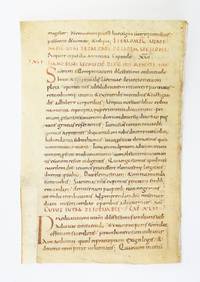
réf. ST17767BEGermany second quarter of ninth century. Each leaf approximately 305 x 205 mm 12 x 8". Single column 29-30 lines in a large and extremely legible Caroline minuscule. Rubrics in red each leaf with one or more large initials in red. Text with a few contemporary corrections and erasures. Accompanied by a copy of a letter from Bernhard Bischoff dating the manuscript leaves. ◆Vellum a little toned and soiled one leaf with an old repair to the bottom third of the outer margin minor folds small stains and other trivial imperfections but IN EXTREMELY FINE CONDITION the lettering clear and legible the vellum in excellent shape and the margins surprisingly comfortable. These are nothing short of magnificent specimens and remarkable survivals with wide borders all around with entirely clear and distinct script with only minimal overall dust soiling and with strength and freshness to the vellum; the leaves present a powerful redolence of a time as far in the past as one could optimistically hope to encounter among Western manuscript artifacts in the marketplace. The script here is an outstanding example of the highly legible Caroline minuscule that dominated Europe in the ninth century characterized by clear letter forms ample spacing between letters and between lines and very few abbreviations the most common occurrence being "&" for "et" occurring anywhere in a word. The parent manuscript was almost certainly a Homiliary containing sermons by various Christian authors to be said throughout the year with the present leaves containing passages from part of Leo I Sermo XCV and parts of a tractatus on Luke by Ambrose as well as other lections readings for the Vigil of the Feast of St Peter and the Feast of the Octave of Pentecost and the opening of a sermon of Leo I for Feria IV mensis IV; four other sister leaves are known and contain additional passages from Leo I and Ambrose as well as Pope Gregory I and readings for various feast days. The presence of these texts suggest that the leaves might have come from a Homiliary originally composed by Paul the Deacon at the behest of Charlemagne a version that was widely circulated throughout the Carolingian Empire in the eighth and ninth centuries. Although the scriptorium in which these leaves were produced has yet to be determined we can say with confidence that they date to the second quarter of the ninth century due to the style of the script as stated in the accompanying letter by esteemed paleographer Bernard Bischoff. Much of their history over the last 12 centuries remains a mystery but we do know that three of the extant leaves were in the possession of dealer Bruce Ferrini by 1989 with his stock number beginning "VM" and two bear the stock numbers and price codes of Quaritch. All were acquired by Martin Schøyen and became part of the renowned Schøyen collection MS 587. Very early leaves such as these often survive only because they come from manuscripts that were dismembered with the leaves then being reused as binding scrap; when later recovered they are typically in lamentable condition. The present leaves by contrast met no such fate--they have always been intact and untouched by the binder and so show none of the staining and trimming that are almost always present with repurposed leaves from demolished manuscripts. This notably fine state of preservation is rarely seen on the market. As a consequence these specimens are not only among the earliest leaves we have ever offered for sale but also some of the most extraordinary survivals we have ever acquired. We have bought and sold only a handful of ninth century leaves in our 45 years in business; in the present case because we were extremely lucky to acquire a small collection of six leaves from a single source we are able to offer them here at an advantageous price point. unknown
réf. ST17767BEGermany second quarter of ninth century. Each leaf approximately 305 x 205 mm 12 x 8". Single column 29-30 lines in a large and extremely legible Caroline minuscule. Rubrics in red each leaf with one or more large initials in red. Text with a few contemporary corrections and erasures. Accompanied by a copy of a letter from Bernhard Bischoff dating the manuscript leaves. ◆Vellum a little toned and soiled one leaf with an old repair to the bottom third of the outer margin minor folds small stains and other trivial imperfections but IN EXTREMELY FINE CONDITION the lettering clear and legible the vellum in excellent shape and the margins surprisingly comfortable. These are nothing short of magnificent specimens and remarkable survivals with wide borders all around with entirely clear and distinct script with only minimal overall dust soiling and with strength and freshness to the vellum; the leaves present a powerful redolence of a time as far in the past as one could optimistically hope to encounter among Western manuscript artifacts in the marketplace. The script here is an outstanding example of the highly legible Caroline minuscule that dominated Europe in the ninth century characterized by clear letter forms ample spacing between letters and between lines and very few abbreviations the most common occurrence being "&" for "et" occurring anywhere in a word. The parent manuscript was almost certainly a Homiliary containing sermons by various Christian authors to be said throughout the year with the present leaves containing passages from part of Leo I Sermo XCV and parts of a tractatus on Luke by Ambrose as well as other lections readings for the Vigil of the Feast of St Peter and the Feast of the Octave of Pentecost and the opening of a sermon of Leo I for Feria IV mensis IV; four other sister leaves are known and contain additional passages from Leo I and Ambrose as well as Pope Gregory I and readings for various feast days. The presence of these texts suggest that the leaves might have come from a Homiliary originally composed by Paul the Deacon at the behest of Charlemagne a version that was widely circulated throughout the Carolingian Empire in the eighth and ninth centuries. Although the scriptorium in which these leaves were produced has yet to be determined we can say with confidence that they date to the second quarter of the ninth century due to the style of the script as stated in the accompanying letter by esteemed paleographer Bernard Bischoff. Much of their history over the last 12 centuries remains a mystery but we do know that three of the extant leaves were in the possession of dealer Bruce Ferrini by 1989 with his stock number beginning "VM" and two bear the stock numbers and price codes of Quaritch. All were acquired by Martin Schøyen and became part of the renowned Schøyen collection MS 587. Very early leaves such as these often survive only because they come from manuscripts that were dismembered with the leaves then being reused as binding scrap; when later recovered they are typically in lamentable condition. The present leaves by contrast met no such fate--they have always been intact and untouched by the binder and so show none of the staining and trimming that are almost always present with repurposed leaves from demolished manuscripts. This notably fine state of preservation is rarely seen on the market. As a consequence these specimens are not only among the earliest leaves we have ever offered for sale but also some of the most extraordinary survivals we have ever acquired. We have bought and sold only a handful of ninth century leaves in our 45 years in business; in the present case because we were extremely lucky to acquire a small collection of six leaves from a single source we are able to offer them here at an advantageous price point. unknown books
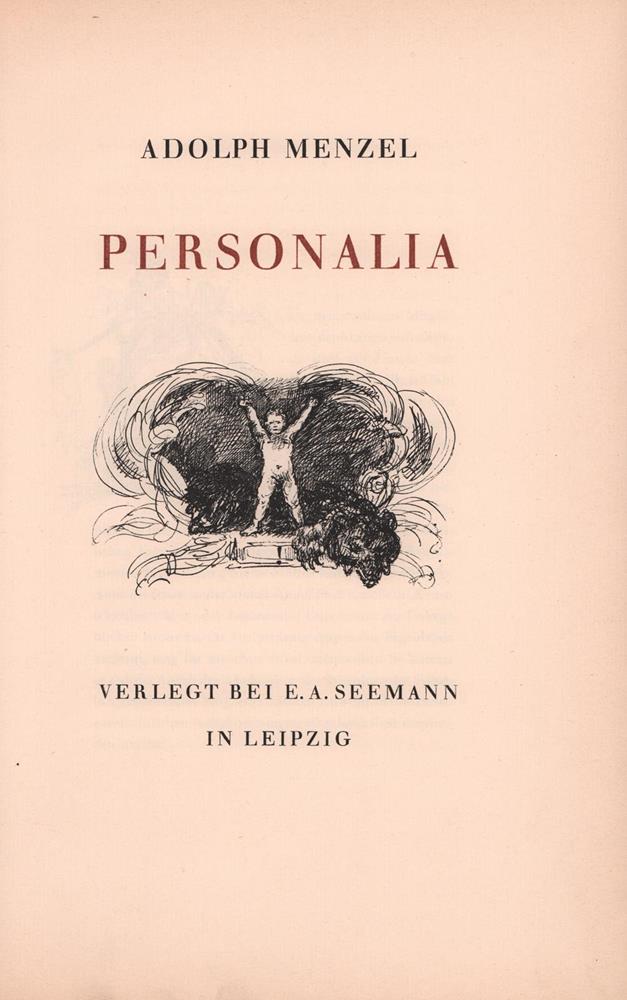
1924réf. 65442(Leipzig, E A. Seemann, 1924). 10 Bll., 3 Faksimile-Dokumente (11 Bll. unterschiedl. Formats), 2 Bll. Mit 5 Illustr. Folio (ca. 37 x 23,5 cm). OHPgt. mit farb. illustr. VDeckel-Titel.
réf. 4924Paris, Roger Dacosta, 1978 17 x 25, 392 pp., nombreuses illustrations, cartonnage + jaquette, bon état
réf. APJ-1
1896réf. 2783Paris, Edouard Pelletan, 1896 ; in-4, en feuillets sous chemise-étui miel, pièce de titre rouge au dos de la chemise, étui muet ; (4) ff. (2 bl., faux-titre, titre), 195 pp., (4) ff. (2 ff. de table, justification, bl.) ; 62 bois gravés en noir + suites ; couverture blanche à rabats illustrée en couleurs.
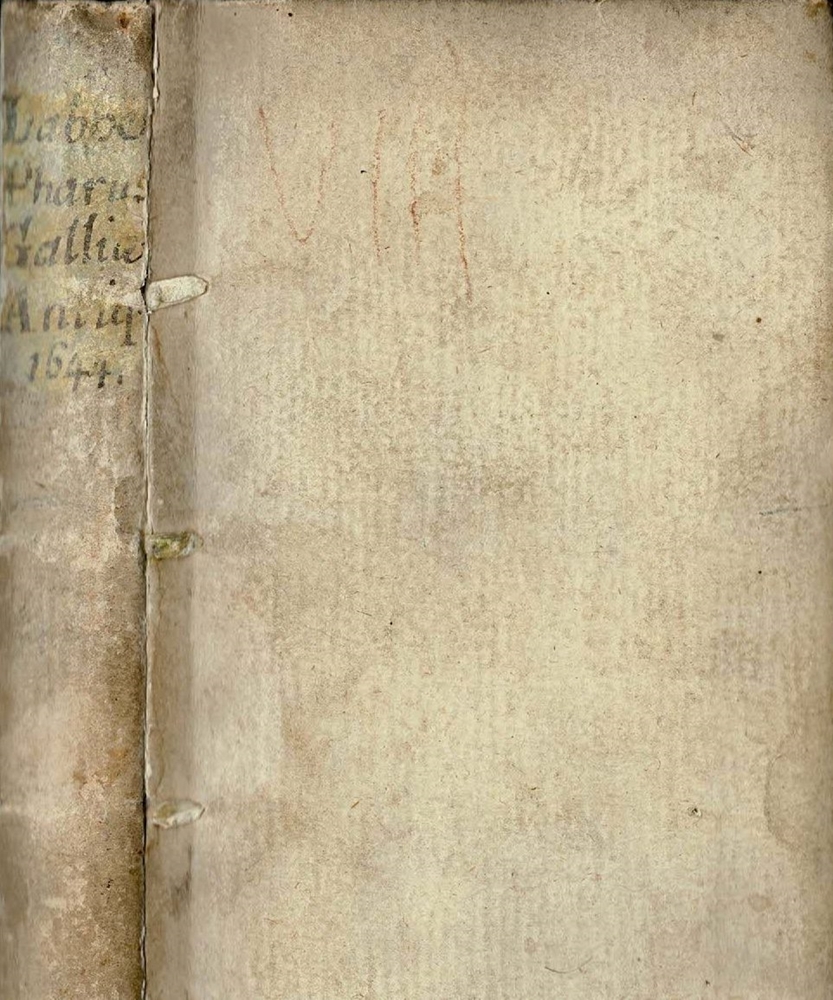
1644réf. 41901Moulins, Petrus Vernoy, 1644. 32 Bll., 272 S. Kl.-8vo. Spät. Kart. mit durchgezog. Bünd.
1834réf. 250961834 Planche 376 de La Caricature N° 178.La Caricature, 3 avril 1834. Lithographie originale sur Velin blanc. . Delteil 77. épreuve en noir ,fente sans manque (restaurable) en marge et sur 1 cm dans la planche; lithographie en noir sur velin blanc pli vertical,bon tirage bien noir - Delteil 77 ,
1847réf. 006863Paris Société Encyclographique acquis par Victor Masson 1847 Fort in-4 Broché Edition originale
1962réf. 006456Cannes Galerie Madoura 1962 In-4 agrafé, couverture illustrée Edition originale
réf. 1286petit in 8 broché,faux-titre,titre,88 pages,éditions de minuit 1964 édition originale numérotée sur vélin alfa mousse navarre,très bon état
réf. 1396Paris, Calmann-Lévy, 1927 14 x 20, 326 pp., non coupé, broché, très bon état
1942réf. 013833Paris Gallimard NRF 1942 In-12 Broché Edition originale
1975réf. 2206Seyssinet-Pariset, André Philippe, Editions du Grésivaudan, 1975 ; in-folio, en feuillets sous chemise-étui de l'éditeur tissu marron, titre bleu au dos de la chemise, étui muet ; 245 pp., 16 lithographies en couleurs hors-texte ; couverture blanche à rabats imprimée bleu.
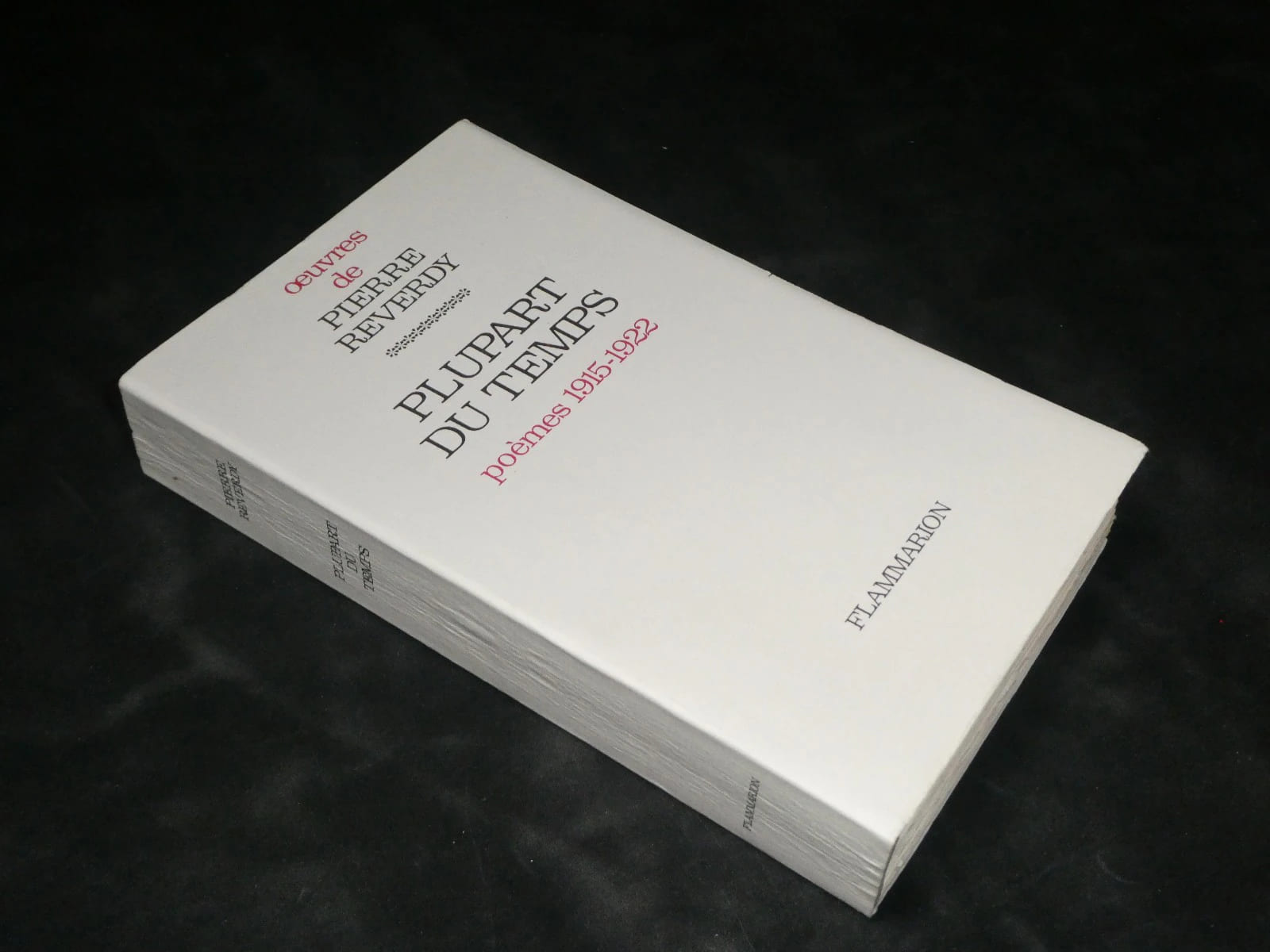
1967réf. boz_006673Auteur : Pierre Reverdy Titre : Plupart du temps, poèmes 1915-1922 Édition : Flammarion, Paris, 1967 Tirage : Édition originale. Exemplaire n 500, un des 1000 exemplaires numérotés de 26 à 1025 sur Vélin Alfa Reliure : Couverture d'éditeur imprimé. Exemplaire tel que paru, avec ses marges non coupées Dimensions : 12,5 x 19,7 cm État : Complet, très bel état de conservation. Intérieur très frais et propre. Voir photos pour plus de détails. Nombre de pages : 449 pages
1944réf. 001628Paris Seuil 1944 In-4 Broché, couv. rempliée Ed. originale
1930réf. ST19362England ca. 1930. 268 x 190 mm. 10 1/2 x 7 1/2". 31 1 pp. 1 leaf colophon. LOVELY ROSE-BROWN CRUSHED MOROCCO GILT INLAID AND BEJEWELLED front turn-in stamped in gilt "Made in England" but almost certainly by Sangorski & Sutcliffe covers framed by multiple plain and dotted gilt rules sprays of tulips at corners central panel of upper cover with animated floral design of onlaid white morocco flowers each set with a petite rose-cut diamond and of onlaid lilac and green morocco thistles all on a stippled ground raised bands spine compartments with spray of onlaid purple morocco berries green morocco label turn-ins framed with gilt ribbon roll and other decorative rolls ivory watered silk endleaves all edges gilt. In the original black pebble-grain morocco case with cushioned velvet lining upper cover detached. WITH ILLUMINATED TITLE PAGE FEATURING A VIGNETTE of the Tower of London and a border with knights on chargers SIX ADDITIONAL VIGNETTES AND FOUR FULL-PAGE MINIATURES AS WELL AS 10 FULL BORDERS THREE THREE-QUARTER BORDERS two half borders AND 13 LARGE ILLUMINATED INITIALS all executed with great imagination and skill. Pages with miniatures separated by silk guards others separated by paper. Leather with very slight naturally occurring variations in hue otherwise the volume IN PRISTINE CONDITION. This is a beautifully bound and exceptionally attractive modern illuminated manuscript celebrating English poetry and culture executed by the 20th century's undisputed master of illumination Alberto Sangorski. The text contains three early English poems: "While a Prisoner" by James I of Scotland; "Merciless Beauty" by Geoffrey Chaucer; and "The Nymph's Reply" by Sir Walter Raleigh. Each poem is followed by a brief section of biographical information about the author. In addition to the many beautiful decorated initials and sparkling borders Sangorski has also painted a total of seven vignettes and four full-page miniatures. The latter include an image of a woman dressed in Medieval garb reading a small book in a courtyard; an intimate portrait of the "Merciless Beauty" herself caught in a state of half-dress; the meeting of three young peasant women in a lush rural setting; and the boldly painted coat of arms of Scotland. Complex knotwork designs and precise gilt tooling among the borders demonstrate Sangorski's range and abilities and the text and capitals could not be more perfectly executed. The color scheme in this manuscript is particularly attractive featuring dark greens dusky blues and rich purples that contrast beautifully with the bright gold applications and white highlights. Most important the vignettes and full-page miniatures are painted with exquisite taste and exacting skill; they reward repeated and protracted viewing. Alberto Sangorski 1862-1932 started his professional life as secretary to a goldsmith's firm became attracted to the book arts at the age of 43 and began doing illuminated manuscripts that were then bound by his brother Francis' firm Sangorski & Sutcliffe. Sometime around 1910 Alberto and Francis had a falling out and the artist went to work for Riviere the chief competitor to his brother's firm. The lovely jewelled binding here is not described in Ratcliffe and the signature "Made in England" offers no indication of the binder's identity. The design however clearly suggests that the creator at work here must have been familiar with the work of both Sangorski and Riviere and it is possible that our binder may have been previously employed by one of these firms. The work is clearly on par with what those workshops were producing. Whatever the case may have been the binding is an appropriately fine addition to an already beautiful manuscript. unknown
1930réf. ST19362England ca. 1930. 268 x 190 mm. 10 1/2 x 7 1/2". 31 1 pp. 1 leaf colophon. LOVELY ROSE-BROWN CRUSHED MOROCCO GILT INLAID AND BEJEWELLED front turn-in stamped in gilt "Made in England" but almost certainly by Sangorski & Sutcliffe covers framed by multiple plain and dotted gilt rules sprays of tulips at corners central panel of upper cover with animated floral design of onlaid white morocco flowers each set with a petite rose-cut diamond and of onlaid lilac and green morocco thistles all on a stippled ground raised bands spine compartments with spray of onlaid purple morocco berries green morocco label turn-ins framed with gilt ribbon roll and other decorative rolls ivory watered silk endleaves all edges gilt. In the original black pebble-grain morocco case with cushioned velvet lining upper cover detached. WITH ILLUMINATED TITLE PAGE FEATURING A VIGNETTE of the Tower of London and a border with knights on chargers SIX ADDITIONAL VIGNETTES AND FOUR FULL-PAGE MINIATURES AS WELL AS 10 FULL BORDERS THREE THREE-QUARTER BORDERS two half borders AND 13 LARGE ILLUMINATED INITIALS all executed with great imagination and skill. Pages with miniatures separated by silk guards others separated by paper. Leather with very slight naturally occurring variations in hue otherwise the volume IN PRISTINE CONDITION. This is a beautifully bound and exceptionally attractive modern illuminated manuscript celebrating English poetry and culture executed by the 20th century's undisputed master of illumination Alberto Sangorski. The text contains three early English poems: "While a Prisoner" by James I of Scotland; "Merciless Beauty" by Geoffrey Chaucer; and "The Nymph's Reply" by Sir Walter Raleigh. Each poem is followed by a brief section of biographical information about the author. In addition to the many beautiful decorated initials and sparkling borders Sangorski has also painted a total of seven vignettes and four full-page miniatures. The latter include an image of a woman dressed in Medieval garb reading a small book in a courtyard; an intimate portrait of the "Merciless Beauty" herself caught in a state of half-dress; the meeting of three young peasant women in a lush rural setting; and the boldly painted coat of arms of Scotland. Complex knotwork designs and precise gilt tooling among the borders demonstrate Sangorski's range and abilities and the text and capitals could not be more perfectly executed. The color scheme in this manuscript is particularly attractive featuring dark greens dusky blues and rich purples that contrast beautifully with the bright gold applications and white highlights. Most important the vignettes and full-page miniatures are painted with exquisite taste and exacting skill; they reward repeated and protracted viewing. Alberto Sangorski 1862-1932 started his professional life as secretary to a goldsmith's firm became attracted to the book arts at the age of 43 and began doing illuminated manuscripts that were then bound by his brother Francis' firm Sangorski & Sutcliffe. Sometime around 1910 Alberto and Francis had a falling out and the artist went to work for Riviere the chief competitor to his brother's firm. The lovely jewelled binding here is not described in Ratcliffe and the signature "Made in England" offers no indication of the binder's identity. The design however clearly suggests that the creator at work here must have been familiar with the work of both Sangorski and Riviere and it is possible that our binder may have been previously employed by one of these firms. The work is clearly on par with what those workshops were producing. Whatever the case may have been the binding is an appropriately fine addition to an already beautiful manuscript. unknown books
réf. 13392AUDRAN Gérard PORUS blessé devant Alexandre. La prise de PORUS. SIC VICTUS ET VICTA PLACET La vertu plaît quoique vaincue, ou la magnanimité d’Alexandre. Estampe gravée au burin, à l’eau forte et la pointe sèche, épreuve sur vélin fort, signature de Gérard AUDRAN sculp. angle inférieur droit. 1678. Sur vélin fort, avec GOYTON en pointillé. 3 feuilles sur 4- 1060 x715mm marge inférieure et pliures renforcées. Mouillure en marge inférieure, plus visible au recto. Le milieu de la composition est occupé par PORUS blessé, que deux soldats amènent à ALEXANDRE,
1946réf. 000704Paris Librairie Grasset 1946 In-12 Broché Ed. originale
1956réf. 009258Paris Glm 1956 In-12 oblong Broché
1962réf. 005164Paris Société des Hautes Etudes Conosophiques 1962 In-12 En feuilles couverture à rabat Edition originale
1962réf. 014105Paris Jean Grassin - Collection "Théatre présent" 3 1962 plaquette in-12 Broché Dédicacé par l'auteur
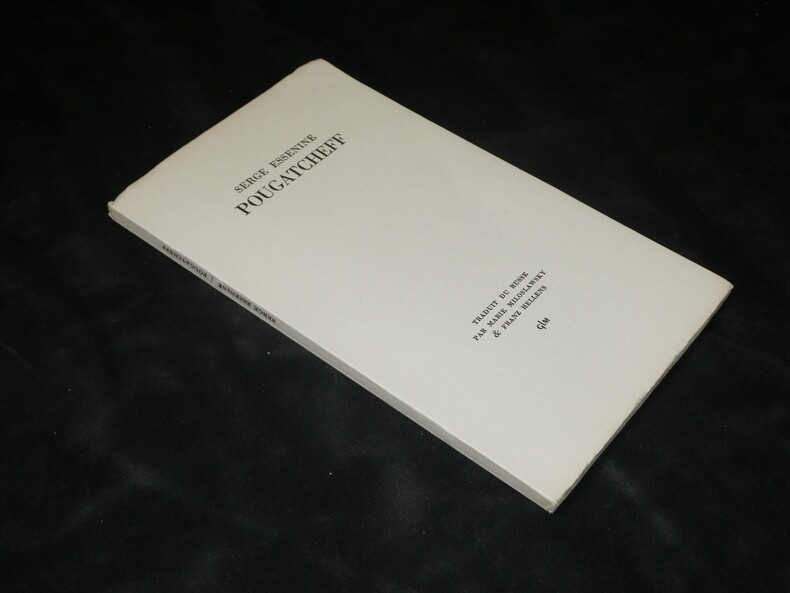
1956réf. boz_006523Auteur : Serge Essenine Titre : Pougatcheff (Traduit du russe par Marie Miloslawsky & Franz Hellens). Édition : GLM (Guy Lévis Mano), Paris, 1956 Tirage : Tirage de tête, exemplaire n 13. L'un des 25 seuls exemplaires imprimés sur vélin de Renage (premier papier, tirage strictement limité avant 1175 exemplaires sur vélin Djébel). Reliure : Broché, exemplaire tel que paru, avec ses marges non coupées Dimensions : 11,3 x 19 cm État : Très bel état de conservation exemplaire complet. Intérieur frais, avec de très rares rousseurs. Voir photos pour plus de détails. Nombre de pages : 59 pages