VariousABAA
196 384 résultats
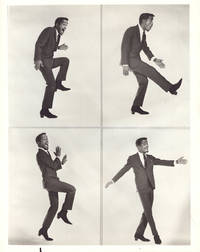
1950réf. WALTER-FILM007847Various. No binding. Near Fine. Archive of 35 variously-sized vintage original black-and-white glossy photos including one-of-a-kind snapshots. Most have paper blurbs ink stamps and notations on verso. Overall near fine. Sammy Davis Jr. 1925-1990 was a legendary American entertainer -- often dubbed "Mr. Entertainment" -- celebrated for his unmatched talents as a singer dancer actor comedian and multi-instrumentalist. He is famous for breaking racial barriers and his core membership in the iconic Rat Pack. A trailblazer on television and Broadway he starred in hit Broadway shows like Mr. Wonderful 1956 and Golden Boy 1964 for which he received a Tony nomination. He also broke cultural ground when featured in pioneering television specials and made TV history with a famous kiss on the cheek to Archie Bunker on the sitcom All in the Family. Davis actively fought segregation in the entertainment industry. He frequently boycotted or refused to perform at hotels and nightclubs in cities like Las Vegas and Miami that allowed Black performers on stage but denied them entry through the front door or access to the venues' amenities. He also participated in major civil rights marches and supported Martin Luther King Jr. personally and financially. Sammy married Swedish actress May Britt on November 13 1960. Their union sparked massive media and racist backlash as interracial marriage was illegal in 31 U.S. states at the time. Frank Sinatra served as the best man for the high-profile ceremony. The marriage lasted eight years. Their union is considered a landmark moment in the fight for civil rights and marriage equality. I ncluded in this selection of images from his adult life and career are: a photo with his mother in 1964; ten photos of Sammy with May Britt between their wedding in 1960 and 1966 including one with their children on the set of Robin and the Seven Hoods in 1963; eight photos in performance between the late-1950s and ca. 1970 including Sammy on his own TV show in 1966 on The Hollywood Palace singing with Steve Lawrence and boxing with Wilt Chamberlain; an image from 1967 rehearsing with models which appears to be for a guest spot on TV show I Dream of Jeannie; two images in social settings by Steve Magan; two smaller photos performing in Las Vegas in later years; and eleven small format candids stamped by Jere Hagman which show Sammy in live performance possibly in Las Vegas ca. early-1960s. Various books
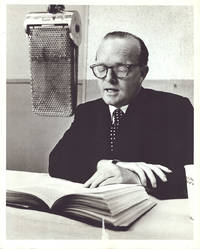
1953réf. WALTER-FILM007844Various. No binding. Near Fine. New York Los Angeles: Various 1953-1978. Archive of 14 vintage original 8 x 10" 20 x 25 cm and 7 x 9" 17 x 22 cm black-and-white glossy silver gelatin photos. Most have attached paper blurbs date/photographer ink stamps on verso. Minor publication use overall near fine. Truman Garcia Capote 1924-1984 was a leading American writer of the 20th century known for his unique style and contributions to both fiction and nonfiction. His work often explores themes of isolation and abandonment and his characters frequently grapple with sexual and emotional confusion. Capote is credited with pioneering the "nonfiction novel" genre which blends factual reporting with fictional narrative techniques. In Cold Blood 1966: Capote spent six years researching the brutal murders of the Clutter family in Kansas blending rigorous journalistic reporting with the narrative style and depth of a novel. Breakfast at Tiffany's 1958: This iconic novella follows the eccentric free-spirited Holly Golightly in 1940s New York City. It was later adapted into the famous 1961 film starring Audrey Hepburn permanently cementing the character into pop culture. Beyond his books Capote was an influential cultural figure. He became a confidante to high-society women he dubbed his "swans" and his larger-than-life witty personality made him a fixture of mid-century celebrity culture. Included in this offering are Capote: at a train station in 1953 with Vittorio De Sica; at an event with Constance Collier and Peggy Wood in 1954; with Michael Sean O'Shea in 1955; recording excerpts from In Cold Blood for RCA in 1966; at a party for In Cold Blood in 1966 with Lauren Bacall newspaper blurb on verso; presenting his A Christmas Memory for ABC in 1967; with Maureen Stapleton and Martin Balsam on set of Among the Paths to Eden 1967; with Lee Radizwill in 1967 1972 also with Norman Mailer; in two characters for his Sonny and Cher TV show appearance in 1973; and with swan Mrs. Winston at Studio 54 in 1978. Various books
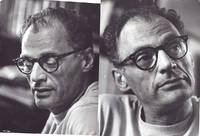
1947réf. WALTER-FILM007850Various. No binding. Near Fine. Set of 27 vintage original variously-sized black-and-white glossy silver gelatin photos. Most have date and publication ink stamps attached paper blurbs and clippings on verso. Publication used overall near fine. Arthur Miller 1915-2005 was an iconic 20th-century American playwright renowned for his realistic dramas that critiqued the American Dream and explored the moral struggles of ordinary people. He is universally famous for authoring stage classics like Death of a Salesman The Crucible and All My Sons. Beyond his plays Miller was a prominent public figure. He famously married screen icon Marilyn Monroe in 1956 and later wrote the screenplay for her final completed film The Misfits 1961. Also in 1956 he bravely refused to name alleged communist sympathizers to the House Un-American Activities Committee risking a prison sentence for contempt. After divorcing Monroe in 1961 Miller married Austrian-born Magnum photographer Inge Morath in 1962. They collaborated on several photo-journalistic books and remained married until her death in 2002. In his later life Miller remained prolific transitioning into a revered public intellectual and activist. He published his celebrated autobiography Timebends in 1987 saw a major career resurgence with 1990s plays like Broken Glass and actively worked on screenplays and essays until his death in 2005. Wikipedia Amongst the photos in the archive are: twelve portraits of Miller between 1947 and 1977; with Karen Morley and Howard Da Silva for the 1946 play You're Next; at a rehearsal for The Crucible 1953; with Van Heflin on A View from the Bridge 1955 as well as with Mary Ure in 1956; with Clark Gable on location for The Misfits; on location set of film version of A View from the Bridge in 1961; attending court in Germany in 1964; with Melina Mercouri at a 1968 Tony Awards party; with Dustin Hoffman for a revival of Death of a Salesman; with George C. Scott in 1976; and with wife Ingeborg Morath in 1962 and 1964. Various books
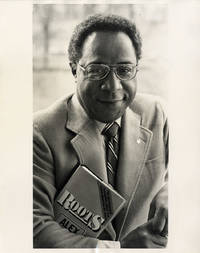
1970réf. WALTER-FILM007779Various. No binding. Fine. Np: ca. mid-1970s. New York: 1970s. Set of 8 vintage original black-and-white photos overall fine. Alex Haley 1921-1992 was an American writer and author of the 1976 epic novel Roots which helped raise public awareness of Black American history. Wikipedia 8 x 10" 20 x 25 cm portrait of Haley with pen in hand at a book signing. Photographer stamp on verso. 8 x 10" 20 x 25 cm portrait of Haley with a copy of his book Roots. Affixed text refers to Haley receiving a special Pulitzer Award for the book. 8 x 10" 20 x 25 cm portrait of Haley with lead actor LeVar Burton on the set of Roots. 7 1/2 x 5" 19 x 13 cm portrait most likely issued to promote the publication in 1976 of his book Roots. 9 x 7" 23 x 18 cm portrait most likely issued to publicize the showing of Roots on ABC. Two 7 x 9" 18 x 23 cm photos promoting Roots: The Next Generation: one a portrait and the other a photo of Haley with two men involved in the show's production. 8 x 10" 20 x 25 cm photo 1980 for a TV appearance on The Toni Tennille Show. Various books
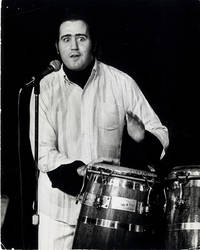
1977réf. WALTER-FILM007709Various. No binding. Near Fine. New York: Various 1977-1983. Set of 13 vintage original 7 x 9" 18 x 23 cm and 8 x 10" 20 x 25 cm black-and-white photos. Two portraits with 3-7-81 date stamps on verso; Three 7 x 9" photos all with text on verso: Stick Around an unsold pilot 1977; Uncle Andy's Funhouse 1980; Taxi 1982; Three photos of Kaufman with musical instruments: borderless photo on drums photographer stamp on verso ca. 1980; photo with guitar from Andy Kaufman Plays Carnegie Hall 1980; Kaufman on drums with a musician on either side of him ca. 1980. Four photos documenting Kaufman's forays into wrestling 1983. Deborah Harry is in two of these photos. Two photos have text on back the other two have holograph photographer credits. Portrait of Kaufman doing his famous Elvis Presley impersonation with CBS-TV promotional text affixed. Various books
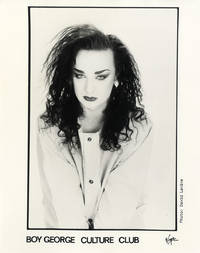
1984réf. WALTER-FILM007088Various. No binding. Fine. London and other cities: 1984-1986. Set of 17 vintage original black-and-white photos overall fine except as noted. 6 x 9" 15.5 x 23 cm photo shows Roy Hay and Mikey Craig performing. Printed text on verso dated Dec 18 1984. 8 x 10" 20 x 25 cm photo of band with Mr. T during a visit to the set of The A-Team TV show. Printing notations on front printed text on verso. Near fine. 9 x 7" 29 x 18 cm photo of Boy George with Mr. T. Two 8 x 10" 20 x 25 cm portraits of Boy George for Virgin Records most likely from his period as a solo artist ca. late 1980s. 8 x 10" 20 x 25 cm portrait for Virgin Records by David Levine. 8 x 10" 20 x 25 cm candid photo with holograph inscription in ink on verso: "Boy George & friends at the Mud Club in London 1985. With 2 models at left Philip Sallon who runs the club George was here being interviewed by Barbara Walters." Photo agency stamp on verso printing notations in blank lower margin near fine. Seven photos of which three are 8 x 10" 20 x 25 cm and four are 8 x 6" 20 x 15 cm. All have text on verso many with the stamp of British photo agency Syndication International. One photo labeled "Boy George at Dawn" has printing notations in red pencil. Another labeled "BOY GEORGE-HEROIN ADDICT" has paint notations around the image of George. Three 8 x 10" 20 x 25 cm photos with small printing notations in red. One features Boy George with Bob Hope George appeared in a 1986 Bob Hope TV special. Various books
réf. 1414684Smithsonian Folkways. Collection of 37 Discs in Good Plus to Very Good condition. Collection includes: Negro Folk Music of Alabama Volumes I II III IV V and VI inserts included; two sets of Music of Haiti Volumes I II and III inserts included; two sets of The World of Man Volumes I and II inserts included; two copies of Cult Music of Cuba inserts included; two copies of Spirituals inserts included; two copies of Folk Tales from Indonesia inserts included; two copies of Folk Music of Ethiopia inserts included; two copies of Folk Tales From West Africa inserts missing; three copies of Calypso and Meringues inserts missing; two copies of Haitian Piano inserts missing; two copies of Radio Programme III: Courlander's Almanac inserts included; two copies of Ashanti Folk Tales From Ghana one insert missing; one copy of Andre Charles & His Quisqueya Ibo Combo Group insert included; one copy of Uncle Bouqui Of Haiti insert included. Discs and cases all intact. Shelved in Rockville Room E. This set comes from the collection of famed folklorist and anthropologist Harold Courlander who was involved with Folkway Records as an editor and producer. 1414684. Special Collections - Upstairs. Smithsonian Folkways unknown books
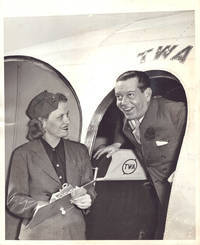
1936réf. WALTER-FILM007828Various. No binding. Near Fine. New York Los Angeles: Various 1936-1956. Set of 12 vintage original 8 x 10" 20 x 25 cm and 7 x 9" 17 x 22 cm black-and-white glossy silver gelatin photos. Most have various ink date stamps and original paper blurbs attached to verso. Overall near fine. Cole Porter 1891–1964 was a legendary American composer and lyricist known for his sophisticated witty and sensual songs. Renowned as one of the few songwriters to create both the words and music for his hits. From Paris at the end of World War II to hits on Broadway and the movies his shows and song list is incomparable. Wikipedia Earliest photo date stamped Jan. 18 1936 on verso along with its newspaper publishing blurb of Porter dining with actress Ruth Chatterton in Hollywood. This is before his 1937 riding accident which left him crippled. At the time he was in Hollywood working on MGM films Born to Dance and Rosalie. May 4 1939 date stamped photo from Newark Airport TWA terminal shows him coming off a plane. During this time he was in New York City working on the Broadway show Du Barry Was a Lady. Porter meeting Ed Sullivan for the CBS television show Toast of the Town in 1952. Two photos of Porter visiting the MGM film set for Kiss Me Kate in 1953 appearing with director George Sidney producer Jack Cummings and actor Ron Randall. Stage actress Louise Carlyle sings with Porter at the piano in a 1954 photo by G. D. Hacket. Porter observes Sally Forrest's dance moves and chats with Sally and Dolores Gray during an Aug. 1954 rehearsal for a Ford Star Jubilee tribute to Porter's music. Porter escorts Myrna Hansen to the 1956 premiere of High Society. Two portraits dated for the 1957 promotion of Silk Stockings one is an MGM portrait ca. 1957. Porter with Dinah Shore which is unusual as there is not an archived meeting between the two but looking at Shore's styling it seems to be ca. 1957 when she released her album Dinah Shore Sings Porter and Rodgers on Harmony Records. Various books
réf. 1414546Smithsonian Folkways. Volumes 1-6. In Very Good condition. Discs cases and inserts all intact. Shelved in Rockville Room E. This set comes from the collection of famed folklorist and anthropologist Harold Courlander who was involved with Folkway Records as an editor and producer. He is credited with coining the name for the label. 1414546. Special Collections - Upstairs. Smithsonian Folkways unknown books
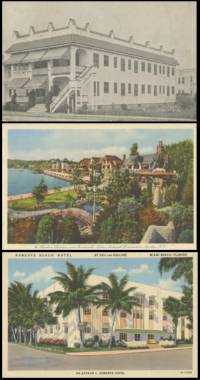
1970réf. List3712United States 1970. 33 items: 28 postcards and five pamphlets. Generally excellent. A collection of postcards and pamphlets for hotels resorts and some planned neighborhoods around the US-mainly in New York New Jersey and Florida-with most advertising that they did not accept Jewish visitors. Many of the resorts' restrictions are stated implicitly advertising "restricted" "exclusive" or "carefully selected" clientele or mentioning their proximity to "Catholic and Other Christian Churches". Other postcards are explicit: the Marine Terrace Hotel in Miami advertises "Strictly Gentile Clientele" Mountain Lakes in Bethel New York is described as "a restricted Gentile Vacation Colony" and Awosting in New Jersey assures patrons that "The most careful Christian restriction insures the congenial atmosphere characteristic of the community." Pamphlets for Thendara Lodge and Locust Cottage both in New York state that they are "Gentiles Only"; and the collection includes a souvenir pamphlet for Mooseheart Illinois a planned community operated by the Loyal Order of Moose "an international fraternity restricted to members of the Caucasian or White race". The extent of discrimination against Jewish people inspired the publication of the Jewish Vacation Guide 1917 which documented hotels restaurants and services that were friendly to Jewish clients as the later Negro Motorist Green Book did for African Americans. The items in the collection come from twenty locations eighteen of which did not accept Jewish clients. The two postcards advertising resorts that explicitly catered to Jewish clientele come from Twin Pines in the Lake George region which advertises "Jewish American Cuisine" and Yarkony's Kosher Hotel at the Adler in Sharon Springs. These two hotels were part of the "Borscht Belt" an area of upstate New York that attracted Jewish vacationers mainly from the city. The area flourished between the 1920s and 1960s with hundreds of resorts offering Kosher food Shabbat and holiday services and entertainment. Of interest to historians of anti-Semitic discrimination in the US and of travel and recreation in the midcentury. books
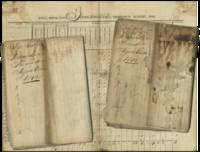
1842réf. List3740Jacksonville Illinois 1842. Three packets each 13 pp and measuring appx. 12 x 16 inches. Folded and delicate with damage at folds; staining including water stains though entirely legible. Overall good. Three manuscript poll books recording votes cast in Jacksonville Illinois in the August 1842 state election preserving a detailed name-by-name account of voting in a major Whig stronghold in antebellum Illinois. The books list individual voters alongside their choices for governor lieutenant governor sheriff county commissioner coroner representatives and a proposed constitutional amendment. Each concludes with signed certifications by election judges and clerks tallying the results. Jacksonville in this period was one of the intellectual and political centers of Illinois home to Illinois College founded in 1829 the first college in the state and a hub of New England-influenced reform culture. The town was closely associated with the so-called "Yale Band" of missionaries and educators whose influence helped shape its strong Whig evangelical and antislavery-leaning character in the decades before the Civil War. As records of open voting prior to the adoption of the secret ballot the volumes offer an unusually granular view of political participation documenting not only outcomes but the alignment of individual voters within a defined community and provide a fantastic resource for genealogical and historical data on the Jacksonville area. The inclusion of a full slate of offices reflects the structure of mid-19th century elections in which local county and state contests were conducted simultaneously and recorded in a single return. The results are particularly notable for the sharp contrast between local and statewide outcomes. Thomas Ford the Democratic candidate who ultimately won the governorship over Joseph Duncan by a comfortable statewide margin fared poorly in Jacksonville. Across the three poll books Ford receives just 202 votes to Duncan's 571 with Morgan County overall favoring Duncan. The disparity reflects the strong Whig orientation of Jacksonville-home to Illinois College and a center of reformist and evangelical culture-and illustrates the regional fragmentation of Illinois politics in the years preceding the Civil War. Ford's election would soon carry broader historical consequences. His administration coincided with rising tensions surrounding the Latter-day Saints at Nauvoo where Joseph Smith had established a rapidly growing and politically influential community. Conflicts between Mormon settlers and their opponents culminated in Smith's arrest and murder in 1844. Overall a scarce and informative set of primary documents offering a detailed snapshot of antebellum voting practices local political identity and the mechanics of democratic participation in early Illinois as well as demographic information on the reform-minded Jacksonville area. A scarce survival we find only a single poll book from Illinois in auction records. books
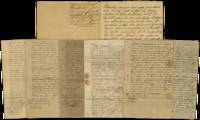
1836réf. List3741New York City 1836. Twelve documents totaling fourteen pages. See description for full inventory. Generally very good to excellent. Cary Ludlow 1736-1814 was a lawyer and merchant from the prominent New York City Ludlow family. In 1768 Ludlow had bought a property at 9 State Street on the Battery with plans to build a mansion there-lower Manhattan was becoming fashionable after the building of the Kennedy Mansion at 1 Broadway by Archibald Kennedy 11th Earl of Cassilis.1 However Ludlow was an ardently pro-Stamp Act Tory and because of this had to flee with his family to England around the outbreak of the Revolutionary War. Upon his return in 1784 he began work on the 9 State Street mansion which was completed around the mid-1790s shortly after the marriage of his daughter Catherine 1767-1849 to Jacob Morton 1761-1836. Later New York City Comptroller and Major General of the New York Militia during the War of 1812 Morton-who also appears in these documents-had been the marshal at George Washington's first inauguration.2 After the Revolutionary War many of New York's high society were moving to lower Manhattan especially on Front Street State Street and Broadway around Bowling Green and the Battery.1 The collection of legal filings offered here document this process of gentrification: they show Ludlow purchasing multiple lots surrounding his property on State Street from members of the lower classes. In particular Ludlow buys lots occupied by John Roorbach a grocer and Richard Anders an oysterman. Roorbach and Anders may have been renters or partial owners as the deals go through Samuel Craig whose occupation is listed as "gentleman" Robert Tuite Kemble formerly an officer of the British Army3 Cornelius Rosevelt likely of the Roosevelt family; also listed as "gentleman" and others. Following Cary Ludlow's death in 1814 the 9 State Street estate passed to Catherine and Jacob Morton and became a social center for the well-to-do epitomized by the 1824 ball the couple threw for the Marquis de Lafayette. However after Jacob Morton's death in 1836 the house became a boarding house; by the 1870s the 26-room mansion was home to "twenty-six Irish families" and Battery Park had become a spot where "roughs played base-ball" and vendors sold "horrible sweetmeats wormy apples and villanous lemonade". 1 The documents offered here illustrate several features of life for the elite during the Early Republic era: first they are primary documents of the gentrification of a neighborhood showing the displacement of its lower-class residents and the consolidation of property in the hands of a small number of wealthy owners; second the names appearing in them-Ludlow Morton Kemble-indicate that other than a small blip during the Revolutionary War financial ties outpaced political ones. State Street property documents: September 20 1794. Purchase and sale agreement between Roorbach and Ludlow for a house and lot on State Street "the street formerly called Copsey Street". Of the £1000 £600 goes to Kemble £200 to Samuel Craig and wife and £200 to Roorbach. 7 ¾ x 12 ½ inches 2pp folded Near Fine. February 7 1795. Release and quitclaim by Roorbach for two lots "in consideration of the sum of Five shillings . paid by Cary Ludlow" which were "mentioned and described in two certain Indentures" one between Cornelius and Catherine Rosevelt and Robert Tuite Kemble and the other between Kemble and Gerard Steddeford. 7 ¾ x 12 ½ inches 1pp folded excellent. February 7 1795. Agreement between Ludlow and Kemble with £500 owed to Kemble for a lot on the Battery bought by Kemble from Steddeford in 1791. 8 x 13 inches 1pp folded and separated at bottom fold with large tear at middle fold very good. February 7 1795. A stipulation that any payments by Ludlow to Roorbach would count towards his debt to Kemble. 8 x 12 ½ inches 1pp folded with several large tears at folds very good. May 4 1795. Indenture between Ludlow and Richard Anderson selling a "small lot" on State Street to Ludlow. The lot is specified as being bordered by the homes of Joseph Correy Stephen Smith and Ludlow likely No. 9. 9 ½ x 14 ¼ inches 2pp folded with some water stains but legible very good plus. June 19 1795. Release and quitclaim by Samuel Craig and his wife Rachel to Ludlow of a lot occupied by Roorbach. 8 x 12 ½ inches 1pp folded excellent to Near Fine. July 17 1795. Agreement between Ludlow and Anders to trade a house owned by Ludlow on Petticoat Lane Marketfield Street for one owned by Anders on State Street. 8 x 12 ¾ inches 1pp folded excellent. Other family documents: April 1775. Legal document signed by Ludlow as plaintiff's attorney in a debt case between Nicholas Ray and Benjamin Davis. 7 ½ x 5 inches 1pp very good plus. January 17 1818. Power of Attorney granted by Ludlow's widow Hester to John and George Morton brothers of Jacob Morton. 8 x 12 ½ inches 1pp excellent. February 28 1825. Grant of commission by Hester Ludlow to John and George Morton on proceeds to Ludlow's estate. 6 ½ x 8 inches 1pp excellent to Near Fine. January 21 1831. Receipt for sale of six shares in Butchers' and Drovers' Bank to Jacob Morton. 3 ½ x 7 ½ inches good. December 1 1836. Title to Vault 136 in the New York City Marble Cemetery for Jacob Martin. 7 x 9 ½ inches excellent. Of interest to historians of development and demographic change in New York City during the Early Republic era. 1 Rodolphe E. Garczynski "Some Old Houses illustrated" Appleton's Journal 8 no. 195 Dec 21 1872 696-699. 2 "Jacob Morton 1761-1836" American Aristocracy https://americanaristocracy.com/people/jacob-morton accessed April 23 2026. 3 "Robert Kemble 1755-1820" American Aristocracy https://americanaristocracy.com/people/robert-kemble accessed April 23 2026. books
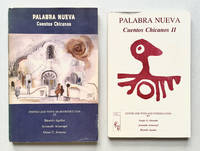
1987réf. 2705Two volumes offset on commercial stock in stiff printed wrappers. Text in Spanish. 8vo. First volume edited by Ricardo Aguilar Armando Armengol and Oscar U. Somoza 147 pp. published by Texas Western Press. Second volume edited by Sergio D. Elizondo Armando Armengol and Ricardo Aguilar 127 pp. published by Dos Passos. Good. Light shelfwear a few light spots to cover interiors bright. 2705 Two volumes of collected Chicano short stories presented in Spanish. Part of a broader series of anthological collections of Chicano writing in prose and poetry from the same publisher. Volume one with an inscription by one of the editors Armando Armengol. Texas Western Press / Dos Passos paperback books
1980réf. 2824First Edition. 126 pp. offset on glossy commercial stock in stiff printed wrappers. Text in Spanish English and French. Chiefly illustrated. 4to. Very good. 2824 Elegant catalogue for an exhibition of stylistically diverse work by seven Mexican photographers: Anibal Angulo Lázaro Blanco Victoria Blasco Graciela Iturbide Pedro Meyer Pablo O. Monasterio and José Luis Neyra. Universidad Nacional Autónoma de México paperback books
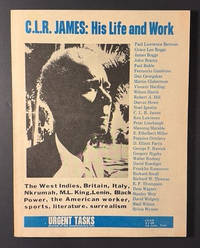
1981réf. 2729First Edition. 126 pp. offset on commercial stock in stiff printed wrappers. Occasional illustrations. 8vo. 2729 Special issue of the leftist journal Urgent Tasks devoted to the great Trinidadian Marxist writer and historian C. L. R. James who turned 80 that year. Includes essays appraisals and other texts by over 30 contributors. Sojourner Truth Organization paperback books
1969réf. Cat340United States and England 1969. 453 letters with twenty pieces of other material. Of the letters to WBAI: Fourteen letters from 1968; 245 from January 1969; sixty-four from February 1969; five from March and April 1969; eighty-six undated. With thirty-nine sent to the FCC these are copies sent to WBAI. Conditions vary; generally very good. Julius Lester 1939-2018 was a Black academic author civil rights activist photographer and musician. He taught at the New School for several years and then at UMass Amherst from 1971 until his retirement. In his highly decorated career he authored over forty books including a guide to the twelve-string guitar written with Pete Seeger; released several folk-blues albums; exhibited photographs including at the Smithsonian Institution; and won numerous teaching awards.1 From 1968 to 1975 Lester hosted Uncle Tom's Cabin on WBAI an independent New York City radio station. Early in the show's tenure during the 1968 teachers' strike over the firing of a number of mostly Jewish teachers from the majority Black Ocean Hill-Brownsville school district Lester's show aired a poem written by a young Black student at an unidentified New York City high school. The poem was dedicated to the striking United Federation of Teachers' president Albert Shanker and opens: "Hew jew boy with that yamaka on your head / You pale faced jew boy / I wish you were dead / I can see you jew boy /naw you cant hide / I got a scoop on you yeah / you gonna die." Lester-who incidentally converted to Judaism in 1982-defended the poem and its airing provoking backlash from listeners and from the Anti-Defamation League which called for his resignation and picketed the station. Offered here is a large archive of listener mail responding to this broadcast and to the later broadcast of a letter from a Black Queens College graduate. This letter also concerned anti-Semitism in the Black community albeit with a much different tone than the student poem: the writer explains that "until quite recently" they had felt significant anti-Jewish sentiment because having grown up in a Jewish neighborhood they used to conceive of all white people as Jewish-and that listening to WBAI "was very instrumental not only in helping me to recognize my anti-Semitism but in tracing its roots". The original copy of this letter is contained in the archive; as a manuscript note on it remarks it "started a second wave of complaint and precipitated the complaint from Shanker to the FCC". The letter was broadcast on Larry Josephson's In the Beginning and much of the mail is addressed to him. A tally on a filing folder totals the "hate" letters at 728 and "love" letters at 341; however in this collection the response is mostly positive. Moreover within the positive response to the broadcasts are only a handful of openly anti-Semitic ones "Good luck in your fight against the Jewish financial interests of New York City". Nonetheless the "hate" contingent is well-represented: besides threats "Don't walk alone cock-sucker and don't take this lightly - we have pledged to get you and we mean it!"; "'He who lives by the sword will die by the sword.' And you will get yours you may be sure" a number of writers sent in poems of their own usually riffs on the original poem and generally containing abundant racial slurs and stereotypes about crime welfare and police brutality. Occasionally a rationale is offered: the station had defended its broadcasts on the basis of free speech and therefore should air these poems as well. In fact the better part of the supportive letters including ones from listeners who vehemently disagreed with the broadcast content also cite the importance of free speech as a reason for their continued support; for instance Adele Lawrence writes: "I am a subscriber and a Jew. Negro anti-semitism has upset me too. But I support the station's policy 100%. Lets hear what black people are saying. Lets search our souls to find out why. And lets do something about it - instead of all this self-righteous over-reaction." Like Lawrence most listeners felt the need to include some demographic information about themselves. It seems that the broadcasts had prompted listeners to introspect on their own identities and to write in with their experiences often in surprisingly thoughtful ways. A number had fled Nazi Germany such as Liz Frankel who writes: "Who am I to talk I came out of Germany in 1939 at the age of 17. My father was in a concentration camp but was miraculously released. His health was broken though and he died in this country in 1945. I personally have severe psychological scars left from my experiences in Germany that is one reason why I can understand the black man's terrible life in this country. Why other refugees from Nazi Germany cannot is beyond me." Kurt Obernbreit describes his reaction to the broadcasts and how his views changed: "On January 17 I wrote you a letter regarding the now famous Julius Lester/Leslie Campbell program in which I voiced a negative reaction. I did not hear the program but got all my information from the press at that time. Meanwhile you had the courtesy of sending me a copy of your report I heard you on the Barry Gray show and some more material appeared in the press including the Village Voice. I have now a much clearer picture of what actually occured sic and I must compliment you on the clarity of your report. I admit I reacted emotionally and I admit that I am very sensitive maybe overly sensitive to expressions of Anti-Semitism as I am myself a graduate of the real Mc Coy namely the Hitlerian variety which I experienced personally. . I want to withdraw my criticism." One affecting ambivalent letter from an Orthodox Jewish college student reflects on the poem and letter and on her and Josephson's Jewish identity. She writes in part: "You talk about being Jewish but you must realize that my whole life is Jewish and I happen to think that its great and I am very proud of that. I think its because I feel like this that I can understand how a person of any race or ethnic group feels and thats why I respect him. Since I did grow up in this community and went to the schools that I did go to unfortunately for myself I did not come in contact with any black people or even people from any other religious groups. . I can't see anything wrong with the poem and I still don't after all you've got the right to read anything over the air that you want. . my father said to me 'did you hear about the poem that they read over that homo-sexual station that you listen to' . well with my father I'm sometimes able to reason so I said 'so what' . Now thats crazy if we're going to start punishing people for saying what they want then we might as well start having a secret police if we don't already and the whole thing. . Larry I couldn't write an anti-black poem if I wanted to or an anti any other group of people because they've never done anything to me. . I know the reading of the poem over the air can do no harm but further free speech which we need alot more of. But I am really afraid that it did something to me when you were talking this morning I felt you were directing your anger at me as a Jew and I kept on asking why . Unlike the black girl who wrote you who seemed to have found her answer all I have are thousands of questions." Another writer Esther Aronson discusses her historical experiences of Black-Jewish relations in the city: "In the early 1930s my family lived in the Bronx. The scene was in the early depths of the depression. No one that I knew had as much as a spare dime. But there were enough families in this Bronx Jewish ghetto who could afford a day worker. The WASP communities were using white maids . the Jewish people for many obvious reasons used the negroes. And I must say in passing that it is probable that the Jews were the only people as a group who did hire negroes. . And the slave mart shaped up each Friday morning on certain corners in the community. The Jewish women came to the slave block to haggle about the price to test the strength select for whatever characteristic the most desirable their particular day worker. By 8 or 9 A.M. the scene broke up. The Jewish women taking home their particular catch and the unhired negroes returning to Harlem minus 10¢ carfare. I don't mean to imply that the Jewish women alone made the scene. The negro women came willingly to the slave block. These were the only people that would hire them. But then the most sordid bit of this scene developed. Even though I'm sure it wasn't universally true it was true enough to have reached my ears. . 1. Move the clock back so that an extra hour or two could be gleaned from the negro. 2. Cut the wage at the end of the day. 3. Pay part of the wage in old clothes. 4. Humiliate the negro by talking deprecatingly about the lazy stinking schwarter in broken English as if the negro was not there and listening etc. etc. . So the Jewish community has become the first area of vengeance. They were and are most intimately visible. But the police force was equally visible and much more violent and deadly in the negro experience. . So I imagine what may be operating is a transfer of latent all American WASP anti-semitism into the issue." A number write in with their own experiences of ethnic prejudice. The writers are sometimes Jewish: "my son who as a kid in the heart of Manhattan was beaten up by other white kids only because he admitted that he attended afternoon classes in Hebrew school. I was screamed at and insulted in the very same area when I was seen putting posters of the American Jewish Congress in store windows" and sometimes not like Gerhard Weber a German immigrant who "couldn't get away from that epithet 'nazi'"; and Shirly Niebanck whose "son goes to public school and has been in this WASP minority constantly . he is being punished because he's Gentile." Many writers discuss WASP-hood; interestingly there is a noticeable split between writers who identify Jewish people including themselves as distinct from white people versus as "white and Jewish." Several letters also came in from NYC teachers who were in some way invested in the strike. Harriet Haberstroh writes in support: "I . taught in P.S. 144 in Ocean Hill last school year. The strong anti-black sentiment was detectable among some of the Jewish teachers. As a former U.F.T. member I cannot back Al Shanker in his claims of anti-semitism and favoritism of the black side. The UFT was given time." Rita Mandelman writes with a more equivocal tone: "I am a subscriber: white Jewish middle class and a teacher a deadly combination. I voted for and supported the first 2 strikes. I voted against but reluctantly supported the third strike. I have written to you before criticizing WBAI's heavily one-sided coverage of the strike and its repercussions. . WBAI will not be living up to my ideal of 'free speech radio' until I start hearing some genuine discussion of the issues--some confrontations of opposing viewpoints. . You say that you have afforded the teacher's Union many invitations that have not been accepted. I find this difficult to believe but I must accept your word on it. I have written Mr. Shanker to ask why. You are in error when you say that the Union has opposed the experiment in Ocean Hill from the beginning. The U.F.T. was instrumental in setting up the district. Only when things started running badly and Union people were critical of some of the leadership or lack of it did the hostilities erupt. You say the Union's position has been 'extensively reported' in the media implying that this relieves you of the responsibility of airing these views. Certainly the Ocean Hill position has been as extensively reported and supported in the press so something is faulty in your logic. The only place the Union's position is supported is in its own Newspaper and very often highly critical letters are printed there. There is no lack of opposition to Mr. Shanker within the Union as you have so often implied. It is as close to being a democratically run large organization as any I have ever seen." One writer "Eva" a former nurse reflects on her Jewish identity and the parallels between the teachers' strike and the 1959 hospital workers' strike: "Black people hate the Jews because of the Jewish Teachers Union or better because of Shanker who symbolizes it. Nobody loves the Jews because of Local '1199' and its Jewish president Leon Davis. This man 'has laid down his life on the line' to use your words to upgrade the Black and Puerto Rican workers of the hospitals. . I was one of the few white hospital rank and filers who 'laid down her life' to help Black Hospital workers out of their misery. For the last 9 years I have considered this to be the main purpose of my living. For the last 9 years my bosses conducted an extermination campaign against me for my anger hatred of them and my fanatical activity. As a result not only am I out of my job but confined to my bed with an incurable illness. While being in the very same hospital as a patient recently I was treated with bitter hatred by one of the nurses for absolutely no reason at all. The only reason was that she is Black and I am Jewish and I was much too ill to defend myself. . When my son was 9 years old he was beaten up and thrown into the snow by white Americans because he is a Jew. I was cursed and insulted by white Americans because of the same reason. . Well the American Nazi party must be delighted about the way things are turning out in the Black community. . Also all the Nazis in Germany and Austria are jubilant about the way things are developing in this country. My mother was murdered by a German Nazi I and my son will be murdered by an American Negro! Wonderful!" Overall the archive is dense with personal stories and reflections about identity-Jewish and otherwise-in New York City and the contentious relationship between the city's Black and Jewish populations. Of interest to scholars of the city's ethnic tensions at the time the 1960s counterculture and especially the social construction of race. Provenance: From the estate of Rabbi A. Bruce Goldman who hosted Up Against the Wailing Wall on WBAI in the 1970s. 1 Margalit Fox "Julius Lester Chronicler of Black America Is Dead at 78" The New York Times January 19 2018. books
réf. Cat352United States 1980. Approximately 170 pieces; see below for full inventory. Conditions vary; generally very good to excellent. An archive of material belonging to Rosemary Gaffney -2024. Gaffney lived in the New York City area with her partner Joyce Vinson; the two were involved in a number of feminist activist organizations including the New York Radical Feminists NYRF the National Organization for Women NOW-NYC and the Women's Liberation Center. Gaffney was a performer involved in filmmaking with Women Make Movies WMM and an employee at Mother Courage for the entire duration that the restaurant was in business from 1972 to 1977. She also collected feminist literature and material from across the country. The collection spans several decades and includes numerous publications event flyers and behind-the-scenes notes from feminist groups. It is highlighted by collections of material related to WMM-particularly the 1976 short Healthcaring: From Our End of the Speculum-women's theater and performance and women's health. The film and performing arts material records the efforts women put in to carve out a space for their own work in creative fields that were then disproportionately composed of men while the women's health material documents some of the early organizing around issues that arose from the similar underrepresentation of women and their issues in healthcare. Interestingly the two topics intersect in the archive particularly in Healthcaring but also in projects like the "Mental Prisoners Liberation" screening at the Kitchen which suggests a connection to the psychiatric survivors movement. These materials are of interest to researchers not just of feminist history but also the history of women in film and the arts; working both in performance and healthcare; and in patient activism. The following description begins with these materials before turning to the remainder of the collection: Other Original and Unpublished Material; NYRF; Women's Strike for Equality; NOW; The Women's Liberation Center; Mother Courage Restaurant; Other Events and Organizations; and Other Publications. Women Make Movies WMM Founded in 1969 by Ariel Dougherty Sheila Paige and Dolores Bargowski Women Make Movies is a non-profit feminist film organization based in New York City. It started as a workshop to teach local women to make films and expanded to include screenings and film distribution. Today WMM distributes films from nearly thirty countries and its films have played at Sundance and Cannes. Though generally not found in OCLC some items offered here may appear in WMM collections at the MoMA and the Academy Film Archive or in the Ariel Dougherty collection at Harvard University. The present collection includes a significant amount of material on Denise Bostrom and Jane Warrenbrand's 1976 short film Healthcaring: From Our End of the Speculum which is listed in its own section. Items presented in alphabetical order. • Blank WMM letterhead 8 ½ x 11 inches. • Copy of a letter from the IRS to WMM. The letter which addresses the group as "Gentlemen" approves its 501c3 status. 8 ½ x 11 inch photocopy. Very good minus. • Grant application materials two pieces. November 1974 materials sent to Youthgrants for creating the film The Women's Movement: The Past Seven Years by Carol Clement Ariel Dougherty and Sheila Paige. Five pages 8 ½ x 11 inches. With large packet of grant-writing material. • Manuscript notes about a film relating to a women's bank in Bethesda. • MENTAL " PRISONERS " LIBERATION / VIDEOTAPES at the kitchen. A flyer for a screening at the avant-garde Chelsea performance space The Kitchen co-sponsored by The Kitchen and WMM. Titles include He Lives Alone dir. Dixie Beckham N.d.; Chelsea Infants of the Martial Arts dir. Jane Warrenbrand N.d.; and Career Women dir. Lisa Methfessel N.d. The flyer reads in part "The Mental 'Patient' Movement / Radical Alternatives / Social Rejection Stigmas" and "Violence and Psychiatry / The Myth of 'Mental Illness' / Poetry and Music" indicating a connection with the psychiatric survivors movement. Sheet measuring 11 x 18 inches folded in half. Some damage to edges. Very good. • MOVIES / international ♀'s day / SATURDAY MARCH 8TH 1975 / after the march. A flyer for two screenings at Washington Square Methodist Church with proceeds going to the International Women's Day Coalition. Titles include "Fear & Domestic Tranquility" and "The Emerging Woman". Double-sided 8 ½ x 11 inch sheet. Excellent. • Photograph of the WMM c. 1970s photocopy. • "the problem" and "a solution". Promotional material for the films Superwoman dir. Anne Sandys Men's Film no director The Women's Martial Arts Center Teaches no director and The Betrayed Daughter dir. Isabel Castellano Carmen Colon and Toni Santiago. Two sheets 8 ½ x 11 inches. Very good. • WMM Newsletter. Fourteen-page newsletter 8 ½ x 11 inches. Excellent. • "women make movies is women making history" 1973. A flyer advertising WMM and several of its films including Domestic Tranquility dir. Harriet Kriegel 1973; Fear dir. Jean Shaw 1973; and The Women's Happy Tine Commune dir. Sheila Paige 1972. Sheet measuring 8 ½ x 13 ¾ inches folded in half. Small fold to one corner else Near Fine. Feminist film conference materials. Several pieces concern a 1975 event the Conference of Feminist Film & Video Organizations in Womanhattan which does not appear to have been documented. • "An Ongoing Manifesto". Single 8 ½ x 11 inch sheet. Very good. • "Conference of Feminist Film & Video Organizations in Womanhattan". Eleven-page stapled conference information packet 8 x ½ x 11 inches. Excellent. • "Policy on Freelance Work" written at the conference. Single 8 ½ x 11 inch sheet. Very good. Healthcaring: From Our End of the Speculum. A documentary short film directed by Denise Bostrom and Jane Warrenbrand the film discusses women's experiences as patients with primarily male practitioners especially in obstetrics and gynecology. • Copy of a letter to Lucille Goodman of Brooklyn 1974. A letter asking for financial support for Healthcaring with a short proposal. Two pages 8 ½ x 11 inches. Very good. • Grant application materials from Healthcaring and an untitled film on street harassment possibly A Film on Street Harassment dir. Sheila Paige 1977. These date to early in Healthcaring's production when it had the earlier title books
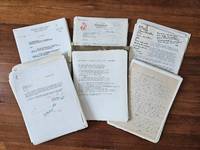
1945réf. 1393159Various: Various 1945-1968. 142 letters on mainly 8.5 x 11 paper to and from famed magician and magic publisher James. G. Thompson from 1945 to 1968. The correspondence covers various topics such as publishing/writing magic books and articles attending/organizing conferences discussing magic tricks personal correspondence and other assorted topics. There are a number of interesting letterheads from magicians publishers magic suppliers and magician organizations along with letterheads from amateur magician workplaces such as banks brake manufacturers and a police department among others. Included is a personal note on stationery from famed magician Harry Blackstone along with a self-drawn portrait. James G. Thompson 1910-1975 was the author of a number of books on magic as well as many articles for such well-known magician publications as The Sphinx The Phoenix and The Linking Ring for which he was the Associate Editor. A banker by trade he started exhibiting his magic skills by his mid-twenties and was well known for his abilities in card magic mentalism and close-up magic. MA Consignment. Shelved Room A Magic Ephemera. 1393159. Special Collections - Upstairs. Various unknown books
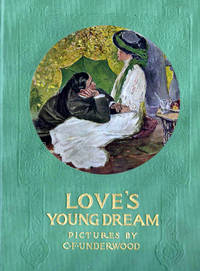
1908réf. 006845Indianapolis: Bobbs-Merrill Company 1908 Green cloth with color pastedown titled in gilt with decorative blind stamp light rubbing to corners first few pages with crease near gutter due to tight binding. A collection of poetry with b&w decorations by Will Jenkins and 8 color plates by "pretty girl" artist Clarence Underwood. Very Good/No Jacket. Illus. by Clarence Underwood & Will Jenkins. 8vo. Bobbs-Merrill Company hardcover books
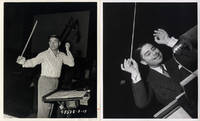
réf. WALTER-FILM007803Various. No binding. Near Fine. Los Angeles: Np 1930s-1970. Collection of 6 vintage original 8 x 10" 20 x 25 cm black-and-white photos. Most have holograph notations on verso of date and/or film. Scattered creasing overall near fine. - Newman in front of an orchestra ca. 1939 for Wuthering Heights. - Newman his right hand with baton lowered and his left hand raised ca. 1939. - Newman with cigarette works on the score for The Song of Bernadette 1939. - A joyful Newman conducting with both hands upraised ca. 1946. - Newman baton in hand ca. 1950s. - Newman conducting the score for Airport 1970. Text on verso. "Alfred Newman 1900- 1970 was an American composer arranger and conductor of film music. From his start as a music prodigy he came to be regarded as a respected figure in the history of film music. He won nine Academy Awards and was nominated 45 times contributing to the extended Newman family being the most Academy Award-nominated family with a collective 92 nominations in various music categories." Wikipedia Various unknown books
1938réf. WALTER-FILM007825Various. No binding. Near Fine. New York various: 1938-1972. Set of 37 vintage original 7 x 9" 17 x 22 cm and 8 x 10" 20 x 25 cm single and double weight black-and-white silver gelatin photos. Overall near fine. Richard Charles Rodgers 1902-1979 was an American composer who worked primarily in musical theater. With 43 Broadway musicals and over 900 songs to his credit Rodgers was one of the best-known American composers of the 20th century and his work significantly influenced popular music. He worked with lyricist Lorenz Hart from 1919 to 1943. When Hart died in 1943 Rodgers formed a partnership with well-known lyricist Oscar Hammerstein II. Wikipedia An array of images featuring the great composer mostly from the years he worked with partner Hammerstein. Included are 15 solo photos of Rodgers including formal portraits and of him at the piano; with George Abbott in 1938; with Hammerstein between 1946 and 1958 including with their wives at openings and on vacation; behind-the-scenes with actors Mary Martin South Pacific Jane Frohman Ethel Merman Eddie Fisher Mitzi Gaynor at film premiere Yau Shan Tung Flower Drum Song Danny Kaye Two by Two Diahann Carroll No Strings and others. Various books
1856réf. 002830Various Places: Various Publishers 1856. Very good. Mostly issues of "Bulletin of the Society of St Vincent de Paul" spanning the years between 1856 and 1859 but also "Report of the General Meeting of the Conferences of Dublin Held on the 8th of December 1856" etc.; 8 1/4 x 5 1/2; nonconsequtive dates and pagination 688 pp. altogether; bound together in marbled boards and 3/4 black morocco; four raised bands to spine with gilt title and decorations; illustrated with tables some of them large fold-out; small worn spots to tips of spine and corners; a bit of rubbing to boards edges; upper margin of ffep trimmed; first leaf with a few closed cuts not affecting readability; some foxing mostly to last few leaves; overall in about very good condition. Founded in 1883 in Paris by author lawer and educator Antoine-Frederic Ozanam The Society of Saint Vincent de Paul is a large international charitable organization in the Catholic Church. The sammelband includes reports of general meetings of the conferences bulletins and more. Various Publishers hardcover books
1903réf. 3754Various 1903. Octavo with eleven pamphlet volumes mostly in original wrappers bound together in blue cloth with handwritten spine label featuring seven of the eleven titles. Text is predominately in French with two volumes in English. These are rare volumes that cover topics related to viticulture and oenology specifically wine production but also include a report on federal protection to American commerce and a French price guide to historic coins and medals. Blue cloth with some rubbing small white mark to the cover and mild foxing to the end pages otherwise very good. ~ 1. Manning J.F. Federal Protection to American Commerce. New York: Evening Post Job Printing Office 1882. 48 pages. Lacking back wrapper. 2. "Congrès de Reims Les 23 24 25 et 26 Juillet 1903". Bulletin de l'Association des Chimistes No. 3-Tome XXI Septembre 1903. 1903. 27 pages paginated 145-172. With fourteen illustrated figures. Text in French. Because this is just a section of the bulletin there are no wrappers. 3. Salleron J. Notice sur les Instruments de Précision Appliqués A l'Oenologie. Paris: Chez L'auteur 1887. xvi 182 pages. Second edition. Illustrated with numerous figures and two plates. Text in French. Lacking back wrapper. 4. Duclou Georges. De l'Epamprement ou Écimage de la Vigne en Gironde: Effets qu cette opération semble produire sur le cep et le vin. Paris/Bordeaux: Les Libraires Associes/Feret et Fils 1896. 8 pages. Text in French. In orange wrappers. OCLC locates one copy at UC Davis Shields Library. 5. Barbet M.E.A. Concours Relatif a la Rectification des alcools. Paris: Imprimerie Noizette 1892. 19 pages. Illustrated with figures. Text in French. In heathered blue wrappers. OCLC locates no copies 6. Bouffard A. La Loi Griffe et le Platrage. Montpellier: Aux Bureaux du Progrès agricole et viticole 1890. 12 pages. Text in French. In blue wrappers. OCLC locates no copies. 7. Marès M.H. Du Prix de Revient Des Vins dans Le Departement de l'herault. Montpellier: Imprimerie Typographique de Gras 1866. 18 pages. Text in French. In blue wrappers. OCLC locates just one copy at Bibliothèque nationale de France. 8. Andrieu Pierre. Nouvelle Mèthode de Vinification de la Vendange par sulfitage et Levurage: Ses application en 1900 et 1901 dans diverses contrees viticoles de la France. 1902. 22 pages. Text in French. In blue wrappers. OCLC locates one copy at the University of Chicago Library. 9. Salleron J. Notice ser les Instruments de Précision appliqués a l'oenologie. Paris: Chez L'auteur 1882. 82 pages index. Illustrated throughout. Text in French. Lacking front wrapper. OCLC locates no copies of this edition. 10. Administration des Monnaies et Médailles. Catalogue et Prix de vente des Medailles de la Monnaie: Prix de vent des Medailles de administrations de l'etat: Tarif des frappes sur coins particuliers des inscriptions en creux et end relief etc. Paris: Imprimerie Nationale 1902. 31 pages. Text in French. In green wrappers. OCLC locates no copies of this edition. 11. Grazzi-Soncini G. Appendix E to the Biennial Report of the Board of State Viticultural Commissioners for 1891-92: Wine. Classification-Wine Tasting-Qualities and Defects. Translated by F.T. Bioletti. Sacramento: State Office 1892. 57 pages. Lacking wrappers. OCLC locates no copies of this edition. hardcover books
1919réf. 002046Riga: Ts. K. K. P. L. Central Committee of the Communist Party of Latvia 1919. Softcover. Very good. Large printed document; 15 3/4 x 10; single sheet pp. 2; newspaper stock ruled with an intricate border; 1 1/2" loss of paper to upper right corner; crease line through middle; a bit of age-toning; overall in very good condition. Possibly one of the earliest publications of the newly-renamed Communist party of Latvia it was an exuberant call to all working men and women to celebrate for the very first time in Latvia May 1 the day of the victory of the proletariat. The party was initially founded in 1904 and in 1906 after entering the Russian Social Democratic Labour Party as a territorial organization it changed its name to Social-Democracy of the Latvian Territory. In June of 1918 a group of Mensheviks who had been expelled from the latter formed the Latvian Social Democratic Workers' Party. In turn it was renamed the Communist Party of Latvia in March of 1919. Ultimately the party would be banned in 1920 after the Latvian War of Independence. The document in true propaganda fashion rambled on about the evil bourgeoisie's terror and their demise in the hands of the Bolsheviks and the continued need for thwarting the efforts of the world Imperialism. A memorable passage read: "Today the entire European armed proletariat raises their weapons even higher and exclaims - Want war You will perish!" Riga: Ts. K. K. P. L. (Central Committee of the Communist Party of Latvia) paperback books
2023réf. 216158Valencia: Departament d'Historia de l'Art Universitat de Valencia 2023. Softcover. VG. Glossy white and blue wraps with color illustration; French flaps. 196 pp. Filled with illustrations the majority in BW. Text in Catalan Spanish and English. Departament d'Historia de l'Art, Universitat de Valencia paperback books