7710 resultados
2013ref. 2081502111903049Huangshan book company 2013. Soft Cover. Fine. Number of books: Hardcover 14 Huangshan book company paperback
1942ref. 149240Universal City: Universal Pictures 1942. Archive of three scripts and one post-production script for the 1942 film. First is a First Draft script under the working title "'Sherlock Holmes' #2" by screenwriters Edward T. Lowe and Scott Darling dated March 24 1942. Ribbon copy typescript on onionskin stock with annotations in manuscript pencil on several pages inquiries about plotline question marks as well as dates and name of screenwriter Darling. Bound in preceding script are: A two-page carbon typescript breakdown of the story in 21 points with annotation of "1st rough draft" and "One 3/24/42" in manuscript pencil in upper right of first page. A ribbon copy typescript "continuity" breakdown of locations and sequences in ten points dated 4/6/42. A ribbon copy typescript "comments on Sherlock Holmes #2" broken into nine points dated 4-6-42 and a three-page ribbon copy typescript synopsis dated 3/24/42. Second is a Third Draft script under the working title "'Sherlock Holmes' #2" crediting screenwriter Scott Darling on front wrapper and Edward T. Love and Scott Darling on title page dated April 22 1942. Annotation in manuscript pencil of "mimeographed pink" on lower right of front wrapper. Ribbon copy typescript on onionskin stock with several annotations in red or graphite manuscript pencil question marks an asterisk underlines and screenwriter S. Darling's name and date "4-27-42." Third is a Draft script under the working title "Sherlock Holmes Fights Back" with name of screenwriter Edmund L. Hartmann on front wrapper. Title page credits to "Additional Changes by Edmund L. Hartmann" and screenwriters Scott Darling and Edward T. Lowe dated May 22 1942. Carbon typescript with mimeograph duplication revision pages. Bound in preceding script is a page describing concept for "The Miss Bently School for Girls" with photograph affixed illustrating concept. Annotations in red and graphite manuscript pencil throughout noting dialogue locations shots characters as well as strikes and dates. Lastly a Post-production Dialogue and Contitnuity script dated August 6 1942 with single annotation in manuscript ink on front wrapper. Loosely based on the 1903 Sherlock Holmes short story "The Adventure of the Dancing Men" by Sir Arthur Conan Doyle. The fourth Sherlock Holmes movie starring Basil Rathbone and Nigel Bruce and the second produced at Universal Studios. Preceded by "Sherlock Holmes and the Voice of Terror" 1942 directed by John Rawlins and followed by "Sherlock Holmes in Washington" 1943 also directed by Roy William Neill who would go on to direct all subsequent Holmes films at Universal. Watson and Holmes transplanted from their usual Victorian setting now in England in the midst of WWII have to protect Swiss scientist Dr. Franz Tobel and his invention an advanced bomb site from falling into the hands Nazi Germany as well as Holmes' arch-nemesis Professor Moriarty Lionel Atwill. The first Holmes film to feature Inspector Lestrade Dennis Hoey of Scotland Yard. March 24 1942 script "'Sherlock Holmes' #2": Gray titled wrappers dated March 24 1942 with credits for screenwriters Edward T. Lowe and Scott Darling. Title page integral with first page dated 3/24/42 noted as 1st draft screenplay with credits for screenwriters Lowe and Darling. 103 leaves with last page of text numbered 96. Ribbon copy typescript on onionskin stock rectos only. Pages Near Fine wrapper Very Good with chipping and closed tears to extremities and one large 4.5 inch closed tear on bottom of front wrapper bound with three gold brads. April 22 1942 script "'Sherlock Holmes' #2": Gray titled wrappers noted as THIRD DRAFT on the front wrapper dated April 22 1942 with credits for screenwriter Scott Darling. Title page integral with first page with credits for screenwriters Edward T. Lowe and Scott Darling. 110 leaves with last page of text numbered 110. Ribbon copy typescript rectos. Pages Near FIne wrapper Very Good with closed tears and chipping at extremities bound with three gold brads. May 22 1942 script "Sherlock Holmes Fights Back": Gray titled wrappers with credits for screenwriter Edmund L. Hartmann. Title page present dated May 22 1942 with credits for Additional Chages by screenwriter Edmund L. Hartmann screenwriters Scott Darling and Edwart T. Lowe and author Sir Arthur Conan Doyle. 107 leaves with last page of text numbered 100. Carbon typescript with mimeograph duplication revision pages rectos only with pink revision pages throughout undated. Pages Near Fine wrapper Very Good with large closed tear to front wrapper and chipping and closed tears to extremities bound with three gold brads. script: Titled self wrappers noted as DIALOGUE CONTINUITY on the front wrapperdated August 6 1942 with credits for director Neill. 109 leaves. Mimeograph duplication rectos only. Pages Near Fine bound at top with two gold brads. Universal Pictures unknown
1942ref. 149240Universal City: Universal Pictures 1942. Archive of three scripts and one post-production script for the 1942 film. First is a First Draft script under the working title "'Sherlock Holmes' #2" by screenwriters Edward T. Lowe and Scott Darling dated March 24 1942. Ribbon copy typescript on onionskin stock with annotations in manuscript pencil on several pages inquiries about plotline question marks as well as dates and name of screenwriter Darling. Bound in preceding script are: A two-page carbon typescript breakdown of the story in 21 points with annotation of "1st rough draft" and "One 3/24/42" in manuscript pencil in upper right of first page. A ribbon copy typescript "continuity" breakdown of locations and sequences in ten points dated 4/6/42. A ribbon copy typescript "comments on Sherlock Holmes #2" broken into nine points dated 4-6-42 and a three-page ribbon copy typescript synopsis dated 3/24/42. Second is a Third Draft script under the working title "'Sherlock Holmes' #2" crediting screenwriter Scott Darling on front wrapper and Edward T. Love and Scott Darling on title page dated April 22 1942. Annotation in manuscript pencil of "mimeographed pink" on lower right of front wrapper. Ribbon copy typescript on onionskin stock with several annotations in red or graphite manuscript pencil question marks an asterisk underlines and screenwriter S. Darling's name and date "4-27-42." Third is a Draft script under the working title "Sherlock Holmes Fights Back" with name of screenwriter Edmund L. Hartmann on front wrapper. Title page credits to "Additional Changes by Edmund L. Hartmann" and screenwriters Scott Darling and Edward T. Lowe dated May 22 1942. Carbon typescript with mimeograph duplication revision pages. Bound in preceding script is a page describing concept for "The Miss Bently School for Girls" with photograph affixed illustrating concept. Annotations in red and graphite manuscript pencil throughout noting dialogue locations shots characters as well as strikes and dates. Lastly a Post-production Dialogue and Contitnuity script dated August 6 1942 with single annotation in manuscript ink on front wrapper. Loosely based on the 1903 Sherlock Holmes short story "The Adventure of the Dancing Men" by Sir Arthur Conan Doyle. The fourth Sherlock Holmes movie starring Basil Rathbone and Nigel Bruce and the second produced at Universal Studios. Preceded by "Sherlock Holmes and the Voice of Terror" 1942 directed by John Rawlins and followed by "Sherlock Holmes in Washington" 1943 also directed by Roy William Neill who would go on to direct all subsequent Holmes films at Universal. Watson and Holmes transplanted from their usual Victorian setting now in England in the midst of WWII have to protect Swiss scientist Dr. Franz Tobel and his invention an advanced bomb site from falling into the hands Nazi Germany as well as Holmes' arch-nemesis Professor Moriarty Lionel Atwill. The first Holmes film to feature Inspector Lestrade Dennis Hoey of Scotland Yard. March 24 1942 script "'Sherlock Holmes' #2": Gray titled wrappers dated March 24 1942 with credits for screenwriters Edward T. Lowe and Scott Darling. Title page integral with first page dated 3/24/42 noted as 1st draft screenplay with credits for screenwriters Lowe and Darling. 103 leaves with last page of text numbered 96. Ribbon copy typescript on onionskin stock rectos only. Pages Near Fine wrapper Very Good with chipping and closed tears to extremities and one large 4.5 inch closed tear on bottom of front wrapper bound with three gold brads. April 22 1942 script "'Sherlock Holmes' #2": Gray titled wrappers noted as THIRD DRAFT on the front wrapper dated April 22 1942 with credits for screenwriter Scott Darling. Title page integral with first page with credits for screenwriters Edward T. Lowe and Scott Darling. 110 leaves with last page of text numbered 110. Ribbon copy typescript rectos. Pages Near FIne wrapper Very Good with closed tears and chipping at extremities bound with three gold brads. May 22 1942 script "Sherlock Holmes Fights Back": Gray titled wrappers with credits for screenwriter Edmund L. Hartmann. Title page present dated May 22 1942 with credits for Additional Chages by screenwriter Edmund L. Hartmann screenwriters Scott Darling and Edwart T. Lowe and author Sir Arthur Conan Doyle. 107 leaves with last page of text numbered 100. Carbon typescript with mimeograph duplication revision pages rectos only with pink revision pages throughout undated. Pages Near Fine wrapper Very Good with large closed tear to front wrapper and chipping and closed tears to extremities bound with three gold brads. script: Titled self wrappers noted as DIALOGUE CONTINUITY on the front wrapperdated August 6 1942 with credits for director Neill. 109 leaves. Mimeograph duplication rectos only. Pages Near Fine bound at top with two gold brads. Universal Pictures unknown books
2021ref. 2081502111904636Guangxi Normal University 2021. Soft Cover. Fine. The book is in fine condition. Guangxi Normal University paperback
2022ref. 2081502111903761Shanghai Institute of Social Sciences 2022. Soft Cover. Fine. The book is in fine condition. Shanghai Institute of Social Sciences paperback
2018ref. 2081502111906087Bashu Publishing Company 2018. Soft Cover. Fine. The book is in fine condition. Bashu Publishing Company paperback
2018ref. 2081502111906285Koryo Shosha 2018. Soft Cover. Fine. The book is in fine condition. Koryo Shosha paperback
2021ref. 2081502111907775national library 2021. Soft Cover. Fine. The book is in fine condition. national library paperback
2020ref. 2081502111903762Gakuen Publishing Company 2020. Soft Cover. Fine. The book is in fine condition. Gakuen Publishing Company paperback
2021ref. 2081502111901527Beijing Science and Technology Publishing House 2021. Soft Cover. Fine. The book is in fine condition. Beijing Science and Technology Publishing House paperback
2021ref. 2081502111905701Chinese book office 2021. Soft Cover. Fine. The book is in fine condition. Chinese book office paperback
2021ref. 2081502111907682Tianjin ancient books 2021. Soft Cover. Fine. The book is in fine condition. Tianjin ancient books paperback
2020ref. 2081502111902890Kaiten Publishing Company 2020. Soft Cover. Fine. The book is in fine condition. Kaiten Publishing Company paperback
2020ref. 2081502111904496China Airlines Registration Office 2020. Soft Cover. Fine. The book is in fine condition. China Airlines Registration Office paperback
2017ref. 2081502111905764Hua Mulan Culture Publishing Company 2017. Soft Cover. Fine. The book is in fine condition. Hua Mulan Culture Publishing Company paperback
2021ref. 2081502111903326Shanghai Dictionary Publishing House 2021. Soft Cover. Fine. The book is in fine condition. Shanghai Dictionary Publishing House paperback
1822ref. 0204521822 - 1849. First Edition. Hardcover. Occasional foxing or staining; "withdrawn" stamps on front and rear pastedowns where there are minor remnants of a pocket. Paper library labels on the spines rubbing to joints slight edgewear. Overall Near Fine. Two 5-1/4" x 8-1/2" volumes identically bound in half calf and marbled boards with matching gilt-lettered morocco spine labels. All the pamphlets are complete except for the original wrappers which were not bound in. Both volumes with Edward Everett's bookplate on the front pastedown along with a presentation bookplate of Frederick W. Putnam to Hamilton College both stamped "Withdrawn." In addition to Emerson and Story other contributors include James Kent Charles Sumner Alexander Everett Theopholis Parson James Percifal William J. Spooner Denison Olmstead Thomas S. Grimke Benjamin Toslin Theron Metcalf Asher Robbins Seth Hawley Virgil Maxcy and Asher Ware. Story's DISCOURSE SABIN 92300 is INSCRIBED "The Honorable/Edward Everett/from the Author" on the title and has a partial correction in the author's hand on page 26. In addition to Story's INSCRIPTION to Everett Maxcy and Ware have also INSCRIBED their addresses to Everett. Emerson's address is certainly the most important present in these volumes. Published in an edition of only 500 copies all of which were sold within a months time it was generally well received and was later described by Oliver Wendell Holmes as "our intellectual Declaration of Independence." When Emerson included this essay in his seminal collection in 1841 he renamed it "The American Scholar": "The clarion cry to think to create to become a productive scholar and above all to fulfil yourself as an individualist." BAL 5183; GROLIER AMERICAN 100: 43. Each volume also with the owner inscription of Frederick W. Putnam dated 22 November 1910 Binghamton NY. Putnam a student of Louis Agassiz was the first director of the Peabody Museum of Salem president of the American Association for the Advancement of Science president of the American Folklore Society and president of the American Anthropological Association among other honors. He is widely known as the "Father of American Archaeology." A remarkable collection with an exceptional provenance and association. Edward Everett--a Unitarian minister member of both the United States Congress and Senate and also a governor of Massachusetts--is perhaps best known for his oratory powers. It is he who gave the "other" address at Gettysburg on 19 November 1863. The next day he wrote Lincoln saying "I should be glad if I could flatter myself that I came as near the central idea of the occasion in two hours as you did in two minutes." hardcover books
2017ref. 2081502111906608Chunghwa Book Bureau Tianjin Ancient Books 2017. Soft Cover. Fine. The book is in fine condition. Chunghwa Book Bureau Tianjin Ancient Books paperback
2017ref. 2081502111907689Hoo 2017. Soft Cover. Fine. The book is in fine condition. Hoo paperback
2006ref. 2083002115802622Sakka 2006. Soft Cover. Fine. Number of books: 12 Sakka paperback
1833ref. 128644Hilliard Gray and Company: Cambridge 1833. 4th. Leather. Very Good. 9x0x6. 1833 Hilliard Gray and Company: Cambridge 3 volumes set in modern 1/2 leather over marbled boards. Stain to lower 1/3 of volume 1's spine. Tight bindings text unmarked. oversized and overweight. Please email for photos. Hilliard, Gray and Company: Cambridge hardcover
1973ref. 2080402107100635Not Available 1973. Soft Cover. Fine. The book is in fine condition. Not Available paperback
2021ref. 2081502111902656Social Science Literature Publishing Company 2021. Soft Cover. Fine. Size: Hardcover Social Science Literature Publishing Company paperback
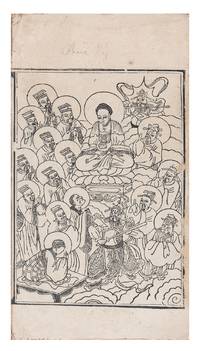
ref. 10902Two full-page frontis. woodcuts printed on each side of first leaf of Vol. I & one full-page woodcut on final leaf of Vol. II. 61.5; 107 folding leaves. Three parts in two vols. 8vo 287 x 171 mm. orig. wrappers Vol. I & modern wrappers Vol. II stitched orig. stitching in Vol. I. Quần phương hạ xã: Anh quang tự 1928. First edition of this very rare Vietnamese edition of the story of MaudgalyÄyana. The journey of MaudgalyÄyana rendered in Chinese as mulian 目連 one of the Buddha’s earliest disciples into the most abysmal and gruesome of Buddhist hells in his quest to rescue the soul of his mother was perhaps the single most important story in Chinese popular Buddhism since medieval times. The detailed depictions of tortures inflicted upon sinners relayed in MaudgalyÄyana’s story made Buddhist cosmology and morality vividly graspable to the laity and since the 12th century at the latest staged performances of his underworld travel have accompanied the Ghost Festival held at the full moon of the seventh month attended by masses of people across social strata. These theatrical retellings of MaudgalyÄyana’s travels remained highly popular until the early 20th century and are still sometimes staged today. The tale’s popularity and influence since medieval times had been so immense that David Johnson a historian of Chinese popular culture writes that “among the tens of thousands of Chinese operas none had deeper religious significance or was watched with greater excitement or was integrated into a more complex ritual matrix than MaudgalyÄyana” “Actions Speak Louder than Words: The Cultural Significance of Chinese Ritual Opera” in Ritual Opera Operatic Ritual IEAS Publications: 1989 p. 2. Unsurprisingly then there was wide dissemination of MaudgalyÄyana narratives and rituals not only in China but throughout East Asia in local and vernacular retellings of his story in a large range of religious and literary genres. Our copy of Penitence at the Compassionate Ritual Grounds of MaudgalyÄyana printed in northern Vietnam in 1928 is one such example. It opens with two illustrations from the canonical narrative of MaudgalyÄyana: the assembly of disciples attentively surrounding the Buddha and MaudgalyÄyana entering Avīci Hell riding a cloud holding the Buddha’s magical staff. The book itself is simultaneously a narrative account of MaudgalyÄyana’s travels and a Buddhist ritual of penitence opening as it does with prayers of refuge and devotion to “Shakyamuni the benevolent father” Thích-ca từ phụ 釋迦慈父 an interesting appellation. The prayer sections also make use of the placeholding name giáp mỗ ç”²æŸ which during ritual readings of the text was probably to be replaced with one’s own name. Despite sharing the same title as a canonical Buddhist scripture T. 1909 composed in the Liang dynasty a comparison of contents suggests that ours is a related but substantially different text. The first Preface makes it clear that this text is indeed based on an original in the “northern country” — i.e. China — and an earlier domestic edition was made possible by the secular and ritual offerings of the monk Trí Giác 智覺. For some time the woodblocks had been stored in the Trác điá»n temple å“田寺 in Bình Lục 平陸 Hà Nam province and did not circulate widely. As a result a reprint was made in Tự Äức 9 1856 by a monk named Thanh Tuyá»n Bhikṣu 清泉比丘. His Preface also dated 1856 is found in the first volume. By the 1920s however there was another problem: there were too many variants of the text in circulation which became a source of confusion. The monk Thanh Hưởng 清亨 using the earlier woodblocks stored at the Anh quang temple 英光寺 Quần phương hạ 羣芳下 commune Nam Äịnh province and with the guidance of Phổ Tụ æ™®èš collated various editions in circulation and created a new edition. This editorial history might explain why our copy does not correspond to known Chinese versions of the text as it probably has incorporated local Vietnamese elements. The woodblocks were carved by two craftsmen named Phó Dung 付瑢 and Phó Huênh 付轟 from the Liễu choàng xã 柳幢社 with monetary offerings from monks and laypeople across many temples and communes listed towards the end of the second volume. The carving began in Bảo Äại 1 1926 and concluded two years later in 1928; the completed woodblocks were kept at the Anh quang temple. Despite the country’s long history of Buddhist and Confucian learning woodblock-printed books published within Vietnam itself are far fewer in number today than their Chinese or Japanese counterparts. This scarcity of extant Vietnamese books is due to a variety of factors including the cost of local printing a humid climate that makes preservation difficult as well as the country’s recent war-torn past. Outside of Buddhist texts kept by individual temples in Vietnam whose collections are difficult to access the bulk of these books are now kept at a handful of institutions such as the Institute of Sino-Nôm Studies in Hanoi and l’École française d’Extrême-Orient in Paris. The catalogue of these collections shows two items with the same title as ours Viện nghiên cứu Hán nôm AC.607 and AC.647 but there is insufficient detail to determine their editions. We find no Vietnamese woodblock-printed copy by this title on WorldCat. Very good set. Final three leaves of the second volume are carefully repaired. The full-page woodcut on the final leaf is partially defective at the borders but the main image is completely intact. â§ Rostislav Berezkin Many Faces of Mulian: The Precious Scrolls of Late Imperial China Univ. of Washington: 2017; Beata Grant and Wilt Idema Escape from Blood Pond Hell: The Tales of Mulian and Woman Huang Univ. of Washington: 2011; David Johnson ed. Ritual Opera Operatic Ritual IEAS Publications: 1989; Stephen F. Teiser The Ghost Festival in Medieval China Princeton: 1988; Yuenan Hannan wenxian ziliaoku è¶Šå—æ¼¢å–ƒæ–‡ç»è³‡æ–™åº« Academia Sinica. unknown
ref. 10902Two full-page frontis. woodcuts printed on each side of first leaf of Vol. I & one full-page woodcut on final leaf of Vol. II. 61.5; 107 folding leaves. Three parts in two vols. 8vo 287 x 171 mm. orig. wrappers Vol. I & modern wrappers Vol. II stitched orig. stitching in Vol. I. Quần phương hạ xã: Anh quang tự 1928. First edition of this very rare Vietnamese edition of the story of MaudgalyÄyana. The journey of MaudgalyÄyana rendered in Chinese as mulian 目連 one of the Buddha’s earliest disciples into the most abysmal and gruesome of Buddhist hells in his quest to rescue the soul of his mother was perhaps the single most important story in Chinese popular Buddhism since medieval times. The detailed depictions of tortures inflicted upon sinners relayed in MaudgalyÄyana’s story made Buddhist cosmology and morality vividly graspable to the laity and since the 12th century at the latest staged performances of his underworld travel have accompanied the Ghost Festival held at the full moon of the seventh month attended by masses of people across social strata. These theatrical retellings of MaudgalyÄyana’s travels remained highly popular until the early 20th century and are still sometimes staged today. The tale’s popularity and influence since medieval times had been so immense that David Johnson a historian of Chinese popular culture writes that “among the tens of thousands of Chinese operas none had deeper religious significance or was watched with greater excitement or was integrated into a more complex ritual matrix than MaudgalyÄyana” “Actions Speak Louder than Words: The Cultural Significance of Chinese Ritual Opera” in Ritual Opera Operatic Ritual IEAS Publications: 1989 p. 2. Unsurprisingly then there was wide dissemination of MaudgalyÄyana narratives and rituals not only in China but throughout East Asia in local and vernacular retellings of his story in a large range of religious and literary genres. Our copy of Penitence at the Compassionate Ritual Grounds of MaudgalyÄyana printed in northern Vietnam in 1928 is one such example. It opens with two illustrations from the canonical narrative of MaudgalyÄyana: the assembly of disciples attentively surrounding the Buddha and MaudgalyÄyana entering Avīci Hell riding a cloud holding the Buddha’s magical staff. The book itself is simultaneously a narrative account of MaudgalyÄyana’s travels and a Buddhist ritual of penitence opening as it does with prayers of refuge and devotion to “Shakyamuni the benevolent father” Thích-ca từ phụ 釋迦慈父 an interesting appellation. The prayer sections also make use of the placeholding name giáp mỗ ç”²æŸ which during ritual readings of the text was probably to be replaced with one’s own name. Despite sharing the same title as a canonical Buddhist scripture T. 1909 composed in the Liang dynasty a comparison of contents suggests that ours is a related but substantially different text. The first Preface makes it clear that this text is indeed based on an original in the “northern country” — i.e. China — and an earlier domestic edition was made possible by the secular and ritual offerings of the monk Trí Giác 智覺. For some time the woodblocks had been stored in the Trác điá»n temple å“田寺 in Bình Lục 平陸 Hà Nam province and did not circulate widely. As a result a reprint was made in Tự Äức 9 1856 by a monk named Thanh Tuyá»n Bhikṣu 清泉比丘. His Preface also dated 1856 is found in the first volume. By the 1920s however there was another problem: there were too many variants of the text in circulation which became a source of confusion. The monk Thanh Hưởng 清亨 using the earlier woodblocks stored at the Anh quang temple 英光寺 Quần phương hạ 羣芳下 commune Nam Äịnh province and with the guidance of Phổ Tụ æ™®èš collated various editions in circulation and created a new edition. This editorial history might explain why our copy does not correspond to known Chinese versions of the text as it probably has incorporated local Vietnamese elements. The woodblocks were carved by two craftsmen named Phó Dung 付瑢 and Phó Huênh 付轟 from the Liễu choàng xã 柳幢社 with monetary offerings from monks and laypeople across many temples and communes listed towards the end of the second volume. The carving began in Bảo Äại 1 1926 and concluded two years later in 1928; the completed woodblocks were kept at the Anh quang temple. Despite the country’s long history of Buddhist and Confucian learning woodblock-printed books published within Vietnam itself are far fewer in number today than their Chinese or Japanese counterparts. This scarcity of extant Vietnamese books is due to a variety of factors including the cost of local printing a humid climate that makes preservation difficult as well as the country’s recent war-torn past. Outside of Buddhist texts kept by individual temples in Vietnam whose collections are difficult to access the bulk of these books are now kept at a handful of institutions such as the Institute of Sino-Nôm Studies in Hanoi and l’École française d’Extrême-Orient in Paris. The catalogue of these collections shows two items with the same title as ours Viện nghiên cứu Hán nôm AC.607 and AC.647 but there is insufficient detail to determine their editions. We find no Vietnamese woodblock-printed copy by this title on WorldCat. Very good set. Final three leaves of the second volume are carefully repaired. The full-page woodcut on the final leaf is partially defective at the borders but the main image is completely intact. â§ Rostislav Berezkin Many Faces of Mulian: The Precious Scrolls of Late Imperial China Univ. of Washington: 2017; Beata Grant and Wilt Idema Escape from Blood Pond Hell: The Tales of Mulian and Woman Huang Univ. of Washington: 2011; David Johnson ed. Ritual Opera Operatic Ritual IEAS Publications: 1989; Stephen F. Teiser The Ghost Festival in Medieval China Princeton: 1988; Yuenan Hannan wenxian ziliaoku è¶Šå—æ¼¢å–ƒæ–‡ç»è³‡æ–™åº« Academia Sinica. unknown books