319 resultados
1978ref. 1606090899xbvkSpotswood - New Jersey, Joyce Music, September 1978. (1) 56 singleside-printed sheets of Text. - Publisher's photographically illustrated lightgreen softcover with black cloth spine; 4to.(ca. 28 x 21,5 cm).
2015ref. THEATREE550320Grenoble, ELLUG, "La Fabrique de l'oeuvre", 2015, 14,5 x 21,5, 228-XVI pages sous couverture illustrée. Avec un cahier de XVI pages d'illustrations en couleurs.
ref. 007027Hippolyte, acteur au Vaudeville et au Palais-Royal. L.A.S., 2 mars 1855, 1p in-12. Il demande à Paul-Aimé Chapelle dit Laurencin deux place. Anciennes collections Henri Bachimont, JL Debauve. [238]
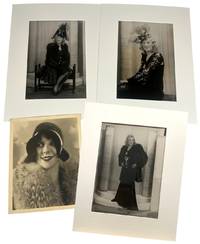
1920ref. 226731920. LGBTQ Drag JJimmy Slater and Rusty female impersonator photograph archive documenting early twentieth century drag performance culture and queer theatrical networks in Britain and the United States produced circa 1920s-1940s. The photographs capture two performers working within the tradition of stage female impersonation that flourished in music halls vaudeville circuits and theatrical revues during the interwar period. Jimmy Slater an English female impersonator who began performing in seaside concert parties as a teenager and later honed his craft in British Army concert parties during the First World War appears in elaborate theatrical portraits reflecting the glamorous visual language associated with drag performance of the era. The archive also includes a signed studio photograph of the American drag performer Rusty inscribed to Patsy Kelly the Hollywood actress widely recognized as one of the earliest openly lesbian figures in American film culture. Together the images document both the public stage presence of female impersonators and the personal networks connecting queer performers and entertainers across transatlantic entertainment circuits. Archive of four professional studio photographs dating from approximately the 1920s through the 1940s. Three photographs depict Jimmy Slater in highly stylized theatrical portraits taken by Debrons Theatrical Photographers of Preston. In these images Slater appears in fur-trimmed evening gowns feathered hats and elaborate stage costume emphasizing the aesthetic conventions of female impersonation performance in British theatrical culture. The fourth photograph is a professional Chicago studio portrait of the drag performer Rusty photographed wearing a cloche hat and fur stole in a style associated with Jazz Age stage glamour. The Rusty photograph bears a handwritten inscription addressed to Patsy Kelly linking the image directly to an actress whose career spanned Hollywood film Broadway theater and later television and who has been widely identified within queer cultural history. Four photographs. Silver gelatin prints. Three Jimmy Slater portraits measure approximately 8 x 10 inches and are mounted in large presentation mats measuring approximately 11.75 x 15 inches. The Rusty portrait measures approximately 8 x 10 inches. These photographs document the visual culture of female impersonation performance during a period when drag artists occupied a complex position within popular entertainment appearing in concert parties vaudeville stages and theatrical revues while also circulating within informal queer social networks. The inscription to Patsy Kelly provides documentary evidence of connections between drag performers and queer figures in early twentieth century entertainment industries in both Britain and the United States. Light surface wear and minor handling marks to prints and mats consistent with age. Images remain strong and well defined. Overall very good condition. A visually striking group preserving early drag performance aesthetics and personal connections within interwar queer entertainment culture. unknown
1920ref. 226731920. LGBTQ Drag JJimmy Slater and Rusty female impersonator photograph archive documenting early twentieth century drag performance culture and queer theatrical networks in Britain and the United States produced circa 1920s-1940s. The photographs capture two performers working within the tradition of stage female impersonation that flourished in music halls vaudeville circuits and theatrical revues during the interwar period. Jimmy Slater an English female impersonator who began performing in seaside concert parties as a teenager and later honed his craft in British Army concert parties during the First World War appears in elaborate theatrical portraits reflecting the glamorous visual language associated with drag performance of the era. The archive also includes a signed studio photograph of the American drag performer Rusty inscribed to Patsy Kelly the Hollywood actress widely recognized as one of the earliest openly lesbian figures in American film culture. Together the images document both the public stage presence of female impersonators and the personal networks connecting queer performers and entertainers across transatlantic entertainment circuits. Archive of four professional studio photographs dating from approximately the 1920s through the 1940s. Three photographs depict Jimmy Slater in highly stylized theatrical portraits taken by Debrons Theatrical Photographers of Preston. In these images Slater appears in fur-trimmed evening gowns feathered hats and elaborate stage costume emphasizing the aesthetic conventions of female impersonation performance in British theatrical culture. The fourth photograph is a professional Chicago studio portrait of the drag performer Rusty photographed wearing a cloche hat and fur stole in a style associated with Jazz Age stage glamour. The Rusty photograph bears a handwritten inscription addressed to Patsy Kelly linking the image directly to an actress whose career spanned Hollywood film Broadway theater and later television and who has been widely identified within queer cultural history. Four photographs. Silver gelatin prints. Three Jimmy Slater portraits measure approximately 8 x 10 inches and are mounted in large presentation mats measuring approximately 11.75 x 15 inches. The Rusty portrait measures approximately 8 x 10 inches. These photographs document the visual culture of female impersonation performance during a period when drag artists occupied a complex position within popular entertainment appearing in concert parties vaudeville stages and theatrical revues while also circulating within informal queer social networks. The inscription to Patsy Kelly provides documentary evidence of connections between drag performers and queer figures in early twentieth century entertainment industries in both Britain and the United States. Light surface wear and minor handling marks to prints and mats consistent with age. Images remain strong and well defined. Overall very good condition. A visually striking group preserving early drag performance aesthetics and personal connections within interwar queer entertainment culture. unknown books
Paris, M. Lévy frères, 1860, in-16, copertina fittizia, pp. 86, (2).
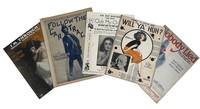
1910ref. 208451910. Archive of drag performance and female impersonation music ephemera 1910s-1950s documents the role of stage performance popular song and nightclub culture in the development of early twentieth century queer entertainment. The material centers on performers who shaped female impersonation traditions in vaudeville cabaret and nightclub circuits preserving evidence of repertoire publicity and audience engagement. Figures such as Karyl Norman and Bert Errol appear through attributed sheet music situating the archive within a transatlantic performance culture in which gender impersonation functioned as both theatrical convention and queer expression. Five pieces of sheet music and related memorabilia measuring approximately 9 x 12 to 10 x 14 inches. Two sheet music titles associated with Karyl Norman include I'm Through Shedding Tears Over You and Nobody Lied When They Said I Cried Over You reflecting the popular song repertoire of female impersonators active from the late 1910s through the 1940s. One sheet is attributed to Bert Errol performing Gimme a Little Kiss Will Ya Huh a standard adapted within impersonation performance contexts. The archive also includes a 1950s promotional pamphlet for Club My-O-My a venue known for female impersonation shows featuring the tagline "The World's Most Beautiful Boys in Women's Attire" and illustrated with black and white photographs of performers in formal gowns wigs and stage makeup. Spanning the period from vaudeville through midcentury nightclub entertainment the material reflects the persistence and evolution of drag performance prior to the emergence of modern LGBTQ political movements. The combination of printed music and promotional imagery supports research into performance history gender expression and the commercial infrastructure of queer nightlife. Minor wear to some covers; materials remain clean and visually strong; overall very good condition. unknown
1910ref. 208451910. Archive of drag performance and female impersonation music ephemera 1910s-1950s documents the role of stage performance popular song and nightclub culture in the development of early twentieth century queer entertainment. The material centers on performers who shaped female impersonation traditions in vaudeville cabaret and nightclub circuits preserving evidence of repertoire publicity and audience engagement. Figures such as Karyl Norman and Bert Errol appear through attributed sheet music situating the archive within a transatlantic performance culture in which gender impersonation functioned as both theatrical convention and queer expression. Five pieces of sheet music and related memorabilia measuring approximately 9 x 12 to 10 x 14 inches. Two sheet music titles associated with Karyl Norman include I'm Through Shedding Tears Over You and Nobody Lied When They Said I Cried Over You reflecting the popular song repertoire of female impersonators active from the late 1910s through the 1940s. One sheet is attributed to Bert Errol performing Gimme a Little Kiss Will Ya Huh a standard adapted within impersonation performance contexts. The archive also includes a 1950s promotional pamphlet for Club My-O-My a venue known for female impersonation shows featuring the tagline "The World's Most Beautiful Boys in Women's Attire" and illustrated with black and white photographs of performers in formal gowns wigs and stage makeup. Spanning the period from vaudeville through midcentury nightclub entertainment the material reflects the persistence and evolution of drag performance prior to the emergence of modern LGBTQ political movements. The combination of printed music and promotional imagery supports research into performance history gender expression and the commercial infrastructure of queer nightlife. Minor wear to some covers; materials remain clean and visually strong; overall very good condition. unknown books
Milano, Placido Maria Visaj, 1832, in-24, copertina fittizia, pp. 94.
1957ref. 4421Le Club du meilleur Livre 1957 178 pages in8. 1957. Reliure éditeur pleine toile sous rodhoid. 178 pages.
ref. c5169Editions du Bélier, 1943 ; grand in-8°, broché, couverture rempliée blanche illustrée en couleurs; 145pp.,1f.nch. Illustré en couleurs de dessins dans le texte ou à pleine page par R. Peynet.
ref. 1588ou le rocher de cancale,chansonnier de table composé des meilleures chansons de l’ancien caveau des dîners du Vaudeville et de l’épicurien en français par les convives du caveau moderne.6ème volume orné de musique.In 16 bro-ché amateur.titre manuscrit sur le premeir plat.340 pages,Capelle 1812 Portrait de Saint-Evremont en frontispice. Fondé en 1805, Le Caveau Moderne fut d'abord dirigé par le comédien Armand Gouffé et le libraire Capelle.Le 20 de chaque mois, des dîners musicaux étaient organisés au Rocher de Cancale, rueMontor- gueil.Ces dîners ont rassemblés entre autres Desaugiers, Pierre Laujon, Béranger (reçu membre en 1813) qui y chanta son Roi d’Yvetot,en 1812,Brazier,Philippon de La Madelaine,Emmanuel Dupaty,Grimod de La Reynière Gouffé Laujon,Théaulon,de Piis, Jouy,Cadet-Gassicourt,Ducray-Duminil
ref. ORD-15631Paris. Delaunay. Léopold Collin. 1810. In-16 (86 x 135mm) dos lisse basane vert foncé, gardes marbrées, 2ff., 228 pages. Petite tache sur une tranche, rares rousseurs assez bon exemplaire.
PARIS, Lib. hachette -1898 - 2 volumes brochés - In-12 - dos recollé - 366 & 356 pages Envoi à Eugène FALLOUX
ref. 5989PARIS, Lib. hachette -1898 - 2 volumes brochés - In-12 - dos recollé - 366 & 356 pages
1974LeRoy's story of his love affair with Hollywood and the art form that was once the wonder of the world. 244 pages. Dust jacket price clipped and with small chips and worn corners and top/tail of spine. Massive inscription by previous owner on front free endpaper.
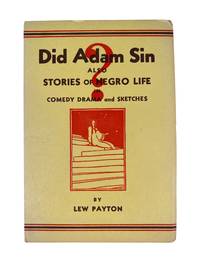
1937ref. 221321937. African AmericanTheaterLiterature Payton Lew. Did Adam Sin Also Stories of Negro Life in Comedy Drama and Sketches. Los Angeles: Lew Payton 1937. First edition. 132 pages. Original yellow wrappers printed in red and brown featuring an abstract graphic of a seated classical figure and a prominent red question mark in the background. A scarce self-published collection of dramatic sketches. Did Adam Sin represents a significant contribution to African American theatrical literature during the Harlem Renaissance's waning years. Written by actor playwright and vaudeville veteran Lew Payton the book offers seven stage-ready works that explore the lives struggles and humor of Black Americans in the early 20th century. Titles include A Bitter Pill Two Sons of Ham and Who Is De Boss blending satire pathos and social commentary with vernacular expression and period-specific concerns. Lew Payton began performing as a child in West Virginia and came of age as an entertainer during the height of Black vaudeville. Here Payton archives both the legacy of African American popular performance and his personal experience in street parades cakewalk acts and Hollywood film roles. The introduction recounts Payton's early experiences with minstrel circuits and his Los Angeles school for Black stage actors. This context situates the collection not only as literature but as pedagogical tool and cultural preservation. The plays foreground the racial dynamics resilience and humor of Black life offering roles that resist the demeaning stereotypes endemic to Hollywood and white theater. Contemporary scholarship increasingly cites Did Adam Sin for its historical value and its intervention into the politics of representation in American drama. Minor edge wear and light toning to wrappers; interior clean and bright; spine uncreased. Overall very good condition. A scarce and important work in the canon of African American theater notable for its authorship self-publication and its insight into Black performance culture during the interwar period. unknown
1937ref. 221321937. African AmericanTheaterLiterature Payton Lew. Did Adam Sin Also Stories of Negro Life in Comedy Drama and Sketches. Los Angeles: Lew Payton 1937. First edition. 132 pages. Original yellow wrappers printed in red and brown featuring an abstract graphic of a seated classical figure and a prominent red question mark in the background. A scarce self-published collection of dramatic sketches. Did Adam Sin represents a significant contribution to African American theatrical literature during the Harlem Renaissance's waning years. Written by actor playwright and vaudeville veteran Lew Payton the book offers seven stage-ready works that explore the lives struggles and humor of Black Americans in the early 20th century. Titles include A Bitter Pill Two Sons of Ham and Who Is De Boss blending satire pathos and social commentary with vernacular expression and period-specific concerns. Lew Payton began performing as a child in West Virginia and came of age as an entertainer during the height of Black vaudeville. Here Payton archives both the legacy of African American popular performance and his personal experience in street parades cakewalk acts and Hollywood film roles. The introduction recounts Payton's early experiences with minstrel circuits and his Los Angeles school for Black stage actors. This context situates the collection not only as literature but as pedagogical tool and cultural preservation. The plays foreground the racial dynamics resilience and humor of Black life offering roles that resist the demeaning stereotypes endemic to Hollywood and white theater. Contemporary scholarship increasingly cites Did Adam Sin for its historical value and its intervention into the politics of representation in American drama. Minor edge wear and light toning to wrappers; interior clean and bright; spine uncreased. Overall very good condition. A scarce and important work in the canon of African American theater notable for its authorship self-publication and its insight into Black performance culture during the interwar period. unknown books
1964Mm 155x210 Due volumi di agine rispettivamente XIV-631+713, fioriture ad un paio di carte del primo volume, astuccio editoriale. Opera in ottime condizioni. Spedizione in 24 ore dalla conferma dell'ordine.
ref. 006902Léopold Boyer (fin XIX-début XX), directeur de théâtres belge (Casino de Bruxelles, Vaudeville, Palais-Royal, La Renaissance). L.A.S., 4 octobre 1871, 4p in-8. Longue lettre à Beaulieu concernant le fonctionnement de la troupe à Bruxelles. Il vient d'engager Melles Frosine et Valérie et M. Paulus (le chansonnier Jean Paul Habans). Différentes considérations sur les répétitions, salaires, etc. Joli document. Ancienne collection JL Debauve. [233]
1922Roma, Libreria Salesiana, 1922, 16mo (cm. 18 x 12) brossura originale, pp. 91.
1820ref. boz_006923Marc-Antoine Désaugiers, directeur du Théâtre du Vaudeville - Circulaire autographe signée - Restructuration du comité de lecture du Théâtre du Vaudeville - 1820 Chansonnier, poète, goguettier et vaudevilliste français Lettre autographe signée de Marc-Antoine Désaugiers, directeur du Théâtre du Vaudeville, compositeur et dramaturge français. La lettre n’est pas datée (circa 1820-1822). Rédigée à l'encre brune sur feuillet de papier vergé crème avec en-tête partiellement imprimé "Le Directeur Administrateur du Théâtre du Vaudeville" et portant la mention manuscrite "Circulaire" en haut à gauche. Dans cette lettre adressée à Monsieur Bizet, Marc-Antoine Désaugiers évoque les nouvelles directives du Ministre de l'Intérieur lui octroyant le droit exclusif de former le Comité de lecture, confirmant ainsi la nomination de son correspondant et annonçant l'ajout des dramaturges Ducange, Dartois, Soulié et Béraud. Dimensions du document le plus grand : 17,3 x 21 cm État : Bon état général, présence de plis postaux d'époque, de quelques rousseurs claires et traces de salissures minimes au dos, ainsi que de légers manques de papier dans les marges extérieures (visibles au dos) sans aucune atteinte au texte. Voir photos pour plus de détails. Nombre de pages : 1 page
1908ref. 17261908 1908 Pierre Lafitte & Cie, Paris, 1908. 1 volume in-8 broché, 337 pages. Bon état
1983ref. 6045822Heidelberg, Winter 1983. 8°. 244 pp. Broschur. Kleines Signaturschild. Stempel verso Titel. Sonst ordentlich.
ref. 4992Michel Levy frères éditeurs, Paris, 1870, 1875, 1865 – in-8, 542 pp – demi-rel. basane bleue d'ép.