[BIBLE, KING JAMES VERSION]Biblio.com

2,443 results
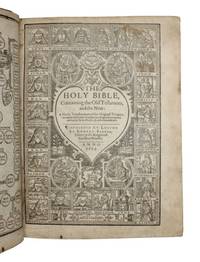
1611ref. 16409London: Robert Barker 1611. A3 bound backwards. Title page the 2 leaves of the engraved map and the final 2 leaves in excellent facsimile. Additional title page from a later edition bound in behind the facsimile. Gothic and Roman types text double column with 59 lines per column and printed within woodcut rule-border calendar and almanac printed in red and black. General title-page within engraved border by Christian Boel and section title for the New Testament dated 1611 within woodcut border. Full-sheet engraved map of the Holy Land by John Speed after Dr John More 17 leaves of genealogical tables incorporating woodcut illustrations of Adam and Eve Noah’s Ark the Tower of Babel and other Biblical subjects numerous woodcut head- and tail-pieces historiated and ornamental initials. Contemporary calf boards rebacked spine labels; some staining a few leaves with small holes or edges torn away but generally a very good copy. With a notation on the paste-down that the book was “received of William Biggs for the sum of 5 shillings . by me John Lang. Ford Warminster” dated 1747 and with a small but elaborate bookplate of William Thomas Smedley 1858-1920 the noted collector of Elizabethaniana and Bacon; his library was sold in 1924 to Henry Clay Folger and the Folger library collection today includes nearly 1500 volumes formerly owned by Smedley. First edition second issue/state called the “she” Bible because of the reading of Ruth III 15: “she went into the citie”. In addition because of the small hole in C6 Matthew 26:36 it is impossible to tell whether the word Judas or Jesus is printed. The King James version of the Holy Bible is arguably the most important book ever published in English. Preparation of the Royal Version took more than 5 years and was laboriously attended to by over 50 translators and researchers. The final translations were then exchanged and reviewed reaching a final committee of six. Supervision of the printing was carried out by Miles Smith and Thomas Bilson. Although the Royal Version appropriates much from the Tyndale Coverdale Geneva and Bishops’ Bibles it is unquestionably regarded as the greatest literary translation of the Bible ever produced. Herbert 309; Pforzheimer 62; PMM 114; STC 2217. Robert Barker unknown
1611ref. 16409London: Robert Barker 1611. A3 bound backwards. Title page the 2 leaves of the engraved map and the final 2 leaves in excellent facsimile. Additional title page from a later edition bound in behind the facsimile. Gothic and Roman types text double column with 59 lines per column and printed within woodcut rule-border calendar and almanac printed in red and black. General title-page within engraved border by Christian Boel and section title for the New Testament dated 1611 within woodcut border. Full-sheet engraved map of the Holy Land by John Speed after Dr John More 17 leaves of genealogical tables incorporating woodcut illustrations of Adam and Eve Noah’s Ark the Tower of Babel and other Biblical subjects numerous woodcut head- and tail-pieces historiated and ornamental initials. Contemporary calf boards rebacked spine labels; some staining a few leaves with small holes or edges torn away but generally a very good copy. With a notation on the paste-down that the book was “received of William Biggs for the sum of 5 shillings . by me John Lang. Ford Warminster” dated 1747 and with a small but elaborate bookplate of William Thomas Smedley 1858-1920 the noted collector of Elizabethaniana and Bacon; his library was sold in 1924 to Henry Clay Folger and the Folger library collection today includes nearly 1500 volumes formerly owned by Smedley. First edition second issue/state called the “she” Bible because of the reading of Ruth III 15: “she went into the citie”. In addition because of the small hole in C6 Matthew 26:36 it is impossible to tell whether the word Judas or Jesus is printed. The King James version of the Holy Bible is arguably the most important book ever published in English. Preparation of the Royal Version took more than 5 years and was laboriously attended to by over 50 translators and researchers. The final translations were then exchanged and reviewed reaching a final committee of six. Supervision of the printing was carried out by Miles Smith and Thomas Bilson. Although the Royal Version appropriates much from the Tyndale Coverdale Geneva and Bishops’ Bibles it is unquestionably regarded as the greatest literary translation of the Bible ever produced. Herbert 309; Pforzheimer 62; PMM 114; STC 2217. Robert Barker unknown books
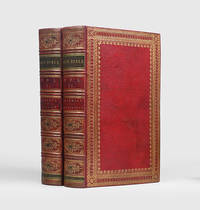
1763ref. 184488Cambridge: printed by John Baskerville 1763. An outstanding synthesis of fine printing illustration and binding First Baskerville edition: a spectacular copy of one of the greatest English Bibles and a crowning achievement of English printing in a magnificent Staggemeier and Welcher binding and abundantly extra-illustrated with 287 Old Master engravings. The copy adorned two of the greatest book collections of the last two centuries: the library of the Dukes of Marlborough at Blenheim Palace and of Estelle Doheny in California. Friedrich Leberecht Staggemeier 1759-1827 was esteemed for his elaborately decorated neoclassical bindings. He partnered with Samuel Welcher from 1799 to 1810 and the pair catered to the highest echelons of the market. Extra-illustration was a distinguishing feature of this market: here 171 of the illustrations are from Bernard Picart and Gerard Hoet's Figures de la Bible The Hague 1728 and 58 are from Pierre Mortier's Bible Amsterdam and Antwerp 1700 while others are from Jan Luyken's Icones Biblica Veteris et N. Testamenti Amsterdam 1729 and other sources. The extravagant binding and extra-illustration were commissioned by the first owner the collector and scholar Jacob Bryant. In 1804 he bequeathed the Bible to his patron George Spencer 4th Duke of Marlborough. It remained in the duke's collection at Blenheim Palace until 1881 when it passed to Fanny Octavia Louisa daughter of the 7th duke. Her descendants sold the book and it passed via Dawson's Book Shop to Estelle Doheny one of the greatest collectors of the 20th century where it joined her Gutenberg Bible and other landmarks of printing history. She bequeathed it to St. John's Seminary which sold it and the rest of Doheny's collection in 1988 where it realized $11000. Bound in 2 vols large folio 518 x 343 mm pp. 1146. Extra-illustrated with 287 Old Master engravings of which 198 are single page and 84 double each mounted mostly within a black ink and pale yellow wash frame. Late 18th- or early 19th-century red straight-grain morocco by L. Staggemeier & Welcher of London binder's ticket green morocco labels richly gilt in compartments wide gilt borders to covers gilt Greek-key turn-ins green watered-silk linings with gilt grapevine borders all edges gilt. Joints and extremities restored scattered light offsetting from plates and foxing else contents fresh very minor worming to front endpapers of first volume: a beautiful copy. ESTC T93106; Gaskell 26; Herbert 1146. unknown
ref. 104192London Printed by Thomas Baskett 1751. . 2 vols bound in 4; folio 41.5 x 27 cm; text in two columns ruled in red two printed title-pages extra-illustrated with 213 engraved plates 29 double-page marbled endpapers some minor marginal staining to some plates bookplates; bound in contemporary navy morocco gilt with the arms of the second duke of Newcastle all edges gilt the border beautifully decorated with an elaborate gilt design spines also gilt in compartments gilt edges bindings slightly faded extremities very slightly rubbed; otherwise a very good copy. A fine copy of this rare bible with superb provenance. Extra-illustrated with 213 engraved plates including 29 double-page. The plates have captions in several languages including English and Hebrew and the artists include G. Hoet A. Houbraken and Bernard Picart. This scarce edition includes both the Old and New Testaments and the Apocrypha. It is notable for being the first folio size edition published by Thomas Baskett the son of the King's Printer John Baskett who first starting printing bibles in London in 1711. Thomas inherited his father's printing house and his title as King's Printer. His reputation grew and his bibles were the first English bibles to be printed in America in 1761. This finely bound copy is from the library of Henry Fiennes Pelham-Clinton 2nd Duke of Newcastle under Lyne 1720-1794 who inherited the dukedom from his uncle in 1768. He held many other prestigious posts such as Gentleman of the Bedchamber to George II and George III and several official posts including Lord Lieutenant of Cambridgeshire 1742-1757 High Steward of Westminster 1759-1794 and Comptroller of Customs of the Port of London 1749-1794. Herbert 1091. London, Printed by Thomas Baskett, 1751. unknown
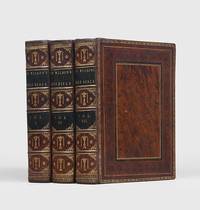
1785ref. 173867Bath: printed by R. Cruttwell; and sold by Rivingtons' Dilly Robson & Robinsons' 1785. With three Biblical fore edge paintings An imposing Bible handsomely bound by Edwards of Halifax in their celebrated "Etruscan" style. The set is unusual in featuring motifs relevant to the contents on all three fore-edges - scenes from the Old and New Testaments - as opposed to the more typical landscapes. Edwards famously almost never signed their bindings and their style was very frequently reproduced by others. This set is cited by Weber in his Annotated Dictionary of Fore-Edge Paintings as "a notable Bible from the Edwards bindery" Weber 2010 p. 118-9 and it is used as an example in a chapter devoted to distinguishing genuine Edwards bindings and paintings from imitations. The technique of concealing a painting under the gilt fore edge of books was revived in England by William Edwards about 1780. "The Edwards family not only carried on the art but enlarged it from the mainly floral and heraldic early efforts with occasional religious scenes and royal portraits to embrace views of well-known country houses set in landscapes" Marks p. 194. They were the originators of the bucolic English fore-edge painting which became standard in the 19th century. Scholars believe that the paintings were made in Halifax rather than in London by artists both within and outside the family and under the supervision of Thomas Edwards. Inspiration for the images was taken from various sources often engravings appearing in other books; for landscapes the favourite artist was William Gilpin a pioneer of the "picturesque". Volume I features a moment from Genesis: Abraham welcoming three angels into his home an act of hospitality which moved the Lord to bless Abraham and his wife with a son despite she was far beyond childbearing age. On Volume II is an episode from Exodus: an Egyptian princess and her attendants discover the infant Moses in the bulrushes of the Nile. Volume III displays an animated scene from the life of St. Paul as he preaches in Rome. The "Etruscan" style binding with a border of palmettes and other classical ornaments stencilled in black on brown calf was one of the firm's most popular designs. The origin of this style is debated: some 19th-century writers attributed the invention to John Whitaker while others ascribe it to the Edwards firm. It is known that Edwards employed it from at least 1775. Provenance: a Herman Frasch Whiton probably the American sailor and Olympic champion 1904-1967 with his elaborately designed bookplate featuring his arms and a ship on the verso of an initial blank in each volume. b Randall J. Moskovitz MD American collector from Memphis Tennessee with his bookplates loosely inserted. 3 vols large quarto 306 x 238 mm. Contemporary "Etruscan" calf by Edwards of Halifax spines with raised bands compartments tooled in gilt with flower and urn centerpieces and pediment cornerpieces black morocco labels covers with gilt pentaglyph and metope border stencilled frame of palmettes central panel of tree calf enclosed by gilt Greek key roll board edges and turn-ins tooled in gilt marbled endpapers each vol. with a contemporary fore-edge painting depicting a Scriptural scene edges gilt green silk bookmarkers. Spines uniformly darkened binding judiciously refurbished joints and spine ends repaired gilt retouched on spine light rubbing to palmettes design in places intermittent foxing and slight toning else clean the fore-edge paintings beautifully preserved. A handsome set. P. J. M. Marks "The Edwards of Halifax Bindery" British Library Journal vol. 24 no. 2 1998; Jeff Weber Annotated Dictionary of Fore-Edge Painting Artists & Binders 2010. See also: G. E. Bentley The Edwardses of Halifax 2015; Carl J. Weber Fore-Edge Painting 1966. hardcover
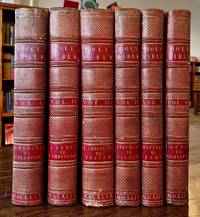
1800ref. 512129Thomas Bensley for Thomas Macklin 1800. First Edition. Hardcover. VERY GOOD. First edition of The Macklin Bible a masterpiece of book design that has been called 'the last of the great Bibles.' Complete in six volumes without the posthumously published Apocrypha. Elephant Folio 19' x 15.5' and . Full red morocco covers with gilt rolled Greek meander borders spines with double raised bands gilt in seven compartments all edges gilt gilt dentelle marbled endpapers. Sturdy bindings are remarkably solid despite the demands of these heavy textblocks. Very Good ex-libris from the John Wilson Collection of Multnomah County Library with small bookplates on paste downs a few penciled notes to versos of title pages but otherwise unmarked. Wide margins. Bindings scuffed and soiled rubbed along joints wear at heads and tails. Contents generally bright with typical offsetting from engravings; many tissue guards still present. Handwritten 2pp. 1889 note from London bookseller Henry Sotheran tipped-in to Vol. 1 wherein he apologizes for the lack of The Apocrypha which was published in 1816. Exhaustively illustrated throughout with engravings including 70 full-page copperplates after Benjamin West Angelica Kauffman Henry Fuseli William Artaud Joshua Reynolds Philip James de Loutherbourg and others. Weighing in at well over 100 lbs this Macklin Bible will ship in multiple boxes and will require additional fees for international delivery. Thomas Bensley for Thomas Macklin hardcover
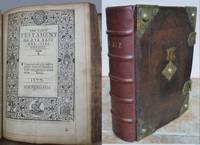
1577ref. 53814London imprinted by R. Jugge Printer to the Queenes Majestie cum privilegio Regiae Maiestatis1577. Bishops' version 1577 The Bishops' Bible also known as the "Treacle Bible" because of its translation of Jeremiah 8:22: "Is there not treacle at Gilead". IMPERFECT: LACKS FIRST TITLE PAGE PREFACE and 2 PAGES from THE WHOLE SCRIPTURE. First page is a Prayer then 3 pages of The Whole Scripture followed by 6 leaves of Kalendar then The Order Howe 1 page then 2 pages Proper Lessons then 3 pages Certain Godly and Comfortable Prayers then 24 leaves of The Book of Common Prayer leaves: 35 1-103 1 - blank; title to 2nd part 106-252; title to 3rd part 254-500 581-592 the jump in pagination 500-581 is the same in all copies nothing is missing; New Testament leaves: title 2-127 last page with colophon and publisher's device. Psalmes: title pages: 4 1-99 page 99 misplaced in final section; Final section Veni Creator Song of 3 Children etc: 14 of 16 lacks A1. Small 4to bound in eights approximately 205 x 155 mm 8 x 6 inches slightly cropped affecting some running titles dated title page to New Testament and Psalms divisional titles to the second and third parts of the Old Testament and to the Apocrypha. 1 half page woodcut of the Garden of Eden 1 full page of the 12 tribes and the Tabernacle 3 maps in the text and 2 full page maps historiated initials pages ruled in red collation: pi6 -pi1-3 and pi6 6 2 misnumbered 3 4 A-C8 A-Z8 Aa-Hh8 Ii4 KK-Zz8 Aaa-Sss8 Ttt4; A-P8 Q6. The NT is followed by The Metric Psalms printed in London by John Daye 1577. Bound in old panelled calf rebacked with raised bands gilt title and date boards cornered in decorated brass with a single boss small central decorated brass lozenge with single boss to both boards probably the covers with brass bosses are as issued at the time decorated brass clasps not matching and partially renewed at some time ornate gilt monogram to both boards: "C C" early endpapers retained. Inner paper hinges strengthened neatly with paper strip ex Cheshunt College library with armorial bookplate on front pastedown stamped "Withdrawn" ink name with date 1748 on front endpaper faint inscription on 2nd blank endpaper 2 small rusty marks with hole at centre on first 2 endpapers caused by nails in clasps similar smaller marks on rear endpapers first page of prelims pi4 - A prayer is dusty and stamped in red at top and bottom with the college name small brown stain on pages 141 verso -142 recto no loss of legibility another on 255 verso - 256 obscuring a few words large pale brown stain on 176 verso no loss small piece missing from lower corner of Nnn1 with loss of a few words a large lower corner missing from D6 135 x 75 mm 5" x 3" that is St. Luke Chapters IV and V worming to lower margins of NT leaves 21-39 sometimes touching bottom line of text loss of 2 words on both sides of leaves 27 and 29 handling signs to NT margins large pale water stain to NT leaves 23 to 105 small closed tear to lower corner of NT leaf 78 no loss outer margins of final 2 leaves tatty no loss of text. A few other minor faults. A good copy of an Elizabethan Bible. Last page of Revelation: Imprinted at London by Richard Jugge Printer to the Queenes Majestie cum privilegio Regiae Maiestatis. Jugge's device with the motto: Omne Bonu Supernae below. Darlow and Moule Historical Catalogue of Holy Scripture Volume 1 pages 85-86 No.112; A.S. Herbert The English Bible 1525-1961 page 85 No.150; ESTC No: S5108; Old Bibles by J.R. Dore page 262 states: "This Bible is also particularly interesting from its being the last Bible ever printed by Richard Jugge. This makes the words placed over his printer's device on the last page so significant cogita mori." He died in the same year 1577. MORE IMAGES ATTACHED TO THIS LISTING ALL ZOOMABLE FURTHER IMAGES ON REQUEST. Postage at cost and all parcels sent fully tracked and fully insured. London, imprinted by R. Jugge, Printer to the Queenes Majestie, cum privilegio Regiae Maiestatis,1577. hardcover
ref. 123616London Imprinted at London by Robert Barker Printer to the Kings most Excellent Maiestie 1614-1613. . Four works in 1 vol.; 4to 23.5 x 18 cm; woodcut title-pages NT title dated 1613 with apocrypha Common Prayer with woodcut title and calendar printed in red and black early MS annotations in pen to margin of Bible 2H3 extensive MS family register to front endpapers the odd spot and area of toning final f. with closed tear to margin internally generally clean and crisp; contemporary blind-panelled calf later endpapers spine expertly restored edges sprinkled red a little rubbed very good or better. A superb example of the Geneva Bible well-preserved in contemporary blind-panelled calf and complete with the Book of Common Prayer Concordances and Psalms. The Geneva Bible was first published in 1560. The translation was primarily the work of English 'Marian exiles' on the continent who having fled England following the accession of Mary I in 1553 sought to create a version of the scriptures that emphasised clarity and promoted accessibility for the learned lay. It was the primary Bible of the evangelical movement and continued to be used by dissenting Protestants from Shakespeare to Oliver Cromwell well into the seventeenth century; it was one of the Bibles taken to America by the first pilgrims on the Mayflower. Notable innovations include the use of verse divisions which made it easier to locate specific passages and extensive study notes commentary and annotations that reflected the Reformed Calvinist theology of the time. As a result the translation proved unpopular with the Elizabethan regime which sought a more moderate religious settlement. The Archbishop of Canterbury Matthew Parker was duly authorised in 1568 to produce a more orthodox translation the Bishops' Bible which promoted the Anglican church and would go on to form the basis of the King James Version in 1611. Nevertheless the Geneva Bible remained popular until at least 1644 when the last known seventeenth-century edition was printed. ESTC S1399 S93850 & S121126 our copy a variant with 'Company' not 'Companie' in imprint; Herbert 330 our copy without Speed's Genealogies and map; DM 256; Griffith 16141. London, Imprinted at London by Robert Barker, Printer to the Kings most Excellent Maiestie, 1614-[1613]. unknown
ref. 124311London Printed at London by Robert Barker Printer to the Kings most excellent Majesttie and by the Assignes of John Bill 1632-1633. . Four works in 1 vol.; folio 35.5 x 23.5 cm; engraved general title signed 'Guilielmus Hole' partially burnished out as noted by ESTC with date in imprint altered to read '1633' on the plate engraved NT title dated 1632 full-page woodcut illustration of Adam & Eve to verso of A10 final f. of preliminaries note ff A7-8 with incorrect printed signatures as A6-7 woodcut initials head and tailpieces further illustrated with Speed's genealogies and double-page map of Canaan occasional toning final f. of Psalmes laid down title of Common Prayer affixed via stub Speed map with loss to central portion of design with final f. reinforced to verso at gutter margin and tape repair to margin A1 of Old Testament with closed tear crudely repaired lower margin of Adam & Eve woodcut with tape repair not affecting design some further closed repairs throughout later endpapers; contemporary calf gilt lozenge device to covers bisecting the initials 'I' and 'E' gilt faded upper brass clasp in working order remnants of the lower clasp joints and corners expertly restored very good. A very well preserved folio edition of the King James Bible complete in the original clasped calfskin binding with Speed's Genealogies including his double-page engraved map of Canaan The Book of Common Prayer and Sternhold & Hopkins' Psalmes. The elaborate title border is that engraved by William Hole d.1624 which had been used before in the folio Geneva Bible of 1607. 'As a copperplate-engraver Hole remained a specialist in engraving maps music and lettering. and he stands at the head of the seventeenth-century tradition of engravers who worked for writing-masters. He engraved the plates to Martin Billingsley's The Pens Excellencie or The Secretaries Delighte of 1618 the first important English engraved copybook dedicated to Charles as Prince of Wales and he was also responsible for the first engraved plates of music made outside Italy: the famous Parthenia of 161213 which contained music by William Byrd John Bull and Orlando Gibbons and Angelo Notari's Prime musiche nuove of 1613' ODNB. Our example a variant with the date in the imprint of the engraved general title altered on the plate to read '1633'. ESTC S122379 variant; Herbert 466; DM 359. London, Printed at London by Robert Barker, Printer to [the] Kings most excellent Ma[jes]ttie and by the Assignes of John Bill, unknown
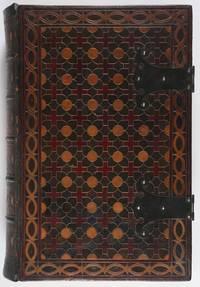
1701ref. 53475Liege: Jean-François Broncart 1701. First edition thus. Hardcover. Very good. Two tomes each in two parts bound in one volume folio: 6 lxxix 1 blank 544; 1 title 1 blank 545-957 1 blank xx Cantique des cantiques 96 La sagesse; Ecclesiastique de Jesus fils de Sirach; 1 title 1 blank 468; 1 title 1 blank 430 16 Oratio Manassae; Liber Esdrae - tertius et quartus pp. Main titles for each tome in red and black; secondary titles in black only all four titles with engraved printer's device; each dated 1701. Text in two columns Latin and French. Illustrated with 6 engraved plates: frontispiece Johann Friederich Karg von Bebenburg; folding plate with 16 vignettes 4x4 depicting well-known biblical scenes; 4 folding maps The Holy Land; The Promised Land Apportioned by Tribe; Jerusalem in the Second Temple Era - after Lamy; The World Known to the Evangelists. Quarter-page engraved vignettes at the head of each of the 30 biblical books; historiated initials; printed marginalia. Exquisitely bound in the 19th century in levant morocco extra over wooden boards with mosaic compartments in crimson ochre; and dark brown bordered in fine gilt line; spine with raised bands lightly rubbed; pair of brass mounts finished in black with steel rivets at both covers clasps and catched perished. All edges gilt and elaborately gauffered in textured floral motif; gilt inner dentelles; decorative endleaves renewed in orange and black; crimson silk ribbon marker. The work of a master binder. Expertly repaired at spine caps. Occasional faint embrowning; marginal dampstains beginning in second half mostly at outer corners; expanding to fore-edge and darkening considerably in final 20 leaves. Overall a very good copy with crisp text throughout though incomplete: lacks Antoine Arnould's "Concorde des quatre Evangélistes" along with its accompanying Latin version and the concluding index. Amply margined copy of this sumptuous edition of the Bible comprising the Latin Sixto-clementine Vulgate and the Port-Royal French translation printed in parallel columns. Isaac-Louis Lemaistre de Sacy 1613-1684 was the principal translator of the French version which was edited and completed after his death by Pierre Thomas du Fossé 1634-1698 and Henri-Charles de Beaubrun 1655-1723 who also provide annotations throughout. According to Barbier the French controversialist Thierry de Viaixnes 1659-1735 who found himself often at odds with his superiors was the principal editor of the work; at the time of its preparation he was serving as director of an academy at Hautvilliers in the diocese of Rheims McClintock & Strong. Dedicated to Johann Friederich Karg von Bebenburg 1648-1719 whose signed portrait was drawn and engraved by C. Gustav of Amling. An advocate of maximal papal power Karg served as Privy Councilor of the Prince-Bishop of Bamberg and Würzburg Peter Philipp von Dernbach then of Elector Max Emanuel of Bavaria. He served as Dean of Our Lady in Munich and was entrusted by Emperor Leopold I with a legation to Pope Innocence XI. By these efforts he secured in 1688 the election of Prince Joseph Clemens of Bavaria as Archbishop of Cologne as a result of which he was made Chancellor and Minister of State here noted on the frontispiece. Provenance and annotations: Bookplate of Herman Blum Blumhaven Library & Gallery with his ticket below; two gilt-stamped ex-libris morocco labels: Henry W. Poor oval; Adolph Lewisohn octogonal. References: Darlow & Moule 3779; Deleveau & Hillard Bibles imprimées du XVe au XVIIe siècles conservées è Paris 605; ADB 15 1882 "Karg: Johann Friedrich; Jean-François Broncart hardcover
1701ref. 53475Liege: Jean-François Broncart 1701. First edition thus. Hardcover. Very good. Two tomes each in two parts bound in one volume folio: 6 lxxix 1 blank 544; 1 title 1 blank 545-957 1 blank xx Cantique des cantiques 96 La sagesse; Ecclesiastique de Jesus fils de Sirach; 1 title 1 blank 468; 1 title 1 blank 430 16 Oratio Manassae; Liber Esdrae - tertius et quartus pp. Main titles for each tome in red and black; secondary titles in black only all four titles with engraved printer's device; each dated 1701. Text in two columns Latin and French. Illustrated with 6 engraved plates: frontispiece Johann Friederich Karg von Bebenburg; folding plate with 16 vignettes 4x4 depicting well-known biblical scenes; 4 folding maps The Holy Land; The Promised Land Apportioned by Tribe; Jerusalem in the Second Temple Era - after Lamy; The World Known to the Evangelists. Quarter-page engraved vignettes at the head of each of the 30 biblical books; historiated initials; printed marginalia. Exquisitely bound in the 19th century in levant morocco extra over wooden boards with mosaic compartments in crimson ochre; and dark brown bordered in fine gilt line; spine with raised bands lightly rubbed; pair of brass mounts finished in black with steel rivets at both covers clasps and catched perished. All edges gilt and elaborately gauffered in textured floral motif; gilt inner dentelles; decorative endleaves renewed in orange and black; crimson silk ribbon marker. The work of a master binder. Expertly repaired at spine caps. Occasional faint embrowning; marginal dampstains beginning in second half mostly at outer corners; expanding to fore-edge and darkening considerably in final 20 leaves. Overall a very good copy with crisp text throughout though incomplete: lacks Antoine Arnould's "Concorde des quatre Evangélistes" along with its accompanying Latin version and the concluding index. Amply margined copy of this sumptuous edition of the Bible comprising the Latin Sixto-clementine Vulgate and the Port-Royal French translation printed in parallel columns. Isaac-Louis Lemaistre de Sacy 1613-1684 was the principal translator of the French version which was edited and completed after his death by Pierre Thomas du Fossé 1634-1698 and Henri-Charles de Beaubrun 1655-1723 who also provide annotations throughout. According to Barbier the French controversialist Thierry de Viaixnes 1659-1735 who found himself often at odds with his superiors was the principal editor of the work; at the time of its preparation he was serving as director of an academy at Hautvilliers in the diocese of Rheims McClintock & Strong. Dedicated to Johann Friederich Karg von Bebenburg 1648-1719 whose signed portrait was drawn and engraved by C. Gustav of Amling. An advocate of maximal papal power Karg served as Privy Councilor of the Prince-Bishop of Bamberg and Würzburg Peter Philipp von Dernbach then of Elector Max Emanuel of Bavaria. He served as Dean of Our Lady in Munich and was entrusted by Emperor Leopold I with a legation to Pope Innocence XI. By these efforts he secured in 1688 the election of Prince Joseph Clemens of Bavaria as Archbishop of Cologne as a result of which he was made Chancellor and Minister of State here noted on the frontispiece. Provenance and annotations: Bookplate of Herman Blum Blumhaven Library & Gallery with his ticket below; two gilt-stamped ex-libris morocco labels: Henry W. Poor oval; Adolph Lewisohn octogonal. References: Darlow & Moule 3779; Deleveau & Hillard Bibles imprimées du XVe au XVIIe siècles conservées è Paris 605; ADB 15 1882 "Karg: Johann Friedrich; Jean-François Broncart hardcover books
1763ref. 1805300033Cambridge : John Baskerville 1763. First Edition. Hardcover. Very Good. 1st Baskerville edition. Massive folio 50 cm. One of 1250 copies York variant. Bound in full morocco leather early 19th century. Gilt stamping gilt border. Rubbing wear to extremities. Solid binding. All edges red. Illustrated with full page engravings. 1146 pp. Crease on title page. Refs: Gaskell 26; Darlow and Moule 1146; ESTC T93106; Huntington Library Great Books in Great Editions 6. "Always regarded as Baskerville's magnum opus and his most magnificent as well as his most characteristic specimen" - Reed A History of the Old English Letter Foundries p. 279. "One of the most beautifully printed books in the world." - Dibden. "Aesthetically the highest point in English Bible printing so far was John Baskerville's folio printed at Cambridge in 1763. The Bible uses his types paper and ink and shows his characteristic 'machine-made' finish: very smooth and even in color and impression with glossy black ink on smooth paper. The design is traditional but the quality of material and workmanship is so high and the conventions are so delicately modified and consistently applied that the result is extremely impressive" Cambridge History of the Bible 464. This is an oversized or heavy book which requires additional postage for international delivery outside the US. John Baskerville hardcover
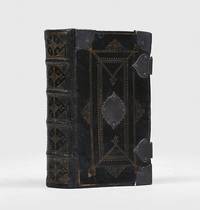
ref. 124312London Printed by John Field 1648. . 4to 24 x 18 cm; without the Apocrypha engraved general title slightly cropped at foot of engraved area with the sculpture's signature just cut through and re-margined later inscriptions in pen to margins letterpress NT title text block toned with some damp-staining to gutter margin of first 6 quires occasional spotting; 17th century dark brown goatskin the covers panelled in gilt with filets and a roll between the panels tooled in blind with fern fronds adorned with engraved-silver centre and corner pieces and clasps in full working order the upper centrepiece with monogram 'AA' the lower with engraved armorial device of three mullets of six points all pierced within a lozenge border rebacked preserving the original gilt spine which has been laid down all edges gilt the lower spine-side corner piece of the lower board loose from fitting a little rubbed overall an excellent example. The King James Version splendidly preserved in an English Restoration binding of gilt panelled dark brown morocco furnished in silver with engraved centrepieces bearing the monogram 'AA' and the armorial device of three mullets or six points pierces cornerpieces and clasps in full working order. Binding 'furniture' originally served a functional purpose with bosses and cornerpieces helping to protect the covers from wear and tear and clasps employed to prevent the parchment leaves of manuscript books from warping. The advent of paper and the movement away from wood to pasteboard had largely made these features redundant by the end of the seventeenth century. Instead as here metalwork survived as a decorative feature which enhanced the binding of important devotional works whilst also helping to keep these texts which were more likely to be carried about secure see David Pearson English Bookbinding Styles 1450-1800 pp26-30. Our example is bound without the Apocrypha. Darlow and Moule note that the Apocrypha in their example no. 469 is possibly supplied from another edition and that a different copy is lacking the Apocrypha. ESTC R37304; Herbert 605; DM 469; Wing B2225A. London, Printed by Joh[n] Field, 1648. unknown
1613ref. D15149London: Robert Barker 1613. First Edition thus. Full Calf. Good. 4to 8 1/2 x 6 1/8 in.; 216 x 156 mm. Black letter text in double columns 71 lines to the full column New Testament title in heart-shaped center within woodcut border woodcut initials head-and tailpieces. The First Quarto Edition of the King James Bible in black letter with "he" in Ruth 3:15. "This and many subsequent issues were produced in close imitation of those black-letter quarto editions of the Geneva Bible which had proved so popular." Herbert As they are often found our copy is imperfect bound with additional bits and pieces also imperfect Our copy is lacking preliminary quire A including general title scattered browning and staining throughout two tears just touching text two holes costing a few words. Bound before the Bible: An imperfect and defective copy of the Book of Common Prayer lacks all before quire B; and Speed's Genealogies stained throughout without the map of Canaan. Bound after the Bible: the 1615 edition of Herrey's Concordances last two leaves defective; and Sternhold & Hopkins' metrical psalms lacks title-page quite stained and frayed toward the end. Bound in Eighteenth-century tree calf; worn joints cracked but generally sound. Label to spine states it incorrectly as Geneva Bible. Our copy has an interesting line of provenance as follows: William Albin several signatures dated 1727 1729 and 1732 Theophilus Jones gift inscription to Thomas G. Evans dated 1867 Birth records of the Welsh family Evans 18471874 in one hand on flyleaf Christmas Evans inscription dated 1935; Evans's probable namesake and ancestor was the famous Welsh Noncomformist minister Christmas Evans 17661838 $5500 Robert Barker unknown
1613ref. D15149London: Robert Barker 1613. First Edition thus. Full Calf. Good. 4to 8 1/2 x 6 1/8 in.; 216 x 156 mm. Black letter text in double columns 71 lines to the full column New Testament title in heart-shaped center within woodcut border woodcut initials head-and tailpieces. The First Quarto Edition of the King James Bible in black letter with "he" in Ruth 3:15. "This and many subsequent issues were produced in close imitation of those black-letter quarto editions of the Geneva Bible which had proved so popular." Herbert As they are often found our copy is imperfect bound with additional bits and pieces also imperfect Our copy is lacking preliminary quire A including general title scattered browning and staining throughout two tears just touching text two holes costing a few words. Bound before the Bible: An imperfect and defective copy of the Book of Common Prayer lacks all before quire B; and Speed's Genealogies stained throughout without the map of Canaan. Bound after the Bible: the 1615 edition of Herrey's Concordances last two leaves defective; and Sternhold & Hopkins' metrical psalms lacks title-page quite stained and frayed toward the end. Bound in Eighteenth-century tree calf; worn joints cracked but generally sound. Label to spine states it incorrectly as Geneva Bible. Our copy has an interesting line of provenance as follows: William Albin several signatures dated 1727 1729 and 1732 Theophilus Jones gift inscription to Thomas G. Evans dated 1867 Birth records of the Welsh family Evans 18471874 in one hand on flyleaf Christmas Evans inscription dated 1935; Evans's probable namesake and ancestor was the famous Welsh Noncomformist minister Christmas Evans 17661838 $5500 Robert Barker unknown books
1613ref. AQ36763Imprinted at London By Robert Barker 1613. The text is collated and complete bound without the Map which sometimes is included. 1352pp. Signatures: A8 2A-3Z8 A-M8 square brackets as printed. NT has separate title page dated 1613; register is continuous. In this edition Genesis I 11 has: 'bring forth'; Ruth III 15 has: 'she went'. Very small burn holes to text of leaves O5 and O7 short tear to head of leaf Aa2 some loss to lower corner of leaf H8 early ownership inscription to blank verso of leaf K4: 'Edward Pointz his Book 1663'. ESTC S116976 STC 2228. Bound after: SPEED John. The genealogies Recorded In The Sacred Scriptures. London. Printed by John Beale 1613. 2 43pp. Without two terminal leaves. Initial four leaves laid down with substantial loss to title page. ESTC S102017. Bound before: PSALTER - English Sternhold & Hopkins. The booke of psalmes. London. Imprinted at the Company of Stationers 1614 8 93pp 5. Defective without 11 terminal leaves substantial portion of title page torn away final two leaves laid down. Modern blind-tooled calf. Scattered spotting. An early example textually complete and with both title pages of the definitive Anglican text of the Reformation. 'The Authorized Version of the English Bible first printed in 1611.is the most widely-published text in the English language. During many generations large portions of it were known by heart by people on both sides of the Atlantic. With Shakespeare its exact contemporary the Authorized Version has contributed countless quotations and expressions which have slipped hardly noticed into English language and idiom.The book was always printed according to a very precise formula. The lengthy wording of the title-page was unvarying. Every Bible opened with the standard preface to James I 'To the Most High and Mighty Prince James.' beginning 'Great and manifold were the blessings.' The text of the Bible was arranged in strict convention. It was generally laid out in two columns with separate numbered verses. Each chapter opened with a short summary of its content. There were no interpretative notes but there were brief references in the margins to parallel passages or variant readings. 246-249pp HAMEL Christopher De. The Book. A History of the Bible. London 2001. . Authorized Version. Quarto. unknown
1585ref. 477London: Christopher Barker 1585. Good. 10 1/4 x 15 inches text block only. Folio. Lacks leaves before leaf 8. Bible begins at leaf 8 - 536 OT & Apocrypha 137 NT. A4 B 6 leaves par. 6 leaves 2par. 2 leaves A - Tttt 6 leaves Uuuu 8 leaves OT & Apocrypha A - Z 6 leaves NT. Small text loss to lower margin/corner of leaf 8 288 293 391 438 OT and 5 80 NT closely cropped on foremargin with slight loss to some notes more particularly at bottom. Psalter gospels and epistles rather soiled and worn with closed marginal tears and old repairs. Occasional ink to the margins. Edges soiled. Also lacks 17 18 290 OT 75 76 NT lower half of 291 OT lower one-third of 292 297 OT 33 106 121 NT. Increasing wear to margins towards the end of the New Testament with 9 leaves following Y3 title of Revelation lacking and a few leaves at the end loose. Separate title pages to Psalter and New Testament complete outer half of Apocrypha title lacking. Herbert 188; ESTCS156. Boards present though detached and with numerous repairs and losses. Spine absent. A good though imperfect reading copy of the only edition after 1572 to contain the Psalter of the 1568 folio Bishops version rather than the BCP version. Christopher Barker unknown
1696ref. 176200Oxford: University Press 1696. Passed down through several generations of women A richly decorated personal bible with extensive female provenance. Annotations to the front free endpaper record its passage between at least four generations of women from the Worsley family who were based around the Bristol area. The earliest dated inscription is from 1835 by which point the Bible had been in the family for over 50 years. The women recorded in the multiple annotations include Sarah Worsley c.1776-1843 Anne Worsley née Taylor c.1807-1877 Anna Worsley c.1835-1906 and Muriel Anne Worsley née Smith 1878-1975. It is possible that the Bible was given as a wedding gift to women who married into the Worsley family. Duodecimo 143 x 90 mm: A-2T12; 504 leaves unnumbered. Early 18th century black roan spine with four raised bands and full gilt panels concentric gilt frames to covers with floral cornerpieces and ornaments marbled endpapers gilt edges 19th-century metal corners and clasps. Spine and joints repaired and retouched. One metal corner missing gilt a slightly darkened corner of B2 repaired pages occasionally a little closely trimmed. In very good condition. ESTC R25628; Darlow & Moule 842; Wing B2369. hardcover
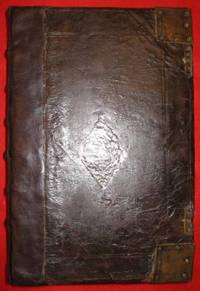
1611ref. 805London: Robert Barker 1611. Leather Bound. Very Good . 9 x 13 1/4 inches. Folio. 78 of 80 pages. Lacking title page. Griffiths 1611/2. Bound with: The Bible: That is The holy Scriptures contained in the Old & New Testament. London: Robert Barker 1612. 4 362 OT 361-444 Apocrypha 135 NT 7 tables leaves. Collates as A 4 leaves A-Lll in 6s Mmm - Ooo in 8s Ppp - Eeee in 6s Ffff 4 leaves. Engraved title page with old repair to closed tear at bottom. Full page woodcut of Garden of Eden presentwith loss to lower outer corner of image. B6 with old manuscript repair to loss at outer corner. Lacks 2Z3.4 Isaiah 17:13-24:18. Herbert 312. STC 2218. NT with separate title page dated 1611. Printed in two column Roman type. Bound with: Sternhold Thomas and John Hopkins. The Whole Booke of Psalmes: Collected into English Meeter. London: Printed for the Company of Stationers 1612. 114 6 of 8 pages. Collates as A-K in 6s L 1 of 2 leaves lacking index. STC 2539. Endpapers with 17th and 18th Century owners' inscriptions. Some marginal soiling and minor dampstains. Bound in contemporary brown calf with blindstamped arabesque centerpiece on covers brass corner pieces catches and clasps now lacking. Covers with old repairs and modern professional rebacking. A very good collection of the BCP of James I with the Geneva/Breeches Bible and Psalmes in folio with brass hardware. More complete than the copy located in Hills. Robert Barker unknown
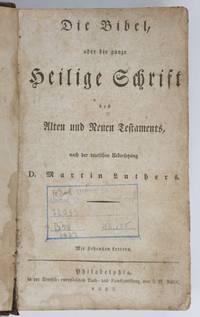
1827ref. 54126Philadelphia: J. G. Ritter 1827. Hardcover. Good. Two parts thick octavo. VIII 1096; 328. Old Testament and Apocrypha paginated continuously; collective title page; New Testament with separate full title page. Text in two columns. Contemporary calf rubbed; spine with raised bands gilt title. Wear at spine cap some loss 3/4 inch at spine tail. Light dampstain at bottom margin; mild foxing throughout somewhat heavier at final 50 leaves. A good complete copy. Rare early nineteenth-century edition of the Bible in Luther's German translation published in Pennsylvania. Apart from the 1828 New Testament very few copies of any of the Luther Bible editions published by Johann Georg Ritter 1772-1840 at Philadelphia between 1826 and 1829 survive. In his 1893 pioneering work The First Century of German Printing in America Oswald Seidensticker locates no complete Luther Bibles and only two editions of the New Testament which were published by Ritter in 1826 304 pages and 1828 541 pages. These were of course often bound with the Old Testament along with their full title-page. The 1828 New Testament is the only portion of Ritter's biblical editions that is widely held in institutional libraries. Expanding upon the work of Seidensticker the editors of The first Century of German Language Printing in the United States of America 1989 assign only four Luther Bible editions Old and New Testaments bound together to Ritter one in 1827 and three in 1829. OCLC however locates Luther Bible editions published by Ritter in all four years between 1826 and 1829. A careful comparison of the paginations reveals that Ritter's Luther Bibles appeared in several variants. The 1827 edition was re-issued in 1829 as a "Zweyte Auflage" with 20 additional pages of preparatory material immediately preceding the Old Testament. Variants of the present edition also appeared in which the Apocrypha 160 pages was separately paginated. Some surviving copies lack the Apocrypha and only contain the 936 pages of the Old Testament. Our careful review of OCLC locates only sixteen surviving copies of Ritter's Luther Bibles containing both the Old and New Testaments published between 1826 and 1829. Twenty-four copies of the separately bound 1828 New Testament have survived as well. The only two copies of our 1827 edition have been located: the University of Waterloo and the Wurttembergische Landesbibliothek. The results of our census are appended below. Johann Georg Ritter appears to have begun his career in Reading Pennsylvania where he printed two German-language works for the firm of William M'Carty and Davis in Philadelphia: Geschichte des americanischen Kriegs von 1812 1817; Hoch-Deutsches reformirtes A B C-und Namen-Büchlein für Kinder welche anfangen zu lernen 1818. He later moved to Philadelphia and set up his own shop Der Deutsche-europäischen Buch- und Kunsthandlung. Sammlung religiöser deutscher Gesaenge which he edited along with J. G. Schmauk was published in 1824 and has been tentatively attributed to Ritter after his move to Philadelphia; Karl Rudolph Demme's Letzte ehre des Christlichen Predigers in einer Christlichen Gemeine Philadelphia 1825 is the earliest work to appear under his imprint. He catered chiefly to the German-speaking Reformed community with religious works sermons and elementary school texts. He briefly published in 1825 a periodical edited by Johann Carl Gossler Philadelphier Magazin für Freunde der deutschen Literatur in Amerika. Provenance: Stamp of Library of United Theological Seminary at title. Full title and imprint: Die Bibel oder die ganze Heilige Schrift des Alten und Neuen Testaments auch der deutschen Uebersetzung D. Martin Luthers. Mit stehenden Lettern. Philadelphia in der Deutsch-europäischen Buch- und Kunsthandlung von J. G. Ritter 1827. New Testament title: Das Neue Testament unsers Herrn und Heilandes Jesu Christi verteutscht von Dr. Martin Luther. Mit stehender Schrift. Philadelphia in der Deutsche-europäischen Buch- und Kunsthandlung von J. G. Ritter 1827. Refences: O. Seidensticker The First Century of German printing in America 1728-1830 Philadelphia 1893; Bötte & Tannhof The First Century of German Language printing in the United States of America vol. 2 1808 - 1830 cf. nos. 2878; 3044; 3045; 3046. Not in Darlow & Moule. INVENTORY •Die Bibel oder Die ganze Heilige Schrift des Alten und Neuen Testaments New Testament with separate title page 1826 - xii 868 304 pages 18 cm - Southern Methodist University Bridwell Library "New Testament has special t.p.: Das Neue Testament Unsers Herrn und Heilandes Jesu Christi verteutscht von D. Martin Luther." 1826 - 2 volumes in 1 19 cm - Pennsylvania State Univ; Brigham Young Univ UT "New Testament has special t.p. and separate paging." 1827 - viii 1096; 328 pages - Wurttembergische Landesbibliothek - OUR EDITION 1827 - viii 1096; 328 pages 22 cm - Univ of Waterloo Libr CA ON - OUR EDITION 1827 2 Aufl. - viii 936; 328 pages 22 cm - Baker Univ KS; American Bible Soc Libr PA "Zweyte Auflage. Mit stehenden Lettern."/ Spine title: Biblia./ The Holy Bible in German./ The New Testament has special title page and pagination: Das Neue Testament unsers Herrn und Heilandes Jesu Christi./ Bound in brown leather tan end papers sprinkled red edge brass clasps missing title in gold on spine./ Text printed in verse form double column single rule down center of page. Chapter summaries in smaller type references between verses." N.B.: Our researches indicate this copy lacks Aprocrypha = 160 pages probably separately paginated as Hillsdale 1829 edition below. 1827 - viii 1557 3 462 p. - Bethel Coll Libr N Newton KS; American Antiquarian Soc Libr MA; United Theog Seminary Libr OH; Library of Virginia "The New Testament 462 p. has separate title page./ Printed in two columns./ "Die Propheten nebst den Büchern so man Apocrypha nennet verdeutscht durch D. Martin Luther."-- Page 965-1557. Shoemaker 28112; Bötte & Tannhof German printing 2878." 1828 20. Aufl. - viii 936; 328 pages 22 cm - Univ. of Virginia N.B.: Our researches indicate this copy lacks Aprocrypha = 160 pages probably separately paginated as Hillsdale copy 1829 edition below. 1828 - 1324 462 pages 23 cm - Buffalo & Erie Cnty Pub Libr Rare Books NY; Calvin Col and Theol Seminary MI "New Testament has special t.p. and separate paging." 1829 2 Aufl. - 2 20 1096 x 328 pages 23 cm 2 Aufl. - Univ of Waterloo Libr CA ON 1829 Zweyte Aufl. mit stehenden Lettern. 23 cm - viii 336 i.e. 936 160 328 pages ; 23 cm - Hillsdale Coll. Mossey Libr MI "Apocrypha and New Testament each have special t.p./ Apocrypha has publication date 1829; New Testament has publication date 1828." •Das Neue Testament unsers Herrn und Heilandes Jesu Christi 1826 - 304 pages 18 cm - Kansas City Pub Libr MO; Webster Eden Libr MO; Franklin & Marshall Col PA; German Soc of Pennsylvania Horner Libr 1827 - 462 pages 23 cm - New York Pub Libr 1828 Neue Aufl. - 542 pages 8vo - Universiteit Goettingen longer title page text: . Mit kurzem Inhalt eines jeden Capitels und vollständiger Anweisung gleicher Schriftquellen ; Wie auch aller Sonn- und Festtägigen Evangelien und Episteln. 1828 Neue Auflage - 542 p. 18 cm - American Antiquarian Soc Libr MA Shoemaker 32318; Bötte & Tannhof German Printing 2970 1828 New ed. - 542 pages - Univ of Ontario Group; Univ of Toronto Thomas Fischer Rare Book "mit kurzem Inhalt eines jeden Capitels und vollständige Anweisunggleicher Schriftstellen wie auch aller Sohn- und Festtägigen Evangelien und Episteln." 1828 - 542 pages 19 cm - 20 Libraries 19 US; 1 CA "Text printed in double column verse form single rule down center of page title centered across top of both pages. Chapter summaries in matching type references after verses. mit kurzem Inhalt eines jeden Capitels und vollständiger Anweisung gleicher Schriftstellen wie auch aller Sonn- und Festtägigen Evangelien und Episteln. J. G. Ritter hardcover
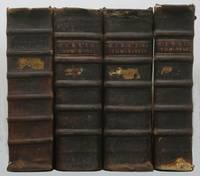
1726ref. 54196Berlenburg: n.p. 1726. First edition. Hardcover. Good. Eight volumes bound in four folio published between 1726 and 1742. All volumes with letterpress title page; sectional half titles; woodcut headpieces. Vol. 1 engraved frontispiece often not present here precedes vol. 7; appropriate engraved title leaves have been supplied from another German bible edition and inserted in vols. 1 3 4 and 5. Text in two columns. Contemporary calf over beveled wooden boards ruled in blind; spines with raised bands gilt morocco lettering pieces paper labels; marbled edges. Catches and clasps perished. Slight remains of paper labels. One volume with vertical crack through center of upper board else covers sound worn at extremities especially spine ends. Text with variable mild embrowning and light foxing occasional mild dampstains but overall clean. A good set complete and sturdily bound. Vol. 1 1726: 12 804 pp. - Vol. 2 1728: 8 880 pp. - Vol. 3 1730: 8; 784 pp. - Vol. 4 1732: 6 858 pp. - Vol. 5 1735: 8 820 pp. - Vol. 6 1737: 8 792 - Vol. 7 1739: 8 600 pp. - Vol. 8 1742: 4 556 44 index pp. with letterpress half-title: Der Berlenburgischen Bible Achter und Letzter Theil. First edition of this rigorous revision of Luther's version in the spirit of mystical Pietism edited by Johann Heinrich Haug d. 1753 and other scholars as is reflected in the main title: Welchem allem noch untermängt Eine Erklärung die den inneren Zustand des geistlichen Lebens oder die Wege und Wirckungen Gottes in der Seelen zu deren Reinigung Erleuchtung und Vereinigung mit Ihm zu erkennen gibt. Underlying everything is an explanation that reveals the inner state of the spiritual life or the ways and effects of God in in souls for their purification enlightenment and union with Him. A theologian and orientalist Haug was expelled from Strasburg for holding an assembly of Philadelphians and other mystic Separatists. He fled to the castle of Casimir Graf von Sayn-Wittgenstein-Berlenburg which had become a refuge for radical pietiests. Remaining there until his death Haug directed a Philadelphian organization that extended throughout western Germany. "He is said to have been a man of great piety and charming personality and was regarded by Count Casimer as a prophet of God" Schaff-Herzog. "The new spirit of mystical Pietism. was fully revealed in the Marburg Bible 1712. The interpretation of type and prophecy in this follows the federal theology of Cocceius that of Canticles and Revelation Madame Guyon. It was the forerunner of a larger work in the same spirit the Berleburg Bible of 1726-42. projected and prepared chiefly by Johann Heinrich Haug. The text is a revision of Luther's with comparison of the English and French versions; the commentary reflects the views of the Philadelphian communities and quotes the mystical books current among them especially Madame Guyon's but its teaching goes back beyond Dippel and Petersen to Jakob Böhme or even to Origen in some points. It lacks unity of belief and of treatment; it is the work not of a single mystic giving voice to his inner convictions but of a propagandist sect with radical tendencies. It is not without value however from different points of view; it edifies by its continual application of Scriptural works to the spiritual life and it prepares the way for historical criticism by an appendix vol. 8 containing apocrypha Old and New Testament pseudepigrapha and postapostolic writings." Schaff-Herzog. Christopher Sauer the agent for the sale of the Berlenburg Bible in the United States used the text as a model for the first German-American Bible 1743. Provenance: Bookplates of United Brethren Historical Society Dayton Ohio. D&M 4239. Jackson S. M. ed. The New Schaff-Herzog Encyclopedia of Religious Knowledge 1908 vol. 2 p. 157; vol. 5 p. 170. Main title and imprint vol. 1: Die Heilige Schrift Altes und Neues Testaments nach dem Grund-Text aufs neue übersehen und übersetzet: Nebst Einiger Erklärung des buchstäblichen Sinnes Wie auch der fürnehmsten Fürbildern und Weissagungen von Christo und seinem Reich und zugleich Einigen Lehren die auf den Zustand der Kirchen in unseren letzten Zeiten gerichtet sind; Welchem allem noch untermängt Eine Erklärung die den inneren Zustand des geistlichen Lebens oder die Wege und Wirckungen GOttes in der Seelen zu deren Reinigung Erleuchtung und Vereinigung mit Ihm zu erkennen gibt. Gedruckt zu Berlenburg im Jahr unsers Erlösers und Ursprungs der heiligen Schrifft JEsu Christi. [n.p.] hardcover
1827ref. 54126Philadelphia: J. G. Ritter 1827. Hardcover. Good. Two parts thick octavo. VIII 1096; 328. Old Testament and Apocrypha paginated continuously; collective title page; New Testament with separate full title page. Text in two columns. Contemporary calf rubbed; spine with raised bands gilt title. Wear at spine cap some loss 3/4 inch at spine tail. Light dampstain at bottom margin; mild foxing throughout somewhat heavier at final 50 leaves. A good complete copy. Rare early nineteenth-century edition of the Bible in Luther's German translation published in Pennsylvania. Apart from the 1828 New Testament very few copies of any of the Luther Bible editions published by Johann Georg Ritter 1772-1840 at Philadelphia between 1826 and 1829 survive. In his 1893 pioneering work The First Century of German Printing in America Oswald Seidensticker locates no complete Luther Bibles and only two editions of the New Testament which were published by Ritter in 1826 304 pages and 1828 541 pages. These were of course often bound with the Old Testament along with their full title-page. The 1828 New Testament is the only portion of Ritter's biblical editions that is widely held in institutional libraries. Expanding upon the work of Seidensticker the editors of The first Century of German Language Printing in the United States of America 1989 assign only four Luther Bible editions Old and New Testaments bound together to Ritter one in 1827 and three in 1829. OCLC however locates Luther Bible editions published by Ritter in all four years between 1826 and 1829. A careful comparison of the paginations reveals that Ritter's Luther Bibles appeared in several variants. The 1827 edition was re-issued in 1829 as a "Zweyte Auflage" with 20 additional pages of preparatory material immediately preceding the Old Testament. Variants of the present edition also appeared in which the Apocrypha 160 pages was separately paginated. Some surviving copies lack the Apocrypha and only contain the 936 pages of the Old Testament. Our careful review of OCLC locates only sixteen surviving copies of Ritter's Luther Bibles containing both the Old and New Testaments published between 1826 and 1829. Twenty-four copies of the separately bound 1828 New Testament have survived as well. The only two copies of our 1827 edition have been located: the University of Waterloo and the Wurttembergische Landesbibliothek. The results of our census are appended below. Johann Georg Ritter appears to have begun his career in Reading Pennsylvania where he printed two German-language works for the firm of William M'Carty and Davis in Philadelphia: Geschichte des americanischen Kriegs von 1812 1817; Hoch-Deutsches reformirtes A B C-und Namen-Büchlein für Kinder welche anfangen zu lernen 1818. He later moved to Philadelphia and set up his own shop Der Deutsche-europäischen Buch- und Kunsthandlung. Sammlung religiöser deutscher Gesaenge which he edited along with J. G. Schmauk was published in 1824 and has been tentatively attributed to Ritter after his move to Philadelphia; Karl Rudolph Demme's Letzte ehre des Christlichen Predigers in einer Christlichen Gemeine Philadelphia 1825 is the earliest work to appear under his imprint. He catered chiefly to the German-speaking Reformed community with religious works sermons and elementary school texts. He briefly published in 1825 a periodical edited by Johann Carl Gossler Philadelphier Magazin für Freunde der deutschen Literatur in Amerika. Provenance: Stamp of Library of United Theological Seminary at title. Full title and imprint: Die Bibel oder die ganze Heilige Schrift des Alten und Neuen Testaments auch der deutschen Uebersetzung D. Martin Luthers. Mit stehenden Lettern. Philadelphia in der Deutsch-europäischen Buch- und Kunsthandlung von J. G. Ritter 1827. New Testament title: Das Neue Testament unsers Herrn und Heilandes Jesu Christi verteutscht von Dr. Martin Luther. Mit stehender Schrift. Philadelphia in der Deutsche-europäischen Buch- und Kunsthandlung von J. G. Ritter 1827. Refences: O. Seidensticker The First Century of German printing in America 1728-1830 Philadelphia 1893; Bötte & Tannhof The First Century of German Language printing in the United States of America vol. 2 1808 - 1830 cf. nos. 2878; 3044; 3045; 3046. Not in Darlow & Moule. INVENTORY •Die Bibel oder Die ganze Heilige Schrift des Alten und Neuen Testaments New Testament with separate title page 1826 - xii 868 304 pages 18 cm - Southern Methodist University Bridwell Library "New Testament has special t.p.: Das Neue Testament Unsers Herrn und Heilandes Jesu Christi verteutscht von D. Martin Luther." 1826 - 2 volumes in 1 19 cm - Pennsylvania State Univ; Brigham Young Univ UT "New Testament has special t.p. and separate paging." 1827 - viii 1096; 328 pages - Wurttembergische Landesbibliothek - OUR EDITION 1827 - viii 1096; 328 pages 22 cm - Univ of Waterloo Libr CA ON - OUR EDITION 1827 2 Aufl. - viii 936; 328 pages 22 cm - Baker Univ KS; American Bible Soc Libr PA "Zweyte Auflage. Mit stehenden Lettern."/ Spine title: Biblia./ The Holy Bible in German./ The New Testament has special title page and pagination: Das Neue Testament unsers Herrn und Heilandes Jesu Christi./ Bound in brown leather tan end papers sprinkled red edge brass clasps missing title in gold on spine./ Text printed in verse form double column single rule down center of page. Chapter summaries in smaller type references between verses." N.B.: Our researches indicate this copy lacks Aprocrypha = 160 pages probably separately paginated as Hillsdale 1829 edition below. 1827 - viii 1557 3 462 p. - Bethel Coll Libr N Newton KS; American Antiquarian Soc Libr MA; United Theog Seminary Libr OH; Library of Virginia "The New Testament 462 p. has separate title page./ Printed in two columns./ "Die Propheten nebst den Büchern so man Apocrypha nennet verdeutscht durch D. Martin Luther."-- Page 965-1557. Shoemaker 28112; Bötte & Tannhof German printing 2878." 1828 20. Aufl. - viii 936; 328 pages 22 cm - Univ. of Virginia N.B.: Our researches indicate this copy lacks Aprocrypha = 160 pages probably separately paginated as Hillsdale copy 1829 edition below. 1828 - 1324 462 pages 23 cm - Buffalo & Erie Cnty Pub Libr Rare Books NY; Calvin Col and Theol Seminary MI "New Testament has special t.p. and separate paging." 1829 2 Aufl. - 2 20 1096 x 328 pages 23 cm 2 Aufl. - Univ of Waterloo Libr CA ON 1829 Zweyte Aufl. mit stehenden Lettern. 23 cm - viii 336 i.e. 936 160 328 pages ; 23 cm - Hillsdale Coll. Mossey Libr MI "Apocrypha and New Testament each have special t.p./ Apocrypha has publication date 1829; New Testament has publication date 1828." •Das Neue Testament unsers Herrn und Heilandes Jesu Christi 1826 - 304 pages 18 cm - Kansas City Pub Libr MO; Webster Eden Libr MO; Franklin & Marshall Col PA; German Soc of Pennsylvania Horner Libr 1827 - 462 pages 23 cm - New York Pub Libr 1828 Neue Aufl. - 542 pages 8vo - Universiteit Goettingen longer title page text: . Mit kurzem Inhalt eines jeden Capitels und vollständiger Anweisung gleicher Schriftquellen ; Wie auch aller Sonn- und Festtägigen Evangelien und Episteln. 1828 Neue Auflage - 542 p. 18 cm - American Antiquarian Soc Libr MA Shoemaker 32318; Bötte & Tannhof German Printing 2970 1828 New ed. - 542 pages - Univ of Ontario Group; Univ of Toronto Thomas Fischer Rare Book "mit kurzem Inhalt eines jeden Capitels und vollständige Anweisunggleicher Schriftstellen wie auch aller Sohn- und Festtägigen Evangelien und Episteln." 1828 - 542 pages 19 cm - 20 Libraries 19 US; 1 CA "Text printed in double column verse form single rule down center of page title centered across top of both pages. Chapter summaries in matching type references after verses. mit kurzem Inhalt eines jeden Capitels und vollständiger Anweisung gleicher Schriftstellen wie auch aller Sonn- und Festtägigen Evangelien und Episteln. J. G. Ritter hardcover books
1726ref. 54196Berlenburg: n.p. 1726. First edition. Hardcover. Good. Eight volumes bound in four folio published between 1726 and 1742. All volumes with letterpress title page; sectional half titles; woodcut headpieces. Vol. 1 engraved frontispiece often not present here precedes vol. 7; appropriate engraved title leaves have been supplied from another German bible edition and inserted in vols. 1 3 4 and 5. Text in two columns. Contemporary calf over beveled wooden boards ruled in blind; spines with raised bands gilt morocco lettering pieces paper labels; marbled edges. Catches and clasps perished. Slight remains of paper labels. One volume with vertical crack through center of upper board else covers sound worn at extremities especially spine ends. Text with variable mild embrowning and light foxing occasional mild dampstains but overall clean. A good set complete and sturdily bound. Vol. 1 1726: 12 804 pp. - Vol. 2 1728: 8 880 pp. - Vol. 3 1730: 8; 784 pp. - Vol. 4 1732: 6 858 pp. - Vol. 5 1735: 8 820 pp. - Vol. 6 1737: 8 792 - Vol. 7 1739: 8 600 pp. - Vol. 8 1742: 4 556 44 index pp. with letterpress half-title: Der Berlenburgischen Bible Achter und Letzter Theil. First edition of this rigorous revision of Luther's version in the spirit of mystical Pietism edited by Johann Heinrich Haug d. 1753 and other scholars as is reflected in the main title: Welchem allem noch untermängt Eine Erklärung die den inneren Zustand des geistlichen Lebens oder die Wege und Wirckungen Gottes in der Seelen zu deren Reinigung Erleuchtung und Vereinigung mit Ihm zu erkennen gibt. Underlying everything is an explanation that reveals the inner state of the spiritual life or the ways and effects of God in in souls for their purification enlightenment and union with Him. A theologian and orientalist Haug was expelled from Strasburg for holding an assembly of Philadelphians and other mystic Separatists. He fled to the castle of Casimir Graf von Sayn-Wittgenstein-Berlenburg which had become a refuge for radical pietiests. Remaining there until his death Haug directed a Philadelphian organization that extended throughout western Germany. "He is said to have been a man of great piety and charming personality and was regarded by Count Casimer as a prophet of God" Schaff-Herzog. "The new spirit of mystical Pietism. was fully revealed in the Marburg Bible 1712. The interpretation of type and prophecy in this follows the federal theology of Cocceius that of Canticles and Revelation Madame Guyon. It was the forerunner of a larger work in the same spirit the Berleburg Bible of 1726-42. projected and prepared chiefly by Johann Heinrich Haug. The text is a revision of Luther's with comparison of the English and French versions; the commentary reflects the views of the Philadelphian communities and quotes the mystical books current among them especially Madame Guyon's but its teaching goes back beyond Dippel and Petersen to Jakob Böhme or even to Origen in some points. It lacks unity of belief and of treatment; it is the work not of a single mystic giving voice to his inner convictions but of a propagandist sect with radical tendencies. It is not without value however from different points of view; it edifies by its continual application of Scriptural works to the spiritual life and it prepares the way for historical criticism by an appendix vol. 8 containing apocrypha Old and New Testament pseudepigrapha and postapostolic writings." Schaff-Herzog. Christopher Sauer the agent for the sale of the Berlenburg Bible in the United States used the text as a model for the first German-American Bible 1743. Provenance: Bookplates of United Brethren Historical Society Dayton Ohio. D&M 4239. Jackson S. M. ed. The New Schaff-Herzog Encyclopedia of Religious Knowledge 1908 vol. 2 p. 157; vol. 5 p. 170. Main title and imprint vol. 1: Die Heilige Schrift Altes und Neues Testaments nach dem Grund-Text aufs neue übersehen und übersetzet: Nebst Einiger Erklärung des buchstäblichen Sinnes Wie auch der fürnehmsten Fürbildern und Weissagungen von Christo und seinem Reich und zugleich Einigen Lehren die auf den Zustand der Kirchen in unseren letzten Zeiten gerichtet sind; Welchem allem noch untermängt Eine Erklärung die den inneren Zustand des geistlichen Lebens oder die Wege und Wirckungen GOttes in der Seelen zu deren Reinigung Erleuchtung und Vereinigung mit Ihm zu erkennen gibt. Gedruckt zu Berlenburg im Jahr unsers Erlösers und Ursprungs der heiligen Schrifft JEsu Christi. [n.p.] hardcover books
1956ref. 755j1601Mexico City Mexico: Culinary Arts Institute. Very Good with no dust jacket. 1956. Second Edition. Hardcover. Offers authentic recipes from every region of the Mexican Republic. Adapted for use in the United States Central and South America. Author 1899-1968 "was a Mexican cook researcher writer and teacher. She was a pioneer of Mexican gastronomy and an entrepreneur of Mexican cuisine." - Wikipedia. "Before Rick Bayless before Diana Kennedy Josefina Velázquez de León was the sage of the Mexican kitchen Mexico's original celebrity chef." - Lesley Tellez. "Between the 1930s and 1960s she published over 140 cookbooks ran a cooking academy and hosted TV and radio shows. She is the woman responsible for giving a national face to regional Mexican cuisine." - laplazala on Instagram. "Her most important book is her only bilingual work the 'Mexican Cook Book Devoted to American Homes' published in 1947. Decades later it remains a classic. In a clear approachable tone Josefina breaks down iconic recipes such as tomato-infused Mexican rice refried beans chilaquiles and mole poblano. She traveled throughout Mexico and collected home cooks' recipes into books unifying what was then a disparate collection of locally known dishes. No one has matched her output and zeal or done more to shape Mexican food's culinary identity." - Lesley Tellez. Our research suggests this example is a slightly renamed second edition of the 1947 first edition mentioned above. 10-320 pp. Detailed Table of Contents at back. Light wear to original dark cerulean cloth lettered and ruled in gilt. Binding intact. Contents uniformly tanned with age remarkably clean and unmarked. No dust jacket presumably as issued. A rare and wonderfully preserved example of this Mexican epicurean classic. 19.6 x 14.5 cm. Axford p. 269. ; Drawings; 8vo . Culinary Arts Institute hardcover
1687ref. AQ30934Printed for the author and Peter Story and sold by Tho: Fabian at the Bible in Pauls Churchyard. Dorman Newman at ye King's Armes in the Poultry. 1687. 6 278 3 279-358 2 359-396pp 2. With an engraved title included in the pagination displaying the figures of Moses and Aaron within an architectural design an engraved portrait frontispiece of William Addy two further engraved divisional titles also included in the pagination of the New Testament Holy Dove and the Four Evangelists and the Psalms King David playing the harp and a terminal blank. Contemporary gilt-tooled and panelled black morocco A.E.G. marbled endpapers. Some rubbing to extremities bumping to corners short split at head of spine upper hinge starting. With old bookseller's ticket tipped to verso of FFEP further bibliographical notes tipped in at end to blank fly-leaf. Early ownership initials of W.R. to verso of engraved frontispiece with a further name neatly erased. The first complete Bible to be produced entirely in shorthand engraved throughout by John Sturt and including the metrical psalms of Sternhold and Hopkins translated from the King James Authorised Version by English writing master and stenographer William Addy c.1618-c.1695. Addy's shorthand system was extensively outlined in his Stenographia or The art of short- writing compleated in a far more compendious method than any yet extant London 1684. As he himself acknowledged it owed a great debt to the system of Jeremiah Rich d. c. 1660. Darlow & Moule transcribe a note from the B.M. copy which explains the method of production: 'This Bible in Stenography my Brethren at sight and all others skill'd in ye Art of Sculpture know it's Engraven; but in a Peculiar Manner. It was written by Mr. Addy in ungum'd Ink burnished on the wax and then run through with the Engraver by John Sturt'. The old bookseller's description tipped into this copy refers to the work as the 'Pepys shorthand Bible' referencing J.W. Carlton's 1933 article "Samuel Pepys his Short-hand Books" Transactions of the Bibliographical Society. New Series Vol. XIV p.83 1933; however Pepys copy is described as featuring 'a rapturous dedication to William of Orange' which was not added until the 1689 reissue confusingly with the title continuing to display the 1687 date of this Bible. One of three slight variant editions published in 1687. All are rare; ESTC locates copies of this edition with imprint 'Printed for the author and Peter Story' on verso of the second leaf at just four locations worldwide Cambridge NYPL Oxford and Senate House. Darlow & Moule 637 ESTC R172956 Wing B2805B. First edition. 16mo. Printed for the author, and Peter Story and sold by, Tho: Fabian at the Bible in Pauls Churchyard. Dorman Newman at ye King' unknown