AesopBiblio.com
1 685 résultats
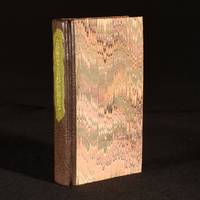
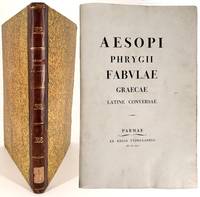
1800réf. 2962Parma: Giambattista Bodoni 1800. Very good . Folio 17 1/4 x 19 1/2 inches 440 x 293 mm; 8 176 4 pp. 19th Century quarter-binding in tan calf boards covered in marbled paper gilt title and decorations on spine; edges rubbed and corners bumped; front hinge partially split but binding is square and solid; generous margins with some marginal restoration from leaf 19/4 to end else internally clean and bright. Provenance: dedication inked by Ludovico Florio March 1862 on verso of second leaf; Barone Zappalà Asmundo paper label on spine; Carlo Antinori bookplate pasted inside front board. Brooks 796. A superb Bodoni classical imprint this handsome folio edition of Aesop's Fabulae is among the finest productions of the Parma Royal Press. The Greek text is printed with a parallel Latin translation in Bodoni's magnificent type demonstrating the harmony precision and elegance for which his editions are celebrated. Produced at the height of Bodoni's career it is an enduring masterpiece of neoclassical printing and an essential work for collectors of fine typography and Bodoni imprints. H. C. BROOKS in his Compendiosa bibliografia di edizioni bodoniane Florence 1927 says it is "of a simple yet incomparable beauty. Giambattista Bodoni unknown
1761réf. 962Z9Birmingham: John Baskerville 1761. First edition. Leather. Near Fine. 7" by 4.5". None stated. The renowned first Robert Dodsley edition of Aesop's fables published by Baskerville adorned with wood engravings and beautifully bound in vellum and crushed morocco with a uniform cloth slipcase and chemise. The first Dodsley edition published by Baskerville. Illustrated with a monochrome wood engraved frontispiece monochrome wood engraved vignettes and sixteen wood engraved plates. Collated complete.Bound by Eric Sweet a keen collector of private press and fables. He studied at the Brighton College of Art before moving to London to work as a lettering artist and typographer for advertising agencies later becoming the head of Birmingham School of Printing. Sweet's bindings are unique and striking reflecting the topics of the volumes in distinctive style.A charming collection of fables credited to Aesop a Greek storyteller and fabulist whose tales were characterised by the anthropomorphic animal characters. This collection is separated into three 'books' and edited with an account of the life of Aesop by Robert Dodsley. Dodley's edition was notable as the animals spoke in character such as the lion speaking in a royal manner adding personality to the creatures. His addition also included fables from ancient sources and new stories written by himself and other notable writers. This edition is also notable for being printed by Baskerville a printer known for inventing wove paper and his renowned typeface. Bound in modern crushed quarter morocco with vellum to the boards with endpapers and blanks renewed and a cloth chemise and slipcase. Bound in modern crushed quarter morocco with vellum to the boards with endpapers and blanks renewed and a cloth chemise and slipcase. Externally lovely with only very slight marks to the vellum. Internally firmly bound with bright washed and generally clean pages with only the odd minor spot and owner's signature to the title page. Minor archival tape repairs to the rear few pages. The Slip and chemise are lovely. Near Fine John Baskerville hardcover
1856réf. 346386Boston: J. Buffum 1856. 96pp. 12mo 3 1/2 x 2 3/4 inches 9 x 7 cm. Publisher's brown cloth gilt. Very Good. 96pp. 12mo 3 1/2 x 2 3/4 inches 9 x 7 cm. inscribed on the front free endpaper by John Hay "Ellie Hay/from her Brother/John/1857" and on the following page the signature of "Miss Helen J.ulia Hay 1857 June 1." Helen Hay Whitney was named after her. Likely first edition thus . Publisher's brown cloth gilt. ; 96 pp. woodcut illustrations. Binding a hair worn the stamping dull internally some toning. A presentation copy of this delightful little juvenile inscribed by the young age 18 or 19 depending on the date of gift John Hay. At this time Hay had graduated from Brown and was working for his father Milton Hay. Lincoln had offices next door and after 1860 Hay became an ardent supporter. He would go on to become Lincoln's secretary and later one of his most eminent biographers and in time Secretary of State under McKinley and Roosevelt one of the most powerful figures on the American political scene. J. Buffum unknown
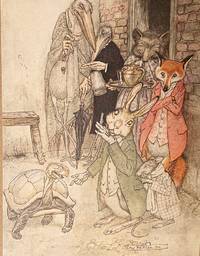
1912réf. 57786London:: William Heinemann 1912. First edition. publisher's gilt white cloth in publisher's plain paper wrapper neatly titled in ms. on spine by a former owner. Slight bump to one corner and the slightest of soiling to the white cloth; light foxing to endsheets; some shallow chipping and use to the wrapper; a very attractive copy. . Folio. With frontispiece and twelve color tipped-in plates by Arthur Rackham and text illustrations in black and white. A New Translation by V. S. Vernon Jones. With an Introduction by G. K. Chesterton. William Heinemann, hardcover
1697réf. 55531Paris: Widow of Claude Thiboust Madeleine Thévenon / Augustin Leguerrier 1697. Very good. First edition published in France of this influential Latin collection of Aesopian-fables - almost certainly the edition used by fairy tale-popularizer Charles Perrault for his French translation of 1699. Faerno's Neo-Latin fables were first published in 1563 as FABULAE CENTUM and soon became the most successful original work in the Aesopian tradition until La Fontaine; like La Fontaine Faerno adapted classical sources like Aesop as well as writing his own fables. In fact this edition's name refers to another important fabulist and celebrated Latin translator of Aesop Phaedrus whose work was rediscovered in the Renaissance; Faerno's fables were considered so good that many thought he cribbed them from Phaedrus - a charge against which Perrault defended him in his French translation of 1699. This edition was published the same year as Perrault's book of fairy tales HISTOIRES OU CONTES DU TEMPS PASSÉ 1697. Perrault appears to have begun his translation of Faerno around the same time suggesting that Perrault saw his fairy-tale work as linked to the fabulist tradition going back to Aesop. This edition the first printed in France according to the anonymous preface was meant especially for the education of children rearranging some of the entries to start with those easier to comprehend. Ashby notes that "Aesop's fables were not originally created for children" 6 but rather were intended as lessons for adults. Yet Faerno's own Aesopian fables were seen as a pedagogical tool from the beginning especially for teaching students Latin; it was works like this one that helped transform the wisdom tradition of the Aesopian fable into what we now see as a children's genre side by side with the fairy tale tradition. 12mo 5.5'' x 3.25''. Contemporary vellum green goatskin spine label. 22 156 12 pages. Boards bowed with notable soil. Faint dampstaining to text a couple small losses to rear endpaper. Tight. Widow of Claude Thiboust [Madeleine Thévenon] / Augustin Leguerrier unknown
1592réf. ABC_45202Venice 1592. 12mo. Niccolò Polo Contemporary limp vellum with overlapping fore edge. With a printers device with an ornamental frame on the title-page and 187 small woodcut illustrations. 282 6 pp. Rare Latin edition of Aesops fables with 187 woodcut illustrations based on the first illustrated edition of the "Aesopus Dorpii" to be published in Italy by Dominicus Nicolinus at Venice in 1563 Bodemann 31.3; Thoen 135. This Latin prose collection of fables compiled by Martinus Dorpius 1485-1525 a humanist teaching in Louvain was first published in 1509 at Antwerp without illustrations. The Dorpius compilation proved very important for the diffusion of Aesop as a school textbook during the following centuries and went through at least two hundred editions to the mid-19th century mostly in small formats.With "Aesopi" written in ink on the foot edge. The binding is somewhat soiled and shows traces of use the work has been rebound with modern endpapers. A small hole in the margin running through the first half of the book. Otherwise in good condition.l EDIT16 CNCE 407 1 copy; ICCU same copy; USTC 807915 same copy; WorldCat 3 copies; cf. Bodemann 31.1-3 1556 Lyons 1561 Paris & 1563 Venice eds.; Fabula docet ; Paul Thoen Aesopus Dorpii essai sur lEsope Latin des temps modernes in: Humanistica Lovaniensia 19 1970 pp. 241-289 nos. 112 118 131 135 ca. 1550 recté post 1634 Venice 1554 Lyons 1561 Paris & 1563 Venice eds. LITERATURE & LINGUISTICS Fable Books hardcover
1829réf. 2499London: J. M'Gowan and Son 1829. Two volumes in One 140x108mm half black cloth marbled sides worn to foot of spine vii-xxi 263pp and Vol. II iii-vii 311pp.Aquatint plates 100 unusually the plates are bound 51 49 at the end of each volume. Title pages to both volumes in facsimile. Volume I starts with Preface thus seems to lack the contents list. Volume II lacks only the title as contents pages are complete. Name stamp to margin of Preface edge browned and some fingering & soiling a few leaves with edge wear with 3 leaves with 3mm tears to blank margins only. A well loved and well used Aesop with charming AQUATINT PLATES. Very scarce with Oxford the only copy of this printing noted in British libraries - McGowan was printer as well as publisher and his Windmill Street address is given at the foot of the last page of each volume. J. M'Gowan and Son hardcover books
1761réf. 323871Birmingham: Baskerville 1761. hardcover. good. Small 8vo 4 lxxvii 204 pages 28 page index. Copper engraved frontispiece and engraved vignette on the title page. 17 full-page copper engravings and 5 half-page illustrations. Contemporary leather boards well rubbed and crackled with early re-backing in similar brown calf with morocco spine label front cover neatly reattached. Birmingham: Printed by John Baskerville for R. and J.Dodsley 1761. Scattered foxing and early previous owner's name on title page. The first of Baskerville's books to be issued with illustrations. Baskerville unknown
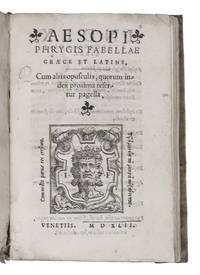
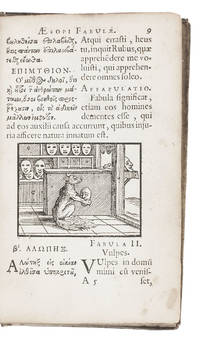
1542réf. 736Venice 1542. Small 8vo 16 x 11 cm. colophon: Giovanni Farri and brothers Contemporary limp sheepskin parchment straight-sewn on 3 alum-tawed split thongs laced through the joints fore-edges folded over with fragments of a vellum manuscript in a rotunda gothic hand used to reinforce the spine. With Farris woodcut device on the title page crowned head with 3 faces flanked by Farri's initials I . F on a scrollwork shield repeated on verso of last leaf; 1 woodcut decorated initial but further with spaces left for manuscript Greek and Latin initials with printed guide letters; and a vine-leaf ornament Vervliet 38. Set in Greek and Aldine-style italic with incidental roman. 364 4 pp. Venice school edition of Aesop's fables with parallel text in Greek and Latin. The book is neatly printed and the clear Greek type has relatively few ligatures. Besides the life of Aesop and Aesop's fables the book contains several collections of fables and single fables by other authors pp. 232-364: Ignatius von Nicaea Gabriae Graeci fabellae often added to the Aesop canon; Aphthonius Excercitamentis de fabula; Philostratus De fabula; pseudo Homer Batrachomyomachia the battle of frogs and mice a parody of Homer's Iliad; Musaeus De Ero & Leandro Hero and Leander; Agapetus De officio regis; Hippocrates Ius iurandum the Hippocratic oath! and Theodorus Prodromus Galeomnomachia the battle between the cats and the mice the last two in Greek only. The book ends with a 4-page index and the colophon.With a few contemporary manuscript notes in brown ink. With some marginal worm holes mostly in the gutter of quires r and s and some mostly marginal water stains more serious in quire c and a dark stain in the upper outside corner of 2 leaves not approaching the text otherwise in good condition. The binding is wrinkled with a 1½ x 2 cm gap in the backstrip some small tears and the 2 pair of ties lost. A nice early student edition of Aesop with very extensive additions.l EDIT 16 CNCE 364; STC Italian p. 8; USTC 807871. BOOK HISTORY & PRINTING EARLY PRINTING & MANUSCRIPTS LITERATURE & LINGUISTICS Early Printing - 16th century Fable Books Greek & Roman Classics hardcover
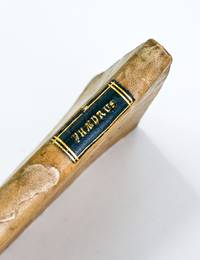
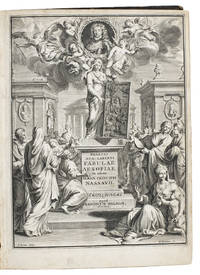
1701réf. ABC_45394Amsterdam 1701. 4to. François Halma Contemporary half calf brown sprinkled paper sides brown spine label with title in gold red sprinkled edges. With an engraved frontispiece by P. Boutats after J. Goeree an engraved printer's device on the title-page a folding portrait of the dedicatee Johan Willem Friso van Nassau-Dietz by P. van Gunst after B. Vaillant and 18 engraved plates with 6 roundels on each plate illustrating the 99 fables and 5 prologues 3 portraits of Aesop and tailpieces and historiated initials all by Jan van Vianen. 32 160 84 pp. Gorgeous edition of the 94 Aesop fables with 5 additional fables found by the German philologist and classical scholar Marquart Gudius together with his extensive and scholarly notes printed in two columns below each fable the whole prepared by David van Hoogstraten 1658-1724 the conrector of the Latin School of Amsterdam 1694-1722. Apart from being a prolific Dutch and Neo-Latin poet he was an esteemed linguist and philologist who edited a number of classical authors. His present splendid Phaedrus edition intended for and dedicated to the young Stadholder of Friesland and Groningen the crown-prince Johan Willem Friso of the Nassau family is magnificently printed in the style of the French in usum Delphini editions made for Le Grande Dauphin. With the bookplate of John Blackburne on the front paste-down. Spine damaged front hinge weak paper sides worn and partly torn off some small marginal tears in the portrait of Johan Willem Friso but otherwise in good condition.l Bodemann 94.1; Fabula docet 42; Landwehr F163; Schwabe/Barbier pp. 69-70. LITERATURE & LINGUISTICS Fable Books unknown
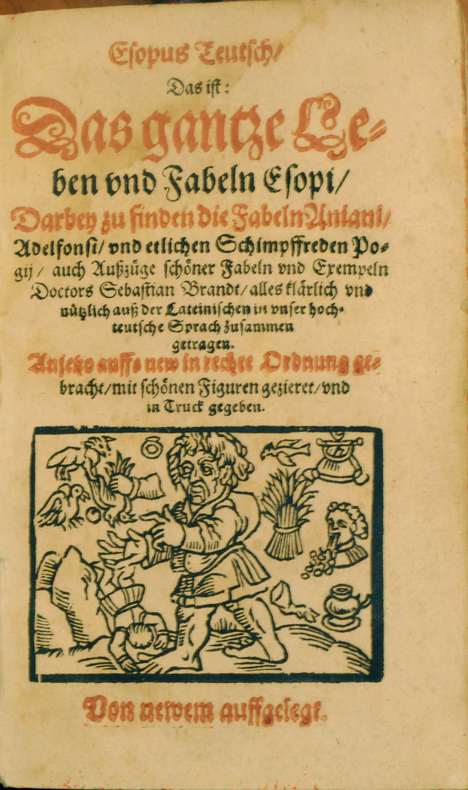
réf. 46404621s. l. n. d., , [Francfort, début XVIIe] ; in-8, vélin ancien. Titre en rouge et noir avec 1 bois gravé, 3 ff. n. ch., 452 pp., 6 ff. de table.Traduction en allemand des fables d’Esope, avec la vie d’Esope, diverses fables d’Avianus, Adelfonse... des facéties de Pogge, des fables et histoires de Sébastien Brandt. La première édition de ce recueil a paru à Fribourg en 1539. Il fut souvent réimprimé à Fribourg, Bâle et à Francfort de 1555 à 1676 (voir Graesse I, p. 37).Le volume est orné de 169 très jolies vignettes gravées sur bois dans le texte. Les fables de Brandt occupent les pp. 227 à 363 ; suivent celles d’Avianus (ici mal orthographié Anianus) pp. 364-394 ; celles d’Adelfonse et les contes du Pogge pp. 395 à 451.Certains cahiers sont un peu roussis, comme c’est toujours le cas avec les papiers allemands de l’époque, fentes au vélin à coiffe sup.
réf. 122913London: for R. Sare B. Took M. Gillyflower A. & J. Churchil G. Sawbridge and J. Hindmarsh 1699. 2 vols. in one folio 10 28 8 476; 16 238 2 ads. pp. Engraved frontispiece portrait of L’Estrange by Roger White after Geoffrey Kneller and full page engraving of Aesop and animals both in vol. 1. Contemporary calf neatly rebacked and tips restored a clean very well-margined copy. Inscribed twice by John Bailward dated 1730 and a few pencil notes and sketches in the text. § One of the first collections of fables prepared specifically for children. Third edition corrected and amended from the 1692 edition. With the second part in first edition the two seldom found together. Roger L'Estrange 1616-1704 was Tory journalist and pamphleteer notorious for his censorship of “seditious” Whig publications in his role as Surveyor of the Press. His edition of Aesop was commissioned by a group of booksellers and appeared two years after Locke first recommended Aesop as a first reading book for children. Muir writes it was “the best and largest collection of fables in English and he had children especially in mind when making his compilation… He included many other fabulists besides Aesop notably a selection from La Fontaine within 20 years of the first appearance of any of his fables in French. It is highly probable that this was their earliest appearance in English.” The DNB notes of L’Estrange’s Aesop that it was “an assemblage of fables and facetiae from a variety of sources ancient and modern the second volume being wholly unAesopian. The trenchant reflections added to the individual fables possess a strong political animus and were to draw severe criticism from the later whig fabulist Samuel Croxall; but all L'Estrange's translations have some degree of political colouring… This compilation also includes a biography of Aesop an alphabetical table of the fables and fables by Barlandus Anianus Abstemius Poggius and La Fontaine.” DNB. Wing A-709 and A-1247. Muir English Children’s Books p.24. for R. Sare unknown books
1829réf. 2499London: J. M'Gowan and Son 1829. Two volumes in One 140x108mm half black cloth marbled sides worn to foot of spine vii-xxi 263pp and Vol. II iii-vii 311pp.Aquatint plates 100 unusually the plates are bound 51 49 at the end of each volume. Title pages to both volumes in facsimile. Volume I starts with Preface thus seems to lack the contents list. Volume II lacks only the title as contents pages are complete. Name stamp to margin of Preface edge browned and some fingering & soiling a few leaves with edge wear with 3 leaves with 3mm tears to blank margins only. A well loved and well used Aesop with charming AQUATINT PLATES. Very scarce with Oxford the only copy of this printing noted in British libraries - McGowan was printer as well as publisher and his Windmill Street address is given at the foot of the last page of each volume. J. M'Gowan and Son unknown
1653réf. 000384Amsterdam: Joannem Janssonium 1653. Period Calf. Fair. 12mo - over 6¾" - 7¾" tall. Amsterdam: Joannem Janssonium 1653 dated in apostrophic Roman numerals. Engravings. 12mo; full calf with some tooling see scan. Accompanied by two simple later handmade paper protective jackets. Rubbed soiling shelfwear; binding broken exposing interior of spine. Two previous owner's inscriptions on ffep Josephus Stephani Dedit Hosepho de Villis 1675; Matt Kenrid 1748. Fair to About Good. See scans. Also: 'Eae item quas Avienus carmine espresit. Accedit Ranarum & Murium Pugna Homero olim ascripta. Cum elegantisimis in utroque libello Figuris & utriusque Interpretatione plurimus in Iocisemendata. Exdecreto D.D. Hollandae Ordinum in ufum Scholarum.' Rare 17th century specimen of Aesop's fables published by 17th Century Amsterdam publisher Joannem Janssonium. Fables here presented in Greek and Latin on opposing pages with engraving illustrations. Fragile and precious example no doubt one for the children of the time judging from the illustrations. See scans. L51 Joannem Janssonium unknown
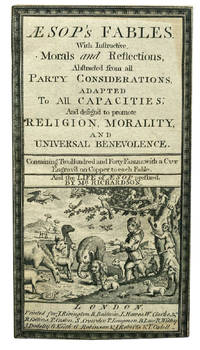
1760réf. 3939An attractive copy of the fourth of five illustrated editions with Richardson's Life of Aesop. It was first published in 1739 with a title-page dated 1740 with subsequent editions in 1749 1753 two issues and 1775. All of the editions are scarce with ESTC listing four copies of the first edition two copies of the second five of the third edition. The 25 engraved plates include delightful illustrations in miniature for each of the fables with a brief caption and fable number given above each illustration. The engraved title-page is also very attractive with an idealised illustration of a landscape peopled with different animals. ESTC t118432 listing BL Bodleian Szczecin Public Library Louisiana State University Rice UCLA and Yale. J. Rivington, R. Baldwin, J. Hawes, W. Clarke, R. Collins, T. Caslon, S. Crowder, T. Longman, B. Law, R. Withy, J. Dodsley, G. K
1534réf. 1394218Basileae Basel: In officina Frobeniana 1534. Hardcover. Octavo 363 5 pages. In Good condition. Bound in later half brown calf with teal paper-covered boards; label bearing gilt titling to spine. Light plus rubbing to head and tail of spine; moderate split to front joint and split starting at rear joint. Moderate rubbing to edges and corners of boards. Surfaces of boards with moderate plus rubbing and scratching with a few minor chips to paper at edges of boards. Text block edges stained red. Pencil annotations to front paste down and front free endpaper. Damp staining visible to fore edges of front pastedown front free endpaper to p. 32 and to all pages from p. 335 on only slightly impacting text. Text block with light plus age toning and scattered ink annotations including a sizable ink blot on p. 320 text still legible. BW Consignment. Shelved case 3. This work was printed in the workshop of the Froben Press in 1534 about seven years after the death of Johann Froben the press' founder. Following Johann Froben's death the press was managed by his son Hieronymus 1501-1563. The Froben family including Hieronymus's brother-in-law Nikolaus Episcopius contributed to the establishment of Basel as a significant hub of the European book trade. All three men were friends of Erasmus and published many of his works. They also collaborated regularly with Hans Holbein the Younger who designed a printer's device for the Froben firm the Hermes caduceus printed on the title page of this work. 1394218. Special Collections. In officina Frobeniana hardcover
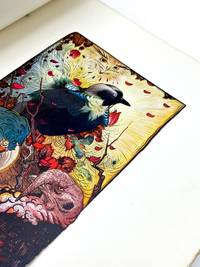
1909réf. 39157London: Hodder & Stoughtond 1909. Very good plus. First edition out of series copy of this large paper edition of Detmold's beautifully illustrated interpretation of Aesop's fables with an original watercolor on parchment signed by Detmold tipped in. In his vibrant and stylish illustrations for this limited edition of Aesop's Fables Edward Detmold exhibits aesthetic influences drawn from a variety of sources including Japanese and Chinese paintings Art Nouveau and classical Western art. This copy is supplemented with an original watercolor by Detmold apparently an early iteration of an illustration of a redshank chick that would appear in his circa 1912 BOOK OF BABY BIRDS. 12.5'' x 10.25''. Original white gilt pictorial cloth. Top edge gilt other edges machine deckle. 25 tipped-in color plates. Unpaginated. Bookplate of Sir Francis Carruthers Gould to front pastedown. Original Detmold watercolor on parchment tipped onto verso of front flyleaf; likely an artist's copy no limitation page present. Binding with light bumping to corners and spine ends a few tiny spots of soil to rear; spine sunned. Watercolor with margins marked-up for framing. Endpapers with mild toning leaves with occasional tiny spots of soil or foxing. Sound with vibrant colors. Hodder & Stoughtond unknown
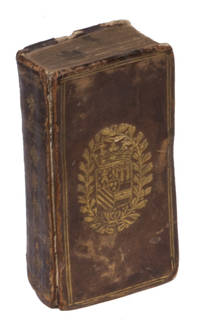
1623réf. ABC_45188Paris: Jean Libert 1623. Contemporary French gold-tooled calf sewn on 2 supports each board with the coat-of-arms of Henri de La Tour 1555-1623 Duc de Bouillon and Prince of Sedan who married the daughter of William the Silent founding father of the Dutch Republic with a French Ducal crown the whole in a wreath of 2 laurel branches with berries the flat spine divided into 4 fields each with a central decoration gilt edges. Marbled paste-downs fine-toothed combed pattern in red blue and white. 16mo. With a woodcut decoration on the title-page and woodcut decorated initials in the text. Very rare 24º edition of 150 prose fables by Aesop and 43 verse fables by Babrius here called Gabrius in Greek and Latin on facing pages remotely based on the text of the illustrated humanistic editions published by Jean de Tournes in Lyons. While the existence of Aesop ca. 620-ca. 584 BCE as a story teller is attested in many early sources the canon that appears under his name contains fables passed down orally and rendered in literary form by many authors over the centuries. Babrius wrote verse fables shortly before 200 CE that were later rendered in Greek prose and added to the Aesop canon. Although the title-page indicates that the fables are illustrated the present edition never contains woodcuts: Libert apparently copied his title from one of the illustrated editions. He does include Maximus Planudess extensive account of Aesops life preceding the fables. Although the earliest European marbled papers appear to have been made in or around southern Germany they were not combed. Wolfe notes that the French first used marbled paper for bookbindings and the present paste-downs closely resemble his earliest example of combed marbled paper. The arms on the binding are quartered with an inescutcheon. The Counts of Auvergne had born the quartered arms of La Tour and the Counts of Auvergne with the inescutcheon of the Counts of Boulogne since 1389. With the Counts of Boulogne extinct the arms passed to another branch of the family descending to Henri de La Tour 15551623 who took the title Duc de Bouillon by marriage in 1591 and later inherited the title Vicomte de Turenne from his father. In 1595 he married Elisabeth van Oranje Nassau daughter of William the Silent 15331584. Their second son was the famous Marshal Turenne 16111675. Early owners inscription on title-page in ink. Lacking the last leaf of the index title-page cut short at the head not affecting the text and a small worm hole in the second half sometime affecting a letter in the first line but otherwise in good condition. Binding rubbed not affecting the arms and backstrip worn a few small chips and holes and hinges cracked.l KVK & WorldCat 2 or 3 copies; cf. Bodemann 29.2 similar 1570 De Tournes ed. Jean Libert, unknown
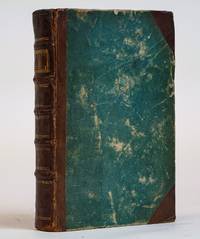
1760réf. 962Z5London: J. Rivington et al 1760. Leather. Fine. 7" by 4". None stated. A beautifully bound eighteenth century engraved collection of Aesop's renowned fables bound in half calf and housed in a cloth chemise and uniform slipcase. The Samuel Richardson edited edition. Bound by Eric Sweet a keen collector of private press and fables. He studied at the Brighton College of Art before moving to London to work as a lettering artist and typographer for advertising agencies later becoming the head of Birmingham School of Printing. Sweet's bindings are unique and striking reflecting the topics of the volumes in distinctive style.Illustrated with a monochrome copper engraved frontispiece and twenty-four monochrome cooper engraved plates each depicting ten engravings. Collated complete. Frontispiece incorrectly bound facing pp. xv. A charming collection of fables credited to Aesop a Greek storyteller and fabulist whose tales were characterised by the anthropomorphic animal characters. This collection includes two hundred and forty fables with an account of the life of Aesop by Samuel Richardson. Bound in modern quarter calf with marbled paper to the boards and a cloth chemise and slipcase. Endpapers and blanks renewed. Undated dated by copies held institutionally. Bound in modern quarter calf with marbled paper to the boards and with a cloth chemise and matching slipcase. Endpapers and blanks renewed. Externally lovely. Frontispiece bound before pp.xv. Bookplate of 'Eric Sweet' to the front pastedown. Internally firmly bound with washed bright pages and generally clean with only the odd spot. The slipcase has spotting. Fine J. Rivington et al hardcover
réf. 06684London: William Heineman 1912. Where Ancient Fable Meets Arthur Rackham's Enchanted Imagination The Signed Limited Edition of Aesop's Fables 1912 RACKHAM Arthur. AESOP. Aesop's Fables. A New Translation by V.S. Vernon Jones with an Introduction by G. K. Chesterton and Illustrations by Arthur Rackham. London: William Heinemann 1912. Limited to 1450 numbered copies signed by the artist this being copy no. 1103. Large quarto 11 7/16 x 8 7/8 inches; 291 x 227 mm. xxix 1blank 223 1 pp. Thirteen color plates mounted on heavy brown paper with captioned tissue guards and fifty-three black and white text drawings. Publisher's white buckram front cover and spine pictorially stamped in gilt top edge gilt others uncut. Spine very slightly darkened otherwise a very fine copy the gilt bright and fresh. Aesop's Fables or the Aesopica is a collection of fables credited to Aesop a slave and story-teller believed to have lived in ancient Greece between 620 and 560 BC. The 1st century AD philosopher Apollonius of Tyana is recorded as having said about Aesop: ". like those who dine well off the plainest dishes he made use of humble incidents to teach great truths and after serving up a story he adds to it the advice to do a thing or not to do it. Then too he was really more attached to truth than the poets are; for the latter do violence to their own stories in order to make them probable; but he by announcing a story which everyone knows not to be true told the truth by the very fact that he did not claim to be relating real events" Philostratus Life of Apollonius of Tyana Book V:14. Lattimore and Haskell pp. 38-9. Riall p. 111. London: William Heineman, 1912 unknown
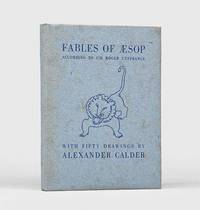
1931réf. 159579Paris: Harrison of Paris 1931. In the original slipcase with the elusive paper-knife First Calder edition limited issue number 262 of 595 copies on Auvergne paper from a total edition of 665 scarce retaining both the slipcase and the paper-knife. The text of the present edition is based Roger L'Estrange's ground-breaking translation of Aesop's Fables 1692. Harrison of Paris was founded by publisher and heiress Barbara Harrison Wescott 1904-1977 and art patron and curator Monroe Wheeler 1899-1988 in 1930. Wheeler designed this book the pale blue covers of which were made from schoolchildren's aprons Becker p. 62. The illustrator Alexander Calder came from a long line of sculptors and first took up printmaking after moving to Paris in 1926 where he befriended Marcel Duchamp Fernand Leger Joan Miró and Piet Mondrian. Quarto. Illustrated throughout by Alexander Calder. Original light blue paper-covered boards front cover lettered in dark blue with Calder illustration edges untrimmed endleaves uncut. With the original paper knife loosely inserted. Housed in the original red card chemise and slipcase. A touch of foxing to wrappers faint offsetting from paper-knife on half-title. A near-fine copy a little wear to slipcase. David P. Becker Drawings for Book Illustration 1980. hardcover
1760réf. 73880London:: Printed for J. Rivington R. Baldwin and 12 others 1760. Early edition. 19th c. dark blue straight-grain morocco. Lacking one engraved plate as noted. Tiny old ink name partially effaced from title; old signature practiced on the verso of one plate not visible on recto and ink calculations at the bottom margin of one page of text; neat repair to one torn leaf; some light spots and inoffensive soiling. Joints partially cracked; edges and corners quite rubbed; still sound. . 12mo. Engraved illustrated title page. Containing Two Hundred and Forty i.e. 230 Fables with a Cut Engrav'd on Copper to each Fable. The engravings were printed ten to a page and this copy is unfortunately lacking one of the 24 plates Plate XIII. . And the Life of Aesop prefixed by Mr. Richardson. Printed for J. Rivington, R. Baldwin [and 12 others], unknown
1909réf. 25107London: Hodder & Stoughton 1909. Limited first edition of 750 copies numbered and signed by the artist. Illustrated with 25 beautiful plates in color by Edward J. Detmold including two extra plates not found in the trade edition. Thick folio publisher’s original full white polished buckram the upper cover artfully decorated with the original gilt pictorial designs surrounded by a frame ruled in gilt and filled with intertwined vines the spine handsomely gilt lettered and decorated with gilt device and gilt rules t.e.g. housed and protected in the original slipcase. A fine copy with just very light age mellowing at the spine panel the corners fine and sharp the plates all in excellent condition the text-block clean and white essentially a near as pristine copy in a protective slipcase. The slipcase with some wear as would be expected. The book profiting by the presence of the slipcase with the white cloth remaining clean and the giltwork very bright. FIRST EDITION LIMITED SIGNED NUMBERED AND SPECIALLY BOUND. This title represents in our opinion Detmold's very best work. The grace and sensitivity of the illustrations reflect a certain Eastern sensibility. The artist’s powers in the delicate communication of nature’s spirit are exemplified by these wonderful paintings rich with the wide variety of the colours in the spectrum. This is a very fine copy of the best printing of the work numbered and signed by Detmold. Hodder & Stoughton hardcover
1518réf. 1331015Basileæ: In Officina Heruagiana Johann Herwagen; Johannes Froben 1538/1518. Hardcover. Octavo a-x8 y7 A8 B4; VG; bound in 17th century calf plain paneled spine; some rubbing and wear to binding minor worming to binding; mild soiling to interior; Lacking y8-z8; The wanting leaves of the 1538 edition substituted after 350 with new pagination of 106-126 with the Galeomyomachia in Greek only from the 1518 Froben edition of Aesopi Phrygis vita et fabellæ cum latina interpretatione. Early substitution i.e. 17th century or earlier as the textblock is integral and the binding unrestored; Printer's device on title page and on verso of last leaf.; Wide margins; Second title page trimmed at top; small holes in upper and lower gutters of the entire first part from previous binding; Text in Greek and Latin on facing pages for the Aesop Greek only for the Galeomyomachia Provenance to the recto and verso of the ffep Fitzwilliam family provenance in several early hands the largest stating playfully: "William Fitzwilliam not his Book but John Fitzwilliam his booke"; Scattered marginalia and underlining including extensive minute annotations in an early faded 16th century hand around the rear printer's mark other minor annotations throughout notably in English on Midas on page 315.; Scarce; PD consignment; shelved case 3. USTC: 608058; USTC lists 15 copies 14 in Europe and 1 at the University of Toronto.; A 1538 edition of Aesop's Fables printed by Johann Herwagen with an appended 1518 edition of the Galeomyomachia Battle of Cats and Mice printed by Johann Froben. Galeomyomachia usually found bound with five other printings by Froben 1518.;. 1331015. Shelved Dupont Bookstore. In Officina Heruagiana [Johann Herwagen]; [Johannes Froben] hardcover books
1632réf. F6HD0MAV59JYLeiden 1632. 8vo. Joannes Maire Contemporary vellum sewn at three stations but with 2 tanned leather thongs laced through the joints each board with a panel stamp 59 x 50 mm of the Amersfoort coat of arms in a circular laurel wreath in a rectangle with winged angel heads in each corner in a frame of double filets. Most endpapers later. With Maire's woodcut "fac et spera" device on title-page Breugelmans Maire device 10 47 woodcut illustrations 5 x 6.5 cm by Christoffel van Sichem II in the text and 3 woodcut decorated initials 2 series. Set in Greek and roman types with extensive italic. 158 2 pp. Rare second edition one of three dated "1632" of a popular Greek and Latin school book edited by the famous Dutch neo-Latin poet humanist and Leiden Professor of Greek Daniel Heinsius 1580-1655 with 47 beautiful woodcut illustrations by Christoffel van Sichem II. Aesop's fables were prescribed by the States of Holland in the Hollandsche schoolordre of 1625 as one of the books to be read in the 3rd class. Christoffel van Sichem II ca. 1577-1658 the second of several woodcut artists in that family studied with Jacques de Gheyn and was one of the leading Dutch book illustrators in the first half of the 17th century. Although the book has no prize certificate or inscription and no owner's name the coat-of-arms of the city of Amersfoort on the binding of a school book strongly suggests a prize binding for a student at the Amersfoort Latin school. With an occasional contemporary manuscript note in Greek and Latin. With a small dark stain in the lower inside corner of the foot margin of many leaves not approaching the text and with very slight browning throughout but still in good condition. The vellum of the binding is dirty and slightly rubbed but also good.l Landwehr Emblem & fable books F025 2 copies; Hollstein XXVII Van Sichem II 31; for the panel-stamp: Spoelder Prijsboeken Amersfoort 1. BOOK HISTORY & PRINTING EDUCATION & LEARNING LITERATURE & LINGUISTICS LOW COUNTRIES Armorial Bindings Bindings Fable Books Greek & Non-Western Types Greek & Roman Classics Netherlands School & Textbooks hardcover