1.698 Ergebnisse
1990Autori: Emanuele Tesauro. Curatori: D. Aricò.
in-12, 130 pp, illustrations n&b, biblio, index, broche, couv. a rabats. Bel exemplaire, enrichi d'une belle DEDICACE de l'auteur. [CA32-5]
1953formato 25X20,5. Legatura editoriale pagine 68. Serie Prima N.1. Quinta ristampa dalla Prima Edizione. Piccole mancanze ai piatti di copertina. Dorso mancante. Interno in buono stato
1950188 pages. Undated. Well-worn. From the Young People's Libary. Circa 1950? Book
196495p., illus. Hardcover Very good condition good
LEGATURA IN TUTTA PERGAMENA COEVA, MANCANO I LEGACCI. INTERNO CON MOLTE VIGNETTE DI BUONA QUALITA' numero pagine: 449 (6) formato: 13.2X8 stato conservazione: ABBASTANZA BUONO, NOME E GHIRIGORO DI POSSESSO ALLA SGUARDIA. NORMALI BRUNITURE E SEGNETTO AD UN MARGINE DI UNA PAGINA. UN PAIO DI FORELLINI ALLA PERGAMENA E TAGLIO
1987cofanetto cartonato formato 36X25,5 contenente un volume in brossura con sovraccoperta piegata a busta. Pagine 46 + una piegata contenente una acquaforte numerata e firmata da Paladino. Tiratura in 150 esemplari numerati e firmati su carta Hahnemule (103). Copia in perfetto stato di conservazione
[Esopo favole](15x21) pp. 200. Questo libro si compone di ben 430 favole, 354 di Esopo, altre di La Fontaine ed altre ancora dello stesso Pancrazi, ma tutte sembrano scaturite da un'unica mente, impossibile distinguerne i vari autori. Diversamente dalla favole di Esopo, riportate in tante antologie, queste non hanno la morale, tolta volutamente da Pancrazi per renderle di più immediato approccio per il lettore. Anche il titolo per molte è stato cambiato; ridotto ad una o due parole sole parole, esprimenti in sintesi il concetto del racconto. Nelle pagine iniziali "Invito all'Esopo", leggiamo, tra l'altro, la tanto particolare, quanto leggendaria vita di Esopo. L'opera è inoltre impreziosita dalla prefazione della giornalista Marina Corradi e dall'introduzione del filosofo Edoardo Mirri. L'editore in dieci pagine finali ha voluto catalogare queste favole, raggruppandone i titoli sotto gli analoghi concetti che, a suo parere, esprimono, come: adulazione, affetto deleterio, ambiguità, ecc.
1968cm. 18 x 25,5, xvi-444 pp. con ill. n.t. Edizione di 700 copie numerate. 1430 gr. xvi-444 p.
1989DISPONIBILITÀ GARANTITA AL 99%; SPEDIZIONE ENTRO 12 ORE DALL'ORDINE. FONDO DI MAGAZZINO PARI AL NUOVO. PERFETTO, LIEVISSIMI SEGNI DEL TEMPO E SCOLORITURA DELLA SOVRACCOPERTA. RARO. Descrizione bibliografica Titolo: Sapere e paradosso nell'Antichità: Esopo e la favola Autore: Stefano Jedrkiewicz Editore: Roma: Edizioni dell'Ateneo, 1989 Lunghezza: 516 pagine; 23 cm Collana: Volume 60 di Filologia e Critica: GEI Gruppo Editoriale Internazionale Soggetti: Esopo, Favole esopiche, Scritti in prosa, Scritti Miscellanei In Greco Classico, Grecia, Critica letteraria, Studi culturali, Letteratura greca, Favola, Fiabe, Opere generali, Mitologia classica, Morale, Etica, Filosofia, Animali personificati, Uomini, Conoscenza, Paradosso, Immaginario, Mentalità, Lingua, Schiavitù, Romanzi greci, Racconti, Filologia, Scrittori greci, Simbolismo, Dèi, Divinità, Collera, Aesop, Criticism and interpretation, Knowledge, Theory of Paradox, Fables, Classical, History, Philologie, Histoire, Aesopus, Fabulae, Esope, Fabulas griegas, Saggi, Libri Vintage, Fuori catalogo, Bibliografia, Ésope et de la fable ésopique, Le théâtre athénien et son public, L'image du sage en Grèce, Le Socrate de Platon, Erodoto, Animales y sophía, Culture hellénistique, Heuretés, Aesopica, Aneddoti, Biografia, Morte, Pius, Delfi, Ostilità, Società, Pharmakos, Potere, Socrate, Ahiqar, Saggezza, Bivalenza, Eroi, Muse, Anti-Apollo, Zalmoxis, Vita Aesopi, Ironia esopica, Sette Savi, Tragedia, Pubblico, Lettori, Identità, Stile, Struttura, Non-umano, Umanizzazione, Antropomorfismo, Peripeteia, Comunicazione poetica, Poesia, Favolistica, Messaggio, Simposio, Metafora, Commedia, Politica, Erudizione, Polis, Anonimato, Citazioni, Fabeln, Bambini, Ragazzi, Folk-tale, Folklore, Corpus, Attribuzione, Rhodopis, Sarcasmo, Condanna, Orazioni pubbliche, Archetipi, Exempla, Inganno, Verità, Apparenza, Stoltezza, Astuzia, La volpe e l'uva, Al lupo! Al lupo!, La cicala e la formica, La lepre e la tartaruga, L'uomo e il satiro, L'allodola e il contadino, Il topo di città e il topo di campagna, Il cane e le conchiglie, Il cervo alla fonte e il leone, Il corvo e la volpe, Il leone e l'asino che andavano a caccia insieme, Zeus, Prometeo, Atena e Momo, Eracle e Atena, L'eunuco e il sacerdote, Opere letterarie in greco antico, Aesop, Exopic Fables, Prose Writings, Miscellaneous, Greece, Literary Criticism, Cultural Studies, Greek Literature, Fable, Fairy Tales, General Works, Classical Mythology, Ethics, Philosophy, Personified Animals, Men, Knowledge, Paradox, Imaginary, Mentality, Language, Rhetoric, Slavery, Greek Novels, Philology, Greek Writers, Symbolism, Gods, Anger, Essays, Books Out of print, Bibliography, Herodotus, Anecdotes, Biography, Death, Delphi, Hostility, Society, Power, Socrates, Wisdom, Heroes, Irony, Seven Savi, Tragedy, Audience, Readers, Identity, Style, Structure, Non-Human, Humanization, Anthropomorphism, Poetic Communication, Poetry, Message, Symposium, Metaphor, Comedy, Politics, Erudition, Anonymity, Citations, Children, Condemnation, Public Orations, Archetypes, Deception, Truth, Appearance, Foolishness, Cunning, The fox and the grapes, To the wolf! To the wolf!, The cicada and the ant, The hare and the turtle, The man and the satyr, The lark and the peasant, The city mouse and the country mouse, The dog and the shells, The deer at the source and the lion, The crow and the fox, The lion and the donkey who went hunting together, Prometheus, Athena, Heracles, The eunuch and the priest, Literary works in ancient Greek Parole e frasi comuni Adrados Aesopi Ahiqar analogia aneddoti animali Apollo Archiloco Aristofane Aristophanes Aristotele attico attribuite attuanti Babrio battuta finale biografia bivalenza capacità caso Chambry cinica collezioni complesso comune connotazioni contesto Creso cultura culturale Delfi Delfici Demetrio Demetrio Falereo dimensione Diogene divinità elementi epoca Erodoto Esiodo favola esopica favolistica Fedro figura filosofo forma formula funzione greco Hausrath Iside IV secolo a.C Jagoda Luzzatto aquila Lasserre letteraria lògos messaggio Muse narrativa narratore narrazione Nectanebo Nojgaard nozione orale paradigma Penna Perry personaggi pharmakós Platone Plutarco poleis Progymn protagonista pubblico racconto esopico reale realtà retorica Rhetorica riferimento Romanzo romanzo greco rovesciamento saggezza saggio schiavitù schiavo senso Sette Savi situazione Socrate Solone storia struttura tematica Thiele umano valore versione Vesp volpe Xanto Zalmoxis Zeus
2004pp. 137, cm 21x14, rileg. edit. con sopracoperta.
2006pp. 265, cm 21, brossura, collana "La Roue a livres".
Cm. 22; pp. 54. Brossura editoriale a stampa. Dedica autografa dell'autore alla prima bianca, buon esemplare 16512
Cm. 18; pp. 94, (2). Brossura editoriale illustrata. Con 25 illustrazioni nel testo. Buon esemplare. 16001
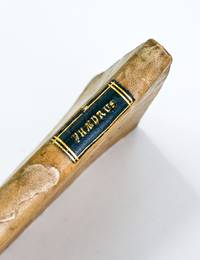
1697Best.-Nr. 55531Paris: Widow of Claude Thiboust Madeleine Thévenon / Augustin Leguerrier 1697. Very good. First edition published in France of this influential Latin collection of Aesopian-fables - almost certainly the edition used by fairy tale-popularizer Charles Perrault for his French translation of 1699. Faerno's Neo-Latin fables were first published in 1563 as FABULAE CENTUM and soon became the most successful original work in the Aesopian tradition until La Fontaine; like La Fontaine Faerno adapted classical sources like Aesop as well as writing his own fables. In fact this edition's name refers to another important fabulist and celebrated Latin translator of Aesop Phaedrus whose work was rediscovered in the Renaissance; Faerno's fables were considered so good that many thought he cribbed them from Phaedrus - a charge against which Perrault defended him in his French translation of 1699. This edition was published the same year as Perrault's book of fairy tales HISTOIRES OU CONTES DU TEMPS PASSÉ 1697. Perrault appears to have begun his translation of Faerno around the same time suggesting that Perrault saw his fairy-tale work as linked to the fabulist tradition going back to Aesop. This edition the first printed in France according to the anonymous preface was meant especially for the education of children rearranging some of the entries to start with those easier to comprehend. Ashby notes that "Aesop's fables were not originally created for children" 6 but rather were intended as lessons for adults. Yet Faerno's own Aesopian fables were seen as a pedagogical tool from the beginning especially for teaching students Latin; it was works like this one that helped transform the wisdom tradition of the Aesopian fable into what we now see as a children's genre side by side with the fairy tale tradition. 12mo 5.5'' x 3.25''. Contemporary vellum green goatskin spine label. 22 156 12 pages. Boards bowed with notable soil. Faint dampstaining to text a couple small losses to rear endpaper. Tight. Widow of Claude Thiboust [Madeleine Thévenon] / Augustin Leguerrier unknown books
1875Best.-Nr. 34370London: Chatto & Windus 1875. Very good. Second edition of this Victorian tour de force with fine and fabulous hand-colored images of humanized animals. Eric Quayle notes that Bennett 1829-1867 had a short career which was terminated by consumption but his books were "extremely popular most passing though several editions"; this book "contains some of Bennett's finest and most vigorous work" 217. The Morgan Library's EARLY CHILDREN'S BOOKS AND THEIR ILLUSTRATORS also list it as a notable edition of Aesop. Bennett's compositions suggest the fine caricature of PUNCH but applied a classic work of ancient Greece. 9.75'' x 7.25''. Original blue pictorial cloth stamped in gilt and black. Yellow coated endpapers. Illustrated by Bennett with 24 full-page wood engravings hand colored including title page. 22 pages. Emboss of famed Victorian bookselling firm W.H. Smith & Son to front fly leaf. Slight lean with a bit of cracking to hinges still firm. Subtle repairs to spine ends a few spots to boards. Interior lightly foxed. Bright. Chatto & Windus unknown books
1807Best.-Nr. 375205New Haven: Sidney's Press 1807. Woodcut illustrations. 142pp. 12mo. Contemporary sheep-backed marbled paper boards minor wear. Woodcut illustrations. 142pp. 12mo. Edited by Nathaniel Crouch. At least two wood engravings signed by Alexander Anderson. Welch 15.2; Shaw 11949 Sidney's Press unknown books
1954Best.-Nr. 374173New York: Museum of Modern Art 1954. No. 182 of 975 numbered copies of an edition of 1000 signed by Frasconi Wescott and the printer Joseph Blumenthal. Linoleum blocks by Antonio Frasconi. Printed by Joseph Blumenthal in Emerson type at the Spiral Press. Original pictorial paper-covered boards red cloth spine a fine copy in labeled card slipcase missing glassine book cover. No. 182 of 975 numbered copies of an edition of 1000 signed by Frasconi Wescott and the printer Joseph Blumenthal. Linoleum blocks by Antonio Frasconi. Printed by Joseph Blumenthal in Emerson type at the Spiral Press. As stated on the colophon: "This book the first of a series of limited editions to be published by The Museum of Modern Art under the direction of Monroe Wheeler has been designed and printed by Joseph Blumenthal at The Spiral Press New York.". The Artist and the Book 111. A Century of Artists Books p.121 Museum of Modern Art unknown books
1997Best.-Nr. 52913Seattle: University of Washington Press 1997. Fine in near fine jacket. First edition thus re-issued with five new images of this beautifully illustrated take on Aesop's classic fables featuring stunning pen-and-ink illustrations by Lawrence "one of America's most celebrated artists." This book was originally published in 1970 and fell out of print before being redesigned for this new edition which features five additional illustrations by Lawrence. 10'' x 8''. Original black cloth stamping to front board lettered in red to spine. In original pictorial jacket. Grey endpapers. Illustrated throughout in black and white. 56 pages. Jacket with touch of edgewear and rubbing faintest toning to top edge of front panel. Interior fresh and bright. University of Washington Press unknown books
1789Best.-Nr. 365792Philadelphia: T. Dobson 1789. The Ninth Edition Corrected and Amended. Text in English and Latin. 161 3pp. Errors in pagination as issued. Lacks terminal ad leaf. 12mo. Contemporary calf some losses to spine lacks endpapers. Foxing. The Ninth Edition Corrected and Amended. Text in English and Latin. 161 3pp. Errors in pagination as issued. Lacks terminal ad leaf. 12mo. The first America edition of Aesop was Samuel Croxall's translation published in Philadelphia by Aitken in 1777; the first American editions of Robert Dodsley's translation and that of Robert Burton were published the same year by Robert Bell of Philadelphia. The first American edition of this translation by Clarke was first published in Boston in 1787 with the present 1789 edition being the first Philadelphia edition of that translation. Evans 21631; ESTC W6771 T. Dobson unknown books
1800Best.-Nr. 366475Paris: Chez Batilliot frères 1800. Folded engraved half-title with double page frontispiece and engraving facing title 60 numbered pages of engravings. Text and illustrations printed within borders. Last page of text is a publisher's list of books. 66 pp. 1 vols. 16mo. Contemporary mottled calf with gilt scroll border red spine label. Minor rubbing. Very good plus. Folded engraved half-title with double page frontispiece and engraving facing title 60 numbered pages of engravings. Text and illustrations printed within borders. Last page of text is a publisher's list of books. 66 pp. 1 vols. 16mo. Chez Batilliot frères unknown books
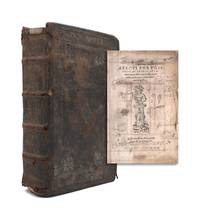
1538Best.-Nr. 338977Basilae: In officina Heruagiana 1538. Collection first published by Froben 1518. A1-Z8: 393 5 pp. 8vo. Late 17th-century stamped-calf binding loss to head and foot of spine title page with borders drawn on it some loss to title page not affecting text annotated throughout some worming needs to be resewn and binding reattached title page should be repaired. Provenance: Johannis Miller. Collection first published by Froben 1518. A1-Z8: 393 5 pp. 8vo. With ownership signaure to the title page: "Ex Libris Johannis Miller pret. 1s. 0d Anno Dm 1693" a further ownership signature to the recto of the last leaf "Ex Libris Johannis Miller A D 1688" and annotations throughout the text. Rev. John Miller 1666-1724 was commissioned fort chaplain of the New York companies in 1692 spending 1692-1695 in New York: "Miller was the sole officiating Episcopal clergyman in the entire province of New York during the three years of his residence; his activities as evinced by contemporary records and his familiarity with all inhabited parts extended beyond the confines of the city." During this time he wrote extensive notes about New York and drew a map of the fort. When his returning vessel was overtaken by French Privateers he threw his documents overboard to destroy the intelligence contained therein. He later rewrote many of his observations and redrew the map from memory it's retained in his manuscripts at the British Museum from George Chalmers in 1842 and was later published in Valentine's 1842-3 Manual. He returned to England where he was given the post of vicar of Effingham gaining a reputation as a "worthy and respectable vicar" and "a man of research." His library was still "preserved with great care" by his successor in the beginning of the nineteenth century then consigned and sold in New York by Bangs and Company in 1894. A number of his books have found their way into prominent libraries and collections Stokes' Iconography; Paltsits Victor Hugo intr. "New Yorke Considered and Improved A.D. 1695 by John Miller" Electronic Texts in American Studies 17. The present work seems to have gone from him to another owner Richard Norton and then to Thomas Norton; the second page has the ownership signature and note: "Thomas Norton pretium / Thomae Dicitur Fr Richard". Thomas Norton could be Thomas Norton 1684-1748 Whig Member of Parliament of Ixworth Abbey Bury St. Edmunds Suffolk; the grandson of Col. Richard Norton M.P. 1615-1691 intimate friend of Cromwell; and nephew of Maj. Richard Norton. Contents include: Aesopi Fabulatoris vita Aesopi Fabulae Gabriae Graeci Tetrasticha Ex Aphthonij Sophistae exercitamentis Ex Philostrati imaginibus fabulae Ex Hermogenis exercitamentis / Prisciano interprete Ex Auli Gellij libro secundo capite undetrigesimo Apologus Aesopi Phrygis memoratunon inutilis Homeri Ranarum et murium pugna heavily annotated Musaeus De Ero et Leandro annotated Expositio capitvm admonitoriorum aedita ex tempora ab Agapeto Hippocratis Iusiurandum GaleÅmyomachia hoc est Felium & murium pugna annotated with translations from the Greek. USTC 608058 In officina Heruagiana unknown books
1856Best.-Nr. 346386Boston: J. Buffum 1856. 96pp. 12mo 3 1/2 x 2 3/4 inches 9 x 7 cm. Publisher's brown cloth gilt. Very Good. 96pp. 12mo 3 1/2 x 2 3/4 inches 9 x 7 cm. inscribed on the front free endpaper by John Hay "Ellie Hay/from her Brother/John/1857" and on the following page the signature of "Miss Helen J.ulia Hay 1857 June 1." Helen Hay Whitney was named after her. Likely first edition thus . Publisher's brown cloth gilt. ; 96 pp. woodcut illustrations. Binding a hair worn the stamping dull internally some toning. A presentation copy of this delightful little juvenile inscribed by the young age 18 or 19 depending on the date of gift John Hay. At this time Hay had graduated from Brown and was working for his father Milton Hay. Lincoln had offices next door and after 1860 Hay became an ardent supporter. He would go on to become Lincoln's secretary and later one of his most eminent biographers and in time Secretary of State under McKinley and Roosevelt one of the most powerful figures on the American political scene. J. Buffum unknown books
1718Best.-Nr. FF2503Utrecht:: Apud Guilielmum vande Water 1718. 1718. Two parts in one volume. Octavo. 62 398; 258 70 pp. Elaborate engraved frontispiece woodcut title vignette head & tail pieces index. Title printed in red & black. Internally generally clean and tight with offsetting to title. Later full red straight grain morocco single-ruled in gilt with gilt-stamped and lettered spine with solid single gilt roll to edges foot of spine gilt-stamped: TRAJ: AD RHEN publisher: 1718 all edges gilt marbled endsheets; somewhat rubbed. Bookplates of Thomas M. Lowndes and Henry Drury. Very good. With a fore-edge painting depicting a scene of HAWICK ROXBURGHSHIRE SCOTLAND after an engraving by John Greig fl. 1800-1843 from an original study by Luke Clennell 1781-1840. The fore-edge painting is based on an engraving found in Sir Walter Scott's Border Antiquities of England and Scotland Longman & Co. 1814-1817. This well-painted scene is likely of 20th century vintage. / The Dutch scholar Peter Burman was professor of the art of rhetoric and the history of Utrecht and also of Greek philology. In 1715 he succeeded Perizonius receiving the chair of history and the Greek language and the art of rhetoric at the Lyon-Batava Academy. Later he was librarian and director of the Lyon-Batava Academy. This is his commentary on Phaedrus which was originally issued in 1698. PROVENANCE: Thomas M. Lowndes – Henry Drury both pre-fore-edge – Jack Bartfield Fine Books New York – Randall J. Moskovitz MD Memphis Tennessee. Apud Guilielmum vande Water, 1718. unknown books
1983Best.-Nr. 1247071983. San Francisco: The Book Club of California 1983. 4to 58 4pp. Frontispiece 8 illustrations an original leaf and a proof from an original block. Original brown boards white paper spine label. As issued in fine condition. § Edition limited to 518 numbered copies. The inserted leaf is " Jupiter and the Ass" and the proof is "The Boys and the Frogs". Not a rare book but an important addition to Bewick scholarship. There is a biographical sketch by John W. Borden and a history of the fables by Janet S. Krueger. The book was designed by Jack Stauffacher of the Greenwood Press who also took the new impression from the original Bewick block and lithographed at the Cloister Press. unknown books