1 693 résultats
réf. 14056Orléans, Couret de Villeneuve, 1750. 2 tomes en 1 vol. in-12, basane fauve jaspée, dos à nerfs sans ornementation, pièce de titre verte, tranches rouges. Reliure de l'époque, coiffes absentes, petites fentes aux mors, coins râpés. (2) ff., xxiv-252 pp.; (2) ff., 262 pp., (1) f. Petite galerie de vers dans la marge inf. des 3 premiers ff.
réf. 1153Sans date - broché - Editions Spes, Paris - sans date - In-12 (format poche), broché - 269 pages - Feuillets particiellement coupés
1728réf. 16041Amsterdam, Zacharias Chatelain, 1728. 2 Frontispices (Porträt des Autors von B. Picart und allegorische Musendarstellung mit dem Autor inmitten, von Romeyn de Hooghe), eine Titel-, zwei Kopfvignetten, Titel in rot/schwarz, 19 Bll., 123 SS., 2 Bll., SS. 141 - 268. 1 Bl., 117 (1) SS., 2 Bll., SS. 119 - 233, 2 Bll., 123 (1) SS., 1 Bl. Kl.-8°, etw. späteres Pergament, Vorsätze erneuert.
2022réf. 1-195225115XParagon Pr 2022. Hardcover. New. 248 pages. 11.00x9.00x1.00 inches. Paragon Pr hardcover
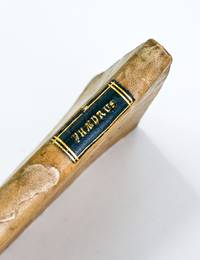
1697réf. 55531Paris: Widow of Claude Thiboust Madeleine Thévenon / Augustin Leguerrier 1697. Very good. First edition published in France of this influential Latin collection of Aesopian-fables - almost certainly the edition used by fairy tale-popularizer Charles Perrault for his French translation of 1699. Faerno's Neo-Latin fables were first published in 1563 as FABULAE CENTUM and soon became the most successful original work in the Aesopian tradition until La Fontaine; like La Fontaine Faerno adapted classical sources like Aesop as well as writing his own fables. In fact this edition's name refers to another important fabulist and celebrated Latin translator of Aesop Phaedrus whose work was rediscovered in the Renaissance; Faerno's fables were considered so good that many thought he cribbed them from Phaedrus - a charge against which Perrault defended him in his French translation of 1699. This edition was published the same year as Perrault's book of fairy tales HISTOIRES OU CONTES DU TEMPS PASSÉ 1697. Perrault appears to have begun his translation of Faerno around the same time suggesting that Perrault saw his fairy-tale work as linked to the fabulist tradition going back to Aesop. This edition the first printed in France according to the anonymous preface was meant especially for the education of children rearranging some of the entries to start with those easier to comprehend. Ashby notes that "Aesop's fables were not originally created for children" 6 but rather were intended as lessons for adults. Yet Faerno's own Aesopian fables were seen as a pedagogical tool from the beginning especially for teaching students Latin; it was works like this one that helped transform the wisdom tradition of the Aesopian fable into what we now see as a children's genre side by side with the fairy tale tradition. 12mo 5.5'' x 3.25''. Contemporary vellum green goatskin spine label. 22 156 12 pages. Boards bowed with notable soil. Faint dampstaining to text a couple small losses to rear endpaper. Tight. Widow of Claude Thiboust [Madeleine Thévenon] / Augustin Leguerrier unknown books
1697réf. 55531Paris: Widow of Claude Thiboust Madeleine Thévenon / Augustin Leguerrier 1697. Very good. First edition published in France of this influential Latin collection of Aesopian-fables - almost certainly the edition used by fairy tale-popularizer Charles Perrault for his French translation of 1699. Faerno's Neo-Latin fables were first published in 1563 as FABULAE CENTUM and soon became the most successful original work in the Aesopian tradition until La Fontaine; like La Fontaine Faerno adapted classical sources like Aesop as well as writing his own fables. In fact this edition's name refers to another important fabulist and celebrated Latin translator of Aesop Phaedrus whose work was rediscovered in the Renaissance; Faerno's fables were considered so good that many thought he cribbed them from Phaedrus - a charge against which Perrault defended him in his French translation of 1699. This edition was published the same year as Perrault's book of fairy tales HISTOIRES OU CONTES DU TEMPS PASSÉ 1697. Perrault appears to have begun his translation of Faerno around the same time suggesting that Perrault saw his fairy-tale work as linked to the fabulist tradition going back to Aesop. This edition the first printed in France according to the anonymous preface was meant especially for the education of children rearranging some of the entries to start with those easier to comprehend. Ashby notes that "Aesop's fables were not originally created for children" 6 but rather were intended as lessons for adults. Yet Faerno's own Aesopian fables were seen as a pedagogical tool from the beginning especially for teaching students Latin; it was works like this one that helped transform the wisdom tradition of the Aesopian fable into what we now see as a children's genre side by side with the fairy tale tradition. 12mo 5.5'' x 3.25''. Contemporary vellum green goatskin spine label. 22 156 12 pages. Boards bowed with notable soil. Faint dampstaining to text a couple small losses to rear endpaper. Tight. Widow of Claude Thiboust [Madeleine Thévenon] / Augustin Leguerrier unknown
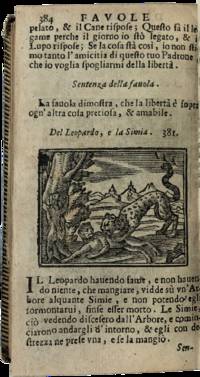
1700réf. 4112Venice and Bassano: Gio. Antonio Remondini 1700. 12mo 134 x 67 mm. Collation: A-R12. 394 14 pp. 2 parts separately titled second title-page on F5r. Woodcut printer’s device on titles 120 text woodcuts a very few repeated. A few cuts with black dots e.g. on p. 257 apparently from wormed blocks. Fol. K12 with short closed tear touching a woodcut a few headlines shaved; some light discoloration. Late 18th-century English green calf covers with gilt intertwining feather and pointillé border smooth spine gold-paneled and tooled with 3 different all-over patterns red calf lettering piece gilt edges marbled endleaves worn: spine cracked headcaps gone. Provenance: a member of the Fletcher family: engraved armorial bookplate two gryphons as supporters motto “Dieu pour nous” the shield described by Burke as “sable a cross flory argent between four escallops. Crest a bloodhound azure ducally gorged or.” An illustrated pocket edition of 400 fables from Aesop and other traditions specifically intended for children preceded by Giulio Landi’s life of the semi-mythic fabulist. The charming simple but decisively cut woodcut illustrations are typical of the early productions of the Remondini firm who used the blocks as well in several Latin editions of the fables. Giovanni Antonio Remondini 1634-1711 an enterprising businessman whose earliest commercial successes were in wool production was the founder of the long-lived Bassano print publishing firm later known for its paper production. Specialized at first in the production of popular prints mainly engravings the firm’s typographic activities were circumscribed until the mid-18th century by the Venetian monopoly of book production; thus the Remondinis’ earlier typographical output was limited to popular chapbooks and devotional works for a local readership usually in small formats and often illustrated with quickly but skillfully cut woodcuts as here. This undated edition corresponds with the below-cited ICCU record in its pagination and fingerprints but several mispaginations described in ICCU were here corrected. The ICCU editors note two variants one with the place of publication given as Bassano only and this state or issue with imprint “In Venetia et in Bassano” dubbed variant B. ICCU ITICCULO1E04628; cf. M. Infelise I Remondini di Bassano 1980 pp. 23-33 and 132-3. Gio. Antonio Remondini unknown books
1700réf. 4112Venice and Bassano: Gio. Antonio Remondini 1700. 12mo 134 x 67 mm. Collation: A-R12. 394 14 pp. 2 parts separately titled second title-page on F5r. Woodcut printer’s device on titles 120 text woodcuts a very few repeated. A few cuts with black dots e.g. on p. 257 apparently from wormed blocks. Fol. K12 with short closed tear touching a woodcut a few headlines shaved; some light discoloration. Late 18th-century English green calf covers with gilt intertwining feather and pointillé border smooth spine gold-paneled and tooled with 3 different all-over patterns red calf lettering piece gilt edges marbled endleaves worn: spine cracked headcaps gone. Provenance: a member of the Fletcher family: engraved armorial bookplate two gryphons as supporters motto “Dieu pour nous” the shield described by Burke as “sable a cross flory argent between four escallops. Crest a bloodhound azure ducally gorged or.” An illustrated pocket edition of 400 fables from Aesop and other traditions specifically intended for children preceded by Giulio Landi’s life of the semi-mythic fabulist. The charming simple but decisively cut woodcut illustrations are typical of the early productions of the Remondini firm who used the blocks as well in several Latin editions of the fables. Giovanni Antonio Remondini 1634-1711 an enterprising businessman whose earliest commercial successes were in wool production was the founder of the long-lived Bassano print publishing firm later known for its paper production. Specialized at first in the production of popular prints mainly engravings the firm’s typographic activities were circumscribed until the mid-18th century by the Venetian monopoly of book production; thus the Remondinis’ earlier typographical output was limited to popular chapbooks and devotional works for a local readership usually in small formats and often illustrated with quickly but skillfully cut woodcuts as here. This undated edition corresponds with the below-cited ICCU record in its pagination and fingerprints but several mispaginations described in ICCU were here corrected. The ICCU editors note two variants one with the place of publication given as Bassano only and this state or issue with imprint “In Venetia et in Bassano” dubbed variant B. ICCU ITICCULO1E04628; cf. M. Infelise I Remondini di Bassano 1980 pp. 23-33 and 132-3. Gio. Antonio Remondini unknown
1554réf. 3630Nuremberg: Gedrückt zu Nürnberg durch Friderich Gutknecht 1554. FIRST COLLECTED EDITION. The first work was first printed in 1535 as "Eyn new gedichte von den Schmeichlern" VD16 S 478. The third fable appeared as a broadside ca. 1540 Weller 82 not in VD16. I have been unable to trace an earlier ed. of the second fable. Hardcover. Fine. Bound in modern vellum over boards soiled slightly bowed. The text is in very good condition with a little light dust-soiling a few small spots on the final two leaves and soiling to the verso of the final leaf. With two woodcut illustrations and a fine woodcut ornament on the final leaf. No copies traced in North America. Hans Sachs' reworkings of three traditional fables two by Aesop "The shepherd flatters the wolf" and "The hares and the frogs" and one "the envious man and the miser" by the Latin fabulist Avianus. The first woodcut shows the devious wolf hiding in his cave. The second shows the miser and envious man having their eyes gouged out. The poet and playwright Hans Sachs a shoemaker and guild master by trade was an accomplished Meistersinger of the Nuremberg School Sachs is the title character of Wagner's "Meistersinger". Sachs' songs plays and dialogues address the social concerns of his day and the effects of the Reformation on the established social order. The Fables: 1. Ein yder sehe für sich und verberg sich hinder keinen Schmeichler. Ein jeder sehe für sich und verbarg sich hinter keinen Schmeichler. The shepherd tries to deceive the wolf: A wolf stalked by a hunter comes upon a shepherd and begs him to hide him from the hunter promising a rich reward. The shepherd agrees to help and the wolf hides in a cave. The hunter coming upon the spot but not seeing the wolf asks the shepherd if he has seen his quarry. The shepherd knowing that the wolf is watching them indicates with his hands that the wolf has gone off in a certain direction. Yet while he does so he tries by means of his eyes to let the hunter know that the wolf is in fact hiding in the cave. The hunter fails to see this and heads off. The shepherd then addresses the wolf telling him that he should be grateful that he has saved his life. The wolf thanks him but -being fully aware of the shepherd's deceit damns the shepherd's eyes. 2. Ein schöne Histori von dem Neidigen und dem Geitzigen Schöne Historie von dem Neidigen und dem Geizigen The Envious man and the Miser: "In this fable Jupiter sent Phoebus to earth where he stumbled upon an envious and a miserly person. He offered the miser a wish adding that whatever he wished for should be given double to his companion. The miser determined to wish for nothing knowing he would get only half what the other received and left it to his companion to make the wish. Thereupon the envious man took revenge by wishing that one of his own eyes be gouged out so that his companion would be made blind. Sachs concludes that envy makes envious persons suffer. They delight in the misery of others even if they are about to suffer the same fate themselves and their hearts are full of poison."Roper The Witch in the Western Imagination 3. "Ein yder trag sein joch dise Zeit" Ein jeder trage sein Joch diese Zeit und überwind sein Übel mit Geduld The hares and the frogs: Enduring and overcoming evil with patience: Once upon a time some hares driven desperate by the many enemies foxes wolves falcons hunters that threatened them from every direction came to the sad resolution that there was nothing left for them to do but kill themselves. They scurried to a nearby lake determined to drown themselves the most miserable of creatures. A group of frogs seated upon the bank frightened at the approach of the hares leaped in great alarm and confusion into the water. 'Nay then my friends' said the leader of the hares 'our case is not so desperate yet for here are other poor creatures more faint-hearted than ourselves.'. Gedrückt zu Nürnberg durch Friderich Gutknecht hardcover books
1554réf. 3630Nuremberg: Gedrückt zu Nürnberg durch Friderich Gutknecht 1554. FIRST COLLECTED EDITION. The first work was first printed in 1535 as "Eyn new gedichte von den Schmeichlern" VD16 S 478. The third fable appeared as a broadside ca. 1540 Weller 82 not in VD16. I have been unable to trace an earlier ed. of the second fable. Hardcover. Fine. Bound in modern vellum over boards soiled slightly bowed. The text is in very good condition with a little light dust-soiling a few small spots on the final two leaves and soiling to the verso of the final leaf. With two woodcut illustrations and a fine woodcut ornament on the final leaf. No copies traced in North America. Hans Sachs' reworkings of three traditional fables two by Aesop "The shepherd flatters the wolf" and "The hares and the frogs" and one "the envious man and the miser" by the Latin fabulist Avianus. The first woodcut shows the devious wolf hiding in his cave. The second shows the miser and envious man having their eyes gouged out. The poet and playwright Hans Sachs a shoemaker and guild master by trade was an accomplished Meistersinger of the Nuremberg School Sachs is the title character of Wagner's "Meistersinger". Sachs' songs plays and dialogues address the social concerns of his day and the effects of the Reformation on the established social order. The Fables: 1. Ein yder sehe für sich und verberg sich hinder keinen Schmeichler. Ein jeder sehe für sich und verbarg sich hinter keinen Schmeichler. The shepherd tries to deceive the wolf: A wolf stalked by a hunter comes upon a shepherd and begs him to hide him from the hunter promising a rich reward. The shepherd agrees to help and the wolf hides in a cave. The hunter coming upon the spot but not seeing the wolf asks the shepherd if he has seen his quarry. The shepherd knowing that the wolf is watching them indicates with his hands that the wolf has gone off in a certain direction. Yet while he does so he tries by means of his eyes to let the hunter know that the wolf is in fact hiding in the cave. The hunter fails to see this and heads off. The shepherd then addresses the wolf telling him that he should be grateful that he has saved his life. The wolf thanks him but -being fully aware of the shepherd's deceit damns the shepherd's eyes. 2. Ein schöne Histori von dem Neidigen und dem Geitzigen Schöne Historie von dem Neidigen und dem Geizigen The Envious man and the Miser: "In this fable Jupiter sent Phoebus to earth where he stumbled upon an envious and a miserly person. He offered the miser a wish adding that whatever he wished for should be given double to his companion. The miser determined to wish for nothing knowing he would get only half what the other received and left it to his companion to make the wish. Thereupon the envious man took revenge by wishing that one of his own eyes be gouged out so that his companion would be made blind. Sachs concludes that envy makes envious persons suffer. They delight in the misery of others even if they are about to suffer the same fate themselves and their hearts are full of poison."Roper The Witch in the Western Imagination 3. "Ein yder trag sein joch dise Zeit" Ein jeder trage sein Joch diese Zeit und überwind sein Übel mit Geduld The hares and the frogs: Enduring and overcoming evil with patience: Once upon a time some hares driven desperate by the many enemies foxes wolves falcons hunters that threatened them from every direction came to the sad resolution that there was nothing left for them to do but kill themselves. They scurried to a nearby lake determined to drown themselves the most miserable of creatures. A group of frogs seated upon the bank frightened at the approach of the hares leaped in great alarm and confusion into the water. 'Nay then my friends' said the leader of the hares 'our case is not so desperate yet for here are other poor creatures more faint-hearted than ourselves.'. Gedrückt zu Nürnberg durch Friderich Gutknecht hardcover
1991réf. 007377New York: Morrow Junior Books 1991 Pictorial boards in matching dust jacket with wear to extremities original price intact. Aesop's fables retold in verse with marvelous color artwork by Rayevsky. First Printing. Fine/Near Fine. Illus. by Robert Rayevsky. 4to. Morrow Junior Books hardcover books
1968réf. 011257Chicago: Rand McNally & Company 1968 Pictorial boards with light shelf wear child's name on endpaper pages slightly age-toned. A retelling of the well-known fable with adorable color artwork by Vivienne Blake. Pictorial Boards. Very Good/No Jacket as Issued. Illus. by Vivienne Blake. Square 8vo. Rand McNally & Company unknown books
1865réf. 6735New York: printed at The Riverside Press for Hurd and Houghton 1865. 130 engravings based on designs by Herrick. 8vo. original brown cloth decorated in gilt. Top of spine rather worn and front hinge split. printed at The Riverside Press for Hurd and Houghton hardcover
1793réf. 6744London: John Stockdale 1793. Two volumes. 112 engraved plates with protective tissue by Thomas Stothard J. Landseer Hunt Medland Lovegrove Skelton Powell Eastgate W. Grainger Clarke L. Chapman A. Smith J. Saunders Audinet et al. Pp. lxi publisher’s ad. leaf 198; xii 248. Large 8vo. original cloth backed marbled paper covered board with printed paper spine labels. Some rubbing light browning to end of volume II and a bit shaken.An excellent untrimmed copy pretty well preserved in the original binding of Stockdale’s well printed and deliciously illustrated Aesop. This is a true first of the great 1793 Stockdale edition with the advertisement leaf for Stockdale’s Gay’s Fables and the misprinted p.891 for p.198 of the first vol. The text is by Samuel Croxall. Booklabels of Carleton Richmond. In the original publisher’s binding John Stockdale hardcover
réf. 16-5874Paris: Pierre Rocolet 1659. 8vo. 11 x 18.2cm. Contemporary calf with gilt spine unrestored. Engraved frontispiece from the 1631 du Bray edition; 22712 8112pp.Pages 206-210 with Fable XXXVI have been removed. 118 full page engravings. .Frontispice et 120 figures gravés en taille douce dont quelquesunes signées Isaac Briot ou de sa fille Marie Briot. Les autres sontcopiées pat un anonyme sur Corneille Galle. Les Fables de Philelpheont un titre séparé.OCLC Number / Unique Identifier:491695286Notes:Les fables de Philelphe ont une p. de titre particulièreSig. ã8 ẽ4 a-f8 g6 A-Z8 Aa-Yy8 Zz2 ; ã4 A-G8118 gravures sur cuivre 1 par fable d'EsoExpertise by Jean-François Bétis1 rue de l'Eglise Donzacq F-40360 Paris: Pierre Rocolet, 1659. unknown
réf. 16-5882Paris: P. Mongie aîneÌ 1826. Oblong 8vo. 20.5 x 22.5cm. Contemporary qtr. coth and marbled boards urestored. viii 208pp. and14 lithographs hors texte. OCLC Number / Unique Identifier:763198381. Morgan Library Accession number: PML 87033. Expertise by : Amaury BONNETAIN. Paris: P. Mongie aîneÌ ,1826 hardcover
réf. 132069Na livraria portugueza de J. P. Aillaud 1837 Paris. 13x21. 1/2 piel. 202 pgs. Texto en portugués. Ilustraciones. Texto enmarcado en cenefa. Puntos de óxido. Una de las láminas desprendida y con algunas faltas. Q9503 Na livraria portugueza de J. P. Aillaud, 1837, Paris. unknown
réf. RO40170512Non précisé. Non daté. In-12. Broché. Bon état, Couv. convenable, Dos satisfaisant, Intérieur frais. 105 pages. Illustré de gravures en noir et blanc hors texte. Etiquette de code sur le dos. Tampons et annotation de bibliothèque sur le 1er plat et en page de titre. Signature en page de garde.. . . . Classification Dewey : 460-Langues espagnole et portugaise
réf. 139063986X.Gpaperback. Good. Access codes and supplements are not guaranteed with used items. May be an ex-library book. paperback
réf. 0365808628.Gpaperback. Good. Access codes and supplements are not guaranteed with used items. May be an ex-library book. paperback
réf. 0366435159.Ghardcover. Good. Access codes and supplements are not guaranteed with used items. May be an ex-library book. hardcover
réf. 2304SB059Com Applicações accommodadas á Moral Christã. Offerecidas ao ill.mo e ex.mo senhor D. JOSEPH DE ASSIS MASCARENHAS Conde de Obidos . Por seu Author MIGUEL DO COUTO GUERREIRO. LISBOA Na Offic. Patr. de Francisco Luiz Ameno. M. DCC. LXXXVIII. 1788. Com licença da Real Mesa da Comissaõ Geral sobre o Exame e Censura dos Livros. In 8.º de 15x10 cm. Com xxiv 456 págs. Encadernação inteira de pele com nervos rótulo e ferros a ouro. Corte das folhas carminado. Compêndio de 345 fábulas cada uma acompanhada de uma «Applicação» ou comentário moral na forma de soneto. Apesar do título este livro reúne muitas fábulas que não são de Esopo mas sim de outros autores incluindo do tradutor e autor das «Applicações» Miguel Couto Guerreiro. Inocêncio VI 231-235 1746. M-11-C-76 unknown
réf. uocl08iaab-21015Girassol. New. Girassol unknown
1987cofanetto cartonato formato 36X25,5 contenente un volume in brossura con sovraccoperta piegata a busta. Pagine 46 + una piegata contenente una acquaforte numerata e firmata da Paladino. Tiratura in 150 esemplari numerati e firmati su carta Hahnemule (103). Copia in perfetto stato di conservazione
1953formato 25X20,5. Legatura editoriale pagine 68. Serie Prima N.1. Quinta ristampa dalla Prima Edizione. Piccole mancanze ai piatti di copertina. Dorso mancante. Interno in buono stato