Esope, Bernadette:Livre Rare Book
Vingt fables d'Esope.
1980réf. 18590Editions Nord-Sud, 1980. In-4, cartonnage couleurs.

La Bergerie · Le Locle, Suisse20,00 CHF≈ 21,65 €
1 689 résultats
2006pp. 265, cm 21, brossura, collana "La Roue a livres".
1980réf. 18590Editions Nord-Sud, 1980. In-4, cartonnage couleurs.
1780réf. 016165Berne: Chez La Nouvelle Societe Typographique 1780. Book measures 19.5x13.cm. 460pp 18 plates including frontis. Bound in modern quarter calf marble boards paper title label on top cover. Binding in fine condition. Internally some light spotting light creasing to some pages probably the quality of paper but not aesthetically distracting . Pages and plates in good clean condition. A very nice well bound copy. Housed in a modern cloth drop-back box.F. Hardcover. Very Good Plus. 8vo. Chez La Nouvelle Societe Typographique Hardcover
2001réf. 020889Ludwig Reichert, Wiesbaden 2001. Leinen Wie Neu
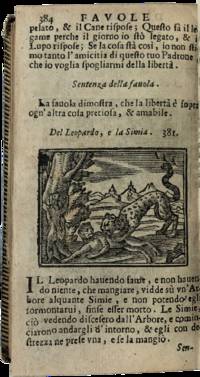
1718réf. ABC_45405Florence: Giovanni Gaetano Tartini 1718. Plain vellum. 12mo. With 90 incl. repeats woodcuts ca. 4.5 x 6 cm. One of the many editions of this extended collection of 400 fables collected and translated in Italian by Giulio Landi 1498-1580 an Italian author philosopher and classical scholar well-known for his description of the Island Madeira. As mentioned on the title the Vita of Aesop comes first composed in Italian on the basis of Max. Planudes Life by Giulio Landi. The corpus of the Fables includes no less than 400 animal fables some collected from other sources including Fables by Landi himself. The Fables are illustrated with 90 anonymous woodcuts. Several woodcuts are repeated especially at the end for the fables taken from other sources. All fables close with a moral here called Sentenza intended for the instruction and amusement of the youth.The first edition of the Vita appeared in 1545 that of the Fables in 1569 based on the Aesopus Dorpii followed by many editions till far into the 19th century.In good condition.l Cf. Bodemann 52.1-52.4 edd. of 1581 1585 1673 and 1818. Giovanni Gaetano Tartini, hardcover
1643réf. 5227Trevigi: Girolamo Righettini 1643. Contemporary sheepskin parchment. 12mo. With 137 small woodcuts in text illustrating the fables including some repeats. 2 parts in 1 volume. Rare edition of the Italian translation by the philosopher Giulio Landi 1498-1579 of Aesop's fables and the Life of Aesop including no less than 400 animal fables some collected from other sources. The fables are illustrated with numerous small anonymous woodcuts that appeared for the first time in 1569 in the fables collected by Cesare Pavesi and became very popular through Landis translations of Aesop beginning in 1580. They have been attributed to Johann Krieger a German working in Italy where he was known as Giovanni Chrieger. Several woodcuts are repeated especially at the end for the fables taken from other sources. All fables close with a moral here called "Sentenza" intended for the instruction and amusement of the youth.With 2 holes in the last few pages some water stains throughout and some restorations with now discoloured tape. With the binding slightly stained partly detached from the bookblock and with 2 holes in the back board.l WorldCat 2 copies; cf. Fabula docet 14. Girolamo Righettini, unknown
1647réf. 70815In Salò.: Per Antonio Comincioli 1647. Cm. 145 pp. 413 15. Con moltissime incisioni xilografiche nel testo. Legatura novecentesca in piena pelle con titoli impressi al dorso in stile fascista e forse in accordo con il luogo di stampa. Entro custodia. Frontespizio con piccoli difetti e tracce di polvere peraltro esemplare internamente ben conservato. Edizione assai rara e non riscontrata nei principali repertori seicenteschi. Solo in: Spini U. "Le edizioni bresciane del Seicento: catalogo cronologico delle opere stampate a Brescia e a Salò" p. 208-209. Per Antonio Comincioli unknown
1700réf. 4112Venice and Bassano: Gio. Antonio Remondini 1700. 12mo 134 x 67 mm. Collation: A-R12. 394 14 pp. 2 parts separately titled second title-page on F5r. Woodcut printer’s device on titles 120 text woodcuts a very few repeated. A few cuts with black dots e.g. on p. 257 apparently from wormed blocks. Fol. K12 with short closed tear touching a woodcut a few headlines shaved; some light discoloration. Late 18th-century English green calf covers with gilt intertwining feather and pointillé border smooth spine gold-paneled and tooled with 3 different all-over patterns red calf lettering piece gilt edges marbled endleaves worn: spine cracked headcaps gone. Provenance: a member of the Fletcher family: engraved armorial bookplate two gryphons as supporters motto “Dieu pour nous” the shield described by Burke as “sable a cross flory argent between four escallops. Crest a bloodhound azure ducally gorged or.” An illustrated pocket edition of 400 fables from Aesop and other traditions specifically intended for children preceded by Giulio Landi’s life of the semi-mythic fabulist. The charming simple but decisively cut woodcut illustrations are typical of the early productions of the Remondini firm who used the blocks as well in several Latin editions of the fables. Giovanni Antonio Remondini 1634-1711 an enterprising businessman whose earliest commercial successes were in wool production was the founder of the long-lived Bassano print publishing firm later known for its paper production. Specialized at first in the production of popular prints mainly engravings the firm’s typographic activities were circumscribed until the mid-18th century by the Venetian monopoly of book production; thus the Remondinis’ earlier typographical output was limited to popular chapbooks and devotional works for a local readership usually in small formats and often illustrated with quickly but skillfully cut woodcuts as here. This undated edition corresponds with the below-cited ICCU record in its pagination and fingerprints but several mispaginations described in ICCU were here corrected. The ICCU editors note two variants one with the place of publication given as Bassano only and this state or issue with imprint “In Venetia et in Bassano” dubbed variant B. ICCU ITICCULO1E04628; cf. M. Infelise I Remondini di Bassano 1980 pp. 23-33 and 132-3. Gio. Antonio Remondini unknown
1700réf. 4112Venice and Bassano: Gio. Antonio Remondini 1700. 12mo 134 x 67 mm. Collation: A-R12. 394 14 pp. 2 parts separately titled second title-page on F5r. Woodcut printer’s device on titles 120 text woodcuts a very few repeated. A few cuts with black dots e.g. on p. 257 apparently from wormed blocks. Fol. K12 with short closed tear touching a woodcut a few headlines shaved; some light discoloration. Late 18th-century English green calf covers with gilt intertwining feather and pointillé border smooth spine gold-paneled and tooled with 3 different all-over patterns red calf lettering piece gilt edges marbled endleaves worn: spine cracked headcaps gone. Provenance: a member of the Fletcher family: engraved armorial bookplate two gryphons as supporters motto “Dieu pour nous” the shield described by Burke as “sable a cross flory argent between four escallops. Crest a bloodhound azure ducally gorged or.” An illustrated pocket edition of 400 fables from Aesop and other traditions specifically intended for children preceded by Giulio Landi’s life of the semi-mythic fabulist. The charming simple but decisively cut woodcut illustrations are typical of the early productions of the Remondini firm who used the blocks as well in several Latin editions of the fables. Giovanni Antonio Remondini 1634-1711 an enterprising businessman whose earliest commercial successes were in wool production was the founder of the long-lived Bassano print publishing firm later known for its paper production. Specialized at first in the production of popular prints mainly engravings the firm’s typographic activities were circumscribed until the mid-18th century by the Venetian monopoly of book production; thus the Remondinis’ earlier typographical output was limited to popular chapbooks and devotional works for a local readership usually in small formats and often illustrated with quickly but skillfully cut woodcuts as here. This undated edition corresponds with the below-cited ICCU record in its pagination and fingerprints but several mispaginations described in ICCU were here corrected. The ICCU editors note two variants one with the place of publication given as Bassano only and this state or issue with imprint “In Venetia et in Bassano” dubbed variant B. ICCU ITICCULO1E04628; cf. M. Infelise I Remondini di Bassano 1980 pp. 23-33 and 132-3. Gio. Antonio Remondini unknown books
1505réf. 684L10Venice: Apud Aldum 1505. First edition. Fine Binding. Very Good Indeed. 10" by 7". None. A very scarce early Aldine work regarding Greek allegorical techniques. A highly sought after first edition printing from the famous Aldine Press. Rebound in a lovely morocco binding by C and C McLeish. McLeish started his binding career at the Doves Bindery before starting a partnership with his sons as C & C Mcleish from 1909 to 1949. This book is from the Spencer library at Althorp Northamptonshire. With the bookplate of the Earl of Spencer's arms and pressmark B65. The Aldine Press was the printing office started by Aldus Manutius in 1494 in Venice. The first book appearing under his name was published in 1495. The press was the first to issue printed books in octavo and is also famous for introducing italics. In Greek. Adams A278; Ahmanson-Murphy 93; Renouard 49:6. Early manuscript title to the second blank with original woodcut Aldine printer's device laid down. Marginalia in Greek and Latin by an early hand throughout. This work contains 85 leaves only and therefore is lacking the first sixty-five leaves. Lacking the fables and life of Aesop. Retaining leaves d6-o4. This work retains the accompanying text including the 'editiones principes' of Cornutus/Phurnutus 'De Natura Deorum' by Cicero 'Palaephatus' on disbelieving histories'De Non Credendis Historiis' Heraclitus Ponticus' 'De Allegoriis Apud Homerum and Horapollon' 'Hieroglyphica' as well as a collection of proverbs. Many of the works to this volume appear in their first edition here. A very scarce work beautifully produced by the Aldine Press and with fascinating provenance. In a full morocco binding. Externally very smart with light rubbing to the joints. Internally firmly bound. Front endpaper is chipped to the edges with handling marks and prior owner's notes as well as bookplate. Second blank has a manuscript title with the Aldine Press printer's device pasted. Pages are bright. Occasional ink inscriptions to the margins in Greek and Latin. Very Good Indeed Apud Aldum unknown
réf. 68393Basel Froben 1518. Kl.8° 262 S. 1 Bl. mit Holzschnitt-Titelbordüre u.Druckermarke am Schluss.; 126 S. 1 Bl. mit 4 wiederh.Holzschnitt-Titelbordüren. u. 4 2 verschied.Druckermarken. Unter Verwendung alter blindgeprägter Deckelbezüge sauber restaurierter Lederband mit 4 Schliessbändern. Das erste Titelblatt im Unterrand angestückt etw. gebräunt u. teils mit kl. Feuchträndern die letzten Bl. mit kl. Einrissim Oberrand; flieg. Vorsatz fehlt hinten. VD 16 A 415 - IA. 101.002 - Hieronymus GG 19 - Schweiger I 13. - Erste Froben-Ausgabe des Aesop und einigen kleineren klassischen Texten „vier davon zweisprachig alle für den fortgeschrittenen Griechischunterricht gedacht.“ Hieronymus. - Die beigedruckten Texte jeweils mit eigenem Titelblatt jedochdurchgehend paginiert. „Für den griechischen Text hat Froben eine neue Kursive nach dem Vorbild derjenigen des Aldus Manutius verwendet“ebd. - Provenienz: Exlibris Janet and C. R. Ashbee sowie Exlibris Edmund Mc Clure auf Spiegel. 010 Basel, Froben, 1518 unknown
1968cm. 18 x 25,5, xvi-444 pp. con ill. n.t. Edizione di 700 copie numerate. 1430 gr. xvi-444 p.
1811réf. 101787Padova Nel Seminario 1811. In 8° mezza pelle coeva con fregi filetti e titoli oro al dorso. Pp. XX 1 tavola pp. 193 3 n.n. 1 tavola in fine. Simbolo dell'Accademia della Crusca al frontespizio ed in ultima. Qualche giallitura ma molto buono lo stato di conservazione unknown
1818(Favolisti greci - Esopo Frigio - Testo Riccardiano - Vocabolario della Crusca - Filologia) In 16° grande (cm 18,5x11,5), legatura coeva in mezza pelle, titolo e filetti ornati impressi in oro al dorso, carta marmorizzata ai piatti, pp. 118,(2), marca tipografica al frontespizio ed in fine (Il Frullone con motto ''Il più bel fior ne coglie''). Alcune pagine di dedica a Girolamo Forteguerri di Angiolo Garinei ed una introduzione di Luigi Rigoli seguite da LIII favole di Esopo e da una ''Tavola Delle voci dell'Esopo più notabili, e i nuovi modi di dire Non registrati nel Vocabolario''. Esemplare ben conservato.
1886Esemplare totalmente coevo, ancora a pagine chiuse. Prossura editoriale a stampa, pp. 204, XVI, in 16°
réf. Z1-S-038-01303Shortland Publications. Used - Good. Ships from UK in 48 hours or less usually same day. Your purchase helps support Sri Lankan Children's Charity 'The Rainbow Centre'. Ex-library so some stamps and wear and may have sticker on cover but in good overall condition. 100% money back guarantee. We are a world class secondhand bookstore based in Hertfordshire United Kingdom and specialize in high quality textbooks across an enormous variety of subjects. We aim to provide a vast range of textbooks rare and collectible books at a great price. Our donations to The Rainbow Centre have helped provide an education and a safe haven to hundreds of children who live in appalling conditions. We provide a 100% money back guarantee and are dedicated to providing our customers with the highest standards of service in the bookselling industry. Shortland Publications unknown
réf. H09OS-00109Novo pokoljenje. Used - Acceptable. Acceptable condition. No Dust Jacket Dampstained. Spine cracked. Aesop's Fables Books in Croatian Novo pokoljenje unknown
réf. LDM0046733We ship worldwide. 100% guarentee. BRAND NEW unknown
1921Cartella in cartonato con titolo e immagine impressi al piatto; dorso in tela e angoli; chiusura con tre alette. La cartella contiene 12 tavole incise all'acquaforte accompagnate da un foglio indicante titolo, dichiarazione della tiratura e indice delle tavole. Ogni foglio misura cm. 36,5 x 25 mentre è variabile la dimensione delle incisioni. Ogni tavola è protetta da velina. Le 12 tavole raffigurano: Titel-vignette (Illustrazione del titolo); Widmung (Dedica); Der Wolf und der Kranich (IL Lupo e la Gru); Der Fuchs und der Lowe (La Volpe e il Leone); Der Wolf un das Lammlein (Il Lupo e l'agnello); Juno und der Pfau (Giunone e il Pavone) ; Der Fuchs und der Affe (La Volpe e la Scimmia); Der Lowe und die Maus (Il Leone e il Topo); Affe, Wolf und Fuchs (Scimmia, Lupo e Volpe); Der Fuchs und der Rabe (La Volpe e il Corvo); Der Rabe und die Pfauen (Il Corvo e i Pavoni); Der Fuchs und die Trauben (La Volpe e l'Uva). Di quest'opera sono state tirate a mano direttamente dall'artista 10 copie numerate da I a X; sono altresì state tirate sotto la supervisione dell'artista 100 copie numerate da 1 a 100. La nostra copia n. 17. Quache lieve fioritura, (in particolare una serie di fioriture più fitte al margine superiore della tavola de "Il corvo e i pavoni"); nel complesso insieme davvero bello, non comune, in ottime condizioni.
1849réf. 47625Philadelphia: Lindsay & Blakiston 1849. Very good. Early edition of this French reader for young US learners published as the cracks that would lead to the Civil War began to form. The world economic status of the US in 1849 was strong due in no small part to the country's ability to produce cotton cheaply through the labor of enslaved people. With the rise of Industrial Revolution technology people were able to move around the globe faster than every before - an urban American student learning French in this period was not only engaging in mental stimulation but actually stood a chance of using their skills to eventually converse with a real French person. ÆSOP'S FABLES IN FRENCH was published during this period offering moral anecdotes alongside "those idiomatic forms of speech" that "characterize a language" Advertisement. Scarce; OCLC locates only one holding of this edition. Duodecimo. 6'' x 3.5''. Original textured sheep-backed pink boards. 238 pages collated complete. Early partially removed ownership label to front board with last name Stocker. Early pencil ownership inscription to second blank. Early ink ownership inscription to page 3 matching ownership label. Scattered pencil annotations to margins. Binding with wear some dampstaining; careful repair to lower spine. Leaves with light foxing and occasional toning. Sound. Lindsay & Blakiston unknown books
1800réf. 366475Paris: Chez Batilliot frères 1800. Folded engraved half-title with double page frontispiece and engraving facing title 60 numbered pages of engravings. Text and illustrations printed within borders. Last page of text is a publisher's list of books. 66 pp. 1 vols. 16mo. Contemporary mottled calf with gilt scroll border red spine label. Minor rubbing. Very good plus. Folded engraved half-title with double page frontispiece and engraving facing title 60 numbered pages of engravings. Text and illustrations printed within borders. Last page of text is a publisher's list of books. 66 pp. 1 vols. 16mo. Chez Batilliot frères unknown books
réf. 1385291494.Ghardcover. Good. Access codes and supplements are not guaranteed with used items. May be an ex-library book. hardcover
1936réf. 030709London 1936 George G. Harrap and Co. Ltd Vellum 1st Edition Signed by Illustrator
réf. 1023120593.Ghardcover. Good. Access codes and supplements are not guaranteed with used items. May be an ex-library book. hardcover
réf. 1379419441.Ghardcover. Good. Access codes and supplements are not guaranteed with used items. May be an ex-library book. hardcover