Sitta Von RedenBiblio.com

3 630 résultats
réf. 44396836like new. unknown
réf. B9781108417266Hardback. New. Comprehensive introduction to the ancient Greek economy. Covers the whole of the Greek world from the Iron Age to the Hellenistic period with separate chapters on key themes. Essential for students and scholars of ancient history and of interest to readers concerned with economic cultures and global economic issues. hardcover
réf. B9781108404846Paperback / softback. New. Comprehensive introduction to the ancient Greek economy. Covers the whole of the Greek world from the Iron Age to the Hellenistic period with separate chapters on key themes. Essential for students and scholars of ancient history and of interest to readers concerned with economic cultures and global economic issues. paperback
1981Scholar's bookplate to inner cover (G. P. Goold). Foxing to textblock. ; American Philological Association. Special Publications 4; 8.9 X 5.8 X 0.6 inches; 207 pages
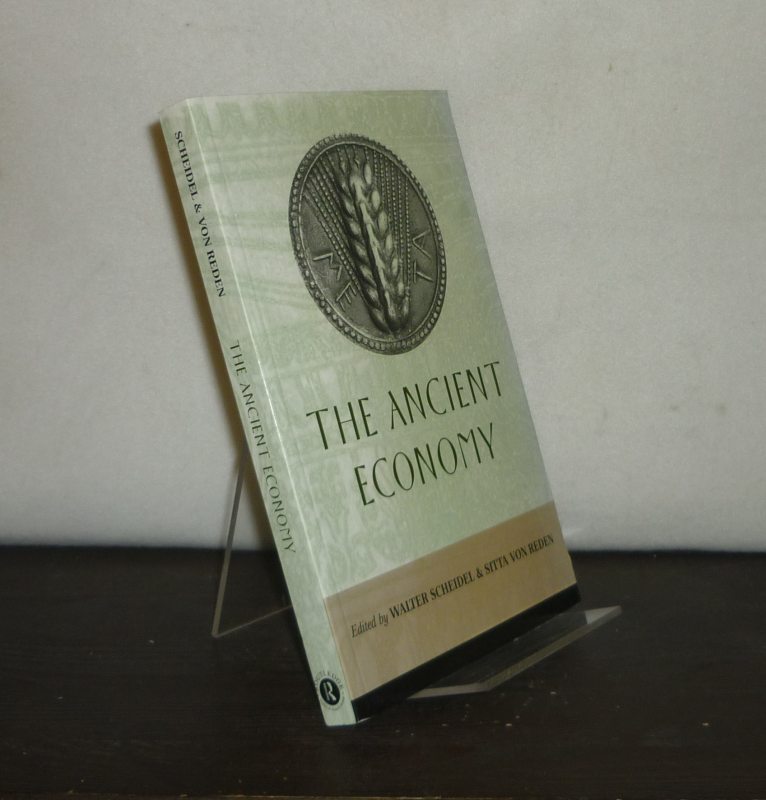
2002réf. 3132519New York: Routledge 2002. XXI, 282 Seiten Gr. 8° (22,5-25 cm). Orig.-Broschur. [Softcover / Paperback].
2002réf. 75908New York, Routledge, 2002, in-8, broché, 282 pages. Très bon état.
2002réf. BN723012New York: Routledge 2002. 2002. The Ancient Economy. Edited by Walter Scheidel and Sitta von Reden. The Ancient Economy. Edited by Walter Scheidel and Sitta von Reden. Scheidel Walter Ed. and Sitta von Reden Ed. New York: Routledge unknown
réf. Q-0748613218Edinburgh University Press. Paperback. New. New. In shrink wrap. Looks like an interesting title! Edinburgh University Press paperback
2002réf. x-0748613218Edinburgh University Press 2002. Paperback. New. 320 pages. 9.21x6.14x0.75 inches. Edinburgh University Press paperback
2003réf. x-041594189XRoutledge 2003. Paperback. New. 1st edition. 288 pages. 9.00x6.00x0.75 inches. Routledge paperback
réf. 6338116Taylor & Francis Group . Papeback. New. pp. 308 Taylor & Francis Group unknown
2002réf. Q-041594189XRoutledge 2002-09-01. Paperback. New. In shrink wrap. Looks like an interesting title! Routledge paperback
1969réf. 29732Frankfurt am Main, Berlin, Bonn, München, Verlag Moritz Diesterweg, 1969. 3. durchgesehene Auflage 88 Seiten , 19 cm, kartoniert
réf. RO20038597NON INDIQUE. Non daté. In-8. Broché. Bon état, Couv. défraîchie, Dos abîmé, Intérieur bon état. 91 pages. 1er plat de couverture abîmé ainsi que les 2 première pages.. . . . Classification Dewey : 845-Discours
Non précisé. 1963. In-4 Carré. Broché. Etat d'usage. Couv. légèrement passée. Dos frotté. Intérieur bon état. 24 pages. Photo en noir et blanc au dos du 2e plat. Couverture d'après le Maître Decaris. Allocution de M. le Prof. Pierre Broustet. Allocution de M. le Doyen Francis Tayeau...
1974réf. yam10943 in-12 brochés en bon état de 200 pages chacun éditions sociales
1803réf. 56229Erfurt, Georgh Adam Keyser, 1803. 8°. IX (1), 586 S., 2 Bll., Ldr. d. Zt. m. goldgepr. Deckelfileten. Rückenverg., goldgepr. Rückenschild, Stehkantenverg. u. dreiseitigem Goldschnitt.
1898Rebound in dark red buckram with a few ink and pencil marginalia else VG. A few small spots browned. ; 255pp, a few illustrations. ; 255 pages
1988réf. 26248Cambridge [etc.] : Cambridge Univ. Pr., 1988. 124 pp. : ill. Gr. 8°. Repr. Orig. pb. (Cambridge Professional English)
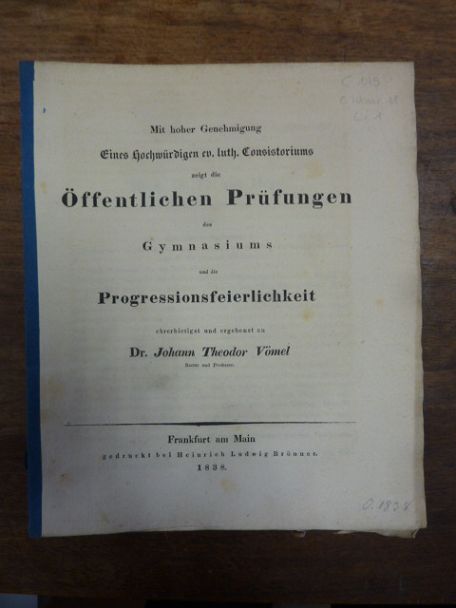
1838réf. 149CBFrankfurt am Main, Heinrich Ludwig Brönner, 1838. 8°, 34, 6 S., original Heft mit Papierrückenstreifen, Erstausgabe schöne, leicht altersspurige Broschur mit handgeschr. Altersangabe (J. 1838) (Li1, Ordner11),
1968réf. LFA-126738528Un ouvrage de 132 pages, format 135 x 215, illustré, broché, publié en 1968, Dunod, bon état
1912réf. 4368Berlin : Langenscheidt, c 1912. Teil 1: Englisch - Deutsch. XLIV, [564] S. Kl. 8°. 7., rev. Aufl. Lwd mit Grifflochreg. ohne SU
1991réf. 5659München : Ed. Spangenberg, 1991. 94 S. : zahlr. Ill. Gr. 8°. OBroschur.
1975réf. 1250184München, Zürich: Piper., 1975. 194 S. kart.
1996Faint foxing to top of textblock. Tiny chip to head of spine. Minor pencil marginalia to about 7 pages. ; 208 pages; In this penetrating new look at the use of language in the Iliad, Hilary Mackie examines the portrayal of the opposing forces in terms not only of nationality but of linguistics. The way the Greeks and the Trojans speak, Mackie argues, reflects their disparate cultural structures and their relative positions in the Trojan War. While Achaean speech is aggressive and public, intended to preserve social order, Trojan language is more reflective, private, and introspective. Mackie identifies the differences between Greek and Trojan language by analyzing poetic formulas, usually thought to indicate a similarity of language among Homeric characters, and conversations, which are seen here to be of equal importance to the numerous speeches throughout the Iliad. Mackie concludes with analyses of the two great heroes of the Iliad, Hektor and Achilles, and the extent to which they represent their own cultures in their use of language.