PERRIER Aug.Livre Rare Book
PEREZ RIOJA, José Antonio.MareMagnum
GRAMATICA DE LA LENGUA ESPAÑOLA.
195322x16. 552p.

Libreria Fernandez Javier · Espanha€ 12,00
6.456 resultados
ref. 87279Paris, Ernest Leroux, 1920. 17 x 27, 296 pp., reliure dos toilé, bon état (bords et coins usagés).
ref. 22498Paris, Leroux, PUF, 1940. 140 X 230 mm. relié demi-parchemin à coins, dos lisse avec pièce de titre verte, couvertures et dos conservés, non rogné. VIII-296 pp. 3ème édition.
1993ref. R320042573OPHRYS. 1993. In-8. Broché. Bon état, Couv. convenable, Dos satisfaisant, Intérieur frais. 83 pages.. . . . Classification Dewey : 425-Grammaire anglaise
1931225x150mm. 92 pages. Hardcover. Cover slightly stained and rubbed. Cover edges and corners slightly bumped. Spine edges slightly worn. One page detached from binding. Pen inscription on whitepage. Pages yellowing. Else in good condition.
195322x16. 552p.
1898Older book on Modern Greek grammar (Katharevousa) no date on tp or colophon, but the author's introduction is dated 1897. xxxi 262p.index. Text neat and complete, covers slightly worn Book
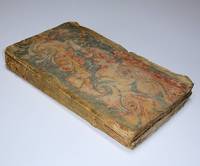
1539In 8°, 188pp, legatura in carta decorata, altrimenti buono stato. Niccolò Perotti, o Niccolò Perotto, in lingua latina Nicolaus Perottus (Sassoferrato, 1430 circa – Sassoferrato, 14 dicembre 1480), è stato un umanista, filologo e arcivescovo cattolico italiano. Nel 1452 Perotti ricevette a Bologna l'alloro poetico dalle mani dell'imperatore Federico III. Durante il soggiorno bolognese Perotti ebbe anche un violento scontro con Poggio Bracciolini in difesa di Lorenzo Valla. Nel 1455 Perotti tornò a Roma, dove venne nominato segretario apostolico. L'anno successivo ricevette gli ordini, e il 19 ottobre 1458 fu nominato arcivescovo di Siponto, sede nella quale tuttavia non risiedette mai. Partecipò invece l'anno successivo al Concilio di Mantova, indetto da Pio II per cercare di arrestare gli Ottomani che nel 1453 avevano espugnato Costantinopoli. Ritornò successivamente al seguito di Bessarione, restandovi fino al 1464, anno in cui fu nominato governatore del Patrimonio di San Pietro. Nel biennio 1460-61, al seguito del card. Bessarione, Perotti fu in Germania, dove venne nominato consigliere imperiale di Federico III, e poi a Venezia (1461), dove ottenne la nomina a referendario pontificio. Durante il quinquennio 1464-69, trascorso a Viterbo come governatore del Patrimonio di San Pietro, Perotti cominciò a pubblicare le sue opere di filologia. Nel 1469 Perotti tornò a Roma; attorno al 1470 scrisse un'invettiva contro Giorgio di Trebisonda reo di aver attaccato violentemente il card. Bessarione. Nel 1471 Perotti fu nominato governatore di Spoleto, incarico che lasciò l'anno successivo. Nel 1474 divenne governatore di Perugia, dove ebbe come segretario l'umanista Francesco Maturanzio. Ai primi del 1477, terminato l'incarico in Umbria, Perotti si ritirò nelle Marche, dove rimase fino al termine della vita. In-8°, 188pp, decorated paper binding, otherwise good copy. Niccolò Perotti, or Niccolò Perotto, in Latin Nicolaus Perottus (Sassoferrato, around 1430 - Sassoferrato, 14 December 1480), was an Italian Catholic humanist, philologist and archbishop. In 1452 Perotti received the poetic laurel in Bologna from the hands of Emperor Frederick III. During his stay in Bologna Perotti also had a violent clash with Poggio Bracciolini in defense of Lorenzo Valla. In 1455 Perotti returned to Rome, where he was appointed apostolic secretary. The following year he received orders, and on October 19, 1458 he was appointed archbishop of Siponto, where he never lived, however. Instead, he participated the following year in the Council of Mantua, called by Pius II to try to arrest the Ottomans who in 1453 had conquered Constantinople. He subsequently returned to the retinue of Bessarione, remaining there until 1464, the year in which he was appointed governor of the Patrimony of San Pietro. In the biennium 1460-61, following card. Bessarione, Perotti was in Germany, where he was appointed imperial councilor of Frederick III, and then in Venice (1461), where he obtained the nomination as pontifical referendarius. During the five-year period 1464-69, spent in Viterbo as governor of the Patrimony of San Pietro, Perotti began to publish his philological works. In 1469 Perotti returned to Rome; around 1470 he wrote an invective against George of Trebizond guilty of violently attacking card. Bessarion. In 1471 Perotti was appointed governor of Spoleto, a position he left the following year. In 1474 he became governor of Perugia, where he had the humanist Francesco Maturanzio as secretary. In early 1477, having finished his assignment in Umbria, Perotti retired to the Marche region, where he remained until the end of his life.
Librairie Ch. Delagrave, Paris. 1888. In-8 Carré. Broché. Etat d'usage. Tâchée. Dos abîmé. Intérieur acceptable. 118 pages. Texte sur 2 colonnes. Etiquette de code sur la couverture. Quelques tampons de bibliothèque. Dos muet, avec de petits manques. A l'usage des candidats au Baccalauréat, à l'Ecole de Saint-Cyr et à l'Ecole Polytechnique.
1968xiv, 912 p. 23 cm. Hardcover Very good condition
Chamerot, Paris. 1854. In-12 Carré. Broché. Etat d'usage. Livré sans Couverture. Coiffe en pied abîmée. Quelques rousseurs. Plaquette de 33 pages. Page de titre et dernier feuillet abîmés. Annotations au crayon sur ce dernier feuillet (garde). Importance et difficultés de la grammaire. Critique de la classification usuelle des verbes...
ref. DADAX0700716947New unknown
ref. DADAX0521091241New unknown
ref. DADAX0521449901New unknown
1850ref. 88572Couverture rigide. Cartonnage de l'éditeur. 132 + 31 pages. Couverture défraîchie. Mouillures, taches, manque à la dernière page.
ref. 43683P., Nathan, 1913, in 12 cartonnage de léditeur, 171 pages.
ref. 66051, Brepols, 2019 Hardback, xciii + 222 pages, Size:155 x 245 mm, Language: Latin. ISBN 9782503582313.
ref. RO20168979HETZEL J. ET CIE. NON DATE. In-12. Relié demi-cuir. Etat d'usage, Coins frottés, Dos frotté, Intérieur frais. 444 pages - plats et contre-plats jaspés - 1 manque au niveau de la reliure de la page de garde à la page 4.. . . . Classification Dewey : 445-Grammaire française
1900ref. 38134Couverture souple. Broché. 444 pages. Rousseurs.
1991ref. 18225ÉDITIONS DISQUES OMNIVOX 1991 382 pages in8. 1991. broché. 382 pages. Le Russe vite et bien est une méthode d'apprentissage accélérée du russe destinée aux francophones débutants. Elle combine des leçons structurées du vocabulaire thématique et des exercices de grammaire avec un accent sur la prononciation et la compréhension orale le tout accompagné de cassettes audio
ref. 596658Wien, Verlag der Österreichischen Akademie der Wissenschaften, 1977. In-8 br., 319 pp., bibliogr. Texte en allemand.
1998749pp., 24cm., in the series "Institut d'Estudis Catalans. Biblioteca filològica" vol.35, softcover, 1 library stamp, else VG, (text in Catalan), T69883
ref. 120376Paris Chez Nyon l'aîné 1778. 3 volumes in 1: 591 blank; 933 blank; 70 p. Contemporary wrappers. 18 cm Details: Marbled wrappers. Woodcut ornament on the title depicting a radiant sun in the heart of which stand the three fleurs-de-lis of the House of Bourbon Condition: Back worn & slightly damaged. The last five leaves slightly waterstained Note: The 'École Royale Militaire' 'was founded in 1750 after the War of the Austrian Succession by Louis XV on the basis of a proposal of Marshal Maurice de Saxe and with the support of Madame de Pompadour and the financier Joseph Paris Duverney with the aim of creating an academic college for cadet officers from poor noble families. It was designed by Ange-Jacques Gabriel and construction began in 1752 on the grounds of the farm of Grenelle but the school did not open until 1760. The 'Comte de Saint-Germain' reorganised it in 1777 under the name of the 'École des Cadets-gentilshommes' School of Young Gentlemen which accepted the young Napoleon Bonaparte in 1784. He graduated from this school in only one year instead of two'. The 'École Militaire' still exists it is a vast complex of buildings housing various military training facilities located in the 7th arrondissement of Paris Southeast of the Champ de Mars. The School was closed down in 1787 and plundered during the Revolution. In 1878 this school for the higher education of future French officers was opened again now as 'École Supérieure de Guerre' ESG. Source Wikipedia 'École Royale Militaire' This convolute of 3 grammars is rare outside France. The Bibliothèque Nationale de France BnF states that the author is Étienne-Maurice Chompré 1701-1784 Collation: A-B12 C6 leaf C6 verso blank; A-D12 leaf D11 verso and D12 blank; A-F6 minus blank leaf F6 Photographs on request unknown
ref. RO20060646CLAEYS-JEUX. Non daté. In-4. En feuillets. Bon état, Couv. convenable, Dos satisfaisant, Intérieur frais. 36 pages. Feuillets rangés dans un classeur souple blanc.. . . . Classification Dewey : 445-Grammaire française
1890ref. 119122Couverture rigide. Reliure toile bleue de l'éditeur. 348 pages. Nombreuses annotations au crayon.