5750 resultados
1960293pp.with ills., 23cm., edition of 5000 copies, cart.cover (spine in cloth), good condition, [text in Russian in Cyrillic script; Estonian texts in Latin script], OCLC 258318053, T75519
1960ref. T75519Tallinn, Estonskoe Gosudarstvennoe izdat. 1960 293pp.with ills., 23cm., edition of 5000 copies, cart.cover (spine in cloth), good condition, [text in Russian in Cyrillic script; Estonian texts in Latin script], OCLC 258318053, T75519
ref. 0265246792.Ghardcover. Good. Access codes and supplements are not guaranteed with used items. May be an ex-library book. hardcover
19198' 92pp. hard cover. cover worn and bumped on edges. pages yellowing. else in fair condition.
1928140X210 mm. 38 pp. Hardcover. Cover corner slightly bumped. Inner spine slightly bumped. Pages yellowing. Else in good condition.
200016X23 cm. 197+LXXXVIII pages. Softcover. Cover slightly chaffed. Else in good condition.
ref. DADAX0133237990New unknown
ref. DADAX0131660985New unknown
ref. DADAX0131661310New unknown
1897RARE critical edition of the original Arabic text of a treatise on Hebrew verbs by the eminent medieval Jewish linguist Judah ben David Hayyuj (Abu Zakariyya Yahya ibn Dawud, 945-1000). 225x155mm. LXXXV+271 pages. Patterned blue rebound Hardcover with green cloth spine. Original cover pasted on front. Spine stained. Spine bottom edge and rear hinge rubbed. Inner cover and whitepges somewhat age- and glue-stained. Several pages upper corner slightly creased. Small light bump-mark on several pages upper corner. Pages yellowing. [SUMMARY]: This extremely rare critical edition of an influential medieval Arabic work on Hebrew verbs, written by the father of scientific grammar of Hebrew language, is in good condition.
1978285X220 mm. 210 pages. Gilt hardcover. Cover slightly scratched. Cover corners bumped. Cover edges slightly stained. Spine slightly bumped. Else in good condition.
1931Very Good Arabic In modern full leather bdg. Roy. 8vo. (24 x 17 cm). In Arabic and Modern Turkish. [xv], [1], 186, [2], 158 p. Abû ?ayyân Athîr ad-Dîn al-Gharnâtî, whose full name is Mu?ammad ibn Yûsuf bin 'Alî ibn Yûsuf ibn Hayyân, sometimes called Ibn Hayyan, was a celebrated commentator on the Quran and foremost Arabic grammarian of his era. His magnum opus Tafsir al-Bahr al-Muhit (Explanation of the Ocean) is the most important reference on Qur'anic expressions and the issues of grammar, vocabulary, etymology and the transcriber-copyists of the Holy Qur'an. Quite exceptionally for a linguist of Arabic of his day was his strong interest in non-Arabic languages. He wrote several works of comparative linguistics for Arabic speakers, and gives extensive comparative grammatical analysis and explanation. He was born in Spain in November of 1256 to a family of Berber origins, from the Berber tribe of Nifza. Historians variously cite Gharnati's place of birth as both Jaén and Granada; his appellation "Gharnati" derives from this latter. At the time Jaén was a dependency of Granada, and the appellation conflict may only be apparent. Abu Hayyan adhered to the Zahiri madhhab of Sunni Islam. When asked toward the end of his life about a claim he had switched to the Shafi'i madhhab, or some other school, he responded that, anyone who had known the ?ahiri school could never leave it. He regarded Sufism as heresy, and the metaphysicsts ibn Arabi, Mansur Al-Hallaj, Ibn al-Farid, Ibn Sab'in and Abu al-Hasan al-Shushtari, as especially impious heretics.[5] Abu Hayyan, along with most Muslim scholars of Andalus of the time, saw the appeal of Sufism as a particular threat to secular Muslims. On the Arabic language, Abu Hayyan shared the views of his fellow ?âhirî Andalusian, Ibn Ma?â'. Absolute belief in the divine mover led them to reject the concept of linguistic causality. For them the 'cause' of all things, including language, is attributable solely to God. Thus on theological grounds, he was suspicious of the so-called "eastern grammarian" supporters of 'linguistic causality'. When Abu Hayyan arrived in Egypt the Mamluk Sultan was ruler. Although Abu Hayyan held the Turkic languages of Mamluk Egypt superior to the Kipchak and Turkmen languages with which he was familiar, he also wrote grammars of Amharic, Middle Mongol, the Berber languages and the Turkic. Other Arabic-language linguists of his day had little regard for foreign languages. Abu Hayyan often illuminated Arabic grammatical concepts with quotes from various language. (Wikipedia). Ahmet Caferoglu was a Turkish filologist. He has worked on basic works of Turkish, etymology, Turkish dialects and Anatolian dialects. He was the first language dialect researcher and historian of science with sturdy title in Turkey. OCLC: 150018789 / 977434024 / 906866886 / 917024141 / 576836072 / 924028884.
1931Very Good English Modern cloth bdg. with traditional style. Roy. 8vo. (24 x 17 cm). Facsimile in Arabic and Turkish texts. 158, [2], 186 p. Facsimile of Hayyan's very important study on Mamluk Qipchaq Turkic / Turkish language and its critical Turkish text.
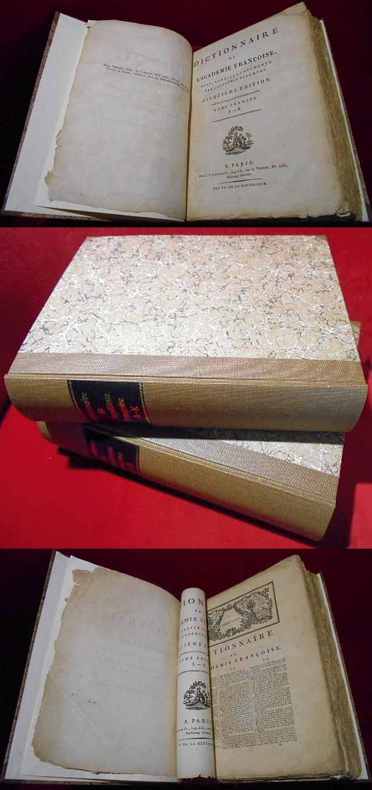
ref. 12799,Paris, Firmin-Didot 1932, 253 pp., 1 vol. in Première Grammaire puliée par l'Académie française depuis sa création en 1635 !
ref. 022848J. J. Smits, Paris, L'an VI et VII De La Republique. Leinen/Hartkarton Sehr gut
1813ref. 95511Newburyport MA: E. Little & Co 1813. Hardcover. Fair. Full leather boards with wear along edges. 1813 publication but no statement of edition; based on statement in the beginning from the District of Massachusetts it appears to be the first. Tight spine. Spine retains gilt bands not raised but not the title. Pages are unmarked but quite age-darkened. Geared toward students studying Latin. 12mo. 255 pp. including a final page headed "Errors." Scarce. E. Little & Co hardcover
1833Corners are bumped. Edgewear to extremities. Front free endpaper has been torn out leaving small strip. Front hinge is weak and cracked but still attached. Foxing throughout with heavy foxing on a few pages. ; 276 pages
ref. 1333298145.Gpaperback. Good. Access codes and supplements are not guaranteed with used items. May be an ex-library book. paperback
ref. 1528405285.Gpaperback. Good. Access codes and supplements are not guaranteed with used items. May be an ex-library book. paperback
ref. 1528114760.Gpaperback. Good. Access codes and supplements are not guaranteed with used items. May be an ex-library book. paperback
1911ref. R240122260A. FOURAUT. 1911. In-8. Cartonné. Bon état, Couv. convenable, Dos satisfaisant, Intérieur frais. 421 pages - passages de texte en anglais - annotations à l'encre dans le texte. . . . Classification Dewey : 425-Grammaire anglaise
1997English-Arabic. 25X17.5 cm. VIII+246 pages. Gilt hardcover with dust jacket. Spine edges slightly bumped. Pages slightly yellowing. Else in good conditions.
1981ref. RO60087236Bibliographisches Institut. 1981. In-12. Relié. Bon état, Couv. convenable, Dos satisfaisant, Intérieur frais. 412 pages. Annotations en page de garde.. . . . Classification Dewey : 435-Grammaire allemande
1869ref. boz_005670Adolphe ADERER. Certificat d'examen de grammaire, Académie de Paris, Empire français. Paris, 8 octobre 1869. Dimensions : 31,8 x 25,2 cm. 1 page. État : Bon état . Voir photos. Adolphe Aderer, né le 17 novembre 1855 à Napoléon et mort le 27 décembre 1923 à Paris, est un écrivain et critique dramatique français. Wikipédia Envoi soigné dans un emballage rigide et étanche. N’hésitez pas à visiter ma boutique et affiner vos recherches en fonction des catégories qui vous intéressent. Ma boutique L'Art Délivré. Lettres autographes, vieux papiers, livres anciens, photographies, gravures, timbres… Nous expertisons et/ou rachetons dans toute la France vos lettres, collections de lettres et livres anciens. Merci de votre visite. Jérôme KAYSER.
ref. DADAX143698534XNew unknown