714 risultati
rif. DADAX0253025516New unknown
1912rif. 224381912. Schwartz Isidor publisher. The Citizen: A Guide to Naturalization published after 1912 provided Yiddish-speaking Jewish immigrants with practical instruction for obtaining American citizenship during a period of substantial Jewish immigration to New York. Published in Brooklyn the manual translated the language and civic knowledge required for naturalization into forms accessible to applicants with limited English proficiency. Its questions and model answers address American government electoral procedures and New York State institutions while phonetic renderings of English enabled readers to rehearse responses for oral examination. The publication documents the role of Yiddish-language commercial publishers in helping Jewish immigrants navigate federal citizenship requirements and acquire the vocabulary of American civic life. Schwartz Isidor publisher. Vi Azoy Tsu Veren a Sitizen. / The Citizen: A Guide to Naturalization. All Important Questions and Answers Printed in Hebrew and Yiddish Also Translations in Plain English Which You are to Know When Applying for Your Final Citizen Papers. Brooklyn: Aroysgegeben fun Isidor Schwartz / Published by Isidor Schwartz n.d. after 1912. Only edition. 31 pages. Text in English and Yiddish including Hebrew script and phonetic transliterations. 6" x 4.5". Stapled pamphlet in printed wrappers. Organized around questions and prescribed answers the manual combines general civics instruction with information specific to New York naturalization applicants. Questions include "How does a bill become a law" "What is the capital of New York State" and "How many stars has the American flag" The supplied answer "Forty-eight stars" establishes a date after the admission of New Mexico and Arizona in 1912 and is consistent with the period before Alaska's statehood in 1959. The response to a question concerning electoral choice states "We vote for the candidate who is in our opinion best fitted to occupy the office he wishes to be elected to." Such prescribed formulations show how applicants were instructed to memorize both civic facts and the language of political participation. The pamphlet belongs to the Yiddish-language instructional literature produced for Jewish immigrants confronting English-language administrative and legal requirements in the United States. Its combination of Yiddish explanations phonetic English and standardized examination responses demonstrates how Brooklyn publishers adapted citizenship instruction to immigrants whose spoken and written English remained limited. The inclusion of New York State questions further identifies its intended regional readership. OCLC records eight institutional copies worldwide according to a published bibliographic census. Moderate chipping and edge wear to front and rear wrappers with several closed tears and losses at corners; interior pages clean and legible. Overall good condition. An uncommon example of Yiddish-language naturalization instruction documenting the practical preparation of Jewish immigrants for American citizenship. unknown
rif. DADAX0231176708New unknown
rif. DADAX0300141750New unknown
rif. DADAX0415555221New unknown
rif. DADAX0520255739New unknown
rif. DADAX0521104645New unknown
rif. DADAX0061376949New unknown
rif. DADAX0609607855New unknown
rif. DADAX0670805076New unknown
rif. DADAX067401913XNew unknown
rif. DADAX0876681569New unknown
rif. SONG0870684922Used: Good unknown
rif. 64208974McGill-Queen's University Press . Hardback. New. pp. xxv 362 McGill-Queen's University Press hardcover
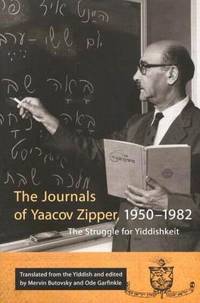
1946rif. 1116373New York: Jewish Encyclopedic Handbooks Central Yiddish Culture Organization CYCO. Fine maroon leatherbound 2 volume set gilt all edges Volume 1 has 430 pp with B/W illustrations; Volume 2 has 430 pp with B/W illustrations. . Fine. Leather Bound. 1946. Jewish Encyclopedic Handbooks Central Yiddish Culture Organization (CYCO hardcover
1974rif. 500528New York: Hebrew Union College Press and Ktav Publishing House 1974. Book. Very Good. Hardcover. 4to. An excellent ex-synagogue-library copy with lean to spine and suggestion of foxing to top edge only. Text clean and bright. Binding tight. Montreal Books rating system: 1. Fine 2. Near Fine 3. Very Good 4. Good 5. Fair . Hebrew Union College Press and Ktav Publishing House Hardcover
1965rif. 28615New York: Harper & Row 1965. First Edition; First Printing. Hardcover. Very Good in a Very Good dust jacket edges taped. Harper & Row hardcover
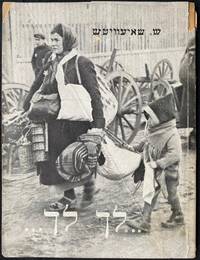
1946rif. 43433Lodzsh: Tsentraler Yidisher Historisher Komisye baym Tsentral-Komitet fun Poylishe Yidn 1946. 1st edition. Original dramatic photgraphic covers 8vo 70 1 page 1 leaf. Includes facsimiles. 21 cm. In Yiddish. Poems. "Oysgabes fun Der Tsentraler Yidisher Historisher Komisye baym Tsentral-Komitet fun Poylishe Yidn. Serye yidishe literatur 1." "Published by a commission The Central Jewish Historical Commission dedicated to recording the fate of Polish Jews published this book length poem by Simkhah Szajewics. Written in the Lodz Ghetto it appeared immediately after the war in 1946; Szajewicz perished in a concentration camp in 1944" from an exhibit at the National Yiddish Book Center which houses their copy in their Rare Book Collection. The book includes two long poems: "Lekh-lekha" and "Friling 702 " as well as letters and other related material. See David Roskies' interesting reflection on this work and it's stunning photographic cover at jtsa.edu/torah/go-forth-the-grammar-of-remembrance. For more about the author-poet see Chava rosenfarb's essay on Shayevitch in Tablet Magazine at tabletmag.com/sections/arts-letters/articles/the-last-poet-of-lodz. SUBJECTS: Jews -- Persecutions -- Poland -- Lódz. Holocaust Jewish 1939-1945 -- Poetry. Jews -- Correspondence. Crease and wear to wrapper and foot and crown of spine see photo better condition than usually found attractive. Good Condition. B HOLO2-110-36A-CCALX-'emm H-40-10. Lodzsh: Tsentraler Yidisher Historisher Komisye baym Tsentral-Komitet fun Poylishe Yidn unknown
1946rif. 13981Lodzsh: Tsentraler Yidisher Historisher Komisye baym Tsentral-Komitet fun Poylishe Yidn 1946. 1st edition. Later cloth with original dramatic photgraphic cover mounted on front 8vo 70 1 pages 1 l. includes facsimiles. 21 cm. Poems. "Oysgabes fun Der Tsentraler Yidisher Historisher Komisye baym Tsentral-Komitet fun Poylishe Yidn. Serye yidishe literatur 1." A committee dedicated to recording the fate of Polish Jews published this book length poem by Simkhah Szajewics. Written in the Lodz Ghetto it appeared immediately after the war in 1946; Szajewicz perished in a concentration camp in 1944" from the permanent exhibit at the National Yiddish Book Center which houses their copy in their Rare Book Collection. The book actually includes two long poems: "Lekh-lekha" and "Friling 702 " as well as letters and other related material. See David Roskies interesting reflection on this work and it's stunning photographic cover at jtsa.edu/torah/go-forth-the-grammar-of-remembrance. For more about the author-poet see Chava rosenfarb's essay on Shayevitch in Tablet Magazine at tabletmag.com/sections/arts-letters/articles/the-last-poet-of-lodz. SUBJECTS: Jews -- Persecutions -- Poland -- Lódz. Holocaust Jewish 1939-1945 -- Poetry. Jews -- Correspondence. Expertly rebound in attractive black cloth with the original photographic front cover mounted on the front. Very Good Condition. B HOLO2-110-36-CCALXBB-'emm H-40-10. Lodzsh: Tsentraler Yidisher Historisher Komisye baym Tsentral-Komitet fun Poylishe Yidn unknown
rif. 63424743University of Wisconsin Press . Papeback. New. pp. 408 Maps University of Wisconsin Press unknown
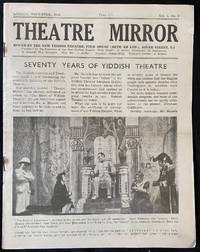
1946rif. 43547London: Nay-Idish teater 1946. Paperback. First edition. Original stapled paper wrappers 4to 16 4 pages including illustrations and photos. 29 cm. Text in Yiddish 16 pages and English 4 pages. Monthly periodical published by the New Yiddish Theater in London. Numbering was continuous despite the volume change with the start of the new calendar year. "In 1945 playwright producer and manager Abish Meisels staged an adaptation of Abraham Goldfaden's The Ten Commandments at the New Yiddish Theatre in the East End. An Austrian refugee Meisels immigrated to London in 1938. Five years later he walked down Adler Street and entered Adler Hall. He turned a key unlocking the doors to the New Yiddish Theatre. According to Meisels his mission was 'to present the best in Jewish drama; to keep alive the art of the Jewish theatre and to inculcate into the minds of the younger generation a love and appreciation of their lives customs and language.' .Meisels' production may have been salient for London's post-war Jewish community. Many of his 20-person company were refugees from Nazi-occupied Europe as were others of London's Jewish population. They found in Meisels' theatre as he put it a 'much needed cultural educational and social centre' and a sense of belonging. By the time Meisels opened his theatre in 1943 the Yiddish stage had been in existence for nearly 70 years. Its story began in 1876 when writer Abraham Goldfaden staged the first Yiddish theatrical productions in Romania and Russia. Yiddish plays were first performed in the UK in the 1880s concurrent with the mass migration of Yiddish-speaking Eastern European Jews to Britain. Between 1881 and 1914 nearly 120000 of these immigrants entered the country most settling in the East End. These Yiddish-speaking Jews brought with them the desire for entertainment in their native tongue. Meisels' company was the last theatre in Britain devoted to Yiddish productions. It followed the Hebrew Dramatic Club on Princes Street 1886-1887; the Pavilion Theatre onWhitechapel Road 1906-1934; the Temple of Art known as the Feinman Yiddish People's Theatre on Commercial Road; the Grand Palais on Commercial Road 1934-1970 and the Jewish National Theatre at Adler Hall 1936- 1939. The use of Yiddish declined asthe community became assimilated. In 1947 Meisels locked the doors to the NewYiddish Theatre for the last time." Stefanie Halpern Jewish Renaissance.For more on London's New Yiddish Theatre and Theater Mirror/Teater Shpigl see the London Jewish Museum's interview with Katie Power https://jewishmuseum.org.uk/whats-on/exhibitions-2/pitch-up-community-voices-katie-power. SUBJECTS: Jewish theater -- Periodicals. Jewish theater. OCLC: 35448905. OCLC locates 5 holdings in the US NYPL LOC Columbia HUC UWisc-Madison Archival corner repair rusting to staples. Good Condition. BER-1 YID-48-82A-GGX-'mccel. London: Nay-Idish teater paperback
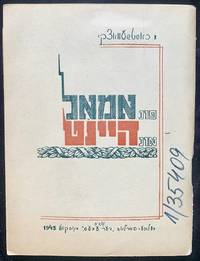
1943rif. 43487Moscow: Der Emes 1943. First edition. Original illustrated paper wrappers 16vo 62 pages. In Yiddish. Title translates as "From Then and Now: Songs and Ballads About War" War poems by Soviet-Yiddish poet Moyshe Khashtshevatski. "Khashtshevatski was a poet prose writer and playwright born in Buki near Uman Ukraine.In 1918 April 6 he debuted in print with a poem entitled 'Friling Kumt' Spring Comes in the Kiev newspaper Di Naye Tsayt The New Times-using the pen name M. Mishal. In 1921 he moved to Kiev where he forged a strong bond with the local Yiddish writers Yekhezkl Dobrushin Dovid Hofshteyn and Der Nister among others and from that point he enhanced ever more his reputation as a creator and builder of Soviet Yiddish literature.From 1923 over the course of three years he contributed intensively to Emes Truth in Moscow and he actively took part in the Soviet community and political life. Although his first works were in the symbolist vein he would later switch to a more realistic depiction of life and address the major issues and events of the time. He brought new motifs and artistic imagery into Soviet Yiddish poetry. The range of his interests was extremely broad. He also masterfully translated from the Russian and Ukrainian classics as well as from other languages. In 1943 the Moscow publisher Der Emes The Truth brought out two books by him: a poetry collection entitled Fun Amol un Haynt Of Then and Now this work and jottings about the hero of the Soviet Union Khayim Diskin Khayim Diskin. The majority of poems in the former were dedicated to war themes. Shortly after the outbreak of the Nazi-Soviet war in 1941 he was evacuated to Samarkand Uzbekistan and there he learned of the death of his only son at the front. He proceeded to volunteer for mobilization into the Red Army despite the fact that he was forty-six years of age. He contributed in the harshest of battles in that period of the fighting and died in battle." Leksikon Fun Der Nayer Yidisher Literatur SUBJECTS: Yiddish poetry. OCLC: 233117501 Number penned to front wrapper & title page; edgewear to one corner on many leaves no text affected and paper is browning and somewhat fragile but otherwise Good Condition. BK YID-48-111A-L-'mexcc. Moscow: Der Emes unknown
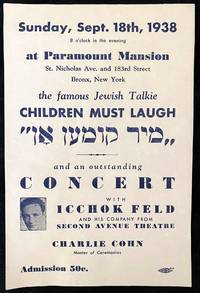
1938rif. 43522New York: No Publisher Paramount Mansion 1938. 1st edition. 5.5x8.5 inches blue on white photographic flyer in English with Yiddish film title. The film title "Mir Kumen On" can be translated directly as "We are Coming" though in the US the title was translated as "Children Must Laugh" and in France and Belgium as "Nous Arrivons." The restored film is viewable online at www.youtube.com/watchv=vozD_XbGHGA and was featured at the Museum of Modern Art's To Save and Project: The 14th MoMA International Festival of Film Preservation in 2016. "A rare record of Jewish life in Poland before World War II this 1936 film Children Must Laugh was produced in several language versions as an international fundraiser for the Medem Sanatorium near Warsaw a clinic sponsored by the General Union of Jewish Workers the Bund that provided care and an escape from urban poverty for some 10000 children between 1926 and 1939. Directed in a Soviet-influenced style by Alexander Ford a committed Communist who later became the head of Poland's National Film School the film follows three children as they gradually overcome their emotional withdrawal and distrust and enter the communal life of the institution" MoMA 2016. Full text: Sunday Sept. 18 1938 8 o'clock in the evening At Paramount Mansion St. Nicholas Ave and 183rd Street Bronx New York The famous Jewish Talkie CHILDREN MUST LAUGH "MIR KUMEN ON" And an outstanding CONCERT WITH ICCHOK FELD AND HIS COMPANY FROM SECOND AVENUE THEATRE CHARLIE COHN Master of Ceremonies Admission 50c. A massive fundraising campaign for the Medem Sanitorium was undertaken in 1937-38 and the film was shown internationally as a way to build support and solicit funds. We were able to locate no copies using OCLC nor with a google search. Apparently an unrecorded promotional flyer for a very important film. Near Fine Condition. Important displayable and exceedingly rare. PBERL-1-10-XX. New York: No Publisher [Paramount Mansion?] unknown
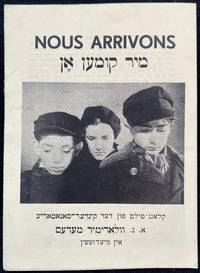
1938rif. 43520No Place Paris: No Publisher The Bund 1938. No Date 1938. 1st edition. Single fold pamphlet 12mo 3 pages. Includes photo on cover & inside. All text in Yiddish. Title translates as "We are Coming. A Sound-Film from the Children's Sanatorium Vladimir Medem in Miedzshin" a neighborhood in Warsaw. Promotional pamphlet for use in France and Belgium and possibly elsewhere for Aleksander Ford's 1936 film re-released in 1937-1938 for fundraising purposes on the children of the Medem Sanatorium entitled "Mir Kumen On" which translates literally as "We are Coming." For the English release of the film the title was instead translated as "Children Must Laugh;" it is viewable online at www.youtube.com/watchv=vozD_XbGHGA. The restored film was featured at the Museum of Modern Art's To Save and Project: The 14th MoMA International Festival of Film Preservation in 2016. "A rare record of Jewish life in Poland before World War II this 1936 film Mir Kumen Onwas produced in several language versions as an international fundraiser for the Medem Sanatorium near Warsaw a clinic sponsored by the General Union of Jewish Workers the Bund that provided care and an escape from urban poverty for some 10000 children between 1926 and 1939. Directed in a Soviet-influenced style by Alexander Ford a committed Communist who later became the head of Poland's National Film School the film follows three children as they gradually overcome their emotional withdrawal and distrust and enter the communal life of the institution" MoMA 2016. From the pamphlet text: "Narrow and dark streets of Greater Warsaw. Crowded and wet attics attics and cellars. 'Apartments' filled with people who lack mother's breasts for the always screaming child. An unemployed father. And - children everywhere many children. Children - withered rickety with crooked legs sunken chests and pale faces they - the children - know all the bitterness of life from a very early age. Often very often they are already 'earners' themselves - in a poor workshop in the street or until late at night they sell th apples and 'hot warm bagels'. And now from this environment the children arrive at the Medem sanatorium: Hanale from the Jewish secular school the pale Zalmanka from Cheder and Laser - the bagel seller. In the beginning everything is strange to them in the 'strange' Medem-Sanatorium: no one punishes no one shouts no one is angry. Everything is friendly to them everyone strives to understand them as their best friend. Joy and freedom mixed with free independent work rule over everything here. And our three heroes quickly got used to the new life-forms. They flourish. They become stronger physically and mentally they actively participate in the work of the 'self-management' of children they begin to understand that the world does not have to be like that as they realized in Warsaw that they can and must be someone else someone free someone equal someone beautiful. The children are taken in by the spirit of true friendship they begin to understand that person's suffering and get an aspiration to help that person. And when their daily newspaper brings news that the coal miners are on strike in Zaglembia that their children are starving they are deeply moved. Because - who can understand better than them what a strike means and feel more than them what is called hunger And at a general meeting the children according to their own proposal give each one a day of their time in the sanatorium so that the 180 children - create 180 days for their brothers in Zaglembia Times flies in the sanatorium. And now we see our 3 'heroes' as they drive off back home. The faces of all 3 are drawn. A deep sadness lies on the young childish faces." Both the pamphlet and the film end with the song "Mir Kumen On"--We Are Coming-the words by Nokhem Yud 1888-1966 and music by Yankl Troupianski 1909-1944. The film's theme song was also used by Camp Hemshekh in New York as its anthem in the 1960s & 1970s. "Everything in the film is factual and authentic. There is not a single artist in the film - everything is performed by the participating children of the Medem Sanatorium." We were unable to locate any copies using OCLC nor with a google search. An unrecorded promotional brochure for a very important film. Near Fine Condition. Very important. Exceedingly rare. PBERL-1-9-XX. No Place [Paris?]: No Publisher [The Bund?] unknown
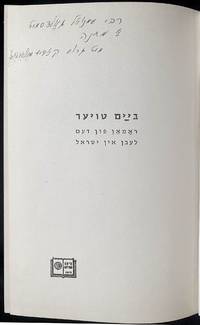
1967rif. 43562Nyu-York New York: Tsiko 1967. Hardcover. 1st edition. Original printed cloth 8vo 412 pages. 24 cm. In Yiddish. Title translates as "At the Gate: A Novel." Inscribed on title page by the author "Roman fun dem lebn in Yis´roel." Kadya Molodowsky was a major figure in the Yiddish literary scene in Warsaw from the 1920s through 1935 and in New York from 1935 until her death in 1975. A teacher in the Yiddish schools in Warsaw as a young woman she was best known for her children's poems. In the United States she wrote for the Yiddish press and founded and edited a journal Sviva Surroundings which she published for three decades. Living in Israel 1948-52 she founded and edited a journal Heym. She published six major books of poems 1927-1965 novels short stories plays and essays. Recurrent themes in her work include the lives of Jewish women and girls Jewish tradition in the face of modernity Israel and the Holocaust. OCLC: 11759957. Very Good Condition. An attractive inscribed work by a leading female Yiddish writer. BER-1-7. Nyu-York [New York]: Tsiko hardcover