454 résultats
réf. DADAX0723202613New unknown
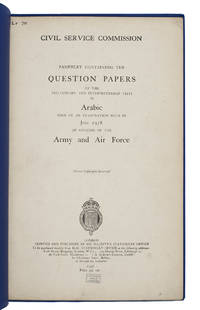
1938réf. ABC_46033London: printed and published at Her Majesty's Stationary Office 1938. Original publisher's printed paper wrappers in later blue paper wrappers. Folio. Printed in English and Arabic. British government publication of an interpretership examination for Arabic translation. It provides the examination questions that officers in the Army and Air Force had to answer correctly to pass as an interpreter of Arabic. The work contains several questions that include translating Arabic texts printed in Arabic type.Library stamp on foot of front cover title-page and pp. 8 and 9: "Liverpool Public Libraries". In good condition.l Consolidated List of Government Publications 1936 p.147; WorldCat 1 copy: British Library. printed and published at Her Majesty's Stationary Office, unknown
réf. 23541My translator says the year 1797 appears in the script. I am obliged to a multi-lingual friend for the information I give. Eight pages pages 7/8 blank not paginated12mo unbound stains on title and its verso not affecting text. See images. Titled "This is the creed of sheikh al-Dardiri". Al-Dardiri was born in 1715 AD in Asyoot in Egypt. He's one of the imams of the Sunni Islam of Maliki school of thought. This document was written by Mohamed Ahmed Ibin Alhaj Mohamed Ahmed Abu Qaseesah in 1797. It discusses the twenty attributes in Sunni Islam that are obligatory for God Almighty according to Al-Dardiri. [My translator says the year 1797 appears in the script.] unknown
réf. DADAX0198202911New unknown
réf. DADAX0674975928New unknown
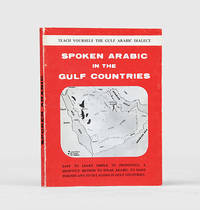
1971réf. 171721al-Khobar: The International Publications Industries 1971. Keep the following in mind and everything will be easy Fourth printing of this institutionally rare phrasebook which adopts "a short cut method simple and easy enough for a businessman to teach himself the spoken Arabic while relaxing in the Aircraft or in his Hotel room. Many of the oil industry people in Arabia owe their local friendship to this book". Arranged by topic the book has sections on greetings shopping food and drink and other practicalities such as taking one's car to a mechanic. The unnamed author places a premium on language as a key to understanding local culture: "you will find the Gulf Arabs intensely loyal to their friends as well as to their families. Most of them are blessed with a keen sense of humor. For these and other reasons such as their hospitality and courtesy you will enjoy getting acquainted with them". Further sections discuss the etiquette of being a guest at a traditional wedding and how to behave if invited to a private house as a guest. WorldCat lists only four copies in institutions Oxford National Library of Wales National Library of Israel Bilkent University. Small octavo 115 x 117 mm. Wire stitched in the original printed wrappers spine lettered in black. Minor wear to wrappers contents lightly toned not affecting text. A very good copy. unknown
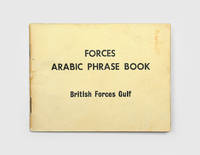
1967réf. 196308No stated place or publisher: 1967. First edition introducing vocabulary for topics ranging from food and drink greetings and personal details to specialised military terms like "rocket launcher" and "Trucial Oman Scouts". We have traced no other copies in institutions or commerce. The phrasebook opens with encouragement: "The Arab regards his language as the greatest in the world. So when he hears someone trying to speak his language he is delighted. You will find your efforts to speak Arabic get a very warm response" p. 1. There are also a number of "Do's and Don'ts" such as do not be discouraged when you do not understand anything and do not point the soles of your feet at anyone. Alongside individual words the book also introduces phrases like "I'd like a cup of coffee please" "Is there a well near here" and "I am a soldier". In 1967 after the British withdrawal from Aden Middle East Command was renamed HQ British Forces Gulf and relocated to Bahrain. The distinction between Bahraini and Trucial Omani vocabulary for example "village" as qarya or balad respectively and the inclusion of regional variants for example fee ammaan Illah for "Goodbye" suggest that it was issued to the Trucial Oman Scouts. Landscape duodecimo. With 7 pp. of note paper at rear as issued. Original yellow paper wrappers wire-stitched as issued front wrapper lettered in black rear wrapper with printer's slug in black. Wrappers a little soiled at edges and spine rear wrapper with strong vertical crease contents clean: a very good copy. unknown
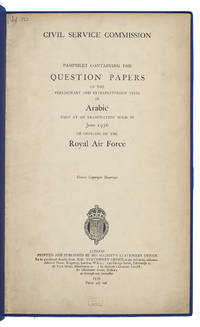
1936réf. ABC_46032London: printed and published at Her Majesty's Stationary Office 1936. Original publisher's printed paper wrappers in later blue paper wrappers. Folio. Printed in English and Arabic. British government publication of an interpretership examination for Arabic translation. It provides the examination questions that officers in the Royal Air Force had to answer correctly to pass as an interpreter of Arabic. The work contains several questions that include translating Arabic texts printed in Arabic type.Library stamp on foot of front cover title-page and pp. 8 and 9: "Liverpool Public Libraries". In good condition.l Consolidated List of Government Publications 1936 p.147; not in WorldCat. printed and published at Her Majesty's Stationary Office, unknown
2014réf. 111335Snoeck Publishers. New. Paperback. FREE UPGRADE to Courier/Priority Shipping Upon Request - IN STOCK AND IMMEDIATELY AVAILABLE FOR SHIPMENT - Flawless copy brand new pristine never opened - Text in French. -- with a bonus offer-- . 2014. 9461611765 . Snoeck Publishers paperback
réf. 70897Dover Publications. As New. Paperback. FREE UPGRADE to Courier/Priority Shipping Upon Request - IN STOCK AND IMMEDIATELY AVAILABLE FOR SHIPMENT - AS NEW THE TEXT BLOCK IS PRISTINE CLEAN UNMARKED AND IN EXCELLENT CONDITION - - ND Circa 1990 Appears unread. -- with a bonus offer--; 1 x 8.4 x 5.3 Inches . N.D. 0486203514 . Dover Publications paperback
réf. 37846New York: A. L. Burtt Company. As New. Hardcover. FREE UPGRADE to Courier/Priority Shipping Upon Request – – IN STOCK AND IMMEDIATELY AVAILABLE FOR SHIPMENT - Text clean unmarked. -- with a bonus offer--; T-Salegeo; Sale George translator Into English from the Original Arabic; with Explanatory Notes Selected By Frederic Mynon Cooper to Which is Prefixed a Life of Mohammed The Koran.with Explanatory Notes Selected By Frederic Mynon Cooper to Which is Prefixed a Life of Mohammed . A. L. Burtt Company hardcover
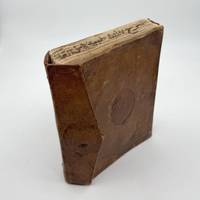
réf. 365678Ottoman lands undated early 18th c. C.E. Ink on on aharli paper. Text in black and red ink 23 lines per page. 158 ff. 1 vols. 6 x 8 inches. Later red leather spine cloth boards. Old paper repairs throughout pencil page numbers in a European hand. Two ownership inscriptions dated A.H. 1128-1152 1716-1739 C.E. Very good. Ink on on aharli paper. Text in black and red ink 23 lines per page. 158 ff. 1 vols. 6 x 8 inches. An important compendium of Islamic jurisprudence in the Hanafi school by ʻAbd AllÄh ibn Aḥmad Nasafī d. A.H. 710 / 1310 C.E. It systematically presents authoritative Hanafi rulings without extended argumentation. The introduction highlights its purpose as a concise yet comprehensive reference. A foundational Hanafi legal text Kanz al-Daqâ'iq is an abridgment of the author's al-Wâfî widely studied in Ottoman madrasas. unknown
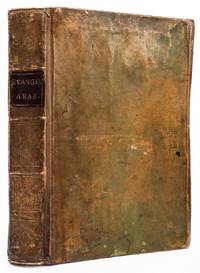
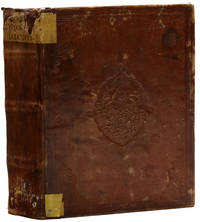
1855réf. ABC_47909London: William Watts 1855. Original elaborately embossed brown calf with the title lettered in gold on the spine red edges. 8vo 22 x 14 cm. Rare edition of one of the best Arabic translations of the Bible. This work is based on the 1671 version from Rome which was the first printed edition of the complete Bible in Arabic. However the version from 1671 was not vocalised written with vowel points but the present edition from London is.The Arabic translation of the Bible from 1671 was done under the direction of Sergius Risi d. 1638 the archbischop of Damascus. It had been requested by the Archbischop of Aleppo and other important figures from the Eastern Church as manuscript copies had become rare and were often found to be incorrect. Risi and his team compared the Arabic manuscripts of the Bible they had access to with Hebrew and Latin versions and then composed their own translation. They first completed the Arabic Pentateuch. The Old and New Testament followed in 1647 and 1650 respectively after Risi's passing. These translations were revised and then finally published in 1671. It was the only Arabic translation of the complete Bible until 1811. Numerous new translations were made in 19th century. The present Catholic edition of the Arabic Bible translation existed alongside the 1860 Protestant translation by Cornelius van Alen van Dyck.According to the title-page this edition of the Old Testament was printed in 1855. However none of the relevant reference works mention an 1855 edition. Since the title-page of the New Testament bears the year 1857 it is possible that the Old Testament was also printed in that year and the date on the title-page is a printing mistake. The 1857 edition is also fairly rare on the market as we have only been able to find it in 1 sales record of the past 100 years.With the label of Watkins' bookbinding factory mounted on the front pastedown and a purple Spanish stamp from the library of someone with a law degree on the final leaf. The edges and corners of the boards are somewhat scuffed the binding is rubbed with some loss of material on the spine. The leaves are somewhat browned mild foxing throughout the back pastedown has a tear in the gutter. Otherwise in good condition.l BM General catalogue vol 2 p. 1276-198/199 other eds.; Darlow & Moule 1684; WorldCat 1402269394 1 copy 1857 ed.; cf. Green Journeymen middlemen: travel transculture and technology in the origins of Muslim printing. In: International journal of Middle East studies vol. 41 2 2009 pp. 203-224. William Watts, unknown
réf. 182523Sidney Ohio: Chaplin Editorial Services; R. Howard Courtney Peoria Illinois 1972-82. The birth of Arab philately First editions a complete run. Chaplin was the first to devote a journal to the stamps of the entire Arab world stretching from Libya to the peninsula and as far north as Syria. We have traced one set of Chaplin's journals at the National Postal Museum and none of Courtney's. Mervin Chaplin's Journal of Arabian Philately was published at a time when Arabian stamps were unpopular amongst Western collectors a viewpoint that Chaplin aimed to counteract. His journal covered topics such as mosques featured on stamps and those issued in the Hejaz and Nejd. It also included a list of new issues in the first half of 1972. The journal only lasted for two volumes both released in 1972. Six years later stamp collector Robert Courtney decided to continue Chaplin's work with the Arab World Philatelist. He copied the design and layout of the Journal of Arabian Philately and produced six volumes. Courtney also included a list of recent auction results in every volume. 8 vols octavo. Many halftone photographic illustrations and maps; advertisements throughout. Original mixed wrappers lettered and decorated in black to recto and verso stapled as issued. Housed in a grey archival box. Some ink tick marks to the Journal of Arabian Philately. Wrappers a touch toned at extremities as expected occasional foxing and offsetting internally: a very good collection. Robert Courtney "The Arab World Philatelist 1978-1982". unknown
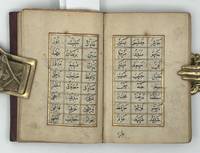
1730réf. 369933Ottoman Empire 1730. Polychrome double page ornamental opening text in black ink in a rounded naskh hand 8 lines per page fully vocalized with gold dot aya markers all within gilt rule borders. Attributes within gilt frames 30 per page. Occasional annotations in red. 117 ff. Dated at end A.H. 1143. 1 vols. 12mo. Late nineteenth century Islamic binding of red leather plaque stamped in silver with fore edge guard. Some minor smudging of passages a few paper flaws. Twentieth-century ownership inscriptions on first blank. Very good plus overall. Polychrome double page ornamental opening text in black ink in a rounded naskh hand 8 lines per page fully vocalized with gold dot aya markers all within gilt rule borders. Attributes within gilt frames 30 per page. Occasional annotations in red. 117 ff. Dated at end A.H. 1143. 1 vols. 12mo. Attractive pocket devotional with short surahs tables of the Attributes of Allah and other prayers. unknown
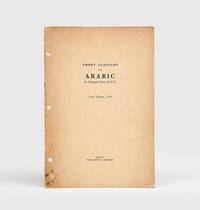
1947réf. 184799London: Geographical Section General Staff 1947. Arabic and military cartography Rare first and only edition of this Arabic glossary for use on foreign maps produced by the British War Office. It explains the use of Arabic terms on maps covering territories to the east of the Libyan-Egyptian border and was part of an extensive series published in the 1940s. The spelling and transliteration follow the RGS II System conventions devised by the Royal Geographical Society's Permanent Committee on Geographical Names in 1921 updating those used by the War Office and Admiralty after 1885. The introduction includes a survey of the history of the Arabic language its alphabet pronunciation and dialects in view of instructing soldiers pilots and surveyors on how to read and pronounce names on maps of the Middle East. "An Arabic word may appear on European maps in numerous transliterated forms each depending upon the national authority of the map and the principle of transliteration applied to the names on it" p. 2 due to the "considerable play" between a e and i and other such alternative renditions of specific letters and sounds. The four-column table provides abbreviations transliteration the Arabic-script version and the meaning of Arabic words commonly found on maps. For instance aqra' is rendered as "without vegetation" ashqar as "reddish" ghurd as "sand dune" and zallaq as "slippery place" specifying if a noun is a plural and/or in a different grammatical case. Words originating from other languages Berber Hebrew Greek Latin Turkish and Persian are also identified. Octavo 270 x 185 mm. pp. 28 2. Text in Arabic and English. Original printed brown paper wrappers three punch holes. Wrappers lightly waterstained along lower edge foot of spine rubbed traces of adhesive at foot of front wrapper contents toned but clean: a very good copy. unknown
1833réf. 365677Ottoman lands 1833. Ink on thick burnished paper 21 lines per page in Levantine-style script in black ink with headings and occasional passages in red ink dated A.H. 1249 = C.E. 1833. 448 pp. The first few pages extensively annotated in margins in a later scholarly hand with numerous doodles and pen starts on last leaves. 1 vols. 8vo 8 x 6 inches. Leather wallet binding with fore edge guard boards decorated with a shamsa motif in blind top edge marked in ink "Sharh al-Shatibi". A bit shaken textblock loose in binding very good overall. Ink on thick burnished paper 21 lines per page in Levantine-style script in black ink with headings and occasional passages in red ink dated A.H. 1249 = C.E. 1833. 448 pp. The first few pages extensively annotated in margins in a later scholarly hand with numerous doodles and pen starts on last leaves. 1 vols. 8vo 8 x 6 inches. Ibn al-QÄsıh 1316-1399 C.E. an eminent scholar of Qira'at and Islamic textual transmission was born in Baghdad and studied in Egypt where he mastered the ten canonical recitations 'ashara. He later became a renowned instructor at Madânî Mosque where he taught many scholars. His works particularly Siraj al-QÄriʾal-mubtadî wa Tadhkar al-Muqriʾal-mutahi are critical to the tradition of Qira'at pedagogy. This manuscript is an early nineteenth-century copy of a standard work an extensive and detailed commentary on al-Shatıbi's Ḥırz al-Amani a foundational text in the science of Qur'anic recitation. While al-Shatıbi's work is a didactic poem that systematically presents the rules of Qira'at this commentary expands upon its meanings with in-depth linguistic grammatical and recitational analyses providing a comprehensive exegesis that was widely studied by advanced scholars. The presence of extensive marginal annotations suggests active scholarly engagement making this manuscript an invaluable resource for the study of classical Qira'at methodologies and textual transmission. A significant scholarly manuscript offering a deeply analytical and authoritative commentary on one of the most important texts in the Qira'at tradition. unknown
réf. 37970London: H.S. Nichols Ltd. 1897. . Limited Library edition one of 570 sets and one of only a few sets issued in the publisher’s full morocco bindings set of twelve volumes full brown bevelled morocco with lavishly decorated boards in gilt gilt decorations to spine five raised bands inner dentelles gilt t.e.g. patterned endpapers b/w frontispiece portrait to first volume b/w plates with caption-sheets; neat ink ownership autograph to front paste-down endpaper and to front free endpaper verso light wear to leather at extremities a very good set. London: H.S. Nichols Ltd., 1897. hardcover
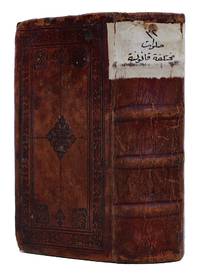
réf. 66237Khenchara Lebanon: Monastery of St John the Baptist 1787. 8vo. 17 x 10 cm. pp. x735. Contemporary russet morocco binding floral decoration stamped in blind on back and front spine with raised bands manuscript title-label in Arabic stuck to the top of the spine. A number of small engravings including one of the nativity head- and tail-pieces. Edges and corners rubbed small area of water damage to back board; internally there is some occasional light water-staining and foxing. Generally very good. This is the second impression of a Horologion printed in Arabic at the press established in 1734 at the Monastery of St John the Baptist in Khenchara by Abdallah Zakhir. It contains the breviary hymns and prayers for the Byzantine rite printed in black and red Arabic script. Khenchara, Lebanon: Monastery of St John the Baptist, 1787. hardcover
1925réf. 000514Damascus: al- Matba'a al- Haditha 1925 Book. As New. Hardcover. 4to - over 9¾ - 12" tall. A comprehensive work by a well-known scholar and politician from Damasscus about the city including the political social and the other aspects during the Ottoman synasty in the last period. Six volumes 4to. in Arabic printed between 1343 and 1347 AH. 1925 and 1927 AD. in Damascus. 309 317 271 310 308 425 p. in later fine bindings. al- Matba'a al- Haditha hardcover
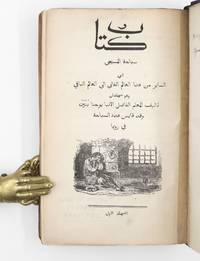
1834réf. 372732Malta: press of the Anglican Church Missionary Society 1834. First edition in Arabic. Title vignette of Bunyan in prison 7 plates captioned in Arabic. 6 281 1 imprint 2 blank pp. 1 vols. 8vo in 6s. Original silky cloth over boards twentieth-century binder's cloth spine. Joints crudely rehinged title leaf reinforced at gutter; binding cracked and a few leaves loosened. Contemporary presentation inscription on pastedown. Very good internally fine. First edition in Arabic. Title vignette of Bunyan in prison 7 plates captioned in Arabic. 6 281 1 imprint 2 blank pp. 1 vols. 8vo in 6s. Bunyan's Pilgrim's Progress translated into Arabic with a life of the author by Christoph Friedrich Schlienz. From the title page this is nominally the first volume but press marks are continuous and the text is complete: the end part twentieth sees the Pilgrim reach the Celestial City. Printed at Malta by the Anglican missionaries. William R. Whittingham 1805-1879 graduated the General Theological Seminary in 1825 and was named librarian of the newly founded school. He later accepted a position on the faculty in 1836. Whittingham was consecrated the fourth Bishop of Maryland in 1840 and served in that capacity until his death. This copy with his contemporary gift inscription to the GTS library "From the Rev. W.R. Whittingham 1834" RARE FIRST EDIITION IN ARABIC of a classic of English literature and of Christian devotion. Roper Arabic printing in Malta 1825-1845 56. OCLC: 57188645 Columbia Glasgow Tübingen 643954559 Manchester. Provenance: William R. Whittingham gif tinscription 1834; General Theological Seminary bookplates and inkstamps press of the Anglican Church Missionary Society unknown
1848réf. ST14540Leipsic Leipzig: Guillaume Vogel fils 1848. FIRST EDITION. 225 x 142 mm. 8 3/4 x 5 1/2". XXV pp. 4 p.l. 231 pp. VERY ATTRACTIVE AND UNUSUAL CONTEMPORARY BLUE CLOTH BY F. J. CRUSIUS OF LEIPZIG his ticket on verso of front free endpaper WITH ORNATE STAMPED DECORATION IN THE ROMANTIC STYLE in gilt colors and blind covers with rocaille frame and large central arabesque in red and gilt smooth black roan spine with stylized gilt vine brown and tan lattice-work printed endpapers and edges. Text in French and Arabic on facing pages. Front flyleaf with AUTHOR'S INK PRESENTATION INSCRIPTION to Monsieur P. Desmaison see below. ◆One corner slightly bumped leaves lightly and uniformly browned due to paper quality a few other trivial imperfections but A NEARLY FINE AND VERY PLEASING COPY with few signs of wear inside or out. This is a beautifully preserved copy of a rare guide to spoken Arabic that features special provenance in an embossed and painted cloth binding that can almost pass as onlaid morocco. Our author Sheikh Mouhammad Ayaad El-Tantavy or al-Tantawi 1810-61 was an instructor of languages and literature at Al Azahr University in Egypt when he came to the attention of Russian diplomats in Cairo whose interpreter had attended his classes. The Russian consul to the Ottoman Empire which then occupied Egypt requested that El-Tantavy be lent to the Institute of Oriental Languages in the Russian foreign ministry and once he arrived in St. Petersburg in 1840 he never left. In addition to teaching languages at the school for Russian diplomats he was a professor of Arabic at St. Petersburg University eventually becoming the Chair of Arabic Studies. The present work is a guide to spoken Arabic for diplomats with the parallel texts in Arabic and French then the international language for diplomacy. France Russia and the Ottoman Empire had been engaged in a series of conflicts for some years so this tool would have had very practical application. It is recommended in the 1855 book "The Languages of the Seat of War in the East" by Friedrich Max Muller. The present copy is inscribed by the author to Jean-Jacques-Pierre Desmaisons 1807-73 the Franco-Russian director of training in Oriental languages in the Asiatic department of the Russian foreign ministry and El-Tantavy's supervisor there. The fact that Desmaisons would not have needed to make practical use of our volume goes some way to account for its fine condition. Binder F. J. Crusius developed machinery to facilitate the lavish decoration of bindings in innovative ways--like using paint to imitate leather as in the present example--achieving aesthetically pleasing results with far less labor and expense than would have been necessitated by hand work. The "Report of the Assessment Commission at the General German Industrial Exhibition in Munich in 1854" notes that Crusius displayed plan drawings of his invention at the fair. Copies of the first edition of this work are rare with OCLC finding just 12 in libraries worldwide and none in North America. We could find no copies recorded at auction. Guillaume Vogel fils unknown
réf. 63499Romae Rome: Ex Typographia Medicea 1619. Folio 33.5x21 cm. pp. 4 9-462 2 with at recto the printer's letter repeated with the date of the 1591 original edition blank at verso. Contemporary green vellum spine with raised bands and gilt-decorated compartments red Morocco label marbled endpapers edges dyed red. Title printed in red and black with Medici's woodcut coat-of-arms printer's advice "Typographus lectori". With 149 text woodcuts by Leonardo Parassole c.1570-c.1630 after Antonio Tempesta 1555-1630 their monograms appearing on a number of the illustrations. The woodcuts are remarkable examples of Tempesta's work notable for their clarity of composition and their didactic narrative of the episodes depicted. Ex libris Luigi Bossi Milan 1758-1835 with his engraved heraldic bookplate to front pastedown along with T. Fenteman & Sons Leeds booksellers label to upper corner. Title-page lightly browned boards faded and discoloured some occasional light toning generally a very good copy printed on thick paper the woodcuts in strong impressions throughout. Rare 1619 reissue or of the original 1591 stock of the Arabic Medicean Gospels. The text lines are almost identical with those of the Arabic issue but now have an interlinear Latin version added which was prepared by Antonius Sionita. In 1584 the last year of the papacy of Gregory XIII who had constantly endeavoured to effect a union between the Church of Rome and the eastern Christians Cardinal Ferdinando de' Medici the brother and later the successor of the Grand Duke of Tuscany founded a printing press in Rome with a vast selection of oriental types cut by the French typographer Robert Granjon. Run by a versatile orientalist Giovan Battista Raimondi the press had various aims. One was to produce propaganda which would attract the eastern Christians to Roman Catholicism. Another was to corner the publishing market in an area where typography was prohibited and to make a financial profit from the sale in the east of books printed in Arabic. The third aim was to further European knowledge and to provide good editions of Arabic versions of certain standard non-religious texts. These included the writings of Avicenna al-Idrisi's geographical compendium al-Tusi's adaptation of Euclid's text on geometry and various works on Arabic grammar and syntax. The first major publication was the 1591 edition of the Gospels. This copy has an interlinear Latin translation but the work was also issued solely in Arabic. It contains 149 fine woodcut illustrations made by Leonardo Parasole mainly after designs by one of the best known Florentine artists of his day Antonio Tempesta who owed much of his fame to the frescoes he painted in the Vatican and in a number of Roman palaces. The woodcut in the Gospel of St Mark of the presentation of the head of John the Baptist to Salome Mark 6:28 by a man in Turkish dress reminds us of the common association between the great enemy of Christendom in the sixteenth century and the ancient heathens. The Arabic text is printed in Robert Granjon's famous large fount generally considered the first satisfactory Arabic printing type; as all early printed editions of the Arabic Gospels it is based on the Alexandrian Vulgate cf. Darlow/M. 1636. The Latin version is by Leonardo Sionita. The work begins with page 9 without a title-page or any preliminary matter at all: "the intended prefatory matter was apparently never published" Darlow/M. Darlow & Moule 1637 & 1643; Schnurrer Bibliotheca arabica 318; Brunet II 1122-23; Graesse II 531 Romae [Rome]: Ex Typographia Medicea, 1619. hardcover
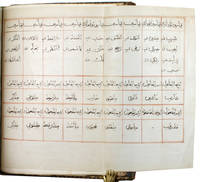
1830réf. ABC_483971830. Contemporary navy blue morocco with the title lettered in gold on spine marbled endpapers. 4to 21.5 x 27 cm. With 2 folding tables 17 lines to the page written in red and black ink. A unique handwritten vocabulary and phrasebook of English and Arabic from the first half of the 19th century. This meticulously prepared manuscript is written in the fashion of a printed book opening with a title page and ending with an index of topics. It is divided into four main sections: nouns adjectives verbs and example sentences. The vocabulary especially in the nouns section is arranged by subjects which include such interesting headings as "Druggist" "Painter" "Merchant" "Cities" "the Bride's Paraphernalia" "Precious Jewels" "War" "The Church" "Clerical Vestments" "Ecclesiastical Degrees & Kinds of Sin" "Festivals" and "Monks their prayers and their dress". Presumably the dictionary was created to help a traveller or merchant who may have had an association with the Church. The final section offers an interesting selection of phrases and sheds some light on the experience of foreign language learning in the early 19th century. The phrases are a mixture of sentences that would be useful in daily life and such as would be included to practice the words from the vocabulary. Examples include: "We roasted a lamb and ate the whole of it and drank wine with it"; "I descended from above with the youth my enemy"; "I shot the bear in the water and he sank"; and "Why dost thou scratch thy head and spit in fire". As a cheat sheet for Arabic grammar the author includes two folding tables of Arabic verb tenses and conjugations. Overall a curious example of a 19th-century Arabic vocabulary and phrasebook.With a presentation note in English indicating it was a Christmas gift in 1881 presented by G. W. Bernard Esq. Binding and spine worn some browning and staining throughout. Otherwise in good condition. unknown
1770réf. ABC_48344Probably Egypt 1770. Near-contemporary brown leather with a blind-stamped oriental rosette as a center piece and similar style corner pieces on both boards a partial manuscript title label on the spine. 4to ca. 17 x 22 cm. Arabic and Italian manuscript on paper 19 lines per extensum paginated throughout from right to left. Manuscript dictionary comprising some 9000 Arabic terms and their Italian translations. It was formerly owned by the German oriental scholar and Franciscan priest Arsenius Rehm 1738-1808 who lived in Cairo between 1769 and 1776 building a large collection of manuscripts which he brought with him when he worked for some time at the Franciscan abbey of Frauenberg at Fulda Hesse. After his death his collection remained at the monastery until it was purchased by the Benedictine Abbey of St Boniface Munich in 1852. The present volume which had not been part of the collection proper remained in Frauenberg whose library was dispersed in 2021 by the Franciscan Province. "The library includes a fairly extensive Arabic dictionary of his though not written by him. It offers only the Italian translation of the Arabic words. In the Arabic style it begins from our perspective at the end" cf. Bihl.With old stamps of the Frauenberg Abbey library on the final leaf with attribution to Arsenius Rehm in indelible pencil ca. 1900. The binding is somewhat rubbed and scuffed; remains of old spine labels. Interior shows only occasional light staining; very well preserved.l Michael Bihl Geschichte des Franziskanerklosters Frauenberg Fulda 1907 p. 137. hardcover