A bibliophile edition of selections from Berceo's masterpiece, ILLUSTRATED WITH 9 FULL-PAGE HORS-TEXTE MIXED ETCHINGS BY ASCENSION BIOSCA AFTER SANDRA ESCOHOTADO AND FERNANDO CANO. Each etching is SIGNED AND JUSTIFIED BY BIOSCA IN PENCIL. From a total edition of 89 numbered copies, all printed on fine, thick wove paper, this is ONE OF ONLY 40 COPIES WITH THE ETCHINGS PRINTED IN BLACK. Large folio. Loose as issued in wraps. Housed in publisher's attractive silk folding case. Prospectuses laid in. FINE AND BRIGHT. New.
Best.-Nr. 20757Paris A l'Emblème du Secrétaire 1938 in 4 (26,5x19,5) 4 volumes brochés sous couvertures rempliées, [4], 315 pages; [1] 330 pages; [2] 347 pages; [4] 371 pages. Avec 288 dessins dont 48 hors texte, coloriés au pochoir par Beaufumé, Jon et Raynal. Avec 288 dessins de Dubout, dont 48 hors-texte, coloriés au pochoir par Beaufumé, Jon et Raynal. Tirage limité à 2144 exemplaires, celui-ci un des 56 exemplaires de collaborateurs, celui-ci nominatif imprimé sur royal Vidalon avec une suite en noir des 48 hors-texte. Notre exemplaire est enrichi d'un envoi autographe signé de Dubout et d'un petit dessin en couleurs. Très bel exemplaire ( Photographies sur demande / We can send pictures of this book on simple request )
1738In -4°, pp. (108), 216, 196-199, (8), 229-326, capilettera, testatine e finali; pergamena coeva con lacci e titolo manoscritto al dorso. Qualche foro di tarlo che non incide sul testo. Vari errori di segnatura e numerazione delle pagine. Prima edizione di quest’opera del maggiore poligrafo e scienziato del Perù in epoca colonialista. Il libro si distingue per una vasta incoerenza delle segnature, per l’uso esteso dei capilettera di tipo “factotum”, caratteristiche entrambe dell’editore, Antonio José Gutierrez de Cevallos che possedeva la tipografia “extra muros de Santa Cathalina e fu attivo in città fino al 1750. Pedro Peralta Barnuevo (1663-1743) era rettore della Università di San Marcos e con evidenza scrisse questi dieci sermoni sulla Passione di Cristo per presentarli a una platea universitaria: si distinguono infatti per il ritmo narrativo del testo. Il lavoro è preceduto da un saggio di genealogia sulla famiglia Moscoso, una delle più influenti famiglie del Nuovo mondo, ed è ricco di informazioni storiche e politiche circa questa e altre importanti famiglie messicane, peruviane e spagnole. Vari errori di numerazione e segnatura ma libro completo. The first edition of this work by the major writer and scientist of Peru, at time. The book is interesting under a typographic point of view, because of the extended use of “factotum” initials and a wide incoherence in signatures, both typical of its publisher, Antonio José Gutierrez de Cevallos. The author was dean of San Marcos university and he wrote these ten speeches about Christ passion towards an academic audience. The work is introduced by a genealogic essay about Moscoso family, one of the most important in the New World, rich of historic and politic information about Peru and spanish colonies. Many page number and signature mistakes, but the book is complete.

2005Best.-Nr. SONG1888467460Brand: Command Spanish Inc 2005-09-01. paperback. Used: Good. 8.50x0.25x11.00. Buy with confidence. Excellent Customer Service & Return policy. Brand: Command Spanish, Inc paperback
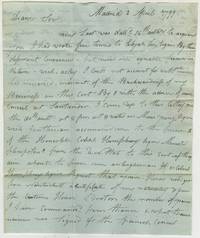
1799Best.-Nr. BK0181Ribadesella Santander and Madrid Spain 1799. Three autograph letters signed by William Riddell to Elijah Dix of Boston each with integral address leaf and contemporary postal markings. Each 2 pp measuring appx 7 ¼ x 9 inches. Preserved on three later philatelic album leaves with typed transcriptions and detailed annotations concerning postal routes rates and contemporary shipping records. Original folds with some minor toning and handling wear. A group of three letters written from Spain by American sea captain William Riddell concerning the seizure of the brig Minerva by Spanish privateers in 1798 and his subsequent efforts to recover the vessel and its cargo. Writing to Boston merchant Elijah Dix over a period of two months in early 1799 Riddell describes the slow progress of his case through Spanish courts. He describes efforts to secure the assistance of American diplomats and the difficulties of establishing his nationality and the legitimacy of his vessel's papers. The letters follow Riddell from the northern Spanish coast to Madrid where he eventually secured an audience with American minister David Humphreys. In the first letter written February 3 from Ribadesella Riddell expresses frustration with the Spanish authorities and describes the intervention of the American consul in Madrid Moses Young who had been corresponding with Spanish officials concerning the detention of the Minerva. Riddell writes that Young had received assurances that justice would be administered according to the treaty between the United States and Spain but that the Spanish government was proceeding so slowly that he could not predict when the case would be resolved: "Your Brig the Minerva is in as good order as the natier of time & our condition will admit." By March 15 Riddell was in Santander where he continued to seek the release of his vessel. He complains that he has written five letters to Dix without receiving a reply and describes the progress of the case through the American consulate in Madrid. Young had received the vessel's papers and obtained an additional thirty days from the Spanish government for their examination. Riddell had also corresponded with the London firm of H. & G. Johnston & Co. the underwriters of the cargo who proposed that he proceed to Dublin once the vessel was released. He was concerned that the cargo might instead have to be sold in Spain. The March letter also contains an interesting account of two sailors who had apparently given false testimony concerning the seizure: "I am heare to apprehend two my Sailors that came back in the privateer that tooke me for gaving a false oath in a diclaration however thay aire of no use to any perty thay now have told the trewth." The final letter dated April 2 from Madrid describes Riddell's journey to the Spanish capital and his meeting with Colonel David Humphreys the American minister plenipotentiary. Humphreys had advised that the captain secure documentation from Nantucket and Boston establishing his American nationality and record of service apparently because the Spanish authorities had questioned whether he was British. Riddell writes: "It is Colonel Humphreys Esquire request that youre Honer wold get from Nantucket a Certificate of my nativity & from the Custom House Boston the number of years I have Commanded from thance & what thaire names was signed pr the Spanish Consul & dispatch thame to me to the Care of his Honer without los of time. By wich means we Expect to Recover Every dimerrage damaeges & Sura." David Humphreys 1752-1818 a former aide-de-camp to George Washington served as United States minister to Spain from 1797 to 1801. Moses Young the American consul in Madrid was likewise involved in diplomatic disputes over privateering and the capture of American merchant vessels during this period. The correspondence dates from the Quasi-War with France when American merchant vessels faced seizures and interference with their trade by European belligerents. Spain then allied with France and at war with Britain was formally at peace with the United States under the Treaty of San Lorenzo of 1795. That treaty provided protections for neutral shipping and established requirements for maritime passports identifying the ownership and nationality of vessels and their commanders. Riddell's need to establish his birthplace and demonstrate his American maritime service was therefore directly relevant to the legal arguments surrounding the Minerva's detention. The recipient Dr. Elijah Dix 1747-1809 was a prominent Boston physician merchant and importer who had established an extensive commercial business after moving from Worcester to Boston in 1795. He was also the grandfather of the reformer Dorothea Lynde Dix. His involvement in transatlantic commerce is consistent with the ownership interests and shipping arrangements discussed in Riddell's correspondence. The three letters are accompanied by detailed postal documentation. The February letter traveled from Ribadesella by way of Gijón to Marblehead Massachusetts arriving March 30 where it was rated ten cents. The March letter traveled from Santander aboard the schooner Hawke Captain Lovett arriving at Beverly Massachusetts May 16 and bears an eighteen-cent rating. The April letter traveled overland to Bilbao where it was forwarded by Ventura Gomez de la Torre & Grand Sons aboard the brig Hannah Captain Harris arriving at New York July 24. It bears a New York clamshell postmark and a nineteen-cent rate. The accompanying annotations cite contemporary shipping notices from the Salem Gazette and New York Commercial Advertiser documenting the arrivals of the vessels that carried the correspondence. Together the letters preserve a sustained account of an American captain's attempts to obtain restitution for a privateer seizure including the involvement of consular officials cargo insurers and the American minister to Spain. The three different postal routes provide an additional record of the means by which correspondence traveled between Spain and New England in the late eighteenth century. . unknown
1799Best.-Nr. BK0181Ribadesella Santander and Madrid Spain 1799. Three autograph letters signed by William Riddell to Elijah Dix of Boston each with integral address leaf and contemporary postal markings. Each 2 pp measuring appx 7 ¼ x 9 inches. Preserved on three later philatelic album leaves with typed transcriptions and detailed annotations concerning postal routes rates and contemporary shipping records. Original folds with some minor toning and handling wear. A group of three letters written from Spain by American sea captain William Riddell concerning the seizure of the brig Minerva by Spanish privateers in 1798 and his subsequent efforts to recover the vessel and its cargo. Writing to Boston merchant Elijah Dix over a period of two months in early 1799 Riddell describes the slow progress of his case through Spanish courts. He describes efforts to secure the assistance of American diplomats and the difficulties of establishing his nationality and the legitimacy of his vessel's papers. The letters follow Riddell from the northern Spanish coast to Madrid where he eventually secured an audience with American minister David Humphreys. In the first letter written February 3 from Ribadesella Riddell expresses frustration with the Spanish authorities and describes the intervention of the American consul in Madrid Moses Young who had been corresponding with Spanish officials concerning the detention of the Minerva. Riddell writes that Young had received assurances that justice would be administered according to the treaty between the United States and Spain but that the Spanish government was proceeding so slowly that he could not predict when the case would be resolved: "Your Brig the Minerva is in as good order as the natier of time & our condition will admit." By March 15 Riddell was in Santander where he continued to seek the release of his vessel. He complains that he has written five letters to Dix without receiving a reply and describes the progress of the case through the American consulate in Madrid. Young had received the vessel's papers and obtained an additional thirty days from the Spanish government for their examination. Riddell had also corresponded with the London firm of H. & G. Johnston & Co. the underwriters of the cargo who proposed that he proceed to Dublin once the vessel was released. He was concerned that the cargo might instead have to be sold in Spain. The March letter also contains an interesting account of two sailors who had apparently given false testimony concerning the seizure: "I am heare to apprehend two my Sailors that came back in the privateer that tooke me for gaving a false oath in a diclaration however thay aire of no use to any perty thay now have told the trewth." The final letter dated April 2 from Madrid describes Riddell's journey to the Spanish capital and his meeting with Colonel David Humphreys the American minister plenipotentiary. Humphreys had advised that the captain secure documentation from Nantucket and Boston establishing his American nationality and record of service apparently because the Spanish authorities had questioned whether he was British. Riddell writes: "It is Colonel Humphreys Esquire request that youre Honer wold get from Nantucket a Certificate of my nativity & from the Custom House Boston the number of years I have Commanded from thance & what thaire names was signed pr the Spanish Consul & dispatch thame to me to the Care of his Honer without los of time. By wich means we Expect to Recover Every dimerrage damaeges & Sura." David Humphreys 1752-1818 a former aide-de-camp to George Washington served as United States minister to Spain from 1797 to 1801. Moses Young the American consul in Madrid was likewise involved in diplomatic disputes over privateering and the capture of American merchant vessels during this period. The correspondence dates from the Quasi-War with France when American merchant vessels faced seizures and interference with their trade by European belligerents. Spain then allied with France and at war with Britain was formally at peace with the United States under the Treaty of San Lorenzo of 1795. That treaty provided protections for neutral shipping and established requirements for maritime passports identifying the ownership and nationality of vessels and their commanders. Riddell's need to establish his birthplace and demonstrate his American maritime service was therefore directly relevant to the legal arguments surrounding the Minerva's detention. The recipient Dr. Elijah Dix 1747-1809 was a prominent Boston physician merchant and importer who had established an extensive commercial business after moving from Worcester to Boston in 1795. He was also the grandfather of the reformer Dorothea Lynde Dix. His involvement in transatlantic commerce is consistent with the ownership interests and shipping arrangements discussed in Riddell's correspondence. The three letters are accompanied by detailed postal documentation. The February letter traveled from Ribadesella by way of Gijón to Marblehead Massachusetts arriving March 30 where it was rated ten cents. The March letter traveled from Santander aboard the schooner Hawke Captain Lovett arriving at Beverly Massachusetts May 16 and bears an eighteen-cent rating. The April letter traveled overland to Bilbao where it was forwarded by Ventura Gomez de la Torre & Grand Sons aboard the brig Hannah Captain Harris arriving at New York July 24. It bears a New York clamshell postmark and a nineteen-cent rate. The accompanying annotations cite contemporary shipping notices from the Salem Gazette and New York Commercial Advertiser documenting the arrivals of the vessels that carried the correspondence. Together the letters preserve a sustained account of an American captain's attempts to obtain restitution for a privateer seizure including the involvement of consular officials cargo insurers and the American minister to Spain. The three different postal routes provide an additional record of the means by which correspondence traveled between Spain and New England in the late eighteenth century. . unknown books
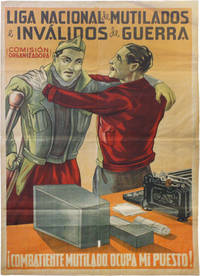
1938Best.-Nr. 52890Madrid: Gráficas Reunidas U.H.P. 1938. Original illustrated poser offset printed in colors on beige stock measuring 68.5cm x 100cm 27" x 39.25". Light wear and toning to extremities a few old folds smoothed-out with several tiny nicks and small edge tears a few tiny splits at intersection of folds and a small loss toward lower margin just above the lettering; an unrestored Very Good example unbacked. The first in a series of four propaganda posters produced by Gráficas Reunidas for the Liga Nacional de Mutilados e Inválidos de Guerra LNMIG the National League of War Wounded and Invalids founded in Madrid in 1937. "The creation of this association was the first tangible outcome of the organizational efforts made by wounded Republican veterans. According to their provisional programme their key concern was to remain 'useful' útiles to the war effort and provide 'unconditional help to the government'. It was stated that the association should 'educate and re-educate the disabled veterans in physical and cultural terms. As a consequence of the efforts made by the LNMIG on behalf of disabled veterans the government gave preference to the war wounded to fill vacant menial jobs such as janitors messengers and the like" cf.Matthews James. Spain at War: Society Culture and Mobilization 1936-44. The poster created by an anonymous artist depicts a wounded soldier supporting himself with a crutch being embraced by a typist above text reading "Wounded soldier take my place!" translation mine. OCLC notes a single holding at the Biblioteca Universitat de Barcelona. CARULLA 1.268. Gráficas Reunidas U.H.P. unknown
1938Best.-Nr. 52890Madrid: Gráficas Reunidas U.H.P. 1938. Original illustrated poser offset printed in colors on beige stock measuring 68.5cm x 100cm 27" x 39.25". Light wear and toning to extremities a few old folds smoothed-out with several tiny nicks and small edge tears a few tiny splits at intersection of folds and a small loss toward lower margin just above the lettering; an unrestored Very Good example unbacked. The first in a series of four propaganda posters produced by Gráficas Reunidas for the Liga Nacional de Mutilados e Inválidos de Guerra LNMIG the National League of War Wounded and Invalids founded in Madrid in 1937. "The creation of this association was the first tangible outcome of the organizational efforts made by wounded Republican veterans. According to their provisional programme their key concern was to remain 'useful' útiles to the war effort and provide 'unconditional help to the government'. It was stated that the association should 'educate and re-educate the disabled veterans in physical and cultural terms. As a consequence of the efforts made by the LNMIG on behalf of disabled veterans the government gave preference to the war wounded to fill vacant menial jobs such as janitors messengers and the like" cf.Matthews James. Spain at War: Society Culture and Mobilization 1936-44. The poster created by an anonymous artist depicts a wounded soldier supporting himself with a crutch being embraced by a typist above text reading "Wounded soldier take my place!" translation mine. OCLC notes a single holding at the Biblioteca Universitat de Barcelona. CARULLA 1.268. Gráficas Reunidas U.H.P. unknown books
1898Best.-Nr. 239391898. Spanish American War soldier photo archive depicting the 18th U.S. Infantry Regiment and the camp environment of American military service circa 1898 to 1899 during the transformation of the Regular Army from scattered peacetime garrisons into an expeditionary force operating overseas. The largest photograph shows two long ranks identified as soldiers of the 18th U.S. Infantry a Regular Army regiment serving within an institution that entered 1898 with only twenty five infantry regiments generally dispersed in small detachments across western posts. Army Historical Program The photographs record the practical world surrounding that transition: formations and small groups of enlisted men officers tents and makeshift quarters mounted personnel horses and wagons flags and the dirt streets of a military encampment. The 1898 war carried the Army across both the Caribbean and Pacific culminating in the occupation of Manila on August 13 and the subsequent conflict between American forces and the Philippine Republic beginning in February 1899. Photo archive of 14 photographs including a large albumen print and smaller silver gelatin photographs Various sizes ranging from approximately 3.5 x 3.5 to large 8 x 10 inches circa 1898 to 1899. The largest albumen photograph depicts two extended lines identified as the 18th U.S. Infantry Regiment standing in uniform along a broad camp street with officers at the head of the formation and rows of tents extending behind them. Other photographs show soldiers in mixed campaign and dark uniform coats before tents; another group stands before an open military tent; mounted soldiers gather in the field; a horse drawn wagon and driver appear along a rough road; soldiers stand beside camp buildings; and an individual serviceman poses in uniform. One photograph records an American flag displayed beside an organizational flag while another shows soldiers and horses near wagons and camp equipment. A photograph of temporary quarters carries the archive's only substantial manuscript caption on the verso provisionally reading: "This is a picture of our shack. Ben Robinson is standing in the doorway and the fellow walking down the street is Mc. Monahan. You can get an idea how we live. There is twelve of us . in it." The final words are difficult to resolve but the writer's phrase "how we live" identifies the structure as soldiers' quarters and turns an otherwise uncaptioned camp photograph into direct evidence of the housing conditions experienced by its occupants. The photographs belong to a period when overseas war forced a Regular Army organized around small frontier posts to adapt rapidly to expeditionary operations. In the Philippines approximately 11300 American troops had reached Manila under Maj. Gen. Wesley Merritt by July 25 1898 and American forces occupied the city after the August campaign against Spain. The Treaty of Paris transferred the Philippines from Spain to the United States in December; armed conflict with the Philippine Republic began on February 4 1899 and the Army subsequently organized forces across Luzon and the Visayas. Official Army correspondence places the 18th U.S. Infantry in the Visayan Military District by November 1899 alongside the 6th 19th and elements of the 23rd Infantry. The camp scenes document the infrastructure behind service with canvas tents and improvised quarters horses and wagons for movement and supply and small temporary military settlements. Some fading and toning with scattered surface stains creases edge wear and some loss to several mounts; the large albumen print shows substantial fading and surface abrasion but retains the photo clearly. Overall in very good condition. A field level photographic record of the 18th U.S. Infantry and the camps transportation quarters uniforms and formations that defined Regular Army service during the United States' transition from war with Spain to sustained military operations in the Philippines. unknown
1898Best.-Nr. 239391898. Spanish American War soldier photo archive depicting the 18th U.S. Infantry Regiment and the camp environment of American military service circa 1898 to 1899 during the transformation of the Regular Army from scattered peacetime garrisons into an expeditionary force operating overseas. The largest photograph shows two long ranks identified as soldiers of the 18th U.S. Infantry a Regular Army regiment serving within an institution that entered 1898 with only twenty five infantry regiments generally dispersed in small detachments across western posts. Army Historical Program The photographs record the practical world surrounding that transition: formations and small groups of enlisted men officers tents and makeshift quarters mounted personnel horses and wagons flags and the dirt streets of a military encampment. The 1898 war carried the Army across both the Caribbean and Pacific culminating in the occupation of Manila on August 13 and the subsequent conflict between American forces and the Philippine Republic beginning in February 1899. Photo archive of 14 photographs including a large albumen print and smaller silver gelatin photographs Various sizes ranging from approximately 3.5 x 3.5 to large 8 x 10 inches circa 1898 to 1899. The largest albumen photograph depicts two extended lines identified as the 18th U.S. Infantry Regiment standing in uniform along a broad camp street with officers at the head of the formation and rows of tents extending behind them. Other photographs show soldiers in mixed campaign and dark uniform coats before tents; another group stands before an open military tent; mounted soldiers gather in the field; a horse drawn wagon and driver appear along a rough road; soldiers stand beside camp buildings; and an individual serviceman poses in uniform. One photograph records an American flag displayed beside an organizational flag while another shows soldiers and horses near wagons and camp equipment. A photograph of temporary quarters carries the archive's only substantial manuscript caption on the verso provisionally reading: "This is a picture of our shack. Ben Robinson is standing in the doorway and the fellow walking down the street is Mc. Monahan. You can get an idea how we live. There is twelve of us . in it." The final words are difficult to resolve but the writer's phrase "how we live" identifies the structure as soldiers' quarters and turns an otherwise uncaptioned camp photograph into direct evidence of the housing conditions experienced by its occupants. The photographs belong to a period when overseas war forced a Regular Army organized around small frontier posts to adapt rapidly to expeditionary operations. In the Philippines approximately 11300 American troops had reached Manila under Maj. Gen. Wesley Merritt by July 25 1898 and American forces occupied the city after the August campaign against Spain. The Treaty of Paris transferred the Philippines from Spain to the United States in December; armed conflict with the Philippine Republic began on February 4 1899 and the Army subsequently organized forces across Luzon and the Visayas. Official Army correspondence places the 18th U.S. Infantry in the Visayan Military District by November 1899 alongside the 6th 19th and elements of the 23rd Infantry. The camp scenes document the infrastructure behind service with canvas tents and improvised quarters horses and wagons for movement and supply and small temporary military settlements. Some fading and toning with scattered surface stains creases edge wear and some loss to several mounts; the large albumen print shows substantial fading and surface abrasion but retains the photo clearly. Overall in very good condition. A field level photographic record of the 18th U.S. Infantry and the camps transportation quarters uniforms and formations that defined Regular Army service during the United States' transition from war with Spain to sustained military operations in the Philippines. unknown books
Best.-Nr. keith-richards-in-exile-vHarman B/W Digital Fibre. Limitation of only 20 First ever printing. Hand numbered. Spanish Tony Media estate stamp to verso. Spanish Tony Sanchez facsimile signature to bottom right recto. Taken early 1970s printed 2024. All prices are unframed. If you would like your print to be framed do get in touch. unknown
Best.-Nr. mick-jagger-and-keith-ricHarman B/W Digital Fibre. Limitation of only 20 First ever printing. Hand numbered. Spanish Tony Media estate stamp to verso. Spanish Tony Sanchez facsimile signature to bottom right recto. Taken 1972 printed 2024. All prices are unframed. If you would like your print to be framed do get in touch. unknown
Best.-Nr. RGW19242AEtching and aquatint from L'Art on laid paper small tear professionally repaired This is one of the additional plates for 'The Proverbios' series. This edition impression was published in 1877 in volume 2 of L'Art with the title Que Guerrero Quel Guerrier. The man running in mock terror from the scarecrow figures slaps his backside to entertain the crowd. unknown
1649In -4°, due parti legate assieme, ciascuna con frontespizio autonomo; pp. IV (4) VI-XV, (1), 120 (8); (4), 48. Legatura in pergamena. La seconda parte s’intitola “Predica contro l'abuso delle comedie, fatta nella citta di Huesca la sera della circoncisione dell'anno 1629 dal p. Gaime Alberto della Compagnia di Giesu, e tradotta di spagnuolo in italiano dal signor Alessandro Adimari”. Fra le due opere è inserito un quartino, non rilegato, che titola “Aggiunta al libro terzo della christiana moderatione... fatta l’anno 1656”. The second half’s title is “Predica contro l’abuso delle comedie…” Between the two works a gathering is included, not bound, whose title is “Aggiunta al libro terzo…”
1639Best.-Nr. ABC_50152Madrid 1639. Folio c. 29 x 20.1 cm. Diego Diaz Unbound housed in a plastic folder. 2 ll. Rare 17th-century Spanish pamphlet documenting the maritime activities of the Royal Armada of Dunkirk and privateers along the coasts of France England and other territories from 1 May to 31 December 1638. This detailed account lists 118 captured vessels including warships frigates and small craft many laden with highly valuable cargoes such as silk spices wine sugar salt precious metals and pearls.Printed in Madrid it served both as a record of naval prizes and a public announcement of military success during the turbulent years of the Eighty Years War 1568-1648 and concurrent Franco-Spanish conflicts. Dunkirk then a major Spanish port in the Low Countries was a base for state-authorised privateers corsarios whose daring raids on enemy shipping are vividly detailed here including the disposition of artillery captured crews and the fate of vessels either incorporated into the Spanish fleet or destroyed.The present work emphasizes the skill and bravery of the Dunkirkers noting that despite repeated attempts by Dutch fleets to block them only one Spanish warship was lost over thirty months of operations while over 800 enemy ships were captured. It is an exceptional example of early modern naval reporting illustrating not only the logistics and spoils of naval warfare but also the political and economic role of privateering in Spanish maritime strategy.The leaves are slightly browned and foxed the gutter of the second leaf has been reinforced with a manuscript page number "124" and "125" at the recto of the first leaf and the verso of the last leaf. Otherwise in good condition.l Catálogo y Biblioteca Digital de Relaciones de Sucesos CBDRS 0001964; WorldCat 1025513992 224450878 7 copies. unknown
1955186 pages. "Published to expose the ramifications of the International Conspiracy which was originated by a small group of wealthy and influential men in 1773 for the purpose of ultimately obtaining undisputed control of the wealth, natural resources, and manpower of the entire world... Explains how the continuity of their Long Range Plan was assured by appointing their successors from their own entourage while still alive." - Foreword. William Guy Carr [1895-1959] was a man's man, an English-born Canadian naval officer who described his adventurous early life in seven preceeding books. Sombre cover illustration depicts Soviet chess pieces moving in for the kill. Above-average but not excessive external wear. Binding intact. "American Nationalist" sticker on title page may refer to the book's American distributor. Ink underlining and markings throughout. Errata list not included. A sound first edition copy of this conspiracy classic. Singerman 921, Weems p.58. Book
1680In -4°, pp. (40), 450, (42), frontespizio in cornice con vignetta, testo su due colonne; legatura in piena pergamena con titolo manoscritto al dorso, piccoli fori su un angolo del frontespizio, non intaccano testo e cornice. Nato in Bolivia, intorno al 1626, l’autore fu sacerdote a Sucre, prolifico scrittore teologo e predicatore. Small holes on a corner of title page, text and frame are untouched. Born in Bolivia around 1626 the author was a priest in Sucre, writer, theologist and preacher. ARch. S
1744In - 4°, pp. (8), 276; testo su due colonne; piena pergamena coeva con titolo manoscritto al dorso. Edizione settecentesca del romanzo di Espinel, molto popolare nel secolo precedente: storia picaresca e movimentata che avrebbe ispirato poco più tardi la “Storia di Gil Blas di Santillana” di Le Sage, lo scudiero Marcos de Obregon, accompagnatore di dame, compie diversi viaggi, sulla falsariga della biografia dell’autore. XVIII Century edition of Espinel’s novel, much popular since the XVII: a picaresque plot that inspired, not much later, the “Gil Blas of Santillana” by Le Sage: Marcos de Obregon, an esquire convoying ladies, travels in Europe, as the author used to.
1658Best.-Nr. PHO-2397Paris ,1658. Chez Siméon Piget. 2 tomes en 1 volume in-4 (25x19cm), 16fnch.-631pp-9fnch./555pp.-10ffnch., relié veau époque, dos manquant mais corps solide, coins usés, vieille mouillure claire par intermittence.
1653Best.-Nr. PHO-2504Paris, Chez Siméon Piget, 1658. 2 volumes in-4 (24 x 19 cm), 16 ff. n. ch.-631 pp.-9 ff. n. ch. / 555 pp.-10 ff. n. ch., reliure en basane de l’époque, dos à nerfs orné, pièces de titre et de tomaison, filets à froid sur les plats. Frottements, coins usés, accroc à une coiffe, rousseurs.
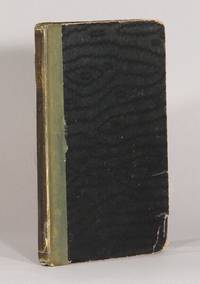
1928Best.-Nr. 73064Hongkong: printed at the Millan Printing Co. 25 Lee Tung Street Wanchi 1928. Sixth edition title page verso 8vo pp. viii 263 1; text in Chinese Spanish and English; frontispiece portrait not present in the edition of 1916; a second portrait pasted in on the verso of the first leaf which is loose but present and obscuring what appears to be an index; title page with pressure stamp of the 'Hong Kong General Agency' 'Alfabeto mayusculo de imprenta' pasted to front pastedown 'Cilabas de dos letras' pasted to rear pastedown; contemporary black moiré cloth backed in green cloth gilt-stamped spine; spine faded and darkened edges rubbed and worn and the text toned but still a good sound copy. A tri-lingual dictionary and phrase book and a section on letter-writing at the back with two sample letters in all three languages dated Panama 1922 and Mexico City 1916 evidence for this edition being after one likely unrecorded in 1922 or 1923. Apparently rare. The only other edition listed in OCLC is that of 1916 - of this earlier edition I find 2 in OCLC: Hong Kong and Georgetown; of the 1928 only 2 in OCLC at the BL and one in Sweden. printed at the Millan Printing Co. 25 Lee Tung Street, Wanchi unknown
1928Best.-Nr. 73064Hongkong: printed at the Millan Printing Co. 25 Lee Tung Street Wanchi 1928. Sixth edition title page verso 8vo pp. viii 263 1; text in Chinese Spanish and English; frontispiece portrait not present in the edition of 1916; a second portrait pasted in on the verso of the first leaf which is loose but present and obscuring what appears to be an index; title page with pressure stamp of the 'Hong Kong General Agency' 'Alfabeto mayusculo de imprenta' pasted to front pastedown 'Cilabas de dos letras' pasted to rear pastedown; contemporary black moiré cloth backed in green cloth gilt-stamped spine; spine faded and darkened edges rubbed and worn and the text toned but still a good sound copy. A tri-lingual dictionary and phrase book and a section on letter-writing at the back with two sample letters in all three languages dated Panama 1922 and Mexico City 1916 evidence for this edition being after one likely unrecorded in 1922 or 1923. Apparently rare. The only other edition listed in OCLC is that of 1916 - of this earlier edition I find 2 in OCLC: Hong Kong and Georgetown; of the 1928 only 2 in OCLC at the BL and one in Sweden. printed at the Millan Printing Co. 25 Lee Tung Street, Wanchi unknown books
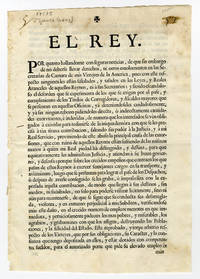
1759Best.-Nr. 37578Madrid. 1759. A rare royal cedula issued by Ferdinand VI King of Spain confirming that the Secretaries of vice-royal chambers throughout the Americas do not have the rights privileges and emoluments held by governors corregidores and alcalde mayores. The decree refers to past abuses of power and finance by secretaries which were harmful to the realm and directs viceroys presidents and governors to ensure that secretaries officials and other dependents do not assume privileges which are not appropriate to their position. This copy accomplished in manuscript at Villaviciosa Spain on Feb. 18 1759 is signed by Juan Manuel Crespo with the inscription: "Yo el Rey. Por mandado del Rey Nuestro Señor." In addition the inscription notes that this printed text is a copy of the royal cedula located in the books of the Secretary of Peru located in Madrid as of March 31 1759. A rare proclamation regarding the limits of compensation for particular royal officials in Spanish dominions throughout the New World. Not in OCLC Medina BHA or Palau. Folio. Dbd. Maltese cross at head of title. Contemporary manuscript inscriptions in ink at top of first page. Accomplished in manuscript at Villaviciosa Spain on Feb. 18 1759 signed by Juan Manuel Crespo with additional inscription on p.3. Light dampstaining in margins occasional light soiling. Very good. unknown
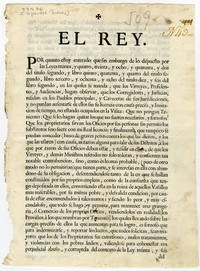
1758Best.-Nr. 37576Madrid. 1758. A rare royal cedula issued by Ferdinand VI King of Spain confirming earlier published laws stating that viceroys presidents and audiencias are to ensure that corregidores and justices reside in the principle towns and headquarters of their jurisdictions. The decree also states that the judges are not to be absent from their principle residences except under special circumstances when a license is issued indicating the precise cause for the absence and the length of time the judge will be away. In addition the judges can not name their own "lieutenants" or assistants nor can the viceroys presidents and audiencias name judges' assistants without royal approval. This copy accomplished in manuscript at Villaviciosa Spain on Sept. 7 1758 is signed by Juan Manuel Crespo with the additional inscription "Yo El Rey" and the annotation "Por mandado del Reyno exo. señor." A manuscript inscription on the blank verso of the final printed page dated Dec. 4 1759 confirms that the decree has been reviewed by the President and other high-ranking officials in Santiago de Chile. A rare proclamation regarding colonial judges in Spanish dominions throughout the New World. Not in OCLC Medina BHA or Palau. Folio. Dbd. Maltese cross at head of title. Contemporary manuscript inscription in ink and later pencil inscription at top of first page. Accomplished in manuscript see below with additional inscription on p.3. Additional manuscript inscription on blank verso of final printed page. Extremely light dampstaining in margins occasional light soiling. Very good. unknown
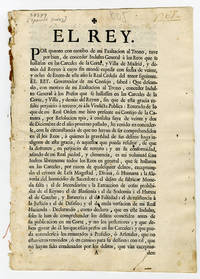
1760Best.-Nr. 37579Madrid. 1760. A Wide-Ranging Decree on Pardons Except for Treason Counterfeiting Arson Blasphemy Sodomy Robbery Falsehoods Duelling or Killing a Priest A rare detailed royal cedula issued by Charles III King of Spain ordering a general pardon of accused individuals to be enacted throughout the Spanish Indies. Citing earlier royal proclamations issued previously by Charles III concerning clemency for prisoners this cedula reprints texts of decrees from January and February 1760. While most prisoners were to receive pardons a long list of exceptions based on the January 28 cedula is provided. These included those accused of secular and religious treason killing a priest counterfeiting money arson blasphemy sodomy robbery falsehoods and duelling. Numerous other details regarding the earlier clemencies are also provided. The present royal amnesty was to be distributed to the viceroys presidents audiencias governors and other judges throughout the Indies in order that this resolution by properly executed. This copy accomplished in manuscript at Buen Retiro on Dec. 28 1770 is signed by Juan Manuel Crespo with the additional annotation: "Yo El Rey. Por mandado del Rey Nuestro Señor." A manuscript inscription on the blank verso of the final printed page dated Feb. 27 1762 confirms that the decree had been reviewed two days earlier by the President and other high officials in Santiago de Chile. A manuscript note in a separate hand on the recto and verso of the integral blank leaf provides additional information about the receipt of the document in Santiago in 1762. A rare and highly informative proclamation regarding royal pardons to be enacted throughout the Spanish New World and in Spain. Not in OCLC Medina BHA or Palau. Folio. Dbd. Maltese cross at head of titlepage. Contemporary manuscript inscription and later pencil inscription at top of first page. Accomplished in manuscript at Buen Retiro Spain on Dec. 28 1770. Signed by Juan Manuel Crespo with additional annotation on last page of printed text and additional inscription on verso of last page of text. Integral blank leaf with manuscript note related to the cedula on recto and verso. Very good. unknown