7 résultats
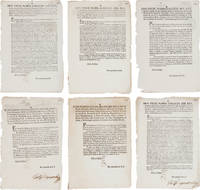
1561réf. 63610México. March 15 - November 6 1813. Rare Mexican Printings of Twenty-One Decrees from Spain's First Constitutional Government A substantial and significant collection of twenty-one rare Mexican printings of Spanish decrees issued by the short-lived but deeply influential constitutional government established in 1812. Each of these decrees was promulgated in Mexico by the Viceroy of New Spain Félix María Calleja del Rey y de la Gándara primer conde de Calderón in 1813. Drafted and ratified in the absence of any monarch Joseph Bonaparte had been rejected by the Spanish and the ousted Ferdinand VII had yet to return the constitution of 1812 followed a period of great political upheaval and married the liberal ideals of the French Revolution with an abiding fear of its outcome resulting in Spain's first ever constitutional monarchy. While the constitution left some power in the hands of the King his absence at the time of its implementation meant that Spain was effectively ruled by a constituent congress and regency council which notably included for the first time representatives from all of Spain's overseas dominions as well as the provinces on the Iberian Peninsula. The considerable majority of the proclamations in this group deal with the repercussions of this dramatically new form of government including clarifying details of the constitution publicly printing some of its laws and regulations and organizing programs meant to protect its legitimacy and longevity. While changes in home government and the Napoleonic Wars were certainly relevant to colonies in the New World a handful of these decrees also relate more materially to the Western Hemisphere including some related to colonial trade and the ongoing war for independence in Venezuela. All of the present documents were promulgated in Mexico City and are signed in type and most of them rubricked in manuscript by the Viceroy Félix María Calleja. Calleja was a general sent to New Spain in 1810 to put down the early rumblings of Mexican independence which he did with ruthless efficiency. He was Viceroy from 1813 to 1816 when he was replaced for fear that his merciless stamping of the insurrection would only further stoke the fires of anti-Spanish sentiment. The full list of decrees in this group ordered by the date they were promulgated by Calleja and accompanied by brief notes on their contents is as follows: All twenty-one documents share the same caption title: Don Felix Maria Calleja del Rey Bruder Losada Flores Campeño Montero de Espinosa Mariscal de Campo de los Exércitos Nacionales Virey Gobernador y Capitan General de Esta N.E. Presidente de Su Audiencia Superintendente General Subdelegado de la Hacienda Pública Minas Azogues y Ramo del Tabaco Juez Conservador de Éste Presidente de Su Junta y Subdelegado General de Correos en el Mismo Reyno. 1 El Orden de las Cortes Generales y Extraordinarias Comunicada…Que en los Papeles de Oficio Usen Siempre el Gobierno y Todas las Autoridades del Mismo Lenguage Que Usa la Constitucion.first lines of main text. March 15. Decrees that all official government papers should follow the language of the new constitution. 2 La Regencia del Reyno Se Ha Servido Levantar el Riguroso Bloqueo en Que Se Hallaba Puerto Cabello en la Provincia de Caracas. March 31. Lifts the Spanish blockade of Caracas now that a peace arrangement had been made with the insurgents in Venezuela. While the Royalists took back the province and the "First Republic of Venezuela" was officially ended in late 1812 it would only be a few months before Simon Bolívar returned and Caracas changed hands once again in the ongoing war for independence. 3 El Consejo de Estado y el Supremo Tribunal de Justicia Que Con Arreglo à la Constitution Política de la Monarquía Española Se Sirvieron Crear las Córtes Generales. March 31. Announcing that the Córtes Generales created by the new constitution and which was effectively the new governing body of the empire is officially in effect and performing duties as described in that document. 4 Las Córtes Generales y Extraordinarias Convencidas de la Necesidad y Utilidad de Que los Expedientes Sobre Infraccion de la Constitucion Sean Determinados Con la Mayor Prontitude Decretan. April 27. Declares that courts will prioritize cases regarding constitutional infractions above all others—one of many decrees particularly concerned with maintaining loyalty to the constitution. 5 Las Córtes Generales y Extraordinarias Queriendo Fixar Por Todos los Medios Posibles en la Memoria de los Españoles la Feliz Época de la Promulgacion de la Constitucion. May 22. In celebration of "the joyous event of the promulgation of the constitutional monarchy" this decree renames the public plaza in which the document was promulgated in every city in the empire to the "Plaza de Constitucion" and orders that a stone marker or monument be built to commemorate the event. When Ferdinand VII was reinstated as absolute monarch in 1814 monarchists tore down many of these monuments in celebration. Others remain to the present day including one in St. Augustine Florida which was still in Spanish hands in 1813. 6 Las Córtes Generales y Extraordinarias Con el Justo Fin de Redimir los Montes y Plantíos de Dominio Particular. May 25. 17 × 12 inches. A notable law removing all regulations on the use of private lands. Land owners would now be allowed to farm collect lumber hunt fish or otherwise profit from their land however they choose. The body of the decree begins our translation: "All laws and ordinances of forests and plantations are repealed and annulled in all their parts insofar as they concern those of private ownership and as a consequence the owners are left in full and absolute freedom to do with them what best suits them without subjection." 7 Las Córtes Decretan Que Ecsen los Individuos Que Actualmente Coponen la Regencia del Reyno y Que Se Encarguen de Ella Provisionalmente los Tres Consejeros de Estado Mas Antiguos Que en el Dia Se Hallan en Deicho Consejo Que Son. July 2. 17 × 12 inches. Appointing a new provisional regency to replace the regency which preceded the constitution to consist of Pedro Agar Gabriel Ciscar and the Archbishop of Toledo. 8 Atendiendo las Córtes Generales y Extraordinarias à la Importancia y Necesidad de Que No Solo los Individuos del Supremo Tribunal de Justicia Sino Tambien los Demas Magistrados y Jueces de Qualquiera Otro Tribunal. July 8. Establishes qualifications for judges and magistrates at all levels. In an attempt to reduce nepotism and ensure the proper enforcement of the new constitution all employees of the judiciary "must enjoy a positive public reputation be accredited in their field possessed of selflessness and good morals dedicated to the Constitution and to have proven themselves in reality to be friends of independence and the political freedom of the nation" our translation. 9 S.M. C D. Fernando VII Rey de España y de las Indias y S.M. el Emperador de Todas las Rusias Igualmente Animados del Deseo de Restablecer y Fortificar las Antiguas Relaciones de Amistad Que Han Subsistido Entre Sus Monariquías. July 13. 16 × 12 inches. The Mexican printing of this treaty between Spain and the Russian Emperor Nicolas I. It is a treaty of amity and commerce as well as a formal military alliance "with the express intention of waging a vigorous war with the Emperor of France their common enemy." 10 La Clase de Guerra Que el Enemigo Comun de los Pueblos de Europa Ha Heco y Hace a Esta Heroycion: Los Exquisitos Pero Siempre Pérfidos Medios Que Ha Puesto en Practica Para Dominarla. August 5. 17 × 12 inches. A solemn and dramatic public warning about the perfidious effects of disloyalty and internal division. Other governmental decrees are referenced including specific reference to numbers four and eight described above. 11 Deseando S.A. Dar un Testimonio Indudable de Su Religiosa Puntualidad en el Cumplimiento de Quanto Prescribe la Constitucion Politíca de la Monarquía. August 11. States that the secretary of state does not have the authority to pardon deserters who present themselves for trial. They will be sent to their respective companies to be judged by them in accordance with the severity of their crime notwithstanding special cases where an individual might be pardoned by the Regency. 12 Las Córtes Generales y Extraordinarias Decretan: El Supremo Tribunal de Justicia Debe Conocer de los Recursos de Nulidad Que Se Interpongan de las Sentencias Dadas en Última Instancia. August 21. Decrees that the supreme court will hear appeals from the previous session's special courts. 13 Las Córtes Generales y Extraordinarias Considerando Que la Reduccion de los Terrenos Communes á Dominio Particular Es Una de las Providencias Que Mas Imperiosamente Reclaman el Bien de los Pueblos. August 23. 21½ × 16¾ inches printed in two columns. A monumentally important law decreeing that all publicly owned lands in Spain the outlying islands and all of her colonies in the New World would be converted to private property. The broadside prints the full text of the law and begins: "The Córtes Generales.considering that the reduction of common lands to private ownership is one of the provisions that most imperiously demand the good of the people and the promotion of agriculture and industry and wanting at the same time to provide with this type of land an aid to public needs a reward for worthy defenders of the country and relief for non-proprietary citizens." Despite the lofty language realistically this law formed part of an ongoing program of confiscation of lands in order to defray mounting debts from the internal and external conflicts of the late 18th and early 19th centuries. The law divided the confiscated property into two even portions: one would be sold at auction and the proceeds contributed directly to the national debt the other would be divided into lots and apportioned to veterans or sold for a fee to landless citizens. 14 Las Córtes Generales y Extraordinarias…Se Propusieron Abrir la Carrera del Honor y Da la Gloria á los Hijos de las Familias Honradas de la Monarquía. September 2. 17 × 12 inches. In order to sustain the "positive feelings and equality" won by the war the government decrees that college university and military admissions cannot take into account whether or not someone is nobility even if that information is offered voluntarily. Along the same lines they also are not allowed to "permit expressions or distinctions which contribute to the fomentation in their ranks of the perfidious ideals of legal inequality or class rivalry." 15 Las Córtes Generales y Extraordinarias Considerando Que el Aniversario del Diez y Nueve de Marzo en Que Se Publicó la Constitucion. September 7. With Calleja's manuscript rubric but not signed. Outlines ceremonies for the upcoming first anniversary of the constitution. Every church is to sing a solemn Te Deum and an artillery salvo is to be fired in the public square of each city. 16 Las Córtes Generales y Extraordinarias Decretan: 1. La Regencia Actual de las Españas Compuesto Del. September 8. Decrees that the provisional regency is no longer provisional but actual and appoints the Archbishop of Toledo as its president. 17 Debiendo las Córtes Generales y Extraordinarias Fixar los Términos en Que la Regencia del Reyno Ha de Exercer Su Autoridad. September 10. 22¾ × 16 inches printed in two columns. Prints the rules and regulations related to the now official Regency council its composition and the extents of its power. The Regency's chief mission is described as to "Uphold the Constitution and its laws protect the individual liberty of the citizens and to elevate these over both the conservation of public order within and the security of the nation without." 18 Habiendo Ocurrido á la Regencia del Reyno el Diputado en Córtes Por Maracaybo D. José Domingo Rús. September 28. No rubric or signature. Responding to a petition by a citizen of Venezuela the Regency grants free import and export of all tools machines and artifacts for agriculture and industry to the province of Maracaybo. 19 Hemos Dado Cuenta á las Córtes Generales y Extraordinarias de la Consulta. September 30. No rubric or signature. Decrees that all persons involved in cases regarding a constitutional infraction should be suspended from employment and duties for the duration. 20 Las Córtes Generales y Extraordinarias Enteradas de Que Quasi en Todos los Puertos de la Península Se Cobraba Por Cuenta de la Inquisicion. October 20. No rubric or signature. Repeals certain duties levied by the Inquisition which was abolished by the new constitution. The text begins our translation: "The General Courts aware that in almost all the ports of the Peninsula vessels were charged on behalf of the Inquisition upon entering them and when they were foreigners or coming from foreign ports a right known as the Right of Inquisition and tax on on boxes of books assortments of prints handkerchiefs and printed fabrics boxes of tobacco and other effects." 21 Las Córtes Generales y Extraordinarias Decretan Por Punto General: Que la Facultad Que Segun la Pragmática de Matrimonios. November 6. In an unusual move for the generally liberal new government this text states that the Real Pragmática Sanción de Matrimonios continues in effect. The Pragmática required all males under the age of twenty-five and all females under the age of twenty-five of any class or race to secure formal consent from their fathers in order to marry and applied to Spain as well as all of its overseas possessions. As of 1803 the father was not required to supply any reason whatsoever for denying a marriage proposal and the law was generally seen as a tool to maintain strict class divisions. These broadside decrees printed in Mexico at an important moment in Spanish constitutional history are rare in the market and institutionally. We locate only a few copies of each in OCLC. A remarkably thorough and continuous set of rare Mexican printings of Spanish decrees from this time of great political and military turmoil and clearly demonstrating the direct influence of affairs in Europe on colonies in the Western Hemisphere. Old folds. Varying degrees of edge wear. Scattered tanning and staining. Very good. unknown
1550réf. 67900En Leon i.e. Strassburg: en Casa de Sebastian Grypho i.e. Augustin Fries 1550. BIBLE IN SPANISH; ENZINAS Francisco de. First Edition in Spanish of Ecclesiasticus BIBLE IN SPANISH. ENZINAS Francisco de translator. Ecclesiastics. Libro de Jesus Hiio de Syrach qu'es llamado el Ecclesiastico. traduzido de Griego en lengua Castellana En Leon i.e. Strassburg: en Casa de Sebastian Grypho i.e. Augustin Fries 1550. First edition in Spanish of Ecclesiasticus. Small octavo 6 x 3 5/8 inches; 151 x 91 mm. 3 109 leaves. With numerous woodcut initials. With an imitation Gryphius woodcut device printed in reverse on title. We could only locate 3 copies at libraries Cambridge Madrid and Copenhagen. No other copy besides this present copy has been at auction in the past 50 years. Early 19th-century mottled sheep. Boards tooled in gilt. Spine stamped in gilt. With red morocco spine label lettered in gilt. Board edges tooled in gilt. Marbled endpapers. Some minor dampstaining mainly to lower blank margin of preliminaries. Signature G is toned. Leaves O3 and O4 with marginal paper repair not affecting text. Final leaf is toned and has a near invisible paper repair not affecting text. Overall a very good copy. "A native of Burgos educated at Louvain and Wittenberg Francisco de Enzinas 1518-52 was a humanist scholar and Protestant convert who produced the first Spanish version of the New Testament printed in 1543 in Antwerp. He formed a partnership with the Strassburg printer Augustin Fries to publish Spanish translations of Greek classics and the remainder of the Bible of which he was only able to complete Psalms Ecclesiasticus Job and Proverbs before his death. Baudrier VIII 241 not having seen or located a copy citing Brunet supplement II 712" "Even before the complete edition of Castellio's Latin Bible appeared Enzinas who had already produced a Spanish Bible New Testament in Antewerp in 1543 had translated the Psalter the Wisdom of Solomon Jesus Sirach present copy and the book of Job into Spanish. All of these appeared with the false address 'En Leon en casa de Sebastian Grypho' though they were in fact his translations from manuscript versions of Castellio's edition. Enzinas continued to work on his translations until his death on 30 December 1552. He had planned to have his Spanish Bible printed in Geneva but this fortunately for Calvin never came to pass." Gilly Spanien und der Basler Buchdruck pp. 342-9 510-11. Found in Sebastian Castellio 1515-1563: Humanist and Defender of Religious .By Hans R. Guggisberg Bruce Gordon. "FRIES Augustine: printer in Zurich and Strasburg began to print at the former place about 1540. In 1547 he printed two books in English by John Hooper Heitz p. 39. Soon after this he moved to Strasburg and there printed among other things several works in Spanish by Franzisco de Enzinas in 1550 and 1551 Wiffen I pp 179 etc." A Century of the English Book Trade: Short Notices of All Printers. By Edward Gordon Duff. HBS 67900. $8500. en Casa de Sebastian Grypho [i.e. Augustin Fries] unknown
1501réf. 36083Madrid Barcelona & elsewhere: Various publishers 18281927. Mostly small 8vo. Bound in 43 volumes. This considerable gathering of Spanish 19th- and early 20thcentury plays includes in 43 sammelbande plays by Hartzenbusch Rodriguez Rubi Breton de los Herreros Lopez de Ayala Garcia Gutierrez Echegaray Zorrilla Eguilaz Gil de Zarate and many others. => One play was expressly written for the actress María Ana de Jesús Guerrero Torija. => Three of the plays are presentation copies from the playwrights. Evidence of Readership: Six plays are marked up either as prompt or acting copies or by very interested readers. => A list of the collection is available. All volumes are in good condition except one which has waterstaining throughout. Texts sometimes have foxing or stains. Ten plays lack title-leaves. Such condition problems have been taken into account in establishing the price. Various publishers unknown books
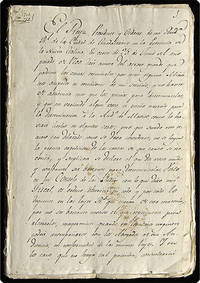
1507réf. 34851Barcelona Madrid Valldolid Spain Aranjuez Mexico City & elsewhere 170179. Small 4to folio & larger. Approximately 135 ff. Explaining why manuscript cedularios were made in the era of the printing press is called for here and the answer is simple: The number of copies that were printed of any given royal cédula tended to be smaller than the number of lawyers clerks judges and other legal sorts who needed a copy. And within months of the issuance of the decree no printed copies were available for love or money. Owning the various editions of the Recopilación de leyes de Indias was insufficient for most cédulas related to => specific issues peculiar to one person place institution or event and such specificity is not included in the recopilaciones though the royal decrees provided good useful precedents to cite. QED: Every colonial-era lawyer had to resort to maintaining his own cedulario. This cedulario was assembled in Mexico during the 18th century probably around 1778 or 1780 for the use of a lawyer before the audiencia or perhaps for an audiencia judge or a judge's staff member. The decrees relate to a wide variety of topics: criminal cases the army and navy confiscation of property the use of stamped paper the royal treasury royal officials in Nicaragua cabildos proselytization of Indians commodities dress codes bigamy and other social matters in the regions of Mexico New Galicia and Guatemala. Of the 43 items 22 are printed decrees all but one printed in Spain and the remaining 21 are manuscript. Fifteen bear => true rather than stamped royal signatures: six are signed by Felipe V and nine are by Ferdinand VI. Of the 28 documents not signed by a king 17 are printed and 11 are manuscript. The documents are sewn and were once bound; binding removed some time ago. 18th-century numbering of documents shows that 10 documents were removed som time before the collection came into our hands. There are some stains a few holes at folds a few edges a little tattered nothing worse. => A sound and interesting collection. unknown books
1550réf. 67900First Edition in Spanish of Ecclesiasticus BIBLE IN SPANISH. ENZINAS Francisco de translator. Ecclesiastics. Libro de Jesus Hiio de Syrach qu'es llamado el Ecclesiastico. traduzido de Griego en lengua Castellana En Leon i.e. Strassburg: en Casa de Sebastian Grypho i.e. Augustin Fries 1550. First edition in Spanish of Ecclesiasticus. Small octavo 6 x 3 5/8 inches; 151 x 91 mm. 3 109 leaves. With numerous woodcut initials. With an imitation Gryphius woodcut device printed in reverse on title. We could only locate 3 copies at libraries Cambridge Madrid and Copenhagen. No other copy besides this present copy has been at auction in the past 50 years. Early 19th-century mottled sheep. Boards tooled in gilt. Spine stamped in gilt. With red morocco spine label lettered in gilt. Board edges tooled in gilt. Marbled endpapers. Some minor dampstaining mainly to lower blank margin of preliminaries. Signature G is toned. Leaves O3 and O4 with marginal paper repair not affecting text. Final leaf is toned and has a near invisible paper repair not affecting text. Overall a very good copy. "A native of Burgos educated at Louvain and Wittenberg Francisco de Enzinas 1518-52 was a humanist scholar and Protestant convert who produced the first Spanish version of the New Testament printed in 1543 in Antwerp. He formed a partnership with the Strassburg printer Augustin Fries to publish Spanish translations of Greek classics and the remainder of the Bible of which he was only able to complete Psalms Ecclesiasticus Job and Proverbs before his death. Baudrier VIII 241 not having seen or located a copy citing Brunet supplement II 712" "Even before the complete edition of Castellio's Latin Bible appeared Enzinas who had already produced a Spanish Bible New Testament in Antewerp in 1543 had translated the Psalter the Wisdom of Solomon Jesus Sirach present copy and the book of Job into Spanish. All of these appeared with the false address 'En Leon en casa de Sebastian Grypho' though they were in fact his translations from manuscript versions of Castellio's edition. Enzinas continued to work on his translations until his death on 30 December 1552. He had planned to have his Spanish Bible printed in Geneva but this fortunately for Calvin never came to pass." Gilly Spanien und der Basler Buchdruck pp. 342-9 510-11. Found in Sebastian Castellio 1515-1563: Humanist and Defender of Religious .By Hans R. Guggisberg Bruce Gordon. "FRIES Augustine: printer in Zurich and Strasburg began to print at the former place about 1540. In 1547 he printed two books in English by John Hooper Heitz p. 39. Soon after this he moved to Strasburg and there printed among other things several works in Spanish by Franzisco de Enzinas in 1550 and 1551 Wiffen I pp 179 etc." A Century of the English Book Trade: Short Notices of All Printers. By Edward Gordon Duff. HBS 67900. $8500 en Casa de Sebastian Grypho [i.e. Augustin Fries] hardcover books
1540réf. 0031701540 Portefeuille grand in-quarto (230 X 337 mm) vélin ivoire recouvert de satin bleu (en partie décousu avec petits manques en marge) et bordé d’un fin galon doré, cordons de fermeture brodés de fils couleurs et or (en partie manquants) ; 28 feuillets (dont deux réglés sans inscription et deux autres vierges) sur peau de vélin reliés au portefeuille par un cordon de soie à brins jaune, vert et rouge (Reliure de l'époque).
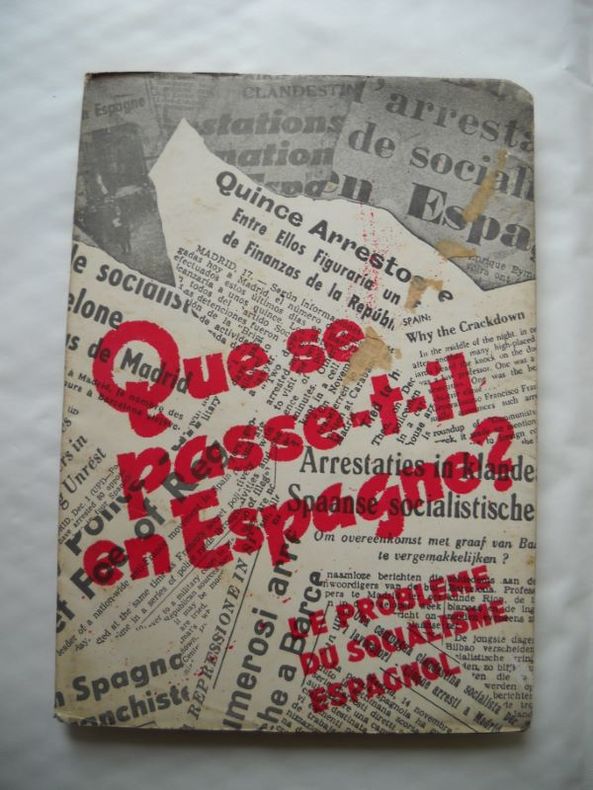
1552réf. 185751552 Broché avec jaquette - 15,5 x 22 - 130 pp - année 1959 - Imprime en Espagne Madrid - illustrations