Kennedy, George A.MareMagnum
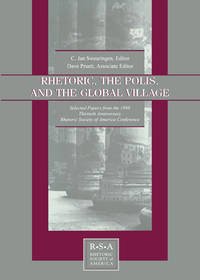
Rhetoric The Polis And The Global Village: Selected Papers From The 1998 Thirtieth Anniversary Rhetoric Society Of America Conference
1999réf. AME_9780805832952Erlbaum 1999. 30th. Paperback. New/New. _ Erlbaum paperback
1 757 résultats
1974Minor shelfwear. Foxing to top of textblock. ; 350 pages; Explores rhetorical theory and practice from the fifth to first centuries B. C. Begins with the practical, creative rhetoric of the pre-Socratic era, progresses through the time of Aristotle and the Attic orators, and concludes with the ossification of rhetoric into a sterile, pedantic discipline during the Hellenistic period.
1988Very light shelfwear to book else fine. Scholar's name to ffep (R. E. Fantham). Very light edgewear to DJ else fine. ; 0.88 x 9.48 x 6.38 Inches; 224 pages; By its very nature, the art of oratory involves character. Verbal persuasion entails the presentation of a persona by the speaker that affects an audience for good or ill. In this book, James May explores the role and extent of Cicero's use of ethos and demonstrates its persuasive effect. May discusses the importance of ethos, not just in classical rhetorical theory but also in the social, political, and judicial milieu of ancient Rome, and then applies his insights to the oratory of Cicero. Ciceronian ethos was a complex blend of Roman tradition, Cicero's own personality, and selected features of Greek and Roman oratory. More than any other ancient literary genre, oratory dealt with constantly changing circumstances, with a wide variety of rhetorical challenges. An orator's success or failure, as well as the artistic quality of his orations, was largely the direct result of his responses to these circumstances and challenges. Acutely aware of his audience and its cultural heritage and steeped in the rhetorical traditions of his predecessors, Cicero employed rhetorical ethos with uncanny success. May analyzes individual speeches from four different periods of Cicero's career, tracing changes in the way Cicero depicted character, both his own and others', as a source of persuasion, changes intimately connected with the vicissitudes of Cicero's career and personal life. He shows that ethos played a major role in almost every Ciceronian speech, that Cicero's audiences were conditioned by common beliefs about character, and finally, that Cicero's rhetorical ethos became a major source for persuasion in his oratory.
1988Very light bump to 1 corner. Else book is fine. Sticker residue to front panel of DJ. ; 0.88 x 9.48 x 6.38 Inches; 224 pages; By its very nature, the art of oratory involves character. Verbal persuasion entails the presentation of a persona by the speaker that affects an audience for good or ill. In this book, James May explores the role and extent of Cicero's use of ethos and demonstrates its persuasive effect. May discusses the importance of ethos, not just in classical rhetorical theory but also in the social, political, and judicial milieu of ancient Rome, and then applies his insights to the oratory of Cicero. Ciceronian ethos was a complex blend of Roman tradition, Cicero's own personality, and selected features of Greek and Roman oratory. More than any other ancient literary genre, oratory dealt with constantly changing circumstances, with a wide variety of rhetorical challenges. An orator's success or failure, as well as the artistic quality of his orations, was largely the direct result of his responses to these circumstances and challenges. Acutely aware of his audience and its cultural heritage and steeped in the rhetorical traditions of his predecessors, Cicero employed rhetorical ethos with uncanny success. May analyzes individual speeches from four different periods of Cicero's career, tracing changes in the way Cicero depicted character, both his own and others', as a source of persuasion, changes intimately connected with the vicissitudes of Cicero's career and personal life. He shows that ethos played a major role in almost every Ciceronian speech, that Cicero's audiences were conditioned by common beliefs about character, and finally, that Cicero's rhetorical ethos became a major source for persuasion in his oratory.
1988Scratch to front panel of DJ. Minor rubbing to DJ else NF. ; 0.88 x 9.48 x 6.38 Inches; 224 pages; By its very nature, the art of oratory involves character. Verbal persuasion entails the presentation of a persona by the speaker that affects an audience for good or ill. In this book, James May explores the role and extent of Cicero's use of ethos and demonstrates its persuasive effect. May discusses the importance of ethos, not just in classical rhetorical theory but also in the social, political, and judicial milieu of ancient Rome, and then applies his insights to the oratory of Cicero. Ciceronian ethos was a complex blend of Roman tradition, Cicero's own personality, and selected features of Greek and Roman oratory. More than any other ancient literary genre, oratory dealt with constantly changing circumstances, with a wide variety of rhetorical challenges. An orator's success or failure, as well as the artistic quality of his orations, was largely the direct result of his responses to these circumstances and challenges. Acutely aware of his audience and its cultural heritage and steeped in the rhetorical traditions of his predecessors, Cicero employed rhetorical ethos with uncanny success. May analyzes individual speeches from four different periods of Cicero's career, tracing changes in the way Cicero depicted character, both his own and others', as a source of persuasion, changes intimately connected with the vicissitudes of Cicero's career and personal life. He shows that ethos played a major role in almost every Ciceronian speech, that Cicero's audiences were conditioned by common beliefs about character, and finally, that Cicero's rhetorical ethos became a major source for persuasion in his oratory.
1881Inner hinges cracked and were repaired with tape at one point. Tape stains to inner hinges. Fraying and chipping to spine ends. Corners edgeworn. Scholar's bookplate to inner cover (G. P. Goold). Foxing to endpapers. ; English and Greek Text. ; 539 pages
1969Lower corners a bit bumped. 1 corner of front wrap a bit creased. ; Inaugural - Dissertation; 213 pages
réf. DADAX022670677XNew unknown
1999réf. AME_9780805832952Erlbaum 1999. 30th. Paperback. New/New. _ Erlbaum paperback
réf. SONG0253222516Used: Good unknown
réf. DADAX0271084693New unknown
réf. DADAX0801482062New unknown
1976Spine is sunned. Light shelfwear. 1 corner bumped. ; Parallel text in French and Latin. 281 pp ; Collection Des Universités De France. Association Guillaume Budé; Vol. 2; 281 pages
1833UN po' sciolto.Costola parzialmente mancante
réf. DADAX0520016106New unknown
réf. DADAX0791418065New unknown
réf. DADAX0809321378New unknown
réf. DADAX0271059753New unknown
réf. DADAX0231178794New unknown
réf. DADAX0252077660New unknown
réf. DADAX0826428975New unknown
1964In-8 (cm. 20.70), legatura in tela, titoli in oro al dorso, pp. 207, (1). Deutscher text. In ottimo stato (nice copy).
réf. Ph874Guilford Publications 1998. hbk 197pp ISBN: 157230426X excellent indj as new Guilford Publications, 1998, unknown
réf. SONG0816629110Used: Good unknown
réf. DADAX1843100754New unknown
réf. DADAX0367523868New unknown