10.015 Ergebnisse
Best.-Nr. 056522Paris Chez Janet et Cotelle, Libraires 1818-1821 1818 in 8 (21,5x14) 25 volumes reliures à la bradel cartonnées de l'époque, dos bruns lisses ornés de filets dorés, pièces de titre et de sous-titre de cuir vert, des rousseurs claires éparses. Tomes 1 à 12 : Les Vies des Hommes illustres de Plutarque, traduites du grec par Amyot ; Tomes 13 à 17 : Oeuvres Morales de Plutarque. Tomes 18 à 23 : Oeuvres mêlées. Tomes 24 et 25 : Tables des matières. Traduites du grec par Amyot, Grand-Aumônier de France, avec des notes et des observations par MM. Brotier, Vauvilliers et Clavier. Nouvelle édition revue et corrigée. Bel exemplaire ( Photographies sur demande / We can send pictures of this book on simple request )
Best.-Nr. 32701Avec des Notes.. 6 vols. in-8: "L'Economie rurale de Caton, Varron, Columelle, Paladius, Vegetius". A Paris, chez Barrois l'aîné en 1783. Reliure en veau blond glacé signée Antoine Chaumont. Dos fleuri avec pièces de titre et tomaisons. Triple filet doré sur les plats. 4 planches gravées dépliantes. Rare et belle édition.
1986Best.-Nr. 168Isaac Asimov - born in Soviet Russia in 1920 in the Smolensk region in a Jewish family. World famous science fiction writer author of about 500 works mostly fiction and popular science. Some terms from his works - robotics positronic psychohistory - have entered English and other languages. He is a multiple winner of the Hugo and Nebula awards. In the Anglo-American literary tradition Isaac Asimov together with Arthur C. Clarke and Robert Heinlein is considered to be one of the 'Big Three' science fiction writers. He was a very popular author in the Soviet Union. Perhaps the first work by Isaac Asimov published in the Soviet Union was the 1958 short story The Feeling of Power published translated by Zinaide Bobyr in two magazines at once: Nauka i Zhizn #11 and Iskatel in #6 of 1962. In 1964 for the first time in the USSR Isaac Asimov's solo collection a series of short stories I Robot translated by Alexey Jordan where the world-famous Three Laws of Robotics were formulated was published. In the 1960s Asimov was published extensively in Soviet journals. In 1966 the Library of Modern Fiction series published Isaac Asimov's novel The End of Eternity translated by Yuri Estrin. In the 1970s-80s other works by Asimov were published in magazines and in separate editions. However the Soviet publishing system was rather slow with each publication requiring a separate authorisation. Fiction fans could not wait for literary officials to make a decision to publish another work. Therefore underground translations of Western authors published in samizdat in typewritten copies and distributed privately began as early as the 1960s. This process became particularly active in the late 1970s and early 1980s when new copying technology became available. Translations were often unnamed for reasons of translator safety. Hundreds of works of Western fiction were translated in a short period of time. Then when in the late 1980s and early 1990s it became possible to print books of this kind in official printing houses some of the samizdat translations were printed. However not all of them! Therefore in the bibliography of Asimov's translations into Russian the first translation of 'Robots and Empire' is listed only in 2003! Thus the samizdat translation went unnoticed and is not listed anywhere. It survived in a small number of copies which did not end up in libraries and on the shelves of collectors. The translation is a photocopy from a typewritten copy 435 pages of text. In good condition. Rarity. Not available in libraries worldwide. Samizdat
Best.-Nr. 118455Paris, Philippe Gonin 1937 - 1948 - 1950, 335x250mm, en feuille, couverture rempliée, sous chemise demi-parchemin avec emboîtage cartonné. Justification du tirage : J’ai tiré moi-même les gravures à la presse à bras, sur les bois qu’Aristide Maillol avait dessinés et gravés de sa propre main. Le texte latin des Géorgiques et la version française de l’abbé Delille, collationnés et revus par madame Michel Roussier, archiviste paléographe, ont été composés avec une fonte nouvelle de caractères du XVème siècle. Le papier créé pour cette édition est de pur chanvre et lin à grandes fibres, exempt de produits chimiques. Le livre a été composé à Paris dans la Typographie Dumoulin, sous ma direction, puis imprimé avec la collaboration de Henry Barthélemy. Philippe GONIN. Un des 750 exemplaires numéroté n.° 463. Hormis rousseurs marginales des pages 6 à 10 du tome II, très bel exemplaire. Achevé d’imprimer le 21 mars 1950, premier jour du printemps.
1983Best.-Nr. 87212New York: Harcourt Brace Jovanovich 1983. First American Edition. First Printing with "First Edition" and publisher's "BCDE" code on copyright page. Octavo 24.25cm; mauve paper-covered boards and cream cloth backstrip with titling and decorations stamped in copper on spine and front cover; map endpapers; dustjacket; viii1-502pp; illus. Signed by the author on the title page. Light scattered foxing to text edges and endpapers; Near Fine. Dustjacket is unclipped priced $15.95 shelfworn gently spine-sunned with numerous small tears some attendant creases a 2" triangular chip to upper rear panel and the remnants of an old sticker to upper front flap; only Very Good. Eco's best-known book a historical murder mystery set in an Italian monastery in 1327. Originally published as Il nome della rosa in 1980. 87212. Harcourt, Brace, Jovanovich unknown
1983Best.-Nr. 87212New York: Harcourt Brace Jovanovich 1983. First American Edition. First Printing with "First Edition" and publisher's "BCDE" code on copyright page. Octavo 24.25cm; mauve paper-covered boards and cream cloth backstrip with titling and decorations stamped in copper on spine and front cover; map endpapers; dustjacket; viii1-502pp; illus. Signed by the author on the title page. Light scattered foxing to text edges and endpapers; Near Fine. Dustjacket is unclipped priced $15.95 shelfworn gently spine-sunned with numerous small tears some attendant creases a 2" triangular chip to upper rear panel and the remnants of an old sticker to upper front flap; only Very Good. Eco's best-known book a historical murder mystery set in an Italian monastery in 1327. Originally published as Il nome della rosa in 1980. 87212. Harcourt, Brace, Jovanovich unknown books
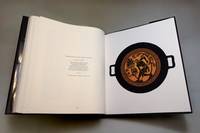
2009Best.-Nr. 727Chestertown Md: Chester River Press 2009. First thus. Hardcover. New/New. Lawrence Avery. New still in publisher's shrink-wrap. This scarce two-volume set of "The Iliad" and "The Odyssey" a 2009 first edition/first printing is the very definition of a "fine edition" and it might be the very definition of "luxury item" as well. It was published by Chester River Press a firm that specializes in bespoke books that are designed in cooperation with the individual commissioning a publication. In this case that anonymous individual went all out with separate hardcover folio copies for each text with the original Homeric Greek edited by Barry B. Powell Professor of Classics Emeritus at the University of Wisconsin-Madison in parallel columns with the great Alexander Pope translation. Steven Shankman Professor Emeritus at the University of Oregon and UNESCO Chair in Transcultural Studies Interreligious Dialogue and Peace wrote a two-part introduction that tells the reader first about Homer then about Pope. It may be the illustrations that make these volumes especially distinguished however. Most of the approximately 55 original prints produced by Avery Lawrence are in the form of full-page recreations of red-and-black Greek pottery that illustrate the stories being told.if "recreations" is the right word for images that follow the exacting artistic forms but still spring from Lawrence's imagination. The facing captions provide the applicable quotes for the action being depicted but also the date and even the artist or collector of the vessel used as a prototype. The print is dignified and sized to be easy to read and the paper is sturdy without being overly thick in a cream color that is gentle on the eyes. They are bound in identical black Dutch cloth with differences in their decoration and obviously their lettering but following the same format. "The Iliad" has an ancient Greek plumed helmet in profile stamped in gold on its front cover. A smaller copy of that helmet is at the top of the spine with the publisher's name at the bottom. The title in large Greek letters is between. All are stamped in bright gold. "The Odyssey" is similar in appearance. Instead of a helmet its cover is decorated with an ancient Greek ship and the title is again in Greek lettering. Unlike many books that come in slipcases these volumes have dustjackets made of sturdy glossy black paper. The spines of the dustjackets match the spines of the binding of the volumes only with orange printing instead of gold but the covers are quite different from the covers of the volume bindings. Here the Greek titles are printed in large orange letters with the titles repeated in smaller orange letters beneath along with Homer's and Alexander Pope's names. Shankman's and Lawrence's names are beneath those even smaller again in orange. We have described the text block to some extent above but we did not mention that each volume has a bright gilt top edge and comes with double black and gold satin ribbon bookmarks. The two volumes share a single slipcase and in this case even that slipcase is extraordinary - black sturdy with an attached broad satin ribbon that is serves as a booklift to help take the volumes out without damage. There are also small blocks built into the bottom of the interior of the slipcase that serve as supports for the text blocks so they don't drag on the binding helpful as the volumes are substantive and large: 15"x13"x1.75" to 2". These books won't be easy to cuddle up with but they will be volumes to be treasured as exemplars of the book arts. That is likely why institutions as far afield as the National Library of New Zealand and as prestigious as the Wren Library at Trinity College Cambridge University have copies. Now you can possess one too. Ours are new and still in shrink wrap as delivered by the publisher. See attached photos. Happy to address any questions. For overseas shipments please consult with us on mailing costs. Postage free with the US. Chester River Press hardcover
1895Best.-Nr. 49766Philadelphia: The Gebbie Publishing Co. Ltd 1895. Connoisseur Edition. One of 25 sets numbered and specially bound this being no.8. Eight octavo volumes 23.75cm; full black crushed morocco spines in six compartments with titling and decorations stamped in gilt on spines and triple gilt-ruled border on covers; marbled endpapers; top edges gilt; xiv2255; xiii226-4335; x2384; x239-4475; xii2384; xii2394624; xii2264; xiv227-4764pp with frontispieces and 58 plates. Light wear to joints and extremities touch of dustiness finger-soil and a few scuffs to covers with faint foxing to text edges; contents relatively clean with hinges sound; Very Good. Handsome edition of the French critic and historian's landmark work on English literature published first in France in 1863 and translated into English in 1871. Gebbie published this set in a variety of issues the Connoisseur Edition representing the smallest available limitation. The Gebbie Publishing Co. Ltd unknown
1895Best.-Nr. 49766Philadelphia: The Gebbie Publishing Co. Ltd 1895. Connoisseur Edition. One of 25 sets numbered and specially bound this being no.8. Eight octavo volumes 23.75cm; full black crushed morocco spines in six compartments with titling and decorations stamped in gilt on spines and triple gilt-ruled border on covers; marbled endpapers; top edges gilt; xiv2255; xiii226-4335; x2384; x239-4475; xii2384; xii2394624; xii2264; xiv227-4764pp with frontispieces and 58 plates. Light wear to joints and extremities touch of dustiness finger-soil and a few scuffs to covers with faint foxing to text edges; contents relatively clean with hinges sound; Very Good. Handsome edition of the French critic and historian's landmark work on English literature published first in France in 1863 and translated into English in 1871. Gebbie published this set in a variety of issues the Connoisseur Edition representing the smallest available limitation. The Gebbie Publishing Co. Ltd unknown books
1969Best.-Nr. 38378Northampton Massachusetts: The Gehenna Press 1969. Hardcover. Fine. Hardcover. Number 34 of 200 copies signed by the famed illustrator and founder of the press Leonard Baskin. Leonard Baskin 1922 - 2000 was an American sculptor draughtsman and graphic artist as well as founder of the Gehenna Press 1942-2000. One of America's first fine arts presses it went on to become "one of the most important and comprehensive art presses of the world" often featuring the work of poets such as Sylvia Plath Ted Hughes Anthony Hecht and James Baldwin side by side with Baskin's bold stark energetic and often dramatic black-and-white prints. Called a "Sculptor of Stark Memorials" by the New York Times Baskin is also known for his wood limestone bronze and large-scale woodblock prints which ranged from naturalistic to fanciful and were frequently grotesque featuring bloated figures or humans merging with animals Wikipedia. Euripides was a Greek tragedian of classical Athens. Along with Aeschylus and Sophocles he is one of the three authors of Greek tragedy for whom any plays have survived in full. His play Hippolytos is an Ancient Greek tragedy by Euripides based on the myth of Hippolytus son of Theseus. The play was first produced for the City Dionysia of Athens in 428 BC and won first prize as part of a trilogy. The text is extant. This may be one of the most stunning of the many fine works published by this famous press. It is accompanied by a separate folder of ten prints with illustrations taken from the text. Bound in brown cream and black marbled paper boards with a brown leather spine with the author and title names in small gilt letters. The types are Monotype Centaur and Arright. The pressman was the well known printer Harold McGrath. Baskin's etchings were printed from the plates by Emiliano Sorini. In the colophon thanks are given to John Moore of Amherst College George Dimock of Smith College and Wililiam Arrowsmith James Hynd and Thomas Gould of the University of Texas for their comments on the text. The text was taken frin W.S. Barrett's edition of the play as published by the Oxford University Press. Housed in a slipcase that also holds the folder of prints. The slipcase has the same marbled papers that were used on the book.It also has a brown leather spine with the titling in gilt. There are two small stains on the leater spine. Other than that this work is in fine condition. Measores 13 x 20 inches. Unpaginated. PRI/080326. The Gehenna Press hardcover
1969Best.-Nr. 38378Northampton Massachusetts: The Gehenna Press 1969. Hardcover. Fine. Hardcover. Number 34 of 200 copies signed by the famed illustrator and founder of the press Leonard Baskin. Leonard Baskin 1922 - 2000 was an American sculptor draughtsman and graphic artist as well as founder of the Gehenna Press 1942-2000. One of America's first fine arts presses it went on to become "one of the most important and comprehensive art presses of the world" often featuring the work of poets such as Sylvia Plath Ted Hughes Anthony Hecht and James Baldwin side by side with Baskin's bold stark energetic and often dramatic black-and-white prints. Called a "Sculptor of Stark Memorials" by the New York Times Baskin is also known for his wood limestone bronze and large-scale woodblock prints which ranged from naturalistic to fanciful and were frequently grotesque featuring bloated figures or humans merging with animals Wikipedia. Euripides was a Greek tragedian of classical Athens. Along with Aeschylus and Sophocles he is one of the three authors of Greek tragedy for whom any plays have survived in full. His play Hippolytos is an Ancient Greek tragedy by Euripides based on the myth of Hippolytus son of Theseus. The play was first produced for the City Dionysia of Athens in 428 BC and won first prize as part of a trilogy. The text is extant. This may be one of the most stunning of the many fine works published by this famous press. It is accompanied by a separate folder of ten prints with illustrations taken from the text. Bound in brown cream and black marbled paper boards with a brown leather spine with the author and title names in small gilt letters. The types are Monotype Centaur and Arright. The pressman was the well known printer Harold McGrath. Baskin's etchings were printed from the plates by Emiliano Sorini. In the colophon thanks are given to John Moore of Amherst College George Dimock of Smith College and Wililiam Arrowsmith James Hynd and Thomas Gould of the University of Texas for their comments on the text. The text was taken frin W.S. Barrett's edition of the play as published by the Oxford University Press. Housed in a slipcase that also holds the folder of prints. The slipcase has the same marbled papers that were used on the book.It also has a brown leather spine with the titling in gilt. There are two small stains on the leater spine. Other than that this work is in fine condition. Measores 13 x 20 inches. Unpaginated. PRI/080326. The Gehenna Press hardcover books
2012Best.-Nr. 932700Seattle WA: Ouroboros Press / Ars Obscura Bookbinding 2012. NEW / Rosencreutz Edition - Full scarlet leather with raised spine bands gilt title and Rose Cross device. Handmarbled endsheets and silk ribbon bookmark. Limited to 120 copies only. Title in Full - "The Rosicrucian Manifestos : The Foundation Documents Of The Brotherhood Of The Rosy-Cross Being the Fama and Confessio Fraternitatis to which is appended A Letter from the Brothers of R. C. Concerning the Invisible Magical Mountain & the Treasure therein Contained." From the Publisher see image - "Early in seventeenth century Germany two anonymous manuscripts were in circulation which would cause a stir in intellectual and spiritual communities in Europe with calls for reformation and a focus on the Hermetic-Cabalist tradition. The manuscripts were finally printed as the Fama Fraternitatis and Confessio Fraternitatis and told the story of the founding of a mysterious society; the Brethren of the Rosy Cross which eschewed religious dogma and called for the study of Alchemia Magia and Cabala. Considered a ludibrium by many including the supposed author Johann Valentin Andreae who later said he wrote them as a 'youthful jest' the Manifestos nonetheless ignited a firestorm of controversy which resulted in the rise of many forms of Rosicrucianism. Some of these movements have come down to us today in the form of magical orders such as the Hermetic Order of the Golden Dawn the Builders of the Adytum or AMORC now based in San Jose California. As the Master Therion wrote in Liber LXI vel Causae concerning purported Rosicrucian manuscripts; "You will readily understand that the genuineness of the claim matters no whit such literature being judged by itself not by its reputed sources." Seventeenth century Europe was expectant of political and religious change as two new stars appeared in firmament as discussed by Johannes Kepler in his De Stella nova in pede Serpentarii; De Stella incognita Cygni which was printed in Prague two years after the stars appeared in 1604. This unique celestial event depicted in the Temple of the Rosy Cross print fortified the call for political and spiritual renewal 'trumpeted' by the manifestos. This invisible college as the Rosicrucian Order was sometimes refered to is represented in the print as a temple on wheels 'under the shadow of the wings of the Lord.' Schweighardt was a supporter of Rosicrucian ideas but he was by no means alone in these endeavours as his reference to Julianus de Campis wielder of the sword shows. Of course there were other supporters such as Michael Maier Robert Fludd and Thomas Vaughan the latter causing to be printed the first English edition of the Manifestos. The Rosicrucian Manifestos describe the early life of Christian Rosencreutz his pilgrimage to the East in search of occult knowledge and his eventual founding of the mysterious Brothers of the Rosy Cross. The enigmatic and axiomatic writing style places the texts firmly into the western esotericism and includes critiques upon the 'closed minds' of society be it political religious or intellectual and includes the legend of the founder CRC and gives very detailed descriptions of the Hidden Symbolical Vault wherein the secrets of the order were secured along with the body of Christian Rosencreutz laid in restful repose under an Everburing Lamp. The appended Letter from the Brothers of R.C. describes the Invisible Magical Mountain of the Adepts how to get there and what to expect while 'visiting'". Limited Edition. Hard Cover/Full Leather/Sewn. New. Illus. by Frontis Portrait of Andreae and 2 Engraved Plates Entirely Reset In Classic Typefaces. Small 8vo - over 7¼" tall. Ouroboros Press / Ars Obscura Bookbinding hardcover
1936Best.-Nr. 76089Paris, Institut International de Coopération Intellectuelle, 1936, 15x19cm, broché avec grande vignette de titre verte contrecollée sur le premier plat, 145p. 4 gravures en couleurs à pleine page de FOUJITA, portrait de Bashô par Kyoroku et une vignette de Kiyoshi HASEGAWA en couverture. Un des exemplaires sur vélin après 55 exemplaires sur Japon Impérial. Intérieur de toute fraîcheur. Couverture présentant quelques marques du temps, une tache de qq. mm.sur le premier plat au coin supérieur droit, dos jauni, frotté et légèrement fendu en un point. Néanmoins brochage solide.
1828Best.-Nr. PHO-1950Paris, Firmin Didot, 1828, 2 tome en 1 volume in-4, VII-461pp.-435pp., sans couverture, manque les pages de titres (copie), quelques rousseurs.
Best.-Nr. 109650Lugduni (Lyon), Apud Ant. Vincentium, M.D.LIII (1553), 1 volume in-12 de 175x105x55 mm environ, 1f.blanc, 40 ff. (titre en rouge et noir avec vignette à la marque de l'imprimeur Antoine Vincent)-1f.blanc-539 feuillets, 2ff.blancs, (un numéro pour 2 pages), plein veau brun de l'époque, dos à nerfs, titres à peine visible sur pièce de titre grenat, orné de fleurons aux entrenerfs et un motifs en losange au centre des plats (dorure en effacée). Exemplaire entièrement réglé, avec colophon en dernière page : Lugduni Excudebat Petrus Fradin, M.D.LV. Avec la Marque de l'imprimeur Antoine Vincent gravée sur bois et des Lettrines gravées sur bois. Sig. |-|||||8, a-z, A-O8, P4, Q-Y8, Aa-Yy8, (Yy8 le dernier feuillet réglé est un feuillet blanc). Reliure abimée avec manque de cuir sur le dos les coupes et les coins, des annotations manuscrites par endroits dans les marges et sur la page de titre, rares manques de papier, petites taches et cernes dans les marges, galeries de ver marginales en début et fin de volume (sans atteinte au texte). Rare impression lyonnaise réalisée par FRADIN pour Antoine VINCENT; Janus Cornarius (Johann Hainpol ou Hagenbut), ami d'Erasme, professeur de Médecine qui donna plusieurs traductions d'Hippocrate.
Best.-Nr. 003242in-12 (13,6 x 8 cm), 430 pp. Reliure d'époque veau brun, dos à cinq nerfs orné,pièce de titre maroquin rouge, tranches rouges. (Date entre 1620 et 1629). Quelques bandeaux et lettrines. Tampon de colportage. Quelques notes manuscrites anciennes dans les marges et sur les feuillets blancs. Provenance manuscrite : "Charles Henichart" Marques de l'imprimeur sur la page de titre et le colophon.
1682Best.-Nr. 73301682 "Suivant la copie imprimée à Paris Chez Claude Barbin." . [Hollande], 1682. 2 volumes in-12, a la sphère Nouvelle traduction par La Valterie, Paris, Barbin, avec lettre à : Monseigneur l'abbé Lyonne, en epistre par l'éditeur (4 pages), une préface (8 pages) et Les Arguments (8 pages) 576 pages. 1682, 2 volumes en deux parties, in12. Reliure veau brun, dos à nerfs orné. Faux titre gravé. 24 gravures dessinées par SchoonebeckEtat superbe dans une reliure d'époque
1976Best.-Nr. 014591Paris Gallimard NRF - Collection "Du Monde entier" 1976 In-8 Broché, jaquette illustrée Dédicacé par l'auteur
1746Best.-Nr. 72511746 La Haye, [au Croissant], 1746. In-12; basane brune, dos lisse orné, pièce de titre marron, Armes sur les plats " Bibliotheque de Mr et Mm DE MAY, filets sur les plats, tranches rouges , 183 pp. Edition originale de la traduction française. Ex-libris :Henri Edouard Weber Un deuxieme roman à la suite du premier : Les deux cousines ou le mariage du Chevalier de *** sans auteur a Constantinople 1747. in-8;
Paris, Denoël, 20 février 1961. In-12, broché, 227 pp. Edition originale. Un des 20 exemplaires numérotés sur vélin pur fil, seul tirage en grand papier. Bel exemplaire en parfait état.
1804Best.-Nr. 21278Lyon, Bruyset aîné et Buynand, an XII-1804 - an XIII-1805 ; 5 tomes in-8, veau porphyre, dos à nerfs décoré de croisillons et fleurons dorés, pièces rouges, dentelle d’encadrement des plats, tranches jaunes (reliure de l’époque) ; LXXIX, [1], 532; 467 ; 648 ; 518; XVIII (Table Alph. Franç. des Genres), XVIII (Table Alph. Latine des Genres), XVI (Table Franç. numérique des Genres), XXXII (Table Alphab. Nosologique), XXII (Table Alph. Pharmaceutique), VIII (Table des Plantes nutritives), XXXIV (Tables Plantes colorantes), CXIV (Table Alph. Lat. des Synonymes de Bauhin), XVI (Table Alph. Lat. des Synonymes des genres), LXIV (Table Alph. des auteurs de Botanique cités), VI (Table Chrono. des Auteurs de Botanique), XLIV (Table Alph. des Etymologies des Genres), [2] pp. Errata. Portrait de Charles Linné gravé par Boily, en frontispice.
1766Best.-Nr. 21550Paris, Pierre-François Didot, le Jeune, 1766 ; in-12, veau marbré, dos lisse à faux nerfs dorés, décoré et doré, pièce de titre grenat, tranches rouges (reliure de l’époque) ; [8], 392 pp.
1972Best.-Nr. 82762Ediciones Poligrafa S. A 1972-01-01. Hardcover. Very Good. Large format hardcover in jacket with text in Spanish light chip to head of spine of the jacket. All 11 original lithographs are intact. Tight binding no marks. oversized and overweight. Please email for photos. Ediciones Poligrafa, S. A hardcover
Best.-Nr. 66277Paris, Librairie Renouard 1918, 408x285mm, XII - 519pages, demi-chagrin noir, dos à nerfs, auteur et itre dorés, bords du haut du dos fendus sur une dizaine de centimetre, reliure solide. Tirage limité, exemplaire numéroté n.° 273 / 550.
Best.-Nr. 117972Paris, de l’imprimerie de Didot jeune, chez Bleuet père 1793 (an 2e. de la République) 240x160mm, reliure maroquin rouge, dos à cinq nerfs doré, étiquette verte, plats encadrés de quelques motifs et filets dorés, superexlibris doré au centre des deux plats, tranches dorées, bordures fleuries, dentelles intérieures, garde papier marbré. Bel exemplaire. Les superexlibris représentent les armes du Marquis de Villeneuve : “A tout premier Maroquis de France”.Voir le Vapereau Dict. univ. des littératures sur les louanges à l’adresse de Delille pour son oeuvre principale.Brunet V, col. 1303-4 mentionne la première édition (1770, Paris, Bleuet) de cette excellente traduction, une édition de Didot, 1783, et celle-ci (an II, 1793).