233 résultats
1950réf. 19261950 Editions Jean Froissart, Paris, 1950. Petit in-8, broché, jaquette illustrée en couleurs. 312 pages.
1918393-488, 126 [ads] pages. One fold-out drawing. Profusely illustrated with detailed drawings and black and white photos. Printed upon glossy stock. Includes dozens of magnificently illustrated ads. Features: The Residence of F.F. Peabody, Esq., Montecito, California; The Ravisloe Country Club, Homewood, Illinois - George C. Nimmons & Co., Architects; The Phi Delta Theta Chapter House at the University of California, John Reid Jr., Architect; Otto R. Eggers, Architectural Renderer and Designer; The Creole Architecture of New Orleans; Industrial Housing Developments in America - Part III, Sawyer Park, Williamsport, PA, George S. and Lewis E. Welsh, Architects; Portfolio of Current Architecture; The Architect's Library - Hispanic Society Publications. Notes and Comments. Somewhat above-average external wear. Openings at each end of backstrip. Two small binding holes near spine. Faint library stamp upon front cover. Binding intact. A worthy vintage copy. Book
2009réf. 2652009 - broché - Editions Mauritania - Copyright Christian le Comte / Hélène Baligadoo - 2009 - In-4 format carré (28 x 28,5 cm) broché, couverture à rabats - 96 pages - Nombreuses illustrations et photographies en couleurs - Avec la plaquette "Malcolm de Chazal 1902-1981. Un homme, une oeuvre..." de la Fondation Malcom de Chazal à Port-Louis (Île Maurice)
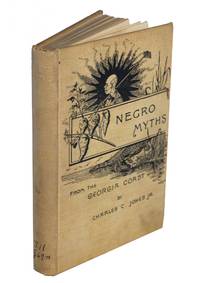
1888réf. 177281888. Jones Charles C. Negro Myths from the Georgia Coast 1888 presenting a late nineteenth-century compilation of African American folklore recorded in the Gullah dialect of the Georgia and South Carolina coastal region with direct relevance to the study of Black oral traditions linguistic history and post-emancipation cultural expression. The volume gathers fable-like narratives often centered on anthropomorphic animals that reflect storytelling traditions rooted in African diasporic heritage and adapted within enslaved and freed communities of the coastal South. Its use of Gullah a Creole language shaped by West African linguistic structures and English situates the work within ongoing efforts of the period to document vernacular speech and preserve forms of cultural expression that had developed under slavery and persisted into Reconstruction and beyond. Jones Charles C. Negro Myths from the Georgia Coast. Boston and New York: Houghton Mifflin and Company 1888. First edition. The text is rendered in Gullah dialect reflecting the linguistic patterns of African American communities along the Georgia and South Carolina coasts including areas around Savannah and Charleston. Jones raised in a plantation environment and familiar with the regional speech patterns compiled these narratives as part of a broader nineteenth-century interest in folklore and dialect studies contributing to early written records of Gullah language and storytelling traditions. Single volume. Ex libris. Minor foxing to the front pastedown and bumped corners; overall very good condition. A late nineteenth-century printed record of African American folklore and language from the coastal South documenting narrative forms and speech patterns that remain central to the study of Gullah culture and linguistic history. unknown
1888réf. 177281888. Jones Charles C. Negro Myths from the Georgia Coast 1888 presenting a late nineteenth-century compilation of African American folklore recorded in the Gullah dialect of the Georgia and South Carolina coastal region with direct relevance to the study of Black oral traditions linguistic history and post-emancipation cultural expression. The volume gathers fable-like narratives often centered on anthropomorphic animals that reflect storytelling traditions rooted in African diasporic heritage and adapted within enslaved and freed communities of the coastal South. Its use of Gullah a Creole language shaped by West African linguistic structures and English situates the work within ongoing efforts of the period to document vernacular speech and preserve forms of cultural expression that had developed under slavery and persisted into Reconstruction and beyond. Jones Charles C. Negro Myths from the Georgia Coast. Boston and New York: Houghton Mifflin and Company 1888. First edition. The text is rendered in Gullah dialect reflecting the linguistic patterns of African American communities along the Georgia and South Carolina coasts including areas around Savannah and Charleston. Jones raised in a plantation environment and familiar with the regional speech patterns compiled these narratives as part of a broader nineteenth-century interest in folklore and dialect studies contributing to early written records of Gullah language and storytelling traditions. Single volume. Ex libris. Minor foxing to the front pastedown and bumped corners; overall very good condition. A late nineteenth-century printed record of African American folklore and language from the coastal South documenting narrative forms and speech patterns that remain central to the study of Gullah culture and linguistic history. unknown books
1903réf. 227771903. Eustis Celestine. Cooking in Old Creole Days 1903 presents one of the earliest widely circulated printed accounts of Louisiana Creole cuisine and preserves culinary traditions shaped by African American cooks French colonial influences Caribbean foodways and regional Southern ingredients. Written by New Orleans writer and philanthropist Celestine Eustis during a period when Creole culture was becoming a subject of national fascination the book documents dishes and techniques that developed within the kitchens of Creole households where Black cooks played central roles in shaping regional cuisine. Recipes for dishes such as crab gumbo crawfish bisque jambalaya à la Creole okra gumbo Hopping John praline cocoanut and molasses cake demonstrate the fusion of African diasporic ingredients French culinary methods and Gulf Coast agricultural products that defined the food culture of New Orleans at the turn of the twentieth century. Eustis Celestine. Cooking in Old Creole Days La Cuisine Créole à l'usage des petits ménages. New York: R. H. Russell 1903. First edition. 8vo. Illustrated with eight full-page plates by Harper Pennington each with a printed tissue guard featuring the musical score and lyrics of a Creole song. Original publisher's pictorial cloth. The book presents recipes alongside cultural commentary celebrating the distinctive culinary traditions of Creole New Orleans. French titles appear alongside English recipe names emphasizing the bilingual cultural environment from which these dishes emerged. The introduction by physician and writer S. Weir Mitchell praises the culinary expertise of African American cooks in Southern households while also reflecting the racial paternalism characteristic of early twentieth century commentary on Black labor and domestic service. The volume is illustrated with eight full page plates by Harper Pennington. Each plate is protected by a printed tissue guard bearing the musical score and lyrics of a Creole song pairing culinary instruction with elements of regional musical culture and reinforcing the book's portrayal of Creole domestic life. At the time of its publication Creole cuisine had become a defining element of New Orleans cultural identity and an object of growing national interest among American readers seeking regional culinary traditions. Works such as Eustis's cookbook helped introduce Creole foodways to a broader audience while documenting dishes that had long circulated within local households and community networks. Clean interior with crisp illustrations and intact tissues; binding tight with minimal signs of use. Overall near fine condition. This book preserves evidence of the racial and social hierarchies that structured domestic labor in the American South where the knowledge and artistry of Black cooks shaped the cuisine even as their contributions were often filtered through the voices of white authors and publishers. unknown
1903réf. 227771903. Eustis Celestine. Cooking in Old Creole Days 1903 presents one of the earliest widely circulated printed accounts of Louisiana Creole cuisine and preserves culinary traditions shaped by African American cooks French colonial influences Caribbean foodways and regional Southern ingredients. Written by New Orleans writer and philanthropist Celestine Eustis during a period when Creole culture was becoming a subject of national fascination the book documents dishes and techniques that developed within the kitchens of Creole households where Black cooks played central roles in shaping regional cuisine. Recipes for dishes such as crab gumbo crawfish bisque jambalaya à la Creole okra gumbo Hopping John praline cocoanut and molasses cake demonstrate the fusion of African diasporic ingredients French culinary methods and Gulf Coast agricultural products that defined the food culture of New Orleans at the turn of the twentieth century. Eustis Celestine. Cooking in Old Creole Days La Cuisine Créole à l'usage des petits ménages. New York: R. H. Russell 1903. First edition. 8vo. Illustrated with eight full-page plates by Harper Pennington each with a printed tissue guard featuring the musical score and lyrics of a Creole song. Original publisher's pictorial cloth. The book presents recipes alongside cultural commentary celebrating the distinctive culinary traditions of Creole New Orleans. French titles appear alongside English recipe names emphasizing the bilingual cultural environment from which these dishes emerged. The introduction by physician and writer S. Weir Mitchell praises the culinary expertise of African American cooks in Southern households while also reflecting the racial paternalism characteristic of early twentieth century commentary on Black labor and domestic service. The volume is illustrated with eight full page plates by Harper Pennington. Each plate is protected by a printed tissue guard bearing the musical score and lyrics of a Creole song pairing culinary instruction with elements of regional musical culture and reinforcing the book's portrayal of Creole domestic life. At the time of its publication Creole cuisine had become a defining element of New Orleans cultural identity and an object of growing national interest among American readers seeking regional culinary traditions. Works such as Eustis's cookbook helped introduce Creole foodways to a broader audience while documenting dishes that had long circulated within local households and community networks. Clean interior with crisp illustrations and intact tissues; binding tight with minimal signs of use. Overall near fine condition. This book preserves evidence of the racial and social hierarchies that structured domestic labor in the American South where the knowledge and artistry of Black cooks shaped the cuisine even as their contributions were often filtered through the voices of white authors and publishers. unknown books
1831réf. 12073Ile Maurice, Imprimerie de G. Deroullede & Cie, Imprimeurs du Gouvernement, 1831. In-8 broché de 79 pp., couverture muette, chemise étui.