Antiquariat.de
57 résultats
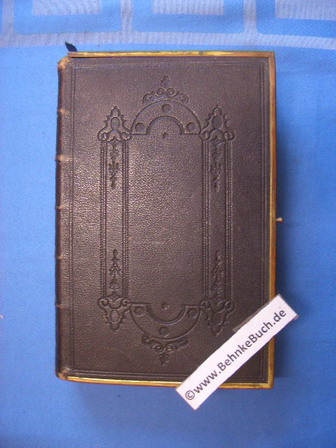
1870réf. 130469London : Samuel Bagster & Sons [1870]. 598, 48, 48 Seiten. 21,5*13,5 cm. OLederband mit Goldschnitt.
1937réf. 401093Mexico, Imprenta Londres (1937). gr.8°, 23 x 17 cm. Media tela original, algo golpeada y polvorienta, portada y primeras páginas comprimidas y algo onduladas por la humedad. 2 hojas, 374 páginas, 1 hoja de erratas. Pequeña firma a tinta en portada. Por lo demás limpio por dentro y en general en buen estado. --- Original half cloth, somewhat bumped and dusty, front cover and first pages are compressed and somewhat wavy due to moisture. 2 sheets, 374 pages, 1 sheet errata. Small signature in ink on title page. Otherwise clean inside and overall in good condition. --- Demi-toile d'origine, un peu bosselée et poussiéreuse, la première de couverture et les premières pages sont compressées et quelque peu ondulées à cause de l'humidité. 2 feuillets, 374 pages, 1 feuillet d'errata. Petite signature à l'encre sur la page de titre. Sinon intérieur propre et bon état général. --- Originaler Halbleinenband, etwas bestoßen und angestaubt, Vorderdeckel und erste Seiten sind gestaucht und etwas wellig infolge Feuchtigkeit. 2 Blatt, 374 Seiten, 1 Blatt Errata. Kleiner Namenszug in Tinte auf dem Titelblatt. Innen ansonsten sauber und insgesamt noch gut erhalten.
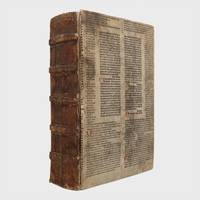
1619réf. 372217Geneva: Pierre de la Rouviere 1619. Engraved title dated at foot 1619. Letterpress titles to Greek and Hebrew O.T. with Mikra in Hebrew within ornamental cartouche. N.T. and Corrections with separate title pages. Biblical text in two columns Greek or Hebrew with interlinear Latin. Pp. 2 167 3 blank; 4 271 1 blank 38 Index Rerum 2 blank; 4 70 Romanae Correctiones in Latinis Bibliis 6 Chronolgia Sacrae Scriptura; 4 blank; 203 1 blank 283 1 blank 183 1 2 blank 22 Hebrew text signed and foliated right to left. 1 vols. Folio. Printer's waste over boards leaves from an early commented edition of Justinian'a Instituiones Liber XXXIX with manuscript initials in red. Spine perished first two and last two leaves with repairs at foot; some light dampstaining at lower margin. Very good. Engraved title dated at foot 1619. Letterpress titles to Greek and Hebrew O.T. with Mikra in Hebrew within ornamental cartouche. N.T. and Corrections with separate title pages. Biblical text in two columns Greek or Hebrew with interlinear Latin. Pp. 2 167 3 blank; 4 271 1 blank 38 Index Rerum 2 blank; 4 70 Romanae Correctiones in Latinis Bibliis 6 Chronolgia Sacrae Scriptura; 4 blank; 203 1 blank 283 1 blank 183 1 2 blank 22 Hebrew text signed and foliated right to left. 1 vols. Folio. Interlinear edition of the Greek Old and New Testaments with the Hebrew Old Testament following the edition published by de la Rouviere at Geneva in 1609. Interesting copy with a binding re-using early printed sheets with manuscript decorations. Darlow & Moule 4667 5117; Delaveau & Hillard 81 Pierre de la Rouviere unknown books
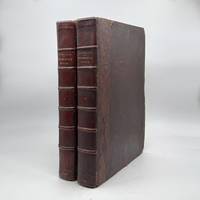
1569réf. 372210Geneva: Henri Estienne 1569. Printer's device on title page. Text in four columns in Greek Latin and Syriac. 6 28 1 324; 325-709 leaves. 2 vols. Folio. Later calf. Rebacked edgeworn and dry. Very good overall. Printer's device on title page. Text in four columns in Greek Latin and Syriac. 6 28 1 324; 325-709 leaves. 2 vols. Folio. The New Testament in Greek Latin and Syriac given in Hebrew characters with a Latin translation of the Syriac by Immanuel Tremellius 1510-1580 professor of Hebrew at Heidelberg. The Dedicatory Epistle is addressed to Queen Elizabeth I. The Syriac version is the second edition the first 1555 of the New Testament; the Latin translation is the first edition and was the basis for translations down to the eighteenth century. This copy with his Grammatica Chaldaea et Syriaca including teminal blank bound preceding Matthew; the second volume begins with Acts. RARE. Darlow & Moole 1421; Renouard Annales de l'imprimerie des Estienne p.132; Adams B1701. OCLC reports fewer than 20 locations over multiple records. Provenance: General Theological Seminary blindstamps bookplate Henri Estienne unknown books
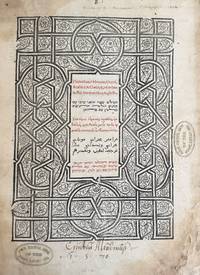
1516réf. 371021Genoa: Petrus Paulus Porrus 1516. Title printed in red and black within woodcut arabesque border printer's device on final leaf. Parallel text in Hebrew Latin Greek Arabic and Chaldaean Aramaic 4 columns to a page 41 lines. 13 woodcut floriated initials. A10 B-Z8 &8 con6; 200 leaves complete. Folio 13-1/8 x 9-3/8 inches. Contemporary blind tooled pigskin over bevelled wooden boards boards with repeated roll of hound hunter and stag spine with floral tools. Clasps perished early repairs with vellum at lower corners; spine darkened with chip at foot joint starting wormholes to the covers. Toning throughout worm holes throughout but heavier to the preliminary and terminal leaves paper loss not affecting text at the lower outer corners of the first 3 leaves minor dampstaining at the lower corners of most leaves and extending from the top inner margin. Scattered early marginalia. Title printed in red and black within woodcut arabesque border printer's device on final leaf. Parallel text in Hebrew Latin Greek Arabic and Chaldaean Aramaic 4 columns to a page 41 lines. 13 woodcut floriated initials. A10 B-Z8 &8 con6; 200 leaves complete. Folio 13-1/8 x 9-3/8 inches. The Genoa Psalter also known as the Octaplum or Quadruplex Psalter was the first polyglot psalter to be published and the first polyglot edition of any part of the Bible. Financed by the Oriental language scholar Bishop Agostino Giustiniani and printed in Genoa in 1516 it presents the psalms laid out in eight columns i.e. four per page on double-page spreads: in Hebrew a Latin paraphrase the Vulgate Latin the Septuagint Greek Arabic Chaldean Aramaic a Latin paraphrase and the editor's notes. "A monument of Renaissance typography this Psalter was linguistically the most ambitious work attempted to date and the first Polyglot work ever published. It provides the Psalms in five languages as well as a marginal scholarship based largely on rabbinic sources. The Arabic text is one of the first two texts and the first biblical text ever printed in this language. The Hebrew types used in this book were apparently never used again" B. Sabin Hill Hebraica from the Valmadonna Trust The Piermont Morgan Library 1989 no. 18. Notably within a lengthy editor's note to Psalm XIX is what is considered the first printed biography of Christopher Columbus along with a very early description of his voyage. A native son of Genoa Giustiniani presents the discovery of the new world as a fulfilment of Biblical prophecy appropriately glossing verse four of Psalm XIX to include his biography of Columbus: "Their sound is gone out through all the earth and their words to the end of the world." The text of the biography of Columbus written a decade after his death includes a brief account of his childhood and continues at length on his discovery of America. Translated from the Latin it begins: "And so their words have reached unto the ends of the earth at least in our own times in which by the marvelous daring of Christopher Columbus of Genoa almost another world was discovered and joined to the community of Christians. And since Columbus often declared that he was chosen by God so that through him this prophecy would be fulfilled I did not consider it unsuitable to include his life here. Therefore Christopher surnamed Columbus a Genoese by birth . lived in our age and through his own efforts explored more lands and seas in a few months than almost all other mortals had done throughout all previous ages . More swiftly than the Portuguese had done he approached new lands and new peoples and at last penetrated regions unknown before now. The news of this matter quickly reached the King who - both out of rivalry with the Portuguese kings and a desire for such new marvels and glory that might accrue to him and his descendants - after long discussions with Columbus finally ordered two ships to be outfitted. With these Columbus set sail from the Fortunate Islands directing his course slightly off the western line . After many days of sailing they had covered great distances. While the others having lost all hope urged a change in course Columbus persisted asserting by reason and conjecture that continuing but a little longer might lead them to discover continents or islands. Nor was he wrong. On the following dawn they sighted land. From this event immense confidence arose in human minds. Later it was learned that these were islands and observations were made of certain peoples there uncultivated and prone to raids on their neighbors even devouring human flesh like wolves. There were violent encounters yet eventually some of these islanders were brought safely to Spain astonishing and delighting all who saw them because they were at first timid unfamiliar with approach easy to persuade and marveling at everything as new." An important and desirable work from a liturgical linguistic and historical perspective. Adams B1370; BM STC Italian p. 97; Darlow & Moule 1411; Sabin 66468; European Americana 516/4; Harrisse BAV 88; JCB 3 I:64; Smitskamp 236; Roper Early Arabic Printing in Europe in Sprachen des Nahen Ostens und die Druckrevolution p. 132; Vinograd Genoa 1. Provenance: Cenobii Alois 1570 inscription below title; Bibliotheca Regia Monacensi pencil inscription on the inside front board identifying it as a duplicate; General Theological Seminary ink and blindstamps and other markings Petrus Paulus Porrus unknown books
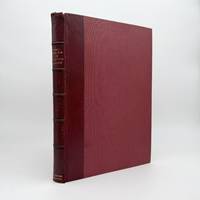
1518réf. 371799Cologne: Johann Soter 1518. Title within woodcut borders. Text in double columns in Latin Amharic not Chaldaean Greek and Hebrew types across double page spreads. Collation: a-y6 ç6 &6 ¶4 -&6 blank. 147 ff. 1 vols. 4to. Twentieth century red morocco and cloth. Some traces of rubbing to joints. GTS bookplate stamps on first and last leaves. Very good plus. Title within woodcut borders. Text in double columns in Latin Amharic not Chaldaean Greek and Hebrew types across double page spreads. Collation: a-y6 ç6 &6 ¶4 -&6 blank. 147 ff. 1 vols. 4to. The third polyglot Psalter edited by Johannes Potken who had edited an Ethiopic Psalter in 1513. The work is preceded only by the Genoa Psalter 1516 and the Complutensian Bible printed 1514-1517 but not published until 1522. The Introductiunculae in tres linguas externas: Hebraeam Graecam Chaldaeam sic introduction to three languages Greek Hebrew and Chaldaean i.e. Ethiopic is bound after the main text. Preserving an early binder's blank marked Duplum Bibliothecae Regiae Monacensis with ink inscription beneath The General Seminary of the Protestant Episcopal Church in the U States new York 10 December 1826 gift of John Pintard. This marks it as one of the earliest books donated to the newly established library. Pintard 1759-1844 was a prominent New Yorker of Huguenot origin patron of education and one of the earliest and staunchest advocates for the preservation and study of the history of New York and the United States. Pintard began to work towards the establishment of a historical society in the city in early 1804 and he was the leader in the organization of the New-York Historical Society in November 1804. He was also a patron of the old French Huguenot Church of St. Esprit and the General Theological Seminary. Important and early work. Darlow & Moule 1413; VD16 B 3101; Adams B-1371; Vinograd Cologne 1; D.S. Berkowitz In Remembrance of Creation 1968 no. 175; Fumagalli G. Bibliografia etiopica 1243 [Johann Soter] unknown books
18658vo., on India paper, with 9 coloured engraved maps on 6 and a double-page chronological chart; attractively bound in publisher's black roan portfolio with drop sides all round, covers framed and blocked in blind and blocked and lettered in gilt, back with five raised bands ruled in blind, second compartment lettered in gilt 'Bagster's Teacher's Bible', gilt edges, black endpapers, portfolio mildly scuffed and rubbed at extremities else a remarkably well-preserved, bright, clean copy. Bagster's Teacher's Bible is a facsimile reprint, with larger types, of the English Version of Bagster's Polyglot Bible first published in 1817 and which made Bagster's name. It corresponds page for page, and line for line, with the two well-known Pocket Editions. The text is that of the Authorized Version, printed in double column with the references in a third central column in Bagster style. In addition to the Old and New Testaments, this edition contains Cruden's Concordance, Chronology, Tables of Weights & Measures, Tabular Harmony, Comparative View of Quotations, and a set of maps engraved and coloured expressly for this edition. A particular feature is the set of Four Thousand Short Scripture Question with Answers, designed expressly for the use of teachers. The Teacher's Bible is an edition uncommon at best, and scarce indeed in this condition with wholly unrestored portfolio in unusually sound state. See Darlow & Moule 1081.
18293 works in 1 vol., 8vo., neat and lengthy contemporary ownership insctiptions on blank preliminary; handsomely bound in full burgundy roan, boards elaborately framed in gilt and blind enclosing large arabesque in blind, back with flat bands, second compartment framed and lettered in gilt, all other compartments richly framed and tooled in gilt, gilt doublures, gilt dentelles, all edges gilt, blue endpapers, a remarkably well-preserved, crisp, clean copy. With the early nineteenth century trade ticket of Rees of Bristol on front paste-down. The works comprise (in order) Book of Common Prayer (Bagster, 1829); New Version of the Psalms of David (Clarendon Press, 1829); English Version of the Polyglot Bible (Bagster, 1828). A SPLENDID EARLY NINETEENTH CENTURY THEOLOGICAL COMPANION WITH CONTEMPORARY BRISTOL ASSOCIATION.
1913244 + [ii] pp., 15cm., publisher's black cloth binding with gilt lettering, 4th edition, Latin text with translation in various languages (English, German, French, Dutch, Spanish, Danish, Polish, etc.), good condition, [a polyglot edition of prayers and judicial questions which are apt to be most used in confession], R96653
1900Complet en 8 tomes: 1034 + xi,912 + viii,838 + vii,660 + vii,892 + viii,908 + viii,694 + viii,582 pp., illustré de quelques cartes dépliantes hors-texte et des figures dans le texte, reliures modernes cart. uniformes solides et en bon état, titre doré aux dos, feuilles de garde décorées, brochures originales conservées et reliées, cachet sur la p.d.t., texte frais (sauf quelques rares rousseurs occasionnelles), 25cm., bon état, poids total: 12kg., [Suite du titre: Avec les différences de l'Hébreu, des Septante et de la Vulgate ; des introductions, des notes, des cartes et des illustrations. Contenu: Tomes 1-6: Ancien testament, T.7-8: Nouveau testament], R106153
1663Complete in 2 volumes, iv,959 + 855 pp., large woodcut mark on title with Borde's device ('Semina fortunae geminat cum tempore virtus'), "Editio novissima", folio (39x25cm.), text printed in two columns, text in Latin, title in red and black, in two uniform cart. hardcover bindings (ca. 19th century, spines in leather, some use at ends, corners bumped and some slightly damaged), foxing throughout though text is always well readable, vague stain in margin of first pages of vol.1, small stamp on first blanco endpaper and on title page, nervertheless a good copy, [Monumental Latin dictionary with equivalents in 7 languages. The first edition was published in 1502, and since then it has been expanded and revised continuously. This edition is based on the revised edition by the French humanist Jean Passerat (1534-1602)], weight: 6.6kg., T107174
1837[4] + 434pp. + engraved frontispiece (portrait, slightly spotted), 16x10cm., contemporary hardcover binding (spine in brown leather with gilt lettering and decorations, gilt ornamentation on boards, corners bit bumped,, a little rubbed at extremities), marbled endpapers, all edges gilt, text is clean and bright, ex-libris stamp on first blanco endpaper and on title page, good copy, [This is a polyglot edition of 24 prayers by saint Nerses Clajensis (1102-1173), Catholicos of the Armenian Apostolic Church from 1166 to 1173. The 24 languages (in several scripts) are: Armenian, Greek, Latin, Italian, French, Spanish, German, Dutch, Swedish, English, Irish, Russian, Polish, Illyrian (Western Balkan), Hungarian, Iberian (Georgian), Ethiopian, Arabic, Turkish, Persian, Syriac, Hebrew, Chaldean & Chinese], R107584
1936xv + 644 + 468 pp., with 1711 illustrations, 21cm., publisher's hardcover in black cloth with gilt lettering, text and interior are clean and bright, good condition, weight: 1.5kg., [N.B. Though it is mentioned nowhere in this volume, it could well be that this copy is a more recent facsimile reprint of the original 1936-edition], W111605
1875Very Good English In contemporary cloth bdg. with flowers embossing. Some foxing and stains on the first pages. Roy. 8vo. (24 x 16 cm). In Armenian and English. [2], [xxx], 786 p., 1 folded table describes the Armenian alphabet with its letters, sound, and pronunciation. With a parallel title page and additional half-title in Armenian and a list of errata and corrigenda. Double-column text. Preface bilingual in Armenian and English. Following that, the second title is 'Short Armenian grammar'. After abbreviations, the dictionary section begins. In the preface, there is a short history and origin of the Armenian language written by Bedrossian according to the conjuncture of the period, followed by his mentions of the necessity of this dictionary for the literature, etc. Rare first edition of this early Armenian - English dictionary printed in Venice by Venetian Mekhitarists. In 1875, Matthias Bedrossian undertook to update earlier Armenian dictionaries, and he succeeded in producing a completely reworked Armenian-English dictionary. The most flourishing period of Venetian Armenians was in the 16th and 17th centuries, especially when Julfa and New Julfa merchants were based in the city. During the same period, Venice also became one of the most important Armenian publishing centers. It was in Venice (1512) that the first Armenian book was published by Hagop Meghabard. Until the founding of the Mekhiterists' printing press in San Lazzaro, there were 19 Armenian printing presses in Venice. (Source: Keghart). Only two copies in OCLC as printed copy in Bibliothèque nationale et universitaire. OCLC 156112892.
1891Very Good English In modern aesthetics cloth bdg. 12mo. (17 x 12 cm). In English andd Armenian. 270 p. Anglo-Armenian grammar.= Banali-Angghiakan lezui. Baghdasarian (Garen) was a photographer who worked actively in Constantinople and Bulgaria between the years of 1890 and 1910. This is first edition and rare his English grammar book written for Armenian readers. First Edition. Five copies in OCLC: 606430682.
1920Very Good Turkish, Ottoman (1500-1928) Contemporary cloth bdg. Ottoman lettered gilt on spine. Cr. 8vo. (19 x 13 cm). In Ottoman script. 243 p. Karay was a Turkish writer and journalist. He was born in Istanbul on 15 June 1888. After studying at Galatasaray High School and Istanbul University Faculty of Law, he briefly served in the Ministry of Finance of the Ottoman Empire. During the Second Constitutional Era in 1908 he resigned from his post and published a short-living newspaper. He also wrote in literary periodicals. Being an opponent of the Committee of Union and Progress he was exiled to several cities in Anatolia. After returning to Istanbul he wrote mainly on Anatolian life style. He was a pioneer in Anatolian based literature. He attended the Freedom and Accord Party. During the reign of the Freedom and Accord Party he served as the teacher of Literature in Robert College and then the General Director of Turkish PTT. He opposed the Turkish War of Independence and at the end of the war he escaped to Beirut and Aleppo. In 1938 after the amnesty law he returned to Turkey. He resumed his writing career and wrote a number of novels. He died on 18 July 1965. He was buried at Zincirlikuyu Cemetery in Istanbul. (Source: Wikipedia). In his book, the author reveals the inner face of a minority living in Istanbul: The riches of the war, the traders, the highlighters, 'Türedi' family, and the members of Progress and Union Party (Ittihad ve Terakki). Roumi: 1336 = Gregorian: 1920. First Edition. Only one copy in OCLC: 754972002.; Özege 8325.; Çikla & Çetin: p. 110.
12mo (130 X 100 mm), 152, 3, [1]pp., text in English, Dutch and Malaysian in parallel columns, original printed limp cloth, slightly soiled. Not in COPAC; OCLC has 3 copies (Leiden, and 2 copies in the U.S.A.).
An outstanding collection, with many rare French and Spanish books, as well as a host of rare editions of the bible, including all the important polyglots. VIII, 315 pp. 3055 lots. Large 8vo. Original printed wraps. Light wear to covers. Former owner's stamp (?) neatly obliterated by a round spot. Otherwise uncut, fine and bright.
1962Features: Cover photo of the RCMP National Ride; The Cannibal Cities - how urban sprawl is eating Canada alive, by Jane Becker; The Magical RCMP Musical Ride - with colour photos; Can you trust a Chiropractor with your Health? - two million people do; Does anybody here speak Canadian? - by Barbara Moon; Nights and Days of a Ward Boss - Frank (Banjo) Hanleyand how he runs his polyglot political kingdom on the seedy side of Montreal; Ask the Name of the Lion, by Ralph Allen (conclusion); Nice colour photo centerfold displays seven models of Kodak cameras; Nice colour photo Molson Canadian ad inside back cover shows picnicking family with the bridge over the Welland Canal under construction near St. Catherines. Average wear. A sound copy. Book
1993Sound book with clean pages and clear content. Library loan slip on FEP and university sticker on inside of front cover. Stamps on page block and (small) library shelf mark label on spine. Ex-Library
réf. 10242MANOMÈTRE. N° 2. (Octobre 1922). Jean Arp, Jorge Luis Borges, Emile Didier, René Faure, Emile Malespine, Adrien Rambaud, Philippe Soupault, Guillermo de Torre, Tristan Tzara, etc. Très bon état.
réf. 10244MANOMÈTRE. N° 5. (Février 1924). Julio J. Casal, Emile Didier, Emile Malespine, Roberto A. Ortelli, Josezf Peeters, Benjamin Péret, Michel Seuphor, Kurt Schwitters, Tristan Tzara, etc. Très bon état.
réf. 10245MANOMÈTRE. N° 6. (Août 1924). Tilly Brugman, Julio J. Casal, Serge Charchoune, César Geoffray, Vicente Huidobro, Pierre Laurent, Emile Malespine, Moholy Nagy, Piet Mondrian, Gonzalez del Valle, etc. Très bon état.
1837réf. 7301837 Venetiis, in insula S. Lazari, 1837. 23,5 x 15,5 cm (R), grand in-8, 4 ff. n. ch. + 431 pp., portrait de Nersès IV en frontispice, reliure romantique de l'époque en demi-maroquin à grains longs rouge à coins, dos lisse orné, tranches dorées. // Large 8vo, contemporary romantic red half straight grained red morocco, smooth spine gilt, gilt edges.
1609réf. 112554geneve roviere 1609 Aureliae Allobrogum (Genève), Petrus de la Roviere (Pierre de la Rovière), 1609, 1 volume grand in-folio de 240 x 370 mm environ, (14) ff. (Page de titre, Praefatio) - 183 - 283 - 84 - 203 pages; [suivi de] (4) ff. (Page de titre, Praefatio) - 186 - 134 pages. Complet dans le canon catholique. Demi-chagrin brun postérieur, dos à 5 nerfs portant titre doré. Exemplaire solide mais en modeste condition : reliure abimée (débuts de fente sur les mors externes, mors internes fendus, manques de cuir, plats tachés, coins dénudés), nombreuses rousseurs et pages brunies, des traces de mouillures, quelques déchirures sans manque, travail de vers sur une dizaine de pages du Nouveau testament.