50 393 résultats
1900réf. C105282London And Sydney: Kobunsha For Griffith And Farran 1900. First Edition Thus. Wraps. Hardcover Hardcover. Very Good. First Edition Thus. Wraps. Small 8vos. 15.2 x 9.4cms. Colour illustrated crepe paper . Soft cover colour illustrated crepe mostly 20 pages or slightly over each. Printed by Kobunsha in Tokyo. Clean bright very good bright copies No date looks like circa 1900 earlier versions came from Hasegawa. 1. Momotaro or Little Peachling. 2: The Tongue cut Sparrow. 3: Battle of the Monkey and the Crab. 4: The Old Man Who Made the Dead Trees Blossom 5: Kachi-Kachi Mountain. 6: The Mouse's Wedding. 7: The Old Man and the Devils. 8: Urashima. 9: The Serpent with Eight Heads. 10: The Matsuyama Mirror. 11. The Hare of Inaba 12. The Cub's Triumph 13. The Silly Jelly Fish 14 The Princes Fire-Flash and Fire-Fade.15. My Lord Bag O' Rice 16 The Wooden Bowl Crepe paper editions. Bound in 4 secovers showing spots and some signs of use but very sound. Kobunsha For Griffith And Farran paperback
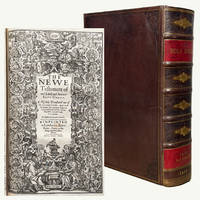
1613réf. 69661London: Imprinted.by Robert Barker 1613. BIBLE IN ENGLISH. Newly translated out of the Originall Tongues: and with the former Translations diligently compared and revised by his Majesties Speciall Commandement. Appointed to be read in Churches. London: Imprinted.by Robert Barker Printer to the Kings most excellent Majestie 1613-1611. Second folio edition of the King James Bible also known as the "Great She Bible." Large folio 14 11/16 x 10 inches; 372 x 253 mm. 752 leaves. Fifty-nine lines. Text in double columns within woodcut rules. Black letter with roman for chapter summaries and roman and italic for marginalia. Calendar and almanac printed in red and black. Woodcut title border McKerrow and Ferguson 231 signed RL and CS. Genealogical tables with woodcut borders and incorporating woodcut illustrations including Adam and Eve Noah's Ark the Tower of Babel and other biblical subjects. Decorative woodcut head- and tail-pieces and decorative and historiated woodcut initials. Facsimile of the 1611 "He" Bible engraved title inserted. Complete with Speed's map map professionally restored. Collation: A-B4 A1r general title A2r dedication to King James I A3v "The Translators to the Reader" A-C6 Speed's Genealogies C6 D4 C1r calendar printed in red and black D1r almanac printed in red black D1v Easter table printed in red and black D2r table and calendar D4v books of the Bible printed in red and black Complete with Ee2 Speed's Map A-Z6 Aa-Zz6 Aaa-Zzz6 Aaaa-Zzzz6 Aaaaa-Ccccc6 Old Testament and Apocrypha; A-2Z6 Aa6 New Testament. In this copy the Genealogies are bound before rather than after the calendar. Late eighteenth-century panelled calf neatly rebacked. Spine ruled in blind and lettered in gilt in compartments. Marbled endpapers. General title restored at margins. Some marginal restoration minor repairs and paper faults touching only a few letters throughout. Generally an exceptionally fresh and clean copy of this monumental work. Housed in a quarter morocco clamshell. "Fry's 'first edition second issue without reprints' of King James' Bible. Others more correctly style it the 'second folio edition 1613 11' inasmuch as it deserves to be reckoned a distinct edition. The general title is usually dated 1613 though the NT title bears the date 1611" Herbert. Commonly known as the "Great She Bible" for the more correct reading "she went into the citie" in Ruth III. 15 and also for the remarkable error in Matthew XXVI. 36 leaf where "Judas" appears for "Jesus." Sometimes a correction slip is pasted over the mistake but in the present copy it is corrected in an early hand. "The King James Bible or the Authorized Version as it is now commonly but not strictly accurately known was the outcome of the conference summoned at Hampton Court by the King in January 1604 in an attempt to settle the quarrels in the Church of England arising from the Puritan zeal of some of its members. It was the leader of the Puritan party John Reynolds the President of Corpus Christi College Oxford who first suggested the idea of a new translation.It has been described as 'the only literary masterpiece ever to have been produced by a committee' and was the work of nearly fifty translators organized in six groups.Being based on a wider range of classical and oriental scholarship than its predecessors the Authorized Version was a more learned text.No new English translation was produced until the Revised Version of 1881 and the influence of the Authorized Version may best be described in the words of G.M. Trevelyan. 'For every Englishman who had read Sidney or Spenser or had seen Shakespeare acted at the Glove there were hundreds who had read or heard the Bible with close attention as the words of God. The effect of the continual domestic study of the book upon the national character imagination and intelligence for nearly three centuries to come was greater than that of any literary movement in our annals or any religious movement since the coming of St Augustine'" Printing and the Mind of Man 114 describing the 1611 first edition. "The translators were directed to take the rendering of the Bishops' Bible as their basis and were advised also to consult the following versions: Tyndale's Matthew's Coverdale's Whitchurch's i.e. the Great Bible and the Geneva" Herbert 309 describing the 1611 first edition. John Speed was granted a patent in 1610 for ten years to issue and insert his "Genealogies" and double-page general map engraved by Elstrack in every edition of this Bible. Darlow & Moule 246. Herbert 319. Pforzheimer 63. STC 2224. W.E. Smith "A Study of the Great She Bible" The Library 2 1890: 1-11 96-102 141ff. HBS 69661. $175000. Imprinted...by Robert Barker unknown
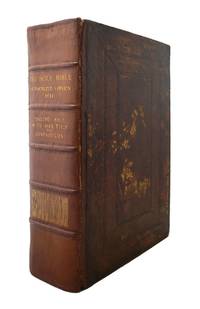
1613réf. 69661London: Imprinted.by Robert Barker 1613. BIBLE IN ENGLISH. Newly translated out of the Originall Tongues: and with the former Translations diligently compared and revised by his Majesties Speciall Commandement. Appointed to be read in Churches. London: Imprinted.by Robert Barker Printer to the Kings most excellent Majestie 1613-1611. Second folio edition of the King James Bible also known as the "Great She Bible." Large folio 14 11/16 x 10 inches; 372 x 253 mm. 752 leaves. Fifty-nine lines. Text in double columns within woodcut rules. Black letter with roman for chapter summaries and roman and italic for marginalia. Calendar and almanac printed in red and black. Woodcut title border McKerrow and Ferguson 231 signed RL and CS. Genealogical tables with woodcut borders and incorporating woodcut illustrations including Adam and Eve Noah's Ark the Tower of Babel and other biblical subjects. Decorative woodcut head- and tail-pieces and decorative and historiated woodcut initials. Facsimile of the 1611 "He" Bible engraved title inserted. Complete with Speed's map map professionally restored. Collation: A-B4 A1r general title A2r dedication to King James I A3v "The Translators to the Reader" A-C6 Speed's Genealogies C6 D4 C1r calendar printed in red and black D1r almanac printed in red black D1v Easter table printed in red and black D2r table and calendar D4v books of the Bible printed in red and black Complete with Ee2 Speed's Map A-Z6 Aa-Zz6 Aaa-Zzz6 Aaaa-Zzzz6 Aaaaa-Ccccc6 Old Testament and Apocrypha; A-2Z6 Aa6 New Testament. In this copy the Genealogies are bound before rather than after the calendar. Late eighteenth-century panelled calf neatly rebacked. Spine ruled in blind and lettered in gilt in compartments. Marbled endpapers. General title restored at margins. Some marginal restoration minor repairs and paper faults touching only a few letters throughout. Generally an exceptionally fresh and clean copy of this monumental work. Housed in a quarter morocco clamshell. "Fry's 'first edition second issue without reprints' of King James' Bible. Others more correctly style it the 'second folio edition 1613 11' inasmuch as it deserves to be reckoned a distinct edition. The general title is usually dated 1613 though the NT title bears the date 1611" Herbert. Commonly known as the "Great She Bible" for the more correct reading "she went into the citie" in Ruth III. 15 and also for the remarkable error in Matthew XXVI. 36 leaf where "Judas" appears for "Jesus." Sometimes a correction slip is pasted over the mistake but in the present copy it is corrected in an early hand. "The King James Bible or the Authorized Version as it is now commonly but not strictly accurately known was the outcome of the conference summoned at Hampton Court by the King in January 1604 in an attempt to settle the quarrels in the Church of England arising from the Puritan zeal of some of its members. It was the leader of the Puritan party John Reynolds the President of Corpus Christi College Oxford who first suggested the idea of a new translation.It has been described as 'the only literary masterpiece ever to have been produced by a committee' and was the work of nearly fifty translators organized in six groups.Being based on a wider range of classical and oriental scholarship than its predecessors the Authorized Version was a more learned text.No new English translation was produced until the Revised Version of 1881 and the influence of the Authorized Version may best be described in the words of G.M. Trevelyan. 'For every Englishman who had read Sidney or Spenser or had seen Shakespeare acted at the Glove there were hundreds who had read or heard the Bible with close attention as the words of God. The effect of the continual domestic study of the book upon the national character imagination and intelligence for nearly three centuries to come was greater than that of any literary movement in our annals or any religious movement since the coming of St Augustine'" Printing and the Mind of Man 114 describing the 1611 first edition. "The translators were directed to take the rendering of the Bishops' Bible as their basis and were advised also to consult the following versions: Tyndale's Matthew's Coverdale's Whitchurch's i.e. the Great Bible and the Geneva" Herbert 309 describing the 1611 first edition. John Speed was granted a patent in 1610 for ten years to issue and insert his "Genealogies" and double-page general map engraved by Elstrack in every edition of this Bible. Darlow & Moule 246. Herbert 319. Pforzheimer 63. STC 2224. W.E. Smith "A Study of the Great She Bible" The Library 2 1890: 1-11 96-102 141ff. HBS 69661. $175000. Imprinted...by Robert Barker unknown books
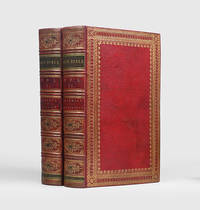
1862réf. 49952Glasgow Edinburgh and London: William Mackenzie 1862. Deluxe Edition. Two volumes folio 450 x 330 mm published between 1862 and 1863. 16 1344pp. 57 unnumbered leaves of albumin prints 230 x 160mm mounted on card stock. Crimson morocco over wooden boards elaborately tooled in gilt and blind; edges mounted in brass double brass clasps with thistle motif; covers with a broad blind-stamped border around a recessed central panel with the crowned cipher of Queen Victoria in gilt; gilt tooled spine with 5 raised bands; a.e.g. marbled endleaves with gilt dentelles. Covers with some mild traces of use; single crease in each marbled endleaf partially detached in second volume; occasional light to moderate foxing mostly confined to the plate mounts; albumin prints in fine condition often with foxing extending about 5mm from the edges into the mount. Overall a very good set with a fine series of photographs notable for their technical achievment. Deluxe edition one of 170 copies complete with all 57 albumen prints. Produced for the 1862 International Exhibition and dedicated to Queen Victoria then recently in mourning for the death of Prince Albert this work appeared at a time when photography though still a laborious and expensive process was just beginning to become a popular activity. Victoria herself was an amateur photographer and "the royal couple had been enthusiastic supporters of photography in England from the beginning; in 1853 they became founding patrons of the Photographic Society Club" K. Fiedorek. Francis Frith 1822-1898 the devout Quaker whose photographic images grace the present work was one of the best-known photographers to work in the Near East and the most commercially successful photographer of the nineteenth century. Finding his elementary studies tedious Frith left school at the age of ten apprenticed with a grocer and eventually started his own business. He later went into printing sold the grocery business to a competitor at a substantial profit and went on to devote himself to photography. "The growing Victorian interest in the East and its exotic and historic attractions caught the attention of this astute businessman" Perez. Between 1856 and 1860 Frith made three photographic expeditions to Egypt Ethiopia Sinai and the Levant accompanied by the engineer Francis Herbert Wenham who provided technical assistance in mechanics and optics. While Perez notes that Frith's "approach was always a strictly commercial one and his concern was to make truthful and accurate views of the area" he readily concedes that "the technical quality of Frith's photographs is superior." Frith employed the new wet collodion process in which glass plate negatives were sensitized exposed and developed while still wet. While technically demanding the process yielded rich detail and broad tones. "Frith's were the first original wet-plate photographs of Jerusalem and the Holy Land to reach a wide English-speaking audience and his pictures of the small Palestinian towns were most likely the first published anywhere" Nir p.66. Perhaps the most novel aspect of this celebrated edition of the Bible and certainly a harbinger of things to come was the way in which the photographer "presented the radical possibility of seeing photographs of the biblical sites alongside related verses of scripture. he sought to defend and promote his faith by conscripting the veracity of science and materialism to his cause and considered photography to be the most effective medium for his campaign" Foster et al. This vision is manifest even in such details as the re-captioning of prints previously offered for sale so that the new descriptions would more clearly reference the King James text. It should be noted that while the printing was still done by hand this was one of the earliest books for which machinery was used for composing. Original publisher's price = 50 guineas. Another version of this work was published at London in 1860-1862 by Eyre & Spottiswoode; sometimes confused with the present work it was issued in 20 parts each containing a single photographic print by Frith. K. Fiedorek A Photographic Bible Fit for a Queen NYPL Blog 2014. Foster Heiting and Stuhlman Imagining Paradise pp. 68-69. Gernsheim Incunabula of British Photographic Literature 1839-1875 p.36 no.184. Herbert The English Bible 1940 1217. Y. Nir The Bible and the Image The History of Photography in the Holy Land 1939-1899 esp. chap. 3: "Early Traveling Landscape Photographers". N. Perez Focus East: Early Photography in the Near East 1838-1885 pp.163-165. William Mackenzie unknown
1862réf. 49952Glasgow Edinburgh and London: William Mackenzie 1862. Deluxe Edition. Two volumes folio 450 x 330 mm published between 1862 and 1863. 16 1344pp. 57 unnumbered leaves of albumin prints 230 x 160mm mounted on card stock. Crimson morocco over wooden boards elaborately tooled in gilt and blind; edges mounted in brass double brass clasps with thistle motif; covers with a broad blind-stamped border around a recessed central panel with the crowned cipher of Queen Victoria in gilt; gilt tooled spine with 5 raised bands; a.e.g. marbled endleaves with gilt dentelles. Covers with some mild traces of use; single crease in each marbled endleaf partially detached in second volume; occasional light to moderate foxing mostly confined to the plate mounts; albumin prints in fine condition often with foxing extending about 5mm from the edges into the mount. Overall a very good set with a fine series of photographs notable for their technical achievment. Deluxe edition one of 170 copies complete with all 57 albumen prints. Produced for the 1862 International Exhibition and dedicated to Queen Victoria then recently in mourning for the death of Prince Albert this work appeared at a time when photography though still a laborious and expensive process was just beginning to become a popular activity. Victoria herself was an amateur photographer and "the royal couple had been enthusiastic supporters of photography in England from the beginning; in 1853 they became founding patrons of the Photographic Society Club" K. Fiedorek. Francis Frith 1822-1898 the devout Quaker whose photographic images grace the present work was one of the best-known photographers to work in the Near East and the most commercially successful photographer of the nineteenth century. Finding his elementary studies tedious Frith left school at the age of ten apprenticed with a grocer and eventually started his own business. He later went into printing sold the grocery business to a competitor at a substantial profit and went on to devote himself to photography. "The growing Victorian interest in the East and its exotic and historic attractions caught the attention of this astute businessman" Perez. Between 1856 and 1860 Frith made three photographic expeditions to Egypt Ethiopia Sinai and the Levant accompanied by the engineer Francis Herbert Wenham who provided technical assistance in mechanics and optics. While Perez notes that Frith's "approach was always a strictly commercial one and his concern was to make truthful and accurate views of the area" he readily concedes that "the technical quality of Frith's photographs is superior." Frith employed the new wet collodion process in which glass plate negatives were sensitized exposed and developed while still wet. While technically demanding the process yielded rich detail and broad tones. "Frith's were the first original wet-plate photographs of Jerusalem and the Holy Land to reach a wide English-speaking audience and his pictures of the small Palestinian towns were most likely the first published anywhere" Nir p.66. Perhaps the most novel aspect of this celebrated edition of the Bible and certainly a harbinger of things to come was the way in which the photographer "presented the radical possibility of seeing photographs of the biblical sites alongside related verses of scripture. he sought to defend and promote his faith by conscripting the veracity of science and materialism to his cause and considered photography to be the most effective medium for his campaign" Foster et al. This vision is manifest even in such details as the re-captioning of prints previously offered for sale so that the new descriptions would more clearly reference the King James text. It should be noted that while the printing was still done by hand this was one of the earliest books for which machinery was used for composing. Original publisher's price = 50 guineas. Another version of this work was published at London in 1860-1862 by Eyre & Spottiswoode; sometimes confused with the present work it was issued in 20 parts each containing a single photographic print by Frith. K. Fiedorek A Photographic Bible Fit for a Queen NYPL Blog 2014. Foster Heiting and Stuhlman Imagining Paradise pp. 68-69. Gernsheim Incunabula of British Photographic Literature 1839-1875 p.36 no.184. Herbert The English Bible 1940 1217. Y. Nir The Bible and the Image The History of Photography in the Holy Land 1939-1899 esp. chap. 3: "Early Traveling Landscape Photographers". N. Perez Focus East: Early Photography in the Near East 1838-1885 pp.163-165. William Mackenzie unknown books
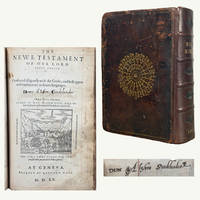
1560réf. V15The Bible and Holy Scriptures Conteyned in The Olde and Newe Testament. Translated According to the Ebrew and Greke and conferred with the best Translations in divers Languages. With Moste Profitable Annotations… Summary The first edition of the Geneva Bible. Unrivaled for three generations the Geneva translation produced by Marian exiles showed a distinct advance on its predecessors: Roman type portable size verse divisions marginal study notes and explanatory woodcuts. Its phrases find an echo in Scripture quotations from Shakespeare to Bunyan. Description General title page 1560 and prelims in facsimile. Text in two column Roman type ruled in red throughout. Two double-page maps are present 'The description of the holie land and other places mencioned in the foure Evangelistes'; 'The description of the countreis and places mencioned in the Actes of the Apostles' with the other three maps in facsimile. The font and woodcuts are both larger than the editions later printed in England. Apocrypha present as issued. New Testament title page 1560 with the woodcut of the crossing of the Red Sea. Concludes with the Two Tables and The Order of the Yeres. Bound with the first edition of the newly authorized 1650 Scottish Metrical Psalter: The Psalmes of David in Meeter printed by Evan Tyler in Edinburgh with title page 1650. First chapter woodcut initials throughout. Collation 4-1-4 general title and prelims in facsimile a-z4 A-Z4 Aa-Zz4 &6 Aaa-Zzz4 Aaaa-Zzzz4 Aaaaa-Bbbbb4 Aa-Zz4 -Tt1 Romans 8:1-9:33 in facsimile Aaa-Lll4. Binding Attractive brown calf featuring an 18th-century Scottish wheel design. Covers bordered with gilt fillets and centered with a large circular gilt wheel composed of radiating floral and foliate tools around a central rosette. Rebacked in matching calf with four raised bands blind tooling to compartments and the words "Holy Bible" and "1560" lettered in gilt. Endpapers renewed. Corners slightly bumped. Condition First three leaves of Genesis strengthened to edges with loss to a few sidenotes of last two leaves; trimmed with headlines occasionally cropped; occasional soiling and staining; Ddd-Lll some repairs to lower corner infrequently costing a few letters of sidenotes. NT title page lightly stained to fore-edge; upper corner repair to final few leaves of Tables. Provenance Contemporary ownership inscriptions "Deme Alesone Sandelandes" repeated on the New Testament title-page and verso of the double-page map in John 20. This Bible's first owner is likely Dame Alison Sandilands d. 1584 Lady Ormiston a member of the prominent Sandilands family of Calder and wife of John Cockburn of Ormiston one of the early supporters of the Scottish Reformation. The Ormiston household stood close to the circle of John Knox: Knox served as tutor to Alison's son Alexander Cockburn while the Protestant martyr George Wishart was sheltered at Ormiston shortly before his arrest in 1546. Alison herself participated in the circulation and preservation of Reformation writings and Henry Balnaves's Confession of Faith was dedicated to her when published in 1584. Later 17th-century family records to verso of The Order of the Yeres include births in 1672 and 1676 the ownership inscription of Mary Hill and a record of the death of her father Charles Hill on 22 October 1691." Note First edition of the Geneva Bible the most important and widely read English Bible for more than a century. Produced by English Protestant exiles who had fled Marian persecution for Geneva it was the first complete English Bible translated directly from the original biblical languages and the first English Bible printed in roman type and with verse divisions. Designed as a portable and readable Bible for everyday devotion and study its title page departed from the elaborate woodcut designs of earlier English Bibles such as the Coverdale Matthew's and Great Bibles instead featuring a modest image of the Israelites trapped at the Red Sea. Hemmed in by the sea mountains and the pursuing Egyptian army the Israelites turn to God for deliverance a scene that invites readers to see a parallel between Israel's bondage and the plight of the persecuted English church in exile awaiting God's deliverance and the opportunity to return home. The Geneva Bible quickly became the Bible of the English Protestant household and retained its popular preeminence until its gradual suppression and displacement following the introduction of the King James Version in 1611. Bound with the first edition of the newly translated metrical Psalter authorized by the General Assembly of the Church of Scotland containing the enduring Scottish version of Psalm 23 beginning "The Lord's my shepherd I'll not want." References Herbert 107; USTC 450496; Luborsky 2108; PMM 83 Bible; ESTC R39597 Psalter. Rouland Hall hardcover
1560réf. V15The Bible and Holy Scriptures Conteyned in The Olde and Newe Testament. Translated According to the Ebrew and Greke and conferred with the best Translations in divers Languages. With Moste Profitable Annotations… Summary The first edition of the Geneva Bible. Unrivaled for three generations the Geneva translation produced by Marian exiles showed a distinct advance on its predecessors: Roman type portable size verse divisions marginal study notes and explanatory woodcuts. Its phrases find an echo in Scripture quotations from Shakespeare to Bunyan. Description General title page 1560 and prelims in facsimile. Text in two column Roman type ruled in red throughout. Two double-page maps are present 'The description of the holie land and other places mencioned in the foure Evangelistes'; 'The description of the countreis and places mencioned in the Actes of the Apostles' with the other three maps in facsimile. The font and woodcuts are both larger than the editions later printed in England. Apocrypha present as issued. New Testament title page 1560 with the woodcut of the crossing of the Red Sea. Concludes with the Two Tables and The Order of the Yeres. Bound with the first edition of the newly authorized 1650 Scottish Metrical Psalter: The Psalmes of David in Meeter printed by Evan Tyler in Edinburgh with title page 1650. First chapter woodcut initials throughout. Collation 4-1-4 general title and prelims in facsimile a-z4 A-Z4 Aa-Zz4 &6 Aaa-Zzz4 Aaaa-Zzzz4 Aaaaa-Bbbbb4 Aa-Zz4 -Tt1 Romans 8:1-9:33 in facsimile Aaa-Lll4. Binding Attractive brown calf featuring an 18th-century Scottish wheel design. Covers bordered with gilt fillets and centered with a large circular gilt wheel composed of radiating floral and foliate tools around a central rosette. Rebacked in matching calf with four raised bands blind tooling to compartments and the words "Holy Bible" and "1560" lettered in gilt. Endpapers renewed. Corners slightly bumped. Condition First three leaves of Genesis strengthened to edges with loss to a few sidenotes of last two leaves; trimmed with headlines occasionally cropped; occasional soiling and staining; Ddd-Lll some repairs to lower corner infrequently costing a few letters of sidenotes. NT title page lightly stained to fore-edge; upper corner repair to final few leaves of Tables. Provenance Contemporary ownership inscriptions "Deme Alesone Sandelandes" repeated on the New Testament title-page and verso of the double-page map in John 20. This Bible's first owner is likely Dame Alison Sandilands d. 1584 Lady Ormiston a member of the prominent Sandilands family of Calder and wife of John Cockburn of Ormiston one of the early supporters of the Scottish Reformation. The Ormiston household stood close to the circle of John Knox: Knox served as tutor to Alison's son Alexander Cockburn while the Protestant martyr George Wishart was sheltered at Ormiston shortly before his arrest in 1546. Alison herself participated in the circulation and preservation of Reformation writings and Henry Balnaves's Confession of Faith was dedicated to her when published in 1584. Later 17th-century family records to verso of The Order of the Yeres include births in 1672 and 1676 the ownership inscription of Mary Hill and a record of the death of her father Charles Hill on 22 October 1691." Note First edition of the Geneva Bible the most important and widely read English Bible for more than a century. Produced by English Protestant exiles who had fled Marian persecution for Geneva it was the first complete English Bible translated directly from the original biblical languages and the first English Bible printed in roman type and with verse divisions. Designed as a portable and readable Bible for everyday devotion and study its title page departed from the elaborate woodcut designs of earlier English Bibles such as the Coverdale Matthew's and Great Bibles instead featuring a modest image of the Israelites trapped at the Red Sea. Hemmed in by the sea mountains and the pursuing Egyptian army the Israelites turn to God for deliverance a scene that invites readers to see a parallel between Israel's bondage and the plight of the persecuted English church in exile awaiting God's deliverance and the opportunity to return home. The Geneva Bible quickly became the Bible of the English Protestant household and retained its popular preeminence until its gradual suppression and displacement following the introduction of the King James Version in 1611. Bound with the first edition of the newly translated metrical Psalter authorized by the General Assembly of the Church of Scotland containing the enduring Scottish version of Psalm 23 beginning "The Lord's my shepherd I'll not want." References Herbert 107; USTC 450496; Luborsky 2108; PMM 83 Bible; ESTC R39597 Psalter. Rouland Hall hardcover books
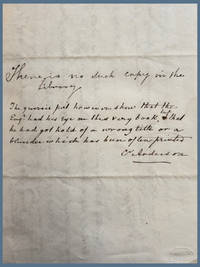
1549réf. U91The newe Testament of the last translacion. By Wylliam Tyndall with the prologes and annotacions in the mergent declaryng many harde places conteyned in the texte also in the later ende foloweth the Epistles of the olde Testament. Description Title page printed in red and black 1549 with an architectural design with two supporting figures and below under an arch a recumbent figure writing. The title page is contemporary and perhaps supplied from another copy. The prelims include an Almanak Calendar and Tyndale's address to the reader. Text in single column black letter with 35 lines to the full column. The text closely follows the 1534 edition of William Tyndale. References subject headings and notes in the margins. Woodcut initials before each chapter. Tyndale's prologues before Matthew and each of the Epistles including his long introduction to Romans. Ends on dated colophon 1548. Collation unsigned4 -unsigned1-3 with authentic title page A6-A6 B-Z8-B-C6 lacking all text before Matthew 15 Aa-Nn8. 271 of 292 leaves. Prelims and all missing text supplied in color facsimile. Binding Rebound in period-style black calf. Covers with a diaper framework design within a rectangular frame. Spine with four raised bands and elaborate blind tooling to compartments. Endpapers renewed. Condition Lacking prelims and all text up to Matthew 15 except title page; Rr7 repaired to upper corner with a few missing words replaced in facsimile; Cc7 lower corner repaired; minor spotting and staining with slight damp-staining at the rear; a few small wormholes; a clean text with some early marginalia in places far better than typically seen of Tyndale New Testaments from the period. Provenance Bookplate of Bristol Baptist College Library to front pastedown with their shelf mark x.9.1 and identification 89b on front free endpaper. An inserted letter in a nineteenth century hand from Francis Fry attempting to identify the edition and inquiring of available copies at the library that match his description; accompanied by Christopher Anderson's response that no such copies exist. Anderson is the author of Annals of the English Bible. On a blank endpaper facing the title page an early inscription claims "Coverdale's Testament" yet this is corrected below in Fry's hand. "A Gifford" of the Baptist College Bristol Particular Baptist minister antiquarian book collector and librarian at the British Museum to headline of D1. Scarcity ESTC records only six institutional copies with only one in North America. RBH records only one copy at auction Ryrie sale also lacking many leaves. Note A rare and early Tyndale New Testament. Most of the copies from the forty editions of Tyndale's New Testament are from the final three printed editions. Heavily suppressed by Mary and produced from much smaller print runs. A true rare and collectible gem. References Herbert 77; ESTC S90918; Fry's No. 18. William Tylle hardcover
1549réf. U91The newe Testament of the last translacion. By Wylliam Tyndall with the prologes and annotacions in the mergent declaryng many harde places conteyned in the texte also in the later ende foloweth the Epistles of the olde Testament. Description Title page printed in red and black 1549 with an architectural design with two supporting figures and below under an arch a recumbent figure writing. The title page is contemporary and perhaps supplied from another copy. The prelims include an Almanak Calendar and Tyndale's address to the reader. Text in single column black letter with 35 lines to the full column. The text closely follows the 1534 edition of William Tyndale. References subject headings and notes in the margins. Woodcut initials before each chapter. Tyndale's prologues before Matthew and each of the Epistles including his long introduction to Romans. Ends on dated colophon 1548. Collation unsigned4 -unsigned1-3 with authentic title page A6-A6 B-Z8-B-C6 lacking all text before Matthew 15 Aa-Nn8. 271 of 292 leaves. Prelims and all missing text supplied in color facsimile. Binding Rebound in period-style black calf. Covers with a diaper framework design within a rectangular frame. Spine with four raised bands and elaborate blind tooling to compartments. Endpapers renewed. Condition Lacking prelims and all text up to Matthew 15 except title page; Rr7 repaired to upper corner with a few missing words replaced in facsimile; Cc7 lower corner repaired; minor spotting and staining with slight damp-staining at the rear; a few small wormholes; a clean text with some early marginalia in places far better than typically seen of Tyndale New Testaments from the period. Provenance Bookplate of Bristol Baptist College Library to front pastedown with their shelf mark x.9.1 and identification 89b on front free endpaper. An inserted letter in a nineteenth century hand from Francis Fry attempting to identify the edition and inquiring of available copies at the library that match his description; accompanied by Christopher Anderson's response that no such copies exist. Anderson is the author of Annals of the English Bible. On a blank endpaper facing the title page an early inscription claims "Coverdale's Testament" yet this is corrected below in Fry's hand. "A Gifford" of the Baptist College Bristol Particular Baptist minister antiquarian book collector and librarian at the British Museum to headline of D1. Scarcity ESTC records only six institutional copies with only one in North America. RBH records only one copy at auction Ryrie sale also lacking many leaves. Note A rare and early Tyndale New Testament. Most of the copies from the forty editions of Tyndale's New Testament are from the final three printed editions. Heavily suppressed by Mary and produced from much smaller print runs. A true rare and collectible gem. References Herbert 77; ESTC S90918; Fry's No. 18. William Tylle hardcover books
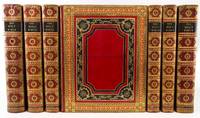
1800réf. ST20221aLondon: T. Bensley for T. Macklin final volume Bensley for T. Cadell & W. Davies 1800 for the six volumes of the Bible 1816 for the Apocrypha. First Printing of this Edition. 480 x 385 mm. 19 x 15 1/8". One leaf in the Apocrypha 3P2 comprising two prologues of Ecclesiasticus invisibly inserted from another copy. Seven volumes comprising the regular Bible in six volumes and the Apocrypha usually not included as a seventh volume. ABSOLUTELY MAGNIFICENT CONTEMPORARY RED NEOCLASSICAL-STYLE STRAIGHT-GRAIN MOROCCO SUMPTUOUSLY GILT AND ONLAID WITH BLUE BY GEORG FRIEDRICH KRAUSS done for Prince Albert Casimir Duke of Saxe-Teschen with repeated "AST" monogram covers with very elaborate frames incorporating 11 plain and decorative gilt rules four onlaid borders of blue morocco and very elegant swirling foliate ornamentation around the central scalloped panel six pairs of raised bands each pair flanking a recessed gilt and blue metope and pentaglyph rule very handsome spine compartments with blue fan-shaped cornerpieces and central gilt-decorated blue medallions within sunburst gilt collars turn-ins with Greek key pattern in gilt striking endleaves of turquoise and green watered silk the Apochrypha endleaves slightly different. With more than 100 allegorical headpieces and tailpieces and some 70 SPLENDID LARGE-FOLIO-SIZE COPPER PLATES after Fuseli Reynolds West and others most plates printed before letters. Tissue guards perhaps later. Herbert 1442 and 1651. First volume with about 30 leaves noticeably foxed the majority of plates offset onto previous and following pages consistent inoffensive offsetting of text on facing pages other trivial imperfections but still a very impressive copy internally with the luxurious paper used for the text both fresh and clean and the engravings richly impressed and with very little foxing. Some unimportant scuffing and rubbing to the leather but all defects minor THE MAGNIFICENT BINDINGS REMARKABLY WELL PRESERVED the heavy volumes completely solid with only insignificant signs of use and THE MOROCCO AND LAVISHLY GILT DECORATION EXTREMELY BRIGHT. AN ALTOGETHER MEMORABLE COPY. The most prodigious form of Scripture in English ever published the Macklin Bible was often put into ornate bindings especially by London binders like Staggemeier and his contemporaries. But however much other sets may glisten the present magnificent example surely stands at or near the front of the line as one of the most lavishly decorated and arresting copies in existence. Its decorative extravagance also testifies to the fact that Macklin's publication was sufficiently admired outside of England to warrant the finest workmanship and the expenditure of great sums of money on artistic resources. The very large and bold type the fine Whatman paper and the series of engravings by some of the most celebrated artists of the period make this an item that is already very desirable. Like the Boydell "Shakespeare Gallery" also printed by Bensley our Macklin Bible is a vast picture book with illustrations that are grand both in size and emotional impact. But it is of course the bindings here that matter the most. Francesco Piranesi is generally given credit for inventing the Neoclassical style when he designed volumes presented to Gustavus III of Sweden during this monarch's visit to Rome in 1783-84. Quickly popular the Neoclassical style was imitated and developed by Staggemeier & Welcher in London by F. W. Standlander in Stockholm and by Georg Friedrich Krauss in Vienna. Krauss was the most prominent Continental binder working in this style of the day and Saxe-Teschen was perhaps his most important client. Products of the Krauss bindery have passed through some of the most distinguished collections over the years particularly those of Fürstenberg and Schäfer; and his bindings have consistently brought remarkable sums of money at auction. It is sufficient to say that the present group of bindings represents the most impressive collection of decorative volumes we have ever offered for sale. The collector for whom these bindings were originally executed Duke Albert of Saxe-Teschen 1738-1822 was the son of Friedrich August II of Saxony and the son-in-law of the empress Maria Theresa. After providing important military and civil service to the Habsburg empire he retired to Vienna in 1795 and afterward devoted himself to the fine arts. He founded the Albertina which now houses the greatest collection of prints in the world and he put together a great library distinguished by the highest taste and most exacting standards. The present copy has the additional distinction of containing what amounts to an extra volume: the Macklin Bible however it is bound most often appears in the marketplace without the Apocrypha appearing here as Volume VII which was not issued until 16 years after the others. It is also of some interest that the bindings of our seven volumes were decorated in an entirely uniform fashion as a close inspection shows something not typical of a set with volumes published so many years apart. The non-uniform endleaves in the final volume here may have resulted from the fact that given the physical size of the books the binder simply ran out of the cloth he had used for lining the first six volumes. The present set was offered though unsold at Sotheby's in 2003 with an estimate of £40-50000 approximately $64000-80000 and in 2005 for £30-40000 approximately $54000-72000. T. Bensley for T. Macklin [final volume Bensley for T. Cadell & W. Davies] unknown
1800réf. ST20221aLondon: T. Bensley for T. Macklin final volume Bensley for T. Cadell & W. Davies 1800 for the six volumes of the Bible 1816 for the Apocrypha. First Printing of this Edition. 480 x 385 mm. 19 x 15 1/8". One leaf in the Apocrypha 3P2 comprising two prologues of Ecclesiasticus invisibly inserted from another copy. Seven volumes comprising the regular Bible in six volumes and the Apocrypha usually not included as a seventh volume. ABSOLUTELY MAGNIFICENT CONTEMPORARY RED NEOCLASSICAL-STYLE STRAIGHT-GRAIN MOROCCO SUMPTUOUSLY GILT AND ONLAID WITH BLUE BY GEORG FRIEDRICH KRAUSS done for Prince Albert Casimir Duke of Saxe-Teschen with repeated "AST" monogram covers with very elaborate frames incorporating 11 plain and decorative gilt rules four onlaid borders of blue morocco and very elegant swirling foliate ornamentation around the central scalloped panel six pairs of raised bands each pair flanking a recessed gilt and blue metope and pentaglyph rule very handsome spine compartments with blue fan-shaped cornerpieces and central gilt-decorated blue medallions within sunburst gilt collars turn-ins with Greek key pattern in gilt striking endleaves of turquoise and green watered silk the Apochrypha endleaves slightly different. With more than 100 allegorical headpieces and tailpieces and some 70 SPLENDID LARGE-FOLIO-SIZE COPPER PLATES after Fuseli Reynolds West and others most plates printed before letters. Tissue guards perhaps later. Herbert 1442 and 1651. First volume with about 30 leaves noticeably foxed the majority of plates offset onto previous and following pages consistent inoffensive offsetting of text on facing pages other trivial imperfections but still a very impressive copy internally with the luxurious paper used for the text both fresh and clean and the engravings richly impressed and with very little foxing. Some unimportant scuffing and rubbing to the leather but all defects minor THE MAGNIFICENT BINDINGS REMARKABLY WELL PRESERVED the heavy volumes completely solid with only insignificant signs of use and THE MOROCCO AND LAVISHLY GILT DECORATION EXTREMELY BRIGHT. AN ALTOGETHER MEMORABLE COPY. The most prodigious form of Scripture in English ever published the Macklin Bible was often put into ornate bindings especially by London binders like Staggemeier and his contemporaries. But however much other sets may glisten the present magnificent example surely stands at or near the front of the line as one of the most lavishly decorated and arresting copies in existence. Its decorative extravagance also testifies to the fact that Macklin's publication was sufficiently admired outside of England to warrant the finest workmanship and the expenditure of great sums of money on artistic resources. The very large and bold type the fine Whatman paper and the series of engravings by some of the most celebrated artists of the period make this an item that is already very desirable. Like the Boydell "Shakespeare Gallery" also printed by Bensley our Macklin Bible is a vast picture book with illustrations that are grand both in size and emotional impact. But it is of course the bindings here that matter the most. Francesco Piranesi is generally given credit for inventing the Neoclassical style when he designed volumes presented to Gustavus III of Sweden during this monarch's visit to Rome in 1783-84. Quickly popular the Neoclassical style was imitated and developed by Staggemeier & Welcher in London by F. W. Standlander in Stockholm and by Georg Friedrich Krauss in Vienna. Krauss was the most prominent Continental binder working in this style of the day and Saxe-Teschen was perhaps his most important client. Products of the Krauss bindery have passed through some of the most distinguished collections over the years particularly those of Fürstenberg and Schäfer; and his bindings have consistently brought remarkable sums of money at auction. It is sufficient to say that the present group of bindings represents the most impressive collection of decorative volumes we have ever offered for sale. The collector for whom these bindings were originally executed Duke Albert of Saxe-Teschen 1738-1822 was the son of Friedrich August II of Saxony and the son-in-law of the empress Maria Theresa. After providing important military and civil service to the Habsburg empire he retired to Vienna in 1795 and afterward devoted himself to the fine arts. He founded the Albertina which now houses the greatest collection of prints in the world and he put together a great library distinguished by the highest taste and most exacting standards. The present copy has the additional distinction of containing what amounts to an extra volume: the Macklin Bible however it is bound most often appears in the marketplace without the Apocrypha appearing here as Volume VII which was not issued until 16 years after the others. It is also of some interest that the bindings of our seven volumes were decorated in an entirely uniform fashion as a close inspection shows something not typical of a set with volumes published so many years apart. The non-uniform endleaves in the final volume here may have resulted from the fact that given the physical size of the books the binder simply ran out of the cloth he had used for lining the first six volumes. The present set was offered though unsold at Sotheby's in 2003 with an estimate of £40-50000 approximately $64000-80000 and in 2005 for £30-40000 approximately $54000-72000. T. Bensley for T. Macklin [final volume Bensley for T. Cadell & W. Davies] unknown books
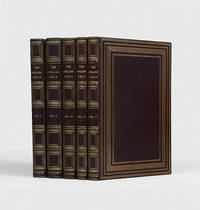
1763réf. 184488Cambridge: printed by John Baskerville 1763. An outstanding synthesis of fine printing illustration and binding First Baskerville edition: a spectacular copy of one of the greatest English Bibles and a crowning achievement of English printing in a magnificent Staggemeier and Welcher binding and abundantly extra-illustrated with 287 Old Master engravings. The copy adorned two of the greatest book collections of the last two centuries: the library of the Dukes of Marlborough at Blenheim Palace and of Estelle Doheny in California. Friedrich Leberecht Staggemeier 1759-1827 was esteemed for his elaborately decorated neoclassical bindings. He partnered with Samuel Welcher from 1799 to 1810 and the pair catered to the highest echelons of the market. Extra-illustration was a distinguishing feature of this market: here 171 of the illustrations are from Bernard Picart and Gerard Hoet's Figures de la Bible The Hague 1728 and 58 are from Pierre Mortier's Bible Amsterdam and Antwerp 1700 while others are from Jan Luyken's Icones Biblica Veteris et N. Testamenti Amsterdam 1729 and other sources. The extravagant binding and extra-illustration were commissioned by the first owner the collector and scholar Jacob Bryant. In 1804 he bequeathed the Bible to his patron George Spencer 4th Duke of Marlborough. It remained in the duke's collection at Blenheim Palace until 1881 when it passed to Fanny Octavia Louisa daughter of the 7th duke. Her descendants sold the book and it passed via Dawson's Book Shop to Estelle Doheny one of the greatest collectors of the 20th century where it joined her Gutenberg Bible and other landmarks of printing history. She bequeathed it to St. John's Seminary which sold it and the rest of Doheny's collection in 1988 where it realized $11000. Bound in 2 vols large folio 518 x 343 mm pp. 1146. Extra-illustrated with 287 Old Master engravings of which 198 are single page and 84 double each mounted mostly within a black ink and pale yellow wash frame. Late 18th- or early 19th-century red straight-grain morocco by L. Staggemeier & Welcher of London binder's ticket green morocco labels richly gilt in compartments wide gilt borders to covers gilt Greek-key turn-ins green watered-silk linings with gilt grapevine borders all edges gilt. Joints and extremities restored scattered light offsetting from plates and foxing else contents fresh very minor worming to front endpapers of first volume: a beautiful copy. ESTC T93106; Gaskell 26; Herbert 1146. unknown
1903réf. 193657Hammersmith: The Doves Press 1903-05. With provenance tied to Citizen Kane The Doves Bible the finest output of the press and among the finest achievements of typography one of 500 sets on handmade paper. This is the copy of Hearst Cartle the residence satirized as Xanadu in Citizen Kane 1941. Its owner the newspaper magnate William Randolph Hearst provided Orson Welles with the model for Charles Foster Kane. Situated in San Simeon California the castle was constructed from 1919 to 1947 in collaboration between Hearst 1863-1951 and the architect Julia Morgan. Welles's unflattering portrayal of Hearst provoked attempts to sabotage the film explored in the documentary The Battle Over Citizen Kane 1996. This set appeared in the sale of Hearst's library through Parke Benet in 1938. The shelf labels of Hearst Castle appear on the rear free endpapers recto. In contrast to Hearst's opulence this binding presents a restrained aesthetic entirely appropriate for the Doves Bible reserving more ornate decoration for the doublures. The binder Henry Stikeman trained under the renowned American bookbinder William Matthews and soon himself rose to pre-eminence in the last decades of the 19th century. Much of the Stikeman bindery's production was for high-end publisher's sets and in later years he established his trade bindery in New York. "The Doves Bible and the Kelmscott Chaucer stand side by side upon the highest peak of typographical accomplishment utterly dissimilar yet with the same element of greatness incontestable. The great red initial 'I' that dominates and yet fits exactly the opening page of Genesis in the Doves Bible is a pattern for all time of complexity reduced to the minimum of simplicity. When it is said that they approach dangerously near to absolute perfection everything has been said" Ransom. Tidcombe notes that foxing appears on the sheets of early volumes of the Bible "although fortunately not the opening page". Cobden-Sanderson was asked about this condition issue in 1920 and noted that it was "due to a misadventure in the drying of the sheets long ago when the Bible was being printed" cited in Tidcombe p. 45. 5 vols quarto 331 x 228 mm. Doves type printed in black with red initials by Edward Johnston on handmade paper. Bound without publisher's 6 blank leaves at front of vols 3-4 and end of vol. 5. Near-contemporary dark red morocco by Stikeman & Co. New York spines lettered in gilt raised bands with gilt dotted roll and foliate finials concentric gilt frames thickly bordering compartments and covers gilt rule to board edges gilt rules and floral roll to turn-ins dark blue morocco doublures with fillet and floral panels incorporating onlaid petals in red and green red silk moiré free endpapers top edges gilt others trimmed. Bindings bright couple of gentle surface scratches to covers a few marks to fore edges foxing to initial leaves of vol. 1 as usual see note occasional light foxing elsewhere mostly marginal. A near-fine set. Ransom p. 56; Tidcombe DP6. hardcover
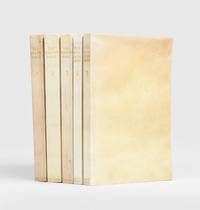
1903réf. 189656Hammersmith: The Doves Press 1903-05. Among the greatest achievements of book design The Doves Bible the finest output of the press and among the finest achievements of typography one of 500 sets on handmade paper. "All copies of the Bible were sold before printing was finished and the fourth Doves Press List published in June 1905 states that the Bible like all other Doves Press books was now out of print" Tidcombe. "The Doves Bible and the Kelmscott Chaucer stand side by side upon the highest peak of typographical accomplishment utterly dissimilar yet with the same element of greatness incontestable. The great red initial 'I' that dominates and yet fits exactly the opening page of Genesis in the Doves Bible is a pattern for all time of complexity reduced to the minimum of simplicity. When it is said that they approach dangerously near to absolute perfection everything has been said" Ransom. Tidcombe notes that foxing appears on the sheets of early volumes of the Bible "although fortunately not the opening page". Cobden-Sanderson was asked about this condition issue in 1920 and noted that it was "due to a misadventure in the drying of the sheets long ago when the Bible was being printed" cited in Tidcombe p. 45. In this copy the foxing is very limited. On the head of each pastedown is the thin bookplate of Benjamin Fairfax Hall 1904-1982 founder of the Stourton Press in 1930. The press was known for its appealing productions many of which used the Aries font designed specially for Fairfax Hall by Eric Gill. 5 vols large quarto. Doves type printed in black with red initial letters by Edward Johnston on handmade paper. Original limp vellum by the Doves Bindery with their stamp on rear pastedowns spines lettered in gilt. Spines a little creased natural colour variance remarkably little foxing. A near-fine set. Ransom p. 56; Tidcombe DP6. hardcover
1763réf. 1230541763. Cambridge: Printed by John Baskerville Printer to the University 1763. Royal folio 573 unnumbered leaves. A2 1 B-13D2 a-e2 f1. English binding of contemporary full blue-green morocco covers with elaborate gilt border backstrip richly gilt with red morocco lettering pieces stamped in gilt "HOLY BIBLE" and at the foot "BASKERVILLE" gilt edges marbled endpapers. Inevitable slight signs of wear on such a huge book but in all a very good unrestored copy internally flawless. § First edition of Baskerville's masterwork in a magnificent contemporary English binding. Third issue of the subscribers' list as usual. "John Baskerville was a monumental figure in the history of English bookbinding and printing with contemporary accounts of his work ethic revealing a man deeply engaged in virtually every aspect of book production. Yet for most of his life and indeed for many decades afterwards he was decried as a mere amateur. Still other sources show an individual with highly idiosyncratic and paradoxical habits -- he lived with Sarah Eaves for nearly two decades out of wedlock; a devout atheist who was buried in his own backyard without Christian ceremony; a man who 'had wit but always against religion and decency'" F.E. Pardoe in John Baskerville of Birmingham: Letter-Founder and Printer 1975. Paradoxically after taking the position of Printer to the University of Cambridge on 1 December 1758 Baskerville produced one of the few great Bibles. It is a true masterwork expertly printed with impeccable attention to ink type spacing paper quality and ease of use. Published on 4 July 1763 "the adjective that inevitably comes to mind is 'noble' and the volume warrants the word. It was conceived and executed on a grand scale. to show that he had now learnt his craft and was able to practice it in a masterly fashion. and the result shows again that Baskerville must be placed in the very top rank of book designers" Pardoe 87. Morison and Day The Typographic Book 1963 write that "Baskerville's folio English Bible printed for the University of Cambridge is the finest presentation of Holy Writ since Richelieu's Latin Vulgate printed at the Imprimerie Royal" 48. Gaskell 26. Herbert 1146. Morison & Day The Typographic Book 48. Huntington Library Great Books in Great Editions 7. Rothschild 2640. Rumball Petre 145. unknown
1763réf. 1230541763. Cambridge: Printed by John Baskerville Printer to the University 1763. Royal folio 573 unnumbered leaves. A2 1 B-13D2 a-e2 f1. English binding of contemporary full blue-green morocco covers with elaborate gilt border backstrip richly gilt with red morocco lettering pieces stamped in gilt "HOLY BIBLE" and at the foot "BASKERVILLE" gilt edges marbled endpapers. Inevitable slight signs of wear on such a huge book but in all a very good unrestored copy internally flawless. § First edition of Baskerville's masterwork in a magnificent contemporary English binding. Third issue of the subscribers' list as usual. "John Baskerville was a monumental figure in the history of English bookbinding and printing with contemporary accounts of his work ethic revealing a man deeply engaged in virtually every aspect of book production. Yet for most of his life and indeed for many decades afterwards he was decried as a mere amateur. Still other sources show an individual with highly idiosyncratic and paradoxical habits -- he lived with Sarah Eaves for nearly two decades out of wedlock; a devout atheist who was buried in his own backyard without Christian ceremony; a man who 'had wit but always against religion and decency'" F.E. Pardoe in John Baskerville of Birmingham: Letter-Founder and Printer 1975. Paradoxically after taking the position of Printer to the University of Cambridge on 1 December 1758 Baskerville produced one of the few great Bibles. It is a true masterwork expertly printed with impeccable attention to ink type spacing paper quality and ease of use. Published on 4 July 1763 "the adjective that inevitably comes to mind is 'noble' and the volume warrants the word. It was conceived and executed on a grand scale. to show that he had now learnt his craft and was able to practice it in a masterly fashion. and the result shows again that Baskerville must be placed in the very top rank of book designers" Pardoe 87. Morison and Day The Typographic Book 1963 write that "Baskerville's folio English Bible printed for the University of Cambridge is the finest presentation of Holy Writ since Richelieu's Latin Vulgate printed at the Imprimerie Royal" 48. Gaskell 26. Herbert 1146. Morison & Day The Typographic Book 48. Huntington Library Great Books in Great Editions 7. Rothschild 2640. Rumball Petre 145. unknown books
réf. 39481Philadelphia: Printed by C. Sherman 5605. 8vo 5 volumes. 8 7/8 x 5 1/2 inches. Hebrew and English text on facing pages. Each volume inscribed at the head of the English-language title "To my beloved wife from her affectionate husband" the first volume with a later family annotation. Contemporary purple morocco spine in six compartments with raised bands lettered in gilt in the second and fourth repeating gilt decoration in others marbled edges marbled endpapers. Provenance: Solomon Nunes Carvalho each cover stamped in gilt Rare large-paper association copy of the first Jewish translation of the Pentateuch into English. More than any other person of his time Isaac Leeser 1806-1868 envisioned the development of a major center of Jewish culture and religious activity in the United States. He single-handedly provided American Jews with many of the basic religious texts institutions and conceptual tools they needed to construct the cultural foundation of what would later emerge as the largest Jewish community in the history of the Jewish people. Printed in 1845 this edition of the Pentateuch in five volumes included a vocalized Hebrew text of each of the Five Books of Moses together with an English translation and notes as well as the haftarot prophetic readings. Leeser actually began working on The Law of God in 1838. Among the factors involved in his decision to begin systematically working on a translation was the recent opening of Rebecca Gratz's Sunday School which met for the first time in March 1838 in Philadelphia and was desperately in need of appropriate study material. Students were compelled to use the King James Bible for want of a Jewish alternative. Religiously objectionable passages in other texts provided by Protestant organizations were either pasted over or torn out by Gratz's staff. Leeser who supported the Sunday School and was its chief academic resource person felt compelled to find more suitable texts for the students. The impetus for Leeser throughout was always his desire to provide the Jews of America with an English text of the Bible that was produced by one of their own and was not tainted by conversionist motivations. This copy with provenance to Solomon Nunes Carvalho who was a noted American painter photographer writer and inventor best known for traveling with John C. Fremont on his fifth expedition through Kansas Colorado and Utah. He published an account of that journey titled "Incidents of Travel and Adventure in the Far West; with Colonel Fremont's Last Expedition" 1860 and was considered a pioneer in travel photography. Isaac Leeser the hazzan of Congregation K.K. Mikveh Israel married Carvalho and his wife Sarah Miriam Solis on October 15 1845 in Philadelphia where Carvalho's father had a workshop. Rosenbach 569; Singerman 884; Goldman 7; Lance J. Sussman "Another Look at Isaac Leeser and the First Jewish Translation of the Bible in the United States" Modern Judaism Vol. 5 No. 2 Gershom Scholem Memorial Issue. May 1985 pp. 159-190. Printed by C. Sherman unknown
réf. 39481Philadelphia: Printed by C. Sherman 5605. 8vo 5 volumes. 8 7/8 x 5 1/2 inches. Hebrew and English text on facing pages. Each volume inscribed at the head of the English-language title "To my beloved wife from her affectionate husband" the first volume with a later family annotation. Contemporary purple morocco spine in six compartments with raised bands lettered in gilt in the second and fourth repeating gilt decoration in others marbled edges marbled endpapers. Provenance: Solomon Nunes Carvalho each cover stamped in gilt Rare large-paper association copy of the first Jewish translation of the Pentateuch into English. More than any other person of his time Isaac Leeser 1806-1868 envisioned the development of a major center of Jewish culture and religious activity in the United States. He single-handedly provided American Jews with many of the basic religious texts institutions and conceptual tools they needed to construct the cultural foundation of what would later emerge as the largest Jewish community in the history of the Jewish people. Printed in 1845 this edition of the Pentateuch in five volumes included a vocalized Hebrew text of each of the Five Books of Moses together with an English translation and notes as well as the haftarot prophetic readings. Leeser actually began working on The Law of God in 1838. Among the factors involved in his decision to begin systematically working on a translation was the recent opening of Rebecca Gratz's Sunday School which met for the first time in March 1838 in Philadelphia and was desperately in need of appropriate study material. Students were compelled to use the King James Bible for want of a Jewish alternative. Religiously objectionable passages in other texts provided by Protestant organizations were either pasted over or torn out by Gratz's staff. Leeser who supported the Sunday School and was its chief academic resource person felt compelled to find more suitable texts for the students. The impetus for Leeser throughout was always his desire to provide the Jews of America with an English text of the Bible that was produced by one of their own and was not tainted by conversionist motivations. This copy with provenance to Solomon Nunes Carvalho who was a noted American painter photographer writer and inventor best known for traveling with John C. Fremont on his fifth expedition through Kansas Colorado and Utah. He published an account of that journey titled "Incidents of Travel and Adventure in the Far West; with Colonel Fremont's Last Expedition" 1860 and was considered a pioneer in travel photography. Isaac Leeser the hazzan of Congregation K.K. Mikveh Israel married Carvalho and his wife Sarah Miriam Solis on October 15 1845 in Philadelphia where Carvalho's father had a workshop. Rosenbach 569; Singerman 884; Goldman 7; Lance J. Sussman "Another Look at Isaac Leeser and the First Jewish Translation of the Bible in the United States" Modern Judaism Vol. 5 No. 2 Gershom Scholem Memorial Issue. May 1985 pp. 159-190. Printed by C. Sherman unknown books
AN IMPORTANT COLLECTION, IN EXCELLENT CONDITION, OF 19TH-CENTURY DEPICTIONS OF PYRENEAN SCENERY, executed in lithography (often hand-colored), aquatint, and engraving. ***(1) An unusually fine set of Melling's large folio "Voyage pittoresque dans les Pyrenees francais" (1826-1830), complete with 72 delicate aquatints, a map, a lithographed portrait of the artist, and the text by Cervini. Attractively bound and with clean, unfoxed plates (most unusual for this book). ***(2) TWO fine sets of Victor Petit's folio "Souvenirs des Pyrenees", with about 50 lithographs per set. The first set is beautifully hand-colored on fine wove paper; the second set uncolored on chine. As usual with these albums, the sets offer interesting bibliographical differences. ***(3) Two beautiful sets (30 lithographs per set) of Petit's folio "Bagneres de Luchon et ses environs", one colored and one uncolored on chine. ***(4) Two excellent (and different) complete sets of Ciceri's "Les Pyrenees dessinees d'apres nature", both very fresh, in their original bindings. ***(5) Two copies (one colored, one uncolored) of "Alpes et Pyrenees" (1842), both in publisher's cloth. ***(6) Several additional albums by Gorse (two, one with rectangular lithographs and one with oval), Allom, and others, including a few miniature albums. Many of these items are quite rare, and all are in very good condition. Several hundred prints in all. An outstanding collection. (I may consider selling one or more items separately. Please enquire.)
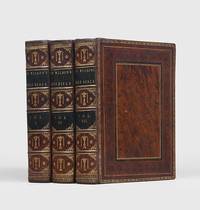
1785réf. 173867Bath: printed by R. Cruttwell; and sold by Rivingtons' Dilly Robson & Robinsons' 1785. With three Biblical fore edge paintings An imposing Bible handsomely bound by Edwards of Halifax in their celebrated "Etruscan" style. The set is unusual in featuring motifs relevant to the contents on all three fore-edges - scenes from the Old and New Testaments - as opposed to the more typical landscapes. Edwards famously almost never signed their bindings and their style was very frequently reproduced by others. This set is cited by Weber in his Annotated Dictionary of Fore-Edge Paintings as "a notable Bible from the Edwards bindery" Weber 2010 p. 118-9 and it is used as an example in a chapter devoted to distinguishing genuine Edwards bindings and paintings from imitations. The technique of concealing a painting under the gilt fore edge of books was revived in England by William Edwards about 1780. "The Edwards family not only carried on the art but enlarged it from the mainly floral and heraldic early efforts with occasional religious scenes and royal portraits to embrace views of well-known country houses set in landscapes" Marks p. 194. They were the originators of the bucolic English fore-edge painting which became standard in the 19th century. Scholars believe that the paintings were made in Halifax rather than in London by artists both within and outside the family and under the supervision of Thomas Edwards. Inspiration for the images was taken from various sources often engravings appearing in other books; for landscapes the favourite artist was William Gilpin a pioneer of the "picturesque". Volume I features a moment from Genesis: Abraham welcoming three angels into his home an act of hospitality which moved the Lord to bless Abraham and his wife with a son despite she was far beyond childbearing age. On Volume II is an episode from Exodus: an Egyptian princess and her attendants discover the infant Moses in the bulrushes of the Nile. Volume III displays an animated scene from the life of St. Paul as he preaches in Rome. The "Etruscan" style binding with a border of palmettes and other classical ornaments stencilled in black on brown calf was one of the firm's most popular designs. The origin of this style is debated: some 19th-century writers attributed the invention to John Whitaker while others ascribe it to the Edwards firm. It is known that Edwards employed it from at least 1775. Provenance: a Herman Frasch Whiton probably the American sailor and Olympic champion 1904-1967 with his elaborately designed bookplate featuring his arms and a ship on the verso of an initial blank in each volume. b Randall J. Moskovitz MD American collector from Memphis Tennessee with his bookplates loosely inserted. 3 vols large quarto 306 x 238 mm. Contemporary "Etruscan" calf by Edwards of Halifax spines with raised bands compartments tooled in gilt with flower and urn centerpieces and pediment cornerpieces black morocco labels covers with gilt pentaglyph and metope border stencilled frame of palmettes central panel of tree calf enclosed by gilt Greek key roll board edges and turn-ins tooled in gilt marbled endpapers each vol. with a contemporary fore-edge painting depicting a Scriptural scene edges gilt green silk bookmarkers. Spines uniformly darkened binding judiciously refurbished joints and spine ends repaired gilt retouched on spine light rubbing to palmettes design in places intermittent foxing and slight toning else clean the fore-edge paintings beautifully preserved. A handsome set. P. J. M. Marks "The Edwards of Halifax Bindery" British Library Journal vol. 24 no. 2 1998; Jeff Weber Annotated Dictionary of Fore-Edge Painting Artists & Binders 2010. See also: G. E. Bentley The Edwardses of Halifax 2015; Carl J. Weber Fore-Edge Painting 1966. hardcover
1794réf. 302622Boston: Printed at Boston by Alexander Young and Thomas Minns For J. Boyle B. Larkin J. White Thomas and Andrews D. West E. Larkin W.P. Blake and J. West. Sold by them at their respective book-Stores 1794. A-U6 W6 X-Z6 Z6 verso blank. Text printed in two columns. 1 vols. 12mo. Recent half calf. Small hole in top of title page margin not affecting text title leaf with tissue repair at gutter and fore edge margin 4 other leaves with small repairs to margins. Very good. A-U6 W6 X-Z6 Z6 verso blank. Text printed in two columns. 1 vols. 12mo. This rare edition of the New Testament printed in 1794 at Boston for a consortium of booksellers aimed to provide a distinctly American printed Bible as an alternative to the British printings being imported and thus included the Great Seal of the United States prominently displayed on the title page. Thus suggesting that even at the dawn of the American republic certain clauses of the Bill of Rights were subject to fluid interpretation. This is an early appearance of the Great Seal of the United States and is the only instance where it was used in conjunction with a patently religious work. Copies are recorded at AAS and Duke. Evans 26664; Hills English Bible in America 48; ESTC W4683 AAS Duke Printed at Boston, by Alexander Young and Thomas Minns, For J. Boyle, B. Larkin, J. White, Thomas and Andrews, D. West, E. Larki unknown
1794réf. 302622Boston: Printed at Boston by Alexander Young and Thomas Minns For J. Boyle B. Larkin J. White Thomas and Andrews D. West E. Larkin W.P. Blake and J. West. Sold by them at their respective book-Stores 1794. A-U6 W6 X-Z6 Z6 verso blank. Text printed in two columns. 1 vols. 12mo. Recent half calf. Small hole in top of title page margin not affecting text title leaf with tissue repair at gutter and fore edge margin 4 other leaves with small repairs to margins. Very good. A-U6 W6 X-Z6 Z6 verso blank. Text printed in two columns. 1 vols. 12mo. This rare edition of the New Testament printed in 1794 at Boston for a consortium of booksellers aimed to provide a distinctly American printed Bible as an alternative to the British printings being imported and thus included the Great Seal of the United States prominently displayed on the title page. Thus suggesting that even at the dawn of the American republic certain clauses of the Bill of Rights were subject to fluid interpretation. This is an early appearance of the Great Seal of the United States and is the only instance where it was used in conjunction with a patently religious work. Copies are recorded at AAS and Duke. Evans 26664; Hills English Bible in America 48; ESTC W4683 AAS Duke Printed at Boston, by Alexander Young and Thomas Minns, For J. Boyle, B. Larkin, J. White, Thomas and Andrews, D. West, E. Larki unknown books
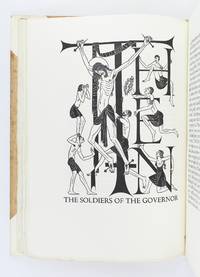
1931réf. ST20201Waltham St. Lawrence: Golden Cockerel Press 1931. No. 352 OF 500 COPIES the first 12 on vellum. 343 x 241 mm. 13 1/2 x 9 1/2". 1 p.l. 268 2 pp 1 leaf colophon. Original white half pigskin and buckram sides by Sangorski & Sutcliffe stamp-signed on front pastedown raised bands top edge gilt other edges untrimmed. ILLUSTRATED THROUGHOUT with four large wood engravings on section titles and scores of striking large and small woodcut illustrations decorative elements and initials BY ERIC GILL. Printed on Batchelor handmade paper. The front pastedown with the engraved armorial bookplate of Albert and Constance Ramsay-Cohn the bookplate of Louis W. Black and the bookplate of "Downsland Court Ditchling Sussex." Chanticleer 78; A Century for the Century 26. Buckram boards somewhat freckled as usual very faint printer's smudges in one margin otherwise A VERY FINE COPY the pigskin--almost always found soiled and/or damaged--quite clean and pleasing and virtually pristine internally. This is an especially appealing copy of the chief work produced by one of the foremost English private presses. One of Eric Gill's outstanding achievements as an illustrator and one of the Golden Cockerel Press' great books the "Four Gospels" has been called by Franklin the finest of all private press books printed between the wars. The success of the work has much to do with Gill's ability to create a harmonious integration of woodcut illustration and typography his Golden Cockerel typeface one of the most important ever cut specifically for private use is introduced here. At the same time that the work achieves an aesthetic balance it also takes risks with the emotional nature of the woodcuts and with its unjustified page layout. As Franklin observes Gill's "pictures beautifully explain their letters as leaves spring from branches. This work is a wonderful extension of typography." Founded in 1920 with the intention to print fine editions of important well-known books as well as new literary works of merit from young authors the Golden Cockerel Press was purchased in 1924 by the illustrator and wood-engraver Robert Gibbings. "Under his direction" says Cave the Press was "transformed into the principal vehicle for the renaissance of wood-engraved book illustration" up until the beginning of World War II. In addition to doing wood engravings himself Gibbings employed a stable of eminent artists including among others Gill John Nash John Farleigh David Jones Eric Ravilious and Blair Hughes-Stanton. Our copy has been owned by two notable collectors and scholars of illustrated books. An early owner was British art historian Albert Mayer Cohn who wrote the catalogue raisonné of George Cruikshank's work. Later the volume passed into the hands of Boston collector Louis W. Black whose Aldine-related bookplate was designed by celebrated wood-engraver Leonard Baskin 1922-2000. Regarding the other bookplate here we have been unable to trace exactly who resided at Downsland Court in Ditchling but it is worth noting that Gill's Sussex artist's community was centered in Ditchling where he lived from 1907-24; it is certainly possible that our copy belonged to someone associated with this group. Golden Cockerel Press unknown
1931réf. ST20201Waltham St. Lawrence: Golden Cockerel Press 1931. No. 352 OF 500 COPIES the first 12 on vellum. 343 x 241 mm. 13 1/2 x 9 1/2". 1 p.l. 268 2 pp 1 leaf colophon. Original white half pigskin and buckram sides by Sangorski & Sutcliffe stamp-signed on front pastedown raised bands top edge gilt other edges untrimmed. ILLUSTRATED THROUGHOUT with four large wood engravings on section titles and scores of striking large and small woodcut illustrations decorative elements and initials BY ERIC GILL. Printed on Batchelor handmade paper. The front pastedown with the engraved armorial bookplate of Albert and Constance Ramsay-Cohn the bookplate of Louis W. Black and the bookplate of "Downsland Court Ditchling Sussex." Chanticleer 78; A Century for the Century 26. Buckram boards somewhat freckled as usual very faint printer's smudges in one margin otherwise A VERY FINE COPY the pigskin--almost always found soiled and/or damaged--quite clean and pleasing and virtually pristine internally. This is an especially appealing copy of the chief work produced by one of the foremost English private presses. One of Eric Gill's outstanding achievements as an illustrator and one of the Golden Cockerel Press' great books the "Four Gospels" has been called by Franklin the finest of all private press books printed between the wars. The success of the work has much to do with Gill's ability to create a harmonious integration of woodcut illustration and typography his Golden Cockerel typeface one of the most important ever cut specifically for private use is introduced here. At the same time that the work achieves an aesthetic balance it also takes risks with the emotional nature of the woodcuts and with its unjustified page layout. As Franklin observes Gill's "pictures beautifully explain their letters as leaves spring from branches. This work is a wonderful extension of typography." Founded in 1920 with the intention to print fine editions of important well-known books as well as new literary works of merit from young authors the Golden Cockerel Press was purchased in 1924 by the illustrator and wood-engraver Robert Gibbings. "Under his direction" says Cave the Press was "transformed into the principal vehicle for the renaissance of wood-engraved book illustration" up until the beginning of World War II. In addition to doing wood engravings himself Gibbings employed a stable of eminent artists including among others Gill John Nash John Farleigh David Jones Eric Ravilious and Blair Hughes-Stanton. Our copy has been owned by two notable collectors and scholars of illustrated books. An early owner was British art historian Albert Mayer Cohn who wrote the catalogue raisonné of George Cruikshank's work. Later the volume passed into the hands of Boston collector Louis W. Black whose Aldine-related bookplate was designed by celebrated wood-engraver Leonard Baskin 1922-2000. Regarding the other bookplate here we have been unable to trace exactly who resided at Downsland Court in Ditchling but it is worth noting that Gill's Sussex artist's community was centered in Ditchling where he lived from 1907-24; it is certainly possible that our copy belonged to someone associated with this group. Golden Cockerel Press unknown books
1617réf. U26The Holy Bible Conteyning the Old Testament and the New. Newly Translated Out of the Originall Tongues: And with the former translations diligently compared and revised by his Maiesties Speciall Comandement… Summary: Pulpit Folio approx. 16.25" x 11.25". The third of the five distinct pulpit folios of the King James Version. A complete copy with the Genealogies by John Speed at a fraction of the price of the first edition. Description: General title page 1617. Calendar printed in red and black. The Genealogies by John Speed with title page. The double-page map in facsimile. Text in large two column black letter type with 59 lines to the full column and within a ruled border. With the reading "and she went into the citie" in Ruth 3:15. New Testament title page 1617 with the twelve tribes of Israel on the left and the twelve disciples on the right. The four evangelists with their gospel symbols around the letterpress with the Tetragrammaton the dove and the slain Lamb at the center. Collation: A6 -A1 B4 C6 D4 prelims; A-C6 D2 -D2 Genealogies and map A-Z6; Aa-Zz6 Aaa-Zzz6 Aaaa-Zzzz6 Aaaaa-Ccccc6 Old Testament and Apocrypha; A-Z6 Dddddd6 New Testament. Complete Bible text with only the map supplied in facsimile. Binding: Professionally rebound in brown calf. Covers paneled in gilt and blind. Spine with five raised bands gilt and blind tooling to compartments and with two gilt-lined red morocco labels and the words "Holy Bible" and "1611 3rd issue" lettered in gilt. Endpapers renewed. Condition: Title page laid down with loss to upper left corner; A2-C1 of prelims with marginal corner repair; 5D1-2 NT title and first leaf of Matthew with a few ink blots; 5G2 with ink blot to text obstructing a few letters on recto; 6A-6D with lower corner reinforced to margins; final two leaves of Revelation with loss to border and one letter of text; final leaf soiled and frayed to edges; overall a very nice copy with great margins. Note: The 1611 King James Bible was printed in a 59-line folio format in 1611 1613 1617 1634 and in 1640/39. The 1611 He Bible constituted a distinct edition with the reading "and hee went into the citie" in Ruth 3:15. The second edition 1613 She Bible was printed in subsequent years 1613 1617 1634 1640/39 with the variant "and she went into the citie." The second edition is frequently found in a variant state with leaves mixed in from different years but most here appear to originate from 1617. Arguably the most important book ever published in English. Its influence can best be summed up by G.M. Trevelyan who stated that "for every Englishman who had read Sidney or Spenser or had seen Shakespeare acted at the Globe there were hundreds who had read or heard the Bible with close attention as the words of God. The effect of the continual domestic study of the book upon the national character imagination and intelligence for nearly three centuries to come was greater than that of any literary movement in our annals or any religious movement since the coming of St. Augustine." Macaulay said of it "If everything else in our language should perish the King James Bible would alone suffice to show the whole extent of its beauty and power" PMM 114. References: Herbert 319. PMM 114. Robert Barker hardcover