16,644 results
1963ref. 723754PN. New. 1963. Soft Cover. Date is original print. This is a reprint edition. . PN paperback
1968ref. 159313N.p.: Columbia British Productions 1968. Three vintage studio still photographs from the 1968 film. Based on the 1966 novel by Derek Marlowe. A British spy is ordered to track down a KGB agent though he himself is that KGB agent. He must disparage his partner's suspicions and ensure the secrecy of his identity. Set in London and West Berlin shot on location in Berlin Germany and London Surrey and Buckinghamshire England. 8 x 10 inches. Generally Near Fine. Spicer US Neo-Noir. Grant UK. Columbia British Productions unknown books
1967ref. 732102PN. New. 1967. Soft Cover. Date is original print. This is a reprint edition. . PN paperback
1966ref. 729561PN. New. 1966. Soft Cover. Date is original print. This is a reprint edition. . PN paperback
2008ref. Q-0061438286HarperOne 2008-10-07. Hardcover. New. New. In shrink wrap. Looks like an interesting title! HarperOne hardcover
2008ref. 1-0061438286Harperone 2008. Hardcover. New. 1st edition. 272 pages. 9.50x6.25x1.00 inches. Harperone hardcover
1969ref. 2111902158904581Sanshusha 1969. Soft Cover. Fine. Volume: 1 Sanshusha paperback
ref. 0266239854.Ghardcover. Good. Access codes and supplements are not guaranteed with used items. May be an ex-library book. hardcover
ref. 0833099116.Gpaperback. Good. Access codes and supplements are not guaranteed with used items. May be an ex-library book. paperback
ref. 1390993264.Gpaperback. Good. Access codes and supplements are not guaranteed with used items. May be an ex-library book. paperback
ref. 1396387846.Ghardcover. Good. Access codes and supplements are not guaranteed with used items. May be an ex-library book. hardcover
1804ref. M15034Boston:: Printed for Young & Minns Printers to the State 1804. 1804. 24 cm. 51 1 pp. Later marbled wrappers; text-block edges "thumbed" and spotted foxed. Bookplate of Frederick A. Frye. Very good. Rare. The author won the Boylstonian Prize for 1803 with this work. "Cholera infantum" refers to an outdated term for a severe diarrheal illness affecting infants historically prevalent in hot humid conditions. / James Mann was a prominent American military surgeon particularly known for his service during the War of 1812. He was the Medical Director of the Northern Army during that conflict where he managed hospitals established new ones and oversaw the care of soldiers. His experiences and observations were later documented in his book "Medical Sketches of the Campaigns of 1812 13 14." / The author was a Fellow of the Massachusetts Medical Society. See: Joseph I. Waring "American Pediatric Writings of the 18th Century" JAMA Pediatrics vol. 130 No. 7 July 1976. Printed for Young & Minns, Printers to the State, 1804. unknown
1804ref. M15034Boston:: Printed for Young & Minns Printers to the State 1804. 1804. 24 cm. 51 1 pp. Later marbled wrappers; text-block edges "thumbed" and spotted foxed. Bookplate of Frederick A. Frye. Very good. Rare. The author won the Boylstonian Prize for 1803 with this work. "Cholera infantum" refers to an outdated term for a severe diarrheal illness affecting infants historically prevalent in hot humid conditions. / James Mann was a prominent American military surgeon particularly known for his service during the War of 1812. He was the Medical Director of the Northern Army during that conflict where he managed hospitals established new ones and oversaw the care of soldiers. His experiences and observations were later documented in his book "Medical Sketches of the Campaigns of 1812 13 14." / The author was a Fellow of the Massachusetts Medical Society. See: Joseph I. Waring "American Pediatric Writings of the 18th Century" JAMA Pediatrics vol. 130 No. 7 July 1976. Printed for Young & Minns, Printers to the State, 1804. unknown books
ref. 0232523827.Gpaperback. Good. Access codes and supplements are not guaranteed with used items. May be an ex-library book. paperback
ref. 138510984X.Ghardcover. Good. Access codes and supplements are not guaranteed with used items. May be an ex-library book. hardcover
ref. 1379516889.Ghardcover. Good. Access codes and supplements are not guaranteed with used items. May be an ex-library book. hardcover
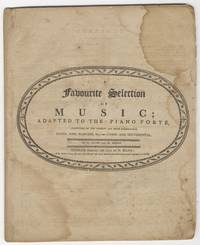
1806ref. 41672Dedham: Printed and Sold by H. Mann; who executes music printing of all kinds on reasonable terms 1806. Quarto. Sewn. i title within oval ornamental border 2-32 pp. Typeset throughout. With contents to head of page 2. Contains 27 pieces most with text some instrumental as follows: - Address to a Tuft of Violets. A New Song. Written by H. Mann. Music by O. Shaw - Bonaparte's Grand March - Gen. Abercrombie's March - Tink a Tink - Tears that Exhale. A Favourite Song Sung by Master Walsh in the Prisoner composed by T. Andrews - O Listen to the Voice of Love - Drink to Me only. A Favorite Glee. Composed by Dr. Jackson - Felton's Gavot. With Variations - Poor Emma. A Favorite New Song - Air by O. Shaw - Unmoved I'll Brave the Stormy Sea. Sung by Miss Brett - The Persian Maid. Composed by W.E. Heather. Words by G. Walker - Poor Richard - Adieu My Liberty - 'Tis Only No Harm To Know It You Know. A New Song. The Poetry by J.O. Keefe Music by William Shield - Bonny Doon. A Favorite Scotch Song - Storace - New Century Hornpipe - The Miller's Daughter. A Favorite Song. Composed by Mr. Hook - London. Composed by T. Swan - A Favorite Rondeau - She Lives in the Valley Below. A New Song Composed by Mr. Hook - Resignation. A New Song Composed by O. Shaw - I owe You One. A Favorite Song Sung by Mrs. Seymour in the Sixty Third Letter - A Favorite March in the Demolution of the Bastille - The Cottage in the Grove. A Favorite New Song - Hymn. Composed by O. Shaw Slightly worn and browned; upper outer and lower inner corners stained; some corners slightly frayed and creased. Wolfe 7884. OCLC 36038853 2 copies only. Shaw was a noted American composer compiler teacher singer organist and publisher. "After accidental eye damage leading to blindness he undertook musical studies with John L. Berkenhead Gottlieb Graupner and Thomas Granger about 1800. In 1805 he established himself as a teacher of the piano and organ in Dedham Massachusetts where he began to issue his music in collaboration with Herman Mann. Moving to Providence in 1807 Shaw became a central figure in the city's musical life as organist organizer of bands and composer of songs odes anthems and marches for patriotic and civic occasions. . Shaw sought to improve the quality of local sacred music co-founding the Psallonian Society and provided inspiration to the founding of the Boston Handel and Haydn Society in 1815 frequently participating in its early performance. His tenor voice was described as sweet simple and natural; his performances of his own compositions were said to be remarkably affective. Mary's Tears There's nothing true but heav'n and All things fair and bright are thine were particularly popular establishing him as a leader in the development of American song. Shaw taught the piano and singing throughout his career and conducted singing schools in the early decades of the 19th century Lowell Mason was among his pupils. He also instructed his own children who later served him as amanuenses. His pedagogical compositions include many easy keyboard pieces two instructional books for the piano 1811 1831 and a compilation of ensemble music For the Gentlemen 1807 which was one of the earliest American printed instrumental tutors by a native composer." Bruce Degen in Grove Music Online Mann was an important early 19th century American publisher especially of hymns and secular songs based in Dedham Massachusetts. Printed and Sold by H. Mann; who executes music printing of all kinds, on reasonable terms unknown
1806ref. 41672Dedham: Printed and Sold by H. Mann; who executes music printing of all kinds on reasonable terms 1806. Quarto. Sewn. i title within oval ornamental border 2-32 pp. Typeset throughout. With contents to head of page 2. Contains 27 pieces most with text some instrumental as follows: - Address to a Tuft of Violets. A New Song. Written by H. Mann. Music by O. Shaw - Bonaparte's Grand March - Gen. Abercrombie's March - Tink a Tink - Tears that Exhale. A Favourite Song Sung by Master Walsh in the Prisoner composed by T. Andrews - O Listen to the Voice of Love - Drink to Me only. A Favorite Glee. Composed by Dr. Jackson - Felton's Gavot. With Variations - Poor Emma. A Favorite New Song - Air by O. Shaw - Unmoved I'll Brave the Stormy Sea. Sung by Miss Brett - The Persian Maid. Composed by W.E. Heather. Words by G. Walker - Poor Richard - Adieu My Liberty - 'Tis Only No Harm To Know It You Know. A New Song. The Poetry by J.O. Keefe Music by William Shield - Bonny Doon. A Favorite Scotch Song - Storace - New Century Hornpipe - The Miller's Daughter. A Favorite Song. Composed by Mr. Hook - London. Composed by T. Swan - A Favorite Rondeau - She Lives in the Valley Below. A New Song Composed by Mr. Hook - Resignation. A New Song Composed by O. Shaw - I owe You One. A Favorite Song Sung by Mrs. Seymour in the Sixty Third Letter - A Favorite March in the Demolution of the Bastille - The Cottage in the Grove. A Favorite New Song - Hymn. Composed by O. Shaw Slightly worn and browned; upper outer and lower inner corners stained; some corners slightly frayed and creased. Wolfe 7884. OCLC 36038853 2 copies only. Shaw was a noted American composer compiler teacher singer organist and publisher. "After accidental eye damage leading to blindness he undertook musical studies with John L. Berkenhead Gottlieb Graupner and Thomas Granger about 1800. In 1805 he established himself as a teacher of the piano and organ in Dedham Massachusetts where he began to issue his music in collaboration with Herman Mann. Moving to Providence in 1807 Shaw became a central figure in the city's musical life as organist organizer of bands and composer of songs odes anthems and marches for patriotic and civic occasions. . Shaw sought to improve the quality of local sacred music co-founding the Psallonian Society and provided inspiration to the founding of the Boston Handel and Haydn Society in 1815 frequently participating in its early performance. His tenor voice was described as sweet simple and natural; his performances of his own compositions were said to be remarkably affective. Mary's Tears There's nothing true but heav'n and All things fair and bright are thine were particularly popular establishing him as a leader in the development of American song. Shaw taught the piano and singing throughout his career and conducted singing schools in the early decades of the 19th century Lowell Mason was among his pupils. He also instructed his own children who later served him as amanuenses. His pedagogical compositions include many easy keyboard pieces two instructional books for the piano 1811 1831 and a compilation of ensemble music For the Gentlemen 1807 which was one of the earliest American printed instrumental tutors by a native composer." Bruce Degen in Grove Music Online Mann was an important early 19th century American publisher especially of hymns and secular songs based in Dedham Massachusetts. Printed and Sold by H. Mann; who executes music printing of all kinds, on reasonable terms unknown books
ref. 0331794063.Ghardcover. Good. Access codes and supplements are not guaranteed with used items. May be an ex-library book. hardcover
ref. B9781020063671Hardback. New. hardcover
ref. 1330239598.Gpaperback. Good. Access codes and supplements are not guaranteed with used items. May be an ex-library book. paperback
ref. B9781017122466Hardback. New. hardcover
1853ref. h45580Syracuse: Hall Mills and Company 1853. First Edition. Hardcover. Very good. 12mo period binding of half brown calf and paper-covered boards very good light wear and rubbing contents a bit tanned and foxed throughout 1878 pencil gift inscription on flyleaf bookseller's old tag on pastedown J. T. Heald Bookbinder Wilmington DE. 141 pp. First printings are rare in the trade and at auction. The work consists of two lectures Mann delivered in 1853 and 1854 in which he explores women's role in society arguing for the importance of education for women and their unique capacity to shape the moral character of those around them. From what we can gather from online sources in these lectures Mann who was the leading early 19th-century proponent of public school education expresses a degree of ambivalence about women's social roles and the relations between men and women. Rather than positing two entirely separate "spheres" for the sexes Mann reframed the traditional "woman's sphere" as a hemisphere - one half of a single shared orb of human interaction - emphasizing that each sex is necessary as the complement of the other. Consistent with his broader educational philosophy Mann believed women were particularly well suited to teaching and to the moral elevation of society and the lectures advocate giving women access to quality education so they can fulfill that role. He also argued that women should be permitted to participate in public life and be accorded the same legal rights as men - though a contemporary feminist critic Ernestine Rose sharply challenged his lectures accusing him of "pandering to prejudiced public opinion" by confining woman's greatest duty to the cradle and to educating children. Overall the work sits in interesting tension: progressive in its call for women's education and rights yet still tethered to 19th-century notions of feminine moral influence and domestic purpose. Hall, Mills, and Company hardcover
ref. 4826688like new. unknown
1850ref. 69881Boston: Ticknor Reed and Fields 1850. First edition 16mo pp. 84; original limp blindstamped black cloth lettered in gilt on upper cover; slight wear dampstain in lower gutter very good. See Sabin 44324. Ticknor, Reed, and Fields unknown