16 644 résultats
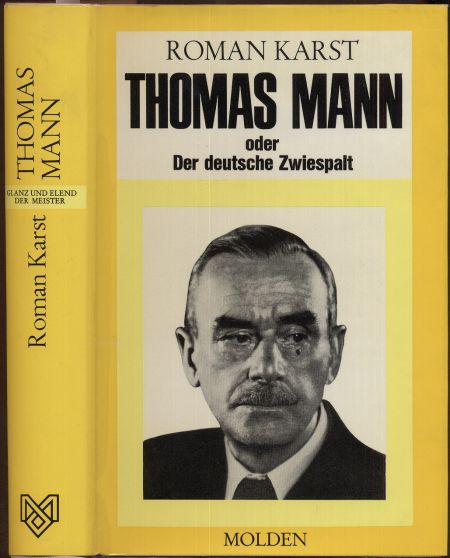
1970réf. 10972ABWien u.a., Molden 1970. 360 S., OLwd. mit (etw. läd.) OUmschl. DEA. Jonas 70.84. OLwd. mit (etw. läd.) OUmschl. DEA. Jonas 70.84.
1970réf. 63366Wien, Mch., Zch.: Fritz Molden (c 1970). 360 Ss. 8°. Pp. mit Umschl.
1970réf. 8076Wien-München-Zürich, Fritz Molden, (1970). 8vo. Mit 16 Kunstdruckbildern. 360 S. OLwd. m. Rückentitel sowie illustr. Orig.-Schutzumschlag.
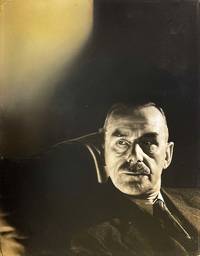
1934réf. 2522New York: n.p. 1934. Very Good. POWERFUL STEICHEN PORTRAIT OF THOMAS MANN FROM CHANCE MEETING IN NEW YORK. Edward Steichen was one of the early pioneers of photographic art leading the movement of photography from its established position as a utilitarian medium to a mode of creative expression. As a major contributor to Alfred Stieglitz's Camera Work magazine in the first decades of the twentieth century Steichen had cemented his reputation as a new kind of photographer enjoying both artistic and commercial success-working as chief photographer for Condé Nast and later heading the Met's photography department. In 1959 having completed the first decade in his tenure as director of the Museum of Modern Art's photography division Steichen was approached by Tas Toth about curating a new display to serve as a counterpart to Steichen's astronomically successful The Family of Man-a MoMA exhibition that would become and remains to-date the most-viewed photographic exhibition. Toth's exhibition to be called Das menschliche Antlitz Europas The Human Face of Europe would mirror The Family of Man's thematic emphasis on shared humanity principally by showcasing images by distinguished figures including Cartier-Bresson Boubat Brassai and Doisneau alongside works by lesser-known artists. Initially the renowned artists were hesitant to contribute towards this unique concept and it was only after Steichen endorsed Toth by allowing him to exhibit his portrait of Thomas Mann that a large number of eminent photographers agreed to contribute to the group exhibition. Steichen's impactful photograph is the work present here. Steichen had taken the image in the United States where Mann would emigrate in 1939 to avoid mounting persecution in his native Germany and where Mann would remain until 1952. It was in 1934 that Mann to promote his Jospeh series made his first journey to America- embarking on RMS Volendam and arriving in New York to great fanfare-"scarcely dreaming" writes biographer Nigel Hamilton "he would one day become an American citizen" p. 283. The image of Mann follows in a line of portraits by Steichen of leading world figures from Churchill and FDR to Chaplin and Gershwin. Furthermore the present photograph preserves in addition to Mann's likeness the providential meeting of two of the most impactful twentieth century creatives who would both make their homes in the New World. Provenance: -Donated by Steichen to the original owner when he worked on the organization of the exhibition 'Das Menschliche Antlitz Europas'. -Christie's lot 218 Sale 7415 21 Nov. 1996 Exhibited: 'Das Menschliche Antlitz Europas' Municipal Museum of Munich 1959. STEICHEN EDWARD. Thomas Mann New York 1934. Gelatin silver print before 1959. 23.8 x 18.8 cm 9 ⅜ x 7 ⅜ in. Mounted on paperboard signed on the reverse in what does not appear to be Steichen's hand: "Edward Steichen" and numbered in pencil. With a tiny amount of touch-up at extreme top corner almost entirely beneath the matte. Handsomely framed. References: Hamilton Nigel The Brothers Mann New Haven: Yale University Press 1979 Steichen Edward A Life in Photography New York: Bonanza 1984. n.p. unknown books
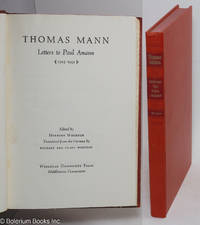
1960réf. 293008Middletown CT: Wesleyan University Press 1960. Hardcover. 190p. editor's introduction letters appendix draft of a letter from Amann to Mann notes index of persons free endpaper corner clipped light offsetting in gutters from binding glue else good first edition stated in red buckram cloth boards and gilt spine titles. Wesleyan University Press hardcover books
2001réf. 16373Klostermann, Frankfurt 2001. 276 S. Kart. Umschlag hinten etwas fleckig. Sonst sehr gutes Exemplar. Mit einer Auswahl von Vorträgen aus dem Herbstcolloquium der Deutschen Thomas-Mann-Gesellschaft in Lübeck 1999 zum Thema "Thomas Mann und die Politik" in Interpretation des
1992réf. 18975CBFrankfurt am Main, Vittorio Klostermann, 1992. 8°, 240 S., original Kartonage (Paperback), Erstausgabe Vorderdeckel mit kleinem Fleckchen, sonst gutes, sauberes Exemplar
1999réf. 18974CBFrankfurt am Main, Vittorio Klostermann, 1999. 8°, 378 S., original Kartonage (Paperback), Erstausgabe gutes, sauberes Exemplar
1955réf. 26493ABHochland 1/1955. Gr.-8°. S. 79 - 81. Exemplar mit Gbrsp. Jonas 55.77. Exemplar mit Gbrsp. Jonas 55.77.
2001réf. 74132Siegen, Carl Böschen Verlag, 2001. Origi.Pappband, 8°, 382 Seiten.
1966réf. USCHTHO00kwRowholt 1966. Very Good. Schroter Klaus. Thomas Mann in Selbstzeugnissen und Bilddokumenten Dargestellt von Klaus Schroter. Mann Thomas. Hamburg: Rowholt 1966. 173pp. Illustrated. 12mo. Paperback. Book condition: Very good with toning to pages and former owner's stamp on the first and last page. Rowholt paperback books
1964réf. 26732ABReinbek, Rowohlt 1964. 173, (7) S. mit zahlr. Abb., OKt. EA. OKt. EA.
1935réf. 29808ABZürich u. Leipzig, Niehans 1935. 186, (2) S., OLwd. (stellenw. verblaßt). EA. Jonas 35.47. OLwd. (stellenw. verblaßt). EA. Jonas 35.47.
1935réf. 95378BBZürich:, Niehans, 1935. 8°. 186 S., Leinen mit Kopffarbschnitt (private Widmung auf Vorsatz; Einband teilweise abgeblasst; stockfleckig)
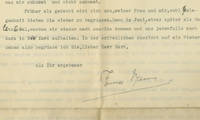
1935réf. 2132622/04/1935. This letter was acquired from the family of the recipient and has never been offered for sale before In 1900 at the age of 25 Thomas Mann wrote and in 1901 published Buddenbrooks chronicling the decline of a wealthy north German merchant family over the course of four generations. Mann drew deeply from the history of his own family the Mann family of Lübeck and their times. It was Mann’s first novel and it made him a major literary figure. The work led to a Nobel Prize in Literature for Mann in 1929; although the Nobel award generally recognizes an author’s body of work the Swedish Academy’s citation for Mann identified “his great novel Buddenbrooks” as the principal reason for his prize. Mann began writing the book in October 1897 when he was twenty-two years old. Henry Hart was an American publisher who worked mainly for Scribner’s in New York. He was working with Mann on the publication of English-language versions of his works including Nocturns. The League of American Writers was established by the First American Writers Congress a gathering held from April 26–28 1935. It was an association of American novelists playwrights poets journalists and literary critics launched by the Communist Party USA in 1935. The group included Communist Party members and so-called ""fellow travelers"" who closely followed the Communist Party's political line without being formal party members as well as individuals sympathetic to specific policies being advocated by the parrty. In 1933 after the takeover of the Nazi party while travelling in the South of France Mann heard from his eldest children Klaus and Erika in Munich that it would not be safe for him to return to Germany. The family except these two children emigrated to Küsnacht near Zürich Switzerland but received Czechoslovak citizenship and a passport in 1936. Typed letter signed April 22 1935 to Hart his publisher. ""It is not easy for me to answer your suggestion in regards to this business news. I have read very carefully the appeal of the American writer’s congress. However I have unsurmountable concerns about contributing a statement to the congress. In the second half of the appeal there is mention of ‘civil liberties’. It stands in logical contradiction to all previous statements which have a purely communist character. A telegram on my part as you have asked me to send would be a clear support of communism which I am not able to force myself to give. I have a true love of civil liberties as much as I am against fascism and war. I much prefer the communist revolution to that of the fascists. Nevertheless the wording of this appeal and the political orientation it lends to this congress does not allow me to follow your wishes to send a note of unrestricted sympathy to the congress. I beg you to understand and not interpret my position as a lack of courage. It is an act of good conscience of what is my duty and what is not. ""Earlier than planned my wife and I will have the opportunity to see you again. In June a little bit later than last time we will come to America and stay for a short while in New York."" This letter was acquired from the family of the recipient and has never before been offered for sale. unknown books
1975réf. 8007Lübeck, Senat der Hansestadt, Amt für Kultur, (1975). Gr.-8vo. 38 S. OBrosch. m. Deckeltitel.
1952réf. 1136417München, K. Desch, (1952). 540 S., 2 Bl. OLwd.
1952réf. 8079München, Kurt Desch, (1952). 8vo. 540 S., 2 Bl. OLwd. m. goldgeprägt. Deckel- u. Rückentitel u. RSchild. Farbiger Kopfschnitt.
1969réf. 10906ABdu 346, Weihnachten 1969. Gr.-4°. S. 1052 - 1054 mit 1 Photo, OKt. Jonas 69.173. OKt. Jonas 69.173.
1969réf. 217219BBHbg., Wegner, 1969. 1.-4. Ts. 557 S. OLwd. m. OU. - Gutes Ex. 4
1969réf. 85897BBHamburg:, Wegner, (1969). 8°. 556 S., Leinen mit Kopffarbschnitt (1.-4. Tsd.). (Schutzumschlag mit Randläsuren; sonst gut erhalten)
1969réf. 1512364Hamburg, Wegner, 1969. 557, (3) S. OLwd.
1969réf. 196489Hamburg: Wegener 1969. 558 S. Ln.mS. *neuwertig*
1991réf. 13034Augsburg, 1991. Mit zahlr. Abbilldunge auf 24 Tafel-Seiten. 2 Bll., 36 S. 4to. OBrosch.
1976réf. 1249633Bern, München : Francke, 1976. 128 S. : Ill. ; 21 cm kart.