4 809 résultats
1943réf. 021599New York: Limited Editions Club 1943. Hardcover. Tasteful bookplate on front pastedown; contents clean. Light chipping to the tips of the spine which is rather fragile with a long vertical tear down the center. Good internally Near Fine in a Good slipcase with the bottom portion partly split. Lynd Ward. Quarto 7-1/4" x 10-1/2" bound in full black sheep leather with an ivory medallion inset on the front cover. Translated from The Latin text by Harry Carter with an introduction by Hendrik Willem Van Loon. Illustrated with 10 original mezzotints by Lynd Ward hand-pulled in the shop of Charles Furth in New York. Ward also contributes numerous marginal illustrations. Designed by George Macy letterpress composed and printed on special Worthy paper in black and rubric red by the J.Horace McFarland Company at the Mount Pleasant Press in Harrisburg. Copy #617 of 1500 SIGNED by the artist on the colophon page. Limited Editions Club hardcover books
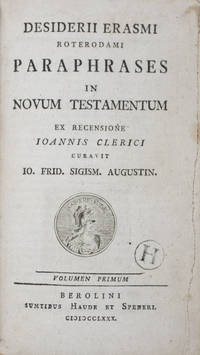
1780réf. 43177Berolini Berlin: Haude et Speneri 1780. Later edition. Hardcover. vg. Octavo 8 1/2 x 5". xxxvi 546pp Vol. 1; xxii 398pp Vol. 2; xliv 399-995 1pp. Modern full black cloth with gold lettering to spines. Title vignettes. Originally published in 1548 "Paraphrases in Novum Testamentum" were composed between May 1517 and January1524. They consist of a series of commentaries on every book of the New Testament except "Apocalypse" a book for which Erasmus had no great regard. The Paraphrases were successful beyond expectation and were quickly translated into French German English and other languages. Modern endpapers and fly leaves. Small letter "H" stamped on title pages of first and third volumes. Text in Latin. Bindings and interior in overall very good condition. The publication history of the "Paraphrases" is complicated. Erasmus began with the Pauline Epistles. The paraphrase of Romans was published in quarto by Dirk Martens in Louvain in November 1517 and reprinted by Erasmus's friend Johann Froben in January of the following year; it sold well and was soon reprinted in octavo. Corinthians was published by Martens in February 1519 and reprinted in Basel by Froben in March; Galatians appeared later that year with editions from both publishers. The remaining Epistles followed in 1520 and 1521 the last to appear being Hebrews. In the autumn of 1521 Erasmus moved from Louvain to Basel and from that time Froben published the first editions of the remaining Paraphrases. Erasmus now turned to the Gospels Matthew appearing in March 1522 in both folio and octavo - from now on there are no more quartos John in February folio and March octavo 1523 Luke in August 1523 and Mark in early 1524 with a title page dated 1523. Acts followed quickly the dedication copy being dated February 13 1524. Froben published a complete edition in two volumes the first "a stout octavo volume of 400 leaves dated 1523 and called Tomus secundus" contained the Epistles and the Tomus primus containing the Gospels and Acts appeared the following year. "This was a considerable investment and the firm kept it in their list for ten years" resetting portions as needed without a change of date. The Paraphrases were reissued in various formats and combinations during the following decades; Roger Mynors writes: "When one is faced with one of these editions in folio one has to remember that a purchaser would see them as composed of separable parts out of which sets could be made up in any way that supply might dictate." For more information see: R.A.B. Mynors "The Publication of the Latin Paraphrases" in Robert Dick Sider ed. New Testament Scholarship: Paraphrases on Romans and Galatians Collected Works of Erasmus University of Toronto Press 1984 pp. xx-xxix. About the author: Desiderius Erasmus Roterodamus 1466-1536 known as Erasmus or Erasmus of Rotterdam was a Dutch Renaissance humanist Catholic priest social critic teacher and theologian. Erasmus was a classical scholar and wrote in a pure Latin style. Among humanists he enjoyed the sobriquet "Prince of the Humanists" and has been called "the crowning glory of the Christian humanists." Using humanist techniques for working on texts he prepared important new Latin and Greek editions of the New Testament which raised questions that would be influential in the Protestant Reformation and Catholic Counter-Reformation. He also wrote On Free Will The Praise of Folly Handbook of a Christian Knight On Civility in Children Copia: Foundations of the Abundant Style Julius Exclusus and many other works. From Wikipedia. Haude et Speneri hardcover books
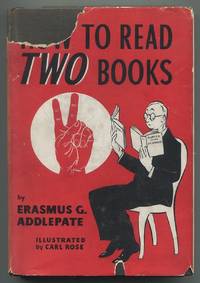
1940réf. 629514New York: Frederick A. Stokes Company 1940. Hardcover. Good/Good. First edition. Illustrated by Carl Rose. 107pp. Good only with spotting and a stamp on the front free endpaper presumably from the publisher in a good only price-clipped dust jacket with a large chip tears and toning. Frederick A. Stokes Company hardcover books
1650réf. 124111650. ERASMUS DESIDERIUS. Adagiorum D. Erasmi Roterodami epitome. Amsterdam: Ludovicum Elzevirium 1650. 12mo. 24 622 72 p. final blank 2F12. Old calf. Title page in red and black with the Minerva vignette. Title somewhat soiled else a very nice copy. First Elzevir edition of the epitome or abridged text of Erasmus's Adagia a collection of Latin and Greek sayings arranged by topic. Willems calls this edition "tres bien imprimee." The text is printed in roman and a rather handsome Greek font with the authors referenced in sidenotes in a smaller roman. Willems 1109. unknown books
1520réf. 253908Basel: Johann Froben 1520. First collected editions. Titles within ornamental woodcut border initials printer's device in colophon. 465 i.e. 495 1; 167 1; and 141 3 pp. 1 vols. 8vo. Contemporary blindstamped pigskin over wooden boards spine in four compartments with raised bands over doubled cords ruled in blind and crossed floral ornaments boards tooled with floral borders about a central field edges ochre. Covers somewhat soiled one brass clasp missing upper joint just starting but quite firm; internally a SUPERB near flawless copy. Bookplate and ownership signature of scholar and author Nathan Comfort Starr. First collected editions. Titles within ornamental woodcut border initials printer's device in colophon. 465 i.e. 495 1; 167 1; and 141 3 pp. 1 vols. 8vo. First collected editions of these "Paraphrases" of the letters of Paul which were undertaken shortly after Erasmus's revolutionary edition of the Greek New Testament of 1516. As part of that monumental reconstruction of the New Testament Erasmus' intention was to "retell" the books of the New Testament in one uninterrupted voice without the clutter of textual commentary or critical interruption. It was a bold undertaking and in 1517 Erasmus began with the letters of Paul. They were first issued separately starting with Romans in 1517; and editions appeared in Louvain Thierry Martens Leipzig Valentin Schumann and Basel Johann Froben. The collected issues - such as the three which are bound together in this exquisite volume - began to be issued in Basel by Froben in 1519; and finally in 1521 Froben issued a collected edition of all of the Pauline letters. All of the lifetime editions both separate and collected are rare on the market; this copy is in a well preserved contemporary pigskin binding first binding. Adams E790; E792; E791; VD16 E 3060; E 3324; E 3328 Johann Froben unknown books
1745réf. 37491a Amsterdam: chez Francois l'Honore 1745. 6 folding plates 74 wood engravings. xxiv 340 20. 1 vols. 12mo. Full tan contemporary continental calf. some minor loss. Holbein Hans. 6 folding plates 74 wood engravings. xxiv 340 20. 1 vols. 12mo. This translation of Ersasmus's "In Praise of Folly is the most popular french translation by Nicolas Guedeville c. 1654-1721. The plates after Holbein 1497-1543 are equally famous. Probably a counterfeit imprint Biblio Eras. VII 1908 p. 166 or Lewine p. 170 chez Francois l'Honore unknown books
1877réf. 464591877. Autograph note signed to Thomas Madden Stone fl. 1838-82. 1 page on the blank leaf of Stone's letter to him. London 17 December 1877 both letter and note. 186 x 116 mm. A few minor spots but fine otherwise. From Erasmus Wilson one of the leading British dermatologists of the nineteenth century see Garrison-Morton.com 9921 who founded the chair and museum of dermatology at the Royal College of Surgeons; he also paid for the vast medical library at the RCS's Hunterian Museum. His correspondent Thomas M. Stone was the librarian at the RCS. Stone had sent Wilson "two Catalogues of the Autograph Sales where you will find the remainder of the Hunters which you told me to purchase for you. Let me know what to give per letter or will you leave it to me!!!" Wilson replied: "By all means leave it to you; you cannot fail to please; I will end as I began 'Buy all'." In a punning postscript Wilson wondered "if your autographs and music will ever fetch money-Not a bad mint not Badminton if they did." . unknown books
1791réf. 43999London: J. Johnson 1791. Darwin Erasmus 1731-1802. The botanic garden: A poem in two parts . . . 4to. xii 214 126 2; 2 ix 197 1pp. General title-leaf misbound before title-leaf to Part II. 20 engraved plates including 5 by William Blake 1757-1827; 2 of the plates are after drawings by John Henry Fuseli 1741-1825. London: J. Johnson 1791. 275 x 207 mm. Half calf gilt marbled boards in period style. Minor foxing and offsetting small marginal stains on two or three plates not affecting the images marginal tears in signature S and one plate repaired but very good. First Edition of Part I; third edition of Part II containing two more plates than the first edition of 1789. Darwin's first major literary work and the chief source of his fame during his lifetime. "The Botanic Garden an annotated scientific poem in Augustan couplets appeared in two parts of which the second The Loves of the Plants 1789 was published before the first The Economy of Vegetation 1791. Darwin decided to publish the second part of the work first because it was better suited 'to entertain and charm.' The first part of the work is more ambitious than the second covering all natural philosophy and embodying many of the researches and inventions of Wedgwood Watt Boulton and others. The design of the totality was Darwin wrote 'To enlist Imagination under the banner of Science . . . to induce the ingenious to cultivate the knowledge of botany . . . and recommending to their attention the immortal works of the celebrated Swedish naturalist-Linnaeus'" Dictionary of Scientific Biography. The Botanic Garden is also important for the five plates in Vol. I engraved by William Blake: four engravings of the Portland vase and the "Fertilization of Egypt" after a design by Fuseli. Keynes Blake 103. King-Hele Erasmus Darwin pp. 97-119. . J. Johnson unknown books
réf. 41242Margin: 75x44 mm. All sides trimmed. unknown books
1795réf. 41603London: J. Sewell 1795. Plate: 186x110 mm. Margin: 223x131 mm. Light soiling faint foxing edges trimmed. J. Sewell unknown books
réf. 41602Margin: 220x142 mm. Very minor tearing in bottom margin faint foxing. unknown books
1804réf. 41039London 1804. 468 x 376 mm. image size 282 x 241 mm. excluding caption. A few small marginal tears faint crease in lower margin but very good. Fine portrait of physician / naturalist Erasmus Darwin grandfather of Charles who himself included a statement of evolution in his poem "The Botanic Garden." The portrait was engraved by J. Heath after the portrait by James Rawlinson 1769-1848. unknown books
1942réf. 444017New York: Black 1942. Hardcover. Very Good. Book club edition. 254pp. A short life of the author and illustrated by Hendrik Willem Van Loon. Small nick on front joint corners lightly bumped very good lacking the dust jacket. Published for the Classics Club. Black hardcover books
1907réf. 382827Boston: The Merrymount Press 1907. Hardcover. Very Good. Tall octavo. Quarter cloth and papercovered boards with leather spine label. Printed in red and black. Two bookplates of husband and wife Mildred Bliss and Robert Woods Bliss both at Dumbarton Oaks label is chipped and corners are rubbed about very good. One of 303 copies printed by D.B. Updike at the Merrymount Press. The Merrymount Press hardcover books
1642réf. 72625London: M. Flesher & R. Young . Sumptibus Adriani Vlacq 1642. First edition of this collection of the letters of Erasmus the most complete that had been compiled to date and the first printed in England; folio 2 volumes in 1 as issued; pp. 36 2146 columns pp. 37; pp. 12 968 columns 116 columns pp. 10; both titles printed in red and black; text largely in double column; engraved frontispiece portrait of Erasmus after William Marshall woodcut initials; full contemporary calf black morocco label on spine; joints cracked cords holding; frontispiece with light spotting in the margins; a good copy and while the joints are cracked the sewing structure is quite sound. An imperfect copy lacking 3K2 and 3K5 in the first part and B1 and B6 in the second part - almost certainly binder's errors. Engraved armorial bookplate of Prince Augustus Frederick Duke of Sussex 1773-1843. "Epistolarum Philippi Melancthonis" Wing M1635A has separate dated title page pagination and register and the "Auctarium epistolarum ex Thoma Moro" caption title has separate pagination and register. Includes a Life of Erasmus and selected letters of Erasmus' correspondents the reformer Philip Melancthon Thomas More and the Spanish humanist Juan Luis Vives. There were four editions of Erasmus' letters published in Basel between 1521 and 1541 each larger than the previous and no other collected edition until this London edition of 1642. This edition though not always accurate by modern standards represents a remarkable achievement in English scholarship. The editors made an exhaustive search through continental libraries for original unpublished letters as well as those which had already found their way into print. A number of the letters here have since perished and this collection preserved the most authoritative text of Erasmus' letters until the definitive edition of the Epistolae appeared in Oxford in 12 volumes 1908-58. Wing E3201 and M1635A. ESTC R218212. M. Flesher & R. Young ... Sumptibus Adriani Vlacq unknown books
1791réf. 54200Germantaun: Michael Billmeyer 1791. First American edition 4to pp. 8 785 3; vignette title woodcut ornaments; contemporary full calf over boards original clasps and catches intact; some browning of the text a few early fore-margins neatly reinforced; a very good sound copy. Originally published in Sulzbach Germany in 1672. Reflects the religious views of the Schwenkfelders a small Anabaptist sect founded in Silesia in the 16th century. Arndt 803; Evans 23975. Seidensticker p. 129. Sabin 102503. Michael Billmeyer unknown books
1901réf. 47070London: Edward Arnold printed at the Essex House Press "under the care of C. R. Ashbee 1901. Edition limited to 250 copies this no. 25; small folio pp. vi 2 87 1; woodcuts and ornamental borders drawn by William Strang and cut by Bernard Sleigh; original parchment-backed decorative paper-covered boards yapp edges spine lettered in gilt; boards a little warped and with a small split at the top of the front joint; all else very good. Edward Arnold, printed at the Essex House Press "under the care of C. R. Ashbee, unknown books
1830réf. 8104Copenhagen: J. H. Schultz 1830. First edition in English small 8vo pp. xii 184; original blue paper-covered boards neatly rebacked; a little foxing but generally a very good sound copy. Edited by Benjamin Thorpe. J. H. Schultz unknown books
1780réf. 15591Basel: typis G. Haas ex officina J.J. Thurneisen 1780. 8vo pp. 16355; engraved frontis portrait and 83 woodcut illus. in the text all after Holbein; later full calf small piece missing from top of spine upper joint starting gilt lettered direct on spine. First edition to contain all 83 of the illustrations cut in wood by Heinrich Heitz after marginal drawings by Hans Holbein and his brother Ambrose and perhaps two other unknown artists in a copy of the Basil 1515 edition. typis G. Haas, ex officina J.J. Thurneisen unknown books
1856réf. 10839Philadelphia PA: Blanchard and Lea 1856. Fourth American From the Last London Edition. Hardcover. Good. Fourth American From the Last London Edition. Hardcover. A revenue stamp with a portrait of Henry Clay pasted to front pastedown with "Henry Clay" inscribed below not by his hand. Moderate shelf/edge wear a few minor pulls and scratches tips bumped minor tide marks touching bottom edge of text block revenue stamp at front pastedown ownership signature at ffep first signature shifted but tight news artical medical freak tipped in at rear pastedown else tight and unmarred. Full brown leather binding black leather spine label gilt lettering wonderful frontispiece. 8vo. 576pp plus 33pp adverts. Illus. b/w plates. Blanchard and Lea hardcover books
1791réf. 539715Germantown Pa.: Michael Billmeyer 1791. Hardcover. Very Good. First American edition. Quarto. 8 785 3pp. Contemporary mottled calf with the original clasps and catches. Front joint partially cracked at head of spine lacking both free endpapers title page and first few text pages moderately toned a few scattered small stains very good overall with both clasps fully functional. A well-preserved copy in the original binding printed at Germantown in Philadelphia. Michael Billmeyer hardcover books
1668réf. 007387Nuremburg Nürnberg: J.A. Endters 1668. Half Leather sheep. Marbled paper pastedown on boards. Very Good. Three parts in two volumes. Folio 33 by 22 cm. 912 xxxxxx pp. J.A. Endters unknown books
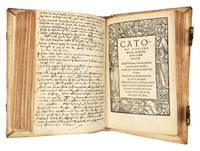
1522réf. 5333Mainz: Johann Schöffer February 1522. Hardcover. Fine. Bound with: Erasmus Desiderius 1466-1536; Cato Dionysius ca. 3rd c.; Colet John 1467-1519 et al. Catonis disticha moralia cum scholiis auctis Erasmi Roterodam. Isocratis paraenesis ad Demonicum. dennuo cum Graecis collata per Erasmum Strasbourg: Johann Knobloch 1523 Octavo: 15.5 x 10.1 cm. I. Adagia: 8 lvs 234 pp. 15 lvs. Collation: A-R8 S4 with final blank leaf present. II. Disticha: 56 lvs. Collation: A-G8 Bound with: Erasmus Desiderius 1466-1536; Cato Dionysius ca. 3rd c.; Colet John 1467-1519 et al. Catonis disticha moralia cum scholiis auctis Erasmi Roterodam. Isocratis paraenesis ad Demonicum. dennuo cum Graecis collata per Erasmum Strasbourg: Johann Knobloch 1523 Octavo: 15.5 x 10.1 cm. I. Adagia: 8 lvs 234 pp. 15 lvs. Collation: A-R8 S4 with final blank leaf present. II. Disticha: 56 lvs. Collation: A-G8 Bound in contemporary blind-stamped pigskin with a very early paper label to the spine. In fine condition. The text bound a bit tight. Minor soiling and a few marginal tears or worming. First t.p. working loose at foot. With fine woodcut borders to the title pages of both works woodcut initials. Knobloch's device on the final leaf of the second work. The leaf between the two volumes has handwritten German translations or German equivalents of certain adages. There are about 25 other translations in the course of the text. See below. This rare edition of the Erasmus' "Adagiorum Collectanea"Collection of Adages was printed by Johann Schöffer grandson of Gutenberg's backer Johann Fust and son of Fust's partner Peter Schöffer. The fine woodcut border on the title page incorporates Schöffer's arms. The book is bound with Erasmus' edition of the "Distichs of Cato" the "Apothegms of the Greek Sages" and other moralizing texts for use in schools. An unidentified 16th c. reader has provided German renderings for approximately 65 adages some within the text but the majority written -densely- on both sides of a blank leaf. These are not literal translations but idiomatic equivalents - German sayings and turns of phrase that the reader judged to carry the same sense as the Latin in the way a modern annotator might pair "actions speak louder than words" with "facta non verba" lit. deeds not words rather than translate it word for word. Here are five examples: 1. Ultra septa transilire is glossed in German as "das heist zu vil machen" "To leap over the fences" i.e. to overshoot the bounds. 2. Oculatus testis unus pluris est quam decem auriti is glossed in German as "von hörensagen leugt man gern" "One eyewitness is worth more than ten ear-witnesses". 3. Genu sura propius is glossed in German as "ich schau auff mein spill" "The knee is nearer than the shin" i.e. one's own concerns come first - "I mind my own game." 4. Arcus non semper feriet quod minabitur is glossed in German as "alle tag ist jagtag aber nit fangtag" Adapted from Horace Ars poetica "nec semper feriet quodcumque minabitur arcus". Not everything one undertakes comes off - "every day is hunting day but not catching day." 5. The Latin lemma In lapidicinas / ad corvos is glossed in German as "zum galgen mit dir" Both classical imprecations "to the quarries!" / "to the crows!" i.e. "go hang" rendered literally in the German as "to the gallows with you." 6. Haec Helena est - "das ist die praut darumb man dantzt" "this is the bride around whom the dance goes". 7. Homo effreni oris - "sein zung schneidt wie ein messer" "his tongue cuts like a knife". There is also a long marginal note explaining the adage "Cave Thoracem" "Beware of the Thorax" - Erasmus Adagia 2.4.52. It refers to Mount Thorax near Magnesia-on-the-Maeander where the grammarian Daphitas is said to have been crucified after mocking the Attalid kings in a scurrilous couplet this exact episode is told by Strabo Geography 14.1.39 and an oracle had reportedly warned Daphitas to "beware of the Thorax" - a pun since thorax also means "breastplate" in Greek. THE ADAGES: The "Adagia" one of Erasmus' greatest achievements is a collection of proverbs taken from both Latin and Greek authors. The work was already conceived during his first stay in England and was first printed at Paris in 1500. The present edition is a reprint of the 1506 edition which had been expanded by 18 adages. It retains however the dedication letter to William Blount Lord Mountjoy Allen 126 from the first edition. Although it was eclipsed by the massively expanded Aldine edition that was to follow in 1508 the "Adagiorum Chiliades" "Thousands of Adages" to which Erasmus would add up until his death in 1536 the much shorter "Collectanea Adagiorum" would continue to be printed as well. "Erasmus' 'Adagiorum Collectanea' is a collection of about eight hundred proverbial sayings drawn from the Latin authors of antiquity and elucidated for the use of those who aspired to write an elegant Latin style. In the dedication Erasmus pointed out the profit an author may derive both in ornamenting his style and in strengthening his argumentation from having at his disposal a good supply of sentences hallowed by their antiquity. He proposes to offer such a help to his readers. What he actually gave was much more. He familiarized a much wider circle than the earlier humanists had reached with the spirit of antiquity. "Until this time the humanists had to some extent monopolized the treasures of classic culture in order to parade their knowledge of which the multitude remained destitute and so to become strange prodigies of learning and elegance. With his irresistible need of teaching and his sincere love for humanity and its general culture Erasmus introduced the classic spirit in so far as it could be reflected in the soul of a sixteenth-century Christian among the people. Not he alone; but none more extensively and more effectively. Not among all the people it is true for by writing in Latin he limited his direct influence to the educated classes which in those days were the upper classes. "Erasmus made current the classic spirit. Humanism ceased to be the exclusive privilege of a few. According to Beatus Rhenanus he had been reproached by some humanists when about to publish the Adagia for divulging the mysteries of their craft. But he desired that the book of antiquity should be open to all." Huizinga p. 39-40 THE DISTICHS OF CATO: The literature of edifying proverbs and "sententiae" enjoyed enormous success during the early Middle Ages. The "Distichs of Cato" were a particularly successful example of this genre being read widely from the Carolingian period up to the 16th century. The book's misattributed to the great Roman statesman Cato the Elder the book is now believed to be a late antique work by a Dionysius Cato gave the book the weight of authority. From the 12th century onward the readership broadened and it began to be used outside of the "collective" settings of the schools and universities as edifying reading for private personal contemplation. "Erasmus would return to the subjects taught in his own education through his publications on childhood education. One of these topics would be the Distichs of Cato. Although he had been working with dicta over several years in the beginning of the 16th century Erasmus claimed that his actual writing of his version of the Distichs took significantly less time. Its first edition was published around 1514 in a book which also included the sayings of Mimus Publianus Publilius Syrus and the seven sages and Erasmus' translation of the poem Institutum christiani hominis by John Colet. Once published the edition quickly spread to schools in both England and the Low Countries. "Erasmus began his edition of the Distichs of Cato with an address to the educator Jean de Nève. In this letter he criticized two earlier commentaries on the Distichs one by Robert of Euremodio ca. 1375 and the other by Philip of Bergamo also late 14th c. He believed that Robert's version was excessively rhetorical in fact it reflects Robert's Cistercian intellectual milieu. Philip he chastised for pointless philosophizing. Erasmus wrote in a straightforward classicizing style without adducing parallels to scripture and patristic and medieval theologians so that students could easily comprehend the text. Erasmus focused on the ethical and linguistic education of the student. "Although his edition of the Distichs was a smaller work than his other publications Erasmus valued its widespread usefulness in early childhood education. In addition to his polemics against earlier editions and corrections to the text Erasmus also included aphorisms often taken from his magnum opus the Adagia. He also briefly clarified historical context but this often was used to criticize the present rather than provide an understanding of the past. His criticism of errant laity and churchmen and a general suspicion of his sympathy for the Reformation led to the censuring of his commentary which nonetheless prospered."Ortega DSB -Digital School Book- online. Johann Schöffer, February hardcover books
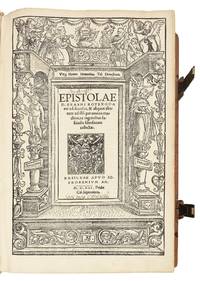
1522réf. 5299Basel: Johann Froben August 21 1521 - January 1522. FIRST EDITION. Hardcover. Fine. A superb copy bound in contemporary alum-tawed pigskin over beveled wooden boards ruled and tooled in blind with the original clasps catches and straps preserved. Binding mildly soiled a few scrapes mild surface wear. Internally crisp and bright with just a few lightly toned leaves and a few trivial stains. With 16th c. manuscript annotations scattered throughout and a 16th c. ownership inscription on the paste-down. The errata lvs. have been tipped in possibly indicating early issue. Excellent. Title page with the fine ‘Triumph of Humanitas’ historiated woodcut border by Urs Graf Lüthi 50a and Hieronymus Oberrheinische Buchillustration 172 enclosing Froben’s printer’s device; two preliminary pages with fine four- and five-piece woodcut borders by Ambrosius Holbein; white-on-black woodcut headpiece two 10-line woodcut initials and numerous smaller ones verso of final leaf with large printer’s device enclosed in five-piece woodcut border; some Greek printing. First edition of this collection of 671 letters of which 171 are newly printed. The majority of the new letters are from 1519-1521 but some are earlier the first dated 11 July 1513. The collection is far larger than its predecessors: the ‘Epistolae aliquot’ of January 1518 52 letters the ‘Auctarium’ of October 1518 63 letters and the ‘Farrago’ of Nov 1519 333 letters. Erasmus provides a preface to his correspondence for the first time in this edition. The letter to his editor Beatus Rhenanus Ep 1206 tells of his dislike of two earlier collections edited by him Beatus and published by Froben the ‘Auctarium’ of October 1518 and the ‘Farrago’ of Nov 1519 and implies that they were published surreptitiously without his consent. After the present edition no further collections were printed until the ‘Opus epistolarum’ of 1529. The introduction in the Collected Works to Erasmus’ prefatory letter to Beatus Rhenanus illustrates his personal involvement in the production of this collection: "Even as the Farrago was being printed Erasmus spoke of another edition with new letters added and others revised. The last thing he desired was a straight reprint either by Froben or another publisher. So in the summer of 1520 he was going through all his letters and in November the review of the ‘Farrago’ was apparently completed. Before the middle of January 1521 the revised copy together with a substantial number of new letters had reached Basel. When he sent the first part of the revised New Testament shortly afterwards he apparently asked to have all letters old and new back for another review but was sent none and told instead that a volume of 41 quires pages 1-490 was set in type lacking only a preface and an epilogue. So he wrote this preface as well as dispatching more letters to Basel. “Froben next prepared a preliminary quire containing the title-page dated 31 August Epp 1206 1225 and to fill some space left over on the last page Ep. 1239. All was printed and ready to be launched at the Frankfurt autumn fair but with the certain prospect of Erasmus’ return to Basel a delay was indicated. As Froben now preferred his volume not to reach the public and his rivals until the time of the spring fair of 1522 Erasmus could add more letters including the last in time dated from Basle 22 November 1521 which appears on page 639 but is followed by thirty more pages of letters. Presumably as a result of Erasmus’ review of the printed volume over three pages of corrigenda were added at the end" Collected Works vol. 8 pp. 215/7. The correspondents for the newly printed letters include Johann Reuchlin Justus Jonas Guillaume Bude Petrus Mosellanus Polydore Vergil Pope Leo X Cardinal Albert of Brandenburg Thomas More William Warham Thomas Wolsey and John Fisher. Many of the letters reflect Erasmus’ changing stance regarding Luther but at the same time continue his attacks on the friars and Louvain theologians. Bietenholz singles out a long letter of 10 May 1521 Ep 1202 to Justus Jonas as one of the finest of the period in which Erasmus expresses his alarm that Jonas as well as a whole group of German humanists especially Melanchthon are committing themselves irrevocably to the Lutheran cause Collected Works vol. 8 pp. 201. Another letter to Jonas of June 1521 Ep 1211 holds an important biography of his friend John Colet the humanist and educational pioneer who had died in September 1519 “Sixteenth-century Europe’s image of Colet owes everything to Erasmus. Much is still today known only from that source. Erasmus’ encomium is the fullest and most explicit portrait.” Contemporaries of Erasmus I p. 327. Also included in this collection and previously published in the Farrago is one of Erasmus’ most famous letters “which will always rank among his finest writing and the great accomplishments of Renaissance literature” Collected Works vol. 7 p. xii. Addressed to Ulrich von Hutten in July 1519 Ep 999 it contains Erasmus’ intimate pen portrait of his close friend Thomas More. It serves as earliest biographical account of More and is the most substantial of three letters the others Ep 1233 see below & Ep 2750 “which are indispensable for any historical assessment of More’s character” Contemporaries of Erasmus II p. 458. It is full of memorable phrases such as “in a word if you want a perfect model of friendship you will find it in no one better than in More” and “no one is less led by the opinions of the crowd yet no one departs less from common sense”. The friends met for the last time in Bruges in August 1521 and in his letter to Budé Ep 1233 first printed here Erasmus writes of the invigorating impact of their meeting and of the shining example set in More’s household for the education of women. Johann Froben, August 21 1521 - January hardcover books
1734réf. LV2704Amsterdam :: Aux Depens de la Compagnie 1734. 1734. Two volumes. 12mo. 20 396; 2 419 1 pp. Text in both Latin and French. Title printed in red & black. 21 engraved plates 1 folding being a genealogical tree St. Francis at the foot of the cross bearing the forty relations of Saint Francis with Christ. Original full gilt-stamped calf; joints worn corners showing. Very good. First Illustrated edition. A vicious attack on Catholicism. / "Not only did he fight for the Protestant cause as a preacher and theologian but he was almost the only member of Luther's party who was able to confront the Roman Catholics with the weapon of literary satire. In 1542 he published a prose satire to which Luther wrote the preface Der Barfusser Monche Eulenspiegel und Alkoran a parodic adaptation of the Liber conformitatum of the Franciscan Bartolommeo Rinonico of Pisa in which the Franciscan order is held up to ridicule. This drew reactions from Catholic scholars such as Henricus Sedulius who published the Apologeticus aduersus Alcoranum Franciscanorum pro Libro Conformitatum which criticized Alberus' arguments in this satire." Wikip. See: GTU BJRT 2016. Berkeley Journal of Religion and Theology Vol.2 No. 2. Berkeley CA: Berkeley Journal of Religion and Theology. p. 89. / Weller attributes this to being printed in Paris. The text was translated by Conrad Badius. Martin Luther contributed a preface. / Bernard Picart or Picard was a French draughtsman engraver and book illustrator in Amsterdam. Aux Depens de la Compagnie, 1734. unknown books