4 758 résultats
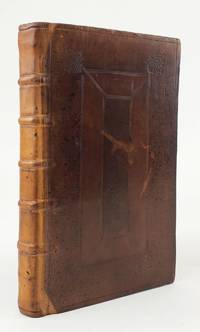
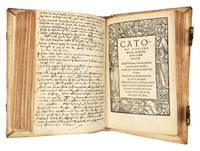
1522réf. 5333Mainz: Johann Schöffer February 1522. Hardcover. Fine. Bound with: Erasmus Desiderius 1466-1536; Cato Dionysius ca. 3rd c.; Colet John 1467-1519 et al. Catonis disticha moralia cum scholiis auctis Erasmi Roterodam. Isocratis paraenesis ad Demonicum. dennuo cum Graecis collata per Erasmum Strasbourg: Johann Knobloch 1523 Octavo: 15.5 x 10.1 cm. I. Adagia: 8 lvs 234 pp. 15 lvs. Collation: A-R8 S4 with final blank leaf present. II. Disticha: 56 lvs. Collation: A-G8 Bound with: Erasmus Desiderius 1466-1536; Cato Dionysius ca. 3rd c.; Colet John 1467-1519 et al. Catonis disticha moralia cum scholiis auctis Erasmi Roterodam. Isocratis paraenesis ad Demonicum. dennuo cum Graecis collata per Erasmum Strasbourg: Johann Knobloch 1523 Octavo: 15.5 x 10.1 cm. I. Adagia: 8 lvs 234 pp. 15 lvs. Collation: A-R8 S4 with final blank leaf present. II. Disticha: 56 lvs. Collation: A-G8 Bound in contemporary blind-stamped pigskin with a very early paper label to the spine. In fine condition. The text bound a bit tight. Minor soiling and a few marginal tears or worming. First t.p. working loose at foot. With fine woodcut borders to the title pages of both works woodcut initials. Knobloch's device on the final leaf of the second work. The leaf between the two volumes has handwritten German translations or German equivalents of certain adages. There are about 25 other translations in the course of the text. See below. This rare edition of the Erasmus' "Adagiorum Collectanea"Collection of Adages was printed by Johann Schöffer grandson of Gutenberg's backer Johann Fust and son of Fust's partner Peter Schöffer. The fine woodcut border on the title page incorporates Schöffer's arms. The book is bound with Erasmus' edition of the "Distichs of Cato" the "Apothegms of the Greek Sages" and other moralizing texts for use in schools. An unidentified 16th c. reader has provided German renderings for approximately 65 adages some within the text but the majority written -densely- on both sides of a blank leaf. These are not literal translations but idiomatic equivalents - German sayings and turns of phrase that the reader judged to carry the same sense as the Latin in the way a modern annotator might pair "actions speak louder than words" with "facta non verba" lit. deeds not words rather than translate it word for word. Here are five examples: 1. Ultra septa transilire is glossed in German as "das heist zu vil machen" "To leap over the fences" i.e. to overshoot the bounds. 2. Oculatus testis unus pluris est quam decem auriti is glossed in German as "von hörensagen leugt man gern" "One eyewitness is worth more than ten ear-witnesses". 3. Genu sura propius is glossed in German as "ich schau auff mein spill" "The knee is nearer than the shin" i.e. one's own concerns come first - "I mind my own game." 4. Arcus non semper feriet quod minabitur is glossed in German as "alle tag ist jagtag aber nit fangtag" Adapted from Horace Ars poetica "nec semper feriet quodcumque minabitur arcus". Not everything one undertakes comes off - "every day is hunting day but not catching day." 5. The Latin lemma In lapidicinas / ad corvos is glossed in German as "zum galgen mit dir" Both classical imprecations "to the quarries!" / "to the crows!" i.e. "go hang" rendered literally in the German as "to the gallows with you." 6. Haec Helena est - "das ist die praut darumb man dantzt" "this is the bride around whom the dance goes". 7. Homo effreni oris - "sein zung schneidt wie ein messer" "his tongue cuts like a knife". There is also a long marginal note explaining the adage "Cave Thoracem" "Beware of the Thorax" - Erasmus Adagia 2.4.52. It refers to Mount Thorax near Magnesia-on-the-Maeander where the grammarian Daphitas is said to have been crucified after mocking the Attalid kings in a scurrilous couplet this exact episode is told by Strabo Geography 14.1.39 and an oracle had reportedly warned Daphitas to "beware of the Thorax" - a pun since thorax also means "breastplate" in Greek. THE ADAGES: The "Adagia" one of Erasmus' greatest achievements is a collection of proverbs taken from both Latin and Greek authors. The work was already conceived during his first stay in England and was first printed at Paris in 1500. The present edition is a reprint of the 1506 edition which had been expanded by 18 adages. It retains however the dedication letter to William Blount Lord Mountjoy Allen 126 from the first edition. Although it was eclipsed by the massively expanded Aldine edition that was to follow in 1508 the "Adagiorum Chiliades" "Thousands of Adages" to which Erasmus would add up until his death in 1536 the much shorter "Collectanea Adagiorum" would continue to be printed as well. "Erasmus' 'Adagiorum Collectanea' is a collection of about eight hundred proverbial sayings drawn from the Latin authors of antiquity and elucidated for the use of those who aspired to write an elegant Latin style. In the dedication Erasmus pointed out the profit an author may derive both in ornamenting his style and in strengthening his argumentation from having at his disposal a good supply of sentences hallowed by their antiquity. He proposes to offer such a help to his readers. What he actually gave was much more. He familiarized a much wider circle than the earlier humanists had reached with the spirit of antiquity. "Until this time the humanists had to some extent monopolized the treasures of classic culture in order to parade their knowledge of which the multitude remained destitute and so to become strange prodigies of learning and elegance. With his irresistible need of teaching and his sincere love for humanity and its general culture Erasmus introduced the classic spirit in so far as it could be reflected in the soul of a sixteenth-century Christian among the people. Not he alone; but none more extensively and more effectively. Not among all the people it is true for by writing in Latin he limited his direct influence to the educated classes which in those days were the upper classes. "Erasmus made current the classic spirit. Humanism ceased to be the exclusive privilege of a few. According to Beatus Rhenanus he had been reproached by some humanists when about to publish the Adagia for divulging the mysteries of their craft. But he desired that the book of antiquity should be open to all." Huizinga p. 39-40 THE DISTICHS OF CATO: The literature of edifying proverbs and "sententiae" enjoyed enormous success during the early Middle Ages. The "Distichs of Cato" were a particularly successful example of this genre being read widely from the Carolingian period up to the 16th century. The book's misattributed to the great Roman statesman Cato the Elder the book is now believed to be a late antique work by a Dionysius Cato gave the book the weight of authority. From the 12th century onward the readership broadened and it began to be used outside of the "collective" settings of the schools and universities as edifying reading for private personal contemplation. "Erasmus would return to the subjects taught in his own education through his publications on childhood education. One of these topics would be the Distichs of Cato. Although he had been working with dicta over several years in the beginning of the 16th century Erasmus claimed that his actual writing of his version of the Distichs took significantly less time. Its first edition was published around 1514 in a book which also included the sayings of Mimus Publianus Publilius Syrus and the seven sages and Erasmus' translation of the poem Institutum christiani hominis by John Colet. Once published the edition quickly spread to schools in both England and the Low Countries. "Erasmus began his edition of the Distichs of Cato with an address to the educator Jean de Nève. In this letter he criticized two earlier commentaries on the Distichs one by Robert of Euremodio ca. 1375 and the other by Philip of Bergamo also late 14th c. He believed that Robert's version was excessively rhetorical in fact it reflects Robert's Cistercian intellectual milieu. Philip he chastised for pointless philosophizing. Erasmus wrote in a straightforward classicizing style without adducing parallels to scripture and patristic and medieval theologians so that students could easily comprehend the text. Erasmus focused on the ethical and linguistic education of the student. "Although his edition of the Distichs was a smaller work than his other publications Erasmus valued its widespread usefulness in early childhood education. In addition to his polemics against earlier editions and corrections to the text Erasmus also included aphorisms often taken from his magnum opus the Adagia. He also briefly clarified historical context but this often was used to criticize the present rather than provide an understanding of the past. His criticism of errant laity and churchmen and a general suspicion of his sympathy for the Reformation led to the censuring of his commentary which nonetheless prospered."Ortega DSB -Digital School Book- online. Johann Schöffer, February hardcover books
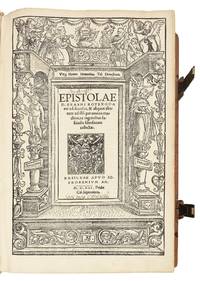
1522réf. 5299Basel: Johann Froben August 21 1521 - January 1522. FIRST EDITION. Hardcover. Fine. A superb copy bound in contemporary alum-tawed pigskin over beveled wooden boards ruled and tooled in blind with the original clasps catches and straps preserved. Binding mildly soiled a few scrapes mild surface wear. Internally crisp and bright with just a few lightly toned leaves and a few trivial stains. With 16th c. manuscript annotations scattered throughout and a 16th c. ownership inscription on the paste-down. The errata lvs. have been tipped in possibly indicating early issue. Excellent. Title page with the fine ‘Triumph of Humanitas’ historiated woodcut border by Urs Graf Lüthi 50a and Hieronymus Oberrheinische Buchillustration 172 enclosing Froben’s printer’s device; two preliminary pages with fine four- and five-piece woodcut borders by Ambrosius Holbein; white-on-black woodcut headpiece two 10-line woodcut initials and numerous smaller ones verso of final leaf with large printer’s device enclosed in five-piece woodcut border; some Greek printing. First edition of this collection of 671 letters of which 171 are newly printed. The majority of the new letters are from 1519-1521 but some are earlier the first dated 11 July 1513. The collection is far larger than its predecessors: the ‘Epistolae aliquot’ of January 1518 52 letters the ‘Auctarium’ of October 1518 63 letters and the ‘Farrago’ of Nov 1519 333 letters. Erasmus provides a preface to his correspondence for the first time in this edition. The letter to his editor Beatus Rhenanus Ep 1206 tells of his dislike of two earlier collections edited by him Beatus and published by Froben the ‘Auctarium’ of October 1518 and the ‘Farrago’ of Nov 1519 and implies that they were published surreptitiously without his consent. After the present edition no further collections were printed until the ‘Opus epistolarum’ of 1529. The introduction in the Collected Works to Erasmus’ prefatory letter to Beatus Rhenanus illustrates his personal involvement in the production of this collection: "Even as the Farrago was being printed Erasmus spoke of another edition with new letters added and others revised. The last thing he desired was a straight reprint either by Froben or another publisher. So in the summer of 1520 he was going through all his letters and in November the review of the ‘Farrago’ was apparently completed. Before the middle of January 1521 the revised copy together with a substantial number of new letters had reached Basel. When he sent the first part of the revised New Testament shortly afterwards he apparently asked to have all letters old and new back for another review but was sent none and told instead that a volume of 41 quires pages 1-490 was set in type lacking only a preface and an epilogue. So he wrote this preface as well as dispatching more letters to Basel. “Froben next prepared a preliminary quire containing the title-page dated 31 August Epp 1206 1225 and to fill some space left over on the last page Ep. 1239. All was printed and ready to be launched at the Frankfurt autumn fair but with the certain prospect of Erasmus’ return to Basel a delay was indicated. As Froben now preferred his volume not to reach the public and his rivals until the time of the spring fair of 1522 Erasmus could add more letters including the last in time dated from Basle 22 November 1521 which appears on page 639 but is followed by thirty more pages of letters. Presumably as a result of Erasmus’ review of the printed volume over three pages of corrigenda were added at the end" Collected Works vol. 8 pp. 215/7. The correspondents for the newly printed letters include Johann Reuchlin Justus Jonas Guillaume Bude Petrus Mosellanus Polydore Vergil Pope Leo X Cardinal Albert of Brandenburg Thomas More William Warham Thomas Wolsey and John Fisher. Many of the letters reflect Erasmus’ changing stance regarding Luther but at the same time continue his attacks on the friars and Louvain theologians. Bietenholz singles out a long letter of 10 May 1521 Ep 1202 to Justus Jonas as one of the finest of the period in which Erasmus expresses his alarm that Jonas as well as a whole group of German humanists especially Melanchthon are committing themselves irrevocably to the Lutheran cause Collected Works vol. 8 pp. 201. Another letter to Jonas of June 1521 Ep 1211 holds an important biography of his friend John Colet the humanist and educational pioneer who had died in September 1519 “Sixteenth-century Europe’s image of Colet owes everything to Erasmus. Much is still today known only from that source. Erasmus’ encomium is the fullest and most explicit portrait.” Contemporaries of Erasmus I p. 327. Also included in this collection and previously published in the Farrago is one of Erasmus’ most famous letters “which will always rank among his finest writing and the great accomplishments of Renaissance literature” Collected Works vol. 7 p. xii. Addressed to Ulrich von Hutten in July 1519 Ep 999 it contains Erasmus’ intimate pen portrait of his close friend Thomas More. It serves as earliest biographical account of More and is the most substantial of three letters the others Ep 1233 see below & Ep 2750 “which are indispensable for any historical assessment of More’s character” Contemporaries of Erasmus II p. 458. It is full of memorable phrases such as “in a word if you want a perfect model of friendship you will find it in no one better than in More” and “no one is less led by the opinions of the crowd yet no one departs less from common sense”. The friends met for the last time in Bruges in August 1521 and in his letter to Budé Ep 1233 first printed here Erasmus writes of the invigorating impact of their meeting and of the shining example set in More’s household for the education of women. Johann Froben, August 21 1521 - January hardcover books
1838réf. 12802Hanover Ind. 1838. 36pp Disbound old institutional and withdrawal stamp light dustsoil. Some pencil corrections in a contemporary hand. Good or so. Mac Master hopes that "our institution will grow up and strengthen and enlarge.in pouring the life-giving light of science and Christianity over this great land." FIRST EDITION. AI 51430 5. Byrd & Peckham 753. unknown books
1791réf. 843Germantown: Michael Billmeyer 1791. First American Edition. Contemporary blind stamped calf; clasps missing. Good; spotting throughout; last 10 leaves with a tide mark along the top edge; binding rubbed. 4to 8 1 - 785 1 - errata 2 - index pp. Weichenhan's 16th century work elucidating the tenets of the Schwenkfelders with a new six page preface identified as originating in Montgomery County Pennsylvania. The new preface describes the reasons for printing this text. It was printed at the expense of the United Friends. Evans notes that as a piece of typography paper and binding it is a very creditable piece of bookmaking. The copy offered here is in its original Billmeyer binding. The Schwenkfelders comprised a small Anabaptist sect founded in Silesia in the 16th century. Like the Quakers they disavowed communion and baptism. In 1734 the entire sect emigrated to Montgomery County in Pennsylvania. Though small in number the sect had a reputation for a devotion to reading and education and had amassed an outstanding library by the latter part of the 18th century. Arndt #803; Evans #23975. Michael Billmeyer unknown books
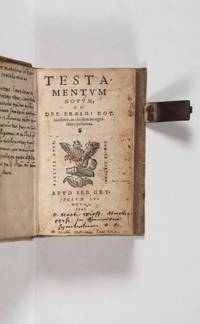
1547réf. 49141Lyon: Sebastian Gryphius 1547. Hardcover. Very Good-. 16mo in 8s: a-z8 A-Z8 aa8 bb8 =384 leaves; blank bb7-8. 763 5 blankpp. Printer's device at title woodcut lettrines. Text in italic headlines and chapter headings in roman; printed marginalia. Later pigskin over bevelled boards tooled in blind brass clasps one of two and catches manuscript title at spine. Extensive old manuscript notes at front endleaf and four blank leaves at the end including the two integral blanks; occasional marginalia and underlining. Title soiled with some slight erosion at margin from oxidation of the clasps else a very good copy with clean fresh text throughout. Complete with the two final blank leaves. Second Gryphius edition and a rather uncommon early sixteenth-century printing of Erasmus' Latin translation of the New Testament first published at Basel in 1516. According to Baudrier Ly. V. 804101/Cat. de Lignerolles Paris Porquet 1894 no. 48 Gryphius first published this translation in 1542 and 1543 as a 16mo of 847 pages; neither of these issues appear in Deleveau & Hillard. Like the present edition these early Gryphius printings of the Erasmus New Testament survive in only a handful of copies. The text opens with Erasmus' dedication to pope Leo X followed by his preface to the reader a general index of the New Testament corpus a listing of the chapters of the four Gospels and a brief passage from Jerome's catalogue of ecclesiastical writings. The editor's introductions precede each book. The text concludes with Erasmus' translation of a brief discussion of apocryphal literature partly from Athanasius though Erasmus questions the attribution: "De libris utriusque testamenti partim reiectus aut non sine contradictione admissis partim apocryphis ex Athanasio tametsi mihi suspectus est titulus." Provenance and annotations: Extensive early annotations in more than one hand appear throughout the book; many marginal notes have been added throughout the Gospel of Matthew. At the front of the book beginning with the free endleaf: "Poeta de Pythogora" several stanzas in Latin and Greek; facing the title: A morning prayer "Oro matutina lecturis oracula divina" 11 lines; an accounting of biblical eras 10 lines since Abraham David and the Babylonian Exile appears at the verso of the title leaf. The final blank page the two intergral blank leaves and two additional blanks added by the binder are filled with notes in several different hands including: a passage from Augustine's De doctrina christianae 14 lines; noted as book 2 chapters 11 and 12 along with four lines about Tertullian; four pages of notes on the twelve disciples numbered; a Greek text discussing the divine names in which the tetragrammaton is written in Hebrew letters; a passage from a letter of Basilius Magnus in Greek with Latin translation. Printed label of Edward Davis Hoblyn 1809-1881 and his manuscript entry dated 1831 at the free endleaf. Edward was likely related to the renowned book collector Robert Hoblyn 1710-1756 of Cornwall. A catalogue of Robert's collection was printed in 1768 as Bibliotheca Hobliniana and reissued by Murray in 1769 with a new titlepage. The library remained with Robert's widow and was sold in 1778. The present work is not listed in the Bibliotheca though no fewer than nineteen 16th-century Latin Bibles and Testaments appear in the catalogue. Gift inscription of D. N. Goodman of San Francisco California to Father J. L. Damas at front pastedown dated 1935. References: Baudrier 8 217. Baumgarten Nach. v. merkw. Büchern 8 1755 206 noting that this and the later Gryphius edition which Le Long assigns to the master printer's workshop are in fact identical and notable examples of elegant typography. Deleveau & Hillard 4407 BNF. Le Long Leipzig 1709 1:751 & 2:478 Bibl. Colbertina - the earlier Gryphius edition of 1542/43 is not cited in either part. Le Long-Masch 2.3 p. 599 noted as the first New Testament ex. Erasmi to appear at Lyon. Sebastian Gryphius hardcover books
1650réf. 2327061Amstelodami Amsterdam: Typis Ludovici Elsevirii Lodowijk Elzevir 1650. Full-Leather. Good/No Jacket. Spine toned with drying leather and some loss from head joints beginning to split with 2 inch chip from spine base but all sewings holding firmly ink name and date B. Bridges 1689 on front free endpaper which is loose but included ink name on title page minimal ink marginalia pencil notes on rear free endpaper. 1650 Full-Leather. 589 3 pp. A-Mm8 Nn4 Oo8 Pp4. 4 7/8 x 2 5/8. Full leather blind-stamped borders and decorations gilt rules on spine. Engraved title page showing a scribe seated with two other men with an archway in the background. 63 colloquies in the original Latin with a brief biographical sketch of the life of Erasmus preceding text footnotes throughout text. House of Elzevir edition printed by Lodowijk Elzevir who met Galileo in 1636. His grandfather founded the publishing company in the 1580s. One of the many works of the philosopher and Catholic theologian known as the 'Prince of Christian Humanists.' Published in 1518 the pages 'held up contemporary religious practices for examination in a more serious but still pervasively ironic tone' Coffin/Stacey Western Civilizations. Christian Humanists viewed Erasmus as their leader in the early 16th century. Erasmus' works had greater meaning to those learned few who had a larger knowledge of Latin and Greek. Colloquies in Latin means a formal written dialogue thus in his book Erasmus explores man's reaction to others in conversations. The Colloquies is a collection of dialogues on a wide variety of subjects. They began in the late 1490s as informal Latin exercises for Erasmus' own pupils. In about 1522 he began to perceive the possibilities this form might hold for continuing his campaign for the gradual enlightenment and reform of all Christendom. Between that date and 1533 twelve new editions appeared each larger and more serious than the last until eventually some fifty individual colloquies were included ranging over such varied subjects as war travel religion sleep beggars funerals and literature. All of these works were in the same graceful easy style and gentle humor that made them continually sought as schoolboy exercises and light reading for generations. "Originally written in his early days at Paris as dialogues illustrating the art of polite conversation they were afterwards expanded into conversation pieces in which all the topics of the day were discussed with a freedom which ensured their popularity. Later in the century and up to the eighteenth century they were a set book in schools and there are lines in Shakespeare which directly recall Erasmus's words." - Printing and the Mind of Man 53 referencing the 1524 original Typis Ludovici Elsevirii [Lodowijk Elzevir] hardcover books
1995réf. 2322305Missouri: Sixteenth Century Journal Publishers Inc 1995. First Edition. Trade Paperback. Very Good. 0x0x0. First edition - a paperback original. Faint crease on front cover along spine spine a bit faded. 1995 Trade Paperback. xxii 170 pp. Edited by Hilmar M. Pabel. Foreword by Erika Rummel. This collection provides a composite picture of Erasmus' ecclesiology: his concept of piety; his emphasis on concord and consensus; his views on modern doctrinalism; and the significance of "evangelical prudence". Sixteenth Century Journal Publishers, Inc paperback books
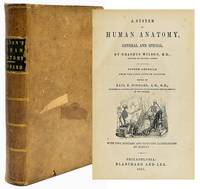
1854réf. 1415464Philadelphia: Blanchard and Lea 1854. Second American Edition from the fourth and revised London edition. Hardcover. 6mo xvi 25-291 pages. In Very Good Condition. Bound in full black cloth with blind tooling to boards and spine and gilt titling to spine. Spine has light rubbing wear and chipping to head/tail. Boards have light rubbing and scuffing throughout with bumping to fore corners exposing boards. Text block has light scuffing to edges; label to corner of front pastedown with offsetting to free endpaper opposite names and addresses of two previous owners in pen to front free endpaper light penciling to front endpaper light tear to corner of front free endpaper light splitting to gutter of pages 190-191 and foxing to rear endpaper and the two leaves preceding it. Shelved in Room A octavo overflow. 1415464. Special Collections - Upstairs. Blanchard and Lea hardcover books
1846réf. 1415889New York; Philadelphia: D. Appleton & Co.; Geo. S. Appleton 1846. First American Edition. Hardcover. 12mo xxiii 2 26-263 1 24 pages plus six plates. In Good plus condition. Bound in full black cloth with gilt titling to spine and blind-tooled ruling and fillets. Spine has rubbing and chipping with some peeling to cloth under title. Boards have surface splitting to joints bumping to fore corners shelfwear to edges and rubbing and scuffing throughout. Text block is separating at head; has dust soiling to edges rippling to leaves from moisture splitting to hinges and gutters and tide marks and foxing throughout. Shelved in Room A octavo overflow. 1415889. Special Collections - Upstairs. D. Appleton & Co.; Geo. S. Appleton hardcover books
réf. 11288N/A n/d. N/A. Hardcover. g. 8vo. 488 pp. total. Three-quarter leather over marbled boards. Raised bands. Gilt lettering to spine. Some age wearing to edges. Gilt top edge. Marbled endpapers. Reinforced back hinge with binders tape."With the bookplate and signature of Bruce Bryan the noted author and long time curator of the Southwest Museum of The American Indians in Pasadena California". 14 booklets on different subjects regarding Great Britain including Archaeology Natural History Architecture Surveys Anglo-Saxon Jewelry Abbeys and Castles in South Wales Ancient Cemetry at Saffron Walden Roman-Britain and many more all bound in one volume. Illustrated throughout with b/w lithographic plates fold out maps plans and drawings. A tight copy in good condition. N/A hardcover books
1806réf. M15073Lisbon:: Joao Rodrigues Neves. 1806. 1806. 8vo. 4 vii 1 408 2 pp. 1 engraved plate facing p. 220; lacks front free endleaf. Original speckled calf; scuffed. Very good. First Portuguese edition translated by Henrique Xavier Baeta with his added notes. This is a translation of Darwin's Zoonomia and part of his Materia medica. Baeta a naval physician took his bachelor's degree in the Faculty of Philosophy at the University of Coimbra then his PhD in Medicine from the University of Edinburgh. His doctoral paper Dissertatio de Febribus Intermittentibus poecipus medendis 1800 and his work on fevers Comparative view of the Theories & Practice of Drs. Cullen Brown and Darwin in the treatment of fever and of acute Rheumatism London 1800 also touched on his interest of Erasmus Darwin. In 1800 he left Coimbra and moved to Lisbon opened his practice whereas in Coimbra he was being persecuted. In 1831 he was searched arrested and placed in jail where he remained until July 24 1833. REFERENCES: See: Ricardo Cabral de Freitas More destructive than guns: contagious epidemic fever and public health in Lisbon 1810-1812. SHS Web of Conferences 136 0 0 2022. Joao Rodrigues Neves. 1806. unknown books
1843réf. 280401London: Williams & Northgate 1843. Hard Cover. Very Good binding. Issued the same year as the Pickering edition this translation of Erasmus Rask's Grammar is from the Swedish. It was published in Stockholm in 1818 and is an important work in Icelandic studies. "Rask's 'Guide to the Icelandic' or old Nordic Language' was the first of an important series of publications which qualify Rask as one of the founders of the modern science of language" Printing and the Mind of Man 266. Half-calf over marbled boards; foxing throughout; previous owner name on the first blank. Very Good binding. Williams & Northgate unknown books
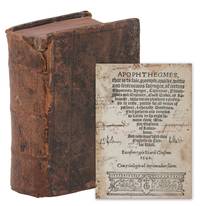
1542réf. 140949529London: Richard Grafton 1542. First Edition. Good. First English translation of Erasmus' collection of Classical wisdom. Small octavo -8 4 a-z8 A-X8 Y6 lacking leaf z1 p. 177 and blank leaf Y6. 376 leaves foliated. xx 176 178-345 12 pp. 62 '53' 64 '55' 83 '81' 100 '84' 119 '118' 122 '101' 144 '143' 222 '224' 224 '222' 225 '522' 273 '275' 275 '273' 277 '279' 279 '277' 311 '310'. Blackletter type on laid paper decorative capitals colophon with printer's device at rear. Bound in near-contemporary calf ruled in blind all edges stained red. Good with heavy wear to covers chipping at head of spine; lacking two leaves as noted. Margins tightly trimmed with frequent shaving to sidenotes slight worming to lower left margin corner through p. 112 light toning and dampstaining to contents. Evidence of bookplate removal to front pastedown round wax stain to p. 104 and facing page several inkstains. Generations of ownership signatures to title and colophon pages occasional ink marginalia. Devereux 3.3.1. The Dutch humanist Erasmus of Rotterdam was the greatest Renaissance scholar in Northern Europe. His Apophthegmata a collection of Greek and Latin adages and anecdotes was first published in Latin in 1531. The English playwright Nicolas Udall translated Books III and IV of the lengthy work into English intending his portion to be the first in a series of pocket-sized scholarly works. It was however a dangerous time to publish Erasmus. The humanist's criticism of clerical corruption had paved the way for Martin Luther's denunciation of the Catholic Church. There was a conservative backlash against reform after the 1540 execution of Henry VIII's fixer Thomas Cromwell who had patronized both Udall and his publisher Richard Grafton. In 1541 Grafton was imprisoned for publishing an epistle by a Lutheran reformer. He was sentenced again in 1543 'for printing off such bokes as wer thought to be unlawfull.' Grafton and Udall did better under Henry's successor Edward VI who after his ascension ordered that a copy of Erasmus's commentary on the New Testament edited by Udall be kept in every church in England. Among the faded names beautifully inscribed in this copy is that of Philemon Holland 1552-1637 whose fame as a translator surpassed that of Udall. He gave the world the first complete translation of Livy into English and followed it with Pliny the Elder's Natural History. Udall's rendering of Latin into English would have interested Holland professionally though he doubtless owned a copy of the original as well. Richard Grafton unknown books
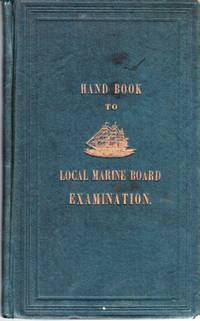
1868réf. 44000Boston: Boston Nautical College 1868. Â"Including regulations for masters and mates in foreign and coasting trade; rules of the road lights laws of storms question . Boston: Boston Nautical College 1868. Including regulations for masters and mates in foreign and coasting trade; rules of the road lights laws of storms questions in seamanship navigation steam etc. and a series of explanatory lectures on navigation and astronomical terms. First edition. Very good condition in illustrated boards. 91 10 pp. b/w line ills. in text; illustrated ads. Boston Nautical College hardcover books
1872réf. 1414732Philadelphia: Lea and Blanchard 1872. Fourth American Edition. Hardcover. Octavo 4 xxiii 1 33-576 32 4 pages. In Good Minus condition. Bound in full brown leather with gilt lettering to black label. Moderate fading with moderate edge-wear to spine. Moderate shelf wear with leather stripping to boards. Bumping to corners with exposure to boards. Binding is sturdy. Discoloration and foxing to page block. Toning and foxing to page faces. "From the Moores with thanks" written in blue ink on first front endpaper. First and third front endpapers signed "G. Wonsetler" in graphite. Third front endpaper is marked "G. Wonsetler Youngstown Ohio" in black ink with ink-bleeding to page. Shelved Rockville. 1414732. FP New Rockville Stock. Lea and Blanchard hardcover books
1955réf. 80559Chillicothe Ohio. Very Good. 1955. Softcover. PATIENCE AN OHIO FOLK TALE By Erasmus Foster Darby. Illustrated By Sylvia Brown. Originally Published in The Columbus Dispatch Magazine March 6 1955. This item is soft-bound in tan wrappers with black printing on the upper cover. The covers show light toning and light wear to the edges and spine. The staple binding is solid. The contents are bright and clean. . paperback books
1855réf. 300595Philadelphia: Blanchard and Lea 1855. Fourth American Edition. Full Leather. Very Good binding. Octavo; in full sheep; with a black morocco label and titling in gilt on the spine; xxiii 33-576 with 32 pages of advertisements in the rear; with black and white illustrations throughout; some surface loss to the upper board; some scattered foxing; end papers toned; a contemporary owners signature on the front end paper. Very Good binding. Blanchard and Lea unknown books
1689réf. 1345326London: printed for R. Bentley in Russel Street in Covent-Garden and R. Sare at Grays-Inn-Gate in Holborn 1689. Hardcover. Octavo 8 293 1 pages; VG-; Bound by Jon Robbins in modern period-style calf; spine tanned; small patch of damp staining to front board and scattered scratches to both boards; light rubbing at corners. Leaf A1 is blank. The original frontispiece portrait plate of Desiderius Erasmus is absent but has been replaced with a modern reprint. With a table of contents at beginning of text. Two ownership inscriptions reading "Rich. Norton His Book" and "James Martin His Book" on the title page. Arithmetic in ink on the verso of the final page of text. Original frontispiece absent; replaced with modern reprint. Large open cuts to the fore edge margins of pp. 253 and 255 text not impacted. Minor shelfwear and denting to edges of text block. Scattered pencil annotations. Text block age-toned and foxed. JR Consignment. ESTC R218873; Wing E3208D. 1345326. Special Collections - Downstairs. printed for R. Bentley in Russel Street in Covent-Garden, and R. Sare at Grays-Inn-Gate in Holborn hardcover books
1902réf. PW1202Wien Vienna & Leipzig:: Wilhelm Braumuller 1902. 1902. Series: Wiener Beitrage zur Englischen Philologie XVI Band. 8vo. xii 203 1 pp. Later blue buckram gilt stamped spine title. Columbia University Library embossed stamp on title. Very good. Scarce. Wilhelm Braumuller, 1902. hardcover books
1963réf. PW1193London:: Macmillan 1963. 1963. 8vo. vii 1 183 pp. Frontis. map index. Cloth dust-jacket; jacket rubbed. Very good copy. Macmillan, 1963. hardcover books
1967réf. PW1199Birmingham:: University of Birmingham Historical Journal 1967-68. 1967. 2 volumes bound as 1. 8vo. viii 201 3 pp. Brownish-tan gilt-stamped library buckram. Bookplate of DG Denis Gibbs Oxford. Near fine. Contents include: "Erasmus Darwin" by the Rt. Hon. Lord Cohen of Birkenhead "William Withering in Perspective" by Sir John Michael "The Lunar Society and the Industrial Revolution" by Robert E. Schofield "Population and Agriculture on a Warwickshire Manor in the Later Middle Ages" by Christopher Dyer "The Birmingham Post and Anglo-German Relations 1933-1935" by A.J. Anthony Morris. University of Birmingham Historical Journal, 1967-68. hardcover books
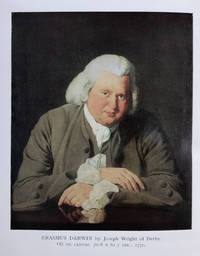
1930réf. PW1198London:: J. M. Dent & Sons 1930. 1930. First edition. 8vo. xi 1 242 2 pp. 12 plates index; some foxing. Pale green cloth black-printed green dust-jacket; jacket rear torn. Ownership inscription of J. Edmonds Oxford. Scarce in jacket. Very good. "The first American publication of a thirty-odd year old portrait of Erasmus Darwin grandfather of the famous Charles and great three times grandfather of author Pearson the last probably accounting not only for the intimacies involved but also the reverence indulged in. Darwin was 18th century England's physician par excellence George III wanted him but didn't get him; Darwin was too democratic; he was also a philosopher a poet and head mandarin of the Lunar Society whose celebrated enclave held Watt of the steam engine Wedgwood of pots and Priestley of oxygen. Darwin was a stutterer who looked twice his age; nevertheless his sallies never missed nor was his sexual appetite ever starved. Twice married and many more times a father his home was a happy one; a failing though- grumpy disapproval of all things spiritual- cost him a son a wistful lad who ended it all at the bottom of the River Derwent. Pearson's style here- it has changed since then- is pretty much drawing-room English comfortably ensconced with wit and stage-bearded with wisdom. The hyperbole of course gets heavy-handed: was Darwin really the progenitor of eugenics aeroplanes submarines psychoanalysis That he was the "parent of Creative Evolution" one can doubt a doctrine made unfashionable ironically enough by his grandson. Put it all down as a bunched-together biography- incidents anecdotes character studies-which in its fustily fastidious way is fascinating. And if Darwin as a personality doesn't emerge as engaging as he was intellectually extraordinary well one can't have everything especially all in one family." Kirkus Reviews. J. M. Dent & Sons, 1930. hardcover books
1963réf. PW1194New York:: Charles Scribner's Sons 1963. 1963. 8vo. vii 1 183 pp. Frontis. map index; small stain p. viii. Green cloth dust-jacket; jacket lightly worn. Very good. Charles Scribner's Sons, 1963. hardcover books
1556réf. LLV2641Lugduni Lyon:: Seb. Gryphium 1556. 1556. Small 8vo. Pagination: 473 23 pp. Signatures: a-z8 A-H8. Printer's device on the title page woodcut initials printed marginalia; editor's name on title and p. 2 are lined out in ink three small worm holes from title-page. Nineteenth century quarter gilt-ruled calf red paper board boards. Early ink name on title of "Carolus . . ." and occasional marginalia pp. 58 61 62 80-83 heavy notes - in the same hand. Very good. Beautifully printed early pocket edition printed by Sebastianus Gryphius 1493-1556 of Suetonius' most famous work and one of the few of his texts that survive with excellent annotations by Desiderius Erasmus of Rotterdam. Commonly known as The Twelve Caesars the work contains a set of twelve biographies of Julius Caesar and the first eleven emperors of the Roman Empire Augustus Tiberius Caligula Claudius Nero Galba Otho Vitellius Vespasian Titus Domitian. It is a primary source for the study of Roman history. The first edition of Suetonius with Erasmus' annotation was issued in 1533. Baudrier Henri L. Bibliographie lyonnaise VIII p. 284; Gultlingen V p. 215: I369; French Books III & IV: Books published in France before 1601 . . . edited by Andrew Pettegree Malcolm Walsby Leiden: Brill 2012 87100. Locations: BYU lacks everything after p. 340 and title is damaged; NYPL. Seb. Gryphium, 1556. hardcover books
1878réf. 334537London: Brain & Co 1878. hardcover. very good. Illustrated. 214 pages. 8vo original terra cotta cloth stamped in gilt edges of covers darkened. London: Brain & Co. n.d. 1878. Very good. Early ownership name on half-title. The London "Needle" was given to Britain as a gift in 1819 but not shipped until 1877 when Erasmus Wilson agreed to cover the transportation costs. Brain & Co unknown books