4.836 resultados
1791ref. 2091202133203778J. Johnson 1791. Soft Cover. Fine. Volume: 1 J. Johnson paperback
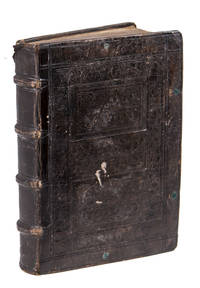
1522ref. ABC_49903Cologne: Eucharius Cervicornus 1522. Contemporary blind-tooled calf with armorial panel-stamps. Sewn on 4 supports with corresponding raised bands on the spine with remnants of 4 pairs of green closing ties re-backed. 4to. With an elaborate woodcut frame on the title page and 2 smaller woodcut frames on the first pages of the texts and 5 woodcut decorated initials. 2 parts in 1 volume. Including: ERASMUS Desiderius. Commentarius in psalmum quare fremuerunt gentes. Second edition printed in the same year as the first of Erasmus version of the Commentaries on the psalms attributed to Arnobius the Younger a Christian priest active in 5th-century Gaul. Arnobius interprets the psalms allegorically relating their content to Christ and the Church. First printed in folio by Froben in Basel in September 1522 the present 4to edition was published shortly after that same year in Cologne by Eucharius Cervicornus. It contains Erasmus preface addressed to Pope Adrian VI the commentary of Arnobius on the psalms and Erasmus own extensive commentary on psalm 2 Quare fremuerunt gentes. The present copy is bound in a contemporary Cologne binding attributed to an anonymous binder active circa 1510. Both boards feature a panel-stamped frame including three armorial shields of the city arms of Cologne ermine field with three open crowns the arms of the Archbishopric of Cologne a black cross on a silver field and a diagonally banded shield likely the binders own mark. Inside there are two identical rectangular panels made up of a stamp with bird motifs and the motto Clamo ad te Domine "I call to you Lord".With two book plates mounted on the front pastedown Thomas Brooke F.S.A. Armitage Bridge and one with the motto Pro viribus summis contendo a small manuscript cypher CP on the title page and Erasmus commentary contains manuscript annotations in the margins and on the final blank page by a near-contemporary hand. The binding has been re-backed the head of the spine is slightly damaged the corners of the boards are slightly damaged the original blind-tooled leather on the boards is somewhat dry and cracked affecting the clarity of the stamps and with some small scratched in the leather on the front board. Some occasional browning and water- staining in the margins. Otherwise in good condition.l Bezzel 554; Goldschmidt 57; Jenkins 2.1; USTC 613135; Vander Haeghen II 10; VD 16 B 3132 and VD 16 E 2460; not in: BM STC German De Reuck. Eucharius Cervicornus, hardcover
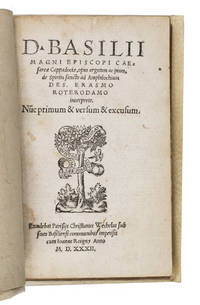
1532ref. ABC_49897Paris 1532. Small 8vo 9.5 x 14.9 cm. Chréstien Wechel and Jean Roigny Modern limp overlapping vellum sewn on 3 supports laced through the joints red edges and with 2 sets of green cloth ties. With Wechels woodcut printers device on the title page and the verso of the otherwise blank last leaf and 2 woodcut decorated initials. 124 3 blank1 pp. Very rare second edition of Erasmus translation of a theological treatise attributed to Basil of Caesarea 330-379 CE.It was published shortly after the first edition published in May of the same year by Froben and Episcopius in Basel May 1532. The work is very rare we have traced only one other copy in sales records of the past 100 years. Erasmus' translation is accompanied by a dedicatory epistle to Joannes Dantiscus 1485-1548 Bishop of Culm and a prominent diplomat of the Polish court. The letter dated April 30 1532 reflects Erasmus conviction that direct engagement with the texts of the Church Fathers rather than with flawed Latin intermediaries was vital for the renewal of Christian piety. As Erasmus himself declared: "It would be of great benefit to sacred letters and Christian devotion if Basil himself in Greek and not the shadow of Basil a Latin translation were made available to all."His source text was a Greek edition he had published just two months prior. According to Julián 2022 Erasmus wanted to publish everything they could find from Basil lamenting that in the existing Latin versions "the greater part of him is missing." Interestingly the legacy of this work can be traced further back to the 15th century when George of Trebizond 1395-1486 a Greek scholar from Crete was commissioned by Cardinal Bessarion 1403-1472 in 1440 to translate both De spiritu sancto and Contra eunomium into Latin. George struggled with the theological complexity of the material confessing in his preface 1442 that he lacked the necessary theological training and fluency in Latin. Erasmus' later effort can be seen as a corrective and a fulfilment of that earlier humanist ambition to make the Greek Church Fathers accessible to a Western audience in an accurate and readable form.Small tear in title page not affecting the text lightly water-stained margin and slightly browned throughout. Overall in very good.l Colón 11; no. 158; Vander Haeghen II 13; Moreau IV 338; V.P. Julián Erasmo traductor y editor de los Padres de la Iglesia: Crisóstomo Basilio y Orígenes. Salmanticensis 691-22022 039-075; USTC 185205 lost book; WorldCat 150413518 913004144 3 copies; not in Adams BM STC German De Reuck; Index Aureliensis; cf. for the Basel 1532 edition: USTC 640558 1 copy; WorldCat 257292311 1374477181 150413518 3 copies. EARLY PRINTING & MANUSCRIPTS RELIGION & DEVOTION Church History & Missions Early Printing - 16th century Erasmus Humanism & Reformation Philosophy & Humanism Religion 16th Century ZZ 001 De Graaf Inkopen hardcover
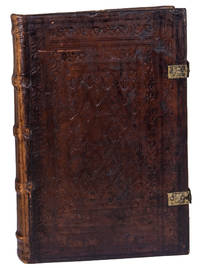
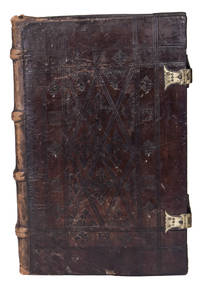
1521ref. ABC_49920Basel 1521. Folio. Johann Froben Contemporary blind-tooled pigskin over wooden boards with brass catch- and anchor plates along the fore-edge of the boards lacking the clasps. With a detailed woodcut border on the title page and the first page of the dedication. Further with a small woodcut illustration incorporating Frobens device on the verso of the last leaf and with woodcut decorated initials throughout. 24 515 1 blank 32 pp. Second edition of Saint Cyprians works as edited by Erasmus published by Froben one year after their first edition. Between 1516 and 1521 Erasmus worked closely with Johann Froben the humanist printer in Basel on a series of editions of the Latin Church Fathers: Jerome Augustine Ambrose Hilary and Cyprian. Erasmus aim was to purify the texts of the Fathers from medieval corruptions to restore their authentic doctrine by returning to the original sources and to present the Early Church as a model for a purer form of Christianity a theme that directly reflected his theological-humanist ideal.Erasmus states that he has cleansed the text of errors added a few minor treatises from ancient manuscripts and removed the works that seemed to have been falsely attributed to Cyprian. Thascius Caecilius Cyprianus ca. 210-258 CE later known as Saint Cyprian was an influential Church Father of the early Latin Christian tradition. Shortly after his baptism he became bishop of Carthage one of the most important Christian centres in the Roman Empire. Most of his works are pastoral letters and treatises here arranged in the index by type. The manuscript appears to have been used for study as the annotations highlight portions of the text and draw comparisons between Augustine and Cyprian.With small strips of manuscript waste visible in the gutters of the pastedowns a small owners inscription H. Reimers Erlang. 1899 in the upper outer corner of the first blank flyleaf along with elaborate manuscript annotations on the recto of that same leaf numerous contemporary and later annotations in three different hands throughout and some of the text underlined. The leather around the top and fore-edge of the front board has been restored the leather on the back board is somewhat damaged some small worm holes in the leather reveal the wooden boards below. The binding is rubbed the clasps are lacking and the head and foot of the spine are somewhat damaged the structural integrity of the binding nevertheless remains intact. The first blank flyleaf has been restored in the gutter margin the last leaf has been restored in the fore-edge margin the edges of the leaves are somewhat browned. Otherwise in good condition.l Adams C3150; BM STC German p. 234; De Reuck 417; USTC 679668; Vander Haeghen II 23; Huizinga VI p. 148; VD 16 C 6509; not in Bezzel. EARLY PRINTING & MANUSCRIPTS HISTORY RELIGION & DEVOTION Church History & Missions Early Printing - 16th century Erasmus Humanism & Reformation Philosophy & Humanism Religion 16th Century ZZ 001 De Graaf Inkopen hardcover
1536ref. 72393Parissiis: Simonem Colinaeum 1536. Simonem Colinaeum unknown
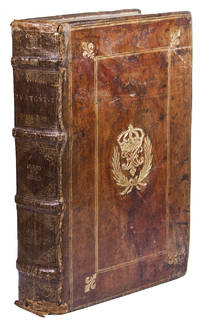
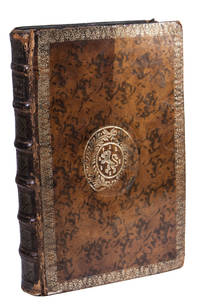
1533ref. ABC_49917Basel 1533. Small folio 21.5 x 31.8cm. colophon Hieronymus Froben & Nicolaus Episcopius 17th-century gold-tooled mottled calf sewn on 4 supports with corresponding raised bands on the spine. Both boards show two triple fillet frames the smaller frame with four fleurs-de-lis cornerpieces on each outer corner and within the smaller frame a centrepiece containing the monogram of the Collège Royal de Navarre in Paris a crown a fleur-de-lis and a laurel wreath can be found. 4 of the 5 compartments on the spine show the same gold-tooled monogram of the College the second compartment from the top contains Svetoniuvs lettered in gold. Further with marbled endpapers gold-tooled board edges and gilt edges. With Frobens large woodcut device on the title page repeated on the final page and several large woodcut initials after Holbein. 2 parts in 1 volume 44 786 2 blank 84 pp. Beautifully bound copy of a collection of Roman imperial biographies known as the Historia Augusta which was supposedly written by 6 authors of the late Roman Empire: Aelius Spartianus Julius Capitolinus Vulcacius Gallicanus Aelius Lampridius Trebellius Pollio and Flavius Vopiscus collectively known as the Scriptores Historiae Augustae. Although modern scholarship questions the authenticity and authorship of these texts they remain a crucial source for understanding the history politics and personalities of the Roman emperors from Hadrian r. 117-138 CE to Numerian r. 283-284 CE.The present edition of the Historia Augusta was edited and annotated by Erasmus alongside several notable scholars including Giovanni Battista Egnazio or Egnatius 1478-1553. Additionally this volume contains a second part with a divisional title page on p. 545: Rerum gestarum libri XVII written by Ammianus Marcellinus ca. 330-ca. 400 CE the last major historian of the Roman Empire. As a former soldier and eyewitness to many events he describes Ammianus essentially wrote a continuation of the history of Tacitus offering vivid accounts of military campaigns court politics and the slow unravelling of Roman power in the West.This version of the Historia Augusta was already printed in 1518 by the Basel publisher Johann Froben. For that edition Erasmus contributed an edited version of Suetonius along with a preface although the title page misleadingly implied that he had also edited Ammianus work. The present edition followed in July 1533 issued by Hieronymus Froben in partnership with Nicolaus Episcopius which incorporated the recently discovered Books 27-30 of Ammianus. Contrary to some claims the editor of that 1533 edition was not Conradus Goclenius but Sigismundus Gelenius. It appears that Erasmus perhaps distracted or misremembering once confused the two names.On the title page surrounding the Froben device there is an ownership inscription reading: DVJON - JVNIVS. This could refer either to Franciscus Junius the Elder François du Jon 1 May 1545 - 23 October 1602 a prominent Huguenot theologian or more likely to his son Franciscus Junius the Younger François du Jon 29 January 1591-1677 the noted philologist and pioneering scholar of Germanic languages known for his extensive collection of ancient manuscripts. With underlinings and marginal annotations throughout including brief notes on the text as well as references to related materials. In a few places the outer margins have been slightly trimmed affecting only a small number of annotations. The spine shows light rubbing with some wear to the spine ends the text is lightly browned throughout. Overall a very good copy.l Adams S 2025; BM STC German p. 842; Clarence H. Miller The Correspondence of Erasmus: Letters 2635 to 2802 volume 19 2019; Erasmus Online 4325; USTC 679548; VD16 E 3647; not in De Reuck; cf. for the monogram of the College de Navarre see: Archives de la Société des collectionneurs dex-libris Paris: 1895 2d Année No. 1 Janvier pp. 66-69. EARLY PRINTING & MANUSCRIPTS HISTORY LITERATURE & LINGUISTICS RELIGION & DEVOTION Classical Antiquity Early Printing - 16th century Erasmus Greek & Roman Classics ZZ 001 De Graaf Inkopen hardcover
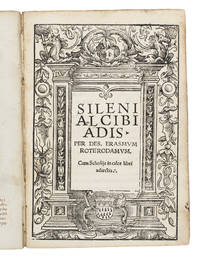
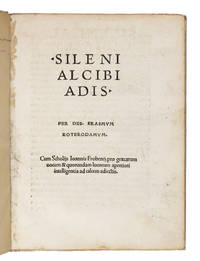
1520ref. ABC_49888Colophon: Cologne: Servas Kruffter 1520. 19th-century marbled boards with a blue paper manuscript title label on the front board. 4to. With an elaborate woodcut border on the title page and a decorated woodcut initial. Rare early edition of an influential work by Desiderius Erasmus which is a call for reform of the Catholic Church. It uses the Ancient Greek figure Alcibiades ca. 450-404 BC and the mythical characters known as the Sileni as an allegory for looking beyond appearances in order to perceive someone's or the Church's true nature. Erasmus wrote the text as part of his compilation of proverbs the Adagia in particular for the revised 1515 edition where it became one of the most popular entries. It was then published by Froben as a separate work in 1517 with his scholia. The present edition is the fourth or fifth overall but the first by Servas Kruffter fl. ca. 1520-1538 and is of considerable scarcity with only five copies recorded in institutions and none in sales records. The Cologne printer Kruffter was repeatedly restricted by censorship and even put in jail several times. Only a comparatively small number of books from his limited production has survived.With the bookplate of the Oberherrlingen Library dated 1839 mounted on the verso of the front board together with two typed descriptions of the work. The boards are somewhat rubbed lacking most of the spine. The work is somewhat browned throughout with a water stain in the inner margin not affecting the text. Otherwise in good condition.l Bibl. Belgica E 261; Erasmus Online 3582; USTC 693956 4 copies; Vander Haeghen I 176; VD 16 E 1991; WorldCat 763214270 150404098 5 copies; not in Adams; Bezzel; BM STC German; De Reuck. Servas Kruffter, hardcover
1515ref. ABC_49919Basel: Johann Froben 1515. Contemporary blind-tooled calf over wooden boards with brass and leather clasps along the fore edge professionally re-backed with later blank pastedowns. Folio. With the title set in a splendid woodcut frame by Urs Graf including Froben's small woodcut device woodcut decorations in the fore-edge and gutter margins of the table of contents verso of the title page and another elaborate woodcut frame on the first page of the dedication. Further with some woodcut initials and Froben's large woodcut device below the colophon on the last page. Senecas complete works here carefully prepared by Erasmus and printed by the renowned Basel publisher Johann Froben are remarkable both for its scholarly rigor and its historical significance. The present work represents one of the earliest Renaissance printings of Senecas writings presenting essays letters and philosophical dialogues that guide the reader toward virtue wisdom and a well-examined life. Erasmus thorough editorial care ensured that the texts were largely purged of errors making this edition an important reference for both humanist scholars and students of classical literature.In addition to the main works this volume includes a number of supplementary writings added by Erasmus reflecting his deep engagement with Senecas philosophy and his commitment to moral and linguistic improvement. The preface encourages attentive reading promising both the refinement of language and the betterment of ones life.The work entitled Ludus de morte Claudii Caesaris includes marginal commentary by Beatus Rhenanus a German humanist and reformer who was a friend of Erasmus and actively involved in the publishing activities of Johann Froben.With printed ex libris bookplate mounted on the front pastedown manuscript waste visible between the front and back endpapers a few manuscript annotations in the margins and some of the text underlined. The binding shows signs of wear the boards have been rubbed some loss of material a small worm hole in the back board the pages are cut slightly short at the head not affecting the text and some occasional slight staining and browning. Otherwise in good condition.l BM STC German p. 808; USTC 667432; Vander Haeghen II 49; VD 16 S5758; not in Bezzel; De Reuck. Johann Froben, hardcover
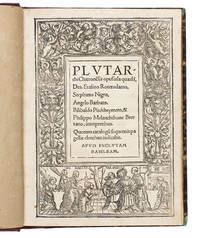
1518ref. ABC_49754Colophon: Basel 1518. 4to. Johann Froben 19th-century richly gold-tooled quarter red morocco and decorated paper sides bound by Gardien in 1863 sewn on 4 supports with corresponding raised bands on the spine with the author title and year lettered in gold on the spine marbled endpapers the whole covered with protective plastic red sprinkled edges and with a green ribbon marker. With a woodcut decorated frame on the title page the first page of the dedication the first page of the text A3r and the first page of the text by Stephanus Niger H2r 18 woodcut decorated initials and a small woodcut illustration incorporating Frobens device. 194 2 pp. An early edition of selected opuscula short philosophical and moral treatises by the Greek author Plutarch of Chaeronea ca. 46-120 CE best known for his Moralia and Parallel lives. The present work brings together Latin translations by multiple Renaissance scholars Erasmus Philipp Melanchthon 1497-1560 Willibald Pirckheimer 1470-1530 Angelo Barbato and Stephanus Niger. It forms part of the earliest wave of humanist publications aiming to make classical Greek thought accessible to Latin readers.Included are four treatises translated by Erasmus himself including his famous version of De tuenda bona valetudine praecepta On the preservation of good health. Particularly notable is Melanchthon's translation of the Convivialem quaestiunculam de notis Pythagoricis a short platonic dialogue dealing with Pythagorean symbols and moral enigmas.With a small catalogue excerpt mounted on the front pastedown including a small modern manuscript note Ex M. Abel le franc an oval black stamp F. Fasting Ex Libris No. added in manuscript: 5080 Rio de Janeiro on the verso of the first free flyleaf and the small stamp of the binder Gardien 1863 on the recto of the second free flyleaf. With some contemporary marginal annotation and underlining of the text. The binding shows slight signs of wear mainly around the corners of the boards slightly browned throughout with minor water stains in the upper outer margins towards the end and brown staining in the upper margins from pages 115 to 169. 3 of the 4 woodcut frames are slightly shaved at the lower margin. Further with a small wormhole in the outer margin from page 127 onward not affecting the text. Overall in good condition.l Adams p. 1653; BM STC German p. 706 ; Vander Haeghen II 46; USTC 684264; VD 16 P 3748; not in: Kossmann; Meyers; De Reuck. EARLY PRINTING & MANUSCRIPTS LAW PHILOSOPHY & POLITICS RELIGION & DEVOTION Early Printing - 16th century Erasmus Humanism & Reformation Philosophy & Humanism Religion 16th Century ZZ 001 De Graaf Inkopen hardcover
1514ref. ABC_49925Paris 1514. Folio. Jodocus Badius 18th-century gold-tooled mottled calf sewn on 6 supports with corresponding raised bands on the spine the author and title lettered in gold on the spine both boards show a gold-tooled armorial centre piece incorporating the arms of the city of Nevers or the arms of the Conflans family from the Champagne region Rietstap I plate CXVIII within a gold-tooled floral frame blind-tooled board edges marbled edges. With a woodcut border and printers device on the title page printed in red and black along with numerous woodcut decorated initials throughout. 6 CCLXVII 1 ll. 1514 Paris edition of Senecas tragedies printed and edited by the humanist printer Jodocus Badius 1462-1535 with contributions from Erasmus and others. Although Erasmus had permitted Badius to use his preparatory work in his autobiographical letter to Botzheim he reflects on the painstaking effort that went into this preparation and subtly expresses his irritation at seeing Badius nostra cum alienis miscuisse that is having mixed Erasmus contributions with those of others. The present work comprises nine dramatic works and extensive scholarly commentary by leading Renaissance philologists.With a printed book plate of the Fossé d'Arcosse family and a manuscript presentation note dated 1828 Emilien Fossé Darcosse donné par Mr B. V. le 10 septembre 1828 on the front pastedown. On the first free endpaper an 18th-century Latin manuscript inscription records the awarding of a prize to Franciscus Vermeil a noble student at the Jesuit College of Nevers in France for his scholarly achievements. The prize which included an award for a Latin oration was granted on 4 September 1746 by virtue of a perpetual endowment from the city of Nevers. The award is formally attested by the Praefectus Studiorum director of studies J. Petrus Coriou whose autograph and the official seal of the college are present. The corners of the boards are bumped the front hinge is weakened the ends of the spine are slightly damaged with some minor loss of material and with some minor loss of material on the back board. The front board is slightly rubbed the outer half of both boards is slightly faded from sun exposure. The lower margin of the title page and the outer margin of the sixth preliminary leaf have been reinforced. The final privilege leaf blank on the verso except for some manuscript annotations has been mounted on the recto of the adjacent blank flyleaf. The first and last leaves are slightly water stained and the upper margins have been cut somewhat short. Otherwise in good condition.l De Reuck 497; Moreau and Renouard 967; Renouard Badius III 252-53; USTC 144361; Vander Haeghen II 49; not in Kossmann. EARLY PRINTING & MANUSCRIPTS LITERATURE & LINGUISTICS RELIGION & DEVOTION Church History & Missions Early Printing - 16th century Erasmus Greek & Roman Classics Humanism & Reformation Philosophy & Humanism Religion 16th Century ZZ 001 De Graaf Inkopen hardcover
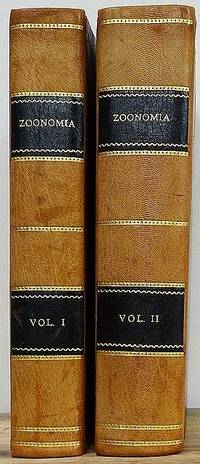
ref. 57923Fine illustrated and antiquarian Natural history . 1st. Ed. Pub. for J. Johnson in St. Pauls Church-yard London. 1794 - 1796. Two volume set with 10 plates 6 hand-coloured. Pages 3 to 6 from the Classes of Diseases not present. 4to. Hardbacks. Some minor spotting and off-setting o/w. contents fine. Original tree-calf boards with more recent spine and very neat repairs to corners. Prov: John Edmonds Stock 1774 - 1835 with his signature dated 1796 and his neat marginal annotations to aid navigation throughout volume I. More recent ownership insc. to both volumes. Scarce first edition. The first consistent all-embracing hypothesis of evolution. A fascinating provenance. John Edmonds Stock Erasmus Darwin 1731-1802 and Thomas Beddoes 1760-1808 were contemporaries of each other. Erasmus Darwin and Thomas Beddoes developed a friendship and working relationship. Indeed Darwin praised and referenced the work of Beddoes in Zoonomia. Stock and Beddoes worked together this in part led to Stock being asked to write the Memoirs of the Life of Thomas Beddoes Pub. 1811. King-Hele 1963 wrote that Darwin was unjustly attacked by reactionaries. Stock came to Darwins aid as a staunch supporter of his ideas. The number of annotations Stock made to this copy of Zoonomia can be seen as an indication of his depth of understanding of Darwins work. Fine illustrated and antiquarian Natural history hardcover
1536ref. 953165Basel: Froben 1536. leather_bound. Gut. 940 Seiten 30 Blatt. Blindgeprägter Schweinsledereinband der Zeit mit zwei Schließen auf Holzdeckeln mit 3 Bünden. Klein-Oktav 173 cm. Gegenlager der unteren Schließe fehlt Einband leicht bestoßen und fleckig Schnitt fleckig handschriftliche Besitzvermerke innen meist dezenter Feuchtigkeitsrand im Ganzen aber gut erhalten. Ledereinband der Zeit auf 3 Bünden mit blindgeprägter Streicheisen- und Rollband-Ornamentik und handschriftlichem Rückentitel. Kleine metallene Griffe markieren den Beginn der Bücher 2 3 und 4. Die Paginierung ist teilweise irrig das Buch ist aber vollständig. Auf den Seiten 174 -181 finden sich dezente Unterstreichungen mit rotem Farbstift auf den Seiten 265 -268 Unterstreichungen mit brauner Tinte. Ganz vereinzelt kleine Ausrisse im weißen Rand. Ausgabebezeichnung: BASILEAE IN OFFICINA FRO / BENIA PER HIERONYMVM / FROBENIVM ET NICOLAVM / EPISCOPIVM MENSE / AVGVSTO ANNO / M D XXXVI "Desiderius Erasmus von Rotterdam geboren vermutlich am 28. Oktober 1466 / 1467 / 1469 wahrscheinlich in Rotterdam; gestorben 11./12. Juli 1536 in Basel war ein bedeutender niederländischer Gelehrter des Renaissance-Humanismus." Wikipedia. Die erste Ausgabe dieses Buches im Oktav-Format erschien 1535. - Eigentlich wollte Erasmus dieses Spätwerk John Fisher dem Bischof von Rochester widmen; kurz vor dem Druck erfuhr Erasmus jedoch von der Hinrichtung seiner Freunde Fisher und Thomas Morus. In seiner Vorrede geht er auf die Hinrichtungen ein was das Interesse der Öffentlichkeit erhöhte. Erasmus richtet seinen Blick auf die neuentdeckten Länder in Amerika. Er mißbilligt die Kriegführung der Conquistadoren appelliert an das Verantwortungsbewußtsein der christlichen Fürsten und lobt den Missionseifer. Ecclesiastes oder: Über die Art des Predigens "ist das Werk eines schließlich müde gewordenen Geistes der nicht mehr scharf auf die Nöte seiner Zeit reagiert. . Die Predigt hatte Erasmus immer als die würdigste Aufgabe des Theologen betrachtet. . Erasmus knüpft mit einer Reihe moraldogmatischer Abhandlungen wieder dort an wo er mit dem Enchiridion begonnen hatte: bei der Erörterung der einfachen allgemein christlichen Lebensführung einer ungezwungenen Ethik. Das ist seine erlösende Botschaft." Huizinga p.166 et pass. Mit 5 alten handschriftlichen Besitzvermerken von 1650 bis 1845 auf dem Titel. Auf dem letzten Blatt recto eine dreizeilige handschriftliche Notiz mit Erwähnung des Hl. Polykarp von Smyrna und dem Reformator Erhard Schnepf aber nicht aus der Hand von Schnepf vielleicht aber eines seiner Studenten. Vgl. Mentz: Handschriften der Reformationszeit 20 b. "Erhard Schnepf oder Schnepff geboren 1. November 1495 in Heilbronn; gestorben 1. November 1558 in Jena war ein lutherischer Theologe und bedeutender Reformator Generalsuperintendent des Herzogtums Württemberg Hochschullehrer an der Universität Jena Hochschullehrer der Philipps-Universität Marburg und Hochschullehrer an der Universität Tübingen 1544 - 1548." Wikipedia. "Wilhelmi Schimko 1845" "Emanuel Wilhelm Schimko 1791-1875 studierte in Ödenburg ung. Sopron und Jena Theologie. Ab 1835 bekleidete er das Doppelamt des Pfarrers und Seniors der Evangelischen Kirchengemeinde A. B. zu Preßburg sowie des Theologieprofessors am Preßburger Evangelischen Lyzeum." Wikipedia. VD16: E 2722; Adams I p.399 630; BMCGB p. 281; Bezzel p. 250 822; Vanderhaegen p. 78; Sebastiani verzeichnet Froben-Drucke nur bis zu dessen Tod 1527. - Weitere Bilder auf Anfrage oder auf unserer Homepage. Wegen Urlaub kann Ihre Bestellung / Anfrage erst nach dem 12.10.2026 bearbeitet werden. - Because of holidays your order / question can be handled only after 10/12/2026. Froben hardcover
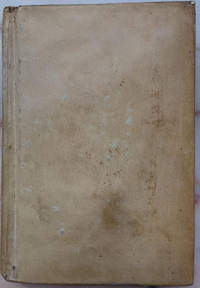
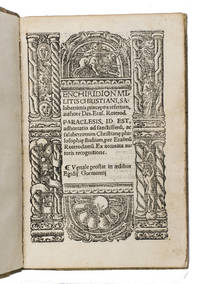
1522ref. ABC_49728Paris 1522. 8vo 10.3x16.2. Gilles de Gourmont Modern half vellum and sprinkled paper sides sewn on 5 supports with the corresponding raised bands on the spine the manuscript author title and supposed year of publication 1522 on the spine. With both titles set within an identical woodcut architectural frame and several woodcut decorated initials. 106 10 ll. Very rare Paris edition of Erasmus Enchiridion militis Christiani including a short text urging readers to study Christian philosophy. Before Erasmus became a household name for his satire The Praise of Folly or for his Latin translation of the New Testament he authored a lesser-known yet deeply personal work: Enchiridion militis Christiani The handbook of the Christian soldier.Written in 1501 the Enchiridion is a passionate call to return to a pure Christ-centred faith one grounded not in ritual or church hierarchy but in inner devotion and practical piety. With urgency and sincerity Erasmus wrote not for scholars or clergy but for ordinary believers striving to live a holy life.Between its first publication and Erasmuss death in 1536 the Enchiridion was printed in over fifty Latin editions becoming one of his most widely read works across Europe. This relatively early French edition is rare with few known copies surviving. We have traced only two other copies in sales records of the past 100 years one sold in 1920 and the other in 1980.With occasional near- contemporary manuscript annotations in the margins and underlining of some text indicating text improvements and highlighting important passages and in the same hand a short note on the blank verso of the last leaf most likely a philosophical reflection or content-related note. Most pages contain a simple frame ruled in red after printing the edges of the last quarter of leaves are slightly frayed minor water staining in the fore-edge margin and somewhat browned throughout. Otherwise in good condition.l Renouard inventaire chronologique des editions Parisiennes III 318; Renouard & Moreau II 1812; USTC 183822 lost book; Vander Haeghen I 84; not in Adams; Bezzel; BM STC French; De Reuck; Kossmann; WorldCat; cf. . Bibliotheca Belgica E 1023 ca. 1522 ed. with different impressum. EARLY PRINTING & MANUSCRIPTS RELIGION & DEVOTION Church History & Missions Early Printing - 16th century Erasmus Humanism & Reformation Philosophy & Humanism Religion 16th Century ZZ 001 De Graaf Inkopen hardcover
1642ref. AB6GB5JMB8EQLeiden: Joannes Maire 1642. Contemporary half vellum paper sides with "Erasmiana tom. I or II" in manuscript on the spine blue edges. 12mo. Ad 1 with an engraved title page by C. van Dalen showing Erasmus standing in a church with a book in his left hand pointing to three other men. All title pages contain Maire's woodcut device see Breugelmans nr. 13 and a woodcut portrait of Erasmus in a roundel on leaf 8r in ad 1 and his device in a roundel in the text on leaf 25v in ad 1. Further with several woodcut decorated initials throughout. 14 works in 2 volumes. With:2 ERASMUS Desiderius. Lingua sive de linguae usu atque abusu liber utilissimus.Leiden Joannes Maire 1649.3 ERASMUS Desiderius. Moriae encomium cum Gerradi Listriis commentariis. Epistolae aliqut in fine additae. Leiden Joannes Maire 1648.4 ERASMUS Desiderius. Dialogus Ciceronianus: sive de optimo genere dicendi. Leiden Joannes Maire 1643.5 ERASMUS Desiderius. Dialogus de recta Latini Graecique sermonis pronuntiatione. Leiden Joannes Maire 1643.6 ERASMUS Desiderius. De contemptu mundi liber. Leiden Joannes Maire 1641.7 ERASMUS Desiderius. Querela pacis undique gentium ejectae profligataeque. Leiden Joannes Maire 1641.8 ERASMUS Desiderius. De immensa Dei misericordia. Leiden Joannes Maire 1641.9 ERASMUS Desiderius. Modus orandi Deum. Leiden Joannes Maire 1641.10 ERASMUS Desiderius. Precationes quibus homines assuescant cum Deo loqui.Leiden Joannes. Maire 1641.11 ERASMUS Desiderius. Enarratio in Psalmum I.Leiden Joannes Maire 1644.12 ERASMUS Desiderius. Enarratio triplex in Psalmum XXII. Leiden Joannes Maire 1645.13 ERASMUS Desiderius. Enarratio pia juxta ac docta in Psalmum XXXIV.Leiden Joannes Maire 1652.14 ERASMUS Desiderius. Concionalis interpretatio plena pietatis in Psalmum LXXXVI.Leiden Joannes Maire 1652. These 14 important works by Erasmus - the edition of his most important letters after the Vita edited by Petrus Scriverius 1576-1660 his famous Laus stultitiae and 3 of his linguistic works in the first volume and 9 theological works in volume 2 - belong to a project of the Leiden publisher printer and bookseller Joannes Maire 1603-1657. This project that can be seen as a series of editions that together represent Erasmus' collected works ensured Maire's stellar reputation through the ages. 23 different works appeared between 1641 and 1652. It has long been thought that Petrus Scriverius was the editor but now there is proof that in fact Willem Henricus Vorstius a learned Remonstrant minister in the village of Warmond near Leiden did the job Breugelmans p. 24.11 works were published in 1641 5 of which in the present collection; 2 in 1642 1 present 3 in 1643 2 present 1 in 1644 also present 3 in 1645 1 present 1 in 1648 also present 1 in 1649 also present 1 in 1650 also present and 2 in 1652 both present. The whole collection brings together a representative selection of Erasmus' spiritual moral and exegetical writings - as it includes treatises on Christian prayer and devotion moral and ascetical reflections expositions of the Creed the Ten Commandments and the Lord's Prayer and commentaries on select psalms. It is presented together with Sriverius' edition of the Vita a biography of Erasmus.Printed in compact duodecimo format with Maires characteristic typographic elegance these Leiden editions form one of the most coherent 17th-century series of Erasmus spiritual writings.With a manuscript owner's inscription on the title pages of ads 1 and 6 a small manuscript inscription on the title page of ad 2 and a small manuscript inscription on the title pages of ads 3 5 and 6-14. Further with two library stamps of the Nordelbische Kirchenbibliothek in Hamburg incl. "Gelöscht" stamps on the versos of the title pages of ads 1 and 6. The bindings are dust soiled and slightly damaged along the extremities but the structural integrity of both bindings remains fine slight foxing and browning throughout. Otherwise in good condition.l Ad 1: Breugelmans Fac et spera. Joannes Maire 2003 1642:7; STCN 840230303; USTC 1028900; Van der Haeghen I 182; Ad 2: Breugelmans 1649:3; Overzicht werken Erasmus Rotterdam 1936 934; STCN 840230753; USTC 1028906; Van der Haeghen I 118; Ad 3: Breugelmans 1648:3A; Overzicht werken Erasmus Rotterdam 1936 990; STCN 840230621 9 copies incl. 1 incomplete; USTC 1028905 9 copies same as STCN; Van der Haeghen I 124; Ad 4: Breugelmans 1643:4; Overzicht werken Erasmus Rotterdam 1936 663; STCN 84023127X; USTC 1028908; Van der Haeghen I 75; Ad 5: Breugelmans 1643:5; Overzicht werken Erasmus Rotterdam 1936 671; STCN 840231237; USTC 1028907; Van der Haeghen I 242; Ad 6: Breugelmans 1641:3B; Overzicht werken Erasmus Rotterdam 1936 556; STCN 840238592 7 copies; USTC 1028914 7 copies same as STCN; Van der Haeghen I 7; Ad 7: Breugelmans 1641:13B; STCN 840227620 5 copies; USTC 1028897 5 copies same as STCN; Van der Haeghen I 167; Ad 8: Breugelmans 1641:4B; STCN 840238479 7 copies; USTC 1028912; Van der Haeghen I 73; Ad 9: Breugelmans 1641:10B; STCN 06126220X 6 copies; USTC 1011884; Van der Haeghen I 121; Ad 10: Breugelmans 1641:11A; Overzicht werken Erasmus Rotterdam 1936 1033; STCN 061215252; USTC 1011798; Van der Haeghen I 160; Ad 11: Breugelmans 1644:2; Overzicht werken Erasmus Rotterdam 1936 1340; STCN 061265306; USTC 1011896; Van der Haeghen I 162; Ad 12: Breugelmans 1645:4; Overzicht werken Erasmus Rotterdam 1936 1345; STCN 113911165; USTC 1015819; Van der Haeghen I 162; Ad 13: Breugelmans 1652:3; Overzicht werken Erasmus Rotterdam 1936 1347; STCN 061377597; USTC 1801991; Van der Haeghen I 162; Ad 14: Breugelmans1652:2; Overzicht werken Erasmus Rotterdam 1936 1350; STCN 061377473; USTC 1802003; Van der Haeghen I 162. Joannes Maire, hardcover
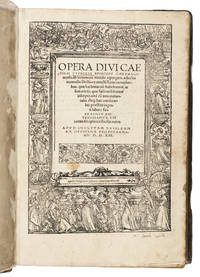
1520ref. ABC_49926Basel 1520. Folio. Johann Froben Contemporary richly blind-tooled calf over wooden boards with brass clasps catch- and anchor plates along the fore-edge and brass edge guards around the corners and on the bottom board edge near the spine manuscript waste pastedowns re-backed. With an elaborate woodcut border on the title page and on the first page of the dedication. Further with a small woodcut illustration incorporating Frobens device on the verso of the last leaf numerous woodcut decorated initials by Ambrosius Holbein throughout and some ornamental woodcut headpieces. 24 515 1 blank 32 pp. First edition of the works of Thascius Caecilius Cyprianus Saint Cyprian ca. 210-258 CE edited by Erasmus. The present work is a landmark in the history of humanist scholarship and a cornerstone of Erasmuss lifelong effort to restore the authentic voice of the Early Church Fathers. Working in Basel Erasmus devoted himself to what he regarded as his highest calling: presenting these foundational Christian sources to a wider audience and revealing the truth of the Gospel in its original simplicity.In this edition Erasmus rescued Cyprians writings from centuries of textual corruption carefully correcting medieval errors and adding several minor treatises from ancient manuscripts that had never previously been printed. It includes Cyprians pastoral letters and doctrinal works arranged by theme and reflects the bishops deep concern with church unity moral discipline and the challenges of the early Christian community.This 1520 edition of Cyprians works marks the true beginning of Erasmus great Basel enterprise: a series of monumental editions that would soon include works by Arnobius 1522 Hilary 1523 Jerome 1524 Irenaeus 1526 Ambrose 1527 Augustine 1528-29 and Chrysostom 1530. This rapid succession of vast editorial projects reveals both Erasmuss astonishing intellectual energy and his conviction that the wisdom of these Church-Fathers could renew Christian life.More than a critical edition the present work embodies the spirit of Christian humanism itself: rigorous scholarship in the service of faith. It stands as one of Erasmus' most significant achievements and a defining moment in the recovery of patristic learning in the Renaissance.With manuscript waste pastedowns three stamps of the Roman Catholic Saint Maria-Magdalena church in Zaandam on the title page occasionally some near contemporary manuscript annotations in the margins and some of the text has been underlined. The work has been re-backed lacking the backstrip of the original binding the edges of the leather around both boards is slightly damaged revealing the wooden boards below the spine is somewhat rubbed. The edges of the first and last few leaves are slightly frayed some occasional water staining in the fore-edge margin not affecting the text some slight staining and dust soiling throughout. Otherwise in good condition.l Allen 1000; De Reuck 416; Huizinga VI p. 148; USTC 679667; Vander Haeghen II 23; VD 16 C 6508; not in Adams; Bezzel; BM STC German. EARLY PRINTING & MANUSCRIPTS HISTORY RELIGION & DEVOTION Church History & Missions Early Printing - 16th century Erasmus Humanism & Reformation Philosophy & Humanism Religion 16th Century ZZ 001 De Graaf Inkopen hardcover
1517ref. ABC_49731Colophon: Basel 1517. 4to. Johann Froben Late 19th-century or early 20th-century boards red edges. With 4 decorated woodcut initials and a woodcut printer's device at the end of each part. 2 parts in 1 volume. 42 ll. First separate edition of an influential work by Desiderius Erasmus which is a call for reform of the Catholic Church. It uses the Ancient Greek figure Alcibiades ca. 450-404 BC and the mythical characters known as the Sileni as an allegory for looking beyond appearances in order to perceive someone's or the Church's true nature. Erasmus wrote the text as part of his compilation of proverbs the Adagia in particular for the revised 1515 edition where it became one of the most popular entries. It was then published by Froben as a separate work in 1517 together with his scholia. The present copy also includes the Scarabeus a similar essay from the Adagia with scholia from Beatus Rhenanus. Although these two works are now rarely found together on the market the Scarabeus was clearly intended as the second part of the Sileni Alcibiades for the present edition as both the pagination and collation continue between the two works.The boards are slightly soiled. The work is slightly browned throughout with water stains in the margins of some of the leaves and numerous near contemporary academic annotations in the margins of the first part by at least 2 different hands. Otherwise in good condition.l Bibl. Belgica E 259; BM STC German p. 277; USTC 693955; ad 1: Adams E 833; Erasmus Online 3579; Vander Haeghen I 176; VD16 E 1990; Ad 2: Adams E 830; Erasmus Online 3574; Vander Haeghen I 175; VD 16 E 1986. EARLY PRINTING & MANUSCRIPTS LITERATURE & LINGUISTICS RELIGION & DEVOTION Catholicism & Eastern Orthodox Church Early Printing - 16th century Erasmus Humanism & Reformation Literature Philosophy & Humanism Religion 16th Century ZZ 001 De Graaf Inkopen hardcover
ref. 16465Basle, Froben, 1523.
1522ref. 53365Mainz: J. Schöffer 1522. First Mainz edition. Octavo. 562 2: colophon blankpp. Collation: A-Z8 Mm8 chi2 O4/O5 reversed complete. Title within historiated woodcut border. Woodcut initials throughout. Text in italics. Printed side-glosses. Errata at final text leaf. Contemporary beveled wooden boards backed in tooled pigskin; spine with raised bands. Brass catch and clasp with expert restoration of leather thong. Contemporary manuscript musical scores used as pastedowns at front and back. Seven leather stubbs affixed at front edge as indexes. Occasional faint smudging mostly at margins else text crisp and fresh. A very good copy in a well-preserved sixteenth-century binding with a notable provenance. Scarce very early collective edition of the Latin "Paraphrases" of the Pauline Epistles prepared by the celebrated humanist scholar theologian and educational writer Desiderius Erasmus of Rotterdam 1466-1536. Preceded by the Froben collective editions of 1520 and 1521 this first and only edition of the Pauline Epistle Paraphrases to be printed at Mainz was issued by Schöffer in two parts each with full title and separate register and pagination; our volume contains the first part only: the Epistles to the Romans; Corinthians 2; Galatians; Ephesians; Philippians; Colossians; and Thessalonians 2. "In the vast and sustained labour he devoted to the New Testament Erasmus saw the culmination of his commitment to scholarship. and nothing else he wrote not even the Moriae encomium was to have so great an influence on posterity. The first edition of the New Testament appeared in 1516 and was followed in his lifetime by four more 1518/10 1522 1527 1535 each newly revised. Each consisted of the Greek text Erasmus' translation thereof and a copious apparatus of notes Annotations published as a separate volume. Beginning in 1517 he also published a Paraphrase of all parts of the New Testament save Revelation. Written in smooth and comprehensible Latin it was usually fuller than the original text. If offered his own interpretatiton but often avoided the provocative statements found in the Annotations. From the outset the translation the Annotations and to a lesser degree the Paraphrases drew criticism originally from conservative theologians who found heresies in his humanist philology but soon also from Lutherans and Catholics who denounced him for departures from their respective doctrines" Bietenholz. The Paraphrases were composed between May 1517 and January 1524. "Erasmus began with the Pauline Epistles. The paraphrase of Romans was published in quarto by Dirk Martens in Louvain in November 1517 and reprinted by Erasmus's friend Johann Froben in January of the following year; it sold well and was soon reprinted in octavo. Corinthians was published by Martens in February 1519 and reprinted in Basel by Froben in March; Galatians appeared later that year with editions from both publishers. The remaining Epistles followed in 1520 and 1521 the last to appear being Hebrews. In the autumn of 1521 Erasmus moved from Louvain to Basel and from that time Froben published the first editions of the remaining Paraphrases" Mynors. Our edition was printed by Johann Schöffer the son of Peter Schöffer who was the principal workman of Johannes Gutenberg. Apart from those of the Pauline Epistles the only other complete Paraphrase of Erasmus to be published by Schöffer was that on the Gospel of Matthew also in 1522. He did in 1521 however issue a series of four brief excerpts from the Paraphrases in German translation which appear to highlight provocative exegesis by the great scholar of Rotterdam concerning for example the hypocracy of the Pharisees Matthew 23 or the exhortation to "Take My yoke upon you and learn from Me" Matthew 11.29. Provenance and annotations: Contemporary manuscript entry at the title-page of the Benedictine monastery library at Amorbach; contemporary 50-word manuscript note in Latin at the free endleaf facing the title which discusses the present work. Early manuscript note in German at the final blank endleaf. Early leaves with light rubrication in red ink; about twenty leaves with contemporary annotations throughout. Later stamps of the Leiningen Palace Library at the bottom margin of the title and very faintly at the pigskin covers. Bookplate of United Theological Seminary Dayton Ohio noting the gift of Dr. Walter N. Roberts with their vertical entry stamp Mar 28 1963 at the dedication leaf lightly over the left-hand edge of the text but not impairing legibility. Full title and imprint: Paraphrases Eras. Rot. In omnes epistolas Pauli apostoli germanas : et in eam quae est ad Hebraeos incerti autoris cum ijs quae Canonicae uocantur diligenter recognitae excusaeque & ita binos in tomos digestae ut cuique secare in formam enchiridij siuelit liberum sit. References: P.G. Bietenholz Encounters with a Radical Erasmus Univ. Toronto 2009 p.13; R.A.B. Mynors "The Publication of the Latin Paraphrases" in: R.D. Sider ed. New Testament Scholarship: Paraphrases on Romans and Galatians University of Toronto Press 1984 pp. xx-xxix; USTC 682534; Vander Haeghen p.145: Paraphrases in omnes epistolas Pauli. Moguntiae Io. Schoeffer m. augusto 1522 octavo; VD16 E-3379 Berlin; Halle; Leipzig; Wittenberg; Wolfenbüttel. This first part not in Adams but cf. E-795 the second part 378pp. J. Schöffer unknown
1522ref. 53365Mainz: J. Schöffer 1522. First Mainz edition. Octavo. 562 2: colophon blankpp. Collation: A-Z8 Mm8 chi2 O4/O5 reversed complete. Title within historiated woodcut border. Woodcut initials throughout. Text in italics. Printed side-glosses. Errata at final text leaf. Contemporary beveled wooden boards backed in tooled pigskin; spine with raised bands. Brass catch and clasp with expert restoration of leather thong. Contemporary manuscript musical scores used as pastedowns at front and back. Seven leather stubbs affixed at front edge as indexes. Occasional faint smudging mostly at margins else text crisp and fresh. A very good copy in a well-preserved sixteenth-century binding with a notable provenance. Scarce very early collective edition of the Latin "Paraphrases" of the Pauline Epistles prepared by the celebrated humanist scholar theologian and educational writer Desiderius Erasmus of Rotterdam 1466-1536. Preceded by the Froben collective editions of 1520 and 1521 this first and only edition of the Pauline Epistle Paraphrases to be printed at Mainz was issued by Schöffer in two parts each with full title and separate register and pagination; our volume contains the first part only: the Epistles to the Romans; Corinthians 2; Galatians; Ephesians; Philippians; Colossians; and Thessalonians 2. "In the vast and sustained labour he devoted to the New Testament Erasmus saw the culmination of his commitment to scholarship. and nothing else he wrote not even the Moriae encomium was to have so great an influence on posterity. The first edition of the New Testament appeared in 1516 and was followed in his lifetime by four more 1518/10 1522 1527 1535 each newly revised. Each consisted of the Greek text Erasmus' translation thereof and a copious apparatus of notes Annotations published as a separate volume. Beginning in 1517 he also published a Paraphrase of all parts of the New Testament save Revelation. Written in smooth and comprehensible Latin it was usually fuller than the original text. If offered his own interpretatiton but often avoided the provocative statements found in the Annotations. From the outset the translation the Annotations and to a lesser degree the Paraphrases drew criticism originally from conservative theologians who found heresies in his humanist philology but soon also from Lutherans and Catholics who denounced him for departures from their respective doctrines" Bietenholz. The Paraphrases were composed between May 1517 and January 1524. "Erasmus began with the Pauline Epistles. The paraphrase of Romans was published in quarto by Dirk Martens in Louvain in November 1517 and reprinted by Erasmus's friend Johann Froben in January of the following year; it sold well and was soon reprinted in octavo. Corinthians was published by Martens in February 1519 and reprinted in Basel by Froben in March; Galatians appeared later that year with editions from both publishers. The remaining Epistles followed in 1520 and 1521 the last to appear being Hebrews. In the autumn of 1521 Erasmus moved from Louvain to Basel and from that time Froben published the first editions of the remaining Paraphrases" Mynors. Our edition was printed by Johann Schöffer the son of Peter Schöffer who was the principal workman of Johannes Gutenberg. Apart from those of the Pauline Epistles the only other complete Paraphrase of Erasmus to be published by Schöffer was that on the Gospel of Matthew also in 1522. He did in 1521 however issue a series of four brief excerpts from the Paraphrases in German translation which appear to highlight provocative exegesis by the great scholar of Rotterdam concerning for example the hypocracy of the Pharisees Matthew 23 or the exhortation to "Take My yoke upon you and learn from Me" Matthew 11.29. Provenance and annotations: Contemporary manuscript entry at the title-page of the Benedictine monastery library at Amorbach; contemporary 50-word manuscript note in Latin at the free endleaf facing the title which discusses the present work. Early manuscript note in German at the final blank endleaf. Early leaves with light rubrication in red ink; about twenty leaves with contemporary annotations throughout. Later stamps of the Leiningen Palace Library at the bottom margin of the title and very faintly at the pigskin covers. Bookplate of United Theological Seminary Dayton Ohio noting the gift of Dr. Walter N. Roberts with their vertical entry stamp Mar 28 1963 at the dedication leaf lightly over the left-hand edge of the text but not impairing legibility. Full title and imprint: Paraphrases Eras. Rot. In omnes epistolas Pauli apostoli germanas : et in eam quae est ad Hebraeos incerti autoris cum ijs quae Canonicae uocantur diligenter recognitae excusaeque & ita binos in tomos digestae ut cuique secare in formam enchiridij siuelit liberum sit. References: P.G. Bietenholz Encounters with a Radical Erasmus Univ. Toronto 2009 p.13; R.A.B. Mynors "The Publication of the Latin Paraphrases" in: R.D. Sider ed. New Testament Scholarship: Paraphrases on Romans and Galatians University of Toronto Press 1984 pp. xx-xxix; USTC 682534; Vander Haeghen p.145: Paraphrases in omnes epistolas Pauli. Moguntiae Io. Schoeffer m. augusto 1522 octavo; VD16 E-3379 Berlin; Halle; Leipzig; Wittenberg; Wolfenbüttel. This first part not in Adams but cf. E-795 the second part 378pp. J. Schöffer unknown books
1514ref. 047405Paris: Jodocus Badius Ascensius 1514. First Edition. Hardcover Full Leather. Very Good Condition. Later ca. late 17th century or early 18th speckled paneled calf edges sprayed red. Front hinge cracked and a little loose but held by cords endpapers browned at edges two old bookplates contemporary signature and an old note to title. Title printed in red and black with an elaborate border with printed some red to the figures. Scattered very minor browning - a clean bright wide margined copy. 6 CCLXVII 1 leaves. Two blanks at front and two at rear. An important edition of Seneca the first with the new critical material by Erasmus including an account in the preliminaries of Seneca by Crinitus. Erasmus had done new critical work on the tragedies and supplied it to Bade who without his knowledge or consent commingled it with the criticism and notes of Caetani and Marmita. The Wrest Park copy. Bookplates of Anthony Earl of Kent 1702 and Thomas Philip Earl of Gray - Wrest Park. Old signature to title Jean Ma. and "sum I.ger amicorum" at bottom of title. Adams S 901 Size: Folio. Quantity Available: 1. Shipped Weight: 1-2 kilos. Category: Literature & Literary; Inventory No: 047405. Jodocus Badius Ascensius hardcover
1524ref. 19218Bâle, Johann Froben, 1524. In-8 de 140 feuillets [a-r8; s4] plein vélin ivoire à rabats, deux lacets, chemise, étui.
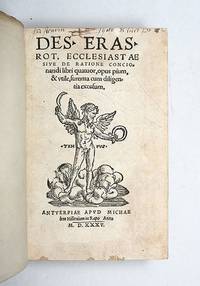
1535ref. 150907Antwerp: Michael Hillenius 1535. Rare 16th-century English blind stamped panels One of two pirated editions of Erasmus's Ecclesiastes published in Antwerp the same year as Froben's authorized original. The covers of this copy bear two handsome and rare blind stamped panels attributed to the Dutch binder Gerard or Garrett Pilgrim active in England at the beginning of the 16th century. Pilgrim was a native of Antwerp who worked as a bookseller and bookbinder in Oxford from at least 1524 until his death in 1536. The two panels of which only 13 examples are known to Oldham Oldham HM 17 and 18 p. 28 all dated 1523-35 are of characteristically English style and manufacturing. They feature an outer frame filled with blind stamped rolls of leaves garlands angels masks and dragons and a central design of heads in roundels accompanied by the binder's initials with a key and a pilgrim's staff crossed. On 12 July 1536 Erasmus died in Basel where he had returned to check on Froben's publication of the Ecclesiastes his last major composition. This work is an extensive manual in four books on the art of preaching containing a treatise on the role and importance of preachers in the church precise indications on how to structure and deliver sermons and a list of sermon topics. The Ecclesiastes was highly successful: in addition to the 2600 copies printed by Froben two pirated editions were produced in Antwerp in 1535 the present one and another by Martinus Caesar for an estimated total of 3500 copies sold - an uncommonly large publication for its time see Kleinhans p. 308. Octavo 160 x 103 mm. Woodcut printer's device to title page and verso of last leaf half-page portrait of Erasmus in a roundel historiated and floriated initials. Later calf preserving contemporary English blindstamped panels signed "GP" spine with raised bands decoration of parallel blind lines to first and last compartment intricate design of curls and tendrils to third and fourth gilt date at foot early 19th century endpapers one binder's blank with watermark "EB 1813". Partly erased contemporary ownership inscription of one "frater Henricus Thor." to title page occasional contemporary marginalia in Latin and maniculae early price indication of 2 shillings inked to verso of last leaf armorial bookplate to front pastedown of George Kenyon of Peel Esq 1666-1728 MP and a prominent figure in the Lancashire Tory political scene in the 1690s through to the 1710s. Raised bands and joints a little rubbed early repair to rear cover panel some marginal light stains and fingermarks to contents otherwise internally bright and exceptionally clean A2-3 missing as usual. An attractive well-margined copy. Adams E-626; USTC 400577; Erasmus Online 1678. J. B. Oldham Blind Panels of English Binders 2010. On the panels see also M. Foot The Henry Davis Gift Vol. II 1979 no. 27. R. G. Kleinhans "Erasmus Ecclesiastes and the Church of England" in Historical Magazine of the Protestant Episcopal Church 39/3 1970 pp. 307-14. hardcover
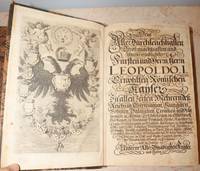
1668ref. 007387Nuremburg Nürnberg: J.A. Endters 1668. Half Leather sheep. Marbled paper pastedown on boards. Very Good. Three parts in two volumes. Folio 33 by 22 cm. 912 xxxxxx pp. J.A. Endters unknown
1668ref. 007387Nuremburg Nürnberg: J.A. Endters 1668. Half Leather sheep. Marbled paper pastedown on boards. Very Good. Three parts in two volumes. Folio 33 by 22 cm. 912 xxxxxx pp. J.A. Endters unknown books
ref. 3376Paris: various publishers 1939-1948. AN UNPARALLELED COLLECTION OF ILLUSTRATED BOOKS BY ONE OF THE MOST ACCOMPLISHED BOOK ARTISTS OF THE 20TH CENTURY. ALL OF THESE BOOKS ARE ILLUSTRATED WITH ORIGINAL COPPER ENGRAVINGS / ETCHINGS /AQUATINTS / ROULETTES. Maurice Leroy like many other illustrators of his time specialized in lightly erotic depictions of feminine beauty. Unlike virtually all the other illustrators of his time however he infused tremendous imagination into his prints and demonstrated absolute mastery of all the major techniques of draftsmanship and copper engraving. The ten books in this collection all come from the height of his career and most of them are SPECIAL COPIES WITH ADDITIONAL SUITES OF THE PRINTS AND/OR ORIGINAL DRAWINGS. 1 Le Diable amoureux by Cazotte. One of only a few copies with the prints beautifully illuminated by hand; 2 Another copy of the same one of 127 copies with a remarque suite; 3 Le malheureux petit Voyage by Soulages. One of only 25 copies tete with an original drawing used for one of the illustrations signed a second suite in color a suite in black and a second suite of the wood-engraved decorations by Poilliot. Beautifully bound in full leather with original color drawings by Leroy on both covers; 4 La Belle sans chemise ou Eve ressuscitee. A unique artist's copy with a stunning original color drawing signed a remarque suite and four likely unique color separation proofs; 5 Le bon Plaisir by Henri de Regnier. One of 36 copies tete with an original color drawing used for one of the illustrations signed a remarque suite in color and a remarque suite in black; 6 L'Eloge de la folie by Erasmus. One of 75 copies with a remarque suite and the "planche refusee"; 7 Le roman de Tristan et Iseut. One of 24 copies with two suites of the etchings and an original watercolor; 8-10 Three other limited-edition books with original prints. 4tos. Except for the bound volume described above all loose as issued in board chemises and slipcases. One slipcase damaged else FINE AND BRIGHT INSIDE AND OUT. A monumental collection a testament to the artist's varied and profound talent. OVER 1000 PRINTS IN ALL. Paris: various publishers, 1939-1948 hardcover