ROTTERDAM, ERASMO DEBiblio.com

4809 resultados
ref. 9788578279875WMF MARTINS FONTES - POD. new. Obra singular onde h� mais humor do que esp�rito e mais erudi��o do que gra�a este livro agitou as multid�es abalou a Igreja inquietou os grandes e contribuiu para fazer a Alemanha escutar os reformadores. WMF MARTINS FONTES - POD unknown
ref. 9786554272452EDICOES 70. new. Trata-se de um dos livros emblemǭticos da cultura ocidental e sem d�vida uma das obras literǭrias mais lidas em todo mundo nos �ltimos seis sǸculos. Publicado pela primeira vez em 1511 o ""Elogio da loucura"" Ǹ uma das cr�ticas mais implacǭveis �� vaidade orgulho e contradi����es da natureza humana. Dirigindo a sua sǭtira contra todos os estratos sociais mostra-se seu Autor mais implacǭvel no desmontar dos rid�culos e abusos sobretudo dos poderosos da pol�tica da Igreja e da vida acad�mica do seu tempo usando de uma linguagem e processos literǭrios altamente divertidos mesmo para o leitor de hoje. No fundo de sua obra encerra-se tambǸm ou talvez sobretudo uma mensagem de funda espiritualidade e uma afirma��o e defesa dos valores do pacifismo ou ""irenismo"" conceito de que Erasmo foi sen�o o iniciador pelo menos seguramente um dos maiores e mais eloquentes ap��stolos. Embora existam in�meras vers��es deste livro editadas em Portugal e Brasil tenho a convic��o de que a imensa maioria para n�o dizer a totalidade delas n�o foi feita nem por latinistas de of�cio nem a partir exclusivamente do texto original latino circunst�ncias estas que n�o se verificam com a tradu��o aqui proposta pois Ant�nio Guimar�es Pinto serviu-se dos textos originais sobretudo do �ltimo texto corrigido por Erasmo datado de 1532 e Ǹ o latinista de Brasil e Portugal que traduziu maior n�mero de pǭginas de textos em latim sobretudo de obras que nunca haviam sido vertidas para qualquer idioma moderno. No caso do Erasmo jǭ em 1999 as Edi����es 70 publicaram sob o t�tulo de ""A Guerra e Queixa da Paz"" duas de suas tradu����es de textos basilares deste Autor. EDICOES 70 unknown
ref. 0802043100.Ghardcover. Good. Access codes and supplements are not guaranteed with used items. May be an ex-library book. hardcover
1516ref. 4621Strasbourg: Johann Knobloch 1516. Hardcover. Fine. Bound with: 2. Erasmus Desiderius 1466-1536 De duplici copia verborum ac rerum commentarij duo. Ab authore ipso diligentissime recogniti & emaculati atque in plerisque locis aucti. . ; Item Epistola Erasmi Roterodami ad Iacobum Vuimphelingium Selestatinum. Strasbourg: Mathias Schürer October 1516 And: 3. Hutten Ulrich von 1488-1523; Weiditz Hans 1495- ca. 1536 artist. ΟΥΤΙΣ. Nemo Augsburg: Johann Miller 9 September 1518 Three Publications in One Volume: Quarto: 19.3 x 13.6 cm. I. Burley 8 LII ff. Collation: i-viii8 A-B8 C-D4 E8 F4-H4 I8 leaf 8 in fist gathering blank. II. Erasmus 6 LXXIII 5 ff. Collation: 1-66 a4 b8 c4 d8 e-f4 g8 h-i4 k8 l-m4 n8 o6. III. Hutten 12 ff. Collation: A-C4 A humanist sammelband featuring Ulrich von Hutten's satire championing the liberal arts with the impressive woodcut of Hutten's Odyssean hero surrounded by the equipment of all students: books a flagon board games musical instruments. Bound in 16th c. pigskin signed S.K.E. and dated 1575 soiled and stained corners bumped. The binding tooled in blind with a roll tool with images of Christ St. Paul and King David playing his lyre signed HW Haebler I p. 486/8. Contents in good condition a little careworn binding and contents moderately soiled scattered marginal notes and underscores occasional stains. Text block cut a bit close at the head at the time 1572 of rebinding; text block separating at front of volume. I. Burley: title page with numerous pen-trials 17th c. ownership note; short worm-trail to first three leaves only not affecting text; damp-stain to corner of first gathering. II. Erasmus: Title with white-on-black woodcut border with fools columns and putti supporting a shield with the printer’s initials. The name of Erasmus has been censored on the first two lvs. in ink with shine though onto the following two lvs. and by scratching out the name elsewhere in the text. Small marginal dampstain occ. notes. III. Hutten: With the iconic full-page woodcut title by Hans Weiditz see below for details. Mild soiling throughout final gathering lightly browned/stained cut close at head. I. Medieval Encounters with the Ancient Philosophers Burley Walter Pseudo- ca. 1320; Diogenes Laertius 3rd c. CE Vita Philosophorum et Poetarum : cum auctoritatibus et sententiis aureis eorundem annexis Strasbourg: Johann Knobloch 1516 ONE OF NUMEROUS EARLY EDITIONS. The first edition was printed in 1470. Now believed to have been composed in the early 14th c. from the 15th c. up until the 20th “The Lives of the Philosophers and Poets” was transmitted under the name of Walter Burley ca. 1275–1344 one of the most prominent and influential philosophers of the fourteenth century. Burley had a very long career in both England and France becoming Master of Arts at Oxford by 1301 and Master of Theology at Paris by 1324. He produced a large body of about fifty works many of which were widely read in the later Middle Ages. “In 1990 the image of ‘De vita et moribus’ suffered a terrible blow when Mario Grignaschi severed its connection with Walter Burley Grignaschi “Lo Pseudo Walter Burley” 131–90 and in the same volume “Corrigenda et addenda” 325–54. Grignaschi showed that the work had to have been composed in northern Italy which had the resources in classical materials and that – from the evidence of an anonymous work dated 1326 that made use of it – it had to have been made no later than the 1320s perhaps even about 1310 that is during a period long before Burley arrived in Bologna. Overnight ‘De vita et moribus’ was deprived of its glamorous Burleian associations with Oxford Paris high scholasticism debates about realism and the Plantagenet court to be revealed as the work of an anonymous Italian who is now referred to – teasingly and cruelly – as the ‘Pseudo-Burley.’ How the work came to be attributed to Burley in fifteenth - century manuscripts is unclear although the attribution stuck and was reaffirmed in early prints… “Adding insult to injury the ‘De vita et moribus’ was hack work not the product of thoughtful pedagogical ruminations in the Oxford common rooms. The anonymous Italian was keen to get his work out there in a competitive literary market so he worked quickly. To this end to find lively day-to-day pictures of the ancient philosophers the Pseudo-Burley turned to that eminently chatty anecdootal resource long derided by classicists and philosophers Diogenes Laertius’ Lives and scooped out from it as much detail as suited his purpose supplementing it with anything else to hand to expand his topic. Thus he lumps Pre-Socratics Cynics Skeptics Epicureans Academicians and Stoics together almost indiscriminately with poets dramatists orators and sophists physicians historians and grammarians and he extends the coverage beyond Diogenes’ Hellenic limits to include various authors of Latin antiquity. Some of the gnomic material in the work is derived from the Arabic -Spanish-Latin ‘Bocados de oro’ notably in the chapter on Plato Hasse 50–52; Ferrer 682.”Rita Copeland “Behind the Lives of Philosophers Reading Diogenes Laertius in the Western Middle Ages” A Pleasing Fullness of Expression II. Erasmus Desiderius 1466-1536 De duplici copia verborum ac rerum commentarij duo. Ab authore ipso diligentissime recogniti & emaculati atque in plerisque locis aucti. . ; Item Epistola Erasmi Roterodami ad Iacobum Vuimphelingium Selestatinum. Strasbourg: Mathias Schürer October 1516 An early edition of ‘De duplici copia’. Erasmus was working for a number of years on a treatise on Latin composition begun while in Italy but completed only in 1512 during his third stay in England at the request of John Colet for use in the latter’s newly founded school in St. Paul’s churchyard. This treatise was designed to help the young student in acquiring an elegant and copious style and to provide abundant examples of how to say the same thing in different ways. It was first printed in Paris by Badius in 1512 but was soon reprinted several times becoming a standard textbook in schools throughout Western Europe. This edition contains Erasmus’ long letter to the Alsatian humanist Jakob Wimpfeling 1450-1528 dated 21 September 1514 in which he relates his previous journey to Basle mentioning all the humanist scholars he had met from Alsace and Basle where Erasmus had just taken up residence. Erasmus had first become acquainted with Wimpheling in August 1514 when he stopped in Strassburg on his way to Basle and was officially welcomed by the members of the recently founded literary society which included Sebastian Brant and Joannes Sturm. The work concludes with three poems by Erasmus addressed to Sebastian Brant Joannes Sapidus and Thomas Didimus together with the latter’s reply. "The word ‘copia’ presents a special problem to the translator. Weltkirch a sixteenth-century Erasmian commentator defined ‘copia’ as the ‘faculty of varying the same expression or thought in many ways by means of different forms of speech and a variety of figures and arguments. ‘Copia’ of words has its origins in grammar; ‘copia’ of thought in dialectic.’ However the word is used by Erasmus to denote not only the faculty of varying but also varying itself. Indeed as used by Erasmus ‘copia’ encompasses within its meaning the meaning of four English words: variation abundance or richness eloquence and the ability to vary or enrich language and thought. "In his lengthy discussion of school curriculum in Shakespeare’s age T.W. Baldwin discusses at great length the importance of the ‘De Copia’ in the educational pattern of the time. The schoolmasters’ editions and commentaries that began to appear even in Erasmus’ lifetime provide further evidence of Erasmus’ impact on Renaissance education… "In his study of Renaissance humanism R.R. Bolgar says: ‘The ‘De Copia’ provides us in a sense with a clue to the whole of Humanism. Specifying the techniques on which imitation depended it makes clear what men were attempting not only in Latin but also in the vernaculars . If we want to trace how the Humanist practice of imitation affected creative writing if we want to go behind the scenes and cast an eye on the mechanism of the process.our best guide is Erasmus. The ‘De Copia’ outlines his method. The ‘Adagia’ presents us with the fruits of that method. and finally the ‘Colloquies’ and the ‘Praise of Folly’ show us the finished product.’"Donald B. King and H. David Rix "On Copia of Words and Ideas". Bezzel Erasmusdrucke no. 740; VD16 E 2647; Knaake Reformationsschriften II 144 The Original Liberal Arts Student Hutten Ulrich von 1488-1523; Weiditz Hans 1495- ca. 1536 artist. ΟΥΤΙΣ. Nemo Augsburg: Johann Miller 9 September 1518 FIRST EDITION FIRST ISSUE. With a full-page woodcut title page by Hans Weiditz. First printing of Hutten's second "Nemo" a substantially re-worked and enlarged version of the 1516 original. This edition has been augmented by 60 verses mainly on political subjects an introduction dedicated to Johannes Crotus Rubianus 1480-1545 and a letter to Julius von Pflug 1499-1564. It also marks the first appearance of the celebrated woodcut title page described in detail below. Hutten found the inspiration for his Nemo "Nobody" in Homer's Odyssey where Odysseus calling himself Nobody outwits the Cyclops Polyphemus. Hutten builds on this wordplay to create a new hero a humanist reformer capable of speaking out against the Church "Nobody dares to criticize the luxury of the priests and the idle life of the Pope." and one who appreciates the value of humanistic learning "Nobody gives scholarly studies the rewards they deserve." The title woodcut cleverly illustrates the dual identities of Hutten's satirical hero. Nemo clad in classical garb stands upon a beach with the familiar attributes of the humanities student gaming boards books a lute a drinking flagon strewn about him. In the background the Cyclops threatens to hurl a boulder onto Nemo's waiting ship. The revised "Nemo" is more overtly political than the earlier version. The added distichs reveal Hutten's anger over corruption in the Church and his mounting frustration with German politics. Shortly after he published "Nemo" Hutten assumed a central role in the politics of the nascent Reformation. In the letter to Pflug that concludes this edition Hutten praised Erasmus with whom he had maintained a good relationship since 1514 as the "Forger of a new way"; Erasmus spoke approvingly of Hutten's work Ep 961 967. Soon after publication of "Nemo" however relations between the two men became strained eventually leading to hostility between them. In 1522 Erasmus would lament that "This whirlwind of Luther" had torn Hutten away from him. See "Contemporaries of Erasmus" vol. II p. 218 ff. "Ulrich Von Hutten German humanist neo-Latin poet and political publicist in the service of the Reformation was born into a family of imperial knights in Steckelberg castle in Franconia. Between 1505 and 1511 Hutten pursued humanistic studies at various Germany universities. In 1512 on his way to Italy to study law he visited Joachim Vadian in Vienna and other humanists in the circle of the Emperor Maximilian. He then turned from personal literary interests to political matters. After studying at the universities of Pavia and Bologna and serving briefly in the army of Maximilian Hutten returned to Germany in 1514. There he met Erasmus who expected much of the young poet and who dedicated his epistolary biography of Thomas More to him. During his second stay in Italy 1515-17 he wrote a series of epigrams denouncing not only the enemies of the Emperor Maximilian -the French and the Venetians- but also Pope Julius II. "On his return from Italy Hutten was crowned poet laureate by Maximilian and entered the service of Albert of Brandenburg archbishop of Mainz as councilor; in four dialogues Hutten nonetheless castigated not only the luxury and moral excess of the papal court and the concept of celibacy but also Rome’s fiscal exploitation of the German nation. With its pointed triplets Hutten’s "Vadiscus sive trias Romana" 1521 contains the most comprehensive catalogue of German grievances against Rome. "Despite his antipapal stance Hutten initially viewed the controversy following Luther’s postings of the Ninety-five Theses in Wittenberg as a monks’ squabble and a welcome rift among his opponents. It was only after two years of virtually ignoring Luther that Hutten began to consider himself as an ally. Although Luther’s opposition to Rome was rooted primarily in religious-theological concerns and Hutten’s was prompted by political-nationalist aspirations the two men exercised considerable influence on each other. "In 1520 Hutten embarked on a feverish campaign in which he challenged the Emperor the German nobility the princes the cities and the general reader to take up the fight against Rome if necessary with arms. During the Diet of Worms he next to Luther became the most prominent representative of the antipapal party in Germany. Realizing in the wake of the Diet that a general uprising would not occur Hutten launched the so-called "Priests’ War" in the hope that it would provide the spark that would ignite the German powder keg. In 1522 having lost the protection of Sickingen Hutten fled to Basel and then in 1523 to Zurich where he died on 29 August of Syphilis." Oxford Encyclopedia of the Reformation Benzing Hutten 62; Fairfax-Murray 211; Musper "Petrarka Master" L7; Roettinger 7; Adams H 1237; BM STC German p. 427; VD 16; H 6384; Worst Brock German humanism 1480-1520 2009 p 1200 f. No. 10.2; Röttinger Weiditz 7; Fairfax Murray 211; Richard C. Kessler Reformation Collection I 114. Johann Knobloch hardcover
ref. 9788573073751-11-70866Penso. New. Penso unknown
ref. 9772446616619-11-84030Almedina. New. Almedina unknown
ref. 9788554650803-11-129614Thieme Revinter. New. Thieme Revinter unknown
ref. 9772446616022-11-83617ALMEDINA. New. ALMEDINA unknown
ref. 9772446616039-11-131206Almedina. New. Almedina unknown
ref. 1023142635.Ghardcover. Good. Access codes and supplements are not guaranteed with used items. May be an ex-library book. hardcover
1662ref. 000425Second edition by Officina Elzeviriana. Willems writes that the editions of 1662 and the subsequent one of 1679 correspond "line for line" with the first edition of 1655. The Amsterdam print corresponds to the 1636 and 1643 editions by Bonaventura and Abraham. Description: Contemp. full vellum with yapped edges upper cover blocked in blind 'H.E.T 1677'. Vigesimo-quarto: 14 × 8 cm; pp. lx 672. With engraved frontispiece by Corn.elis Cl.aeszoon Duysend. Red edges. Provenance: Handwritten name inscriptions on the front flyleaf: 'Ernest Chabaud Latour' and 'C.C. Poppermuller sum A.E. Langejan anno 1706'. Ref.: Brunet: ii 1040; Willems 1184 1285 Condition: With some annotations and a little bit stained in places. Otherwise binding and contents in very good condition. Officina Elzeviriana hardcover
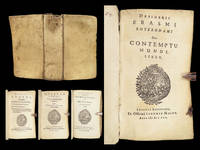
1641ref. 274461641 ERASMUS 1ed Contemptu Mundi Humanism Peace vs War Praise of Medicine 4in1 The "De Contemptu Mundi" was a well-known and iconic genre of apologetic literature throughout history seeing its most frequent examples in the Middle Ages. Authors such as Petrarch Bernard de Cluny and Pope Innocent III all wrote separate examples of "Contemptu Mundi" in which they expressed a strong rejection of the world the materialistic nature of the world and expressed the need for Christian values. Erasmus of Rotterdam wrote his own version of a "Contemptu Mundi" which was likely first published in the 1521. This work however incorporated much of Erasmus's humanist ideals rather than focusing solely on asceticism. This 1641 printing of the works of Erasmus includes not only "Contemptu" but also other notable works such as <!-- if !supportLists-->· <!--endif-->"Querela Pacis" – Erasmus's plea for peace during a time of war in Europe critiques of war and hypocrisy <!-- if !supportLists-->· <!--endif-->"De Virtute Amplectenda Oratio" – treatise extoling the value of a moral life <!-- if !supportLists-->· <!--endif-->"Morte Declamatio" – Erasmus's praise of medicine celebrating physicians and exploring morality with relation to health. Item number: #27446 Price: $599 ERASMUS of Rotterdam Desiderii Erasmi Roterodami De contemptu mundi. Liber Lugd. Batav: ex officinâ Ioannis Maire 1641. First edition. Details: <!-- if !supportLists-->· <!--endif-->Collation: Complete with all pages; 4 parts in 1 <!-- if !supportLists-->o <!--endif-->"Contemptu" – 105 1 <!-- if !supportLists-->o <!--endif-->"De virtue…" – 235 1 <!-- if !supportLists-->o <!--endif-->"Querela" – 76 <!-- if !supportLists-->o <!--endif-->"Consultatio" – 91 1 <!-- if !supportLists-->· <!--endif-->Language: Latin <!-- if !supportLists-->· <!--endif-->Binding: Vellum; tight and secure <!-- if !supportLists-->· <!--endif-->Size: ~5.25in X 3.25in 13.5cm x 8cm Our Guarantee: Very Fast. Very Safe. Free Shipping Worldwide. Customer satisfaction is our priority! Notify us with 7 days of receiving and we will offer a full refund without reservation! Photos available upon request. officinâ Ioannis Maire hardcover
1679ref. 238971679 ERASMUS Rotterdam Colloquies Humanism Renaissance Philosophy War Elzevier "When I have a little money I buy books; and if I have any left I buy food and clothes." ― Erasmus Erasmus's famous 'Colloquies' is a collection of humanistic dialogues on a wide variety of subjects most of which explore man's reactions to other men through conversation. Erasmus and his pupils wrote on war travel religion sleep beggars funerals literature and other topics. According to one expert 'Colloquies' "held up contemporary religious practices for examination in a more serious but still pervasively ironic tone." Coffin This work exposed some of Erasmus's humor through the invention of word games and rhetoric exercises used for education. He wanted culture to serve as a model for those living during the Renaissance. This 1679 edition was published by the famed Elzevier house in Amsterdam. Item number: #23897 Price: $599 ERASMUS Desiderius Des. Erasmi Roterod. Colloquia Amstelodami: Ex officina Elzevirii 1679. Details: <!-- if !supportLists-->· <!--endif-->Collation: Complete with all pages <!-- if !supportLists-->o <!--endif-->20 672 <!-- if !supportLists-->o <!--endif-->Engraved title page <!-- if !supportLists-->· <!--endif-->References: Willems 1563; Coffin Western Civilizations II p463 <!-- if !supportLists-->· <!--endif-->Language: Latin <!-- if !supportLists-->· <!--endif-->Binding: Leather; tight and secure <!-- if !supportLists-->· <!--endif-->Size: ~5.5in X 3.25in 13.5cm x 8cm Our Guarantee: Very Fast. Very Safe. Free Shipping Worldwide. Customer satisfaction is our priority! Notify us with 7 days of receiving and we will offer a full refund without reservation! 23897 Photos available upon request. Elzevirii hardcover
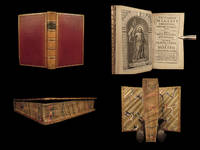
1685ref. 221001685 1ed Erasmus of Rotterdam Enchiridion Militis Christian Knight Soldier Wars"When I have a little money I buy books; and if I have any left I buy food and clothes."― ErasmusWhile best known for his 'In Praise of Folly' and 'Colloquies' Desiderius Erasmus wrote other important works including his book "Enchiridion Militis Christiani". More commonly known as 'Handbook of the Christian Knight' this book is a guidebook for Christians on how to live a Christian life rather than just going through the practices and appearing to be living for Christ.This 1685 edition was published by John Hayes in Cambridge a fine Latin printing of a famous work of Erasmus philosophy and theology.Item number: #22100Price: $750ERASMUS of RotterdamEnchiridion militis Christiani saluberrimis praeceptis refertum . ejusdem de preparatione ad mortem liberCantabrigiae: ex officina Joh. Hayes 1685. 1st editionDetails: • Collation: complete with all pageso 400 8o Includes engraved frontispiece • Language: Latin• Binding: Leather; tight and secureo Stunning red Moroccan leather• Size: ~5.25in X 3.25in 13cm x 8cm• Rare and desirable Our Guarantee:Very Fast. Very Safe. Free Shipping Worldwide.Customer satisfaction is our priority! Notify us with 7 days of receiving and we will offer a full refund without reservation! 22100Photos available upon request. Joh. Hayes hardcover
1761ref. 204771761 In Praise of Folly ERASMUS of Rotterdam French Eisen Illustrated Encomium "When I have a little money I buy books; and if I have any left I buy food and clothes." ― Erasmus In 1509 Erasmus composed his famous essay 'In Praise of Folly' or'Encomium Moraie' which was a satirical attack on superstitions and other unconventional traditions in European society. Since its inception in the early 16th-century it is considered one of the most important works of the Renaissance and helped develop early stages of the Protestant Reformation. Erasmus uses satire to examine doctrine and corruption within the Catholic Church even though Erasmus was devoted deeply to Catholicism. He concludes 'In Praise of Folly' with statements of supporting Christian Protestantism. This highly desirable 1761 edition was translated by Gueudeville and is noteworthy for its inclusion of 14 high quality Eisen plates depicting scenes from the story. Item number: #20477 Price: $599 ERASMUS Desiderius L'eloge de la folie A Paris: 1761. Details: · Collation: Complete with all pages o 6 xxiv 222 o 14 unnumbered leaves of plates · Provenance: Armorial Bookplate – Mr. Varenne · Language: French · Binding: Leather; tight and secure · Size: ~6.75in X 17in 17cm x 10cm Our Guarantee: Very Fast. Very Safe. Free Shipping Worldwide. Customer satisfaction is our priority! Notify us with 7 days of receiving and we will offer a full refund without reservation! 20477 Photos available upon request. hardcover
1668ref. 204991668 Erasmus Colloquies Humanism Rhetoric Philosophy War Latin Elzevier RARE "When I have a little money I buy books; and if I have any left I buy food and clothes." ― Erasmus Erasmus's famous 'Colloquies' is a collection of humanistic dialogues on a wide variety of subjects most of which explore man's reactions to other men through conversation. Erasmus and his pupils wrote on war travel religion sleep beggars funerals literature and other topics. According to one expert 'Colloquies' "held up contemporary religious practices for examination in a more serious but still pervasively ironic tone." Coffin This work exposed some of Erasmus's humor through the invention of word games and rhetoric exercises used for education. He wanted culture to serve as a model for those living during the Renaissance. This 1668 edition was published by the famed Elzevier house in Amsterdam. Item number: #20499 Price: $550 ERASMUS Desiderius Desid. Erasmi Roterodami Colloquia Amstelodami : Typis Danielis Elzevirii 1668. Details: · Collation: Complete with all pages o 8 589 3 o Engraved title page · References: Willems 440; Coffin Western Civilizations II p463 · Language: Latin · Binding: Leather; tight and secure · Size: ~4.75in X 2.5in 12cm x 6.5cm Our Guarantee: Very Fast. Very Safe. Free Shipping Worldwide. Customer satisfaction is our priority! Notify us with 7 days of receiving and we will offer a full refund without reservation! 20499 Photos available upon request. Danielis Elzevirii hardcover
ref. 30656Coloniæ: Martinus Gymnicus excudebat 1545. 8vo 16 632 78 pp. lprinter's woodcut device on title showing a sea horse holding a mast on the top of which is perched a crane and above the crane are the words "Discite Ivsticiam Moniti" contemporary ink signature on fly-leaf and erased early signature on title touching 2 letters occasional ink underscoring some light damp staining later vellum with yapp fore-edges upper cover slightly marked a very good copy. Bibliographie des oeuvres d'Erasme pp.299-300; Not listed in Bibliotheca Erasmiana Bruxellensis. Coloniæ: Martinus Gymnicus excudebat, 1545 hardcover
ref. 27215B. de Graaf Nieuwkoop. Reprint of the 1893 Edition 1961. 3 parts in 2 186; 68; 65pp. orig. cloth. B. de Graaf, Nieuwkoop. (Reprint of the 1893 Edition) 1961 hardcover
ref. 2500621 March 1882; on letterhead of The Avenue 76 Fulham Road S.W. London. See his entry in the Oxford DNB. 3pp 12mo. On bifolium. In good condition lightly aged. He thanks him for ‘letting me try the little horse which I returned to Banks’s. I wrote to them to say that I found him too small for the Victoria. This & his taking too much interest in the subterranian openings alone prevented me from keeping him at once for a hack as his paces & temper seemed to me perfect.’ He sends his compliments to Bristow’s family ‘if they should still recollect me - and the terrible ascent on the “Monks cap” - never to be attempted again by me -’. 21 March 1882; on letterhead of The Avenue, 76 Fulham Road, S.W. [London] unknown
ref. 1020278773.Ghardcover. Good. Access codes and supplements are not guaranteed with used items. May be an ex-library book. hardcover
ref. 9353977355.Gpaperback. Good. Access codes and supplements are not guaranteed with used items. May be an ex-library book. paperback
ref. 1164185128.Gpaperback. Good. Access codes and supplements are not guaranteed with used items. May be an ex-library book. paperback
ref. 1163429678.Ghardcover. Good. Access codes and supplements are not guaranteed with used items. May be an ex-library book. hardcover
ref. 1166492249.Gpaperback. Good. Access codes and supplements are not guaranteed with used items. May be an ex-library book. paperback
ref. 1165951762.Gpaperback. Good. Access codes and supplements are not guaranteed with used items. May be an ex-library book. paperback