BERKELEY, GEORGEBiblio.com

3 721 résultats
1713réf. 55993London Printed by G. James for Henry Clements 1713. 8vo. Contemporary marbled full calf boards prettily rebacked in period style with gilt title-label raised bands and gilt ornamentations to spine. During the re-backing new end-papers have been inserted but the original front end-paper containing old owners' inscriptions has been preserved and is still withbound. Three old owners' names to title-page two of them crossed out. The title-page had been repaired at the outer margin affecting three letters in the last three lines of the subtitle To open a Method for rendering the/ SCIENCES more easy useful and/ compensious namely the "he" in "the" and the "d" in "and" as well as part fo the double-ruled border which has been drawn up again. The final leaf with a somewhat crode repair causing loss of some words towards the hinge. A small hole in A3 not repaired. A bit of brownspotting mostly at beginning and end. With its flaws still and overall acceptable copy of this extremely rare title. 10 166 pp. The very scarce first edition of Berkeley's other magnum opus his great work of metaphysics second in importance only to his "Treatise Concerning the Principles of Human Knowledge" 1710. The present work is not only a popularized version of the "Treatise" though it is a fact that it was more widely studied and more easily understood - being written as an almost Platonian dialogue between Hylas Greek for "matter" - thought to be the representative for John Locke and Philonous Greek for "the lover of reason" - Berkeley's spokesman - it also constitutes a thorough and elaborated explanation of Berkeley's central ideas and the emergence of many of the principal thoughts that we now associate with him and his anti-materialist philosophy."In this Treatise which does not presuppose in the Reader any Knowledge of what was contained in the former i.e. the "Treatise" it has been my Aim to Introduce the Notions I advance into the Mind in the most easy and familiar manner; especially because they carry with them a great Opposition to the Prejudices of Philosophers which have so far prevailed against the common Sense and natural Notions of Mankind.If the principles which I here endeavour to propagate are admitted true; the Consequences which I think evidently flow from thence are that Atheism and Scepticism will be utterly destroyed many intricate Points made plain great Difficulties solved several useless Parts of Science retrenched Speculation referred to Practise and Men reduced from Paradoxes to common Sense" Preface pp. 7-8.In the present work Berkeley one of the greatest thinkers of early modern philosophy sets out to alter the direction of philosophy and set straight the boundaries of man's knowledge of himself and the world around him. He seeks to bring back man to common sense and to bring back science and knowledge to that which is essential and factual. In the present work he famously defends the idealism because of which he is still considered one of the greatest metaphysicians ever. As his "Treatise" is remembered today for the famous phrase "Esse est percipi" - to be is to be perceived - so his "Dialogues" is remembered for the introduction of the perceptual relativity argument stating that the same object can have different characteristics e.g. shape colour etc. depending on the perspective of the observer e.g. distance angle light etc. Furthermore as Berkeley had used God in the "Principles" as the CAUSE or originator of our ideas of sense in the "Dialogues" he brings God a very important step further stating that our ideas must EXIST IN God when not perceived by us thus seeing this as the warrant for the continuity of our ideas God being unchanging. This leap from claiming that God must cause our ideas to claiming that our ideas must exist in God that Berkeley thus takes in the "Dialogues" is among the most important within his philosophy guaranteeing continuous existence to physical objects. The work is considered the foremost representative of Berkeley's phenomenalism."George Berkeley Bishop of Cloyne was one of the great philosophers of the early modern period. He was a brilliant critic of his predecessors particularly Descartes Malebranche and Locke. He was a talented metaphysician famous for defending idealism that is the view that reality consists exclusively of minds and their ideas. Berkeley's system while it strikes many as counter-intuitive is strong and flexible enough to counter most objections. His most-studied works the Treatise Concerning the Principles of Human Knowledge Principles for short and Three Dialogues between Hylas and Philonous Dialogues are beautifully written and dense with the sort of arguments that delight contemporary philosophers. He was also a wide-ranging thinker with interests in religion which were fundamental to his philosophical motivations the psychology of vision mathematics physics morals economics and medicine. Although many of Berkeley's first readers greeted him with incomprehension he influenced both Hume and Kant and is much read if little followed in our own day." SEP.Berkeley published his first important philosophical work "Essay Toward a New Theory of Vision" in 1709 aged 24. The book was well-received and a second edition came out later that same year. The following year he published "A Treatise Concerning the Principles of Human Knowledge" in which he sought to lay out a complete philosophical system based on the idea that the only existing entities in the world are ideas and the mind that perceives them. The work was not very well received however. This did not affect his search for truth though and he continued the outlay of his philosophical system in his "Three Dialogues between Hylas and Philonous" which was printed in 1713. Though neither of the two works were well received and appeared in small numbers they are by far the most important and enduring of all of his works. The view that he presents in the "Dialogues" is that which he called "immaterialism" now "idealism". He considered this anti-materialism the perfect answer to and refutation of skepticism and atheism and his theories later became the foundation of much idealistic philosophy."Upon the common Principles of Philosophers we are not assured of the Existence of Things from their being perceived. And we are taught to distinguish their real Nature from that which falls under our Senses. Hence arise Scepticism and Paradoxes. It is not enough that we see and feel that we taste and smell a thing. Its true Nature its absolute external Entity is still concealed. For tho it be the Fiction of our own Brain we have made it inaccessible to all our Faculties. Sense is fallacious Reason defective. We spend our Lives in doubting of those things which other Men evidently know and believing those things which they laugh at and despise." Preface p. 6.The first edition of this important work is very difficult to find. It was published in an edition together with the "Treatise" in 1734 which though also scarce is the edition of the work that most libraries and institutions have in their holdings seeing that the first editions of both works are of even greater scarcity. We have only been able to locate three copies in libraries worldwide. hardcover
1929réf. 2824Garden City: Doubleday Doran & Company Inc. / The Crime Club Inc 1929. First American Edition. Attractive copy of this Haycraft-Queen cornerstone title and Berkeley's fifth novel featuring detective Roger Sherringham. A Crime Club offers to crack a case which has stumped Scotland Yard involving an accidental death by poisoned chocolates intended for a member of the aristocracy. Hubin p.32; Pronzini & Muller pp.56-57. First Printing. Octavo 19.5cm; black cloth with titling and decorations stamped in red on spine and front cover; dustjacket; x2993pp. Faint suggestion of foxing to upper edge of textblock else Fine and clean throughout. Dustjacket is unclipped priced $2.00 showing minimal wear to extremities a few tiny tears and an old circular splash mark to lower front panel noticeable only on verso; Near Fine. Doubleday, Doran & Company, Inc. / The Crime Club, Inc unknown
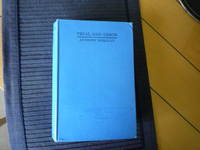
réf. PSHB7164Hodder & Stoughton 1937. 1st edition. Hardcover. Blue boards in near fine condition slight bumping at extremities pages very clean bar a little spotting on the front block and on the first and last few leaves and a small patch on the lower text block. Overall a nice copy of this non-Sheringham crime novel. Hodder & Stoughton, 1937 hardcover
1747réf. 52088à Amsterdam: Chez Pierre Mortier 1747. Fine. Chez Pierre Mortier à Amsterdam 1747 10 x 17 cm relié First edition. The French edition was expanded with additions and corrections communicated by Berkeley to Bouillier before he began his translation. Title page in red and black. Contemporary brown speckled sheep binding. Raised-band spine richly decorated roulette at foot. Red morocco title-label. Headcap torn away. Tailcap worn. Joints cracked at head and foot. 2 wormholes on spine. Small nibbling to last leaf in upper margin on less than one cm. Fairly good copy. Tar water was a medicine used since the Middle Ages composed of pine or birch tar. Its use spread in 18th-century England. Berkeley describes for the first time its use in a wide variety of cases and wonders whether it might not be the universal panacea. He extrapolates as to its efficacy from a study of mind and soul of which ether would be the divine instrument and the thing that binds beings together. Tar water would be used in various forms until the end of the 19th century. Bergson particularly appreciated the philosophical qualities of the treatise. Chez Pierre Mortier unknown
réf. 6131684741Cosimo Incorporated . Hardback. New. pp. 452 Cosimo, Incorporated hardcover
réf. 6131550800Papeback. New. pp. 540 unknown
réf. DADAX0231083254New unknown
1948réf. 015502Menasha: Association for Symbolic Logic 1948. First Edition . Grey-blue Wrappers. Very Good. An unmarked copy with age toning along some edges in the original printed wrappers. Scarce in this the original publication state. Wrappers age-toned at edges; a small semicircular dampspot at foredge visible beginning p14 and becoming larger until about 1/2" deep and 1 1/2" wide on rear cover. Association for Symbolic Logic unknown
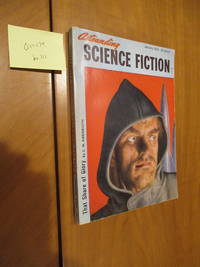
1952réf. 022174New York: Street & Smith 1952. First Edition . Soft cover. Very Good . Color Covers And B/W Interior Illustrations Including Photographs Of Computer Installations Nin 1950. Short Article By Berkeley Discussing Computers. A Nice Copy Slight Usage. Street & Smith paperback
1956réf. 020083New York: Reinhold Publishing Company 1956. 1st Edition 1st Printing. Hardcover. Very Good /Very Good DJ. 366 Pp. Green Cloth Gilt On Black. First Edition. Light Wear No Names Or Marks Contents Crisp. Dust Jacket With Light Wear 3/8" X 1/2" Chip At Top Of Spine 1 3/8" X 1/8" Loss At Top Of Front Flap Fold Small Chips At Corners. Reinhold Publishing Company hardcover
2009réf. DADAX1600105319Library of American Comics 2009-10-06. First Edition. hardcover. New. 8.40x1.20x11.30. Buy with confidence. Excellent Customer Service & Return policy. Library of American Comics hardcover
2011réf. DADAX1844077780Routledge 2011-11-21. 1. paperback. New. 6.85x0.80x9.69. Buy with confidence. Excellent Customer Service & Return policy. Routledge paperback
réf. DADAX0198235097New unknown
réf. DADAX019926628XNew unknown
réf. DADAX0230102808New unknown
réf. DADAX0387008926New unknown
réf. DADAX0387204296New unknown
réf. DADAX0415063736New unknown
réf. DADAX0520039483New unknown
réf. DADAX0520231821New unknown
réf. DADAX0520233549New unknown
réf. DADAX0520220641New unknown
réf. DADAX0520238184New unknown
réf. DADAX0520237676New unknown
réf. DADAX0521450330New unknown