Berkeley, RogerBiblio.com
3 647 résultats
2002réf. DADAX0632057580Wiley-Interscience 2002-07-15. 1. hardcover. New. 6.95x0.92x10.00. Buy with confidence. Excellent Customer Service & Return policy. Wiley-Interscience hardcover
1670réf. 500020133London: J. Macock for Royston 1670. First. . Hardcover. Poor. 12mo. 159pp. rare but imperfect missing pages 35/6 & 145/6 binding cracked in several places back board detached J. Macock for Royston hardcover
réf. RED8TW5JOQX6THE BERKELEY REVIEW. paperback. Like New. in x in x in. THE BERKELEY REVIEW paperback
1844réf. 024836New York: James Mowatt & Co. Brown three quarter leather cover with black boards and gilt spine title. Book plate on the front end paper moderate foxing. MC . Very Good. Hardcover. First Edition. 1844. James Mowatt & Co. hardcover
1925réf. P1-MMNG-PSQZJan 01 1925. Unknown Binding. Good. unknown
réf. 52107680-nnew. unknown
réf. 51720900-nnew. unknown
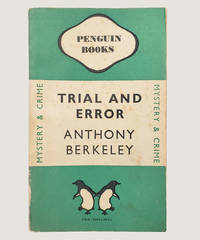
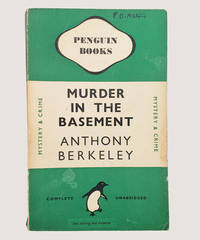
1947réf. 12351Harmondsworth Middlesex; Penguin Books 1947. 1947. Paperback. First Penguin Edition. Softcover octavo pp. 309 1 adverts to rear. Publisher's original green and white soft card wraps. Historic adhesive marks to small area of half-title. Lower portion of hinge is cracked and wraps show light foxing with small areas of loss to spine. A very good copy. Penguin Crime series no. 590. A complex crime novel in which Lawrence Todhunter is in the unusual position of having to prove to the police that he killed obnoxious Jean Norwood instead of their prime suspect Vincent Palmer who has already confessed his guilt. Harmondsworth, Middlesex; Penguin Books, 1947. paperback
2010réf. DADAX1166340007Kessinger Publishing 2010-09-10. paperback. New. 6.00x1.41x9.00. Buy with confidence. Excellent Customer Service & Return policy. Kessinger Publishing paperback
2010réf. DADAX1167005910Kessinger Publishing 2010-09-10. paperback. New. 6.00x0.75x9.00. Buy with confidence. Excellent Customer Service & Return policy. Kessinger Publishing paperback
2010réf. DADAX1165802775Kessinger Publishing 2010-09-10. paperback. New. 6.00x0.75x9.00. Buy with confidence. Excellent Customer Service & Return policy. Kessinger Publishing paperback
2012réf. DADAX0521158656Cambridge University Press 2012-03-29. Reprint. paperback. New. 5.50x1.36x8.50. Buy with confidence. Excellent Customer Service & Return policy. Cambridge University Press paperback
1947réf. 12352Harmondsworth Middlesex; Penguin Books 1947. 1947. Paperback. FIRST PENGUIN EDITION. Softcover octavo pp. 192. Publisher's original green and white soft card wraps. Bookseller's price stamp to half-title. Small chips to edge of upper wrap and half-title. Previous owner's name neatly written on upper wrap small 1 cm approx. tear to spine tail with a touch of soiling to wraps. Publishers' price neatly amended on upper wrap. Penguin Crime series no. 591. John Waterhouse attempts to identify his friend's poisonous murderer. Rare. Harmondsworth, Middlesex; Penguin Books, 1947. paperback
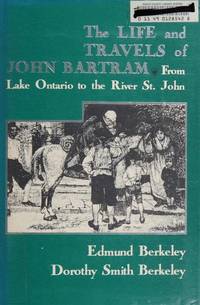
1982réf. 55420University Presses Of Florida 1982. First Edition. Hardcover. Very Good Light Marginal Fade To Jacket Owner Name At Fep. Sm Quarto. B & W PHOTOS AND ILLUSTRATIONS. A QUAKER FARMER ON THE TRAIL OF THE NATURAL WORLD IN AMERICA IN THE 18TH CENTURY University Presses Of Florida hardcover
réf. 26448040-nnew. unknown
réf. 42933726like new. unknown
2010réf. DADAX1140795376Gale Ecco Print Editions 2010-05-27. paperback. New. 9.68x0.80x7.44. Buy with confidence. Excellent Customer Service & Return policy. Gale Ecco, Print Editions paperback
1970réf. Alibris.0015876Baltimore: Mono Book Corp. 1970. First edition. . Hard cover. Very good. No dust jacket. light shelfwear po name. viii 246 p. illus. 24 cm. Includes Illustrations. Mono Book Corp. hardcover
réf. DADAX0815352905Routledge 2019-12-10. 1. hardcover. New. 7.20x0.80x10.10. Buy with confidence. Excellent Customer Service & Return policy. Routledge hardcover
1933réf. Alibris.0009915Doubleday Crime Club 1933. First edition. . Hard cover. Very good. No dust jacket. moderate shelfwear po name in pencil first stated. 296 p. Doubleday Crime Club hardcover
1713réf. 55993London Printed by G. James for Henry Clements 1713. 8vo. Contemporary marbled full calf boards prettily rebacked in period style with gilt title-label raised bands and gilt ornamentations to spine. During the re-backing new end-papers have been inserted but the original front end-paper containing old owners' inscriptions has been preserved and is still withbound. Three old owners' names to title-page two of them crossed out. The title-page had been repaired at the outer margin affecting three letters in the last three lines of the subtitle To open a Method for rendering the/ SCIENCES more easy useful and/ compensious namely the "he" in "the" and the "d" in "and" as well as part fo the double-ruled border which has been drawn up again. The final leaf with a somewhat crode repair causing loss of some words towards the hinge. A small hole in A3 not repaired. A bit of brownspotting mostly at beginning and end. With its flaws still and overall acceptable copy of this extremely rare title. 10 166 pp. The very scarce first edition of Berkeley's other magnum opus his great work of metaphysics second in importance only to his "Treatise Concerning the Principles of Human Knowledge" 1710. The present work is not only a popularized version of the "Treatise" though it is a fact that it was more widely studied and more easily understood - being written as an almost Platonian dialogue between Hylas Greek for "matter" - thought to be the representative for John Locke and Philonous Greek for "the lover of reason" - Berkeley's spokesman - it also constitutes a thorough and elaborated explanation of Berkeley's central ideas and the emergence of many of the principal thoughts that we now associate with him and his anti-materialist philosophy."In this Treatise which does not presuppose in the Reader any Knowledge of what was contained in the former i.e. the "Treatise" it has been my Aim to Introduce the Notions I advance into the Mind in the most easy and familiar manner; especially because they carry with them a great Opposition to the Prejudices of Philosophers which have so far prevailed against the common Sense and natural Notions of Mankind.If the principles which I here endeavour to propagate are admitted true; the Consequences which I think evidently flow from thence are that Atheism and Scepticism will be utterly destroyed many intricate Points made plain great Difficulties solved several useless Parts of Science retrenched Speculation referred to Practise and Men reduced from Paradoxes to common Sense" Preface pp. 7-8.In the present work Berkeley one of the greatest thinkers of early modern philosophy sets out to alter the direction of philosophy and set straight the boundaries of man's knowledge of himself and the world around him. He seeks to bring back man to common sense and to bring back science and knowledge to that which is essential and factual. In the present work he famously defends the idealism because of which he is still considered one of the greatest metaphysicians ever. As his "Treatise" is remembered today for the famous phrase "Esse est percipi" - to be is to be perceived - so his "Dialogues" is remembered for the introduction of the perceptual relativity argument stating that the same object can have different characteristics e.g. shape colour etc. depending on the perspective of the observer e.g. distance angle light etc. Furthermore as Berkeley had used God in the "Principles" as the CAUSE or originator of our ideas of sense in the "Dialogues" he brings God a very important step further stating that our ideas must EXIST IN God when not perceived by us thus seeing this as the warrant for the continuity of our ideas God being unchanging. This leap from claiming that God must cause our ideas to claiming that our ideas must exist in God that Berkeley thus takes in the "Dialogues" is among the most important within his philosophy guaranteeing continuous existence to physical objects. The work is considered the foremost representative of Berkeley's phenomenalism."George Berkeley Bishop of Cloyne was one of the great philosophers of the early modern period. He was a brilliant critic of his predecessors particularly Descartes Malebranche and Locke. He was a talented metaphysician famous for defending idealism that is the view that reality consists exclusively of minds and their ideas. Berkeley's system while it strikes many as counter-intuitive is strong and flexible enough to counter most objections. His most-studied works the Treatise Concerning the Principles of Human Knowledge Principles for short and Three Dialogues between Hylas and Philonous Dialogues are beautifully written and dense with the sort of arguments that delight contemporary philosophers. He was also a wide-ranging thinker with interests in religion which were fundamental to his philosophical motivations the psychology of vision mathematics physics morals economics and medicine. Although many of Berkeley's first readers greeted him with incomprehension he influenced both Hume and Kant and is much read if little followed in our own day." SEP.Berkeley published his first important philosophical work "Essay Toward a New Theory of Vision" in 1709 aged 24. The book was well-received and a second edition came out later that same year. The following year he published "A Treatise Concerning the Principles of Human Knowledge" in which he sought to lay out a complete philosophical system based on the idea that the only existing entities in the world are ideas and the mind that perceives them. The work was not very well received however. This did not affect his search for truth though and he continued the outlay of his philosophical system in his "Three Dialogues between Hylas and Philonous" which was printed in 1713. Though neither of the two works were well received and appeared in small numbers they are by far the most important and enduring of all of his works. The view that he presents in the "Dialogues" is that which he called "immaterialism" now "idealism". He considered this anti-materialism the perfect answer to and refutation of skepticism and atheism and his theories later became the foundation of much idealistic philosophy."Upon the common Principles of Philosophers we are not assured of the Existence of Things from their being perceived. And we are taught to distinguish their real Nature from that which falls under our Senses. Hence arise Scepticism and Paradoxes. It is not enough that we see and feel that we taste and smell a thing. Its true Nature its absolute external Entity is still concealed. For tho it be the Fiction of our own Brain we have made it inaccessible to all our Faculties. Sense is fallacious Reason defective. We spend our Lives in doubting of those things which other Men evidently know and believing those things which they laugh at and despise." Preface p. 6.The first edition of this important work is very difficult to find. It was published in an edition together with the "Treatise" in 1734 which though also scarce is the edition of the work that most libraries and institutions have in their holdings seeing that the first editions of both works are of even greater scarcity. We have only been able to locate three copies in libraries worldwide. hardcover
2012réf. DADAX052115863XCambridge University Press 2012-03-29. Reissue. paperback. New. 5.51x1.06x8.50. Buy with confidence. Excellent Customer Service & Return policy. Cambridge University Press paperback
2000réf. DADAX0521498066Cambridge University Press 2000-07-27. paperback. New. 6.00x0.78x9.00. Buy with confidence. Excellent Customer Service & Return policy. Cambridge University Press paperback
réf. DADAX03951210350000-00-00. First Edition. hardcover. New. xx. Buy with confidence. Excellent Customer Service & Return policy. hardcover
réf. DADAX03957334560000-00-00. Revised Updated. paperback. New. 7.75x1.25x11.25. Buy with confidence. Excellent Customer Service & Return policy. paperback