903 résultats
1936réf. 62308Chicago IL: American Hairdresser 309 West Jackson Blvd. 1936. 4to. 159 1 pp. With over 150 text illustrations photos diagrams tables charts. Colour-illustrated softcovers wire comb-binding as issued minor edgewear slight rubbing some age toning still VG copy w/ faint former ownership marking on front cover. 8th edition of this uncommon work issued by American Hairdresser trade magazine during the Great Depression designed to not only offer the latest hair styles techniques products and equipment but also offering advice on how to expand the business increase sales introduce properly lighted window displays and introduce massage and other health & beauty services. Kozlay 1898-1987 was columnist printer editor and publisher for American Hairdresser following the death of her father Charles Kozlay in 1924 and was the essential force behind the in-house magazine quickly expanding in the 1930’s. She contracted with such names as Oster Belvedere Andis Takara Belmont and Helene Curtis along with Revlon to introduce new products and marketing strategies. The American Hairdresser also actively promoted chemical products developed by Inecto Zotos which would both permanently wave hair without electric curling and straighten curly hair for the African-American market. No copies in Worldcat 1934 6th ed. at Bowling Green. American Hairdresser, 309 West Jackson Blvd., paperback
réf. 201804718Agen, Imprimerie Moderne, 1952 ; in-8, 18 pp., br. Broché très bon état - dedicace de l'auteur.
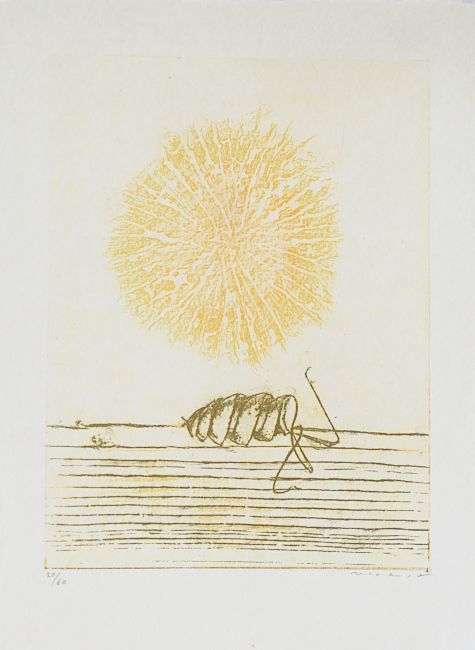
1971réf. 61018Stuttgart, Belser-Presse, 1971. Gr.-Fol. Mit 3 Orig.-Farblithographien von Max Ernst sowie einer signierten Suite der Graphiken auf Japanpapier. 79 S., 1 Bl., Blauer OLdr.-Bd. m. blindgepr. Deckel- u. goldgepr. Rückentitel u. OLwd.-Mappe m. Deckelschild (Suite), zus. in OLwd.-Kassette m. goldgepr. Deckelschild.
1931réf. 63302Hollywood CA: Beauty Arts Institute 1931. 8vo. 240 pp. With text illustrations throughout by Winfield Scott Hoskins. Red publisher’s cloth Art Deco cover art illustration by Hoskins minor sunning & soiling to spine minor fraying to head of spine faint tidemark at gutter margin foot ffep. still a G bright copy. Third printing of this surprisingly uncommon cosmetology work issued by this husband and wife team who operated the Beauty Arts Institute industrial school of cosmetology in Hollywood CA during the studio system heyday. They also offered classes treatments and advice on diet health exercise hair and skin treatments plastic surgery and beauty improvements to increase the woman’s self-esteem and improve opportunities with suitors and employers. Unfortunately during the Great Depression the school closed and Viola 1894-1978 became a home economics teacher until retirement with Fremont High School in Los Angeles. Hoskins 1905-1961 was a Fleischer Studio cartoonist and animator in Hollywood who became a book illustrator gained recognition for his illustrations of the 1942 “Golden Book of Fairytales” for Little Golden Books and also an artist in Los Angeles during the 1930’s and following World War II. Worldcat locates 6 copies Stanford Claremont DLC Cleveland Pub. Free Lib. of Phil. LA Public. Beauty Arts Institute, hardcover
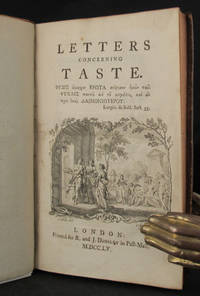
1755réf. 33167London: Printed for R. and J. Dodsley in Pall-Mall 1755. First Edition. A copy with fine provenance having belonged to John Rutherfurd Senator for the State of New Jersey from 1791-1798. With beautifully engraved title-page by the renown artist Samuel Wale engraved head and tail-pieces throughout. 8vo contemporary polished calf the spine with raised bands gilt ruled red morocco lettering label gilt. xiv 143 pp. A fine copy beautifully preserved tight strong clean crisp and unpressed. RARE FIRST EDITION IN FINE CONTEMPORARY CALF. Letters Concerning Taste is considered the first volume on the subject of taste. Written in an epistolary style the work sets out letters to classical figures such as Euphemius Philemon Leonora and Eugenio. Writings about art and creativity can be traced to the texts of classical antiquity but aesthetics as a separate and systematic area of philosophy is almost wholly a product of the 18th century. It was at that time that philosophers began to treat notions about creativity and our responses to it with a kind of philosophical rigour found in epistemology and metaphysics. 18th-century authors such as John Gilbert Cooper sought to define what poetry literature painting and sculpture were and to determine the links between the various forms of artistic expression. John Gilbert Cooper who lived from 1722 until 1769 was a British poet and writer. He first published poetry in 1742 and occasionally until he became a regular contributor to "The Museum" which was published by Robert Dodsley. His contributions to Dodsley's journal was under the nom de plume of "Philaretes". Cooper's claim to notability comes from his prose poetry and a public row he had with William Warburton. He also inspired a noted painting by Joseph Wright of Derby. The painting entitled Miravan Breaking Open the Tomb of his Ancestors was based on a story in these LETTERS CONCERNING TASTE. Cooper had recounted a story where a greedy nobleman despoils his ancestor's grave in search of riches to find himself cursed by his ancestor. The work was "highly praised by Johnson". Pickering Samuel Wale became one of the original members of the Society of Artists of Great Britain in 1765 and of the Royal Academy in 1768 and was the first professor of perspective to the Academy. He exhibited drawings of scenes from English history. A significant part of his artistic work was in designing vignettes and illustrations for the important booksellers of the day; a large number these were engraved by Charles Grignion the Elder. Among them were the illustrations to the ‘History of England’ 1746–7; ‘The Compleat Angler’ 1759; ‘London and its Environs described’ 1761. John Rutherfurd attended the College of New Jersey which is now Princeton University where he studied law. After graduating Rutherfurd practiced law in New York City for several years. In 1787 he moved to a farm near Green Township New Jersey in Sussex County New Jersey. He entered politics in 1788 serving in the New Jersey General Assembly until 1790. He was then elected as a Federalist to the United States Senate from New Jersey and served in the Senate from 1791 to 1798. In 1808 Rutherfurd moved with his family to a farm on the banks of the Passaic River near what is now Rutherford New Jersey which was a least partially named after him. He lived at this place for the rest of his life naming it "Edgerston". And it is the "Edgerston" plate that is in the book confirming its provenance. Printed for R. and J. Dodsley in Pall-Mall hardcover
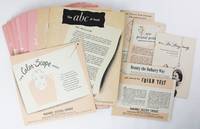
1948réf. 6373New York 1948. Very good. Thirty-six parts plus twelve extra brochures. With original envelopes. Light wear. The complete six week mail order course for debutante success. First published in 1940 and re-copyrighted every subsequent year the DuBarry Success Course was originated by the Richard Hudnut Salon in New York City. It was originally designed to assist debutantes with their coming out -- and as a means to sell DuBarry cosmetics. The course focused heavily on low-calorie dieting purgatives light calisthenics and correct hair and makeup application. In addition to the six week course included here is a quick index to the course materials a "charm test" and a color-scope chart together with tissue papers to help you determine your best colors and what makeup to wear with what dress. A complete look at how to be a "correct" 1940s woman. unknown
1952réf. 6374New York 1952. Very good. Eleven volumes. 32320pp. Folio. Original printed pictorial wrappers. First volume with two sets of contents loose. Light wear else. A ten part course -- plus the personal analysis guide -- on how to be a charming woman. The course contains daily lessons on beauty charm etiquette hair care diet exercise makeup etc. including a color chart to best complement for your hair and skin type. The editor Helen Fraser also published a work on fashion modeling. We locate several iterations though the present set most closely resembles an exemplar held by the University of Rochester. unknown
1948réf. 6373New York 1948. Very good. Thirty-six parts plus twelve extra brochures. With original envelopes. Light wear. The complete six week mail order course for debutante success. First published in 1940 and re-copyrighted every subsequent year the DuBarry Success Course was originated by the Richard Hudnut Salon in New York City. It was originally designed to assist debutantes with their coming out -- and as a means to sell DuBarry cosmetics. The course focused heavily on low-calorie dieting purgatives light calisthenics and correct hair and makeup application. In addition to the six week course included here is a quick index to the course materials a "charm test" and a color-scope chart together with tissue papers to help you determine your best colors and what makeup to wear with what dress. A complete look at how to be a "correct" 1940s woman. unknown books
1952réf. 6374New York 1952. Very good. Eleven volumes. 32320pp. Folio. Original printed pictorial wrappers. First volume with two sets of contents loose. Light wear else. A ten part course -- plus the personal analysis guide -- on how to be a charming woman. The course contains daily lessons on beauty charm etiquette hair care diet exercise makeup etc. including a color chart to best complement for your hair and skin type. The editor Helen Fraser also published a work on fashion modeling. We locate several iterations though the present set most closely resembles an exemplar held by the University of Rochester. unknown books
2005cm. 15 x 21, xxxviii-256 pp. con 1 tav. f.t. e molti es. mus. n.t. Fondazione Giorgio Cini - Istituto Venezia e l'Oriente. Orientalia Venetiana Un?indagine centrata sulla ricostruzione del significato dell?esperienza musicale in Cina sia in ambito teorico che applicativo. Abbandonato il dubbio tentativo di sistematizzare le sfaccettature di una esperienza tanto complessa all?interno di una meta-teoria musicale, si ? privilegiata l?individuazione di specifici ?itinerari di senso? che testimoniano la variet? delle risposte cinesi agli interrogativi sul ?significato? della musica. Each study in this volume explores and clarifies one or more aspects of the multifaceted nature of Chinese musical experience, focusing on its construction of meaning, both in the theoretical debate and in the realm of practice. Rather than attempting to construct some kind of meta-theory for the comprehension of Chinese music as a whole, it aims at reconstructing local itineraries of ?sense? deriving from context and comparison, to show the extraordinary variety of responses given in China to the problem of musical meaningfulness. Inglese 420 gr. xxxviii-256 p.
1662réf. 73016London 1662. 8vo. 1800-talls skinnryggbind med svakt opphøyde ryggbånd og enkel ryggforgylling. Helt gullsnitt. Gravert frontispiece. 10 262 2 blanke 112 s. Printed for R. Royston Engelsk. Med hilsen fra 1800-tallet på forsatsbladet. unknown
1990réf. 2090502113717025Not Available 1990. Soft Cover. Fine. The book is in fine condition. Not Available paperback
1959réf. AUB-182Neuchâtel, éd. Delachaux & Niestlé 1959. Bel exemplaire relié, couverture et reliure pleine toile ornées d'éd., gd in-8, 326 pages avec annexes.
196731 pages Features: Beausejour's Glass Works - History of the Manitoba Glass Mfg. Co. Ltd. at Beausejour, Manitoba; Beauty in Ontario's Pioneer Coverlets; There's Something Heart-warming About a Log Cabin; Those Puzzles in Porcelain - Eighteenth Century English porcelain dishes; Dutch Mirror of History - A journey down Amsterdam's Mirror Street (Spiegelstraat); and Sheraton Chairs - A Brief Look at (Thomas) Sheraton, the Supreme Chair-Man. Minimal wear. Small mailing label top left back cover. Minor soiling on back cover. Front cover and contents clean and unmarked. A sound copy. Magazine
1953192 pages. Features: Jergens ad with photos of Virginia Mayo and Michael O'Shea; Let's Go Dutch; Assignment in Hollywood; Nice color Tide ad; Alcoholism; Bell Telephone ad features photo of Chief Operator Mrs. Esther Davies; Lovely Ivory soap ad includes photo of Anne Viggers; Color ad for Youngstown Kitchens; Color Hunt's Catsup ad; Should all opera be given here in English?; Color Camay ad features Mrs. William Landmark; The Longest Walk in the World - story by Adela R. St. Johns; Wife of the Party; On the Other Side of the Road; Lose Weight on 5 meals per day; The Kent Affair - story by Richard Sherman (part 3 of 4); A Short Story about Princess, by Val Teal; The high cost of being a bridesmaid; Buffet recipes and photos; Sleep disturbances in infancy; Color-photo Duz detergent ad features photos of Mrs. Charles McClelland of Geneva, Alabama, Mrs. Robert F. Young of Fort Worth, Texas, and Phyllis Walker of Charleston, West Virginia; Nice color-photo Prell ad; The beauty clinic; Photo of Mrs. David A. Drexel in Pond's ad; Photo of California's Lieutenant-Governor Goodwin J. Knight presenting blue ribbon award to Mrs. P.J. Hodge of Hemet, California; Lovely color-photo fashion section; Springs Cotton Mills color-photo ad features Miss Vivian Blaine; Photo-illustrated article on girdles and bras; Color Joy dish soap ad on back cover; and much, much more. Average wear. A worthy vintage copy of this charming issue. Magazine
1971réf. 208851971. Photo archive of African American fashion models and a regional beauty pageant winner 1960s-1970s documents Black women's participation in commercial modeling and organized pageantry during a period of changing representation in American media. The images center on professional studio photography and promotional portraiture recording how Black women were presented within fashion and beauty industries that had long limited their inclusion. The archive includes a press photograph of Fern Tresvan crowned Miss Black Colorado and advanced to national competition at Madison Square Garden alongside a sustained series of modeling images of Carol King a Los Angeles based model whose career intersected with music and entertainment industries. Seven black and white silver gelatin photographs most measuring approximately 8 x 10 inches with one elongated print measuring about 5 x 10 inches. Six studio photographs depict Carol King across multiple shoots in Los Angeles attributed to Models International and Greg Mendes studios showing variations in hairstyle dress and pose over roughly a decade. Early images show King in a poolside setting with short hair while later photographs present her in a range of late 1960s and early 1970s fashions including a belted one piece swimsuit with heels a sleeveless dress posed against a leopard patterned textile a mini dress and a long sleeve floral gown. The remaining photograph is a 1971 press image of Tresvan documenting her title as Miss Black Colorado and participation in national pageant competition. Produced during the decades surrounding the Civil Rights Movement the archive situates Black women within expanding but still contested spaces of visual culture fashion and public recognition. The combination of studio modeling and pageant imagery reflects parallel avenues through which African American women gained visibility in print media and public events supporting research into race gender and representation in mid twentieth century American culture. Minor edge wear; prints remain clean and well preserved; overall very good condition. unknown
1971réf. 208851971. Photo archive of African American fashion models and a regional beauty pageant winner 1960s-1970s documents Black women's participation in commercial modeling and organized pageantry during a period of changing representation in American media. The images center on professional studio photography and promotional portraiture recording how Black women were presented within fashion and beauty industries that had long limited their inclusion. The archive includes a press photograph of Fern Tresvan crowned Miss Black Colorado and advanced to national competition at Madison Square Garden alongside a sustained series of modeling images of Carol King a Los Angeles based model whose career intersected with music and entertainment industries. Seven black and white silver gelatin photographs most measuring approximately 8 x 10 inches with one elongated print measuring about 5 x 10 inches. Six studio photographs depict Carol King across multiple shoots in Los Angeles attributed to Models International and Greg Mendes studios showing variations in hairstyle dress and pose over roughly a decade. Early images show King in a poolside setting with short hair while later photographs present her in a range of late 1960s and early 1970s fashions including a belted one piece swimsuit with heels a sleeveless dress posed against a leopard patterned textile a mini dress and a long sleeve floral gown. The remaining photograph is a 1971 press image of Tresvan documenting her title as Miss Black Colorado and participation in national pageant competition. Produced during the decades surrounding the Civil Rights Movement the archive situates Black women within expanding but still contested spaces of visual culture fashion and public recognition. The combination of studio modeling and pageant imagery reflects parallel avenues through which African American women gained visibility in print media and public events supporting research into race gender and representation in mid twentieth century American culture. Minor edge wear; prints remain clean and well preserved; overall very good condition. unknown books
2001réf. 2092902141206054People's Literature 2001. Soft Cover. Fine. Volume: 1 People's Literature paperback
2001A clean, unmarked book with a tight binding. Full blue cloth boards with gilt title and decoration. Slightly bumped corners. 7 3/4"w x 11 1/4"h. 476 pages. Many photos and illustrations. "In The Phenomenon of Life.... Alexander proposes a scientific view of the world in which all space-matter has perceptible degrees of life and sets this understanding of order as an intellectual basis for a new architecture."
2002A clean, unmarked book with a tight binding. Full blue cloth boards with gilt title and decoration. 7 3/4"w x 11 1/4"h. 636 pages. Many photos and illustrations.
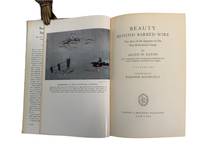
1952réf. 237181952. Japanese American art and craft survey published in 1952 documenting the cultural practices sustained within the War Relocation Authority camps during the Second World War. Allen H. Eaton records calligraphy painting embroidery wood carving miniature landscapes flower arrangement garden construction and tea ceremony as practices carried into confinement and adapted to barracks mess halls and the materials available within camp boundaries. Photographs identify artists teachers and makers at Amache Heart Mountain Manzanar Rohwer Poston Tule Lake and other incarceration sites preserving names and objects that official administrative accounts often treated as incidental to camp operations. Eaton Allen H. Beauty Behind Barbed Wire: The Arts of the Japanese in Our War Relocation Camps. New York: Harper & Brothers 1952. Foreword by Eleanor Roosevelt. Illustrated. 8vo. 128 pages. Eaton organizes the volume around the work produced by incarcerated Japanese Americans with photographs and extended captions describing materials makers and camp settings. Subjects include pine bark panels carved at Amache; miniature landscapes developed at Amache; a Rohwer calligrapher whose skill was "deeply respected by his neighbors"; flower arrangement classes and exhibitions at Rohwer; Estelle Ishigo's painting "Winter" depicting snowbound barracks at Heart Mountain; ornamental entrances and planted yards at Poston and Manzanar; and tea ceremony classes at Tule Lake intended to preserve "dignity and poise while meeting difficult problems." The frontispiece reproduces an embroidery made at Heart Mountain by Mrs. Makagawa combining the camp barracks barbed wire and the snow covered mountain beyond. Published a decade after Executive Order 9066 initiated the forced removal and incarceration of more than 120000 people of Japanese ancestry Eaton's book shifted attention from federal policy and camp administration to the objects and environments created by those confined. Its pages record how residents transformed scrap lumber desert plants stones discarded containers and improvised tools into carved panels gardens bonsai furnishings paintings and ceremonial spaces. Eleanor Roosevelt's foreword places these works within a critique of wartime incarceration while Eaton's captions preserve both the language of the period and detailed evidence of artistic instruction exhibition and exchange inside the camps. Jacket heavily worn stained chipped and torn with substantial losses at the spine and upper edges; with text and illustrated pages generally clean and legible. Overall good condition. A detailed postwar record of cultural continuity artistic labor and the remaking of domestic and ceremonial space under Japanese American incarceration. unknown
1952réf. 237181952. Japanese American art and craft survey published in 1952 documenting the cultural practices sustained within the War Relocation Authority camps during the Second World War. Allen H. Eaton records calligraphy painting embroidery wood carving miniature landscapes flower arrangement garden construction and tea ceremony as practices carried into confinement and adapted to barracks mess halls and the materials available within camp boundaries. Photographs identify artists teachers and makers at Amache Heart Mountain Manzanar Rohwer Poston Tule Lake and other incarceration sites preserving names and objects that official administrative accounts often treated as incidental to camp operations. Eaton Allen H. Beauty Behind Barbed Wire: The Arts of the Japanese in Our War Relocation Camps. New York: Harper & Brothers 1952. Foreword by Eleanor Roosevelt. Illustrated. 8vo. 128 pages. Eaton organizes the volume around the work produced by incarcerated Japanese Americans with photographs and extended captions describing materials makers and camp settings. Subjects include pine bark panels carved at Amache; miniature landscapes developed at Amache; a Rohwer calligrapher whose skill was "deeply respected by his neighbors"; flower arrangement classes and exhibitions at Rohwer; Estelle Ishigo's painting "Winter" depicting snowbound barracks at Heart Mountain; ornamental entrances and planted yards at Poston and Manzanar; and tea ceremony classes at Tule Lake intended to preserve "dignity and poise while meeting difficult problems." The frontispiece reproduces an embroidery made at Heart Mountain by Mrs. Makagawa combining the camp barracks barbed wire and the snow covered mountain beyond. Published a decade after Executive Order 9066 initiated the forced removal and incarceration of more than 120000 people of Japanese ancestry Eaton's book shifted attention from federal policy and camp administration to the objects and environments created by those confined. Its pages record how residents transformed scrap lumber desert plants stones discarded containers and improvised tools into carved panels gardens bonsai furnishings paintings and ceremonial spaces. Eleanor Roosevelt's foreword places these works within a critique of wartime incarceration while Eaton's captions preserve both the language of the period and detailed evidence of artistic instruction exhibition and exchange inside the camps. Jacket heavily worn stained chipped and torn with substantial losses at the spine and upper edges; with text and illustrated pages generally clean and legible. Overall good condition. A detailed postwar record of cultural continuity artistic labor and the remaking of domestic and ceremonial space under Japanese American incarceration. unknown books
2001réf. V34106Bentwisch/Rostock (Klatschmohn) 2001 (= Erste Ausgabe). Gr.-8°, illustrierter Originalkarton (Hardcover) , 476 S., Abbildungen im Text, ISBN 3-933574-31-5 1
1989A clean, unmarked book with a tight binding. Very slight edge wear to cover. 9"w x 12 1/4"h. 308 pages. Black and white illustrations.
1999réf. 16358JLos Angeles: Dreamworks Pictures 1999. Original Printed Access Placard for the Cast and Crew of American Beauty. Original Printed Access Placard Used by a Member of the Cast and Crew of American Beauty Film. Such placards are placed in the window of the vehicles used by cast and crew members and they allow them immediate access to the film’s sound stages and filming locations. This printed placard has printed words AMERICAN BEAUTY printed in red against a black background with a drawing of a rose printed in green and red. 12 inches long by 5 1/2 inches wide. Striking and appealing would be attractive if framed. Very few of these have survived therefore an exceptionally rare piece of printed material dealing with the film. American Beauty is a 1999 American black comedy-drama film written by Alan Ball and directed by Sam Mendes. Kevin Spacey stars as Lester Burnham an advertising executive who has a mid-life crisis when he becomes infatuated with his teenage daughter's best friend played by Mena Suvari. Annette Bening stars as Lester's materialistic wife Carolyn and Thora Birch plays their insecure daughter Jane. Wes Bentley Chris Cooper and Allison Janney also feature. Academics have described the film as a satire of American middle class notions of beauty and personal satisfaction; further analysis has focused on the film's explorations of romantic and paternal love sexuality materialism self-liberation and redemption. On March 26 2000 American Beauty won five Academy Awards: Best Picture Best Director Best Actor Spacey Best Original Screenplay and Best Cinematography. Dreamworks Pictures unknown